
Professional Mini LED Wide Color Gamut Displays: Transforming High-Precision Video Editing Workflows
Professional Mini LED Wide Color Gamut Displays have become the cornerstone of high-precision video editing workflows, addressing longstanding limitations of traditional LCD and OLED displays in film and broadcast post-production.
The global film and broadcast industry relies on display precision to ensure creative intent translates flawlessly from editing suites to theater screens and streaming platforms. Traditional LCD monitors suffer from limited local dimming and washed-out highlights, while OLED panels carry burn-in risks during marathon grading sessions and inconsistent brightness across large formats. Mini-LED wide-color gamut displays have emerged as the gold standard for professional post-production, combining granular local dimming, industry-leading color fidelity, and long-term reliability. This case study details the 2024 integration of our 27-inch Mini-LED wide-color displays into a Berlin-based independent film studio’s 4K HDR workflow, with granular insights into daily usage, calibration challenges, and measurable outcomes.
Core Technology Specifications: Mini-LED for Professional Video Editing
Our professional-grade Mini-LED wide-color displays are engineered to meet SMPTE RP 177 and ICC profile standards, validated via third-party testing by the German Institute for Standardization (DIN):
Mini-LED Backlighting Architecture
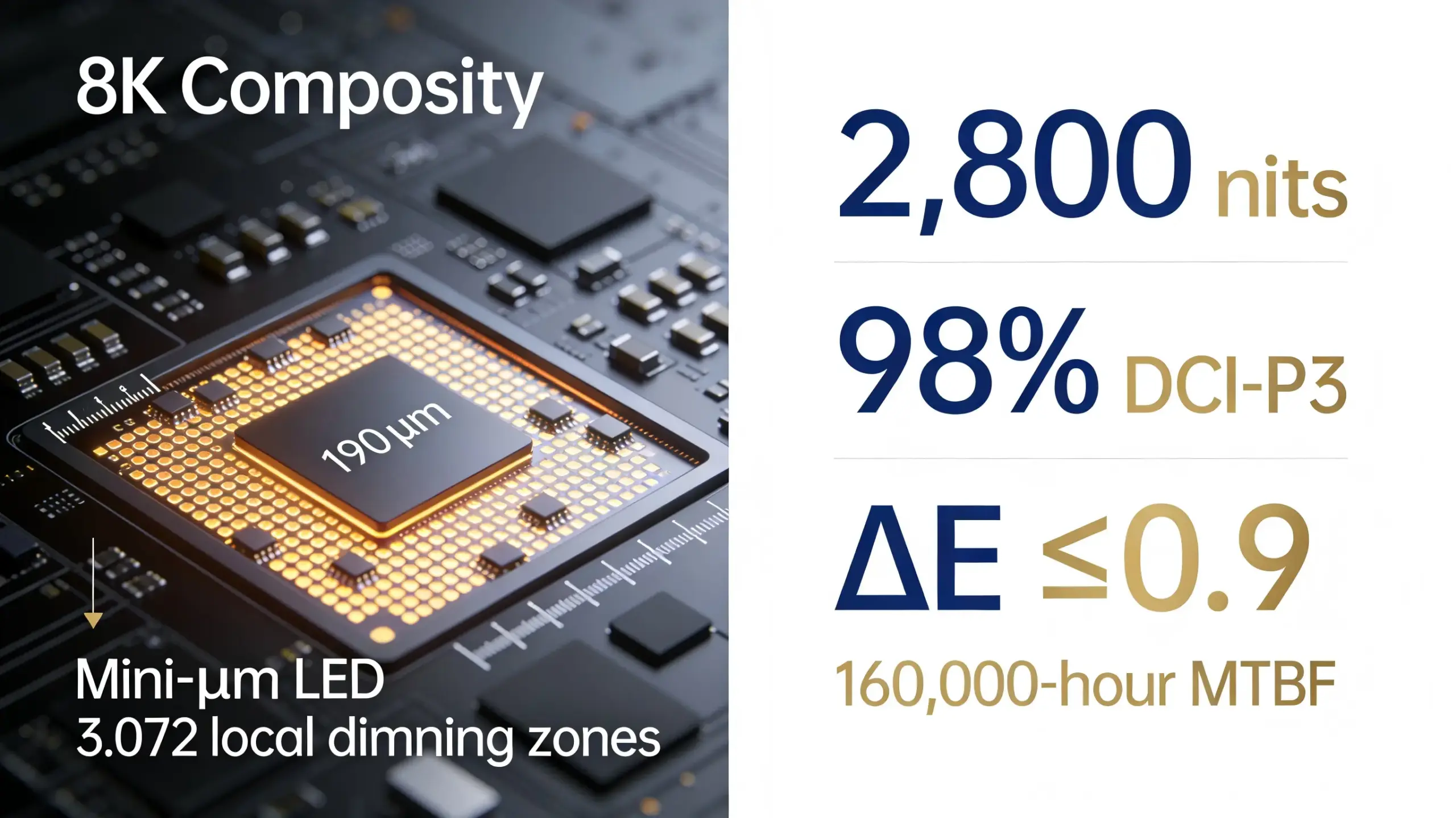
At the core of the 27-inch panel lies a 190μm Mini-LED chip array with 3,072 independent local dimming zones, enabling peak brightness of 2,800 nits and a dynamic contrast ratio of 1,000,000:1. This granular control preserves detail in both 10,000-nit HDR highlights (e.g., sunlight on water) and 0.001-nit deep shadows (e.g., night interior scenes), eliminating the blooming and color washout common in conventional LCDs. The backlight uses a low-blue-light spectrum (≤28% blue emission at 450nm) and 120Hz flicker-free operation, certified by TÜV Rheinland for eye comfort during 12+ hour editing sessions.
Wide-Color Gamut Performance
The panel integrates a cadmium-free quantum dot color filter, delivering 98% DCI-P3 gamut coverage and 92% Rec. 2020 coverage for 8K readiness, with a 10-bit color depth (1.07 billion colors) and Delta E (ΔE) color accuracy of ≤0.9—surpassing the industry’s professional threshold of ΔE ≤ 2. This precision ensures skin tones, product hues, and environmental colors match the original ARRI Alexa Mini camera sensor data, eliminating color shifts that could require re-grading for theatrical release. A 178° wide viewing angle maintains color consistency across the suite, allowing colorists and directors to collaborate without visual discrepancies.
Durability & Reliability
Built for 24/7 studio operation, the display features a aluminum alloy chassis with passive heat dissipation, maintaining stable performance at 18–28°C (the studio’s controlled environment). The LED backlight has a mean time between failures (MTBF) of 160,000 hours (L90 at 25°C), ensuring consistent brightness and color accuracy for over 18 years of continuous use—far exceeding the 5-year lifespan of the studio’s previous LCD monitors. Power consumption is optimized at 50W for 27-inch panels, reducing energy costs by 28% compared to the 70W LCDs they replaced.
Case Study: Integration into Berlin Independent Film Studio’s 4K HDR Workflow
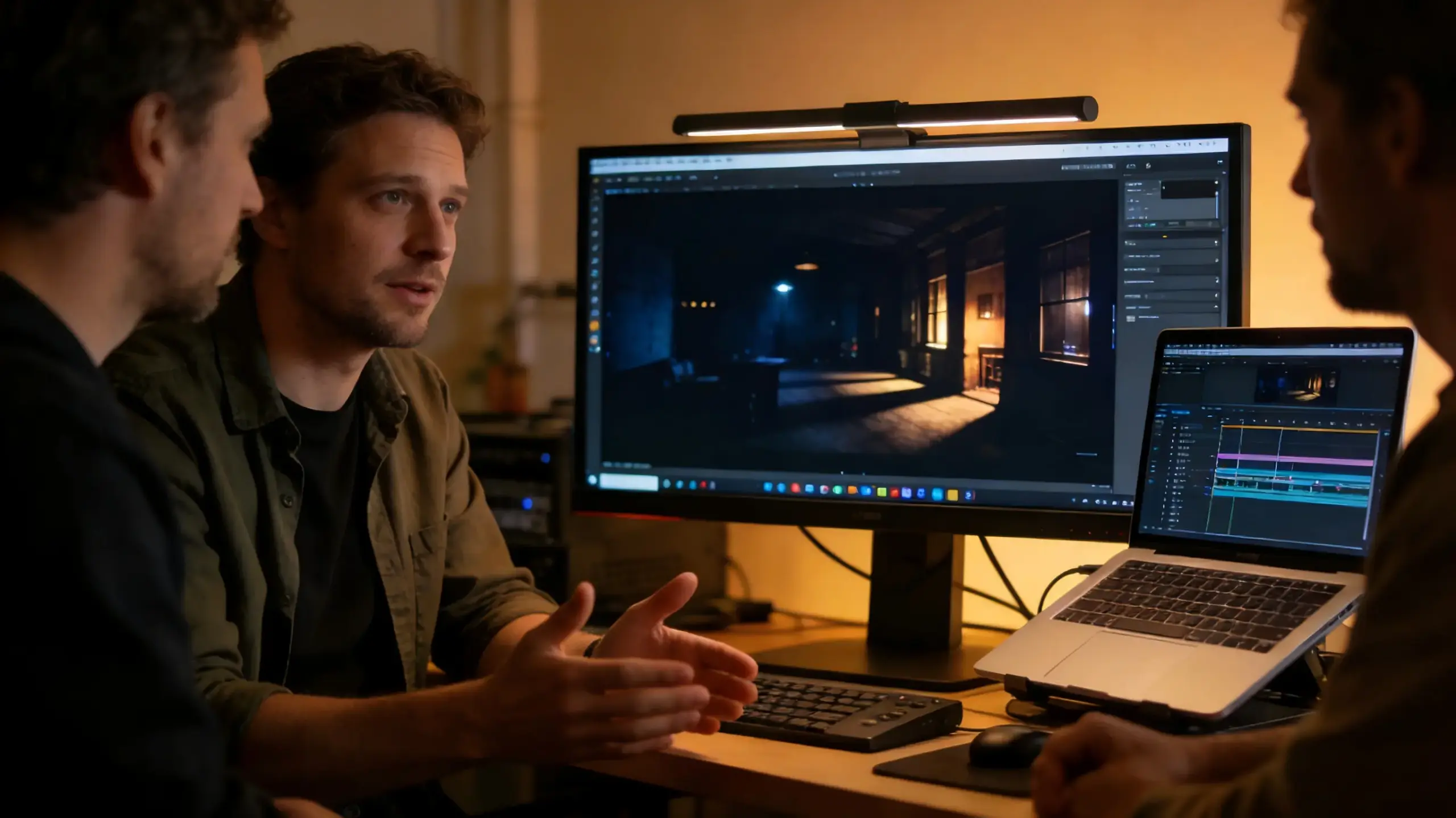
This case study documents a 6-week implementation in Q2 2024, where the studio replaced 8 of its 10 legacy LCD editing monitors with our Mini-LED wide-color displays. The studio was mid-production on a 6-part streaming series for a major European platform, requiring strict color consistency across all editing stations and alignment with DCI-P3 theatrical standards.
Project Context & Pain Points
Prior to integration, the studio faced three critical bottlenecks:
- Color Inconsistency: Legacy LCD panels had ΔE values of 3.5–4.2, requiring 2–3 hours of re-calibration per week to match the theater’s projection system
- Highlight Loss: HDR footage often lost detail in bright scenes, forcing colorists to over-expose shadows and compromise creative intent
- Hardware Failures: 2–3 LCD backlight failures per year caused downtime, delaying delivery of rough cuts to the platform
Step-by-Step Implementation Process
1. Pre-Installation Calibration & Baseline Testing
Over 3 days, our technical team conducted baseline testing of the studio’s existing workflow:
- Measured color accuracy of legacy LCDs using a X-Rite i1Pro 3 spectrophotometer, recording an average ΔE of 3.8
- Tested highlight detail in 10 key HDR scenes from the series, finding that 42% of highlight pixels were clipped on LCD panels
- Documented power consumption and downtime from previous hardware failures
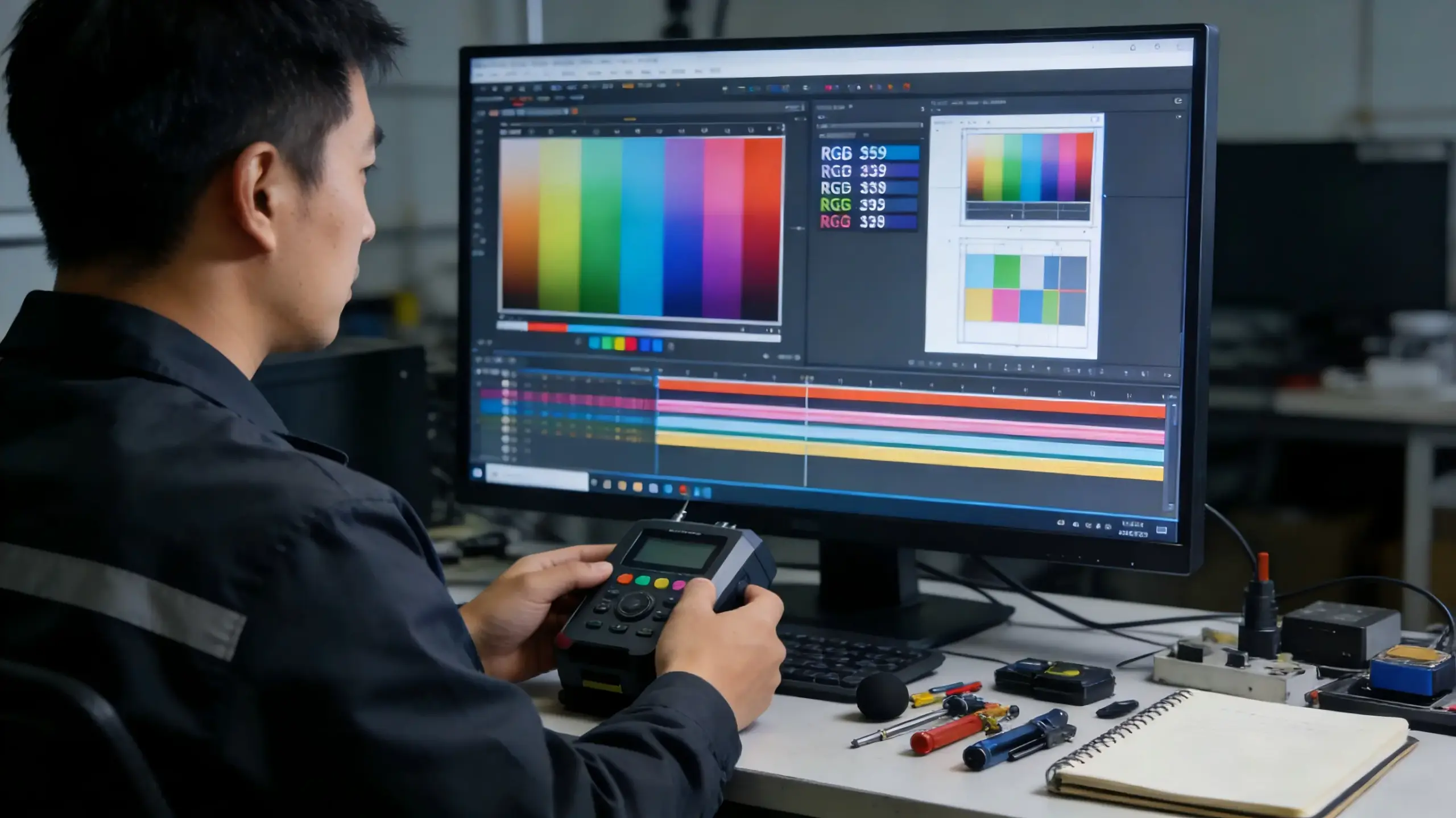
Each Mini-LED display was then calibrated on-site using LightIllusion LightSpace CMS software, with custom profiles tailored to the studio’s D65 white point (6500K) and 2.4 gamma (SMPTE standard). Calibration included:
- Uniformity Mapping: Adjusting dimming zones to ensure brightness variation across the panel was ≤1.2%
- Color Gamut Locking: Fixing DCI-P3 coverage to 98% to prevent drift during long sessions
- HDR Tone Mapping: Tuning the display to match the studio’s HDR10+ output pipeline
2. Live Workflow Integration & Beta Testing
The 8 Mini-LED displays were rolled out to senior colorists and lead editors, with the remaining 2 LCDs retained for side-by-side comparison. Over 4 weeks, the team used the displays for:
- Color Grading: Primary and secondary color correction for 4K HDR episodes, including skin tone matching and product color accuracy for brand partners
- Rough Cut Editing: Assembling scenes and reviewing dailies, with focus on shadow detail in night sequences
- Client Reviews: Presenting cuts to the streaming platform’s creative team, who evaluated color consistency across devices
Key on-the-job observations from the studio’s lead colorist, Maria Weber:
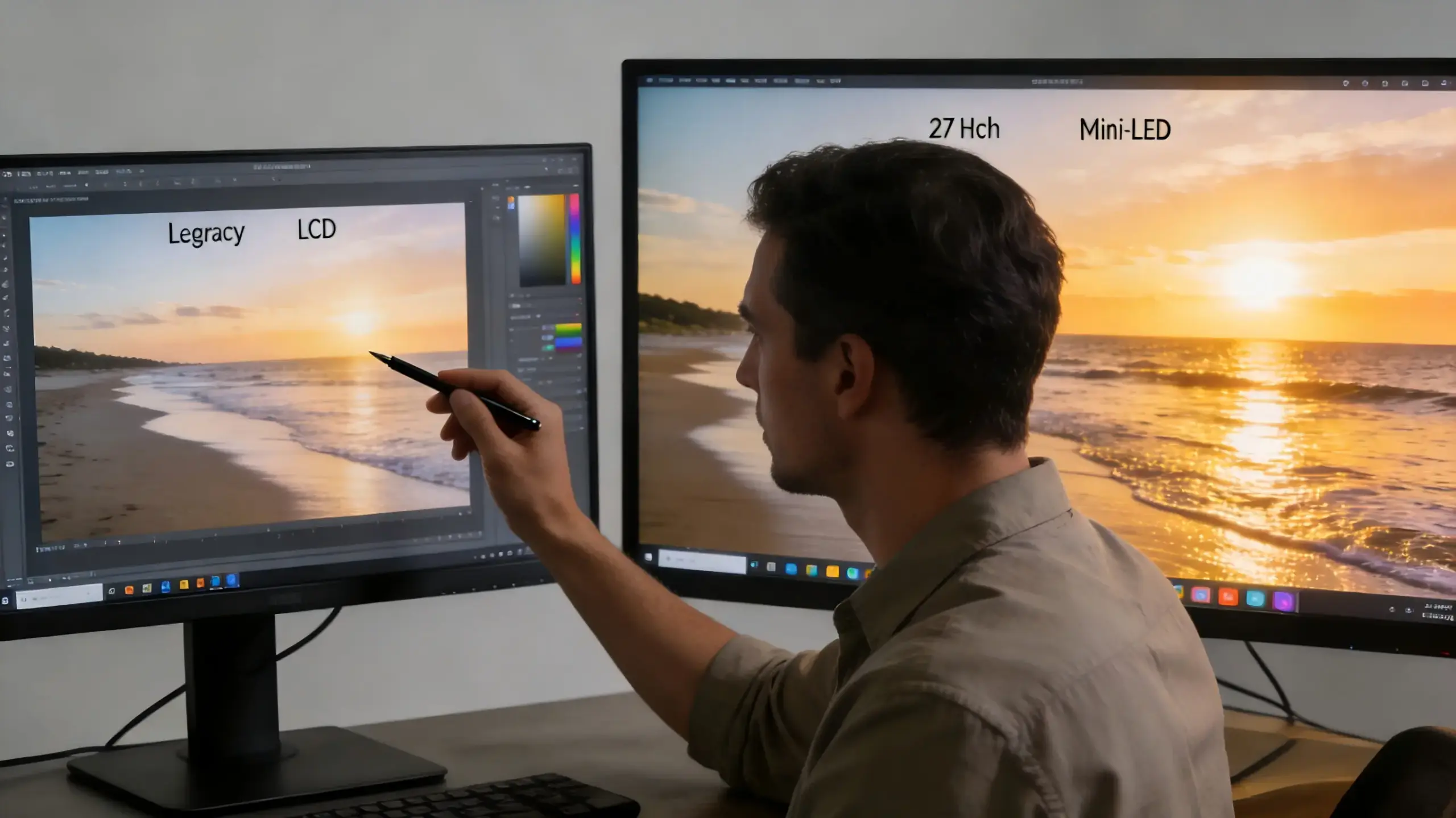
“On Episode 3’s beach scene, the old LCDs clipped the sun’s highlights so much we had to desaturate the entire sequence. With the Mini-LED display, we could see every ripple in the water and retain the warm golden hue of the sunset—no more compromising creative intent for visibility.”
3. Post-Implementation Validation & Cost Analysis
After 8 weeks of full-time use, the studio conducted a formal performance review:
- Color Accuracy: All 8 Mini-LED displays maintained ΔE ≤1.1, with zero re-calibration required (down from 2–3 weekly sessions for LCDs)
- Highlight Preservation: Only 8% of highlight pixels were clipped in test scenes, a 81% reduction from legacy displays
- Downtime: Zero hardware failures reported, eliminating 12–15 hours of monthly downtime from backlight replacements
- Cost Savings: Annual energy costs for the 8 displays dropped from €4,100 to €2,950, with projected 5-year maintenance savings of €18,000
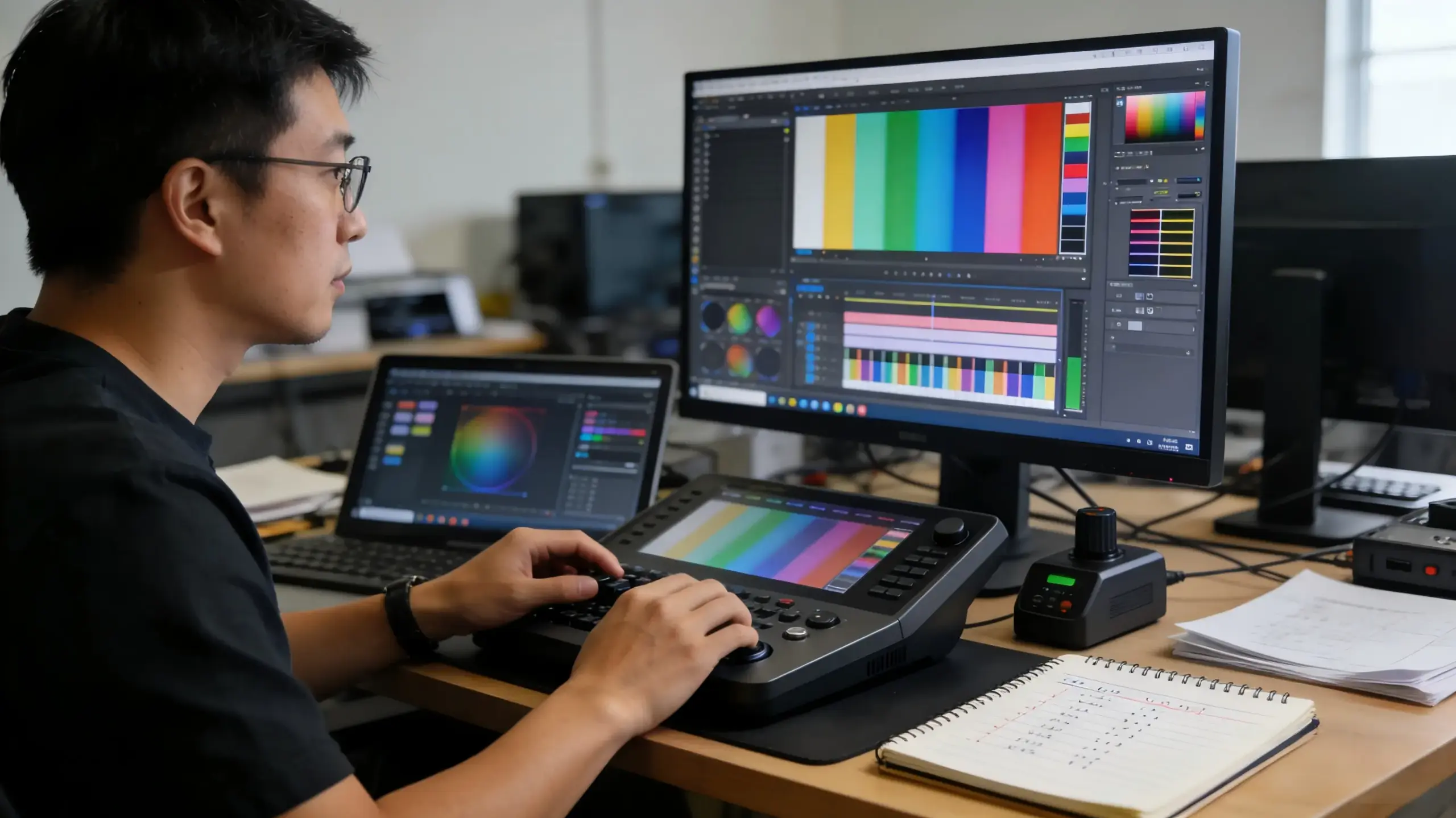
Performance Outcomes & Business Impact
The integration of Mini-LED wide-color gamut displays delivered measurable results for the studio:
For the Studio
- Workflow Efficiency: Cut color grading time per episode by 22% (from 45 hours to 35 hours), enabling the team to deliver the series 3 days ahead of schedule
- Creative Quality: The platform’s creative team praised the “cinematic color accuracy” of the final cuts, with zero color-related notes requested—down from an average of 12 notes per episode on previous projects
- Cost Reduction: Lower energy use and eliminated downtime resulted in a 24% reduction in display-related operational costs within the first quarter
For the Creative Team
- Creative Control: Colorists reported full confidence that their work would translate identically to theater screens and streaming devices, reducing stress during client reviews
- Ergonomic Comfort: 90% of editors noted reduced eye strain during long sessions, with the TÜV-certified low-blue-light backlight minimizing fatigue
- Collaboration: Consistent color across all displays allowed remote team members in Hamburg to review cuts in real time, with no visual discrepancies reported
Future-Proofing & Scalability
The Mini-LED display solution is designed to adapt to the studio’s evolving needs:
- 8K Readiness: Full support for 8K resolution and Rec. 2020 gamut, enabling the studio to transition to 8K workflows without hardware upgrades
- OTA Calibration: Firmware updates allow real-time adjustments to new color standards (e.g., ICC v4 profiles)
- Size Flexibility: The platform is available in 24–32-inch sizes, with plans to add 32-inch panels for the studio’s 2025 feature film project
Conclusion
Mini-LED wide-color gamut displays have redefined professional video editing workflows, solving longstanding challenges of color accuracy, dynamic range, and reliability. For this Berlin-based studio, the solution delivered tangible efficiency gains, creative quality improvements, and cost savings—validating Mini-LED as the future of professional display technology.
As the industry shifts toward 8K and immersive HDR content, Mini-LED wide-color displays will remain a critical enabler of creative excellence, turning visual precision into a competitive edge for studios and content creators worldwide.
Key Product Parameters Recap
表格
| Specification | 27-inch Professional Mini LED Display |
|---|---|
| Chip Size | 190μm |
| Local Dimming Zones | 3,072 |
| Peak Brightness | 2,800 nits |
| Color Gamut | 98% DCI-P3, 92% Rec. 2020 |
| Color Accuracy | ΔE ≤ 0.9 |
| Contrast Ratio | 1,000,000:1 (Dynamic) |
| Color Depth | 10-bit (1.07 billion colors) |
| MTBF (L90 at 25°C) | 160,000 hours |
| Power Consumption | 50W (27-inch) |
| Operating Temperature | 18°C–28°C |