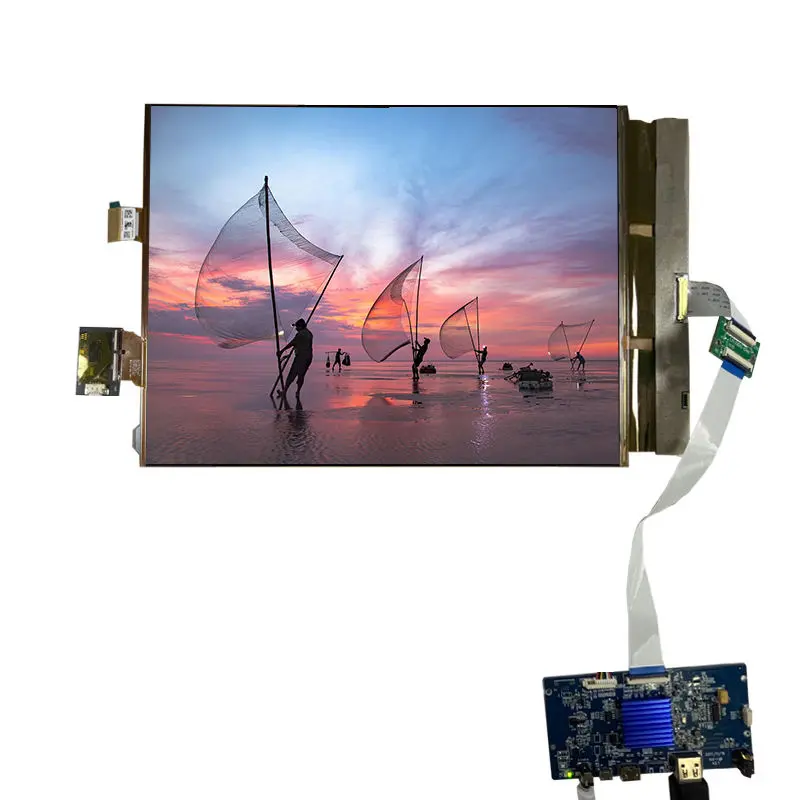
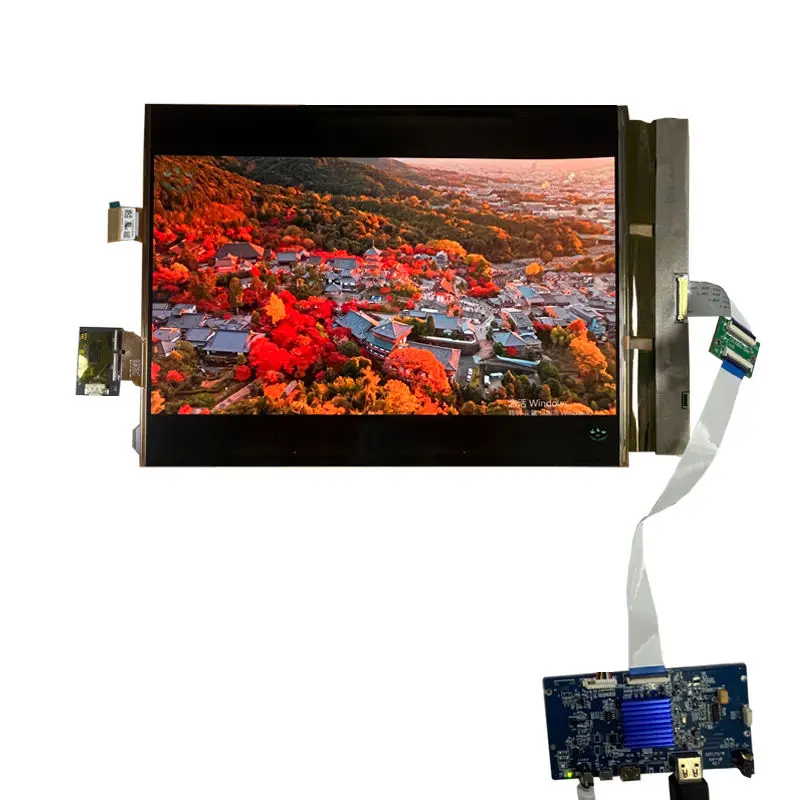
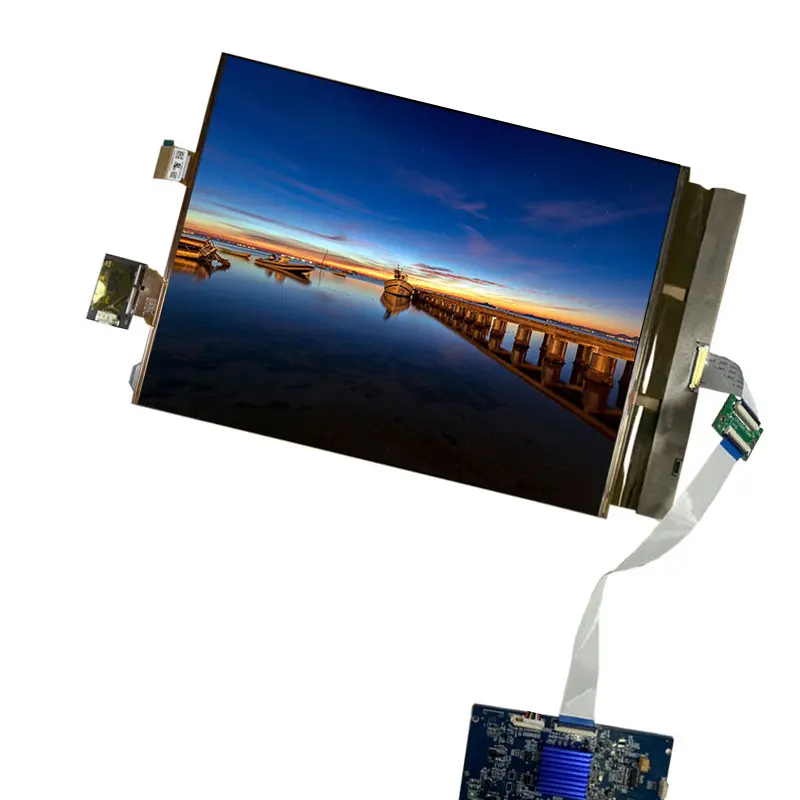
Tablet AMOLED Display Module 13.3 Inch 1536×2048

Product Gallery
Key Specs

Model P/N

HS133QX01A-V1

Size

13.3″

Resolution

1536×2048

Brightness

300 (Typ.)(cd/m²)

Viewing Angle

All Directions (CR≥10)

Connector Type

eDP 1.3 (4 Lanes), 40pins Terminal

Operating Temp

0 ~
50 °C

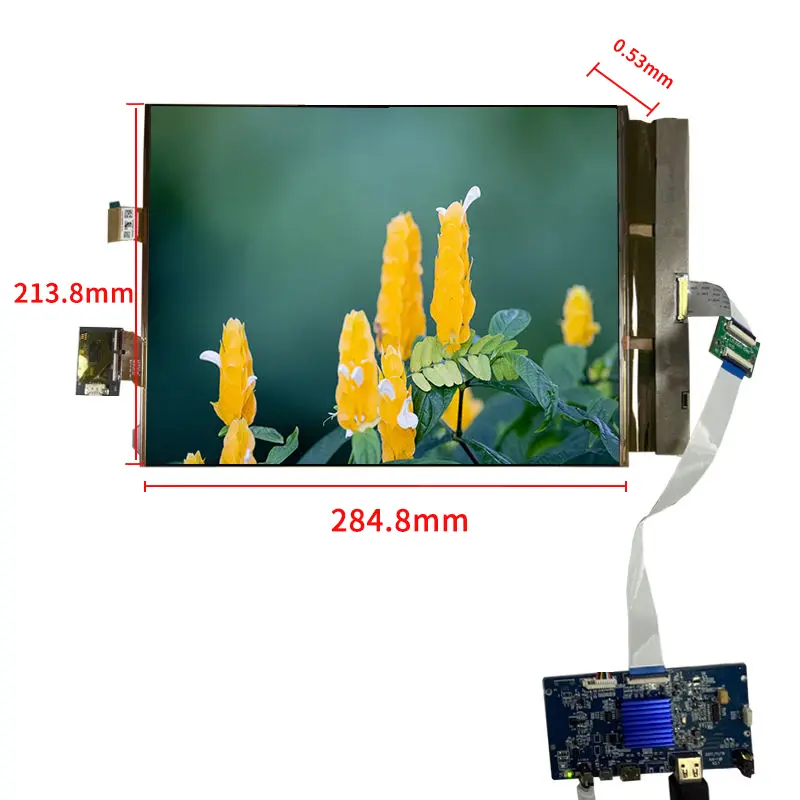
Overall(mm)

213.8(W)×
284.8(H)×
0.53(D)
Upgrade Options (OEM/ODM)

huisoar

HS133QX01A-V1

General Features

Brand

huisoar

Panel Size (inch)

13.3"

Model P/N

HS133QX01A-V1

Resolution

1536×2048

Brightness (nits)

300 cd/m² (Typ.)

Viewing Angle

All Directions (CR≥10)

Contrast Ratio

High Contrast (Implied by AMOLED Self-Illumination)

Response Time

Fast Response (Implied by AMOLED Technology)

Overall (mm)

213.8(W)×
284.8(H) ×
0.53(D) mm

Active Area (mm)

202.552(H) × 270.336(V)

Refresh Rate

60Hz

Display Colors

Wide Color Gamut (DCI-P3, Adobe RGB, sRGB)

Panel Type

oled

Connector Type

eDP 1.3 (4 Lanes), 40pins Terminal

Surface Treatment

Mirror Surface (Haze 0%), Hard Coating (6H)

Operating Temp

0 ~
50 °C

Touchscreen Type

Optional On-Cell Capacitive Touch

Storage Temp

-20℃ ~ +60℃

Work Mode

Normally Black

Pixel Format

RGB Vertical Stripe

Input Voltage (V)

3.3V

Weight (g)

120 g(Typ./Max.)

Designed For

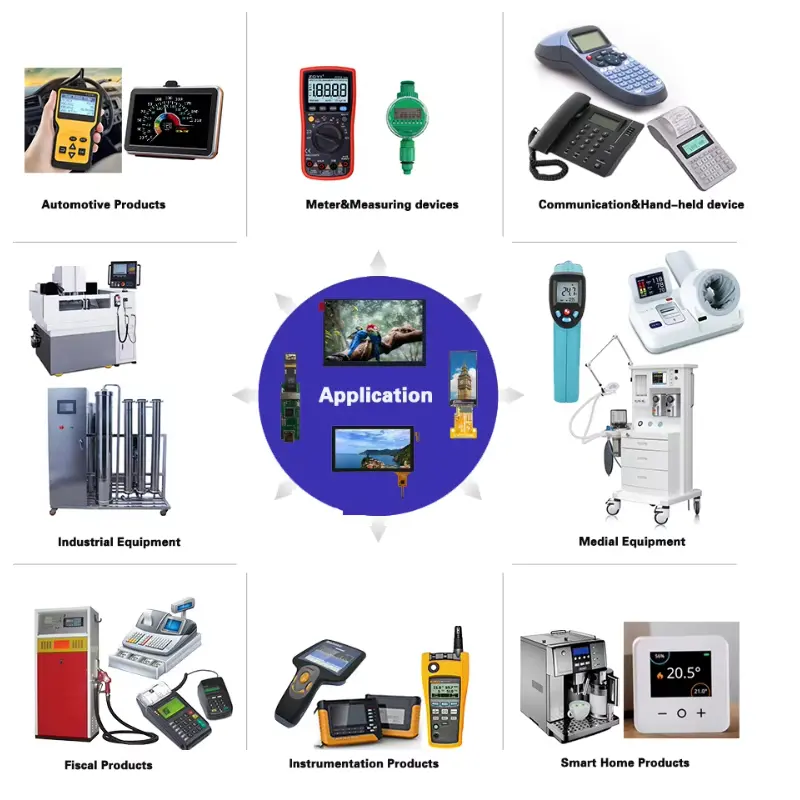
Premium tablets, portable smart devices, medical interfaces, industrial terminals, professional handheld systems

This tablet AMOLED display module is developed for projects that require premium image quality, a slim mechanical profile, and dependable interface integration. The 13.3 inch panel combines 1536×2048 resolution, 300 nits typical brightness, wide color gamut support, and a flexible ultra-thin structure to meet the needs of advanced portable equipment. For buyers developing tablet systems, medical interfaces, or industrial terminals, this tablet AMOLED display module offers a balanced solution focused on visual precision, compact design freedom, and long-term customization potential.

Visual Strengths That Improve Product Value

High Pixel Density for Clear and Refined Interfaces

The 1536×2048 resolution delivers sharp rendering for text, icons, images, and operating interfaces, making the module suitable for products that rely on detailed on-screen information. A high-resolution display can improve readability in professional applications where operators need to review data, menus, or graphics quickly and accurately. For manufacturers building premium electronics, this helps create a more advanced end-user experience while supporting a cleaner and more modern interface design.

Wide Color Gamut and Full Viewing Performance

This panel supports wide color gamut coverage including DCI-P3, Adobe RGB, and sRGB, allowing richer and more accurate color reproduction across different content environments. AMOLED self-emissive technology also contributes deep black performance and strong visual contrast, which helps improve image depth and overall screen quality. In practical use, the tablet AMOLED display module remains visually consistent from different viewing directions, which is useful in shared work environments, medical review stations, and collaborative industrial applications.

Flexible Tablet AMOLED Display Module for Compact Integration

Ultra-Thin Structure for Space-Sensitive Devices

With an overall thickness of only 0.53 mm, this panel provides a meaningful advantage for engineers working on slim or space-constrained products. The thin profile supports more flexible internal design planning for batteries, boards, housings, and thermal structures. It can also help improve the industrial design of the final product by reducing bulk and enabling a cleaner assembly layout. This is especially valuable in portable systems where every millimeter affects product portability and mechanical efficiency.

Flexible Construction for Curved and Customized Designs

The flexible structure and 3R bending capability allow the module to fit product concepts that cannot rely on a conventional rigid panel. This gives OEM and ODM teams more freedom when developing special housings, curved surfaces, or compact assemblies with limited installation space. For buyers seeking a tablet AMOLED display module that supports differentiated hardware design, flexibility can become an important engineering advantage rather than just a visual feature.

Selection Advantages for OEM and ODM Programs

eDP Connectivity for Faster Development Cycles

The eDP 1.3 interface with 4 lanes supports high-speed signal transmission and fits well with many modern embedded and tablet hardware platforms. Standardized connectivity can reduce adaptation effort, simplify mainboard matching, and improve development efficiency during early validation stages. For engineering teams under schedule pressure, choosing a tablet AMOLED display module with familiar interface architecture can help shorten integration time and reduce project risk.

Customization Paths for Commercial Projects

Beyond standard supply, this module supports practical customization options for different project requirements. These include touch panel addition, higher brightness upgrades, cover glass treatment such as AG, AR, or AF coating, interface conversion, reinforcement options, and cable configuration adjustment. This flexibility is important for overseas buyers that need more than an off-the-shelf component. It allows the tablet AMOLED display module to be aligned with mechanical constraints, application environments, and target user expectations in medium- or large-volume programs.

Application Fit Across Professional Equipment Markets

Premium Tablets and Portable Smart Devices

For premium tablets, portable terminals, and advanced smart equipment, display quality directly affects the perceived value of the final product. This module offers high resolution, vivid color performance, low-profile construction, and lightweight characteristics that support elegant product development. These benefits make it suitable for mobile professional tools, information terminals, and handheld systems where visual performance and portability must work together.

Medical and Industrial Interface Equipment

Medical systems and industrial devices often require displays that stay clear, stable, and easy to integrate into compact hardware. This panel can support diagnostic terminals, portable instruments, industrial HMI equipment, and control interfaces where sharp image detail and broad viewing performance are important. Optional touch integration also helps create more complete human-machine interaction solutions, especially for equipment that depends on direct and responsive user input.

For buyers comparing options for a tablet AMOLED display module, the real value is not only in the specification sheet but also in the integration flexibility, customization support, and supply cooperation behind the product. This module combines strong image performance, slim flexible structure, and project-oriented upgrade options for demanding device development. Contact our sales team to discuss custom solutions, sample evaluation, and volume supply plans for your next tablet AMOLED display module project.
Application Scenarios

FAQ

What is the minimum order quantity (MOQ) for custom display solutions?

For custom display solutions, the minimum order quantity is typically project-dependent and negotiated based on the scope of customization, such as optical bonding, cover glass, or unique mechanical designs. Standard guidance for this class of product is an MOQ ranging from several hundred to a few thousand pieces for initial production runs to justify engineering and setup costs. For the exact MOQ applicable to a specific custom project involving this HS133QX01A-V1 module, you should request a formal quotation from the supplier detailing the customization requirements and volume commitments.

What is your MOQ and sample policy for this model?

The MOQ and sample policy for this specific HS133QX01A-V1 model are not explicitly stated on the product page. For a premium AMOLED module like this, standard industry practice for evaluation samples is typically 1-5 pieces, with MOQs for production often starting in the low hundreds of units. We recommend contacting the supplier directly to confirm their exact sample availability, lead time, cost, and the minimum production quantity required. This will also clarify if sample orders can be credited against a future production purchase.

What is the minimum order quantity for custom display modules with specific connector types like 30-pin LVDS?

The product page specifies this model uses an eDP 1.3 interface with a 40-pin terminal connector; it does not mention a 30-pin LVDS option. For custom display modules requiring specific connector types like 30-pin LVDS, the MOQ is determined by the customization depth. Typically, changing a core interface like this involves a new driver board design and validation, leading to an MOQ in the thousands of units to amortize non-recurring engineering costs. You should consult with the supplier's engineering team to confirm feasibility and the exact MOQ for such a custom variant.

Do you offer transparent displays with high transparency rates for retail or exhibition applications?

The provided product information is for a standard, non-transparent AMOLED display module. For transparent displays with high transparency rates for retail or exhibition applications, this would be a different product category altogether, typically utilizing specialized OLED or LCD technology. We recommend inquiring separately about the supplier's capabilities in transparent display solutions, as specifications like transparency rate, resolution, and size would be defined for that specific product line.

What is the supply chain stability for key components like panels from Tianma or BOE, and do you have backup suppliers?

The product page does not specify the panel's original manufacturer or detail the supply chain strategy for key components. For a module of this type, supply chain stability is a critical procurement consideration. Standard guidance is to inquire directly about the primary panel source, the existence of qualified alternate sources for critical components, and the supplier's inventory buffer strategy to mitigate disruption risks. Confirming these points is essential for ensuring long-term production continuity for your project.

Do you support brightness class selection and backlight driver options for power/thermal optimization?

This is an AMOLED display, which is a self-emissive technology and does not use a separate backlight system. Therefore, concepts like 'backlight driver options' do not apply. The brightness is fixed at a typical 300 nits as per the datasheet. For power and thermal optimization, engineering focus would typically be on the panel's power supply circuitry and system-level thermal management, rather than selecting a brightness class or backlight driver. Any display-level brightness adjustment would be handled through the eDP interface and the panel's internal drive electronics.

What are the available connector types and pinouts for your 21.5" LVDS panels, and do you offer adapter cables or reference designs?

This specific model (HS133QX01A-V1) is a 13.3-inch display with an eDP 1.3 interface and a 40-pin connector, not a 21.5" LVDS panel. For 21.5" LVDS panels in general, available connector types (e.g., 30-pin, 40-pin, 50-pin) and pinouts are model-specific and defined by the panel's datasheet. Reputable suppliers typically offer compatible adapter cables or FPCs and can provide reference schematic designs for the interface board to aid in integration. You would need to request the technical documents for the specific 21.5" LVDS model you are evaluating.

Do your automotive displays meet AEC-Q100 qualification standards?

The product information provided does not include any mention of AEC-Q100 qualification or other automotive-grade certifications for this HS133QX01A-V1 display module. This model is described for tablet, medical, and industrial terminal applications, not explicitly for automotive use. If you require a display for an automotive application, you must explicitly request modules that are designed, tested, and validated to meet the necessary automotive reliability standards, which include but are not limited to AEC-Q100.

Can you provide detailed specifications for sunlight readable displays, including typical brightness (nits), contrast ratio, and optical bonding options for outdoor or high-ambient-light use?

This HS133QX01A-V1 module has a typical brightness of 300 nits, which is suitable for indoor use but is not classified as sunlight readable. For sunlight-readable displays, typical brightness starts at 1000 nits and can exceed 2500 nits, combined with optical bonding to reduce glare and maintain contrast in high-ambient light. The product page does not specify contrast ratio or optical bonding options for this model. For outdoor/high-ambient-light applications, you should request the supplier's dedicated sunlight-readable product series and their detailed spec sheets covering brightness, contrast, optical treatments, and temperature range.

Do you offer display modules with integrated controllers and driver boards, or only bare panels?

The product description refers to this as a 'display module,' which typically implies it includes the necessary drive electronics and interface board to function with a standard eDP host. It is not a bare panel only. For the HS133QX01A-V1, the integrated controller and driver are part of the module, interfacing via the stated eDP 1.3 connection. For custom integrations requiring different interfaces or form factors, suppliers often offer the option to develop a custom controller board. You should verify the module's block diagram and confirm if it meets your system's 'ready-to-use' requirements.

Need a custom solution or samples?

Recommended: Same Size

(13.3")

Alternatives
No data was found
Scroll to Top
Request Quote / Datasheet

Response within 12-24 hours. NDA available. Engineering support included.

Fields marked with an asterisk (*) are required.

Contact Information

Request Details

WeChat QR code

Scan the QR code with your phone to contact us.

Download Datasheet

Please input your e-mail address to start the download.