
~
~
~
~
~
~
TM057KBHG02-40 Resistive Touch QVGA LCD 5.7 Inch Tianma
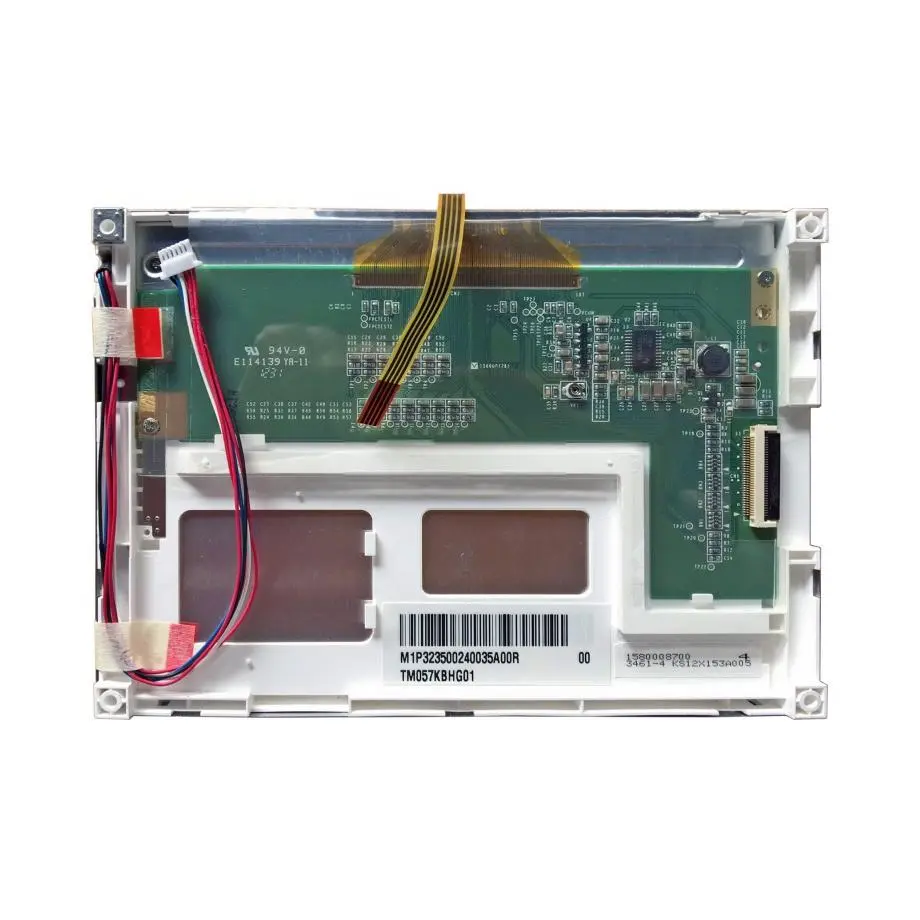
Model P/N
Size
Resolution
Brightness
Viewing Angle
Connector Type
Operating Temp
Overall(mm)
tianma
TM057KBHG02-40
Brand
Panel Size (inch)
Model P/N
Resolution
Brightness (nits)
Viewing Angle
Contrast Ratio
Response Time
Overall (mm)
Active Area (mm)
Refresh Rate
Display Colors
Panel Type
Connector Type
Operating Temp
Touchscreen Type
Storage Temp
Work Mode
Pixel Format
Input Voltage (V)
Designed For
Product Details
Product Overview
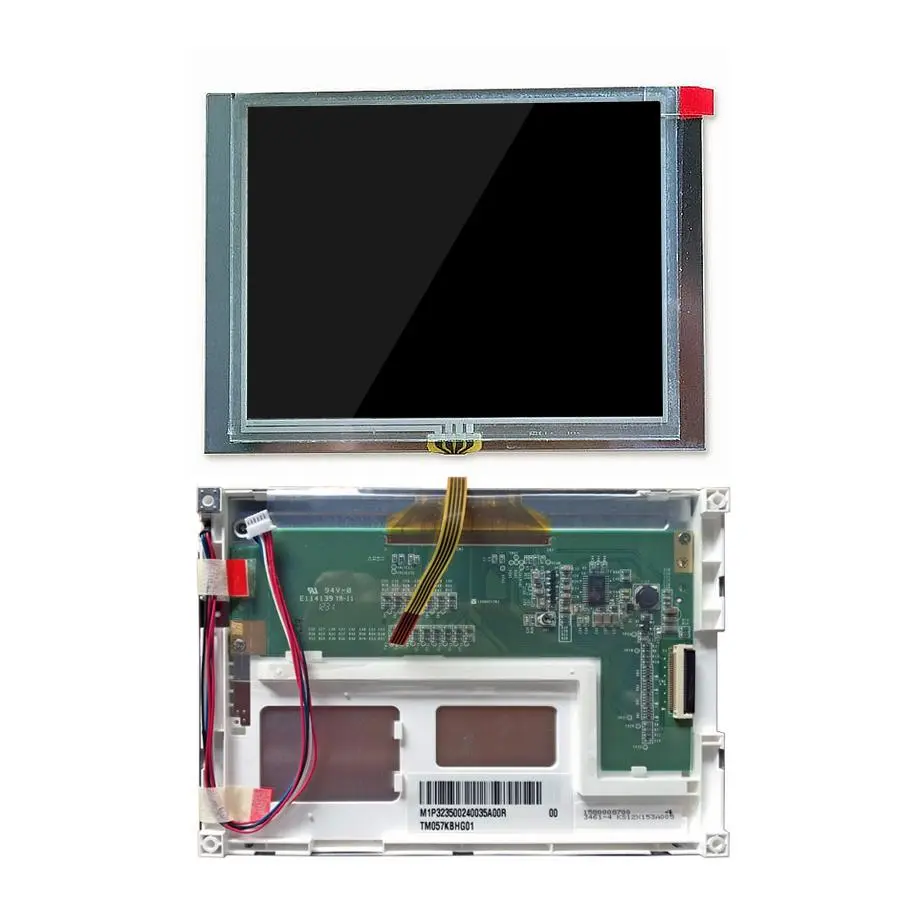
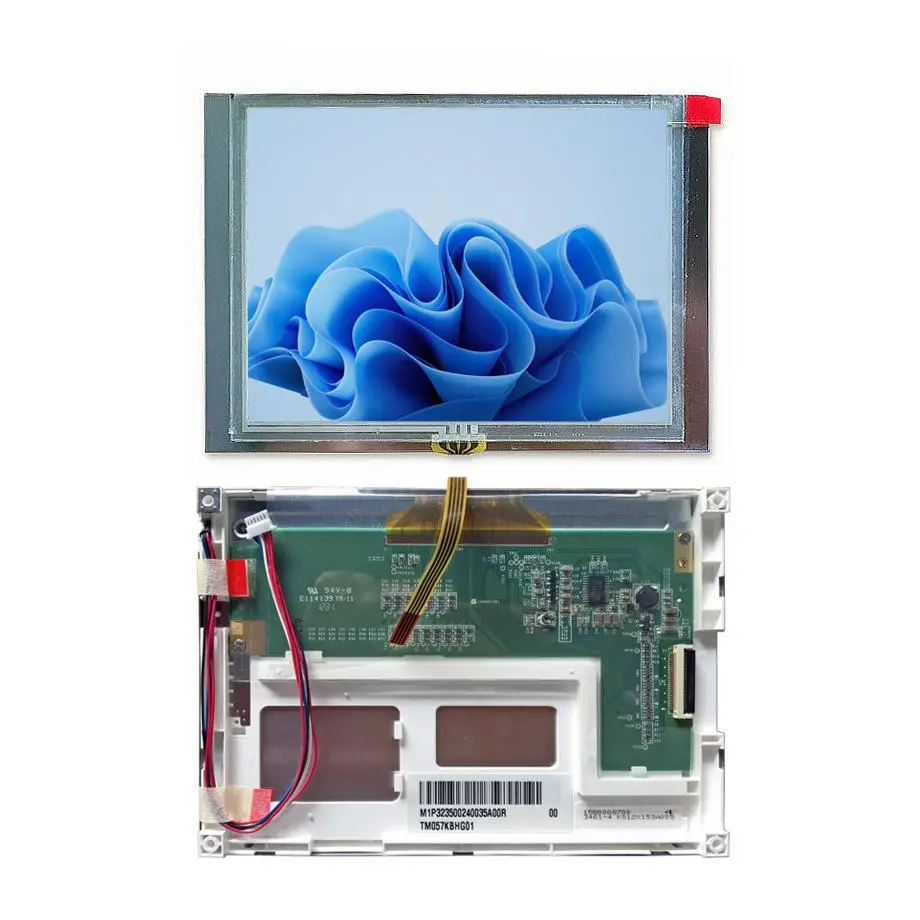
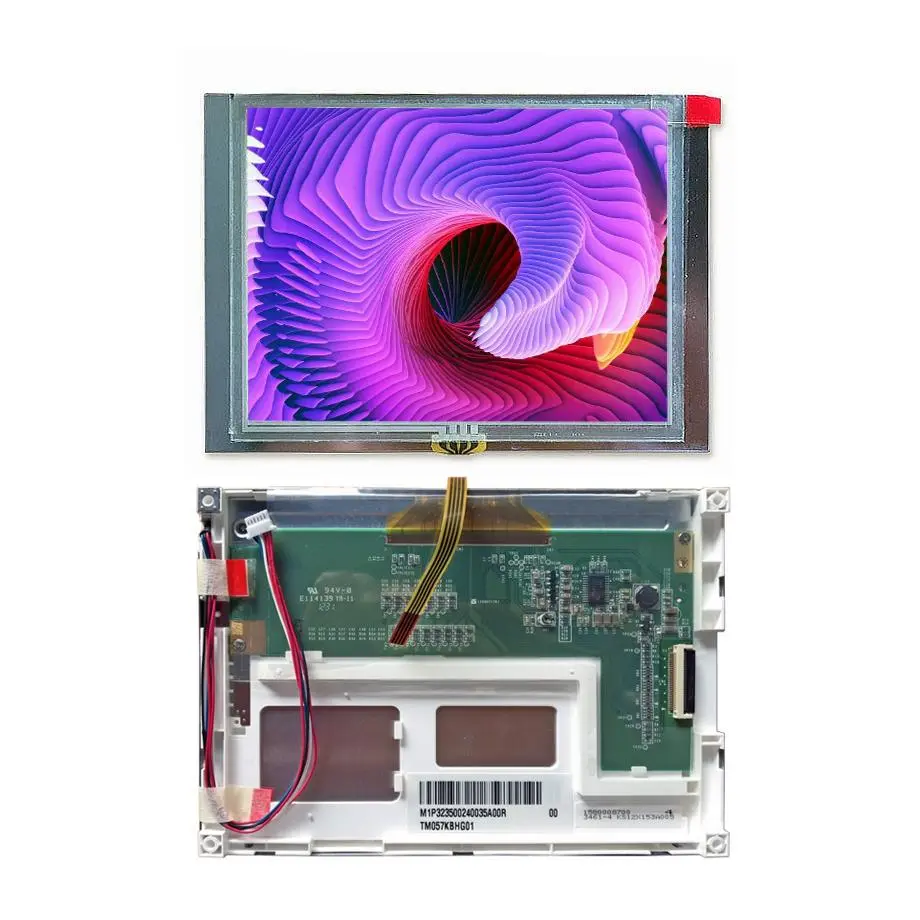
The TM057KBHG02-40 Resistive Touch QVGA LCD is a 5.7-inch Tianma a-Si TFT-LCD module for industrial display integration. It uses a native 320(RGB)×240 QVGA image in a 4:3 format, with a 115.2 × 86.4 mm active area and RGB vertical-stripe pixel layout. The display operates in TN normally-white transmissive mode, supports 262K colors, runs at 60 Hz and is specified for a 500:1 typical contrast ratio with 20 ms typical Tr+Td response.
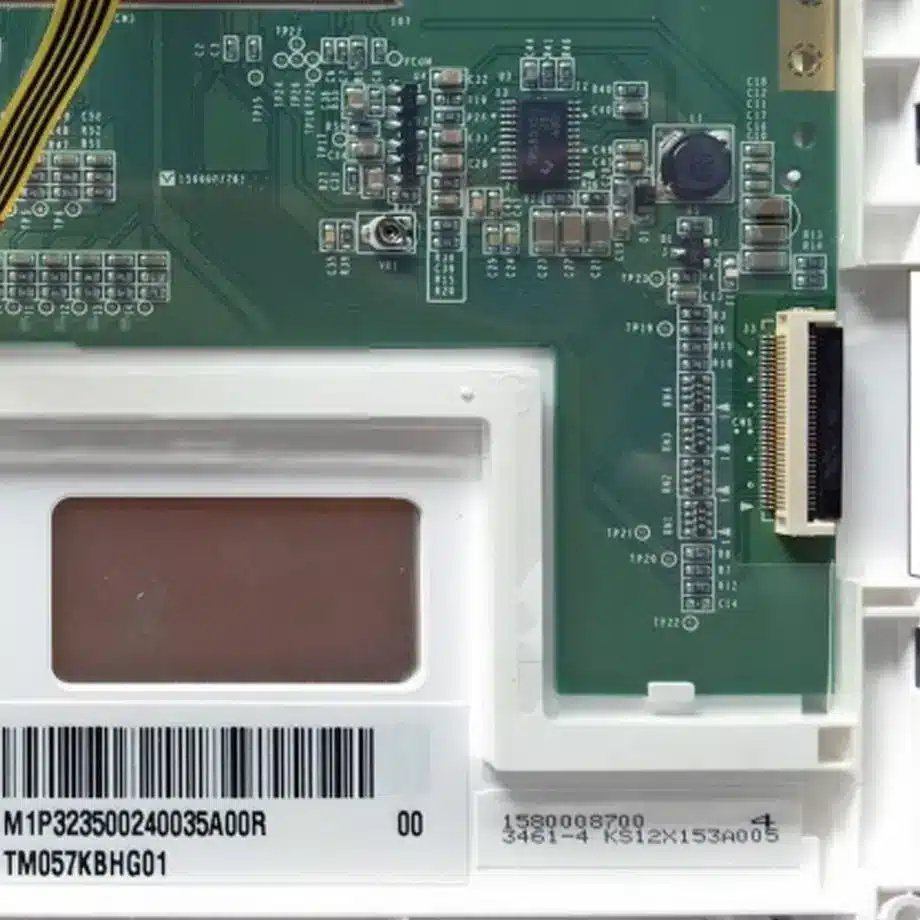
The module is paired with a 4-wire resistive touch screen and uses a one-channel 6-bit parallel RGB display connection. The panel supply is specified at 3.3 V typical. Its WLED backlight is supplied without a driver, so illumination electronics remain a system-level design task. Operating temperature is -20 to 70 °C and storage temperature is -30 to 80 °C. Brightness, viewing-angle values, outline dimensions, touch-controller electronics and backlight-life figures are not established by the available model specifications and should not be inferred from related Tianma modules.
Three Core Buyer Value Propositions
Integrated 4-wire resistive touch supports direct industrial operator input
The resistive touch layer gives an HMI designer a physical touch interface without requiring a separate capacitive sensor stack. Four-wire resistive technology is pressure-actuated and is commonly paired with dedicated touch-controller electronics, making it suitable for applications where the system architecture already supports that input method. The module data does not identify the controller IC, host bus or calibration procedure, so the equipment designer must define the touch-controller implementation and validate coordinate accuracy with the finished front assembly.
Parallel RGB and 3.3 V create a straightforward embedded display boundary
The one-channel 6-bit parallel RGB path and 3.3 V typical panel supply provide a clear starting point for an embedded controller design. This avoids treating the panel as an HDMI or USB display and helps narrow controller selection to devices that expose a compatible native LCD timing interface. Compatibility still depends on the exact pin assignment, pixel-clock timing, synchronization signals, color-bit mapping and power sequence, all of which require the current model-specific interface document.
-20 to 70 °C operation supports industrial thermal qualification
The specified operating range provides a defined component envelope for equipment that may see cold starts or elevated internal temperatures. In an industrial HMI, this should be translated into an assembled-system thermal test rather than used as a blanket “industrial grade” claim. Backlight heat, processor dissipation, sealed enclosures, mounting orientation and local airflow can move the LCD temperature away from ambient, so measurement at the actual module is necessary during qualification.
Key Specifications at a Glance
| Parameter | Specification |
|---|---|
| Manufacturer / model | Tianma TM057KBHG02-40 |
| Size / type | 5.7 inch a-Si TFT-LCD, LCM |
| Resolution | 320(RGB)×240 QVGA, 4:3 |
| Active area | 115.2 × 86.4 mm |
| Overall dimensions / weight | Not specified / TBD |
| Brightness / viewing angle | Not specified |
| Contrast / response | 500:1 typical / 20 ms typical Tr+Td |
| Display mode / colors | TN normally white transmissive / 262K colors |
| Native display interface | Parallel RGB, 1 channel, 6-bit connector |
| Panel input | 3.3 V typical |
| Backlight | WLED, without backlight driver |
| Touch | 4-wire resistive touch |
| Refresh rate | 60 Hz |
| Temperature | Operating -20 to 70 °C; storage -30 to 80 °C |
| Designed for | Industrial |
How should the 4-wire resistive touch function be integrated?
The TM057KBHG02-40 Resistive Touch QVGA LCD provides the resistive sensor layer, but the system still needs electronics and firmware to interpret touch coordinates. Texas Instruments explains the basic four-wire structure as two resistive layers with X+, X−, Y+ and Y− connections, with a touch controller measuring position by applying excitation and reading the resulting voltage (TI four-wire resistive-touch application report). That general architecture is useful for system design, but it does not identify the exact touch-controller IC or host interface used by a particular finished HMI.
Touch calibration belongs to the complete front stack
Coordinate calibration should be performed with the released LCD, touch panel, bezel and any protective overlay installed. Mechanical pressure, edge constraints and front-surface construction can affect touch behavior. If the equipment requires glove use, stylus operation, liquid tolerance or a defined activation force, treat those as separate requirements and obtain supporting evidence before approval. The presence of a four-wire resistive sensor does not automatically prove any of those behaviors.
What does parallel RGB require from the host controller?
The native display path is one-channel 6-bit parallel RGB. In practical terms, the application processor, FPGA or display controller must provide the required RGB data lines plus the model-specific pixel clock and synchronization/control signals. The exact signal names, timing values and connector assignment are not defined by the short interface label alone. Request the current Tianma timing table and pinout before routing a board or purchasing a cable.
Tianma’s industrial-display portfolio covers small and medium TFT modules for factory automation, HMI, test and measurement and industrial monitoring (Tianma industrial display solutions). That manufacturer context supports the industrial integration approach, but it should not be used to borrow a voltage, pinout, brightness or lifetime value from another Tianma part. The exact TM057KBHG02-40 electrical limits remain model-specific.
3.3 V panel power does not define every required rail
The panel input is listed at 3.3 V typical, but that value should not be assumed to cover the raw WLED backlight because the backlight has no driver. Keep the LCD logic/panel supply and the LED-drive path as separate design blocks until the electrical documentation proves otherwise. Confirm current demand, tolerance, power-up sequence and any enable/reset timing for the display, then size the backlight driver from its own LED requirements.
How should the no-driver WLED backlight be qualified?
The WLED source is present, but the driver is not. Therefore, finished-display luminance and dimming behavior depend on the external driver, LED operating point, optical stack and thermal design. The available model data does not state brightness, LED current, string voltage or backlight lifetime. Do not substitute those values from another 5.7-inch Tianma module merely because the size and resolution are similar.
During prototype testing, verify the selected driver across minimum and maximum supply conditions, expected dimming settings and the full thermal profile. Check for flicker, uneven illumination, startup overshoot and local hot spots. If the machine requires a minimum luminance after aging or a defined service interval, obtain the model-specific LED lifetime basis and set an acceptance criterion for the assembled HMI rather than turning an unsupported estimate into a product claim.
Mechanical fit and replacement planning for a 5.7-inch HMI
The active image area is 115.2 × 86.4 mm, but the overall module outline is not specified in the available parameters. That means the enclosure opening can be planned from the visible area only as a preliminary exercise. Final bezel, bracket, cable and touch-overlay geometry require the current mechanical drawing. The 4:3 format is common in legacy industrial equipment, which makes this model relevant to replacement projects, but aspect ratio and QVGA resolution do not establish drop-in compatibility.
A replacement comparison should include the exact parallel-RGB timing, 6-bit color mapping, connector orientation, 3.3 V panel supply, resistive-touch wiring, active-area location, backlight electrical requirements and temperature range. If an older controller board expects a different RGB bit order or sync convention, an apparently similar panel can show incorrect colors or no image. Preserve the approved controller firmware and cable drawing together with the LCD part number when a sample is qualified.
Industrial temperature and operator-use verification
The -20 to 70 °C operating range is valuable for industrial thermal planning, especially in sealed HMIs and machine controls that may experience cold starts or heat from nearby electronics. Still, the system designer should measure panel temperature after the controller and backlight have reached steady state. Storage at -30 to 80 °C should also be considered separately from powered operation; a component that survives storage at a temperature is not automatically approved to operate there.
For operator use, verify touch response and image behavior at the lowest and highest project temperatures that fall inside the specified range. Resistive sensors can feel different through gloves or protective overlays, and TN viewing characteristics can change with angle and temperature. Because viewing-angle values are not provided here, the actual mounting orientation should be tested from the expected standing, seated or oblique operator positions rather than assigning an unsupported wide-view claim.
Procurement and lifecycle controls
The TM057KBHG02-40 Resistive Touch QVGA LCD should be purchased by exact suffix because touch configuration and interface details can vary within a model family. A third-party sourcing reference currently lists the model as in production, but that status is not a manufacturer lifecycle guarantee. Ask Tianma or an authorized channel to confirm the offered revision, current production status, traceability and applicable PCN/EOL process before a long-running industrial program commits to the part.
Current marketplace stock counts should not be treated as HS-LCD inventory, guaranteed availability or evidence of supply duration. For an HMI replacement project, record annual demand, expected service horizon and whether the buyer requires a second-source plan. Those are procurement requirements to be discussed with the supplier; they are not claims that a second source or lifetime commitment already exists.
Engineering Answers in Brief
TM057KBHG02-40 is a 5.7-inch Tianma QVGA LCM with a 320×240 image, one-channel 6-bit parallel RGB display interface and 3.3 V typical panel input.
The module includes a 4-wire resistive touch sensor, but touch-controller electronics, host bus and calibration requirements must be defined by the system designer.
The WLED backlight has no integrated driver, so LED power, dimming and finished-display luminance remain external design responsibilities.
The -20 to 70 °C operating range supports industrial thermal qualification but does not by itself establish rugged, EMC, ingress or safety certification.
Procurement Checklist
- Specify Tianma TM057KBHG02-40 with the complete model suffix.
- Request the current parallel-RGB timing, connector pinout and 6-bit pixel mapping.
- Confirm 3.3 V panel supply tolerance, current demand and power sequencing.
- Define the touch controller, wiring, calibration method and required operator-use conditions.
- Obtain the mechanical drawing before releasing the bezel, bracket or touch-overlay geometry.
- Design the external WLED driver from model-specific LED current, voltage and dimming requirements.
- Test display and touch behavior across the project thermal profile within -20 to 70 °C operation.
- Reconfirm lifecycle, traceability and PCN/EOL expectations before volume purchasing.
The TM057KBHG02-40 Resistive Touch QVGA LCD combines a compact 4:3 industrial display, native parallel RGB and integrated resistive touch in one module. A production-ready HMI still depends on closing the model-specific connector, timing, backlight, mechanics and touch-controller details and validating them with the actual host electronics and enclosure.
Recommended: Same Size
(5.7")
Applications & Value of LCD Panel

- Fast sourcing with in-stock panels & cross-reference alternatives
- Stable supply chain with long-term availability
- Engineering-level support from panel to integration
- Custom solutions: cable, touch & optical bonding
- Strict quality control with IQC / OQC / aging test
- Full traceability system for quality assurance
- Complete technical documentation & drawings
- Compliance support: RoHS & certification files
