
LCD Display Cables
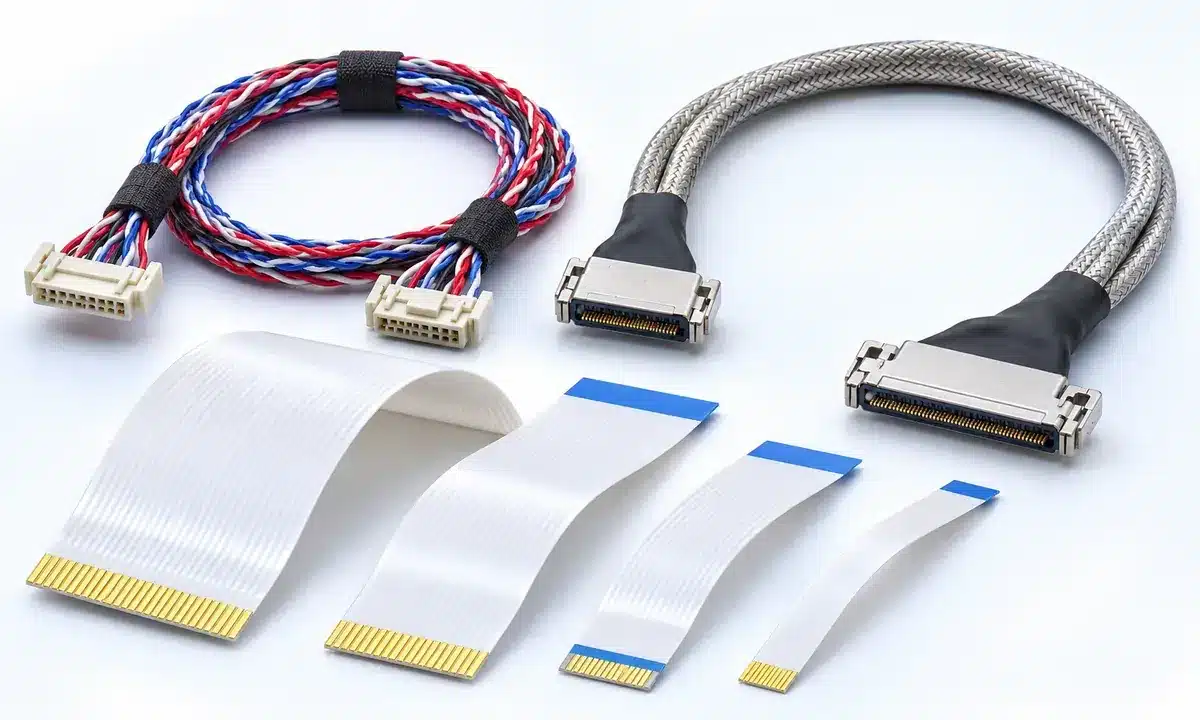
Both-end connector definition
Specify the connector at each end of the assembly.
Pin assignment and signals
Control pin assignment rather than connector appearance.
Length and routing
Define routing, shielding and the required cable length.
Assembly verification
Approve a tested sample against the released drawing.
Category Overview
LCD Display Cables Product Selection
Filter by Specifications
Technical Selection Guide
Both-end connector definition
Provide connector manufacturer references, pitch, pin count and mating orientation. Include photographs only as supporting evidence, not as a replacement for part numbers.
Pin assignment and signals
Confirm the net-by-net wiring, supply rails, grounds and signal pairs at both ends. Never assume matching pin counts imply matching electrical assignments.
Length and routing
Specify length, bend envelope, strain relief and enclosure path. Review shielding and high-speed signal behavior for the actual routing and interface.
Assembly verification
Agree continuity, insulation, pinout and cosmetic criteria appropriate to the cable. Validate the harness with the intended panel and controller before production.
Typical Applications
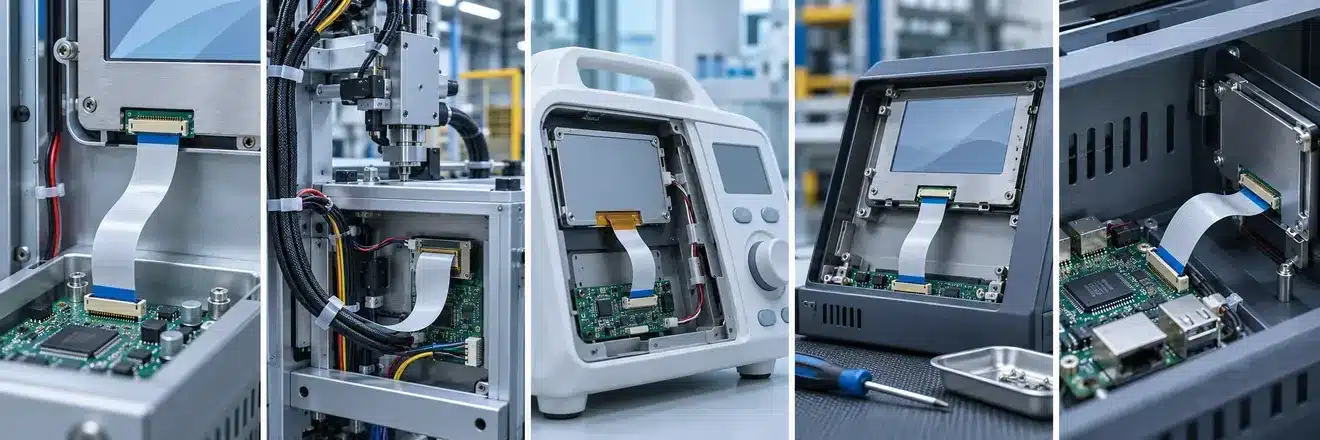
Panel-to-board links
Electrical connections between panels and matched controllers.
Industrial harnesses
Display wiring integrated into equipment assemblies.
Medical instruments
Interconnects reviewed for device-specific requirements.
Service replacements
Cables matched to documented original connections.
Embedded assemblies
Compact routing between host electronics and display modules.
LCD Display Cables FAQ
Can I identify an LCD cable by pin count alone?
Are LVDS, eDP and MIPI cables interchangeable?
What is the difference between same-side and opposite-side FFC contacts?
Can cable length be increased without changing the design?
What information is required for a custom harness?
Can shielding solve every display noise problem?
Which tests should be specified for cable procurement?
Why are brightness and resolution not cable filters?
What information should I include in an RFQ?
How are samples, MOQ and tooling charges confirmed?
Which technical and compliance documents should be reviewed?
How should overseas buyers plan delivery and continuing supply?
Related Categories
Discuss Your Custom Display Requirements
Share your target application, mechanical drawing, interface, operating conditions and volume plan. Our engineering team can review suitable configurations and sample requirements.