
Micro-LED

Micro-LED project evaluation for self-emissive display applications. Define the display architecture, active area, pixel density and integration requirements before discussing availability or a candidate configuration.
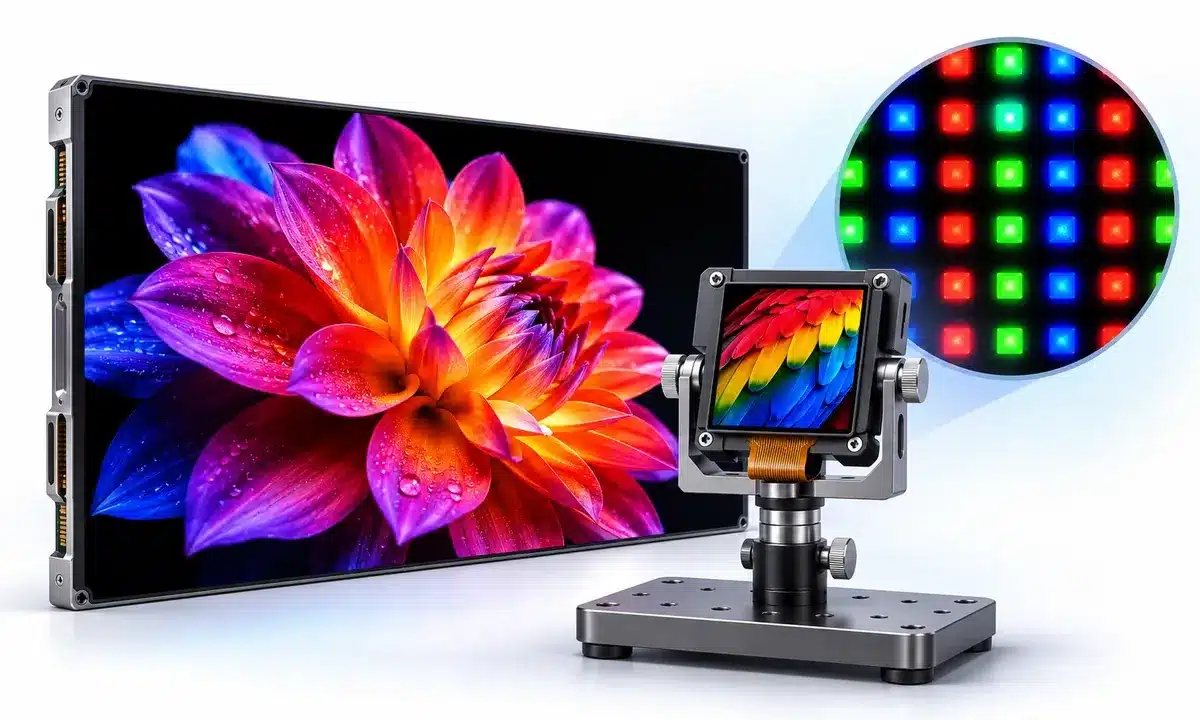
Micro-LED product family concept illustration

Architecture and scope

Define the emissive display architecture and supply scope.

Pitch and viewing geometry

Relate pixel pitch to viewing distance and content.

Drive and thermal design

Assess driver electronics and thermal integration.

Project readiness

Confirm development status before planning production.

Micro-LED product family concept illustration

Category Overview

Micro-LED uses an architecture distinct from an LCD with a Mini-LED backlight. Project requirements can differ substantially between compact modules, microdisplays and larger display assemblies. Procurement should identify the intended architecture, pixel pitch, drive electronics and integration scope first. Ask for configuration-specific specifications and availability rather than assuming every format is a standard stocked product. HuiSoar can review the project brief and identify which technical and sourcing questions require confirmation.

Micro-LED Product Selection

Filter by Specifications

Sort by:
0 Products Found
No matching products. Reset filters or contact our engineering team.

Technical Selection Guide

Use these four checks to compare micro-led for your equipment. Freeze the required configuration and verify the exact drawing, electrical specification and sample behavior before approving production.

Architecture and scope

State whether the requirement is a compact module, microdisplay or larger assembly. Separate self-emissive Micro-LED from LCD backlighting technologies.

Pitch and viewing geometry

Relate active area, pixel pitch and resolution to viewing distance and content. Confirm the proposed configuration rather than scaling a different technology by diagonal size.

Drive and thermal design

Review driver architecture, interface, power distribution and heat paths. Consider luminance uniformity and operating conditions together with the host system.

Project readiness

Request current technical documentation, sample status and production feasibility for the exact configuration. Align customization and supply expectations with confirmed project evidence.

Typical Applications
Micro-LED typical OEM application scenarios

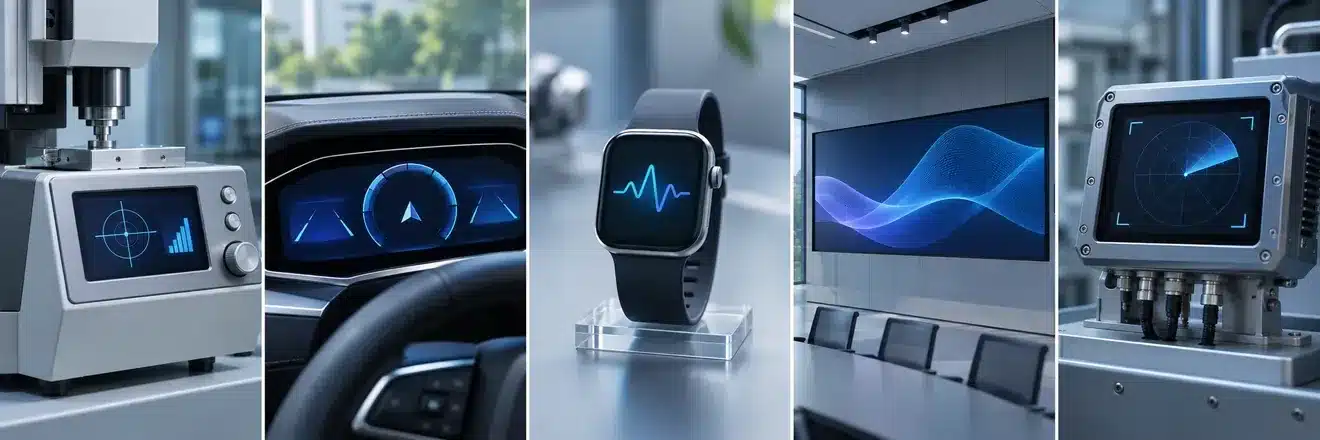
Precision instruments

Potential compact display applications requiring project review.

Vehicle interfaces

Display architectures assessed against vehicle-specific requirements.

Wearable concepts

Space-constrained concepts requiring module availability checks.

Professional visualization

High-quality visual systems with defined viewing geometry.

Specialized OEM devices

Custom integration projects evaluated individually.

Micro-LED FAQ

How does Micro-LED differ from Mini-LED?
Self-emissive Micro-LED and an LCD using Mini-LED backlighting are different display architectures. Identify which technology is required before comparing dimensions, contrast, drive electronics or commercial availability.
Is every Micro-LED size available as a standard module?
No universal availability should be assumed. Module format, architecture, resolution and development status vary. Submit a defined project specification and request confirmation of the exact candidate, sample status and production feasibility.
Is pixel pitch or diagonal size the main selection criterion?
Both matter, together with resolution and viewing geometry. Pixel pitch influences pixel density, while active area and viewing distance determine the practical visual requirement. State these requirements explicitly rather than relying on a diagonal measurement alone.
Can a Micro-LED module replace an LCD directly?
Different drive architectures and integration requirements generally require a full compatibility review. Check mechanics, optical layout, interface, power, control electronics and thermal design. Do not treat equal resolution or size as proof of interchangeability.
What should be checked about brightness and temperature?
Request sustained operating behavior for the proposed configuration and intended environment. Review electrical power, heat removal, dimming and uniformity. Avoid assuming that a technology-level brightness claim applies to every finished assembly.
Are controller and firmware requirements important?
Yes. The display drive architecture, host interface, initialization, calibration and control functions must be defined together. Confirm what electronics and software are included and which responsibilities remain with the equipment integrator.
Can touch or protective glass be added?
Integration feasibility depends on the proposed assembly and optical requirements. Specify the active area, cover material, mounting and touch behavior, then review optical loss, mechanical clearances and validation requirements with the candidate configuration.
How should a new Micro-LED project be qualified?
Use staged approval: technical feasibility, documented candidate configuration, evaluation sample and system validation. Establish acceptance criteria for optical, electrical and mechanical performance before treating a concept image or technology description as a production specification.
What information should I include in an RFQ?
For micro-led, provide the intended architecture, active area, pixel pitch or resolution, viewing distance, interface, operating environment and target production plan. Include sample and annual quantities, target schedule, destination and any mandatory validation requirements. This supports a configuration-specific quotation and identifies unresolved engineering items before purchasing.
How are samples, MOQ and tooling charges confirmed?
Sample availability, minimum order quantity, engineering charges and tooling depend on the selected configuration. Ask for these items separately in the quotation. Approve the sample, drawing revision and acceptance criteria before releasing a production purchase order.
Which technical and compliance documents should be reviewed?
Request the exact micro-led part number and revision, specification, mechanical drawing and relevant electrical information. Request applicable material declarations or test reports for that configuration; a category description or illustrative image is not evidence of certification.
How should overseas buyers plan delivery and continuing supply?
Confirm stock or production status, quoted lead time, packaging, shipping terms and required export documents before ordering. For recurring programs, discuss forecast volumes, revision control and change notification. Reconfirm availability when placing each order rather than assuming permanent supply.

Discuss Your Custom Display Requirements

Share your target application, mechanical drawing, interface, operating conditions and volume plan. Our engineering team can review suitable configurations and sample requirements.

Scroll to Top
Request Quote / Datasheet

Response within 12-24 hours. NDA available. Engineering support included.

Fields marked with an asterisk (*) are required.

Contact Information

Request Details