
~
~
~
~
~
~
TCG104SVLQAPNN-AN20-S 450g 16.7M SVGA Panel Kyocera
Model P/N
Size
Resolution
Brightness
Viewing Angle
Connector Type
Operating Temp
Overall(mm)
kyocera
TCG104SVLQAPNN-AN20-S
Brand
Panel Size (inch)
Model P/N
Resolution
Brightness (nits)
Viewing Angle
Contrast Ratio
Response Time
Overall (mm)
Active Area (mm)
Refresh Rate
Display Colors
Panel Type
Connector Type
Surface Treatment
Operating Temp
Touchscreen Type
Storage Temp
Work Mode
Pixel Format
Input Voltage (V)
Designed For
Product Details
Product Overview
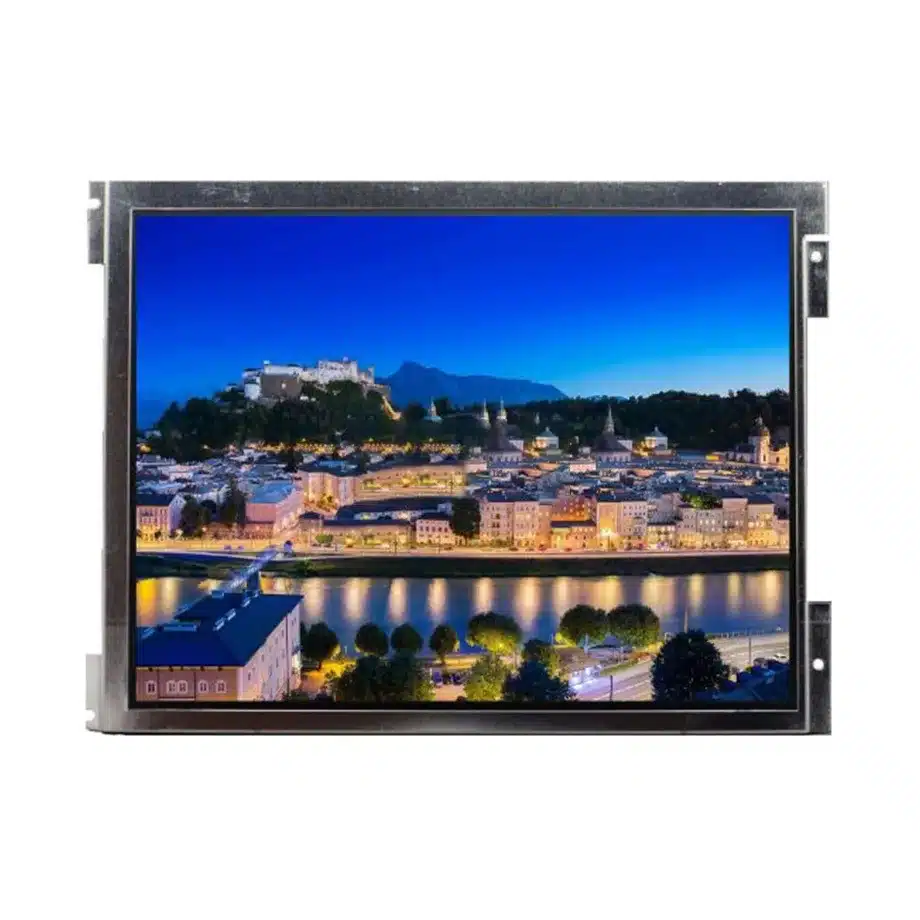
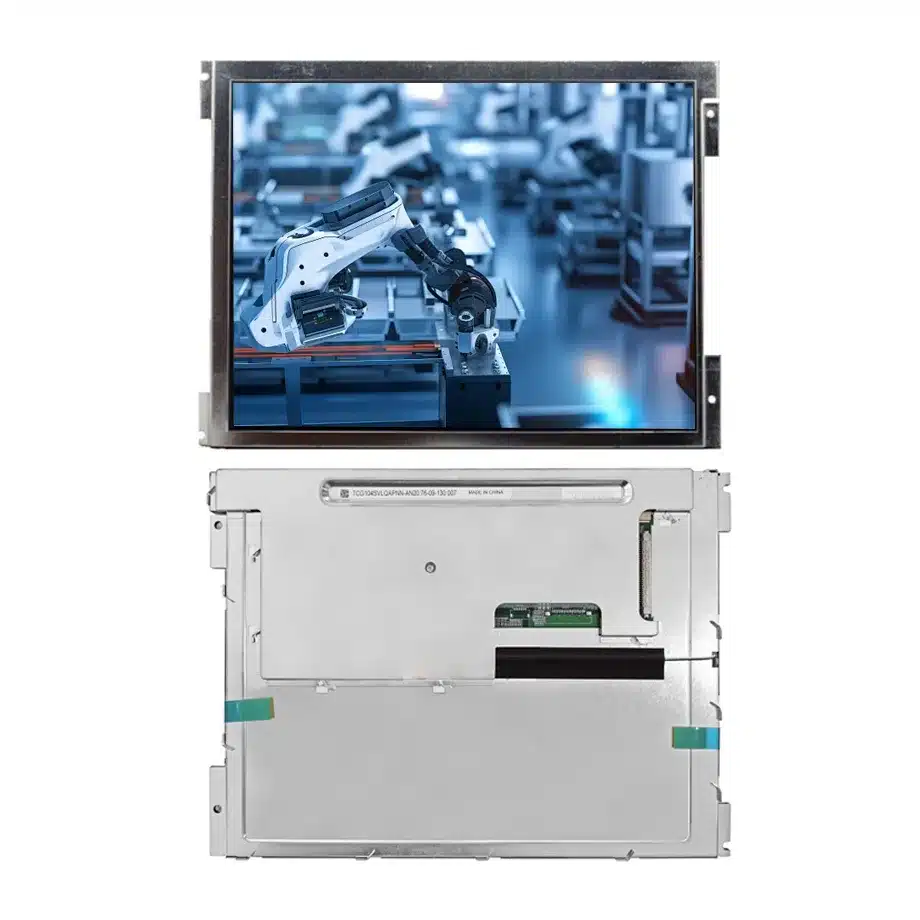
TCG104SVLQAPNN-AN20-S 450g 16.7M SVGA Panel is a 10.4-inch Kyocera a-Si TFT-LCD module for industrial embedded equipment. The user-supplied exact configuration uses 800(RGB)×600 SVGA resolution in a 4:3 aspect ratio, a 211.2 × 158.4 mm active area and a 243 × 185.1 × 8.5 mm outline. Typical module weight is 450 g. The surface is antiglare with 3H hard coating.
The locked optical specification is 500 cd/m² typical luminance, 800:1 typical contrast, 85/85/85/85 typical viewing and 16.7M colors. The panel operates in Advanced Wide View normally-black transmissive mode with a 20 ms typical Tr+Td response and 60 Hz refresh. A WLED backlight with integrated LED driver and 50,000-hour source-life reference is included. The module has no touch screen.
The signal interface is single-channel 8-bit LVDS through a 30-pin connector with a 3.3 V typical supply. Operating temperature is -20 to 70 °C and storage is -30 to 80 °C. The supplied exact-model reference supports industrial application and the model's WLED/LVDS architecture, while Kyocera's industrial display portfolio provides manufacturer context. Public pages for related or differently revised variants are not used to replace the current-run locked values.
Three Core Buyer Value Propositions
1. 16.7M-color 8-bit LVDS supports richer industrial graphics
Compared with older 6-bit SVGA modules, the supplied 16.7M-color capability and 8-bit LVDS path provide a stronger foundation for gradient-rich HMIs, image thumbnails, diagnostic graphics and modern UI assets. This does not make the panel a professional wide-gamut display, but it can reduce visible banding in industrial interfaces when the controller and content pipeline preserve the available color depth.
2. 85-degree four-direction viewing supports flexible operator placement
The Advanced Wide View configuration and 85/85/85/85 viewing target are useful where operators view a control surface from standing, seated or off-axis positions. The benefit is especially relevant in equipment that cannot guarantee a single eye position. Finished readability still depends on cover reflection, ambient light and UI contrast, so off-axis viewing should be reviewed in the actual enclosure.
3. -20 to 70 °C operation supports established industrial installations
The extended operating range directly supports industrial application screening. It is suitable for factory automation, test equipment and embedded terminals that need more environmental margin than office panels. The complete product must still qualify the controller, power supply, adhesives and any added front stack because the system cannot inherit the LCD's range automatically.
Key Specifications at a Glance
| Parameter | Confirmed value |
|---|---|
| Manufacturer / model | Kyocera TCG104SVLQAPNN-AN20-S |
| Display size | 10.4 inch |
| Panel type | a-Si TFT-LCD, LCM |
| Resolution | 800(RGB)×600, SVGA, 4:3 |
| Active area | 211.2 × 158.4 mm |
| Outline | 243 × 185.1 × 8.5 mm |
| Weight | 450 g typical |
| Brightness | 500 cd/m² typical |
| Contrast | 800:1 typical |
| Viewing | 85/85/85/85 typical |
| Response | 20 ms typical Tr+Td |
| Color | 16.7M |
| Display mode | Advanced Wide View, Normally Black, Transmissive |
| Refresh | 60 Hz |
| Interface | LVDS, 1 channel, 8-bit, 30-pin connector |
| Supply | 3.3 V typical |
| Backlight | WLED, 50K hours, integrated LED driver |
| Touch | Without touch screen |
| Operating / storage | -20 to 70 °C / -30 to 80 °C |
How Should the 8-Bit LVDS Path Be Qualified?
The panel uses one LVDS channel with 8-bit color signaling. TCG104SVLQAPNN-AN20-S 450g 16.7M SVGA Panel should be paired with the exact controller timing and pin map from Kyocera documentation or the approved source configuration. Verify differential pair order, clocking, grounds, panel enable and the 3.3 V rail rather than assuming another 30-pin LVDS cable is compatible.
Test native 800×600 at 60 Hz through cold start, power cycling and no-signal recovery. For image-rich HMIs, use gradient and photographic patterns to confirm that the controller outputs the intended color depth and does not fall back to a reduced-color mode.
Controller output depth should be explicit
A panel capable of 16.7M colors cannot improve a graphics pipeline that only generates lower-bit-depth output. Keep the controller configuration and firmware with the qualification record so the richer color capability survives production substitutions and software updates.
How Should 500 cd/m² Be Used in an Industrial HMI?
Five hundred cd/m² typical luminance is useful for factory floors, equipment rooms and other well-lit indoor environments. It should not be promoted automatically as sunlight readable because the current application evidence is Industrial, not Outdoor High Brightness. A cover window or added touch layer can materially change reflection and effective luminance.
Measure the finished HMI after warm-up under representative ambient light. If the enclosure includes a protective lens, evaluate black level and glare with that lens installed. A separate outdoor-use test is required before making direct-sun visibility claims.
What Does Advanced Wide View Add?
The supplied operating mode combines normally-black transmissive behavior with wide viewing. The 85-degree four-direction viewing values give engineers a concrete component target for shared workstations or machines approached from multiple angles. UI design still matters: low-contrast gray text or fine status symbols can become difficult to read even when the LCD itself maintains viewing-angle performance.
During first article review, inspect bright, dark and colored UI elements from the actual operator positions. If the equipment uses a thick cover lens or air gap, include that optical stack because it can introduce additional reflection or parallax.
How Should Same-Model Public Discrepancies Be Handled?
Public databases can show different values for the same model suffix, and Kyocera pages for nearby non-S variants can also differ. The current-run user values are locked production truth. Do not replace the 500-nit, 800:1, 450 g or 8.5 mm values with data from `TCG104SVLQAPNN-AN20` or another revision.
Procurement should confirm the exact -S label and supplier documentation during first article approval. If a later Kyocera notice establishes a configuration change, treat it as an explicit revision-control event rather than silently merging family specifications.
Where Does TCG104SVLQAPNN-AN20-S Fit Best?
The user application is Industrial. TCG104SVLQAPNN-AN20-S 450g 16.7M SVGA Panel fits factory HMIs, process-control terminals, test instruments and embedded equipment that need a 10.4-inch SVGA 4:3 display with strong viewing angles and extended-temperature capability. Its 8-bit color path can be particularly useful for newer graphical interfaces built on established SVGA mechanics.
The panel is non-touch. If touch is added, qualify the sensor and cover as a separate integration layer and recheck brightness, reflection, temperature range and mechanical fit. Inventory taxonomy should remain TFT LCD plus Industrial & Wide Temperature rather than classifying the base module as touch.
How Should a Discontinued Public Status Be Treated?
The supplied reference describes the exact -S model with a discontinued status. That is relevant sourcing context, but public status fields can be time-sensitive and should be verified with Kyocera or an authorized channel. It does not justify claims about remaining stock, last-time-buy quantities or guaranteed availability.
For an existing product, procurement should document approved alternatives only after engineering qualification. A non-S successor or replacement may differ in brightness, contrast, mechanics or interface details and cannot be adopted from model-family similarity alone.
How Should First-Article Approval Be Structured?
Record the exact TCG104SVLQAPNN-AN20-S identity, supplier documentation, production LVDS cable and controller. Verify 3.3 V power and native SVGA timing, then test power cycling, brightness control and no-signal recovery. Confirm 8-bit output with suitable gradient content.
Install the panel in the final enclosure and confirm the locked 243 × 185.1 × 8.5 mm envelope and 450 g typical mass. Measure luminance and inspect wide-angle readability after warm-up. Include representative hot and cold operation if the system depends on the extended temperature range.
How Should Incoming Lots Be Controlled?
Incoming inspection should verify the full -S suffix, 30-pin connector, module thickness and surface condition. Sample units should be tested with the approved controller for native SVGA, backlight operation and 16.7M-color output. Any proposed replacement should remain blocked until electrical, optical and mechanical differences are reviewed.
Because public lifecycle information indicates discontinuation, revision and supply verification is especially important. Keep sourcing facts separate from the technical product record and do not publish supplier stock or lead-time promises without current commercial evidence.
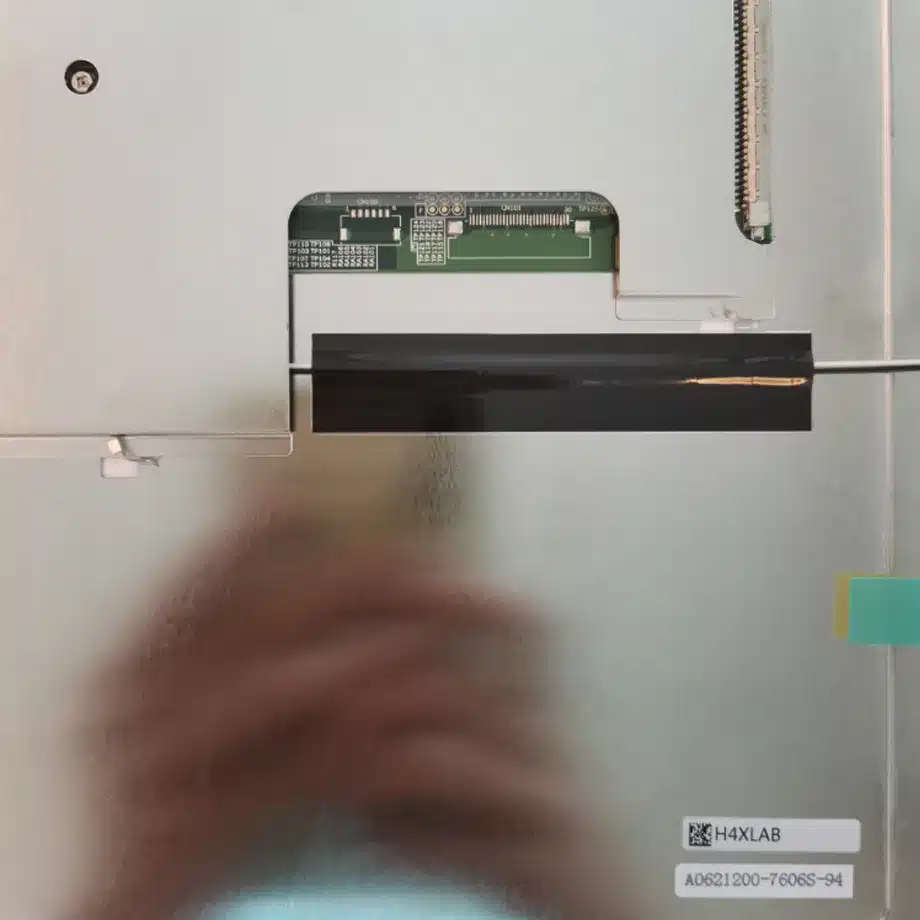
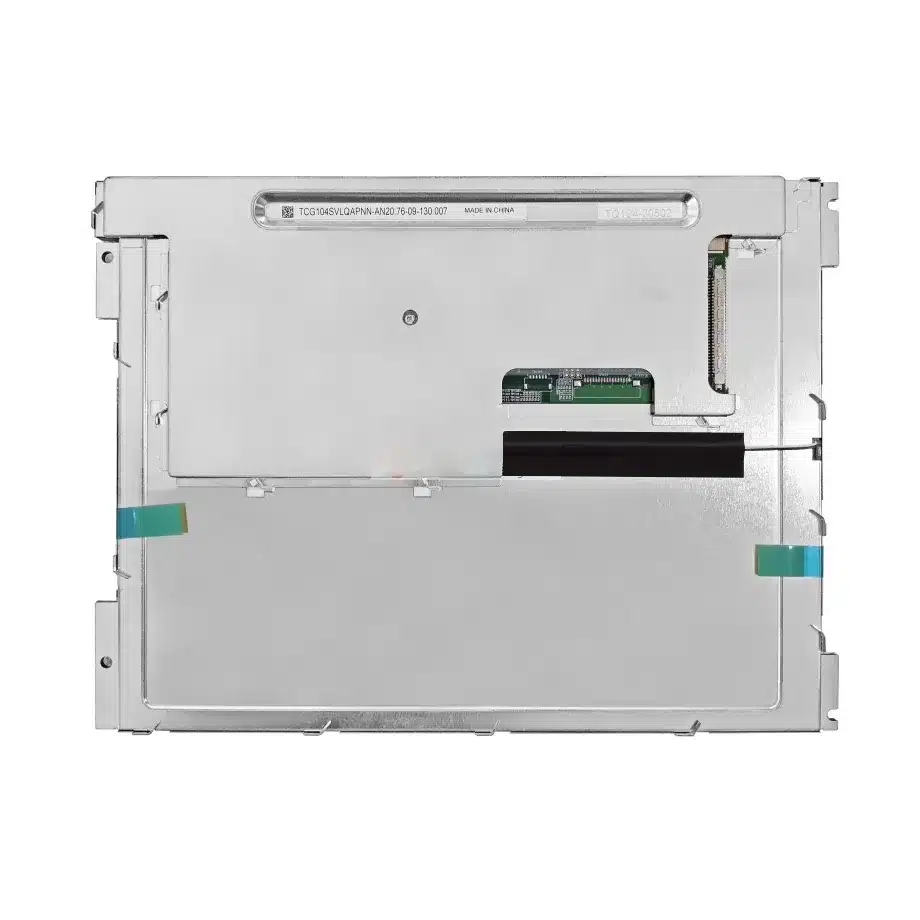
For service projects, keep the original -S panel label and rear-view photograph with the approved BOM. The suffix is part of the controlled identity, and it helps prevent a visually similar non-S part from entering production. This is particularly important when marketplace listings group several Kyocera family variants under one generic 10.4-inch SVGA description.
Document these identity checks before purchasing replacement inventory for field service.
Procurement Checklist
- Confirm exact TCG104SVLQAPNN-AN20-S identity, including the -S suffix.
- Preserve the locked 243 × 185.1 × 8.5 mm outline and 450 g typical mass.
- Verify one-channel 8-bit LVDS and the exact 30-pin pinout.
- Use 500 cd/m², 800:1 contrast and 16.7M colors as the current-run optical baseline.
- Validate -20 to 70 °C operation in the complete equipment.
- Do not import non-S family values into this record.
- Verify current lifecycle/supply status directly before procurement decisions.
- Qualify any replacement model independently.
TCG104SVLQAPNN-AN20-S 450g 16.7M SVGA Panel is a compact industrial SVGA panel with an 8-bit LVDS path, wide viewing and a slim locked mechanical package. Its sourcing value depends on preserving the exact -S configuration and separating technical qualification from time-sensitive lifecycle information.
Recommended: Same Size
(10.4")
Applications & Value of LCD Panel

- Fast sourcing with in-stock panels & cross-reference alternatives
- Stable supply chain with long-term availability
- Engineering-level support from panel to integration
- Custom solutions: cable, touch & optical bonding
- Strict quality control with IQC / OQC / aging test
- Full traceability system for quality assurance
- Complete technical documentation & drawings
- Compliance support: RoHS & certification files
