~
~
~
~
~
~
MV245FHB-NX1 Bare ADS Cell for Monitor Integration 24.5″ FHD BOE
Model P/N
Size
Resolution
Brightness
Viewing Angle
Connector Type
Operating Temp
Overall(mm)
boe
MV245FHB-NX1
Brand
Panel Size (inch)
Model P/N
Resolution
Viewing Angle
Contrast Ratio
Response Time
Overall (mm)
Active Area (mm)
Refresh Rate
Display Colors
Panel Type
Connector Type
Surface Treatment
Operating Temp
Touchscreen Type
Storage Temp
Work Mode
Pixel Format
Input Voltage (V)
Vibration Resistance
Designed For
Product Details
Product Overview
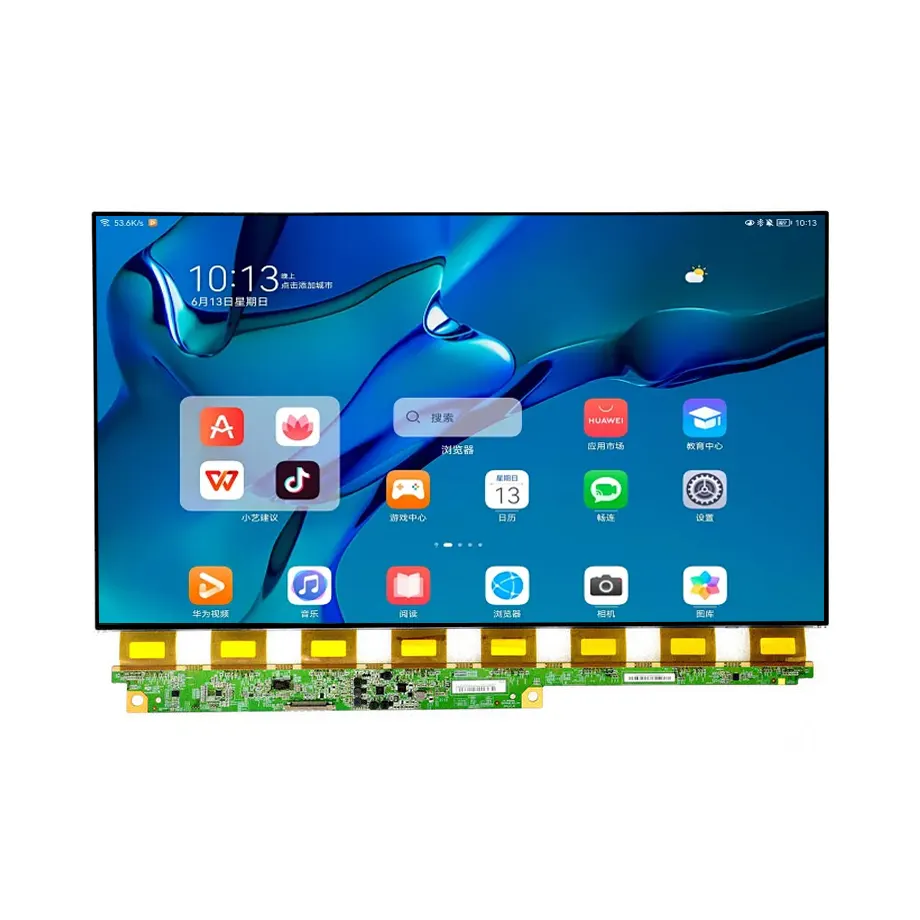
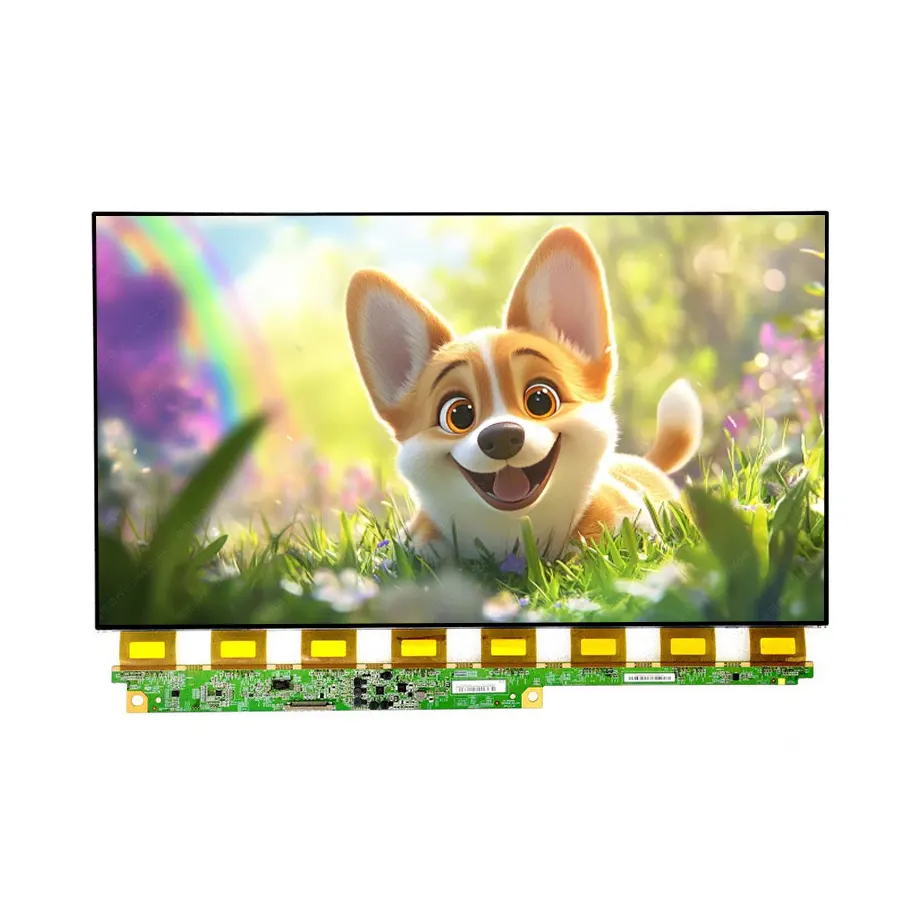
MV245FHB-NX1 Bare ADS Cell for Monitor Integration is a 24.5-inch BOE a-Si TFT-LCD CELL (FOB) intended for desktop-monitor integration. The cell uses a native 1920(RGB)×1080 FHD raster in a 16:9 format, ADS normally-black transmissive operation and a 75 Hz frame rate. Its confirmed active area is 543.744 × 302.616 mm inside a 551.944 × 313.216 × 1.32 mm cell outline. The optical data includes a 1100:1 typical contrast ratio, 89/89/89/89 typical viewing-angle values at CR≥10, 16.7M colors with 100% sRGB wording and an antiglare surface with 25% haze and 3H hard coating.
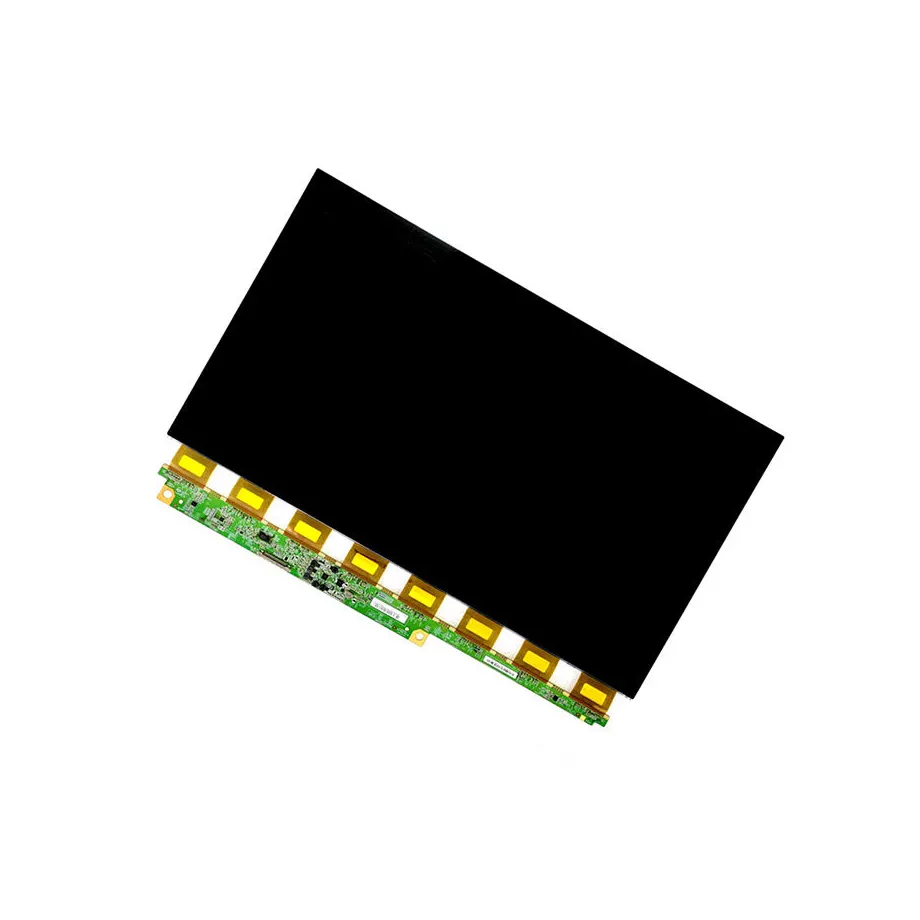
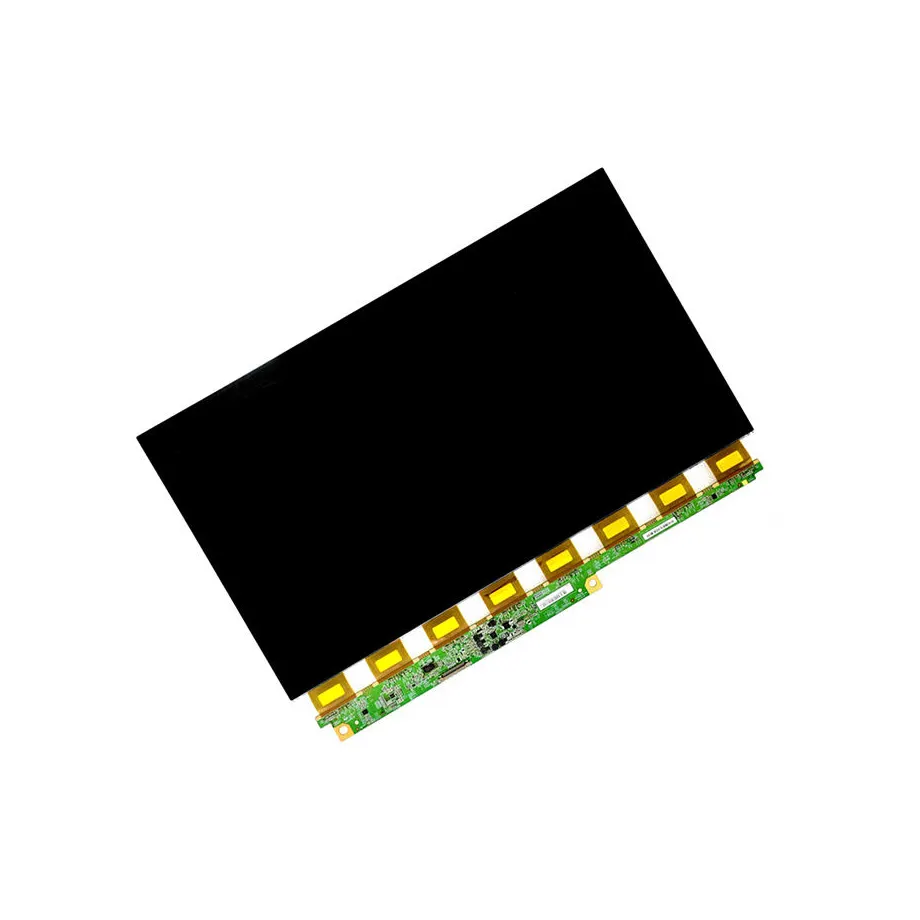
This product is a bare LCD cell, not an illuminated monitor module. The documented luminance is 0 cd/m² because no backlight is integrated, while transmissivity is 5.4% typical with polarizer. The system manufacturer must provide the backlight, optical films, LED driver, mechanical frame and thermal design. The native signal interface is dual-channel 8-bit LVDS through a 30-pin 0.5 mm connector with 12.0 V typical panel input. Those facts define the cell-side architecture but do not prove compatibility with an arbitrary scaler board or existing monitor chassis.
Three Core Buyer Value Propositions
1. Dual-channel LVDS gives controller teams a specific electrical qualification target
The interface is not merely “LVDS.” It is specified as LVDS with two channels and 8-bit data on a 30-pin 0.5 mm connector. That helps an engineering team screen controller boards, cable assemblies and timing resources before prototype build. The boundary remains exact-model implementation: channel mapping, connector pin assignment, clocking, cable orientation, power sequencing and panel timing must be verified from the controlled specification rather than inferred from another 24.5-inch FHD cell.
2. Bare-cell construction gives the monitor maker control over the illumination system
The 0 cd/m² panel luminance and 5.4% typical transmissivity make the product form explicit. A monitor platform can select its own LED spectrum, backlight topology, film stack and dimming strategy to meet the finished display target. That flexibility also transfers responsibility to the system. Final brightness, uniformity, color behavior, power consumption and thermal loading depend on the external backlight and optical stack, so none of those finished-monitor results should be claimed from the cell alone.
3. Confirmed FHD mechanics and sRGB wording support disciplined monitor qualification
The 551.944 × 313.216 × 1.32 mm outline, 543.744 × 302.616 mm active area and 100% sRGB wording provide concrete screening inputs for chassis and optical design. They help procurement compare candidate cells on more than diagonal size. The limits are equally important: mass remains unresolved, the complete mounting geometry still needs the current drawing, and 100% sRGB describes gamut coverage rather than guaranteed calibration accuracy or finished-monitor color error.
Key Specifications at a Glance
| Parameter | Confirmed value |
|---|---|
| Manufacturer / model | BOE MV245FHB-NX1 |
| Product form | a-Si TFT-LCD, CELL (FOB) |
| Display size | 24.5 inch |
| Native resolution | 1920(RGB)×1080 FHD, 16:9 |
| Active area | 543.744 × 302.616 mm |
| Outline | 551.944 × 313.216 × 1.32 mm |
| Brightness | 0 cd/m² — no integrated backlight |
| Display mode | ADS, Normally Black, Transmissive |
| Contrast ratio | 1100:1 typical |
| Viewing-angle values | 89/89/89/89 typical at CR≥10 |
| Response time | 14 ms typical G-to-G |
| Colors | 16.7M, 100% sRGB |
| Surface | Antiglare, Haze 25%, Hard coating 3H |
| Transmissivity | 5.4% typical with polarizer |
| Refresh rate | 75 Hz |
| Native interface | LVDS, 2 channels, 8-bit, 30-pin 0.5 mm connector |
| Panel input | 12.0 V typical |
| Touch | Without touch screen |
| Operating / storage | 0 to 50 °C / -20 to 60 °C |
Why is the luminance listed as 0 cd/m²?
The value reflects the component boundary rather than a defective display. MV245FHB-NX1 Bare ADS Cell for Monitor Integration is supplied without an integrated backlight, so the cell itself does not generate the white luminance expected from a finished desktop monitor. The useful optical input for the illumination design is the documented 5.4% typical transmissivity with polarizer. That value should be combined with the selected LED output, light-guide or direct-light architecture, reflector and optical films when the finished luminance budget is calculated.
A procurement team should therefore separate “cell brightness” from “monitor brightness.” A seller may describe a completed product using a target such as 250 or 300 nits, but that number belongs to the assembled optical system unless it is specifically documented for this exact bare cell configuration. Backlight current, thermal conditions and film efficiency influence both luminance and uniformity. Prototype measurement on the final stack is required before a system-level brightness claim is approved.
How should the dual-channel LVDS link be integrated?
Texas Instruments describes LVDS as low-voltage differential signaling and distinguishes the electrical signaling technology from higher-level display-interface implementations. Its LVDS technical overview is useful background for differential drivers, receivers and signal behavior. For this cell, however, the important procurement fact is the exact dual-channel 8-bit panel interface and its 30-pin connector; a generic LVDS-capable board is not automatically suitable.
Controller validation should cover the pixel clock and timing table, dual-channel mapping, bit order, connector pinout, cable length and impedance, grounding, 12.0 V panel supply and power-on/off sequence. If a monitor controller receives HDMI or DisplayPort from the user, those external ports remain system-board interfaces. The controller must still generate the correct native LVDS signaling for the cell. Avoid describing the panel as a native HDMI or DisplayPort device merely because the finished monitor exposes those ports.
What does 75 Hz change in an FHD monitor design?
A 75 Hz frame rate gives the controller a higher timing target than a conventional 60 Hz implementation, while the native pixel matrix remains 1920×1080. Source, scaler, timing logic and cable integrity should be tested together at the exact mode. A controller advertised as “FHD capable” can still be unsuitable if its firmware, LVDS mapping or pixel-clock limits do not support the required timing for this model.
The 14 ms typical G-to-G response-time figure is a separate panel transition metric. It should not be presented as total monitor input latency. Frame buffering, scaling, synchronization and source processing can add delay independently. For office or general desktop use, qualification should focus on stable image transport, acceptable motion behavior and the intended 75 Hz operating mode rather than using a single response-time number as a complete performance description.
Optical stack decisions: ADS, antiglare and sRGB
ADS normally-black transmissive operation is documented together with 89/89/89/89 typical viewing-angle values and 1100:1 typical contrast. BOE describes ADS Pro as one of its LCD technology directions and positions LCD products across monitor and laptop applications on its official LCD technology page. That manufacturer context is useful for understanding the broader technology family, but it does not add unlisted specifications or certifications to MV245FHB-NX1.
The antiglare surface is specified at 25% haze with 3H hard coating. Haze influences reflection diffusion and perceived fine detail, so any added cover plate or front protective layer should be evaluated as part of the complete optical stack. The 100% sRGB wording is a gamut target, not a factory-calibration guarantee. White point, gamma, uniformity and color error depend on backlight spectrum, electronics, calibration and production tolerances.
Mechanical design for a thin 24.5-inch cell
The 1.32 mm cell depth is much thinner than a completed monitor module because it excludes the backlight assembly, frame and controller electronics. The system structure must protect the long glass edges, maintain flatness and avoid local pressure that can disturb liquid-crystal uniformity. Use the current drawing to identify connector position, support zones, edge clearances and areas where clamping or adhesive pressure should be avoided.
The active area is 543.744 × 302.616 mm while the cell outline is 551.944 × 313.216 mm. These dimensions can be used to plan the visible aperture and initial chassis envelope, but the unresolved mass should remain blank rather than being copied from another BOE MV245 series panel. A production design should weigh an approved sample if cell mass is needed for transport, bracket or shock calculations.
Application fit for desktop monitor platforms
MV245FHB-NX1 Bare ADS Cell for Monitor Integration is documented for desktop-monitor use. The strongest fit is a monitor platform intentionally designed around a 24.5-inch FHD bare cell, external illumination system, dual-channel LVDS path and 75 Hz timing. Office displays, commercial desktop terminals and general monitor products can be considered when their requirements are consistent with these confirmed attributes, but no industrial grade, medical qualification or exact enclosure fit is implied.
Because the panel has no integrated touch function, an interactive monitor would need a separate touch sensor, controller, cover stack and mechanical design. Those additions can change reflections, thickness and optical performance. Likewise, the normal 0 to 50 °C operating range should not be promoted as wide-temperature qualification. Vertical-market claims should remain tied to project-specific evidence rather than inferred from the ADS technology or monitor form factor.
Procurement and engineering checklist
- Lock the exact BOE model MV245FHB-NX1 in the BOM and incoming inspection record.
- Confirm 1920×1080 native timing and 75 Hz operation on the production controller.
- Verify dual-channel 8-bit LVDS, the 30-pin 0.5 mm connector and the exact pin assignment.
- Design the external backlight around the 5.4% typical transmissivity and the target monitor luminance.
- Check the 551.944 × 313.216 × 1.32 mm outline, connector position and cell support zones from the current drawing.
- Validate antiglare behavior, 100% sRGB gamut wording and 1100:1 typical contrast in the completed optical stack.
- Keep panel mass blank until exact-model evidence or an approved-sample measurement is available.
- Confirm that the final product does not require an integrated touch layer.
- Request current revision and change-status information before volume purchase; current online production or stock information is not a guaranteed supply horizon.
For MV245FHB-NX1 Bare ADS Cell for Monitor Integration qualification, provide the target scaler or timing-controller architecture, LVDS cable design, backlight concept, mechanical drawing, finished luminance target, color acceptance limits and required quantity. Treat the cell as one component of the monitor subsystem and qualify every external optical and electrical element against the exact model before release.
Recommended: Same Size
(24.5")
Applications & Value of LCD Panel

- Fast sourcing with in-stock panels & cross-reference alternatives
- Stable supply chain with long-term availability
- Engineering-level support from panel to integration
- Custom solutions: cable, touch & optical bonding
- Strict quality control with IQC / OQC / aging test
- Full traceability system for quality assurance
- Complete technical documentation & drawings
- Compliance support: RoHS & certification files