Freya Yang
+86 18318948097
+852 62667476
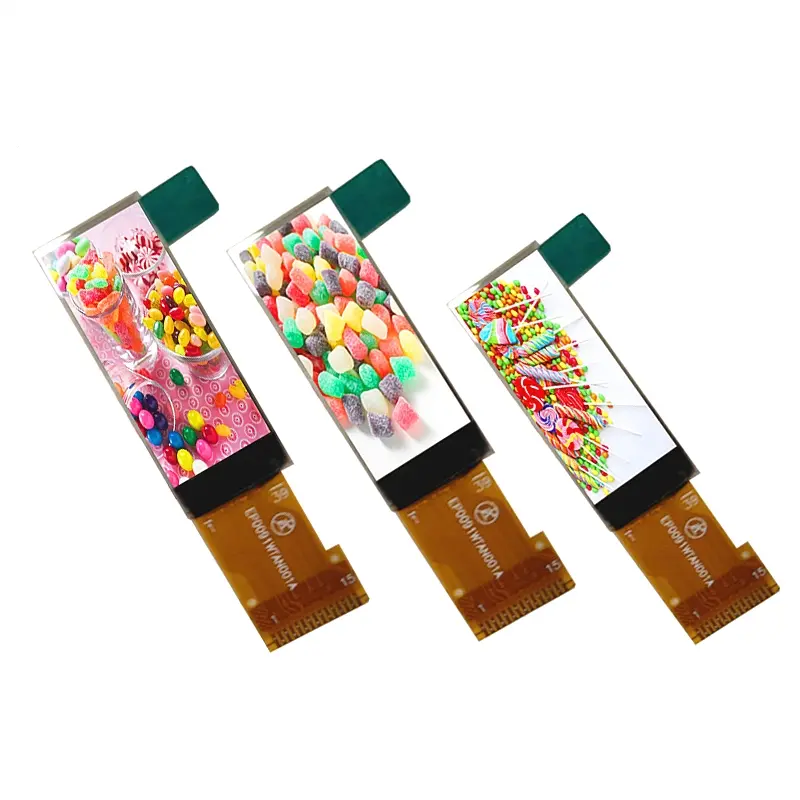
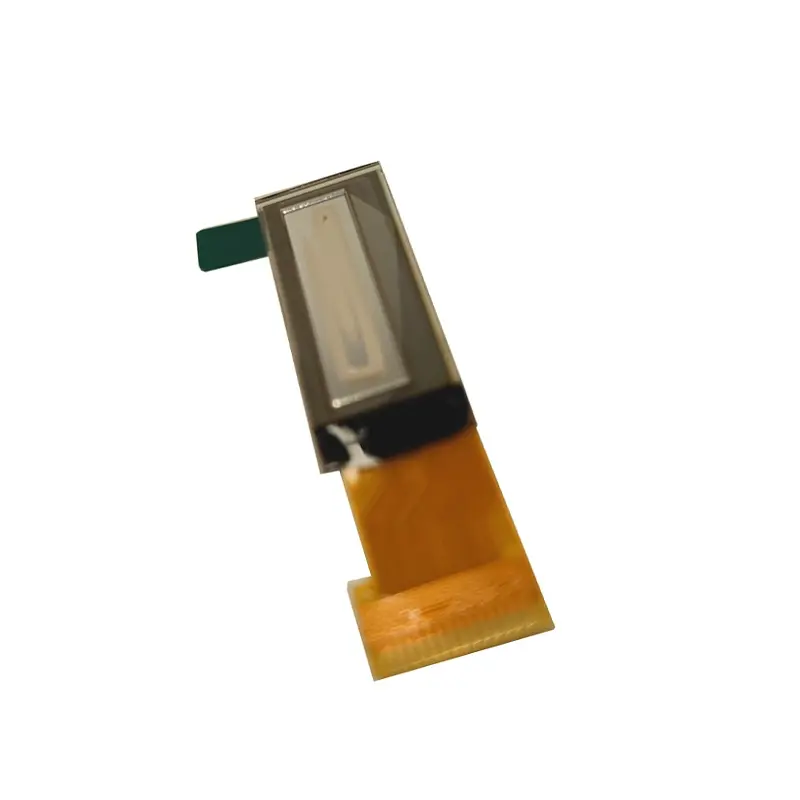
0.91 Inch Wearable OLED Module with SPI Interface
Model P/N
Size
Resolution
Brightness
Viewing Angle
Connector Type
Operating Temp
Overall(mm)
huisoar
HS0091WTAN003A
Brand
Panel Size (inch)
Model P/N
Resolution
Brightness (nits)
Viewing Angle
Contrast Ratio
Response Time
Overall (mm)
Active Area (mm)
Refresh Rate
Display Colors
Panel Type
Connector Type
Operating Temp
Touchscreen Type
Storage Temp
Work Mode
Input Voltage (V)
Designed For
Compact 128×32 PM-OLED Display for Wearables, Mini Terminals, and IoT Sensors
The 0.91 Inch Wearable OLED Module is a compact 128×32 PM-OLED display designed for wearable devices, mini portable terminals, smart sensors, and other space-constrained electronics. It combines a 0.91 inch monochrome display format, 180 nits brightness, SPI interface, 3.3 V input, 5000:1 typical contrast ratio, and 1 ms response time to support clear status readouts, icons, battery indicators, and sensor data in small embedded systems.
At a Glance: 0.91 Inch PM-OLED Display Highlights
- 0.91 inch PM-OLED module designed for wearable devices, mini terminals, and compact IoT sensor displays.
- 128 × 32 dot matrix resolution supports short text, icons, status values, and compact interface graphics.
- 180 nits brightness provides readable monochrome output for indoor and moderate ambient-light use.
- SPI interface supports simplified signal routing for small embedded systems and wearable controller boards.
- 3.3 V input aligns with common low-voltage wearable and portable electronics architectures.
- 5000:1 typical contrast ratio and 1 ms response time help small characters and icons remain visually distinct.
- Touchscreen-free design supports projects that need a simple, compact, low-complexity display interface.
Product Overview of the 0.91 Inch Wearable OLED Module
The 0.91 Inch Wearable OLED Module solves the display-space challenge in compact electronics by offering a narrow, lightweight, monochrome PM-OLED screen for embedded readout applications. Its 128 × 32 resolution and 0.91 inch size make it suitable for smart watches, fitness trackers, compact sensor nodes, handheld mini terminals, small data loggers, and portable electronic devices that need a clear display but cannot accommodate a larger TFT or LCD panel.
For B2B buyers, this module is most relevant when the project requires small size, stable SPI communication, simple visual output, and low-voltage integration. The PM-OLED self-luminous display structure helps eliminate the need for a conventional LCD backlight layer, which is valuable in ultra-compact enclosures where thickness, cable routing, and battery planning are important.
This product should be evaluated as a compact embedded display component rather than a full standalone screen system. Engineers should confirm the mechanical drawing, pin definition, controller compatibility, cable plan, display content requirements, operating environment, and sample validation results before moving from prototype to batch procurement.
Key Features of the 0.91 Inch Wearable OLED Module
| Key Feature | B2B Value |
|---|---|
| 0.91 inch PM-OLED form factor | Fits wearable devices, mini terminals, smart sensors, and compact embedded housings. |
| 128 × 32 resolution | Supports essential data such as time, status, battery level, step count, alerts, and sensor values. |
| 180 nits brightness | Provides balanced visibility for indoor and moderate ambient-light display use. |
| SPI interface | Simplifies signal wiring for space-constrained embedded electronics and wearable controllers. |
| 3.3 V input | Supports common low-voltage system architectures used in portable electronics. |
| 5000:1 typical contrast ratio | Improves readability of monochrome text and icons on a very small display area. |
| 1 ms response time | Helps status changes and simple interface updates appear responsive. |
| No-touch configuration | Reduces integration complexity when the device only needs a readout or indicator display. |
Technical Specifications of the Compact SPI OLED Module
| Specification | Value |
|---|---|
| Product Type | Wearable Mini OLED Module |
| Display Size | 0.91 inch |
| Display Technology | PM-OLED / OLED |
| Resolution | 128 × 32 |
| Brightness | 180 nits |
| Interface | SPI |
| Active Area | 22.38 × 5.58 mm |
| Overall Size | 30 × 11.5 × 1.66 mm |
| Input Voltage | 3.3 V |
| Operating Temperature | -40°C to 70°C |
These specifications help engineers evaluate whether the display can fit the target enclosure, match the control board, and show the required content within a 128 × 32 monochrome layout. The overall size and active area are especially important for wearable housings, while SPI and 3.3 V input should be checked against the selected MCU, driver circuit, FPC layout, and firmware plan.
Why Choose This Compact SPI OLED Module?
This compact SPI OLED module is suitable for projects that need a small, efficient, and readable display rather than a large interactive screen. The combination of PM-OLED technology, 128 × 32 resolution, 180 nits brightness, and SPI interface makes it practical for simple data readouts where enclosure space and power architecture matter.
0.91 Inch 128×32 Form Factor for Mini Wearable Displays
The 0.91 inch form factor is valuable when the display must fit into a narrow device body. Fitness trackers, smart bracelets, smart jewelry, and compact status modules often require a display area that can show numbers, icons, and short messages without increasing the product size. The 128 × 32 resolution gives enough dot matrix structure for basic UI elements while keeping the display compact.
Compared with larger display modules, this format is more appropriate for products where the user only needs essential information. For example, a wearable device may need to show heart-rate status, step count, battery state, connection status, or short notification symbols. A small monochrome OLED display can support that information without forcing the industrial designer to enlarge the enclosure.
SPI Interface and 3.3 V Input for Embedded Electronics
SPI integration is useful for compact embedded systems because it supports a straightforward display-control path with fewer mechanical and electrical complications than many larger display interfaces. For wearable and mini terminal projects, the interface decision affects PCB layout, FPC routing, firmware development, connector placement, and production testing.
The 3.3 V input is also relevant for portable electronics because many wearable control boards and sensor devices use low-voltage architectures. Engineering teams should still confirm the exact pinout, drive IC requirements, firmware library, and display initialization sequence before finalizing the control-board design.
Display Performance of the Mini OLED Display for Wearable Readability
The mini OLED display supports clear monochrome readout by combining a self-luminous PM-OLED structure with high contrast and fast response. This performance profile is most valuable when users need to read essential data quickly from a small device face.
180 Nits Brightness for Indoor and Moderate Ambient-Light Readability
The 180 nits brightness level is appropriate for many wearable and portable electronics used indoors or in moderate ambient-light environments. For a small screen, brightness must be evaluated together with content size, contrast, viewing distance, cover material, and viewing angle. Engineers should test the actual UI design on a sample module because tiny fonts, thin icons, and low-contrast graphics may affect readability even when panel brightness is confirmed.
For outdoor-facing or direct-sunlight applications, system-level evaluation is recommended. Cover glass reflection, enclosure shadowing, user viewing angle, and firmware contrast design can all influence real-world readability. The module should not be described as a direct-sunlight display unless the final system is tested for that condition.
5000:1 Contrast and 1 ms Response for Small Text and Icons
The 5000:1 typical contrast ratio helps the display separate lit pixels from the dark background, which is important for small characters and compact icons. In wearable products, the display often shows only a few data fields at one time, so crisp contrast can improve quick recognition of status values and symbols.
The 1 ms response time supports responsive changes for simple display updates, such as notification icons, status transitions, menu indicators, or sensor readings. The final user experience still depends on MCU performance, firmware refresh strategy, content design, and display driver integration.
Wide Viewing Angle for Wrist-Worn and Handheld Devices
The 80°/80°/80°/80° viewing angle supports flexible viewing in wrist-worn and handheld scenarios. Users may glance at a smart bracelet, mini terminal, or portable sensor from different angles rather than holding the device directly in front of their eyes. A wide viewing angle helps maintain readable monochrome output across typical daily-use positions.
For curved enclosures, protective covers, or recessed mechanical structures, the viewing angle should be reviewed with the final industrial design. Mechanical lips, cover glass reflections, and deep installation positions can reduce practical visibility even when the module-level viewing angle is suitable.
Integration and Mounting Options for SPI Embedded OLED Displays
SPI embedded OLED displays should be integrated through coordinated review of the interface, power input, mechanical drawing, cable path, and enclosure structure. This module is not just a visual component; it must fit electrically and mechanically into a compact device system.
SPI Driver Board and Control Board Integration
The SPI interface should be matched with the project MCU, driver IC support, firmware library, and connector design. If the project uses a wearable controller platform, engineers should confirm communication timing, initialization commands, display addressing, and the number of available GPIO or SPI bus resources.
For new product development, sample validation should include display startup, sleep behavior, refresh logic, brightness setting, and long-duration operation under expected device power modes. This is especially important for battery-powered products where display behavior can affect runtime and user experience.
Mechanical Mounting, Enclosure Space, and Cable Planning
The confirmed overall size of 30 × 11.5 × 1.66 mm makes mechanical drawing review essential. The display area, bezel allowance, adhesive area, FPC bend radius, connector location, and housing clearance should be checked before tooling or enclosure finalization.
Wearable electronics often have curved or narrow housings. Even a compact OLED module can create integration issues if the display window, cover glass, internal ribs, battery position, or PCB stack conflicts with the display module. Early mechanical review helps reduce redesign risk.
Power, Thermal, and System-Level Review
The 3.3 V input should be reviewed with the full power architecture, including battery, charging circuit, regulator, MCU, sensors, and wireless modules. PM-OLED display behavior depends on active pixel usage, content design, and firmware operation, so final power consumption should be measured in the real device.
Thermal planning should also be based on the final enclosure and application. The module has a confirmed operating temperature range of -40°C to 70°C, but the complete device may have additional constraints from the battery, housing material, PCB components, or seal design.
Recommended Applications for Wearable and Mini Terminal OLED Displays
Wearable and mini terminal OLED displays are best used where compact size, clear status readout, and simple embedded integration are more important than full-color graphics or touch interaction. This module is designed for practical information display in small electronic devices.
Fitness Trackers and Smart Bracelets with Limited Display Space
Fitness trackers and smart bracelets often need to show step count, time, battery state, heart-rate status, Bluetooth connection, and simple icons within a very small viewing area. The 0.91 inch OLED format is appropriate for these devices because it supports essential monochrome information without requiring a large display window.
IoT Sensor Nodes Needing Local Status Readout
IoT sensors and compact monitoring devices may need a local screen for readings, configuration state, battery status, or wireless connection indicators. A 128 × 32 SPI OLED module can provide quick visual feedback without adding the complexity of a larger display interface. Engineers should confirm firmware content layout and enclosure viewing angle during sample testing.
Portable Data Loggers and Mini Electronic Terminals
Portable terminals and data loggers often require a narrow display for values, menu indicators, operating mode, or alert messages. This mini OLED display can support these readout tasks where the system does not require touch control or full-color graphics. Its compact size helps preserve internal space for batteries, sensors, buttons, and communication modules.
Customization Options for Mini OLED Module Projects
Mini OLED module projects can be reviewed for interface adaptation, cable planning, cover glass selection, logo or packaging needs, and mechanical integration support. Confirmed product data should remain the baseline, while project-specific options should be evaluated according to the target application and enclosure design.
For wearable and portable electronics, common project review items include FPC direction, connector definition, control-board compatibility, display window size, protective cover requirements, and packaging requirements. If a project requires touch interaction, anti-glare surface treatment, optical bonding, waterproof enclosure protection, or custom housing support, these should be treated as project-evaluation items rather than default module specifications.
Procurement teams can also request sample validation before mass production. Sample evaluation should verify display readability, SPI communication, power behavior, mechanical fit, operating environment, and final UI content on the actual device platform.
Procurement and Engineering Checklist for OLED Module Selection
A successful OLED module selection should confirm both datasheet parameters and real system fit before bulk ordering. Use the following checklist to reduce redesign risk during wearable, mini terminal, or IoT device development.
- Confirm the visible content requirement: decide whether 128 × 32 resolution is enough for text, icons, numbers, or menu states.
- Review the mechanical drawing: check the 30 × 11.5 × 1.66 mm outline, active area, display window, FPC routing, and enclosure clearance.
- Match the SPI interface: confirm pin definition, MCU compatibility, firmware support, and communication timing.
- Validate the 3.3 V input: review the power rail, regulator capacity, battery architecture, and display sleep behavior.
- Test brightness in the target environment: evaluate indoor, shaded outdoor, or device-specific viewing conditions with real UI content.
- Confirm operating temperature requirements: compare the -40°C to 70°C module range with the final device and battery constraints.
- Review cover and touch requirements: decide whether the project needs only a display, or also protective cover glass, touch input, bonding, or surface treatment.
- Plan sample testing before mass production: verify display startup, long-duration operation, readability, mechanical fit, and packaging requirements.
FAQ
About 0.91 Inch Wearable OLED Module
What is a 0.91 Inch Wearable OLED Module used for?
Is the 128 × 32 resolution enough for wearable devices?
Does this mini OLED module support SPI integration?
Is this OLED module suitable for battery-powered devices?
Can this display be used outdoors?
Does the module include a touchscreen?
What should buyers provide for a sample quotation?
Can the module be customized for different wearable projects?
What is the typical lead time for custom display modules with specific interface requirements?
Lead time for custom display modules depends on factors such as interface type, quantity, and current production schedule. Custom configurations or larger orders may require longer lead times. Since
Do you offer displays with high refresh rates (e.g., 120Hz) for smooth graphics in transportation information systems?
The HS0091WTAN003A OLED module has a standard refresh rate of 60 Hz, which is suitable for most wearable and IoT applications. For transportation information systems requiring high refresh rates like 120 Hz for smooth graphics, this module may not meet those requirements. We recommend confirming your specific refresh rate needs with our engineering team. If 120 Hz is essential, we can explore custom options or suggest alternative display modules that support higher refresh rates.
Freya Yang
+86 18318948097