Freya Yang
+86 18318948097
+852 62667476
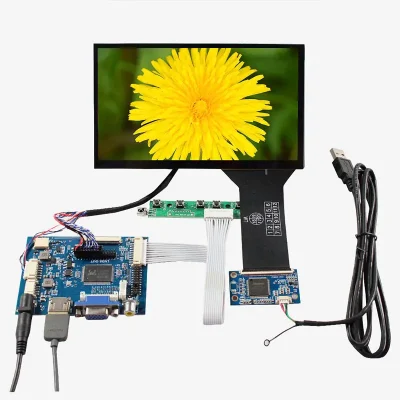
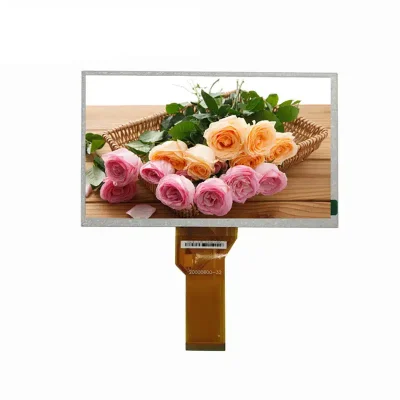
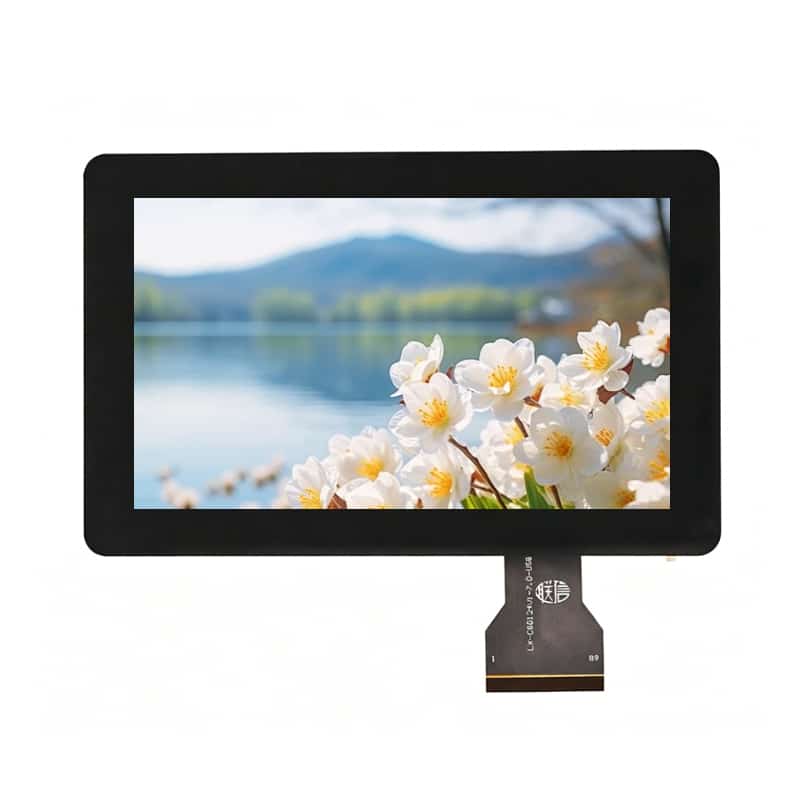
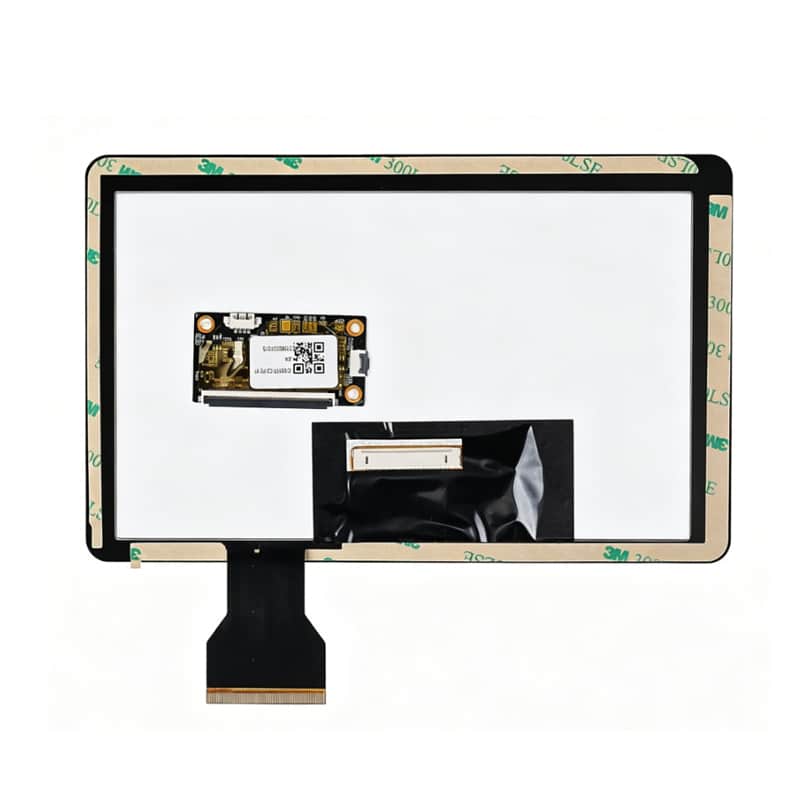
7 Inch LVDS Touch LCD Module with USB PCAP for Industrial Control


Model P/N
Size
Resolution
Brightness
Viewing Angle
Connector Type
Operating Temp
Overall(mm)
huisoar
HS070R21B01-T01
Brand
Panel Size (inch)
Model P/N
Resolution
Brightness (nits)
Viewing Angle
Contrast Ratio
Response Time
Overall (mm)
Active Area (mm)
Refresh Rate
Bezel Opening
Display Colors
Panel Type
Connector Type
Surface Treatment
Operating Temp
Touchscreen Type
Storage Temp
Work Mode
Pixel Format
Input Voltage (V)
Touch Interface
Control Type
Weight (g)
Designed For
1024×600 IPS TFT Display with LVDS Signal Input and 10-Point Capacitive Touch
The 7 Inch LVDS Touch LCD Module is a 1024×600 IPS TFT display solution for embedded HMI, industrial control panels, smart terminals, POS equipment, and interactive OEM devices. It combines LVDS 6/8-bit signal input, a 7.0 inch normally black IPS panel, 350 cd/m² typical luminance, 85° all-direction viewing, and a USB/I2C projected capacitive touch panel with up to 10 touch points. This makes it suitable for compact systems that need stable display input, responsive touch control, and practical customization support.
At a Glance: 7 Inch IPS LVDS Touch Display Highlights
- 7.0 inch IPS TFT LCD module with 1024 × 600 resolution for embedded GUI and HMI layouts.
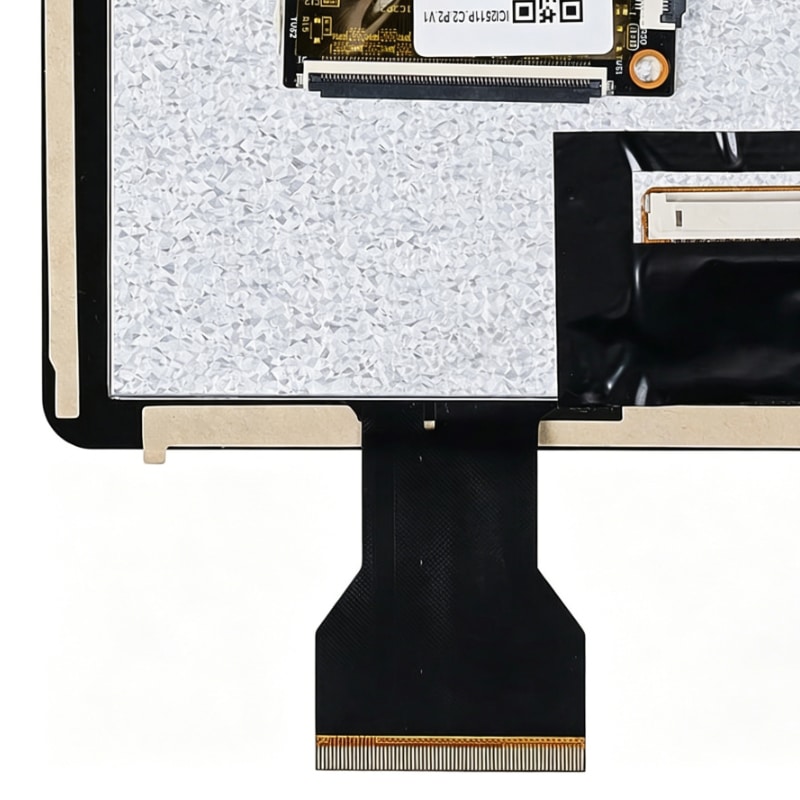
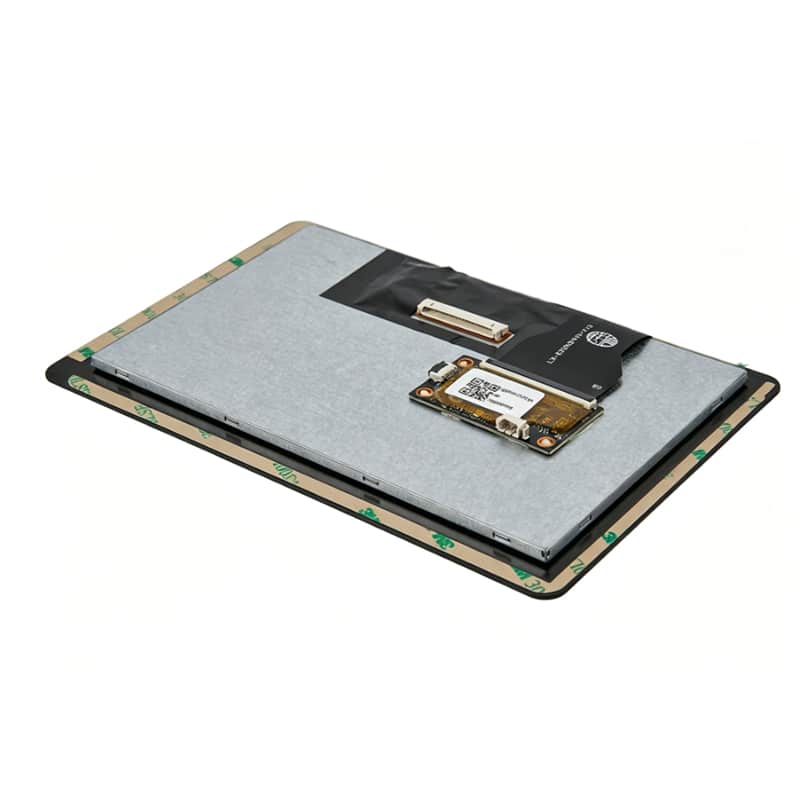
- LVDS 6/8-bit interface through FPC 20 pins supports stable display signal integration.
- USB and I2C capacitive touch interfaces give engineers flexibility for controller-board design.
- Projected capacitive touch panel supports 10 touch points for swipe, zoom, and multi-gesture operation.
- 350 cd/m² typical brightness supports indoor industrial, commercial, and smart terminal interfaces.
- G+G touch structure, ≥85% transparency, and ≥6H surface hardness support durable interactive use.
- -20°C to +70°C operating temperature range supports many embedded equipment environments.
Product Overview of the 7 Inch LVDS Touch LCD Module
The 7 Inch LVDS Touch LCD Module provides a compact interactive display platform for OEM systems that need both stable visual output and capacitive touch input. Its 1024×600 resolution gives enough pixel density for menus, dashboards, status panels, icons, and control interfaces, while the 7.0 inch size keeps the module practical for compact equipment housings.
This module is especially relevant for engineers building industrial HMIs, smart home control panels, POS terminals, portable devices, factory automation controllers, and other embedded products where the display must connect cleanly with a host board. The LVDS interface handles the TFT display signal, while the projected capacitive touch panel can be integrated through USB or I2C depending on the hardware architecture.
For procurement teams, the main value is the combination of display, touch, and customization-ready integration in one module class. Buyers should still confirm the mechanical drawing, LVDS mapping, FPC connector, touch interface routing, cover requirements, brightness target, operating environment, and sample test results before final approval for production.
Key Features of the 7 Inch LVDS Touch LCD Module
| Key Feature | B2B Value |
|---|---|
| 7.0 inch IPS TFT display | Provides a practical screen size for compact HMI, smart terminal, and equipment-control interfaces. |
| 1024 × 600 resolution | Supports clear menus, icons, data fields, dashboard layouts, and embedded GUI content. |
| LVDS 6/8-bit interface | Helps engineers integrate the display with embedded boards that require stable TFT signal transmission. |
| USB / I2C PCAP touch | Gives developers flexibility when selecting host controller, touch firmware, and system architecture. |
| 10-point capacitive touch | Supports modern gestures such as swipe, zoom, and multi-finger input for interactive systems. |
| IPS normally black mode | Improves off-axis viewing and visual consistency compared with narrower viewing technologies. |
| 350 cd/m² typical luminance | Supports indoor and controlled-light use for industrial, commercial, and smart device panels. |
| G+G touch structure with ≥6H hardness | Supports durable front-surface interaction in equipment and terminal environments. |
Technical Specifications of the 7 Inch IPS LVDS TFT Touch Module
| Specification | Value |
|---|---|
| Product Type | 7 Inch IPS LVDS TFT LCD Touch Module |
| Display Size | 7.0 inch |
| Resolution | 1024 × 600 |
| Display Mode | IPS, Normally Black, Transmissive TFT |
| Brightness | 350 cd/m² (Typ.) |
| Display Interface | LVDS 6/8-bit, FPC 20 pins |
| Touch Type | Projected Capacitive Touch Screen |
| Touch Interface | USB, I2C |
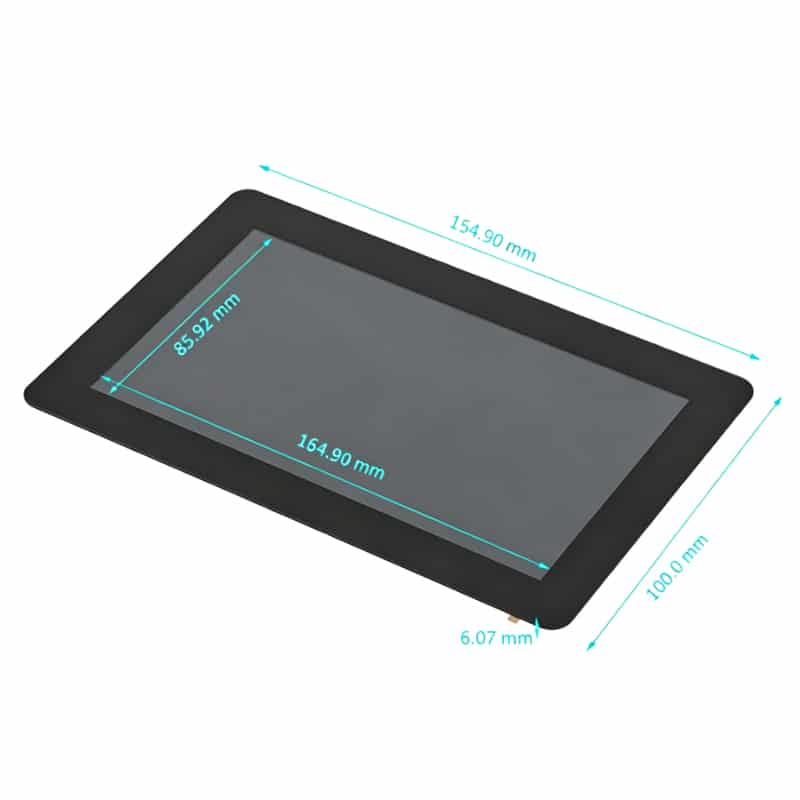
| Module Size | 164.9(W) × 100(H) × 6.07(T) mm |
| Operating Temperature | -20°C to +70°C |
These specifications should be reviewed together rather than separately. LVDS compatibility affects the host-board design, the USB/I2C touch interface affects firmware and connector routing, and the 164.9 × 100 × 6.07 mm module size affects enclosure planning, cover glass alignment, and installation clearance.
Why Choose This 7 Inch IPS LVDS TFT Touch Module?
This 7 inch IPS LVDS TFT touch module is useful when a project needs a balanced combination of display quality, touch control, and embedded-system compatibility. It is not only a bare panel; it is a display-and-touch component for OEM equipment that needs a practical screen size, wide viewing, and controller-board integration flexibility.
1024×600 IPS Resolution for Embedded HMI Layouts
The 1024×600 resolution is a practical match for many 7 inch embedded interfaces because it supports text, icons, controls, status bars, menu panels, and basic dashboard layouts without requiring a larger display footprint. For industrial HMI and smart terminal products, this resolution can provide a clear user interface while keeping PCB, housing, and front-panel design compact.
The IPS normally black display mode supports wide viewing and stable image appearance when operators view the screen from different angles. This is useful in control panels, handheld devices, desktop terminals, and equipment interfaces where users may not always face the display directly.
LVDS Signal and USB PCAP Touch for System Design
The LVDS display interface is valuable for embedded systems that need stable display signal transmission and a defined interface path. The module uses LVDS 6/8-bit with FPC 20 pins, so engineers should confirm signal mapping, connector specification, cable length, and host-board support during design review.
The projected capacitive touch panel supports USB and I2C interfaces, which gives hardware teams more flexibility. USB can simplify integration for some embedded platforms, while I2C may be preferred when the system architecture requires a touch controller connection through a compact internal bus. The correct choice depends on the host board, firmware environment, connector strategy, and system-level EMC planning.
Display Performance of the 7 Inch IPS Touch Display for HMI Interfaces
The 7 inch IPS touch display supports readable indoor HMI operation by combining 350 cd/m² luminance, 500:1 typical contrast, wide viewing, and a transmissive TFT structure. These parameters make it suitable for controlled-light industrial and commercial environments where touch interaction and visual clarity are both required.
350 cd/m² Brightness for Indoor Equipment and Smart Terminals
The 350 cd/m² typical brightness is suitable for many indoor equipment panels, POS terminals, smart home screens, and embedded control interfaces. Brightness should be evaluated with the final cover glass, bonding plan, UI color palette, viewing distance, and installation angle.
For window-facing, outdoor, or high ambient-light applications, brightness, anti-glare cover, optical bonding, enclosure position, and thermal design should be reviewed together. The module should not be positioned as a sunlight-readable display unless the final system configuration is tested for that environment.
85° Viewing Angle and Normally Black IPS Display Mode
The 85/85/85/85 typical viewing angle supports flexible installation in equipment panels and terminals. Operators may stand above, below, or to the side of the device, so wide viewing helps keep interface information readable without forcing a narrow viewing position.
The normally black IPS mode also supports a more stable visual experience for GUI-heavy applications. For dashboards, control buttons, numeric displays, warning prompts, and menu screens, consistent off-axis appearance can improve operator confidence and reduce interface misreading.
Touch Transparency and Surface Hardness for Interactive Use
The projected capacitive touch panel provides ≥85% transparency, helping the display remain visible through the touch layer. The ≥6H surface hardness supports scratch resistance for equipment interfaces that receive frequent finger operation.
The G+G touch structure and GT911 touch IC should be reviewed in relation to the cover design, touch firmware, grounding, and enclosure structure. If the system requires gloves, wet-hand operation, thicker cover glass, or special front-surface coating, the touch behavior should be validated through sample testing.
Integration and Mounting Options for LVDS and USB Touch Display Projects
LVDS and USB touch display projects should be planned around the host board, FPC route, mechanical drawing, front cover, and firmware environment. The display module can support efficient integration when electrical and mechanical constraints are reviewed early.
LVDS 6/8-Bit FPC 20-Pin Interface Integration
The LVDS 6/8-bit FPC 20-pin connection must match the controller board’s output format, voltage requirements, pin sequence, and cable plan. Engineers should verify whether the display is driven directly by the host board or through an LCD controller board. For projects that use HDMI input at system level, a compatible controller board may be evaluated to convert the system signal into the required display input.
Signal stability depends on the complete system design. Cable routing, connector quality, grounding, shielding, and panel timing should be checked during prototype validation, especially when the display is installed near motors, power circuits, or communication modules.
USB and I2C Touch Controller Planning
The touch panel supports USB and I2C, so the interface should be chosen based on the host platform and firmware resources. USB may be convenient for many embedded Linux or Windows-based systems, while I2C may be appropriate for microcontroller-based designs or compact internal control architectures.
Touch validation should include point accuracy, multi-touch response, wake behavior, firmware recognition, and operation through the final cover glass. If optical bonding or special surface coatings are required, touch performance should be re-tested after the front-stack design is defined.
Mechanical Drawing, Cover Glass, and Enclosure Review
The module size of 164.9(W) × 100(H) × 6.07(T) mm provides a defined basis for enclosure design. Mechanical teams should confirm the display window, active area, bezel allowance, mounting clearance, FPC bend radius, connector location, cover-glass edge design, and adhesive area.
For industrial and commercial equipment, front-panel durability is often as important as electrical compatibility. Cover glass thickness, hardness, silk-screen printing, rounded corners, anti-glare film, anti-reflection coating, and optical bonding can be evaluated according to the target application.
Recommended Applications for Embedded HMI and Smart Terminal Displays
This display is best suited for equipment that requires a compact 7 inch screen, touch interaction, and embedded-system integration. Its IPS viewing, LVDS display signal, and USB/I2C capacitive touch support make it a practical option for interactive product development.
Industrial Control Panels with Compact Operator Interfaces
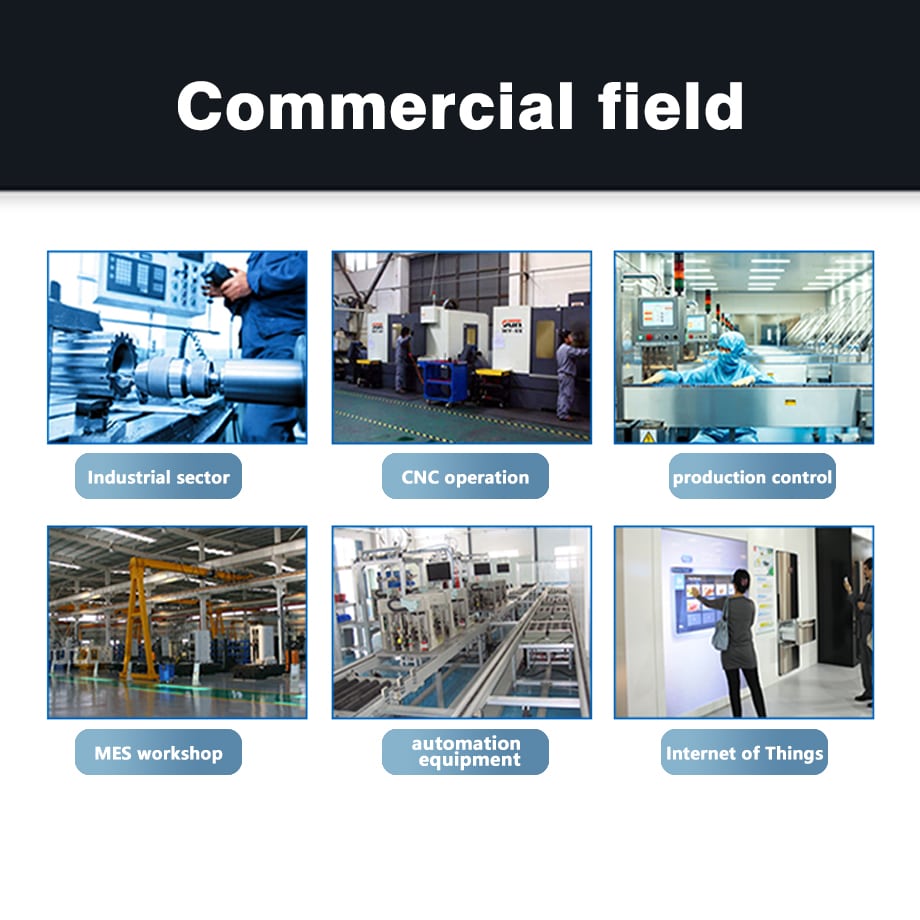
Industrial control panels need clear status display, reliable touch input, and stable integration with the host controller. This module’s 7 inch size, 1024×600 resolution, LVDS interface, and projected capacitive touch panel make it suitable for machine settings, parameter adjustment, monitoring screens, and equipment dashboards.
Smart Home and Building Control Interfaces
Smart home panels and building-control devices often need a slim interactive display for lighting, HVAC, security, access, or room-control menus. The IPS viewing angle helps users read the screen from different positions, while USB/I2C touch gives developers options for different control-board architectures.
POS Terminals and Commercial Interactive Devices
POS and commercial terminals require responsive touch, readable interface layouts, and mechanical reliability. The 10-point PCAP touch capability supports modern gestures, while the 1024×600 panel resolution can display transaction menus, icons, user prompts, and operating status in a compact format.
Handheld and Portable Embedded Equipment
Handheld devices and portable terminals must balance display size, durability, interface routing, and power architecture. This module should be evaluated when the product needs a 7 inch interactive display with LVDS input and capacitive touch. Mechanical fit, cable routing, cover glass, and sample testing are especially important for portable use.
Customization Options for 7 Inch TFT LCD Touch Module Projects
Customization for 7 inch TFT LCD touch module projects can be evaluated across the display, touch panel, cover glass, interface, and mechanical stack. Confirmed source options include backlight type and brightness, touchscreen, and cover glass customization, while broader integration support can be reviewed according to project requirements.
Potential project-evaluation items include brightness adjustment, cover glass size and shape, glass thickness, silk-screen printing, anti-glare, anti-reflection, anti-fingerprint coatings, optical bonding, interface adaptation, cable routing, FPC design, controller-board matching, and mechanical housing review. These options should not be treated as default specifications unless confirmed in the project drawing and quotation.
For OEM and ODM projects, the most efficient process is to provide the target application, host-board interface, mechanical drawing, cover design, touch behavior requirements, and expected order quantity. That information allows the display team to review feasibility, sample preparation, and production alignment.
Procurement and Engineering Checklist for 7 Inch LVDS Display Selection
A 7 inch LVDS display selection should confirm interface, touch, mechanical fit, optical requirements, and production validation before bulk procurement. The following checklist helps reduce mismatch risk during development.
- Confirm the display signal format: verify LVDS 6/8-bit compatibility, timing, FPC 20-pin connector, and host-board support.
- Confirm the touch interface: decide whether USB or I2C is better for the controller board and firmware environment.
- Review the display content: validate that 1024×600 resolution is sufficient for the GUI, font size, icons, and control layout.
- Check brightness requirements: test 350 cd/m² brightness in the target lighting condition with the final UI and cover design.
- Confirm mechanical fit: review the 164.9 × 100 × 6.07 mm module size, active area, FPC route, bezel, and enclosure clearance.
- Evaluate cover glass and bonding: review hardness, thickness, transparency, AG/AR/AF coating, and optical bonding if needed.
- Validate operating environment: compare -20°C to +70°C operation with the final product’s real use conditions.
- Run sample testing: verify display startup, touch accuracy, multi-touch behavior, cable routing, EMI environment, and long-duration operation.
LVDS / USB Touch / Mounting Selection Guide for 7 Inch TFT LCD Projects
For 7 inch TFT LCD projects, the display interface, touch interface, and mounting design should be confirmed together. LVDS affects the display signal path, USB or I2C affects the touch controller route, and the mechanical stack affects both readability and touch accuracy. Early sample testing is recommended when the project includes custom cover glass, optical bonding, special mounting, or high-use interactive operation.
FAQ
About 7 Inch LVDS Touch LCD Module
What is a 7 Inch LVDS Touch LCD Module used for?
Does this module support 10-point capacitive touch?
What display interface does the module use?
Can the touch panel use both USB and I2C?
Is 350 cd/m² brightness enough for industrial use?
What are the main mechanical dimensions?
Can the cover glass be customized?
Is this display suitable for smart home control panels?
What should buyers send before requesting a quote?
Does the module support OEM customization?
Freya Yang
+86 18318948097