Freya Yang
+86 18318948097
+852 62667476
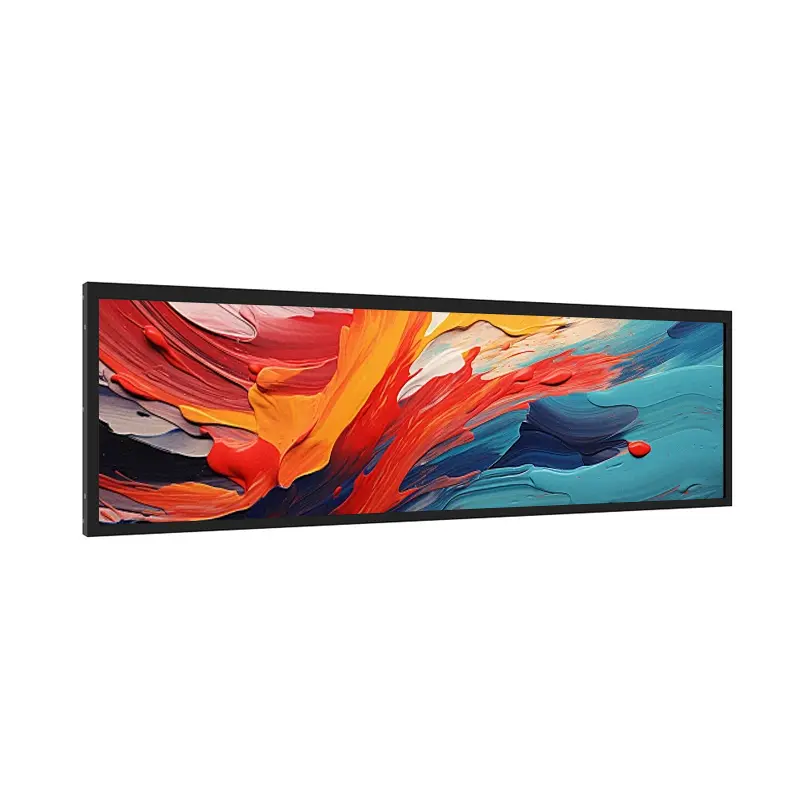
29.4 Inch Bar Type LCD Display 1920×720 IPS for Railway Information

Model P/N
Size
Resolution
Brightness
Viewing Angle
Connector Type
Operating Temp
Overall(mm)
huisoar
HS294IVN01-GE15
Brand
Panel Size (inch)
Model P/N
Resolution
Brightness (nits)
Viewing Angle
Contrast Ratio
Response Time
Overall (mm)
Active Area (mm)
Refresh Rate
Bezel Opening
Display Colors
Panel Type
Connector Type
Surface Treatment
Operating Temp
Touchscreen Type
Storage Temp
Work Mode
Pixel Format
Input Voltage (V)
Weight (g)
Designed For
1920×720 Sunlight-Readable Rail Information LCD Module for Metro Platforms, Train Carriages, BRT Systems, and EV Transit Kiosks
A 29.4 Inch Bar Type LCD Display is a stretched railway information TFT-LCD module for metro platforms, train carriages, light rail vehicles, BRT systems, and EV transit kiosks that need 1920×720 route content, 500–5000 nits brightness customization, AMVA3 wide viewing, anti-glare 3H surface, 51-pin LVDS integration, and a 70,000-hour WLED backlight. It gives transport-system designers a long, readable canvas for route updates, timetable data, service notices, and safety messages without forcing a standard 16:9 screen into a narrow installation space.
At a Glance: 1920×720 Railway Information Bar LCD Highlights
- 29.4-inch stretched TFT-LCD format designed for long-format transit information.
- 1920(RGB) × 720 resolution supports route lines, stop names, alerts, ads, and direction prompts.
- Brightness can be customized from 500 to 5000 nits for different rail and transit environments.
- AMVA3 wide-view technology provides 89/89/89/89 viewing for moving passenger traffic.
- Anti-glare haze 28% surface with 3H hard coating improves public-facing readability and surface durability.
- LVDS 2-channel 8-bit interface with 51 pins supports panel-level controller integration.
- WLED backlight with integrated LED driver and 70,000-hour rated life supports long daily operating cycles.
Product Overview of the 29.4 Inch Bar Type LCD Display
The 29.4 Inch Bar Type LCD Display is built for rail information systems where content is naturally horizontal. Railway platforms, metro halls, onboard carriage panels, and BRT stations often need long lines of readable information: route names, arrival times, safety notices, platform changes, advertising strips, and directional arrows. A stretched 1920×720 module supports that content more efficiently than a conventional rectangular display.
Its main value is the combination of rail-oriented format and sunlight-readable optical performance. The source page confirms 500–5000 nits brightness customization, AMVA3 wide-viewing technology, 4000:1 typical contrast, 16.7M color depth, and anti-glare haze 28% surface with 3H hard coating. These characteristics are useful for public transport environments where viewers move past the screen from different angles and need to read information quickly.
This module should be treated as a panel-level engineering component. Before sample approval, buyers should confirm the LVDS 51-pin pinout, 2-channel 8-bit timing, 12 V power design, backlight and thermal conditions, active-area fit, bezel opening, protective glass, no-touch front structure, and final enclosure layout.
Key Features of the 29.4 Inch Bar Type LCD Display
| Key Feature | B2B Value |
|---|---|
| 29.4-inch stretched format | Fits overhead, wall-mounted, onboard, and narrow public-information spaces. |
| 1920 × 720 resolution | Gives content designers more vertical room than 1920×540 bar displays for route and timetable layouts. |
| 500–5000 nits brightness customization | Allows the display to be matched to indoor platforms, semi-outdoor areas, and high-ambient-light transit zones. |
| AMVA3 wide viewing | Supports readability from passengers approaching from different directions. |
| 4000:1 typical contrast | Helps route text, alerts, and timetable blocks remain visually separated. |
| Anti-glare haze 28%, hard coating 3H | Helps manage reflection and surface wear in public-facing systems. |
| LVDS 2-channel 8-bit, 51 pins | Provides a defined display-interface path for controller-board development. |
| 12 V typical input | Gives power-system engineers a clear baseline for display-system design. |
| WLED 70,000-hour backlight | Supports long operating schedules when thermal design is properly validated. |
| No touch | Fits information-only railway signs and protective-glass front structures. |
Technical Specifications of the 29.4 Inch Railway Information LCD Module
| Specification | Confirmed Value |
|---|---|
| Product Type | Stretched railway information TFT-LCD module |
| Panel Size | 29.4 inch |
| Resolution | 1920(RGB) × 720 |
| Pixel Density | 69 PPI |
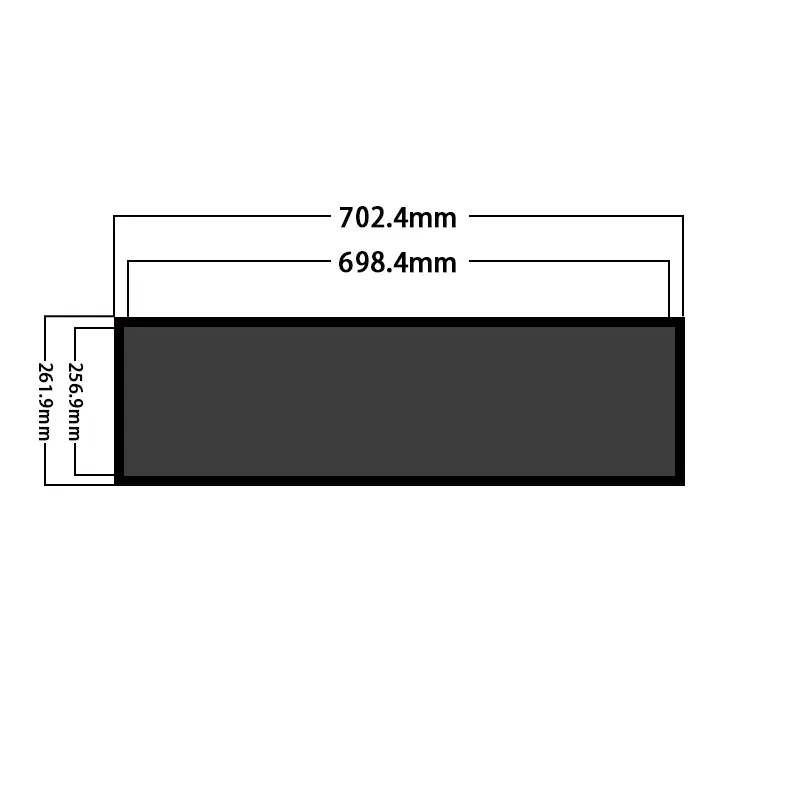
| Active Area | 698.4(W) × 261.9(H) mm |
| Bezel Opening | 702.4(W) × 256.9(H) mm |
| Brightness | 500–5000 nits customizable; 2500 / 3000 / 4000 / 5000 nits typical options |
| Panel Type | a-Si TFT-LCD, transmissive, AMVA3 technology |
| Viewing Angle | 89/89/89/89 |
| Contrast Ratio | 4000:1 typical |
| Surface Treatment | Anti-glare, haze 28%, hard coating 3H |
| Interface | LVDS, 2-channel, 8-bit, 51 pins |
| Power Supply | 12 V typical |
| Backlight | WLED, integrated LED driver, 70,000-hour lifetime |
| Touch Function | None |
| Panel Weight | 3.7 kg typical |
These confirmed values separate this module from general commercial screens. Unknown data such as the full outer dimension, power consumption, connector orientation, mounting details, and exact thermal limits should be confirmed from the engineering drawing before PCB, bracket, or cabinet tooling.
Why Choose a 1920×720 Bar LCD for Railway Information?
A 1920×720 stretched panel gives railway system designers enough height for multi-line route information while preserving a long horizontal layout. This matters when operators need to display both primary route content and supporting notices without overcrowding the screen.
More Vertical Space Than 1920×540 Bar Modules
Compared with a 1920×540 bar display, the 1920×720 format provides additional vertical room for second-line station names, bilingual messages, icon rows, service warnings, or advertising content. For railway PIS and station information, that extra height can make content easier to structure.
500–5000 Nits Brightness Selection for Platforms and Vehicles
The 29.4 Inch Bar Type LCD Display should be specified by installation environment. A covered indoor metro platform may require a lower brightness target than a bright concourse, window-facing sign, or semi-outdoor BRT station. Cover glass, reflection, optical bonding, enclosure shading, and heat dissipation should be evaluated together with the selected luminance.
AMVA3 and 4000:1 Contrast for Moving Passenger Traffic
Passenger information displays are rarely viewed from one fixed position. The 89/89/89/89 viewing specification and 4000:1 typical contrast support readability as viewers walk under, beside, or across the display. This is important for route guidance, safety messages, and real-time service updates.
LVDS, Backlight, and Mechanical Integration Checks
This module is an engineering display platform, so integration depends on correct signal, power, mechanical, and optical decisions. The source page confirms LVDS 2-channel 8-bit signal input through 51 pins and 12 V typical power.
51-Pin LVDS Controller Matching
Hardware teams should confirm LVDS timing, channel mapping, bit depth, connector pinout, cable length, grounding, and EMI behavior. A 51-pin LVDS label is not enough to guarantee compatibility with every controller board, so pin-level review is required before tooling.
70,000-Hour WLED and Thermal Planning
The WLED backlight is listed with a 70,000-hour lifetime and integrated LED driver. For rail and transit systems with long daily operation, the final product should still validate backlight heat, internal airflow, metal frame conduction, sealed housing design, and brightness derating at system level.
Active Area and Bezel Opening Alignment
The confirmed active area is 698.4 × 261.9 mm, while the bezel opening is 702.4 × 256.9 mm. These values should be checked against front mask design, protective glass, installation brackets, gasket position, and visible-window alignment. Any mismatch can affect readability and assembly yield.
Recommended Applications for Railway and Smart Transit Displays
This display performs best where long-format information must be readable in public environments.
Railway and Metro Station Platforms
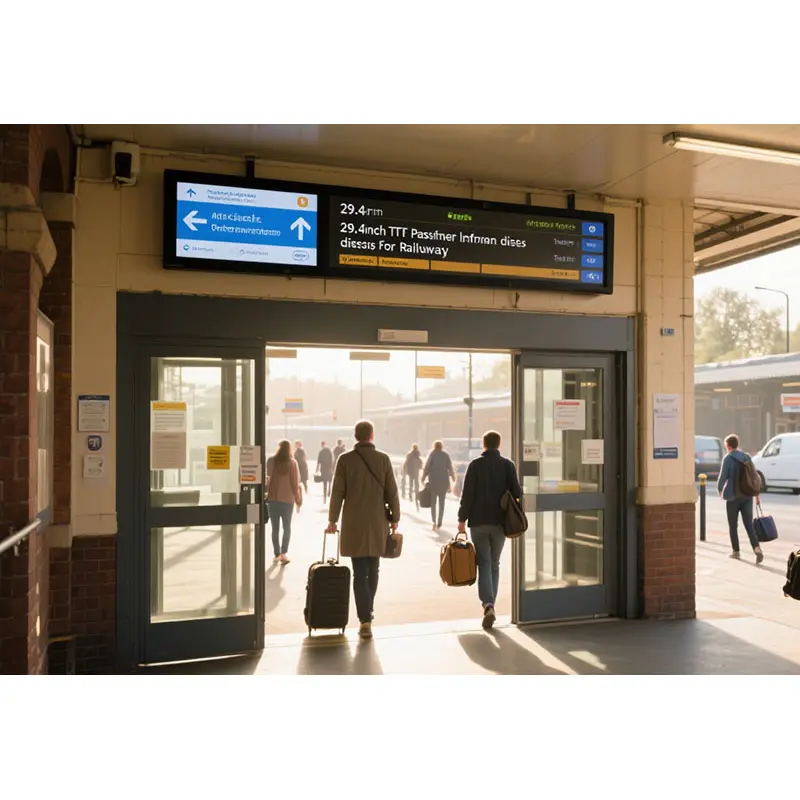
Railway and metro systems can use the format for arrival times, service notices, safety messages, track information, and wayfinding. The high-brightness options and anti-glare surface are useful when platform lighting changes during the day.
Passenger Train Carriages and Light Rail Vehicles
Inside carriages, the display can show route progress, next stop, connection information, service announcements, and public advertising. For onboard use, buyers should validate vibration, power behavior, mounting, and finished-system compliance separately.
BRT, EV Transit Kiosks, and Smart City Signage
BRT stations, EV transit kiosks, and smart city signs can use the stretched layout for directional prompts, status updates, and digital advertising. The no-touch configuration also fits many public-information systems where users read the screen rather than interact with it.
Customization Options for Railway Bar LCD Projects
Project evaluation can include brightness version selection, direct-lit or side-lit backlight review, cover glass, anti-glare or anti-reflective surface design, optical bonding, protective front glass, rail enclosure adaptation, LVDS cable and controller-board matching, mounting bracket review, thermal design, packaging, and sample validation. These options should be confirmed by application environment, quantity, drawing, and target service conditions.
Procurement and Engineering Checklist for 29.4 Inch Bar Type LCD Display Selection
- Confirm whether 1920×720 content layout fits the railway, metro, BRT, or EV kiosk UI.
- Select the brightness target based on platform lighting, viewing distance, cover glass, and thermal budget.
- Review LVDS 2-channel 8-bit timing, 51-pin pinout, cable path, and controller-board support.
- Confirm 12 V power design, backlight behavior, and heat dissipation in the final enclosure.
- Match the 698.4 × 261.9 mm active area and 702.4 × 256.9 mm bezel opening with the front design.
- Decide whether the project needs no-touch front glass, protective cover, optical bonding, or anti-reflective treatment.
- Validate MEMC / refresh requirements for scrolling text, moving graphics, or dynamic route maps.
- Run sample tests for brightness, thermal rise, readability, EMI behavior, mounting, and transport-system installation.
FAQ
About 29.4 Inch Bar Type LCD Display Integration
What is the minimum order quantity (MOQ) for custom display modules with integrated touch and controller boards?
MOQ details are For custom display modules with integrated touch and controller boards, please contact our sales team to discuss your specific requirements and we will provide a tailored quotation.
What are the optical bonding options for your sunlight readable displays to reduce glare and improve readability in direct sunlight?
Optical bonding options are For sunlight readable displays, we recommend requesting a datasheet or confirming with engineering to discuss available bonding solutions that reduce glare and improve readability.
What touch screen technologies do you support (e.g., capacitive, resistive, in-cell)?
Touch screen technologies are This model is without touch. For touch options, please contact our sales team to discuss capacitive, resistive, or other technologies that may be available for your application.
What interface options are available (e.g., LVDS, eDP, MIPI) for your panels?
The HS294IVN01-GE15 29.4-inch bar-type LCD display uses an LVDS interface, as specified in the product datasheet. LVDS is a standard choice for industrial and railway displays due to its reliable signal integrity over longer distances and resistance to electromagnetic interference. For this specific model, the connector type is also LVDS, and the operating voltage is 12.0V.
What are the packaging options for shipping and handling of fragile LCD panels?
Packaging options are not detailed on this page. For fragile LCD panels, we typically use custom foam inserts and anti-static bags in sturdy cartons. Please confirm packaging details with our logistics team for your order.
Do you offer displays with high refresh rates (e.g., 120Hz) for smooth graphics in transportation information systems?
The refresh rate for this model is 60 Hz. For high refresh rates like 120Hz, please contact our sales team to discuss if such options are available for transportation information systems.
How do you ensure color consistency and calibration across multiple display units in a single production batch?
Color consistency and calibration are not detailed on this page. For multiple units in a batch, we recommend requesting a datasheet or confirming with engineering to understand our quality control processes for color uniformity.
Can you compare the power consumption and lifespan of your Mini LED backlight units against standard LED backlights in similar-sized panels?
Power consumption and lifespan comparisons for Mini LED vs. standard LED backlights are For such comparisons, please request a datasheet or contact our engineering team for guidance.
Can you customize the mechanical dimensions and mounting holes of a standard LCD panel to fit our specific enclosure design?
Mechanical customization is For custom dimensions or mounting holes, please contact our sales team with your enclosure design to discuss feasibility and lead times.
What backlight lifetime is expected (e.g., L70) and do you have accelerated life test guidance?
For L70 or accelerated life test guidance, please request a datasheet or confirm with engineering for detailed reliability data.
Freya Yang
+86 18318948097