Freya Yang
+86 18318948097
+852 62667476
32 Inch Window Facing LCD Display for Retail Signage 2500 Nits

Model P/N
Size
Resolution
Brightness
Viewing Angle
Connector Type
Operating Temp
Overall(mm)
huisoar
HS320MNX01D01
Brand
Panel Size (inch)
Model P/N
Resolution
Brightness (nits)
Viewing Angle
Contrast Ratio
Response Time
Overall (mm)
Active Area (mm)
Refresh Rate
Display Colors
Panel Type
Connector Type
Surface Treatment
Operating Temp
Touchscreen Type
Storage Temp
Work Mode
Touch Interface
Weight (g)
Designed For
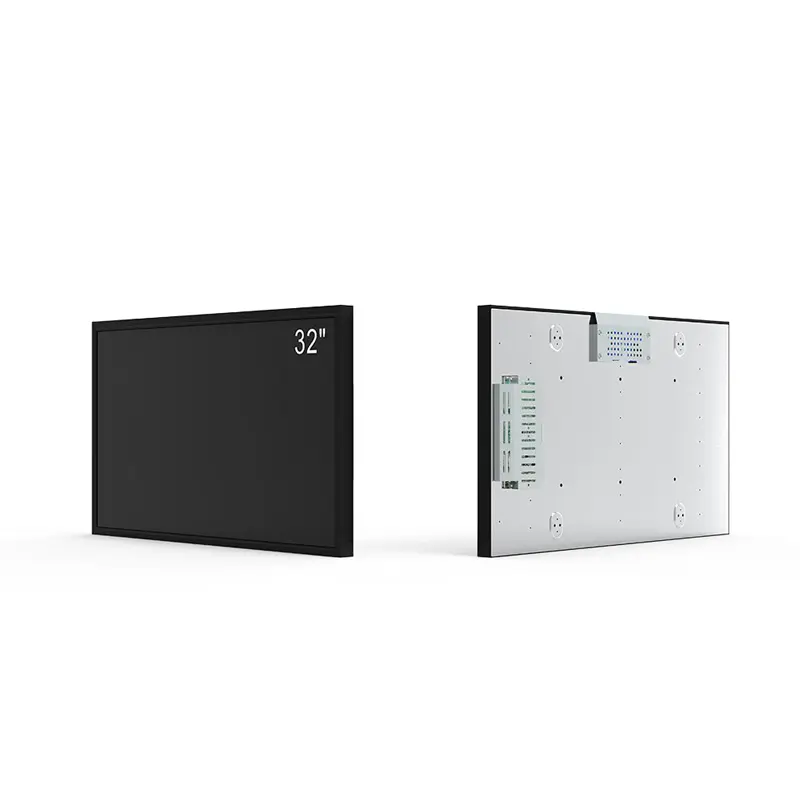
A 32 inch window facing lcd display is designed for storefront advertising where ordinary indoor screens can lose visibility behind glass and under strong daylight. This product combines a 2500 nits brightness level with AG and AR glass, a wide 178° × 178° viewing angle, and support for both landscape and portrait installation. For retail brands, chain stores, and commercial integrators, that combination creates a more practical display platform for window campaigns, promotional messaging, and outward-facing content that needs to remain clear from the street.
Why This 32 Inch Window Facing LCD Display Fits Retail Environments
Optical Strength of the 32 Inch Window Facing LCD Display
The main selection value of this product is readability in bright locations. The source page lists 2500 nits typical brightness and highlights AG plus AR glass to improve screen visibility under direct sunlight. That matters for retail windows, shopping mall facades, and entrance areas where reflected light can quickly wash out conventional commercial displays. Instead of depending only on content design to attract attention, buyers can start with a brighter optical platform that is better matched to real storefront conditions.
The display also supports a 178° × 178° viewing angle, which is important for public-facing installations because pedestrians rarely approach from one fixed direction. A wide viewing structure helps maintain visual consistency for promotions, price messaging, branded loops, and product advertising as foot traffic moves across the window. The page header lists 3840 × 2160 resolution, while the model specification block also references a 1920 × 1080 alternative, indicating that the series can be configured around more than one resolution path. In either case, the screen size and high-brightness structure are clearly positioned for commercial presentation rather than basic indoor playback.
Technical Selection Value for Commercial Integration
Mechanical, Electrical, and Control Advantages
For project development, optical strength needs to be matched by practical installation flexibility. The source page describes support for landscape and portrait use, with multiple mounting methods including wall, ceiling, floor-standing, and hanging arrangements. Default VESA mounting is also listed. That gives equipment builders and signage integrators more freedom when adapting the display to different shop windows, suspended retail layouts, or branded fixture systems.
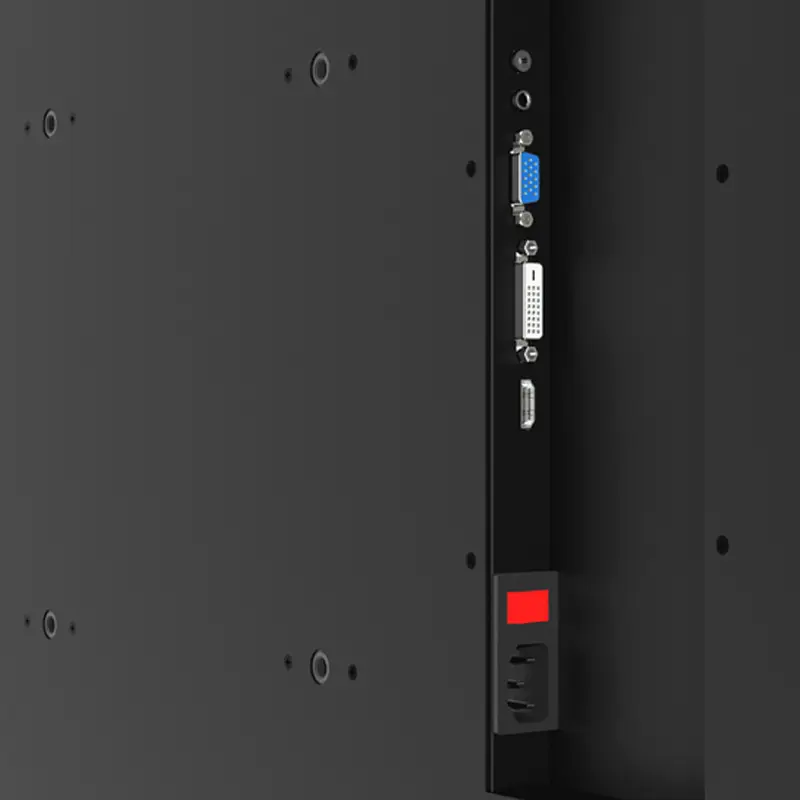
From a system perspective, the product offers a useful mix of common commercial interfaces. The listed inputs are RJ45, HDMI, VGA, USB, and DVI, while the page text also mentions other optional interface directions depending on motherboard choice. Power input is specified at AC 110 to 240 V, 50/60 Hz, which supports deployment across different markets. The model specification block further lists an IR receiver, auto-dimming sensor, and an optional Android player configuration, giving buyers a more complete finished-display direction rather than only a bare panel sourcing option.
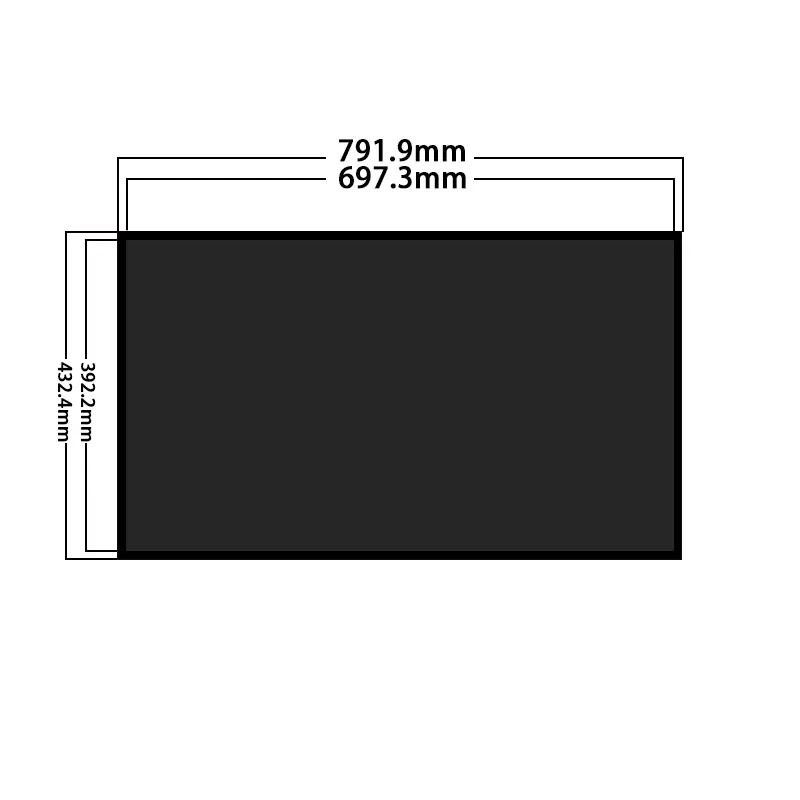
The mechanical dimensions also help with enclosure evaluation. The product page lists a 697.31 × 392.23 mm active area and a 731.9 × 432.4 × 40 mm display dimension, together with a net weight of 32 kg and a black bezel with 40 mm width. Operating temperature is specified at 0 to 50°C, with storage at -20 to 60°C. For B2B buyers, these values are useful during cabinet design, shipping planning, structural evaluation, and site installation preparation.
Application Direction for Storefront and Public Messaging
Best-Fit Projects for a 32 Inch Window Facing LCD Display
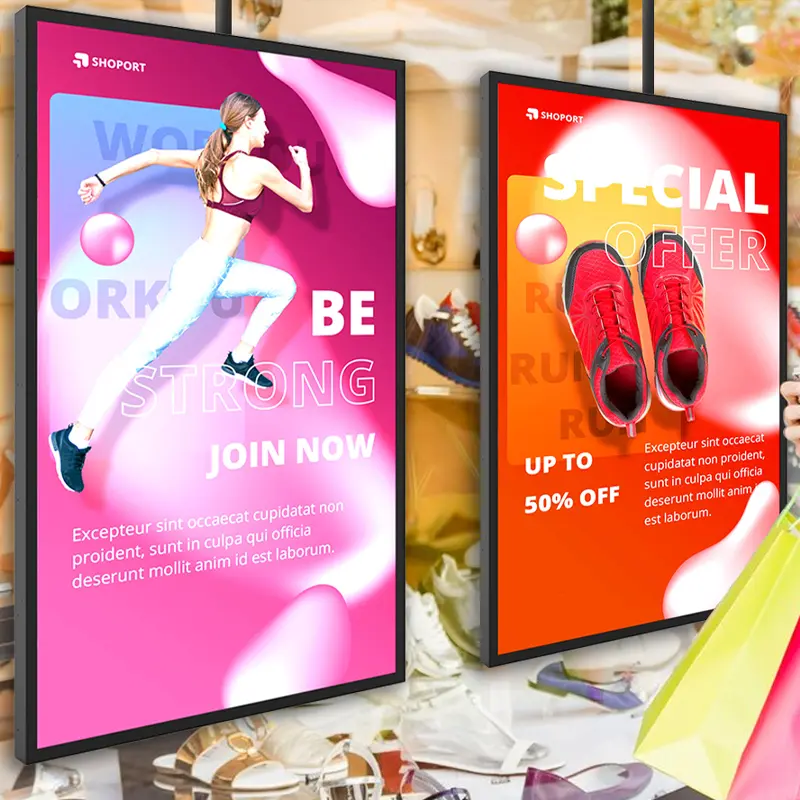
This 32 inch window facing lcd display is a strong fit for storefront advertising, branded retail campaigns, mall corridors, service counters, and other outward-facing commercial messaging projects. Its size is large enough to create a clear visual presence, but still compact enough for narrower shop windows, pillar-mounted installations, or hanging signage layouts where larger screens may be less practical. The combination of high brightness and flexible mounting also makes it useful for projects that need either permanent retail messaging or regularly updated promotional content.
Because the page emphasizes visibility, wide viewing, and adaptable electronics, the display is also suitable for transportation retail zones, indoor areas with heavy ambient light, and public information points near glass entrances. It is not positioned as a touch product on the source page, so it is best understood as a non-touch commercial signage solution rather than an interactive kiosk screen. That makes it especially relevant for looped video, product promotion, queue information, and passive advertising systems that prioritize brightness and readability over user input.
For buyers who need a 32 inch window facing lcd display with strong brightness, flexible mounting, and commercial-ready interface support, this product provides a practical base for retail signage deployment. Contact HuiSoar to discuss display selection, motherboard matching, and customized integration support for your storefront or public-display project.
FAQ
What is the minimum order quantity (MOQ) for custom-sized automotive-grade displays with capacitive touch, like the 12.3" model shown?
What is your MOQ and sample policy for this model?
What is the minimum order quantity (MOQ) for custom display modules with integrated touch and controller boards?
Can you provide detailed specifications for sunlight readable displays, including typical brightness (nits), contrast ratio, and optical bonding options for outdoor or high-ambient-light use?
Do you provide displays with wide viewing angles and high contrast ratios for medical imaging applications?
What are the options for anti-reflective coatings on transparent displays to maintain clarity in bright environments?
What touch technologies do you support (e.g., capacitive, resistive, in-cell) and which is recommended for automotive dashboards?
Can you supply displays with specific certifications for automotive (AEC-Q100) or medical (ISO 13485) applications, and what are the cost implications?
How do you manage supply chain risks for key components like driver ICs or glass substrates, especially for long-term industrial projects?
Do you offer displays with wide viewing angles (e.g., 85/85/85/85) for multi-user transportation information screens?
Freya Yang
+86 18318948097