
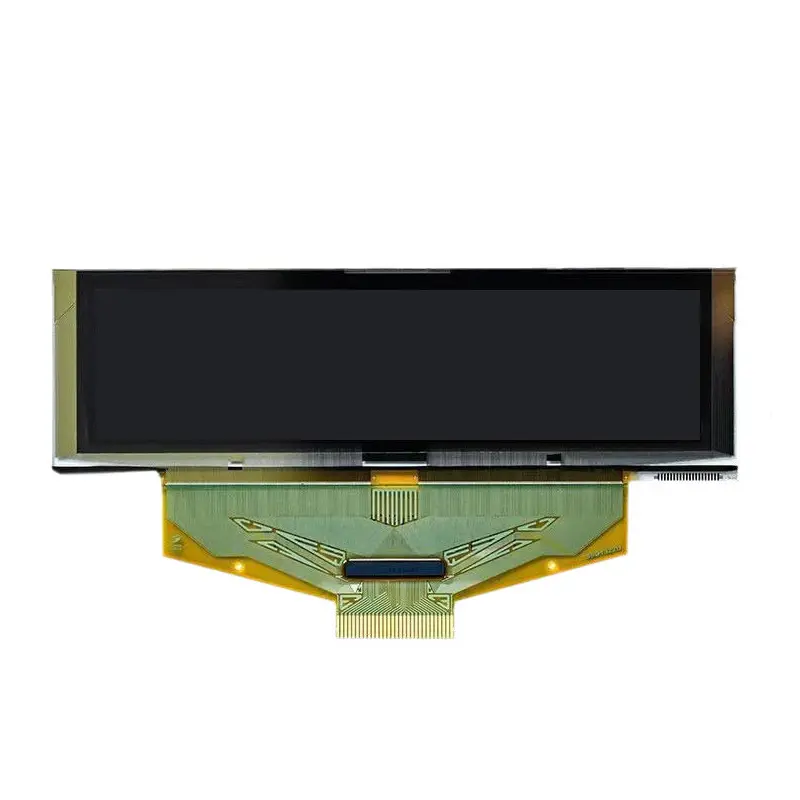
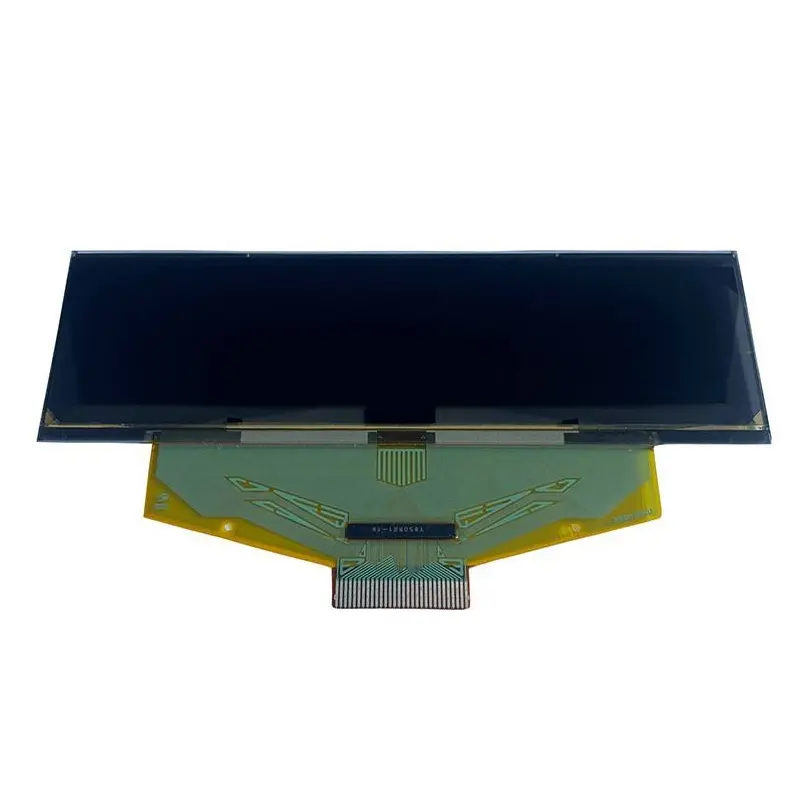
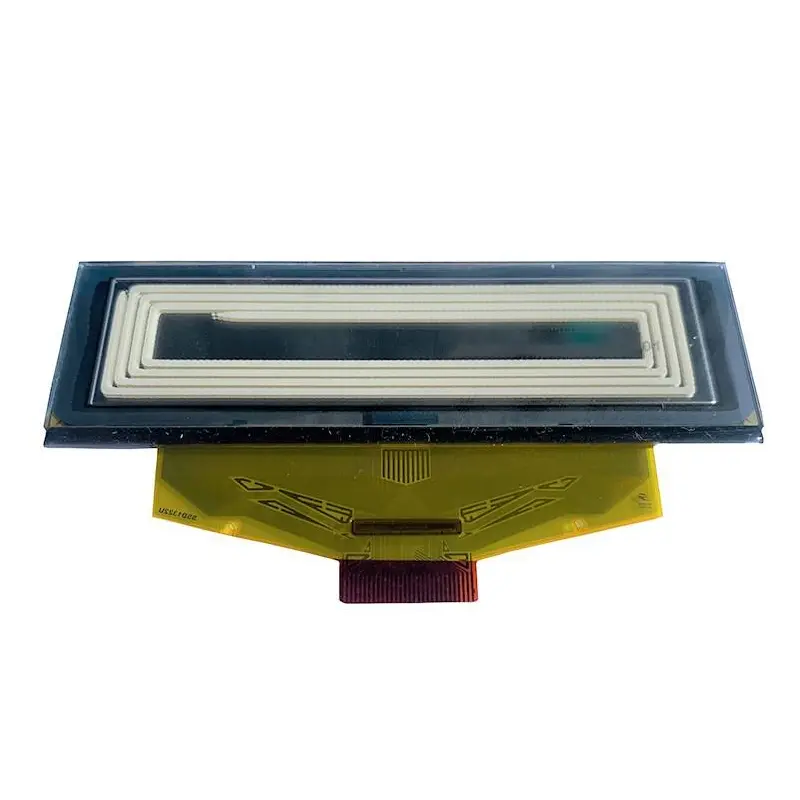
3.12 Inch PMOLED Display for Industrial Instruments

Product Gallery
Key Specs

Model P/N

HS0312EFO1A-V1

Size

3.12″

Resolution

256×64

Brightness

80 (Typ.)(cd/m²)

Viewing Angle

Wide Viewable Angle (CR≥10)

Connector Type

SPI 3-Wire/4-Wire / IIC (I2C) Dual Interface, 8pins Terminal

Operating Temp

-20 ~
60 °C

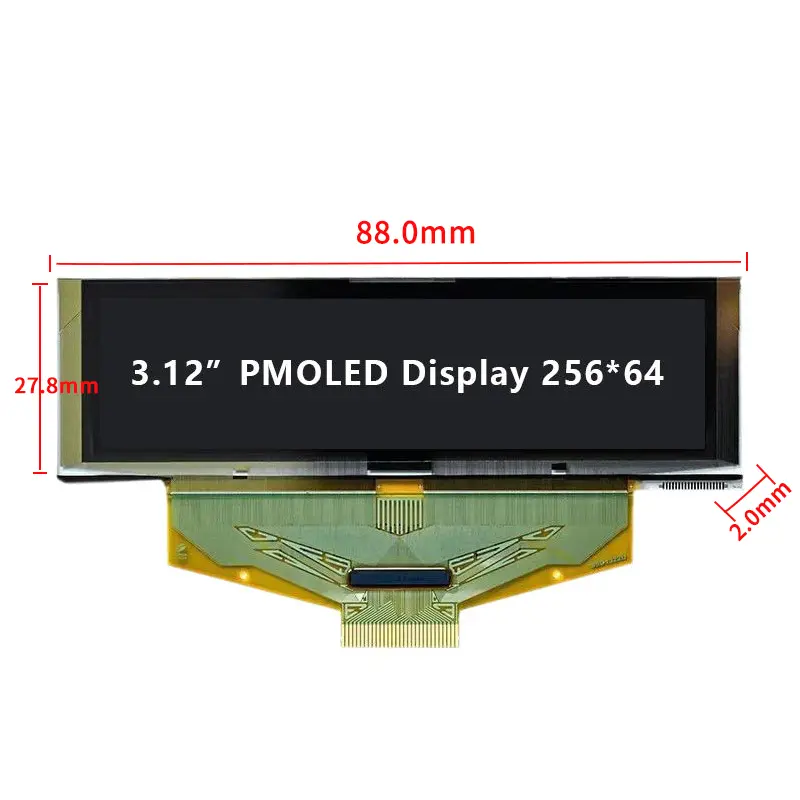
Overall(mm)

88(W)×
27.8(H)×
2.0(D)
Upgrade Options (OEM/ODM)

huisoar

HS0312EFO1A-V1

General Features

Brand

huisoar

Panel Size (inch)

3.12"

Model P/N

HS0312EFO1A-V1

Resolution

256×64

Brightness (nits)

80 cd/m² (Typ.)

Viewing Angle

Wide Viewable Angle (CR≥10)

Contrast Ratio

High Contrast (Implied by PMOLED Self-Illumination)

Response Time

<10ms (Typ.)

Overall (mm)

88(W)×
27.8(H) ×
2.0(D) mm

Active Area (mm)

76.78(W) × 19.18(H)

Refresh Rate

60Hz

Display Colors

Monochrome (White, Optional Single Color Customization)

Panel Type

oled

Connector Type

SPI 3-Wire/4-Wire / IIC (I2C) Dual Interface, 8pins Terminal

Surface Treatment

Hard Coating (4H), Anti-Reflection

Operating Temp

-20 ~
60 °C

Touchscreen Type

Not Supported (Optional Customization)

Storage Temp

-30℃ ~ +85℃

Work Mode

Normally Black

Pixel Format

Dot Matrix (0.2999mm Dot Pitch)

Input Voltage (V)

3.3

Weight (g)

40 g(Typ./Max.)

Designed For

Industrial instruments, compact meters, battery-powered IoT terminals, portable smart devices, embedded controllers

A pmoled display for industrial instruments should do more than fit into a narrow enclosure. It should also simplify hardware integration, reduce power demand, and deliver stable readability in real operating conditions. This 3.12 inch module is developed for compact instruments and smart devices that require a 256×64 dot matrix, slim structural design, and flexible communication options. With SPI/IIC dual interface support, low power consumption, and a long strip profile, it provides a practical display solution for embedded product development, pilot builds, and long-term supply programs.

Core Performance Advantages for Compact Equipment

Clear Readability in Narrow Installation Spaces

The 256×64 dot matrix layout is suitable for devices that need to display operating data, status indicators, symbols, and simple graphics in a limited front-panel area. For industrial instruments, screen clarity is often more important than decorative visual effects. The white monochrome presentation helps keep interface content easy to identify, while the high-contrast PMOLED structure improves readability in demanding environments. This makes the module a practical choice for instrument interfaces, compact controllers, and smart terminal panels.

Ultra-Low Power Consumption for Embedded Devices

One major advantage of this module is its self-illuminating PMOLED design, which eliminates the need for a conventional backlight system. According to the product information provided, power consumption can be controlled at no more than 8mA. This is especially valuable for portable electronics, battery-powered IoT terminals, and compact equipment with tight power budgets. Lower power demand can also help reduce thermal load inside small enclosures and improve overall system efficiency in long-running applications.

Why This PMOLED Display for Industrial Instruments Supports Easier Development

Dual Interface Compatibility for Flexible Controller Selection

This pmoled display for industrial instruments supports both SPI and IIC communication protocols, giving engineers more flexibility during system design. It is described as compatible with STM32, Arduino, and Linux or Android-based controller platforms, which can reduce adaptation difficulty across different hardware solutions. For development teams, this means easier wiring selection, smoother prototype validation, and lower redevelopment cost when migrating between controller architectures or application platforms.

Long Strip Structure for Fast Mechanical Integration

The 88.0 × 27.8 mm long strip format is designed for narrow installation spaces where conventional display shapes may not fit efficiently. Combined with a panel mounting structure, the module can be integrated more easily into compact device housings and instrument front panels. This is valuable for OEM projects that require efficient internal layout planning and quick enclosure adaptation. A slim display format can also improve product appearance while preserving space for control boards, batteries, or sensing components.

Selection Value and Customization Support

Practical Options for Project-Specific Requirements

For many equipment makers, display selection is not only about the standard specification but also about how easily the module can be adapted to a final product. Based on the information you provided, this module supports customization options such as brightness enhancement, FPC length adjustment, outline optimization, and cover glass coating including AG, AR, and AF treatments. These options can help match the display to structural constraints, optical requirements, and user-environment expectations in different projects.

Reliable Supply and Technical Assistance for OEM Buyers

Commercial support is another important factor in display procurement. This module is positioned with no MOQ restriction, small-batch lead time starting from 7 days, and global shipping support through major couriers. In addition, the availability of datasheets, initial code, schematic support, and one-on-one engineering guidance can reduce development barriers for both experienced teams and first-time integrators. For long-cycle industrial programs, long-term supply commitment is also a significant benefit because it helps reduce the risk of unexpected redesign.

Typical Application Scenarios

Industrial Instruments and Measurement Interfaces

This module is suitable for industrial meters, analytical instruments, testing devices, and compact monitoring equipment that require a narrow display window and dependable visual output. Its long strip shape allows efficient use of limited panel space, while the monochrome interface is well suited to presenting values, menus, and status information with clear contrast. For device manufacturers, this supports practical interface design without unnecessary structural complexity.

Portable Smart Devices and Battery-Powered IoT Equipment

This pmoled display for industrial instruments can also be used in portable smart devices, handheld terminals, and battery-operated IoT products where power efficiency and easy integration are critical. In these applications, a compact display with flexible communication protocols can shorten development cycles and improve hardware compatibility. The low-power PMOLED architecture is particularly useful for products that must balance operating time, compact design, and reliable information display.

For buyers looking for a compact and reliable display solution, this module offers a balanced combination of low power consumption, flexible interface support, slim mechanical structure, and customization potential. Contact our sales team to discuss sampling, engineering adaptation, and volume supply for your next pmoled display for industrial instruments project.
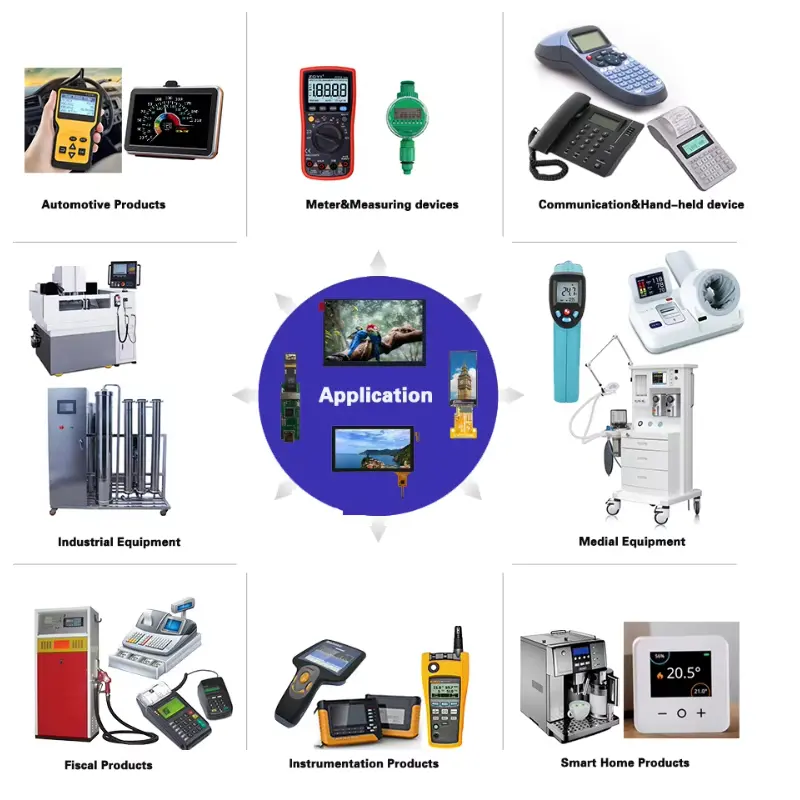
Application Scenarios

FAQ

Can you supply displays with specific certifications for automotive (AEC-Q100) or medical (ISO 13485) applications, and what are the cost implications?

The provided specifications for the HS0312EFO1A-V1 do not list AEC-Q100 or ISO 13485 certifications. Certification status is not specified; available on request. If certifications are required, they would involve additional qualification testing and documentation, which typically increases unit cost and extends development timelines. We recommend discussing specific certification needs directly to receive a detailed assessment of implications.

What is the typical lead time for stretched bar LCD displays in automotive applications?

Lead time information for automotive-grade stretched bar displays is not provided in the specifications for this industrial PMOLED module. Lead times vary significantly based on the specific model, customization level, certification requirements, and order volume. For accurate lead times on automotive displays, please provide the target model number and project specifications for a formal quotation.

Can you provide medical-grade displays with specific certifications (e.g., ISO 13485)?

The specifications for the HS0312EFO1A-V1 do not indicate it is a medical-grade display or list ISO 13485 certification. Certification status is not specified; available on request. Medical applications require stringent design controls, documentation, and often specific biocompatibility or safety testing. We can discuss your project requirements to determine if a suitable certified module is available or can be developed.

What are the optical bonding options for your sunlight readable displays to reduce glare and improve readability in direct sunlight?

Optical bonding options are not detailed in the specifications for this 80-nit PMOLED module, which is not specifically described as sunlight readable. For high-brightness displays intended for direct sunlight, optical bonding (using adhesive to laminate the cover glass directly to the display) is a common solution to reduce reflections and improve contrast. Available bonding materials (e.g., OCR, OCA) and processes depend on the specific display construction and environmental requirements.

What is the typical lead time for custom automotive-grade displays like the 12.3-inch C123HAX04.6 with in-cell touch, and what customization options are available?

Lead time and customization details for the referenced 12.3-inch C123HAX04.6 model are not provided in the current product information. Custom automotive displays typically involve extended lead times (often 12-20+ weeks) for tooling, validation, and AEC-Q100 qualification. Common customizations include modified interfaces, brightness, bonding, cover glass, and mechanical dimensions. A specific project inquiry is needed for accurate details.

Can you customize the bezel size and mounting options for industrial LCD panels to fit existing enclosures?

For the HS0312EFO1A-V1, the provided description emphasizes a 'slim structural design' and 'long strip profile' for compact instruments. While standard dimensions are given, bezel and mechanical customization is often possible for industrial panels to fit existing enclosures. This can involve modifying the overall outline, mounting hole patterns, or connector placement. Such changes require a custom mechanical design and typically impact tooling costs and lead time.

Do you offer transparent displays with high transparency rates for retail or exhibition applications?

The provided product information describes a standard PMOLED display module for industrial instruments. It does not mention transparent display technology or high transparency rates suitable for retail/exhibition applications. Transparent OLED (TOLED) or LCD modules are distinct product categories with different performance characteristics. Please inquire separately if transparent display solutions are required for your project.

What are the differences between Tianma, BOE, Innolux, and AUO panels in terms of reliability and availability?

The HS0312EFO1A-V1 is specified as a Huisoar brand module. Direct comparative analysis of Tianma, BOE, Innolux, and AUO panels is not applicable to this specific product. In general, major panel manufacturers differ in their technology focus, production capacity, supply chain stability, and specific quality/reliability data for different product lines. Selection depends on the exact model's specifications, lifecycle status, and the manufacturer's support for the target application volume and region.

What is the operating temperature range for your outdoor high-brightness displays, and do you offer extended ranges?

The operating temperature range for the HS0312EFO1A-V1 is specified as -20°C to 60°C. This is suitable for many industrial environments but may not be sufficient for all outdoor or harsh conditions. The product info does not mention extended temperature options for this specific module. For applications requiring a wider range (e.g., -40°C to 85°C), it is necessary to inquire about specialized models or customization feasibility, which may involve component selection and additional testing.

What is the typical lead time for custom display modules with specific interface requirements?

The HS0312EFO1A-V1 already supports SPI/IIC dual interfaces, offering flexibility. For custom modules with different or additional interface requirements (e.g., RGB, LVDS, MIPI), lead time depends on the engineering scope. Modifying the interface may require a new PCB design, driver IC selection, and firmware development. For standard module variants, lead time might be 8-12 weeks. For fully custom designs, it can extend to 16+ weeks for NRE and initial samples, plus production time.

Recommended: Same Size

(3.12")

Alternatives
No data was found
Scroll to Top
Request Quote / Datasheet

Response within 12-24 hours. NDA available. Engineering support included.

Fields marked with an asterisk (*) are required.

Contact Information

Request Details

WeChat QR code

Scan the QR code with your phone to contact us.

Download Datasheet
Please input your e-mail address to start the download.