Freya Yang
+86 18318948097
+852 62667476
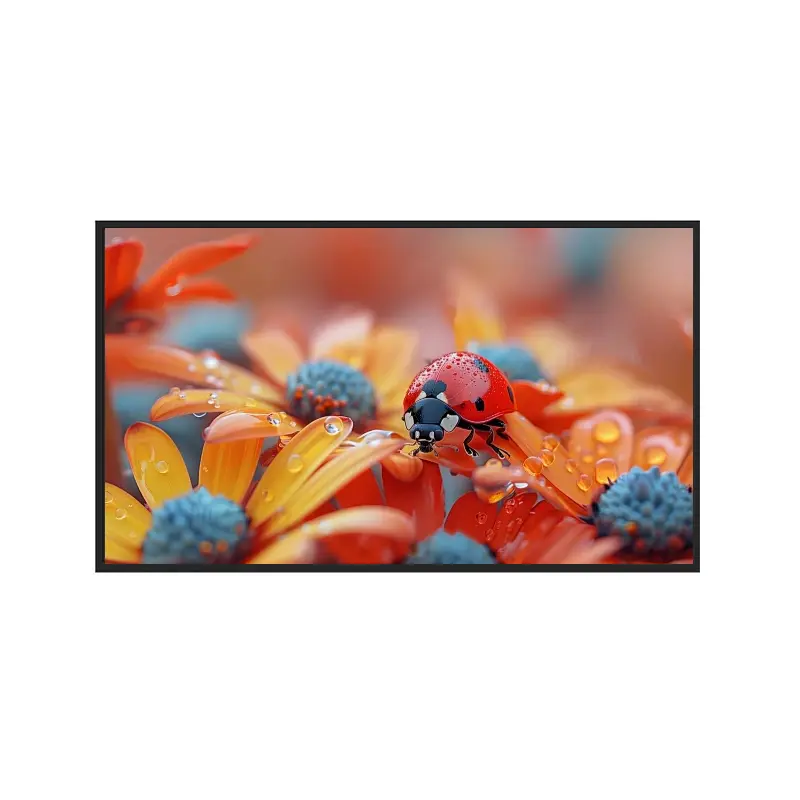
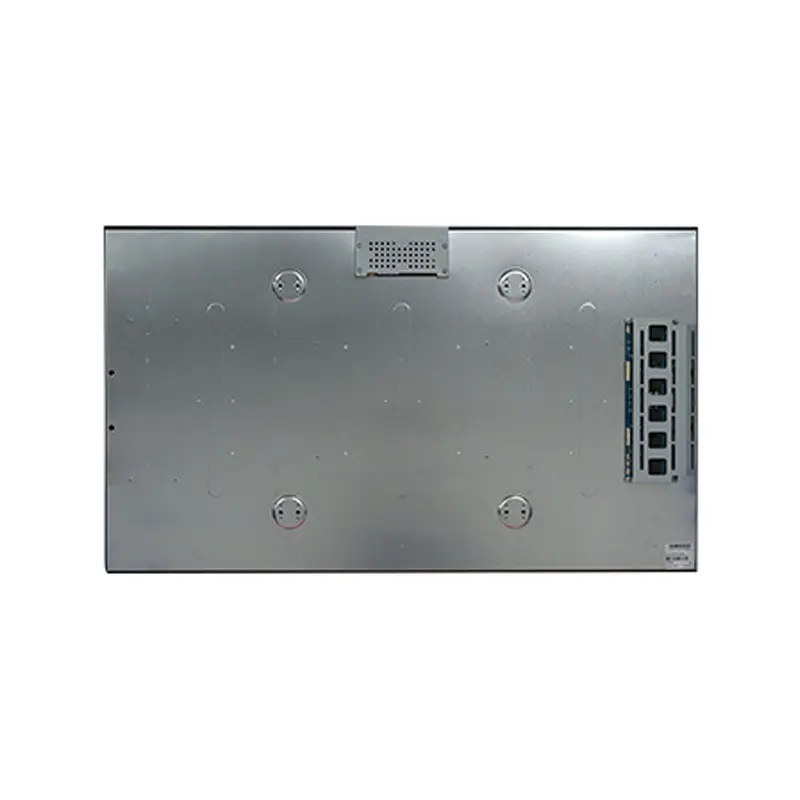
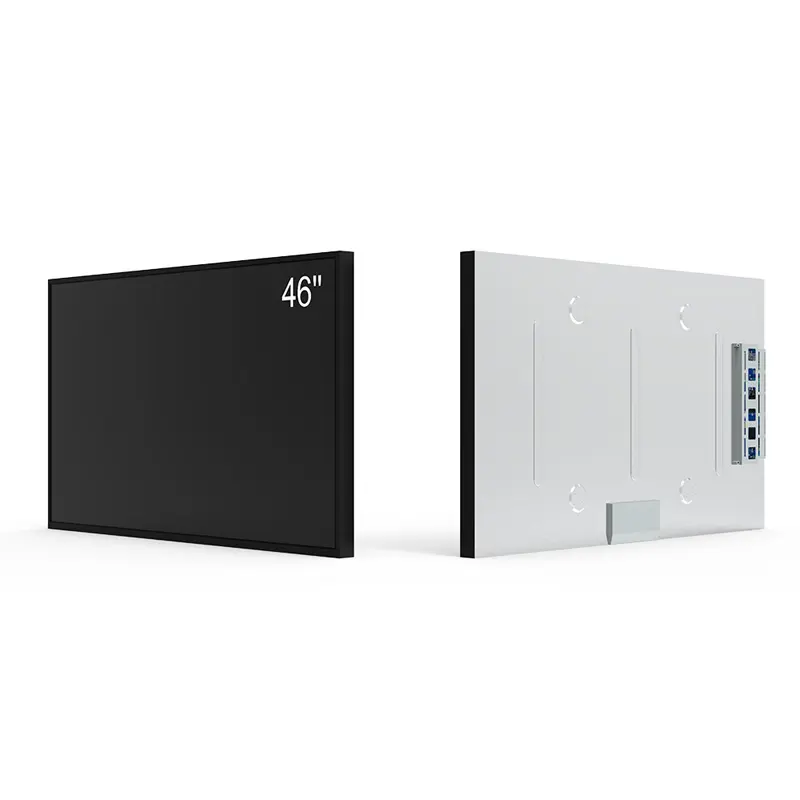
46 Inch Outdoor LCD Panel with Up to 5000 Nits Brightness
Model P/N
Size
Resolution
Brightness
Viewing Angle
Connector Type
Operating Temp
Overall(mm)
huisoar
HS460ENT-GD50
Brand
Panel Size (inch)
Model P/N
Resolution
Brightness (nits)
Viewing Angle
Contrast Ratio
Response Time
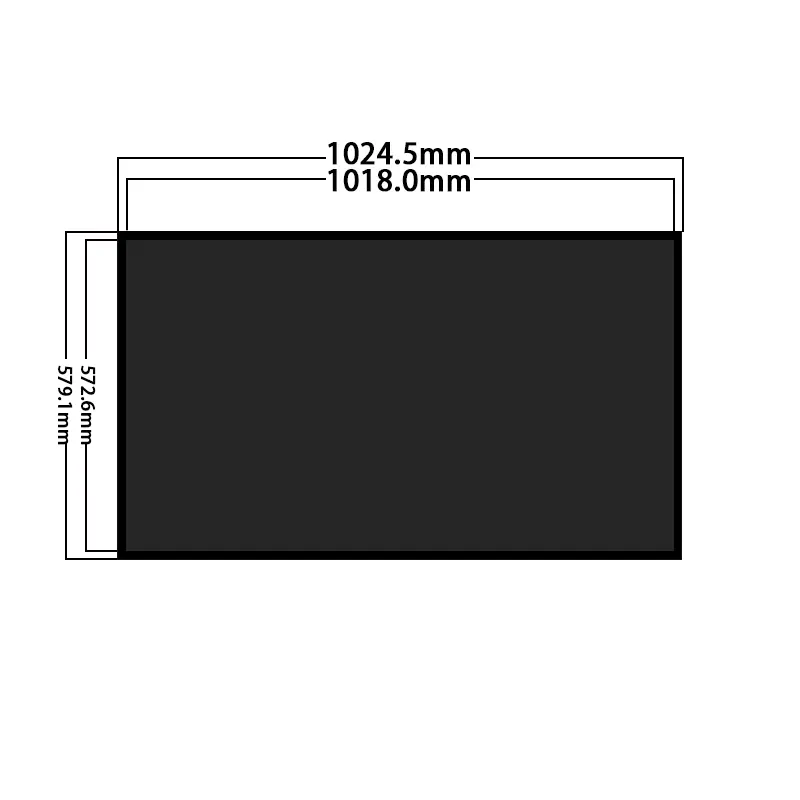
Overall (mm)
Active Area (mm)
Refresh Rate
Bezel Opening
Display Colors
Panel Type
Connector Type
Surface Treatment
Operating Temp
Touchscreen Type
Storage Temp
Work Mode
Pixel Format
Input Voltage (V)
Touch Interface
Weight (g)
Designed For
Designed for digital signage, transportation displays, and high-ambient-light commercial environments.
Outdoor display projects often fail not because of software or enclosure design, but because the display cannot maintain visibility under real-world lighting conditions. The 46 Inch Outdoor LCD Panel is engineered to address this challenge through a combination of ultra-high brightness, AMVA3 contrast technology, anti-glare surface treatment, and industrial-grade reliability. For OEM manufacturers, display integrators, transportation system suppliers, and digital signage companies, this large-format LCD module provides a dependable foundation for high-visibility installations.
Why Choose a 5000-Nit Display for Outdoor Visibility
Many commercial displays perform well indoors but struggle when exposed to direct sunlight or bright ambient lighting. This display platform supports brightness configurations ranging from 2000 nits to 5000 nits, allowing system designers to match performance with installation requirements.
Higher brightness levels help preserve readability for:
- Outdoor advertising displays
- Transportation information systems
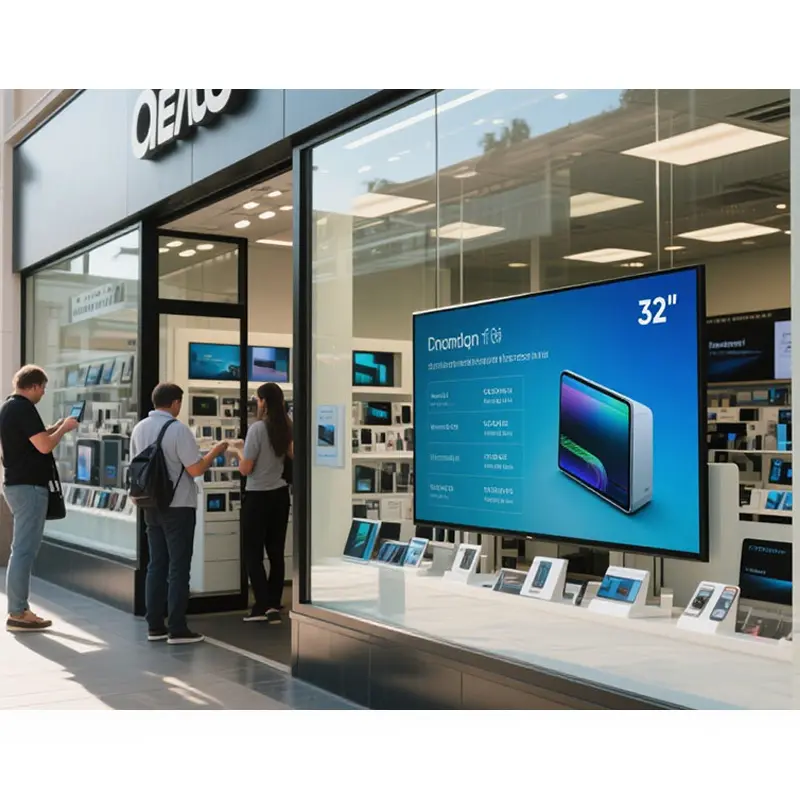
- Retail storefront signage
- Public information kiosks
- Smart city communication networks
Combined with its anti-glare surface treatment featuring 28% haze, the panel reduces reflections that often make conventional displays difficult to read during daylight operation.
46 Inch Outdoor LCD Panel for Commercial Display Systems
Image quality is about more than brightness. This display incorporates an AMVA3 normally black optical structure and a typical contrast ratio of 4000:1, helping content remain visually clear in demanding environments.
Key optical characteristics include:
- Full HD 1920 × 1080 resolution
- 47 PPI pixel density
- 16.7 million to 1.07 billion display colors
- Wide viewing performance
- Full-view display architecture
The combination of contrast, color reproduction, and viewing consistency makes the panel suitable for both advertising content and operational information systems where clarity is critical.
Multiple Brightness Options for Different Projects
One advantage of this display family is the availability of multiple brightness versions. Different projects have different visibility requirements, and excessive brightness may increase power consumption and thermal management requirements.
Available brightness configurations include:
| Brightness Version | Typical Application |
|---|---|
| 2000 nits | Semi-outdoor signage |
| 2500 nits | Window-facing displays |
| 3000 nits | Transportation terminals |
| 3500 nits | Outdoor kiosks |
| 4000 nits | Public information systems |
| 4500 nits | High-ambient-light installations |
| 5000 nits | Direct sunlight environments |
This flexibility allows procurement teams to balance performance, thermal design, energy consumption, and project budget.
Integration Advantages for OEM and System Designers
For engineers, integration efficiency is often as important as optical performance.
The module uses a dual-channel LVDS interface supporting 8-bit and 10-bit operation through a 51-pin connection. LVDS remains widely adopted across industrial and commercial display systems due to its reliability and compatibility with existing controller platforms.
Additional integration specifications include:
- 12.0 V operating voltage
- Embedded module architecture
- 11.0 kg typical weight
- Large active display area exceeding 1000 mm width
These characteristics simplify system design for display manufacturers and equipment integrators.
Motion Performance for Dynamic Content
Modern signage systems increasingly rely on video and animated content. To support these applications, the panel offers multiple refresh-rate configurations.
Supported modes include:
- Standard 60Hz operation
- 120Hz MEMC enhancement
- 120Hz panel plus 120Hz backlight operation
- 240Hz MEMC configuration
These options improve motion smoothness and reduce visual artifacts during video playback and information updates.
Long-Term Reliability in Demanding Environments
Commercial deployments frequently operate 16–24 hours per day. Reliability therefore becomes a major purchasing criterion.
The display utilizes a WLED backlight system rated for approximately 50,000 hours of service life. This helps reduce maintenance requirements and contributes to a lower total cost of ownership.
The operating temperature range of -20°C to 70°C supports deployment across a wide variety of environments, while storage temperatures from -30°C to 80°C assist with transportation and warehousing logistics.
What Buyers Should Consider Before Selection
When evaluating a high-brightness display, brightness alone should not drive the decision.
Professional buyers should also consider:
- Contrast performance
- Operating temperature range
- Controller compatibility
- Interface requirements
- Backlight lifetime
- Enclosure thermal design
- Viewing distance
- Environmental lighting conditions
This display combines high luminance, industrial operating temperatures, strong contrast, and long service life, making it suitable for projects requiring dependable long-term operation.
Typical Applications
Common deployment scenarios include:
- Outdoor digital signage
- Advertising displays
- Transportation information systems
- Metro and railway terminals
- Retail communication displays
- Smart city information boards
- Commercial kiosks
- Interactive systems with optional touch integration
Its combination of visibility, reliability, and integration flexibility makes it a strong candidate for OEM and ODM display development projects.
FAQ
Can you provide datasheet, drawing, and pin definition?
To receive the datasheet, mechanical drawing, and pin definition for the HS460ENT-GD50, please submit a request through our sales channel or contact your account manager. We will provide the official documentation that includes the 51-pin LVDS connector layout and detailed dimensions.
What interface options are available (e.g., LVDS, eDP, MIPI) for your panels?
The 46 Inch Outdoor LCD Panel (model HS460ENT-GD50) uses a standard LVDS interface with 2 channels, supporting 8-bit or 10-bit data, via a 51-pin connector. This is the only interface specified for this model. For other panel sizes or custom interface requirements, please contact us to confirm availability and compatibility. LVDS is widely used in industrial and outdoor displays for its reliable high-speed data transmission over twisted-pair cables, but exact bandwidth limits depend on panel resolution and bit depth.
Do you offer displays with In-Cell touch technology that are suitable for automotive dashboards or industrial HMIs with high reliability?
The HS460ENT-GD50 does not specify In-Cell touch technology. For high-reliability automotive or industrial HMI applications, we recommend discussing your requirements with our engineering team to evaluate suitable touch integration options.
What are the operating temperature ranges for your industrial control displays, especially for environments below -20°C or above 70°C?
The HS460ENT-GD50 has an operating temperature range of -20°C to 70°C and a storage temperature range of -30°C to 80°C. For environments below -20°C or above 70°C, please consult our engineering team to discuss potential custom thermal solutions.
What are the optical bonding options for your sunlight readable displays to reduce glare and improve readability in direct sunlight?
Optical bonding options are To reduce glare and improve sunlight readability, we recommend requesting a datasheet or contacting our engineering team to discuss bonding solutions that can be applied to this panel.
Can you customize the mechanical dimensions and mounting holes of a standard LCD panel to fit our specific enclosure design?
The HS460ENT-GD50 is a standard panel with fixed dimensions (active area 1018.08 × 572.67 mm). For custom mechanical dimensions or mounting holes, please contact our sales team to discuss feasibility and minimum order quantities for a modified design.
What are the warranty terms and after-sales service for your display products?
Warranty terms and after-sales service details are Please contact your sales representative or our support team to obtain the standard warranty period and service level agreement for the HS460ENT-GD50.
Can you provide a custom LCD panel with specific dimensions and a round shape?
The HS460ENT-GD50 is a standard rectangular 46-inch panel. Custom round or non-rectangular LCD panels are Please contact our engineering team to discuss the feasibility of a custom shape for your specific application.
How do you ensure color consistency and calibration across multiple display units in a single production batch?
The HS460ENT-GD50 supports 16.7M / 1.07B colors with 72% NTSC color gamut. For color consistency and calibration across multiple units, we recommend requesting our factory calibration report or discussing batch-level color tuning with our quality team.
What interface options (LVDS, eDP) are available for 21.5" industrial panels, and what are their data bandwidth limitations?
However, specific interface availability and data bandwidth limitations vary by panel model. Since our product page does not list a 21.5" panel, please provide the exact model number for detailed specifications.
Freya Yang
+86 18318948097