~
~
~
~
~
~
M315DCA-EEB AdobeRGB 4K Monitor LCM 31.5 Inch Innolux
Model P/N
Size
Resolution
Brightness
Viewing Angle
Connector Type
Operating Temp
Overall(mm)
innolux
M315DCA-EEB
Brand
Panel Size (inch)
Model P/N
Resolution
Brightness (nits)
Viewing Angle
Contrast Ratio
Response Time
Overall (mm)
Active Area (mm)
Refresh Rate
Display Colors
Panel Type
Connector Type
Surface Treatment
Operating Temp
Touchscreen Type
Storage Temp
Work Mode
Pixel Format
Input Voltage (V)
Weight (g)
Designed For
Product Details
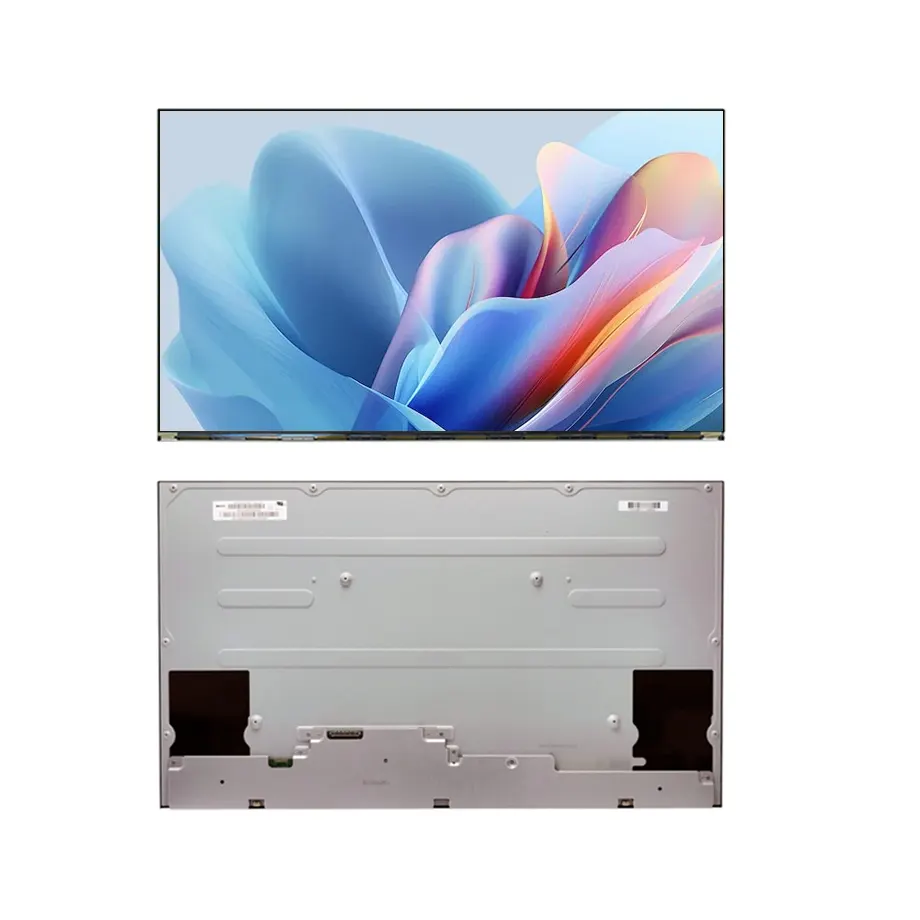
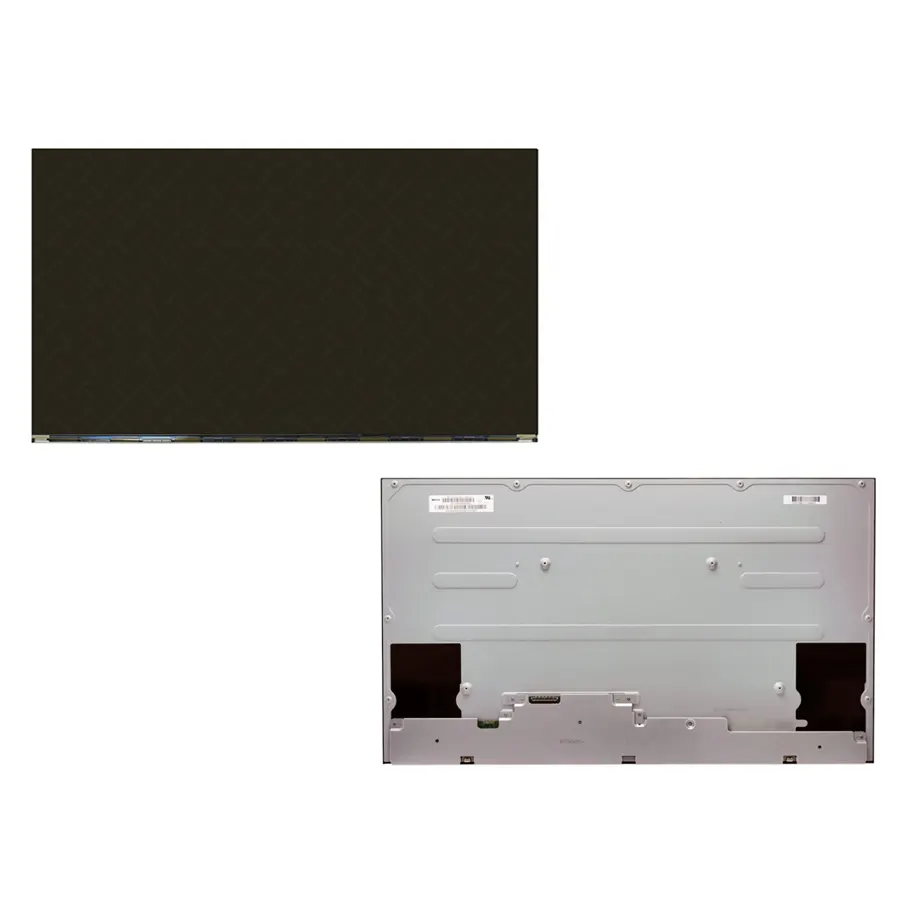
M315DCA-EEB AdobeRGB 4K Monitor LCM is a 31.5-inch Innolux a-Si TFT-LCD module for desktop-monitor integration, combining native 3840×2160 UHD resolution with a wide-gamut 1.07-billion-color specification that includes Adobe RGB and DCI-P3. The exact-model data lists 400 cd/m² typical luminance, 2500:1 typical contrast, 89/89/89/89 viewing angles and a 60 Hz refresh rate. Its active area is 697.3056 × 392.2344 mm inside a 714.2 × 412.4 × 31.79 mm outline, with a typical mass of 3.56 kg. The module uses a sixteen-lane V-by-One interface through a 51-pin 0.5 mm connector, a typical 12 V supply and a WLED light source rated at 50K hours with LED driver.
Large-format 4K LCM for color-oriented desktop systems
The 31.5-inch UHD format gives professional desktop-monitor projects a large native workspace while keeping a standard 16:9 image geometry. AAS, Normally Black, Transmissive operation provides the panel architecture, while the documented Adobe RGB and DCI-P3 support establishes the wide-gamut direction of the product. Those component capabilities are valuable for design, imaging and content workflows, but the finished monitor still needs calibrated processing if it is intended to meet a defined color-accuracy target.
This product is a complete LCM rather than a bare cell. Its WLED system includes an LED driver and a 50K-hour source reference, reducing the amount of backlight design required at the monitor level. The OEM still owns scaler selection, external interfaces, system power, enclosure, calibration and thermal integration. The backlight-life figure should be treated as the supplied panel reference, not as a guarantee of complete-monitor service life.
Three Core Buyer Value Propositions
1. UHD resolution and a 31.5-inch active area support detailed professional workflows
The 3840×2160 native image provides a defined pixel workspace for design, editing, engineering and general high-resolution desktop use. The 697.3056 × 392.2344 mm active area lets enclosure teams verify the visible image against bezel and chassis requirements. Final workspace scaling and application behavior depend on the operating system and graphics environment; the panel simply establishes the native image geometry.
2. Adobe RGB and DCI-P3 support provide a wide-gamut component foundation
The exact model lists 1.07 billion colors with Adobe RGB and DCI-P3 capability. That is relevant to monitor programs where multiple color spaces may be required. It does not guarantee a particular percentage for each gamut beyond what the source explicitly states, nor does it guarantee factory calibration. White point, gamma, matrix or LUT processing and production measurement remain system-level responsibilities.
3. Sixteen-lane V-by-One creates a clear internal controller target
The native panel interface uses 16-lane V-by-One through a 51-pin 0.5 mm connector. This gives the electronics team a defined link architecture for the 4K 60 Hz panel. External HDMI or DisplayPort connectivity belongs to the scaler/controller, which must translate the source into the exact native V-by-One timing and electrical behavior required by the Innolux module.
Key Specifications at a Glance
| Specification | M315DCA-EEB value |
|---|---|
| Display size | 31.5 inch |
| Panel type | a-Si TFT-LCD, LCM |
| Resolution | 3840×2160 UHD, 16:9 |
| Active area | 697.3056 × 392.2344 mm |
| Outline | 714.2 × 412.4 × 31.79 mm |
| Weight | 3560 g typical |
| Brightness | 400 cd/m² typical |
| Contrast | 2500:1 typical |
| Viewing angle | 89/89/89/89 typical at CR≥10 |
| Response | 14 ms typical G-to-G |
| Colors | 1.07B, Adobe RGB, DCI-P3 |
| Refresh rate | 60 Hz |
| Interface | V-by-One, 16 lanes, 51-pin 0.5 mm connector |
| Supply | 12 V typical |
| Backlight | WLED, 50K hours, with LED driver |
| Operating / storage | 0 to 50°C / -20 to 60°C |
Color-space planning for Adobe RGB and DCI-P3 workflows
A wide-gamut panel can display colors outside the conventional sRGB space, which means the monitor electronics need deliberate color-management behavior. If the finished product offers Adobe RGB, DCI-P3 and sRGB modes, each mode should have defined white-point, gamma and gamut targets. The panel provides the optical capability, but mode accuracy depends on processing, calibration and quality control.
M315DCA-EEB AdobeRGB 4K Monitor LCM should therefore be characterized with the actual scaler and production backlight settings. Test representative units rather than assuming that the color labels alone define measured gamut volume or color error. The source does not supply a formal calibration tolerance, so any Delta E or certification claim needs separate finished-product evidence.
V-by-One signal path and controller integration
The sixteen-lane native interface requires a controller capable of generating the exact model timing through the 51-pin connection. Confirm pin assignment, connector orientation, cable construction and startup sequence from the current Innolux documentation. A controller described generically as “4K V-by-One” is only a candidate until it has been validated against the exact module.
Bring-up testing should cover cold boot, repeated power cycles, sleep and wake, source switching and sustained UHD content. Inspect for intermittent link errors, color mapping problems and startup artifacts. Keep the approved firmware and cable revision with the panel record so later controller changes can be retested against a controlled baseline.
Backlight, luminance and thermal behavior
The panel lists 400 cd/m² typical luminance and a WLED system with driver. That is a practical brightness level for many desktop environments, but final measured luminance can vary with drive settings, optical condition and thermal state. The 50K-hour light-source reference belongs to the module specification; it should not be translated into a finished-monitor warranty or exact lifetime promise.
Thermal testing should verify the module and driver region after long-duration operation in the intended enclosure. Rear-cover ventilation, power-supply placement and ambient temperature can affect panel temperature. The exact operating range is 0 to 50°C, and the finished product must keep the component within that range under its intended use conditions.
Contrast and viewing performance
The AAS normally-black transmissive panel is specified at 2500:1 typical contrast with 89-degree viewing angles in all directions. These values provide a useful component basis for dark-scene and wide-view monitor evaluation. Ambient reflections, panel uniformity, backlight leakage and processing settings can change perceived black level in the final monitor.
For a professional monitor program, measure contrast and uniformity after warm-up and at representative brightness settings. If the front structure adds a protective layer, the change in reflections can influence perceived contrast. Component specifications should therefore guide system design without being presented as unconditional finished-product results.
Mechanical packaging for a 31.5-inch module
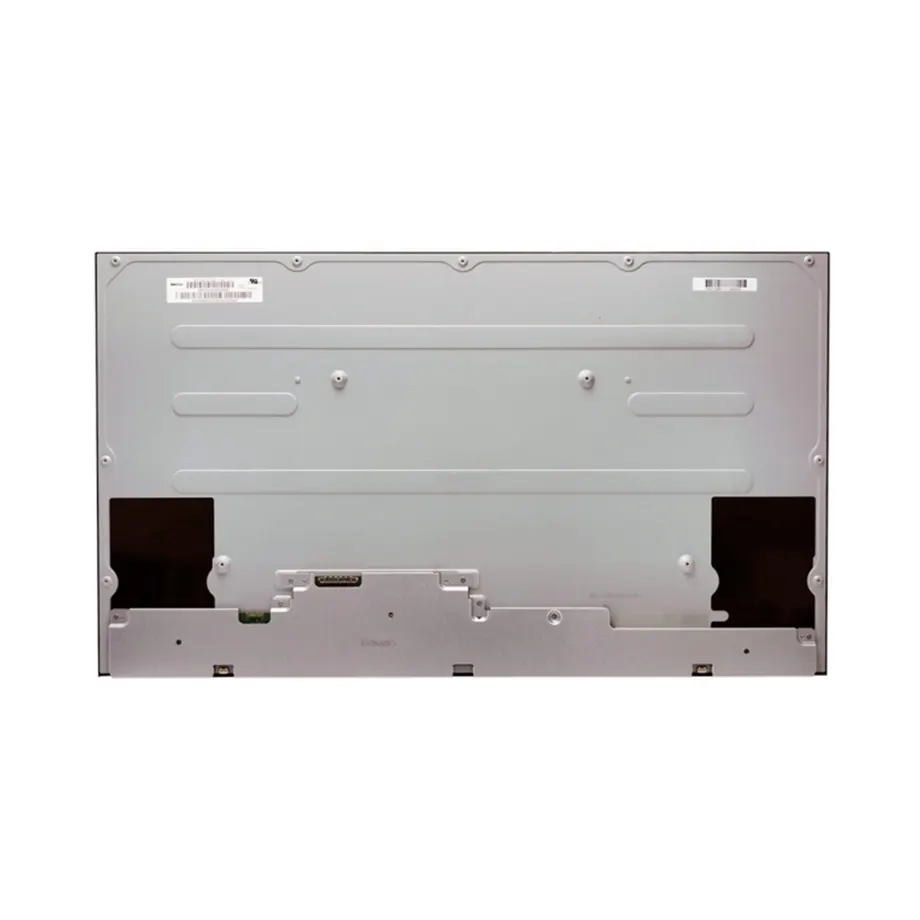
The module measures 714.2 × 412.4 × 31.79 mm and weighs 3.56 kg typical. The enclosure, stand and internal support structure should be designed around that mass and depth rather than around diagonal size alone. Verify mounting points, rear clearances, cable routing and connector access using the exact mechanical drawing before production tooling is released.
The 697.3056 × 392.2344 mm active area establishes the visible window. During prototype assembly, check bezel overlap and pressure distribution so the LCD stack is supported without twist. Transport packaging should also prevent localized loads on the large glass area before the module is installed in the finished chassis.
Application fit: wide-gamut 4K desktop monitors
Desktop Monitor is the documented application for M315DCA-EEB. The combination of UHD resolution, 400-nit luminance, wide color capability and a large 31.5-inch image makes it appropriate for evaluation in professional desktop displays where Adobe RGB or DCI-P3 workflows are relevant. It does not establish medical diagnostic, broadcast-reference or other regulated use.
The panel is specified without touch. Adding a touch sensor or protective cover would change reflections, optical transmission and mechanical depth, so the finished stack would need its own validation. Compatibility with a named commercial monitor is likewise not implied by size and resolution alone; controller, connector, mechanics and firmware must match.
Procurement and incoming-quality checklist
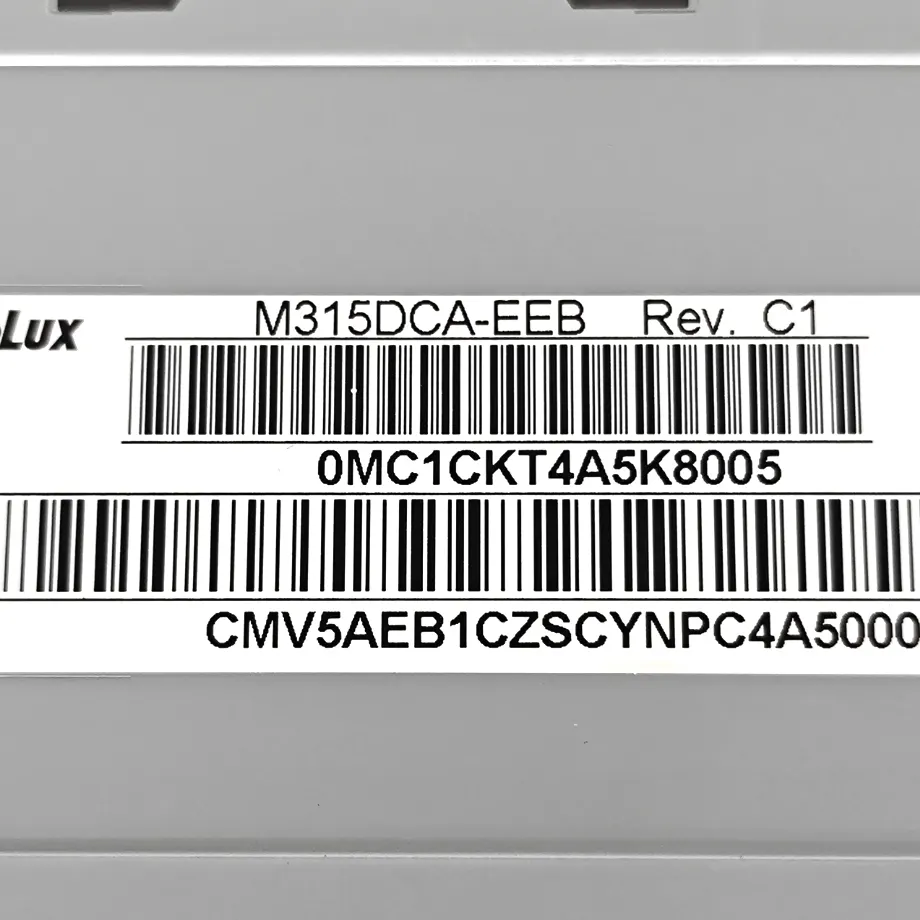
Confirm M315DCA-EEB and the exact revision on incoming labels. Verify the 714.2 × 412.4 × 31.79 mm outline, 51-pin V-by-One connector, 12 V supply architecture and integrated WLED driver. Bring the sample up with the intended scaler and confirm native 3840×2160 60 Hz operation, startup behavior and backlight control.
Optical acceptance should include brightness, contrast, uniformity, representative Adobe RGB and DCI-P3 behavior, viewing angles and visible defects. M315DCA-EEB AdobeRGB 4K Monitor LCM should move into volume purchasing only after the complete monitor meets the program's electrical, optical, thermal and mechanical requirements. Current stock, lead time, pricing and lifecycle status should be checked separately at the time of sourcing.
Production configuration and change control
Keep the approved module revision, controller firmware, V-by-One cable, calibration data and chassis configuration together in the product qualification record. A change to one element can influence link stability, measured color or thermal behavior even if the headline panel specifications remain unchanged. This configuration record gives engineering and purchasing a clear reference when alternate lots or substitutions are proposed.
M315DCA-EEB AdobeRGB 4K Monitor LCM is particularly suited to programs where the panel's wide-gamut capability is part of the product value proposition. Maintaining traceability between the approved panel and the calibration process helps prevent a sourcing change from silently altering that optical result.
Engineering summary
M315DCA-EEB is a 31.5-inch 4K AAS LCM with 400 cd/m² typical luminance, 2500:1 contrast, 1.07B colors, Adobe RGB and DCI-P3 capability, sixteen-lane V-by-One and an integrated 50K-hour WLED system with driver. For production teams, that separation of panel facts from finished-monitor claims is important. It provides a strong hardware foundation for wide-gamut desktop-monitor engineering, while final color accuracy, controller compatibility, thermal performance and mechanical fit remain system-level qualification tasks.
Recommended: Same Size
(31.5")
Applications & Value of LCD Panel

- Fast sourcing with in-stock panels & cross-reference alternatives
- Stable supply chain with long-term availability
- Engineering-level support from panel to integration
- Custom solutions: cable, touch & optical bonding
- Strict quality control with IQC / OQC / aging test
- Full traceability system for quality assurance
- Complete technical documentation & drawings
- Compliance support: RoHS & certification files