Freya Yang
+86 18318948097
+852 62667476
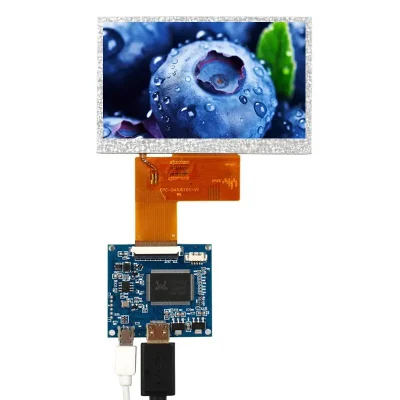
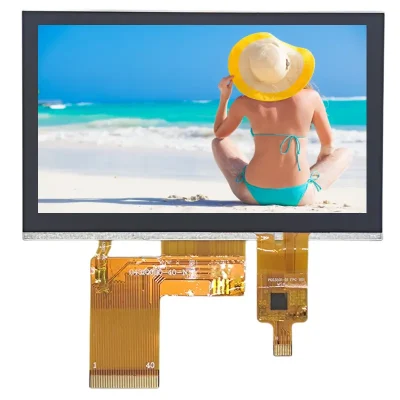
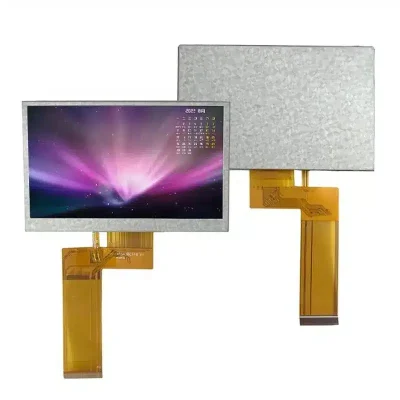
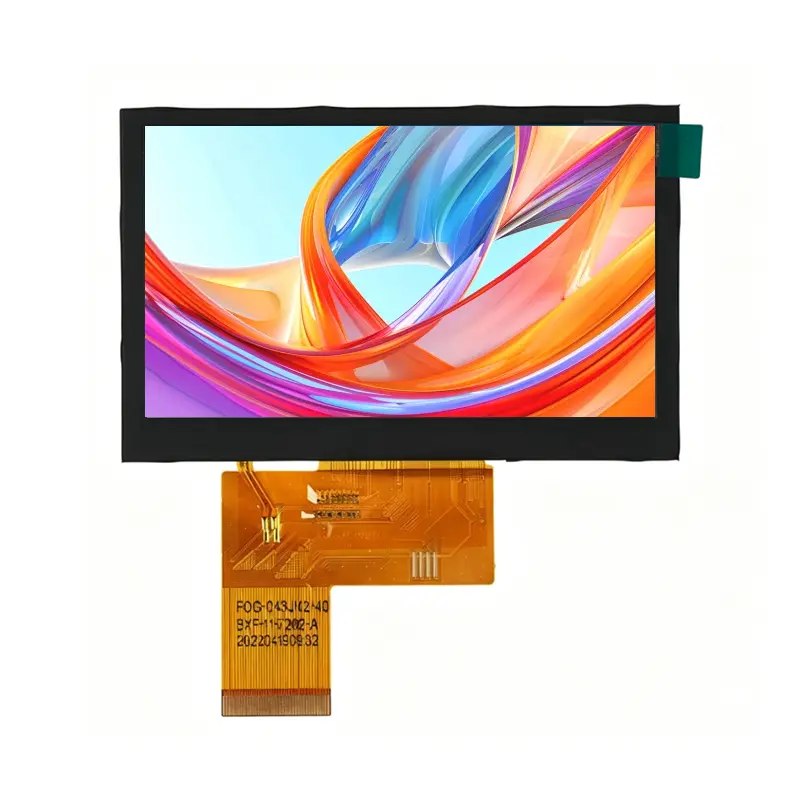
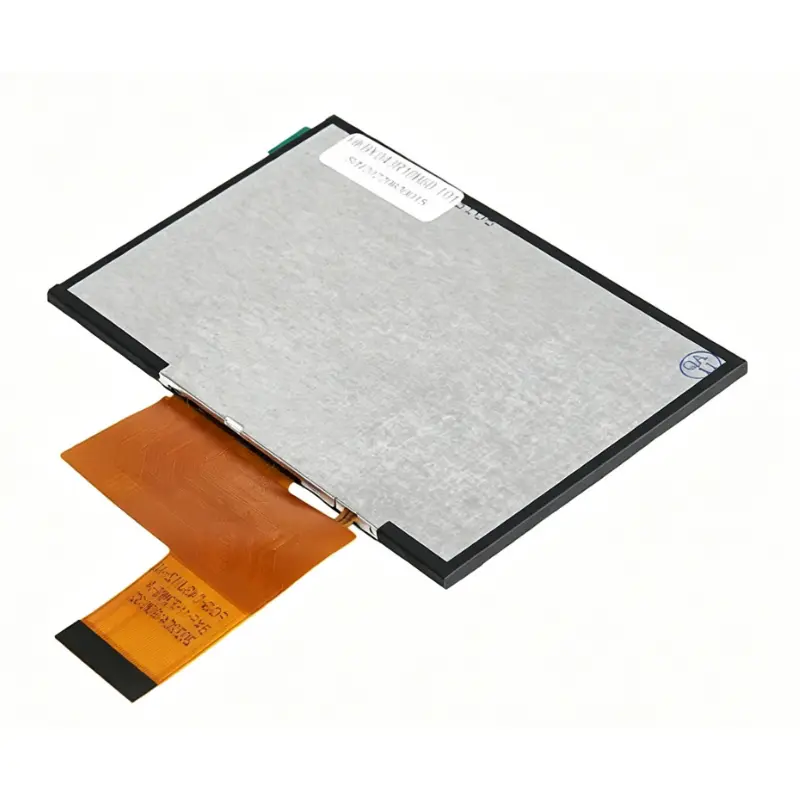
Retail Interface Display Screen 4.3 Inch IPS TFT LCD and RGB 40 pin FPC
Model P/N
Size
Resolution
Brightness
Viewing Angle
Connector Type
Operating Temp
Overall(mm)
huisoar
HS043R10B60-V01
Brand
Panel Size (inch)
Model P/N
Resolution
Brightness (nits)
Viewing Angle
Contrast Ratio
Response Time
Overall (mm)
Active Area (mm)
Refresh Rate
Display Colors
Panel Type
Connector Type
Operating Temp
Touchscreen Type
Storage Temp
Work Mode
Pixel Format
Input Voltage (V)
Control Type
Weight (g)
Designed For
4.3 Inch 800×480 IPS TFT LCD Module with ST7262 Driver and Optional CTP/RTP Touch
A Retail Interface Display is a compact 4.3-inch 800×480 IPS TFT LCD module for POS terminals, self-checkout panels, compact kiosks, smart retail controls, and embedded HMI products. It combines all-o’clock viewing, 24-bit RGB 40-pin input, ST7262 driver support, 500 cd/m² standard brightness with an up-to-800-nit option, optional CTP/RTP touch, and -20°C to +70°C operation for commercial and industrial interface projects.
At a Glance: 4.3-Inch Retail Interface Highlights
- 800×480 WVGA resolution gives compact equipment enough space for menus, prompts, buttons, and status data.
- IPS normally black transmissive TFT structure supports stable viewing from multiple user positions.
- 88/88/88/88 viewing performance helps public-facing interfaces remain readable from different angles.
- 500 cd/m² standard brightness, with up to 800 nits or higher available by project requirement.
- 24-bit RGB input and FPC 40-pin connection support embedded controller integration.
- ST7262 driver IC gives engineering teams a defined controller target for display bring-up.
- Optional CTP or RTP touch lets the same display base serve different interaction environments.
Designed For
This display is designed for POS terminals, self-checkout panels, smart retail interfaces, compact kiosks, industrial HMI panels, smart home controls, medical monitoring devices, portable testing instruments, and embedded controller products that need a compact 4.3-inch RGB display with stable viewing performance.
Product Overview of the Retail Interface Display
Retail equipment often needs a small screen that can show clear instructions, selection buttons, payment prompts, member lookup fields, equipment status, or confirmation pages without taking too much front-panel space. This module fits that requirement with a 4.3-inch size, 800×480 resolution, and IPS viewing behavior.
The product is not just a generic small TFT panel. Its most useful combination is the 24-bit RGB 40-pin input, all-o’clock viewing, and optional touch flexibility. That makes it practical for controller boards that already support RGB output, while still allowing buyers to decide whether the final product should use capacitive touch, resistive touch, or display-only operation.
Because touch is optional, the project should define the user interaction method early. A POS terminal may prefer capacitive touch for finger operation, while an industrial tool may need resistive touch for stylus or glove input. Mechanical fit, cover lens, brightness target, and RGB timing should be checked with samples before volume production.
Key Features of the Retail Interface Display
| Feature | B2B Value |
|---|---|
| 4.3-inch compact format | Fits narrow panels, payment devices, handheld instruments, and small HMI housings. |
| 800×480 resolution | Supports clearer buttons, interface prompts, icons, and numeric input screens. |
| IPS viewing | Helps maintain readability when users approach from different positions. |
| 500 cd/m² brightness | Suitable for many indoor retail, commercial, and embedded interface environments. |
| Up-to-800-nit option | Allows higher visibility for brighter spaces or customized product versions. |
| RGB 40-pin FPC | Supports integration with embedded boards using RGB display output. |
| ST7262 driver IC | Gives firmware and hardware teams a defined display driver reference. |
| Optional CTP/RTP | Lets buyers select capacitive or resistive touch according to user environment. |
| -20°C to +70°C operation | Supports commercial devices and controlled industrial equipment. |
Technical Specifications of the 4.3-Inch IPS RGB TFT Module
| Specification | Value |
|---|---|
| Display Size | 4.3 inch |
| Resolution | 800 × RGB × 480 |
| Display Mode | IPS, normally black, transmissive TFT |
| Viewing Angle | 88/88/88/88 typ. |
| Viewing Direction | All o’clock |
| Contrast Ratio | 800:1 typ. |
| Response Time | 30/30 ms typ. |
| Dot Pitch | 0.1188 × 0.1122 mm |
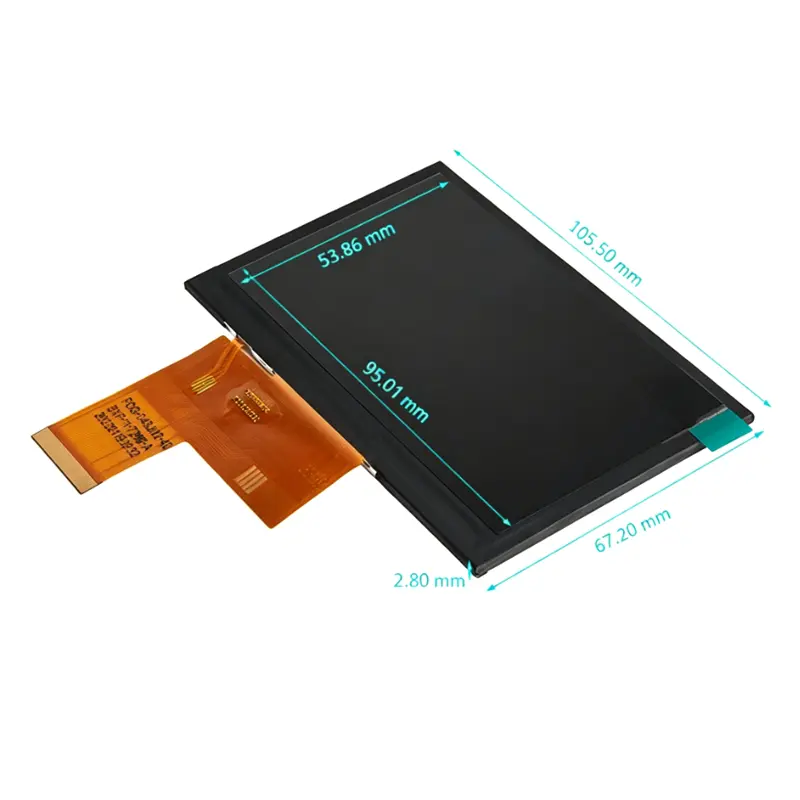
| Active Area | 95.04 × 53.856 mm |
| Module Size | 105.5 × 67.2 × 2.8 mm |
| Luminance | 500 cd/m²; up to 800 nits or higher |
| Backlight Type | 10-chip WLEDs, 15V / 40mA |
| Backlight Life | 30,000 hours typ. |
| Driver IC | ST7262 |
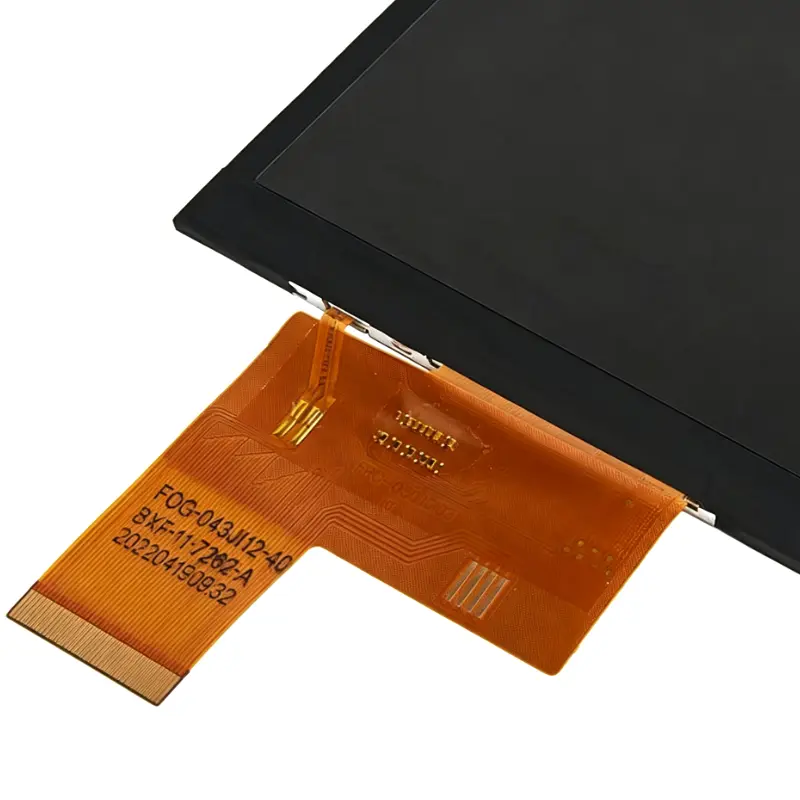
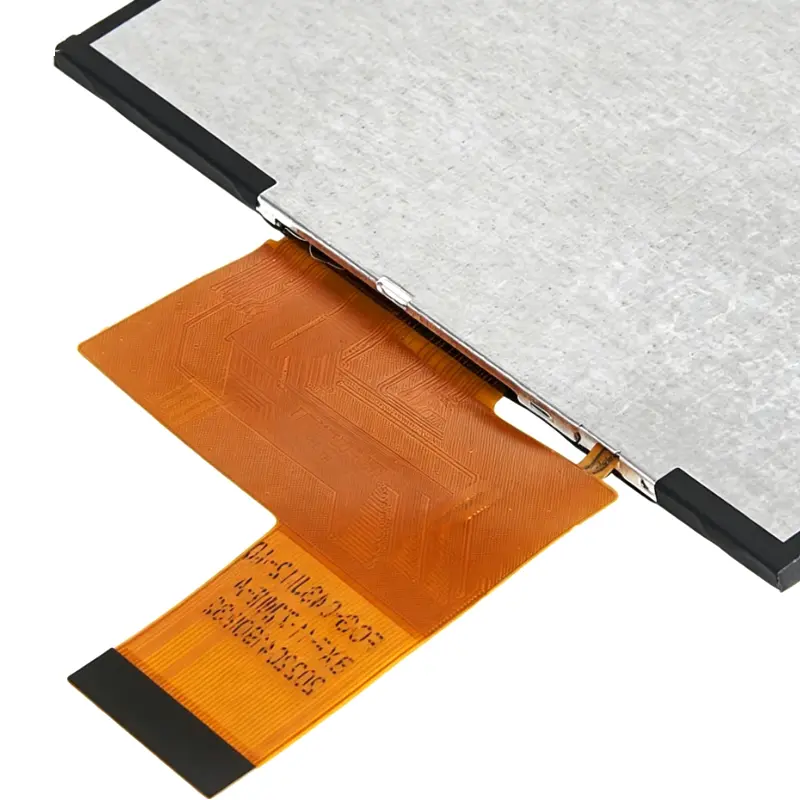
| Interface | 24-bit RGB, FPC 40 pins |
| Touch Panel | CTP/RTP optional |
| Operating Temperature | -20°C ~ +70°C |
| Storage Temperature | -30°C ~ +80°C |
These values make the module suitable for compact HMI products where engineers need a standard WVGA layout, RGB controller compatibility, stable viewing angle, and a configurable touch path. Final validation should include RGB timing, FPC direction, backlight drive, cover lens, touch stack, and enclosure fit.
Why Choose This 4.3-Inch IPS Module for Retail HMI?
A retail or kiosk interface needs to be understandable quickly. Users may only look at the screen for a few seconds before scanning, paying, confirming, or selecting an option. The 800×480 resolution gives UI designers enough room for simple workflow screens, while the compact 4.3-inch format keeps the front panel small.
Wide Viewing for Shared Public Interfaces
The IPS structure and all-o’clock viewing direction are valuable for self-service products because users do not always stand directly in front of the screen. A customer may approach from the side, a technician may test the unit from above, or the screen may be installed at a slight angle inside a housing. The 88/88/88/88 viewing specification supports these use cases better than a narrow-view TN interface.
Brightness Selection for Retail and Equipment Rooms
The standard luminance is 500 cd/m², which is suitable for many indoor retail counters, smart terminals, and control panels. For brighter installation zones, the source indicates up to 800 nits or higher. Buyers should confirm the actual brightness target based on lighting, cover lens reflection, UI color design, and whether the product is used indoors, near windows, or in a brighter semi-public area.
Optional Touch for Different Input Styles
The display supports optional CTP or RTP. CTP is usually preferred for modern finger-touch interfaces such as POS screens, smart terminals, and menu panels. RTP can be useful when stylus operation, glove input, or cost-sensitive interaction is required. Since touch is not listed as mandatory, procurement teams should specify the touch option clearly before samples are approved.
RGB 40-Pin Integration and Mechanical Planning
The middle-stage engineering value of this Retail Interface Display is its 24-bit RGB interface with FPC 40 pins. This route is practical for embedded systems that already output RGB display signals and do not require LVDS or MIPI conversion.
Confirm RGB Timing Before PCB Release
Engineering teams should review pixel clock, HSYNC, VSYNC, data width, voltage levels, FPC pinout, connector orientation, reset sequence, and ST7262 setup before finalizing the control board. A mismatch in RGB timing or pin assignment can create color errors, flicker, unstable image output, or no display.
Check the 105.5 × 67.2 × 2.8 mm Module Envelope
Mechanical teams should review the 95.04 × 53.856 mm active area, 105.5 × 67.2 × 2.8 mm module size, FPC bend radius, front-window opening, cover lens thickness, mounting pressure, and backlight clearance. These checks are especially important for compact POS terminals and kiosk input panels where space is limited.
Review Backlight Drive and Brightness Version
The module uses a 10-chip WLED backlight with 15V / 40mA listed. The backlight circuit, dimming method, thermal path, and power budget should be reviewed together with the chosen brightness version. Higher brightness may improve visibility but can affect heat and power design.
Recommended Applications for Retail and Embedded Interfaces
POS and Self-Checkout Panels
For POS terminals and self-checkout devices, the module can show keypad screens, membership input, payment prompts, status messages, and confirmation pages. The optional touch path lets integrators choose the input method that matches the final product workflow.
Compact Kiosks and Smart Retail Devices
For kiosks, queue devices, shelf terminals, and smart retail controls, the 4.3-inch display size gives enough space for simple user interaction without requiring a large front housing. The IPS viewing angle helps when the screen is mounted in a public-facing position.
Industrial and Commercial HMI Panels
For embedded controllers, testing instruments, medical monitoring devices, and smart appliance panels, the RGB 40-pin interface provides a familiar integration route. The -20°C to +70°C operating range supports commercial equipment and controlled industrial environments.
Customization Options for 4.3-Inch Retail Display Projects
Project evaluation can include FPC customization, RGB timing review, ST7262 bring-up support, backlight type and brightness tuning, CTP or RTP touch selection, cover lens design, bonding review, mechanical drawing adaptation, packaging, sample validation, and controller-board support. Any waterproofing, optical bonding, or special surface requirement should be confirmed as a project-specific option rather than assumed as standard.
Procurement and Engineering Checklist for Retail Interface Selection
- Confirm the 800×480 UI layout, button size, viewing distance, and screen orientation.
- Check RGB 40-pin host support, FPC pinout, signal voltage, and connector direction.
- Validate ST7262 setup and display timing before PCB release.
- Select CTP, RTP, or no-touch configuration according to the operating environment.
- Confirm 500 cd/m² standard brightness or higher brightness requirement.
- Review the active area, module size, front-window opening, and FPC bend path.
- Check backlight drive, dimming plan, heat path, and power budget.
- Send sample quantity, target application, and enclosure drawing for engineering review.
FAQ
About Retail Interface Display
Is this display suitable for self-checkout systems?
Does the module include touch as standard?
What display interface does it use?
What is the main advantage of the IPS panel?
Can brightness be customized?
What should engineers verify before ordering?
Freya Yang
+86 18318948097