
~
~
~
~
~
~
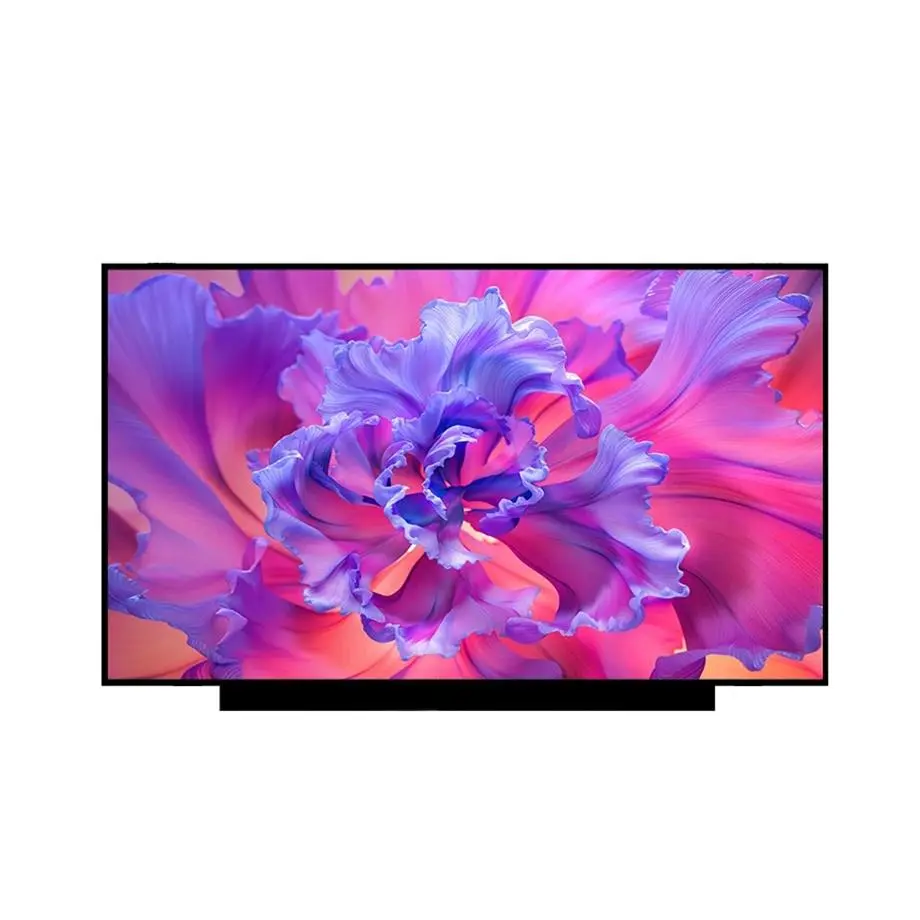
B160UANAB.2 350-Nit WUXGA HBR2 Notebook LCM Slim 16 Inch AUO
Model P/N
Size
Resolution
Brightness
Viewing Angle
Connector Type
Operating Temp
Overall(mm)
auo
B160UANAB.2
Brand
Panel Size (inch)
Model P/N
Resolution
Brightness (nits)
Viewing Angle
Contrast Ratio
Response Time
Overall (mm)
Active Area (mm)
Refresh Rate
Display Colors
Panel Type
Connector Type
Surface Treatment
Operating Temp
Touchscreen Type
Storage Temp
Work Mode
Pixel Format
Input Voltage (V)
Vibration Resistance
Weight (g)
Designed For
Product Details
Product Overview
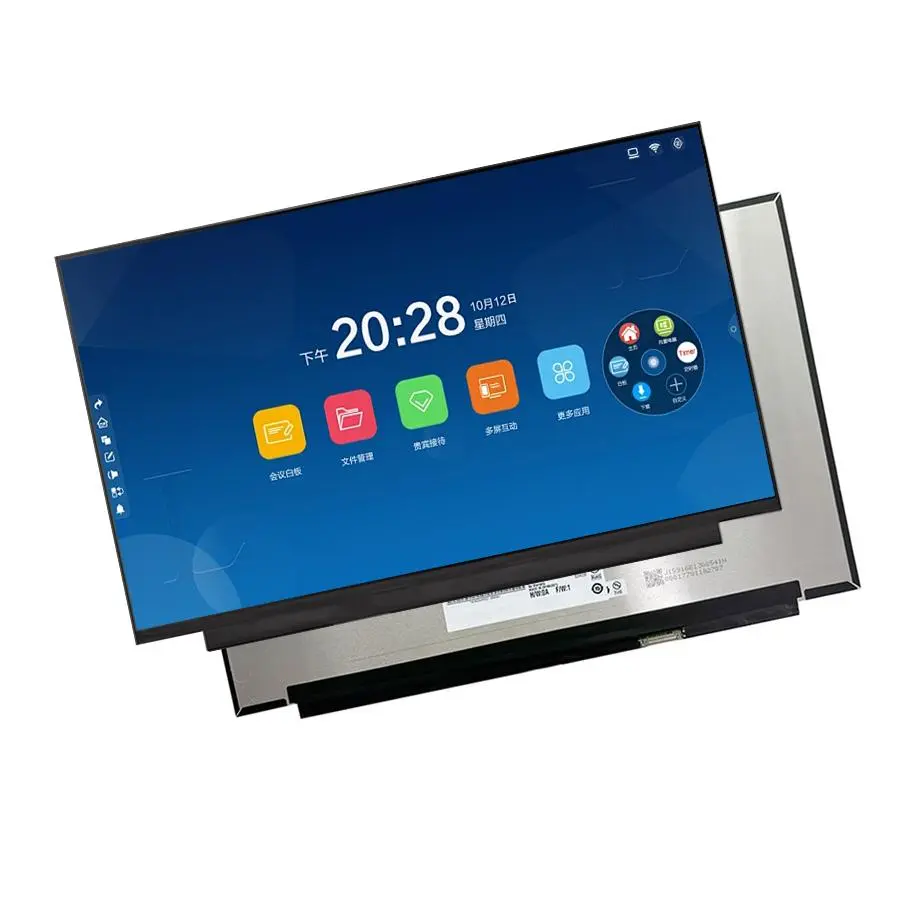
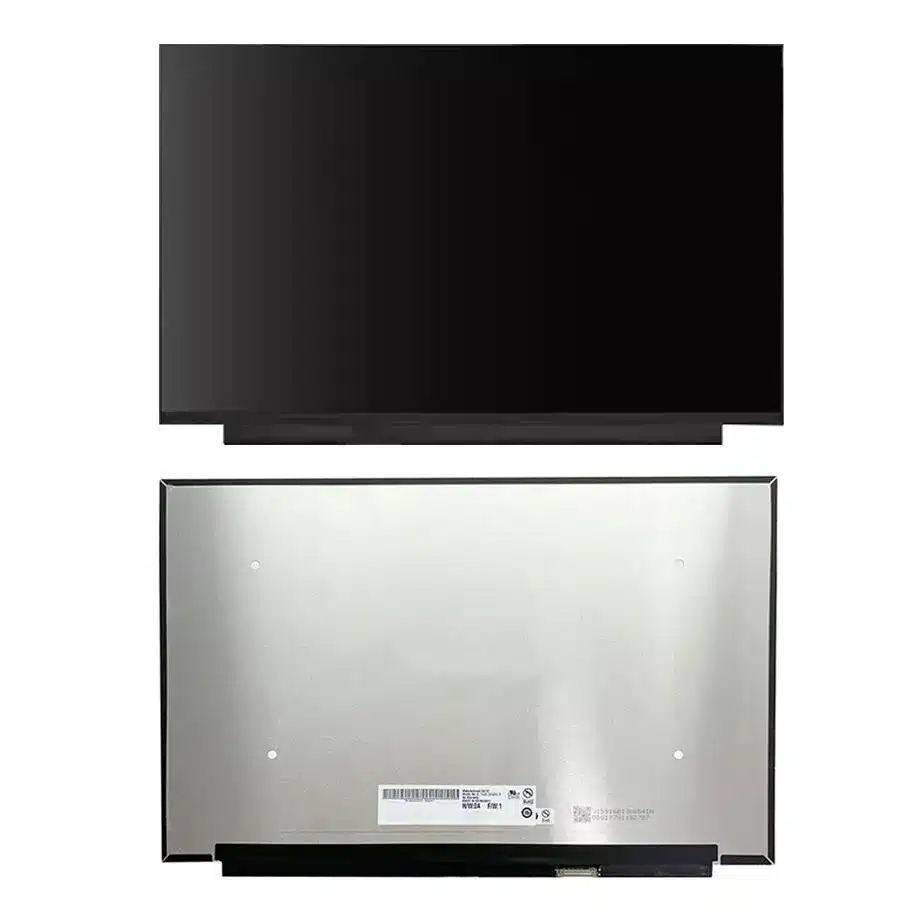
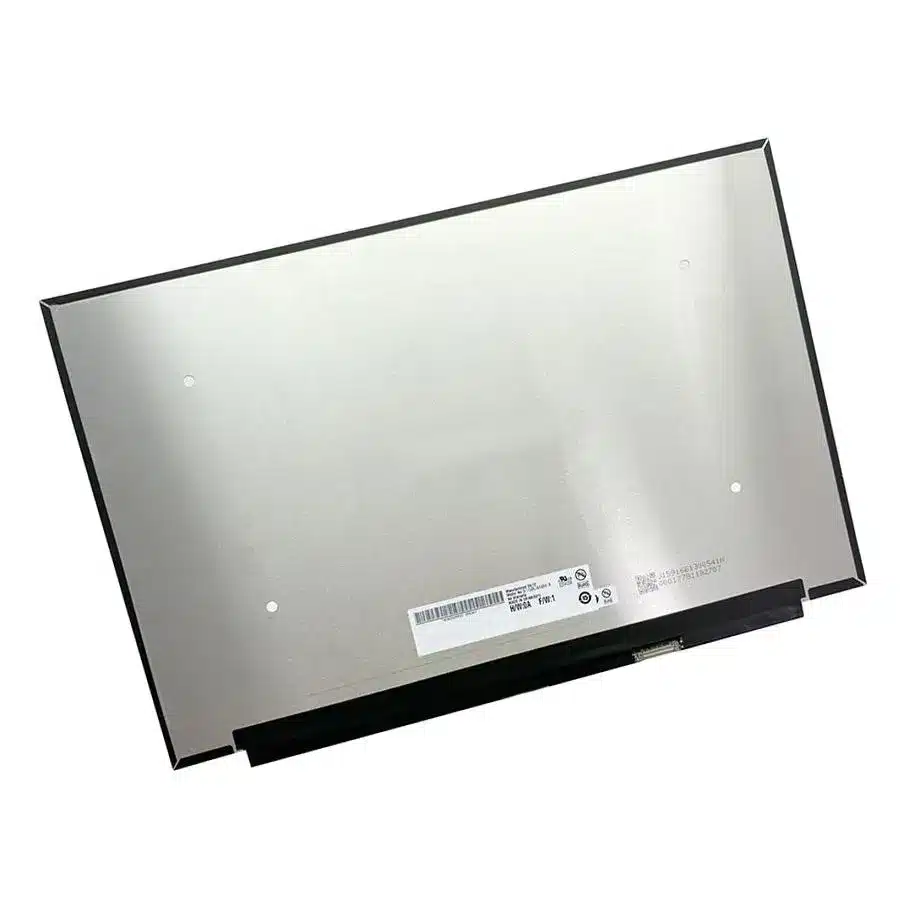
The B160UANAB.2 350-Nit WUXGA HBR2 Notebook LCM is a 16.0-inch AUO a-Si TFT-LCD module for standard-refresh notebook integration. It uses a native 1920(RGB)×1200 WUXGA raster in a 16:10 format, with a 344.68 × 215.42 mm active area inside a 349.68 × 232.42 × 2.75 mm module outline. The current product packet specifies 355 g maximum mass, an antiglare surface and a slim PCBA-flat form, making mechanical thickness and cable routing central replacement checks.
The optical baseline is 350 cd/m² typical luminance, 1000:1 typical contrast and symmetric 85/85/85/85 typical viewing at CR≥10. The display uses AHVA normally-black transmissive operation with 16.2 million colors and 45% NTSC. It runs at 60 Hz and is supplied without touch. The native interface is two-lane eDP 1.4a using HBR2 at 5.4 Gbit/s per lane on a 30-pin connector, with a 3.3 V typical panel supply. A WLED backlight and LED driver are integrated.
Three Core Buyer Value Propositions
HBR2 two-lane eDP provides a defined 30-pin replacement interface
The panel combines WUXGA resolution with a two-lane eDP 1.4a HBR2 link. That gives repair and notebook-integration teams a specific electrical target instead of treating “30-pin eDP” as a universal standard. VESA’s eDP 1.4a material explains that the specification supports higher data rates for embedded displays (VESA eDP 1.4a overview). Actual compatibility still depends on the AUO pin map, timing, power sequence and cable orientation.
2.75 mm module thickness supports thin 16-inch notebook packaging
The specified 2.75 mm thickness and PCBA-flat form create a compact mechanical baseline for 16:10 notebook designs. That can reduce replacement risk when the target chassis expects a thin panel, but the exact drawing remains essential. Connector position, mounting points, bezel relationship, cable bend and tolerance stack must all match; a thicker or PCBA-bent panel can create interference even when diagonal size and resolution are identical.
350-nit AHVA with integrated WLED driving simplifies mainstream notebook qualification
The 350 cd/m² typical luminance, wide-view AHVA mode and integrated LED driver provide a balanced module-level baseline for indoor notebook use. The benefit is engineering clarity rather than a claim of premium color or outdoor readability. With 45% NTSC specified, the panel should not be marketed as full-sRGB or creator-grade without additional evidence, and the integrated backlight still needs firmware, dimming and thermal validation in the finished notebook.
Key Specifications at a Glance
| Parameter | Specification |
|---|---|
| Manufacturer / model | AUO B160UANAB.2 |
| Size / type | 16.0 inch a-Si TFT-LCD, LCM |
| Resolution | 1920(RGB)×1200 WUXGA, 16:10 |
| Active area / outline | 344.68 × 215.42 mm / 349.68 × 232.42 × 2.75 mm |
| Weight | 355 g maximum |
| Brightness / contrast | 350 cd/m² typical / 1000:1 typical |
| Viewing / response | 85/85/85/85 typical at CR≥10 / 25 ms typical Tr+Td |
| Display mode / color | AHVA normally black transmissive / 16.2M colors, 45% NTSC |
| Surface | Antiglare |
| Refresh rate | 60 Hz |
| Native interface | eDP 1.4a, 2 lanes, HBR2 5.4 Gbit/s per lane, 30-pin connector |
| Panel input | 3.3 V typical |
| Backlight | WLED, 15K-hour reference, with LED driver |
| Touch | Without touch screen |
| Form | Slim, PCBA flat |
| Temperature | Operating 0 to 50 °C; storage -20 to 60 °C |
| Designed for | Laptop |
What does HBR2 change in a two-lane eDP replacement?
The B160UANAB.2 350-Nit WUXGA HBR2 Notebook LCM uses a two-lane HBR2 link rather than a four-lane configuration. The current packet states eDP 1.4a and 5.4 Gbit/s per lane, which is a specific link architecture that the notebook GPU and cable must support. VESA’s embedded DisplayPort material describes eDP as an internal panel interface and documents HBR2-class link rates in the evolution of the standard (VESA eDP technology context). That does not make different 30-pin eDP panels interchangeable.
For replacement testing, confirm the exact AUO 30-pin assignment, lane mapping, AUX channel behavior, power sequence and native 1920×1200 timing. Use the production cable and BIOS/firmware rather than a generic bench adapter as the final qualification reference. Repeated cold starts, sleep/wake transitions and display enable/disable cycles are useful because marginal eDP compatibility may appear only during link training or power-state changes.
How should the 350-nit and 45% NTSC optical specification be used?
The 350 cd/m² typical brightness is a practical panel-level target for many indoor notebooks, while 45% NTSC identifies a mainstream color-gamut class. These numbers should guide component selection without being inflated into claims they do not support. The panel should not be described as sunlight-readable, HDR-qualified or full-sRGB based on the current facts. If a project requires color-critical work, define the required gamut, white point, gamma and color error separately and measure the finished notebook.
Cover materials and firmware can change front-of-screen results
Antiglare treatment belongs to the module surface, but the final visual experience also depends on bezel geometry, any protective layer, brightness-control firmware and thermal behavior. Measure luminance and uniformity after the system reaches steady temperature. If the notebook uses aggressive battery-saving dimming, verify that brightness transitions remain stable and that the display does not show flicker or unexpected black-level changes.
Why do module thickness and PCBA form matter for compatibility?
Notebook panel replacement is often constrained by millimeters. The 349.68 × 232.42 × 2.75 mm outline provides a thin profile, and the current packet explicitly describes a PCBA-flat form. A candidate panel with similar active area but a bent board, thicker rear structure or different connector location can interfere with the lid, cable or bezel. The mechanical drawing should be reviewed alongside the display specification before a substitute is released.
The active area is 344.68 × 215.42 mm. Compare that position against the bezel opening as well as the overall dimensions, because a panel can physically enter the lid but still misalign the visible image. Keep mounting pressure, adhesive zones and cable bend radius within the current drawing’s requirements; thin modules should not be forced into a chassis designed around a different rear structure.
What does the integrated LED driver simplify—and what still needs testing?
The WLED backlight is supplied with its LED driver, so the notebook mainboard does not need to provide a separate raw-string driver. The panel still requires correct backlight power/control signals, brightness commands and timing. The 15K-hour backlight-life figure is a reference condition and should not be treated as the expected life of the notebook or as a warranty promise.
During qualification, test minimum and maximum brightness settings, resume from sleep, repeated lid events and extended operation at high brightness. Observe uniformity, flicker, thermal stability and any interaction between system power policy and backlight control. AUO’s notebook technology portfolio emphasizes thin 16:10 panel design, high-resolution displays and power-conscious mobile integration (AUO notebook display technologies), but model-specific electrical limits remain decisive.
Replacement and procurement controls
A replacement for the B160UANAB.2 350-Nit WUXGA HBR2 Notebook LCM should match more than 16-inch WUXGA resolution. Confirm the 2.75 mm outline thickness, PCBA-flat construction, 30-pin connector location, two-lane eDP 1.4a HBR2 link, 3.3 V input, 60 Hz timing, non-touch configuration and integrated backlight-driver behavior. A nearby AUO B160UAN family member can share resolution and brightness while differing in thickness, board form, connector mapping or optical specification.
The supporting sourcing description reports Q2 2025 mass production and an in-production status. Current public listings also show B160UANAB family variants in production, but this remains third-party sourcing context rather than a supply guarantee. Before volume purchasing, confirm the exact B160UANAB.2 revision, traceability, current lifecycle and applicable PCN/EOL information through AUO or an authorized channel. Supplier stock counts, MOQ and delivery claims are not carried into this formal product record.
Engineering Answers in Brief
B160UANAB.2 is a 16-inch AUO WUXGA AHVA laptop module with a two-lane eDP 1.4a HBR2 connection, 30-pin connector and 3.3 V typical panel input.
The module is specified for 350 cd/m² typical luminance, 1000:1 contrast, 60 Hz operation and 45% NTSC color coverage.
The WLED backlight includes its LED driver, while the 15K-hour reference must not be converted into a notebook service-life or supply guarantee.
The B160UANAB.2 350-Nit WUXGA HBR2 Notebook LCM should be mechanically matched by its 2.75 mm PCBA-flat form and electrically matched by its exact HBR2 eDP implementation before replacement approval.
Procurement Checklist
- Specify AUO B160UANAB.2 exactly and confirm the offered revision.
- Request the current 30-pin eDP 1.4a pin assignment, HBR2 timing and power-sequencing documentation.
- Validate native 1920×1200 at 60 Hz with the production GPU, BIOS/firmware and cable.
- Check the 349.68 × 232.42 × 2.75 mm module outline and PCBA-flat construction against the notebook lid.
- Confirm 3.3 V panel power and integrated backlight-control requirements.
- Measure the 350-nit optical target and image uniformity using the finished notebook front stack.
- Keep non-touch status, 45% NTSC color class and 0 to 50 °C operating range in the replacement baseline.
- Reconfirm lifecycle, traceability and PCN/EOL expectations before volume purchasing.
The B160UANAB.2 350-Nit WUXGA HBR2 Notebook LCM offers a thin, mainstream WUXGA notebook display architecture with a clearly specified HBR2 eDP link and integrated backlight driver. Reliable replacement and production integration depend on preserving the exact electrical link, PCBA form, optical class and revision identity rather than treating all 16-inch 30-pin WUXGA panels as equivalent.
Recommended: Same Size
(16")
Applications & Value of LCD Panel

- Fast sourcing with in-stock panels & cross-reference alternatives
- Stable supply chain with long-term availability
- Engineering-level support from panel to integration
- Custom solutions: cable, touch & optical bonding
- Strict quality control with IQC / OQC / aging test
- Full traceability system for quality assurance
- Complete technical documentation & drawings
- Compliance support: RoHS & certification files
