~
~
~
~
~
~
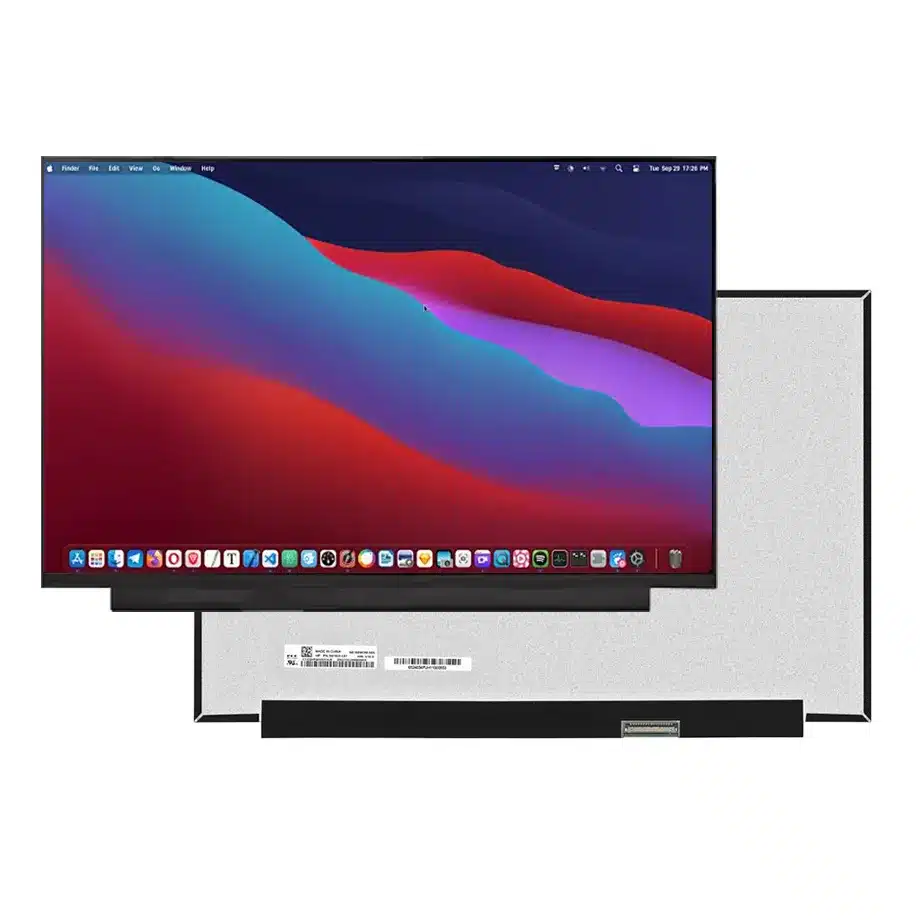
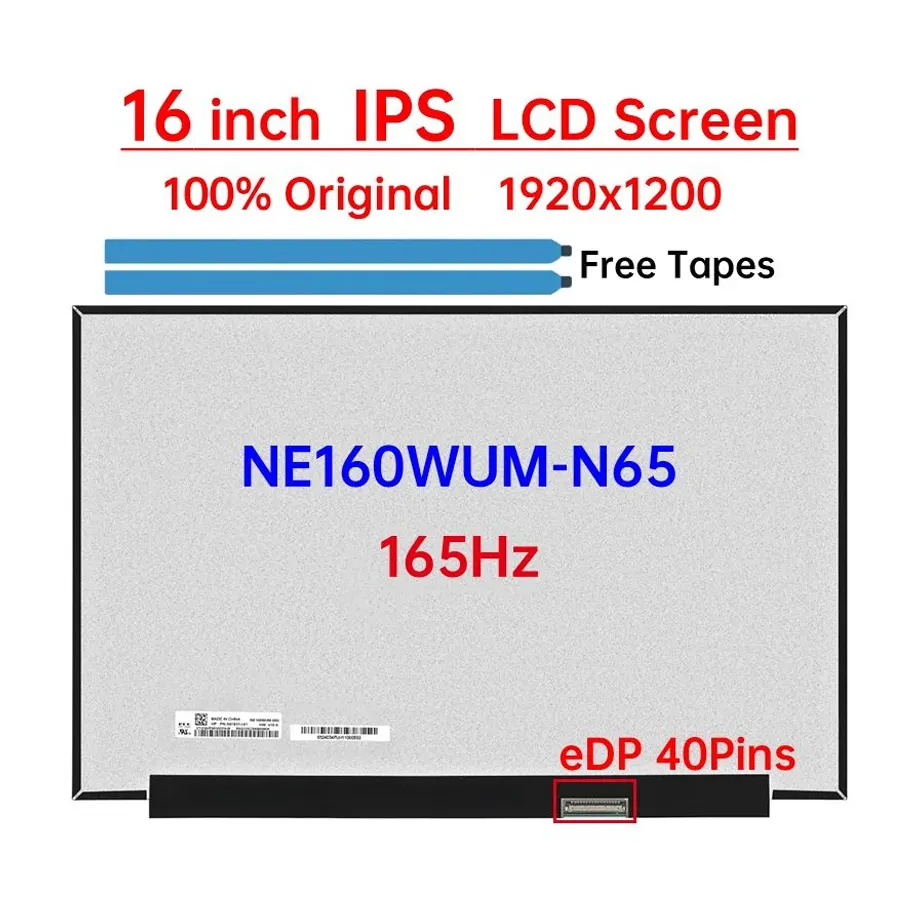
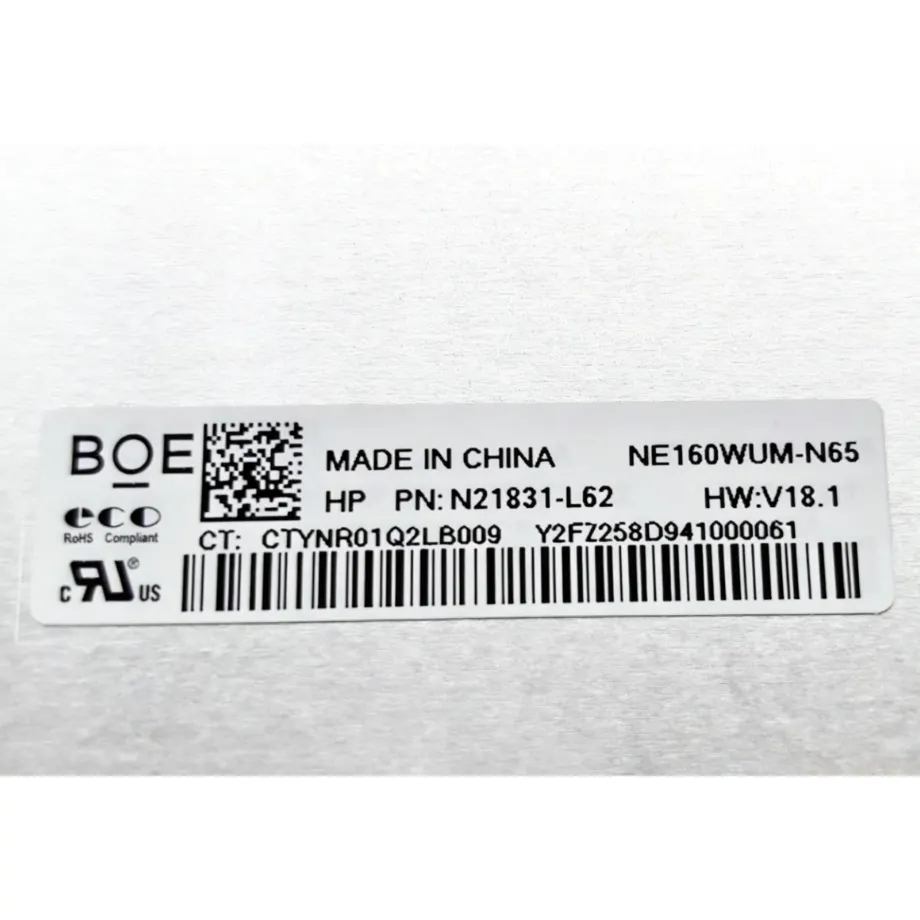
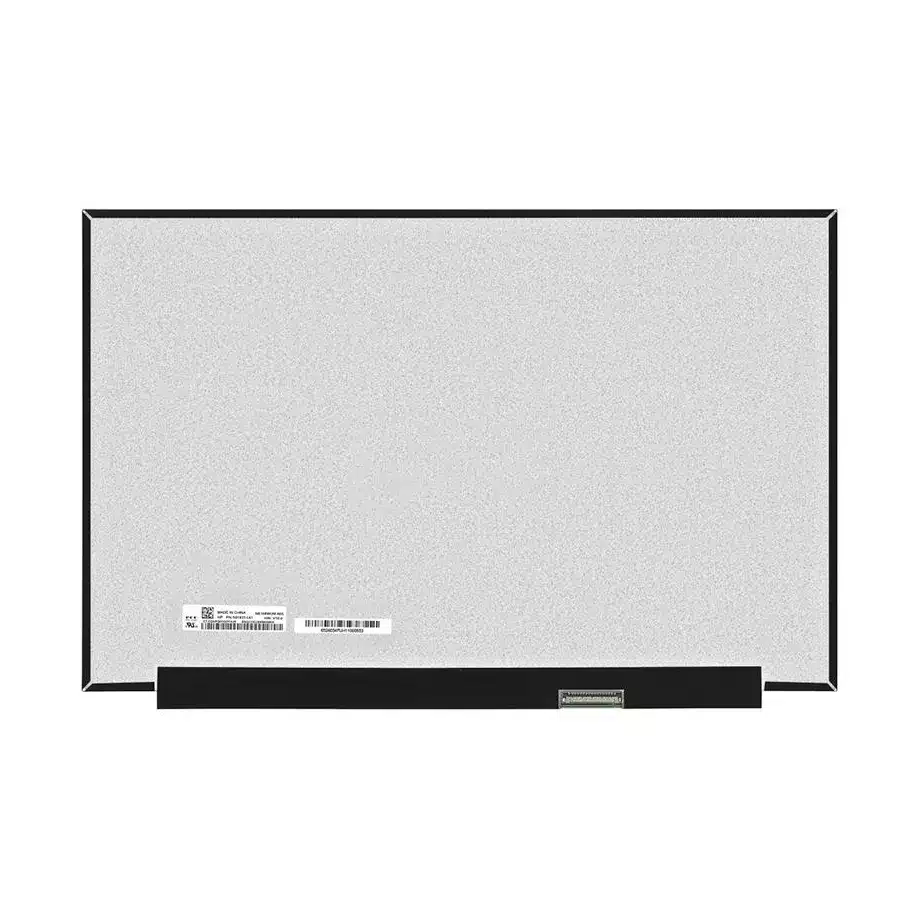
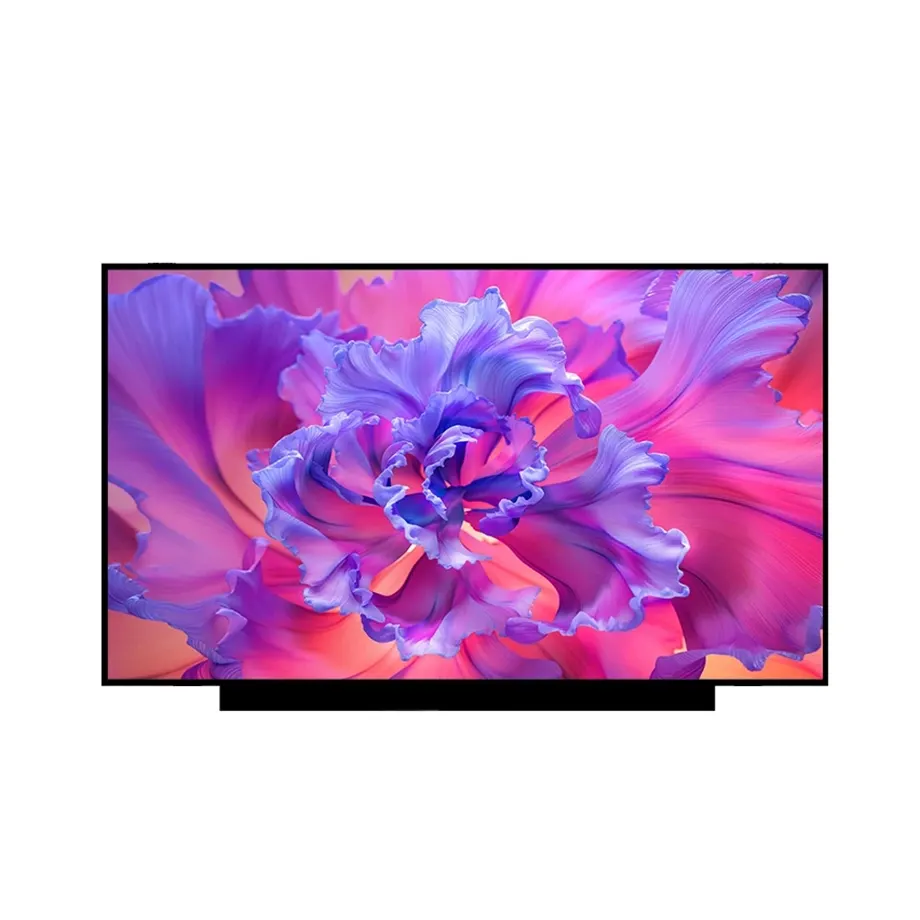
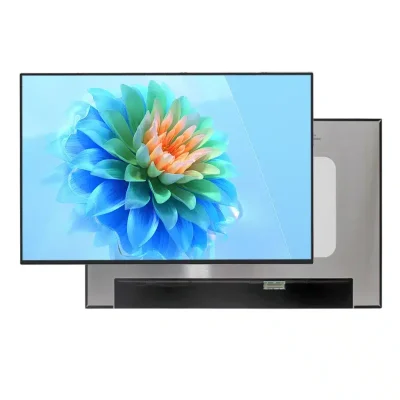
NE160WUM-N65 HP N21831-L62 Laptop Panel 16 Inch BOE
Model P/N
Size
Resolution
Brightness
Viewing Angle
Connector Type
Operating Temp
Overall(mm)
boe
NE160WUM-N65
Brand
Panel Size (inch)
Model P/N
Resolution
Brightness (nits)
Viewing Angle
Contrast Ratio
Response Time
Overall (mm)
Active Area (mm)
Refresh Rate
Display Colors
Panel Type
Connector Type
Surface Treatment
Operating Temp
Touchscreen Type
Storage Temp
Work Mode
Pixel Format
Input Voltage (V)
Vibration Resistance
Designed For
Product Details
NE160WUM-N65 HP N21831-L62 Laptop Panel is a 16.0-inch BOE Oxide TFT-LCD LCM with 1920×1200 WUXGA resolution, a 16:10 image format and a native two-lane HBR1 eDP connection. The exact model is documented for laptop use and is also associated in same-model parts evidence with HP part number N21831-L62, giving procurement teams a useful service-reference anchor. The module uses ADS normally-black transmissive operation, 16.7 million colors, a 1200:1 typical contrast ratio and a 60 Hz refresh rate. Brightness, complete outline width/height and panel mass are not safely established in the current exact-model evidence, so those values remain unresolved rather than being borrowed from a related BOE 16-inch panel.
Product overview: WUXGA notebook LCM with integrated backlight
The active image area is 344.68 × 215.42 mm and the panel uses an RGB vertical-stripe structure. A 16:10 WUXGA image provides 1920 horizontal by 1200 vertical pixels, preserving more vertical workspace than a 1920×1080 16:9 screen at a similar diagonal. That geometry is relevant to replacement projects because a same-size FHD panel does not automatically reproduce the original visible area, timing or lid opening. The exact model should be matched by label, image format, cable architecture and mechanical construction.
This configuration is an LCM rather than a bare CELL. It includes a WLED light source with a listed 15,000-hour reference and an LED driver. The supplied construction is described as slim with a flat PCBA and thickness no greater than 3.2 mm. Those facts reduce the amount of backlight hardware the notebook integrator must add, but they do not define the entire lid stack. Connector location, full outline dimensions, mounting method and rear clearances still need the exact drawing or an approved sample.
Three Core Buyer Value Propositions
1. Exact HP part-number evidence improves replacement-part identification
Same-model public evidence associates BOE NE160WUM-N65 with HP part number N21831-L62. That gives purchasing and repair teams a more specific search and receiving reference than “16-inch WUXGA laptop screen.” It should be used as an identification aid, not a universal compatibility statement. An HP notebook family can use alternate approved panels, cable revisions or lid assemblies, so the installed panel label and service BOM remain controlling evidence for a replacement decision.
2. WUXGA 16:10 geometry preserves the intended notebook workspace
The 344.68 × 215.42 mm active area and 1920×1200 native format define a specific 16:10 display geometry. For productivity notebooks, the additional vertical pixels can matter for documents, development tools and business applications. For engineering, the important point is that the host must deliver the exact timing and the bezel must expose the correct image area. A 16-inch label alone is not enough to establish interchangeability with 16:9 or higher-resolution alternatives.
3. Integrated WLED driver simplifies the panel-side illumination architecture
The module includes its WLED light source and LED driver, so a qualified notebook platform can control an integrated backlight rather than engineering a separate bare-cell illumination stack. The 15K-hour reference is retained as the exact-model backlight-life field, but it should not be converted into a guaranteed notebook service life. LED temperature, drive conditions, brightness usage and system thermal behavior influence the completed product.
Key Specifications at a Glance
| Specification | NE160WUM-N65 value |
|---|---|
| Display size | 16.0 inch |
| Panel type | Oxide TFT-LCD, LCM |
| Resolution | 1920×1200 WUXGA, 16:10 |
| Active area | 344.68 × 215.42 mm |
| Construction | Slim, flat PCBA, T≤3.2 mm |
| Contrast | 1200:1 typ. |
| Viewing angle | 85/85/85/85 typ. at CR≥10 |
| Display mode | ADS, normally black, transmissive |
| Colors | 16.7M, Low Blue Light listed |
| Surface | Hard coating 3H |
| Refresh rate | 60 Hz |
| Interface | eDP, 2 lanes, HBR1 2.7 Gbit/s per lane |
| Input | 3.3 V typ. |
| Backlight | WLED, 15K hrs, with LED driver |
| Touch | Without touch screen |
| Operating / storage | 0 to 50°C / -20 to 60°C |
Why are brightness, weight and complete outline values left blank?
The current exact-model data does not provide a safe luminance value, panel mass or complete outline width and height. A common failure in panel procurement is to fill these gaps from another member of the same family because the diagonal and resolution look similar. That approach can create false mechanical or optical requirements. NE160WUM-N65 should therefore keep those fields unresolved until a current BOE specification, HP service document or physical approved sample provides the missing exact-revision evidence.
This boundary is especially important for replacement engineering. A compatible-screen merchant may describe a brightness or connector form for a sellable replacement, but that does not automatically prove the original BOE panel value. If the target notebook requires a minimum luminance, exact lid clearance or mass budget, include those checks in sample approval rather than assuming a family-level number.
How should the two-lane eDP link be evaluated?
NE160WUM-N65 HP N21831-L62 Laptop Panel is specified with a two-lane eDP HBR1 interface. HBR1 establishes a 2.7 Gbit/s-per-lane transport class, but the production cable still has to match the exact connector position, pin map and orientation. The public same-model record also identifies a reverse-interface orientation, which is useful for cable-routing awareness. That description does not replace the mechanical drawing, because connector side, mating height and cable exit can determine whether a panel physically fits a particular lid.
Bring-up should test native 1920×1200 operation, cold boot, suspend/resume, brightness control and repeated lid-power cycles. The 3.3 V typical supply should be implemented with the current panel power-sequence requirements. A controller that supports eDP generally is only a starting point; the exact timing, AUX behavior and enable sequence should be validated using the intended notebook motherboard and production cable.
Optical and response-time interpretation
The module lists a 1200:1 typical contrast ratio and 85-degree viewing angles in all four directions at CR≥10. These are useful panel-level acceptance parameters, while final perceived contrast also depends on room lighting, front-surface reflections and notebook brightness settings. The exact source does not provide a safe brightness figure in this run, so the page does not assign a nits value or sunlight-readable classification.
The response field is supplied as “16 (Typ.)(Tr+Td) mm,” which contains a unit inconsistency in the source record. The production field preserves that raw wording rather than silently changing it to milliseconds. Public engineering copy should therefore treat 16 as the documented Tr+Td response entry while making clear that the source unit needs confirmation from the current BOE specification. This avoids turning a likely formatting issue into an unsupported corrected fact.
Mechanical qualification for slim notebook lids
The flat-PCBA T≤3.2 mm construction gives a useful thickness boundary, but it does not supply the complete outer rectangle. Mechanical qualification should compare the approved sample with the bezel opening, hinge-side clearances, rear cover, cable bend and retention method in the target notebook. If the screen is secured by adhesive rather than brackets, adhesive position and removal procedure can also affect whether a replacement is serviceable.
The active area is precise enough to check visible-window alignment. Inspect incoming panels for surface damage, edge chips, connector deformation and pressure marks before assembly. Because a 16-inch notebook can have multiple panel options, maintain photos of the approved label and connector orientation in the incoming-quality record. A supplier-proposed alternate model should be qualified as a new display, not accepted solely because it shares WUXGA resolution.
Application fit: laptop and service replacement projects
Laptop is the documented application, and same-model HP part-number evidence supports notebook service and replacement sourcing as a practical use case. The Designed For scope should therefore remain laptop/notebook display integration and HP N21831-L62-associated replacement projects where the installed panel, cable, connector and mechanics are verified. The evidence does not justify expanding this model into industrial HMI, automotive or other vertical applications.
Low Blue Light is listed as a display feature, but it should not be translated into a specific certification or guaranteed eye-comfort result without the corresponding test basis. Similarly, the 0 to 50°C operating range is a component limit, not proof of rugged or wide-temperature qualification. The completed notebook remains responsible for its own thermal and regulatory requirements.
Procurement and incoming-quality checklist
Confirm NE160WUM-N65 identity and revision, record HP part number N21831-L62 where applicable, and verify the native 1920×1200 image, 344.68 × 215.42 mm active area, 60 Hz operation, two-lane HBR1 eDP path, 3.3 V supply and no-touch configuration. Check the flat-PCBA thickness against the lid and verify the integrated WLED backlight and driver operate correctly through the target motherboard's brightness-control range.
Sample approval should include native timing, grayscale and color inspection, backlight uniformity, sleep/wake, lid-cycle behavior and thermal operation across the intended notebook environment. Availability, lead time, lifecycle and change-notification status need current sourcing confirmation. NE160WUM-N65 HP N21831-L62 Laptop Panel should enter an approved BOM only after the exact electrical and mechanical match has been demonstrated on the target system.
Engineering summary
NE160WUM-N65 HP N21831-L62 Laptop Panel is a 16-inch BOE WUXGA Oxide TFT-LCD LCM with ADS optics, two-lane HBR1 eDP, a slim flat-PCBA construction and an integrated WLED driver. Its strongest procurement advantage is the exact-model HP part-number association combined with a clearly documented 16:10 image and interface class. Brightness, mass and complete outline remain unresolved and should stay that way until exact-revision evidence is available, preserving a safer replacement and design-qualification boundary.
Recommended: Same Size
(16")
Applications & Value of LCD Panel

- Fast sourcing with in-stock panels & cross-reference alternatives
- Stable supply chain with long-term availability
- Engineering-level support from panel to integration
- Custom solutions: cable, touch & optical bonding
- Strict quality control with IQC / OQC / aging test
- Full traceability system for quality assurance
- Complete technical documentation & drawings
- Compliance support: RoHS & certification files