~
~
~
~
~
~
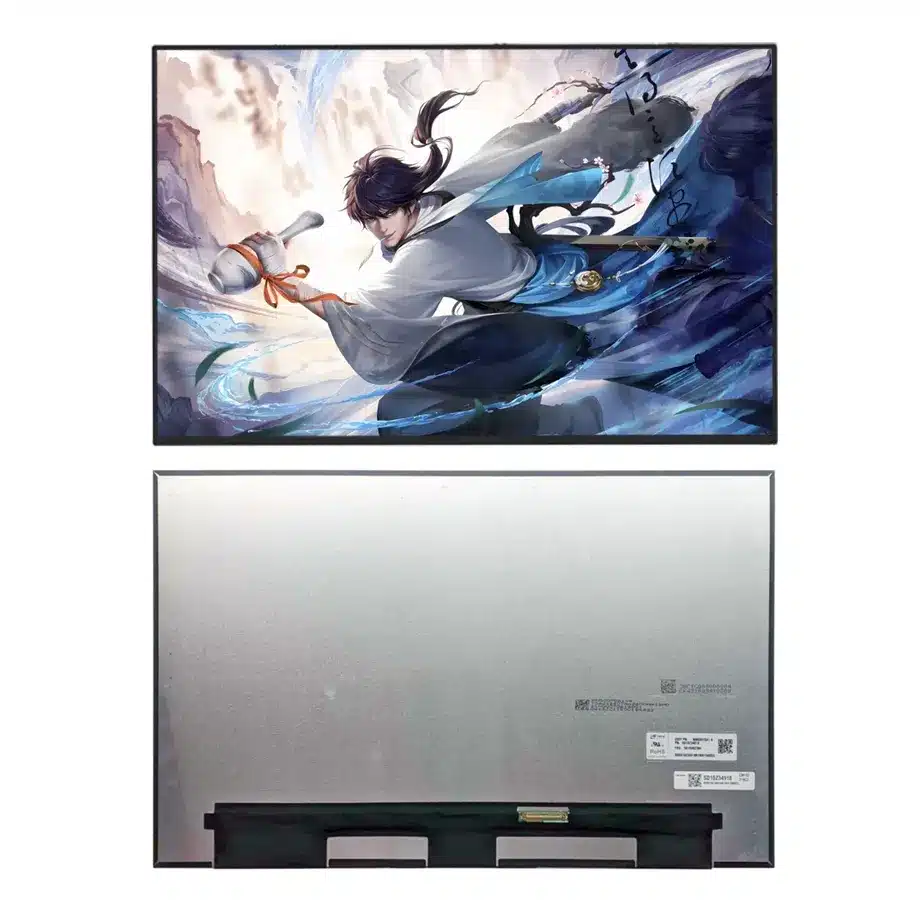
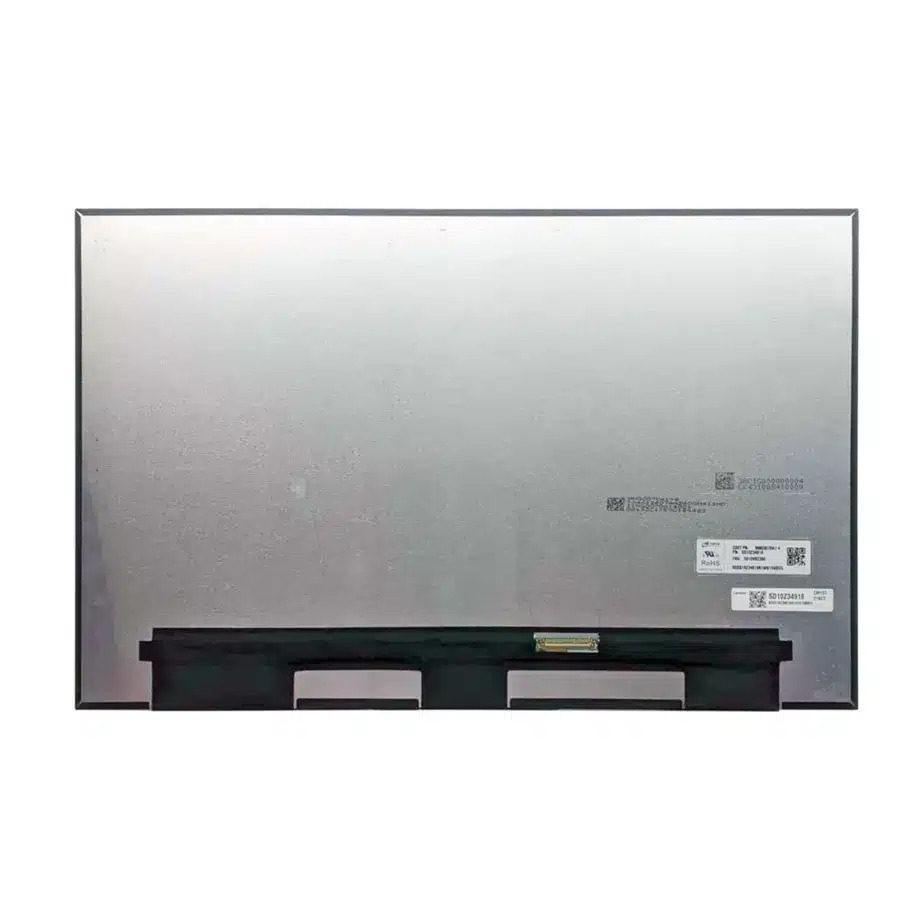
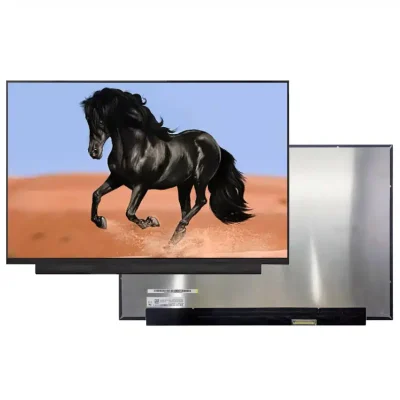
MNG007DA1-N Bent-PCBA Reverse Notebook Display Module CSOT
Model P/N
Size
Resolution
Brightness
Viewing Angle
Connector Type
Operating Temp
Overall(mm)
csot
MNG007DA1-N
Brand
Panel Size (inch)
Model P/N
Resolution
Brightness (nits)
Viewing Angle
Contrast Ratio
Response Time
Overall (mm)
Active Area (mm)
Refresh Rate
Display Colors
Panel Type
Connector Type
Surface Treatment
Operating Temp
Touchscreen Type
Storage Temp
Work Mode
Pixel Format
Input Voltage (V)
Vibration Resistance
Designed For
Product Details
Product Overview
MNG007DA1-N Bent-PCBA Reverse Notebook Display Module is a 16.0-inch CSOT LTPS TFT-LCD module for notebook integration, combining a native 2560(RGB)×1600 WQXGA raster with a 16:10 image format. The 344.678 × 215.424 mm active area sits inside a 349.68 × 225.42 × 4.6 mm outline, with a maximum module mass of 330 g. The panel uses FFS normally-black transmissive operation and is specified at 400 cd/m² typical luminance, 1200:1 typical contrast, 89/89/89/89 typical viewing-angle values at CR≥10 and 16.7M colors with 100% sRGB wording. Its surface is antiglare with 3H hard coating and a 6.5% maximum reflection value.
The module operates at 60 Hz and uses four-lane eDP 1.4 through a 40-pin 0.5 mm connector. A 3.3 V typical panel input is documented. The integrated 12S6P WLED backlight includes its LED driver and carries a 15K-hour reference. The module is supplied without touch, and the exact-model feature list includes Reverse I/F, Low Blue Light and PSR2 wording. Its slim form uses a bent PCBA with a local thickness reference of T≤3.5 mm, while the complete module outline remains 4.6 mm deep. Operating temperature is 0 to 50 °C and storage is -20 to 60 °C.
Three Core Buyer Value Propositions
1. WQXGA 16:10 geometry supports high-density productivity without an extreme graphics load
The 2560×1600 raster gives a 16-inch notebook substantially more vertical workspace than a 16:9 screen while remaining below 4K-class pixel counts. That balance is useful for productivity, development, engineering and content-review systems that need fine text and multi-window space without pushing the graphics subsystem to an unnecessarily high native resolution. The exact active area and module envelope also provide mechanical teams with a defined aperture and lid target instead of relying on nominal diagonal size.
2. 400-nit FFS optics and 100% sRGB wording create a measurable mainstream color baseline
The exact-model 400 cd/m² typical luminance, broad FFS viewing values and 100% sRGB wording give buyers concrete optical requirements for sample approval. These values are useful for business, creative-review and general notebook programs, but gamut coverage does not prove factory calibration, Delta E, white point or uniformity. Low Blue Light wording is likewise a feature label rather than proof of a named certification. The finished notebook should be evaluated through its actual brightness-control and color-management path.
3. eDP 1.4, integrated LED driver and a reverse-interface form narrow platform integration risk
The four-lane eDP 1.4 link, 40-pin 0.5 mm connector and integrated backlight driver create a well-defined electrical class for the notebook motherboard and cable. Reverse-interface wording makes connector side, cable exit and lid routing especially important. The feature reduces ambiguity during sourcing, yet exact pin mapping, AUX behavior, native timing and power sequence still need to match. A 16-inch WQXGA screen with the same connector count is not automatically a safe substitute.
Key Specifications at a Glance
| Parameter | Confirmed value |
|---|---|
| Manufacturer / model | CSOT MNG007DA1-N |
| Display size | 16.0 inch |
| Panel type | LTPS TFT-LCD, LCM |
| Native resolution | 2560(RGB)×1600 WQXGA, 16:10 |
| Active area | 344.678 × 215.424 mm |
| Outline | 349.68 × 225.42 × 4.6 mm |
| Weight | 330 g maximum |
| Brightness | 400 cd/m² typical |
| Display mode | FFS, Normally Black, Transmissive |
| Contrast ratio | 1200:1 typical |
| Viewing-angle values | 89/89/89/89 typical at CR≥10 |
| Response time | 25 ms typical Tr+Td |
| Colors | 16.7M, 100% sRGB, Low Blue Light wording |
| Surface | Antiglare, 3H hard coating, reflection 6.5% maximum |
| Refresh rate | 60 Hz |
| Native interface | eDP 1.4, 4 lanes, 40-pin 0.5 mm connector |
| Panel input | 3.3 V typical |
| Backlight | 12S6P WLED, 15K hrs, with LED driver |
| Touch | Without touch screen |
| Operating / storage | 0 to 50 °C / -20 to 60 °C |
How should eDP 1.4 bring-up be controlled?
VESA's Embedded DisplayPort overview provides standards context for the internal graphics-to-panel link used in notebooks. For this exact module, the production facts are four eDP lanes, eDP 1.4, a 40-pin 0.5 mm connector and a 3.3 V input. The motherboard still needs the correct 2560×1600 timing, link training, AUX behavior, panel enable sequence and brightness-control implementation.
Bring-up of MNG007DA1-N Bent-PCBA Reverse Notebook Display Module should include cold boot, repeated power cycles, sleep/resume, brightness transitions and sustained native-resolution operation. Reverse-interface wording makes cable orientation a mechanical as well as electrical concern. Prototype the real production cable inside the hinge and lid rather than approving the module from a bench cable. A pin-compatible connector shell cannot compensate for an incorrect connector side, lane mapping or power sequence.
What does 100% sRGB establish?
The exact-model color field supports 100% sRGB wording, which is useful for office content, web imagery and workflows built around the standard sRGB color space. It should not be promoted as proof of professional calibration. White point, gamma, Delta E, uniformity and brightness-dependent color behavior remain separate metrics. If the notebook is intended for design review or content production, define those values and test multiple production samples using the intended graphics and profile configuration.
TCL CSOT's laptop display overview shows notebook products spanning business, entertainment and other portable-computing use cases. That portfolio context supports Laptop as the application class, while the exact MNG007DA1-N facts remain the controlling basis for public specifications. Portfolio-level claims such as higher refresh, touch or other premium functions should not be transferred to this 60 Hz non-touch module unless separately documented.
How should Low Blue Light and PSR2 wording be interpreted?
The feature list includes Low Blue Light and PSR2 wording. Low-blue-light behavior can depend on backlight spectrum, panel transmission, operating mode and final color settings, while PSR2 involves coordination between panel capability and the graphics platform. These feature labels are relevant integration cues, not evidence of a named eye-care certification or a guarantee that every motherboard will enable panel self refresh automatically.
Notebook firmware should be tested across idle, video, browser scrolling, sleep and wake states if PSR2 is intended to be used. Image stability, wake latency and brightness behavior should be monitored with the production graphics driver. If eye-comfort certification matters to the end product, that certification should be established on the finished system with the applicable test evidence rather than inferred from the component feature list.
How should full depth and bent-PCBA thickness be separated?
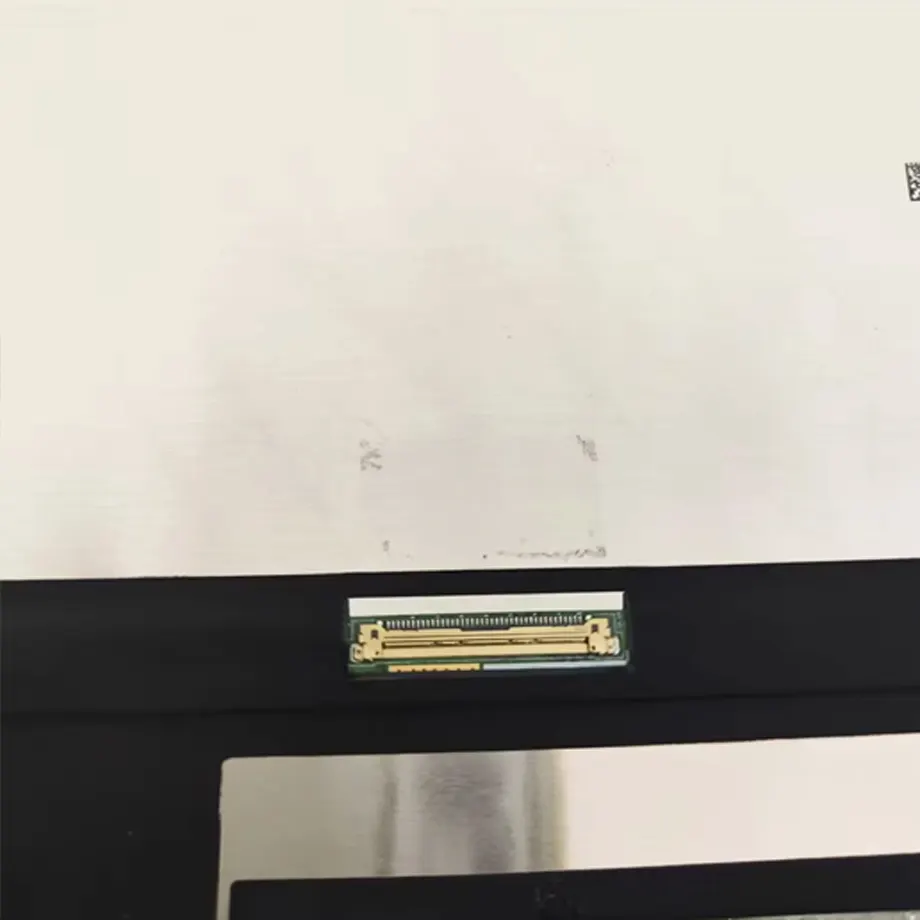
The full module outline is 349.68 × 225.42 × 4.6 mm, while the shape description also identifies a bent-PCBA region with T≤3.5 mm. These values refer to different mechanical concepts and should not be merged into one thickness. The controlled drawing should identify connector location, board bend, component height, support zones and cable path. The 330 g maximum mass also belongs in hinge and lid-balance calculations.
For replacement approval, compare the original panel label, exact suffix, cable side, active area and complete outline. A nearby MNG007DA1 revision can share 16-inch WQXGA geometry yet differ in refresh rate, optical values or mechanics. Full-suffix control is therefore more reliable than accepting a family name or generic “16-inch 2.5K” listing.
Backlight and brightness control inside a thin lid
The 12S6P WLED backlight includes its LED driver, reducing the need for an external monitor-style backlight board. The system still has to command brightness correctly and manage thermal load. Test full brightness, minimum useful brightness, rapid level changes and sustained warm operation. The 15K-hour reference should stay attached to its specified backlight conditions; it does not establish notebook warranty duration or future supply life.
The 400 cd/m² typical luminance should be checked on production samples because cover films, bezel geometry and system brightness tables can affect user-visible output. If the notebook adds a protective front layer, repeat reflection and luminance checks after assembly. The 6.5% maximum reflection value belongs to the panel surface and should not be converted into an outdoor-readability claim.
Application fit for 16-inch WQXGA notebook platforms
MNG007DA1-N Bent-PCBA Reverse Notebook Display Module is documented for Laptop use and is also sold in the replacement-screen channel as an exact 16-inch WQXGA notebook panel. A defensible fit is a productivity, business or color-conscious notebook designed around 60 Hz WQXGA, 400-nit FFS optics, 100% sRGB wording and the exact reverse-interface eDP geometry. No named Lenovo or other notebook model is guaranteed compatible from the panel specification alone.
New-platform and replacement projects should treat mechanical drawing, cable mapping and graphics timing as release items. The module is supplied without touch, so a touch notebook requires a separate sensor/cover architecture or another display assembly. Added touch layers can affect reflections, thickness and brightness and therefore need their own qualification.
Procurement and validation checklist
- Lock CSOT MNG007DA1-N and the complete suffix in the BOM.
- Validate native 2560×1600 timing at 60 Hz over four-lane eDP 1.4.
- Confirm the 40-pin 0.5 mm connector, reverse-interface orientation and production cable pin map.
- Check the 349.68 × 225.42 × 4.6 mm outline and 330 g maximum mass against the lid.
- Verify 400 cd/m² typical luminance, 100% sRGB wording and the antiglare surface on approved samples.
- Test brightness control, PSR2 behavior if used, cold boot and sleep/resume with production firmware.
- Keep the 25 ms typical Tr+Td response qualifier attached to this exact model.
- Preserve the non-touch configuration unless a separately qualified front stack is added.
- Request current revision and change-status information before volume procurement without inferring price, MOQ, lead time or future availability.
For MNG007DA1-N Bent-PCBA Reverse Notebook Display Module qualification, provide the target motherboard, production eDP cable, lid drawing, WQXGA timing plan, brightness and color acceptance limits, thermal conditions and required quantity. Exact-model electrical, optical and mechanical validation should control release so another 16-inch WQXGA panel is not treated as interchangeable without evidence.
Recommended: Same Size
(16")
Applications & Value of LCD Panel

- Fast sourcing with in-stock panels & cross-reference alternatives
- Stable supply chain with long-term availability
- Engineering-level support from panel to integration
- Custom solutions: cable, touch & optical bonding
- Strict quality control with IQC / OQC / aging test
- Full traceability system for quality assurance
- Complete technical documentation & drawings
- Compliance support: RoHS & certification files