~
~
~
~
~
~
MNF601EA1-6 4K Adobe RGB Laptop Panel 15.6 Inch LTPS CSOT
Model P/N
Size
Resolution
Brightness
Viewing Angle
Connector Type
Operating Temp
Overall(mm)
csot
MNF601EA1-6
Brand
Panel Size (inch)
Model P/N
Resolution
Brightness (nits)
Viewing Angle
Contrast Ratio
Response Time
Overall (mm)
Active Area (mm)
Refresh Rate
Display Colors
Panel Type
Connector Type
Surface Treatment
Operating Temp
Touchscreen Type
Storage Temp
Work Mode
Pixel Format
Input Voltage (V)
Designed For
Product Details
Product Overview
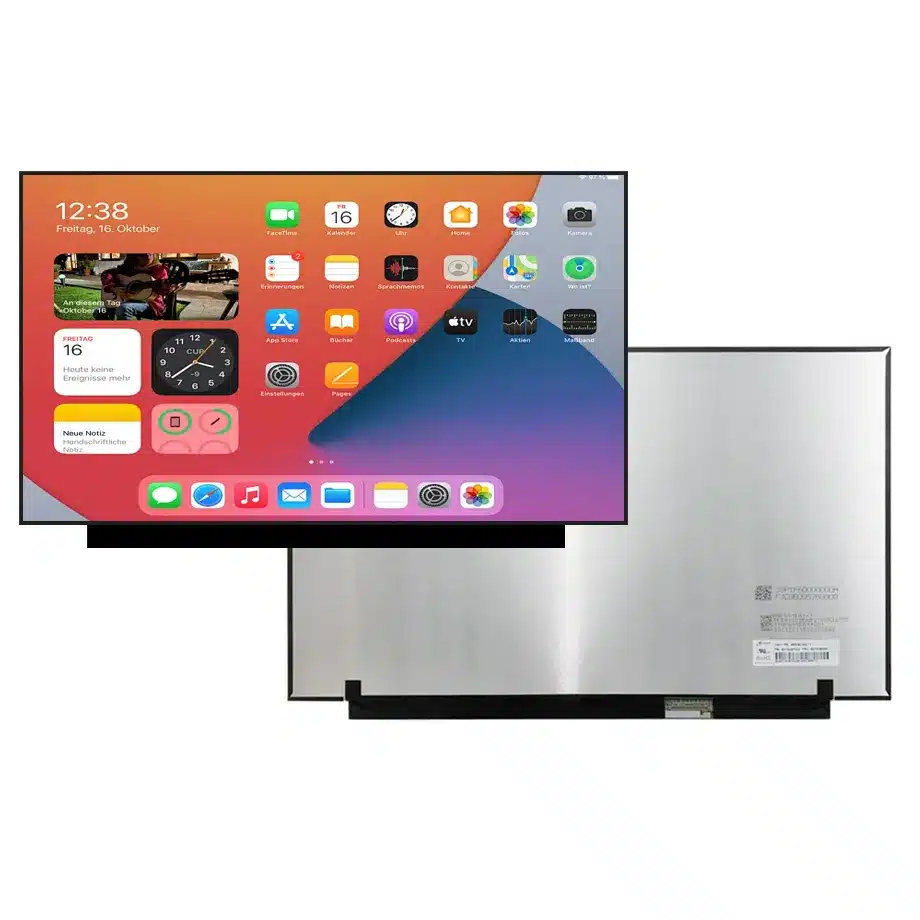
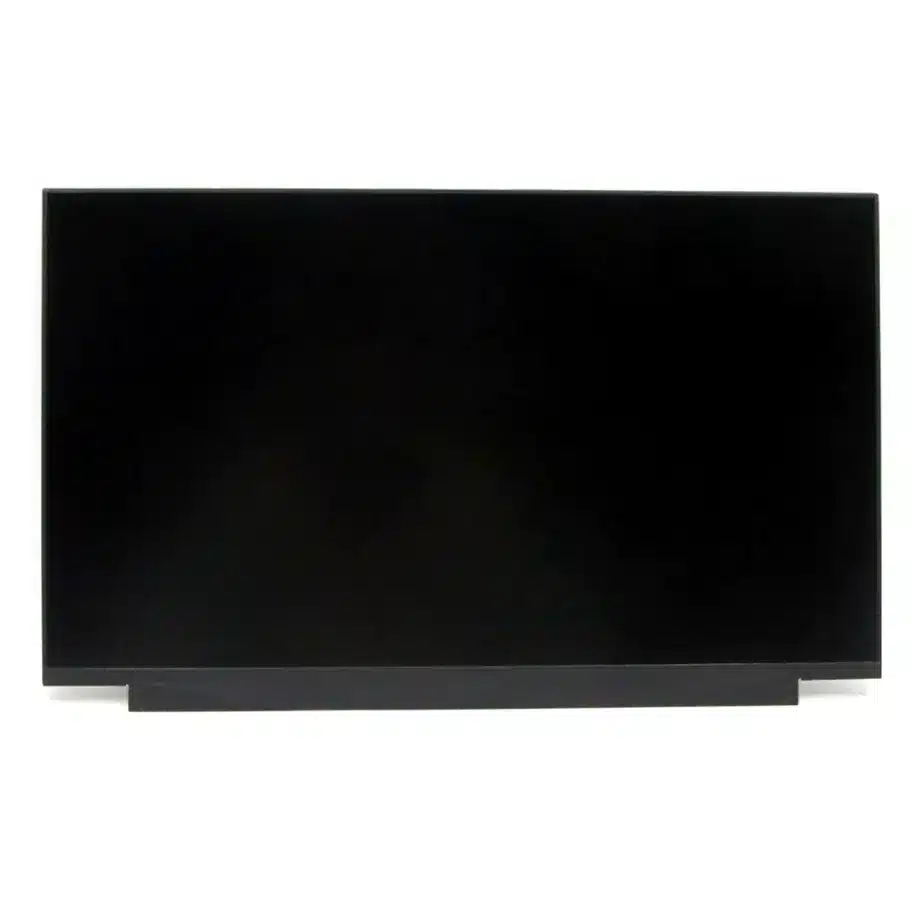
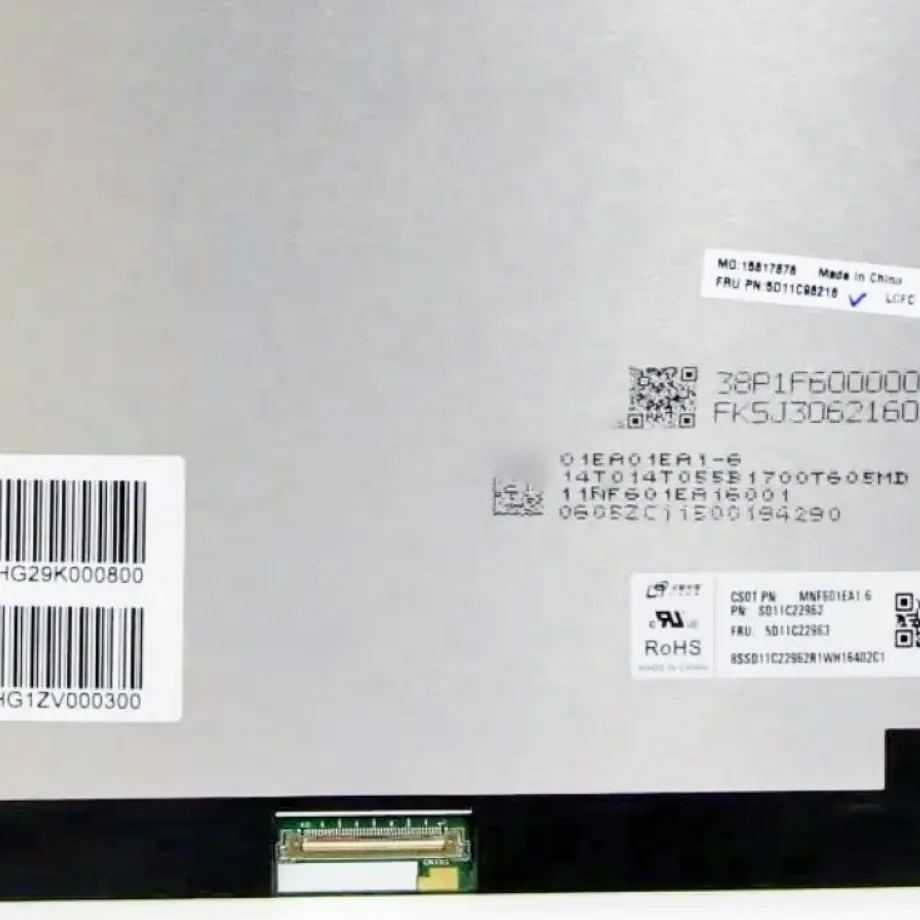
MNF601EA1-6 4K Adobe RGB Laptop Panel is a 15.6-inch CSOT LTPS TFT-LCD LCM aimed at high-resolution laptop display integration. Its native image format is 3840(RGB)×2160 UHD at 16:9, with a 345.6 × 194.4 mm active area and a 350.72 × 216.07 × 2.6 mm module outline. The display uses FFS, normally-black, transmissive operation, 600 cd/m² typical luminance, a 1500:1 typical contrast ratio and 16.7M colors with 99% Adobe RGB wording. It runs at 60 Hz and is supplied without touch.
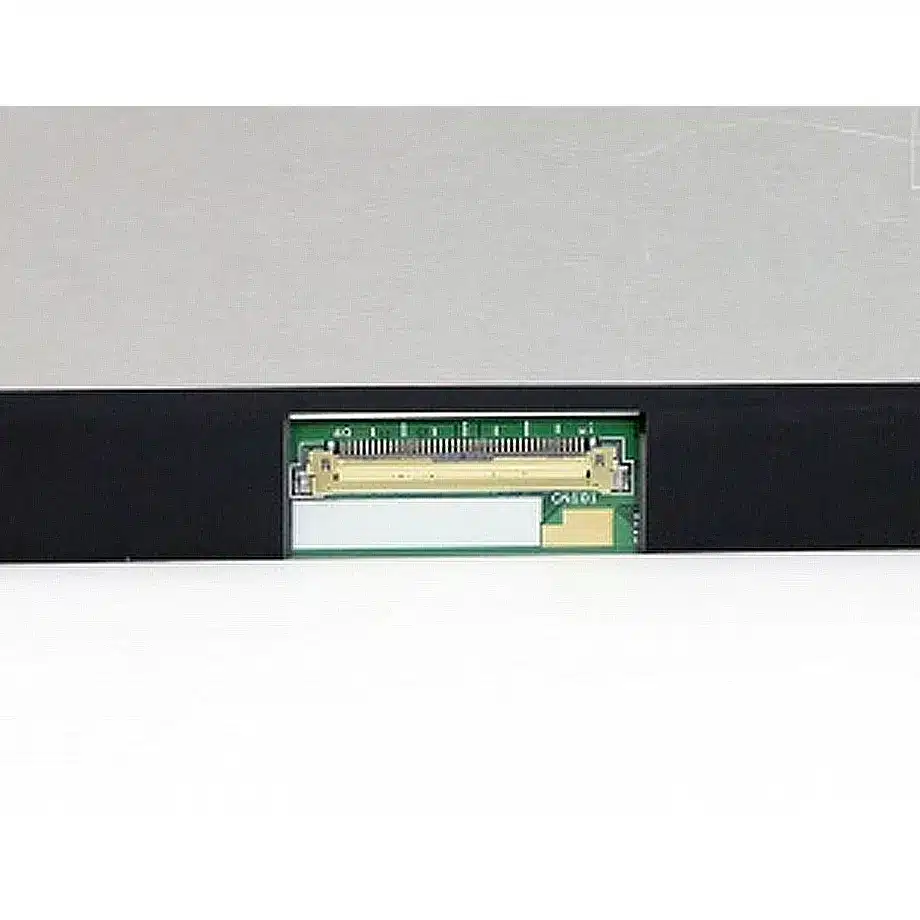
The module uses four-lane eDP 1.4 at HBR2, 5.4 Gbit/s per lane, through a 40-pin 0.5 mm connector with 3.3 V typical input. A WLED backlight and LED driver are integrated, with a 15K-hour backlight-life reference. Those specifications make the product a candidate for notebooks that require a dense 4K image and wide-gamut panel, but they do not prove compatibility with a particular laptop chassis or mainboard. Exact timing, connector position, cable pinout, power sequence and mechanical fit remain qualification items.
Three Core Buyer Value Propositions
1. 4K resolution and 99% Adobe RGB create a defined color-workflow target
The 3840×2160 native raster and 99% Adobe RGB wording give engineering teams two concrete requirements for a high-density, wide-gamut notebook screen. That is useful for workstation, imaging or creator-oriented laptop projects where pixel density and color gamut matter. The boundary is calibration: gamut coverage does not establish factory Delta E, white point, gamma accuracy or application-level color management, so those outcomes need system-level measurement.
2. Four-lane HBR2 eDP provides a clear high-bandwidth panel-side path
The exact interface is eDP 1.4 with four HBR2 lanes and a 40-pin 0.5 mm connector. That narrows controller and cable selection compared with a generic “40-pin 4K panel” description. It still leaves product-specific details to verify, including pin mapping, AUX behavior, connector orientation, panel timing and the notebook’s power sequence. A matching connector shell is not enough evidence for electrical compatibility.
3. Slim 2.6 mm LCM construction supports thin-lid packaging while retaining an integrated backlight
The 350.72 × 216.07 × 2.6 mm module combines a thin physical profile with an integrated WLED backlight and driver. This can simplify the display-side illumination architecture in a slim notebook lid. Mechanical approval still requires the exact drawing because mounting features, connector position, cable exit and local clearances can differ between panels with similar dimensions. The 2.6 mm depth should be treated as a verified outline value, not a guarantee of drop-in interchangeability.
Key Specifications at a Glance
| Parameter | Confirmed value |
|---|---|
| Manufacturer / model | CSOT MNF601EA1-6 |
| Display size | 15.6 inch |
| Panel type | LTPS TFT-LCD, LCM |
| Native resolution | 3840(RGB)×2160 UHD, 16:9 |
| Active area | 345.6 × 194.4 mm |
| Outline | 350.72 × 216.07 × 2.6 mm |
| Brightness | 600 cd/m² typical |
| Contrast ratio | 1500:1 typical |
| Viewing-angle values | 89/89/89/89 typical at CR≥10 |
| Response time | 25 ms typical, Tr+Td |
| Colors | 16.7M, 99% Adobe RGB |
| Surface | Hard coating 3H |
| Refresh rate | 60 Hz |
| Native interface | eDP 1.4, 4 lanes, HBR2 5.4 Gbit/s per lane |
| Connector | 40 pins, 0.5 mm pitch |
| Panel input | 3.3 V typical |
| Backlight | WLED, 15K hrs, with LED driver |
| Touch | Without touch screen |
| Operating / storage | 0 to 50 °C / -20 to 60 °C |
How should 99% Adobe RGB be qualified in a laptop?
The 99% Adobe RGB value is a gamut-coverage statement for the panel. It indicates that the display is intended to reproduce a substantially wider color space than mainstream low-gamut notebook screens, but it does not describe calibration accuracy by itself. A finished laptop still needs the correct GPU output, color profile, operating-system color management, white-point target and production calibration if the project requires controlled color reproduction.
For MNF601EA1-6 4K Adobe RGB Laptop Panel, qualification should include representative Adobe RGB and sRGB content, grayscale tracking, white uniformity and the intended brightness range. If the notebook will be used for imaging or creative applications, define measurable acceptance limits such as color error and uniformity rather than treating gamut percentage as a complete quality score. No formal creator-display certification is inferred from the 99% Adobe RGB wording.
What does four-lane HBR2 eDP 1.4 require from the host?
VESA’s Embedded DisplayPort material identifies HBR2 as a 5.4 Gbit/s main-link data rate and describes eDP as an embedded-display interface. The panel’s four-lane topology, 40-pin connector and exact timing remain model-specific. Those details need to be matched to the notebook motherboard and production cable rather than inferred from the eDP standard alone.
Bring-up should confirm link training, AUX communication, native 3840×2160 timing, cold boot, sleep/resume and brightness control. The 3.3 V typical panel input should follow the exact power sequence in the controlled specification. External USB-C, HDMI or DisplayPort connectors on the notebook do not define the panel-native path; the platform graphics architecture must still deliver the correct embedded link to the internal screen.
Does hard coating 3H mean this panel is antiglare?
No antiglare haze value is confirmed for MNF601EA1-6. The confirmed surface specification is Hard coating (3H), with no documented antiglare haze value for this suffix. Hardness and glare behavior are separate properties: a hard-coated surface describes scratch-resistance treatment, while reflection and haze require their own exact-model evidence.
This distinction matters in replacement work because two 15.6-inch 4K panels can have similar electrical specifications but visibly different front-surface behavior. If reflectance is a project requirement, inspect the approved sample under the intended lighting and obtain exact-model surface data. Do not use the appearance of a related MNF601EA1 variant as proof for this suffix.
How should the 600 cd/m² luminance be used in design decisions?
The documented brightness is 600 cd/m² typical. That provides a substantial luminance target for notebook integration, but brightness alone does not prove sunlight readability, HDR certification or any formal outdoor-use grade. The finished lid’s cover, optical stack and brightness-control behavior affect practical visibility. Power and thermal validation are also relevant because high luminance can change backlight loading and internal temperature.
The WLED system has a 15K-hour life reference and an integrated driver. That reference should remain a component-level backlight figure; it is not a warranty or guaranteed useful-life statement for the notebook. TCL CSOT’s notebook display overview provides manufacturer context for high-resolution and high-gamut laptop displays, but portfolio claims are not additional MNF601EA1-6 specifications.
Mechanical packaging and no-touch integration
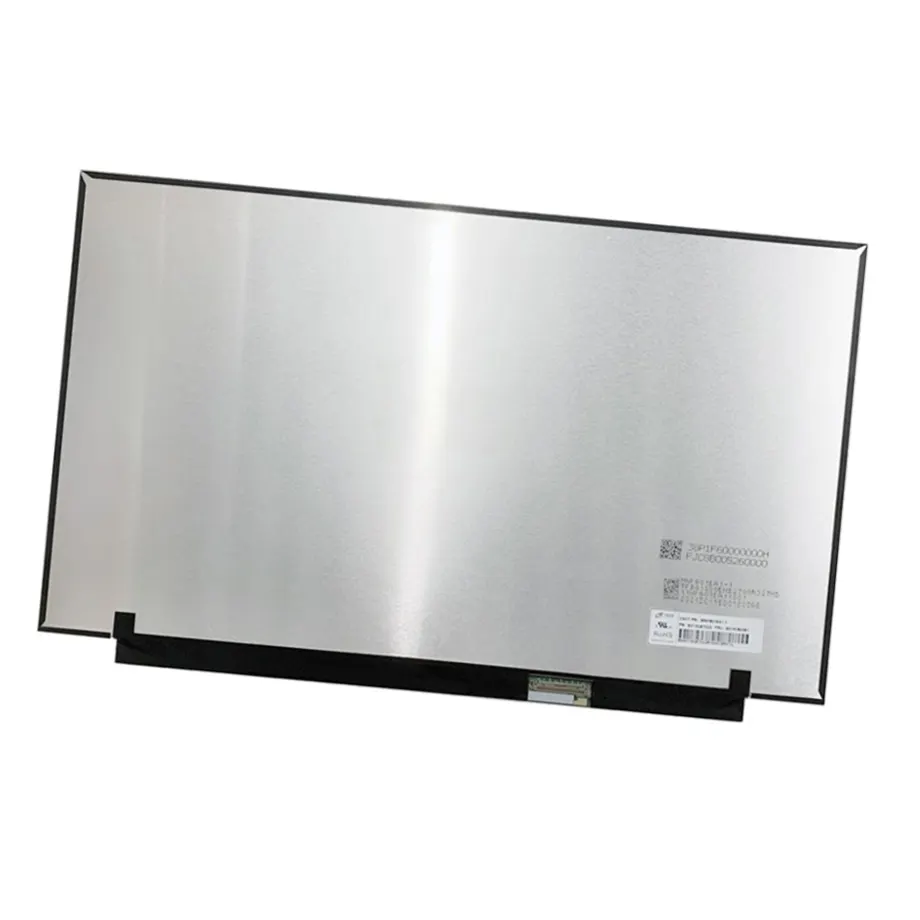
The 350.72 × 216.07 × 2.6 mm outline describes a slim module with flat PCBA construction. The active image area is 345.6 × 194.4 mm, which should be checked against the bezel opening separately from the outer rectangle. Complete mounting details and connector position should come from the current drawing or an approved sample. Panel weight is not documented for this exact suffix, so no mass value is stated instead of borrowing one from another suffix.
The module is supplied without touch. If the notebook requires touch, the digitizer, controller, cover glass, bonding method and cable architecture become separate integration elements. Do not describe a touch-enabled system configuration as an intrinsic feature of this panel. Optical effects from an added touch stack should also be measured with the production display because they can change reflection, luminance and color performance.
Application fit for high-resolution notebook projects
MNF601EA1-6 4K Adobe RGB Laptop Panel is documented for laptop use. Its strongest application is a notebook platform deliberately designed around a 15.6-inch UHD, 600-nit, wide-gamut LCM with a four-lane HBR2 eDP path. The combination is relevant to high-resolution mobile workstations, creator notebooks and other laptop projects where the confirmed color and luminance specifications are useful, but those scenarios do not imply certification or exact fit to a particular OEM model.
Same-model public listings continue to place MNF601EA1-6 in laptop applications, supporting this scope. The 0 to 50 °C operating range remains a normal component limit, not evidence of industrial-wide-temperature or automotive qualification. Any project that needs special environmental, safety or regulatory evidence should request that documentation separately rather than deriving it from the LTPS backplane or high-resolution format.
Procurement and validation checklist
- Confirm the exact CSOT model suffix MNF601EA1-6 on the panel label and purchase record.
- Validate native 3840×2160 timing at 60 Hz and the four-lane HBR2 eDP 1.4 link.
- Check the 40-pin 0.5 mm connector, pin assignment, cable orientation and connector position.
- Verify the 350.72 × 216.07 × 2.6 mm outline and 345.6 × 194.4 mm active area against the notebook lid.
- Measure 600 cd/m² typical luminance and the intended brightness-control range in the complete system.
- Qualify 99% Adobe RGB behavior with project-specific calibration and uniformity limits where color accuracy matters.
- Keep the confirmed Hard coating 3H wording separate from any unverified antiglare claim.
- Confirm that a non-touch LCM is correct for the platform and treat any touch stack separately.
- Request current revision, quantity and change information at ordering time; do not infer a supply-life commitment from current production or stock status.
When the design calls for MNF601EA1-6 4K Adobe RGB Laptop Panel, provide the target motherboard or controller, eDP cable details, native timing requirements, mechanical drawing, color acceptance criteria, brightness target and required quantity. These inputs make the qualification process specific to MNF601EA1-6 rather than to the broader family of 15.6-inch 4K notebook panels.
Recommended: Same Size
(15.6")
Applications & Value of LCD Panel

- Fast sourcing with in-stock panels & cross-reference alternatives
- Stable supply chain with long-term availability
- Engineering-level support from panel to integration
- Custom solutions: cable, touch & optical bonding
- Strict quality control with IQC / OQC / aging test
- Full traceability system for quality assurance
- Complete technical documentation & drawings
- Compliance support: RoHS & certification files