~
~
~
~
~
~
N140GLE-GQ1 VRR High Resolution Laptop Panel WQXGA Innolux
Model P/N
Size
Resolution
Brightness
Viewing Angle
Connector Type
Operating Temp
Overall(mm)
innolux
N140GLE-GQ1
Brand
Panel Size (inch)
Model P/N
Resolution
Brightness (nits)
Viewing Angle
Contrast Ratio
Response Time
Overall (mm)
Active Area (mm)
Refresh Rate
Display Colors
Panel Type
Connector Type
Operating Temp
Touchscreen Type
Storage Temp
Work Mode
Pixel Format
Input Voltage (V)
Vibration Resistance
Designed For
Product Details
Product Overview
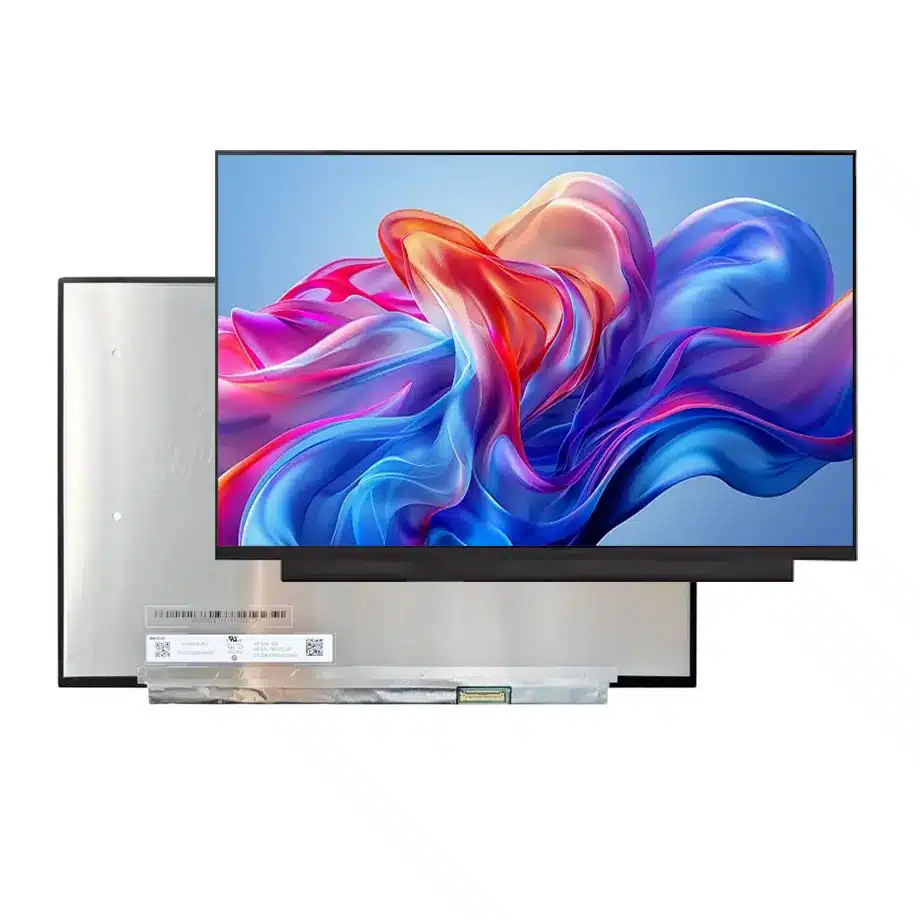
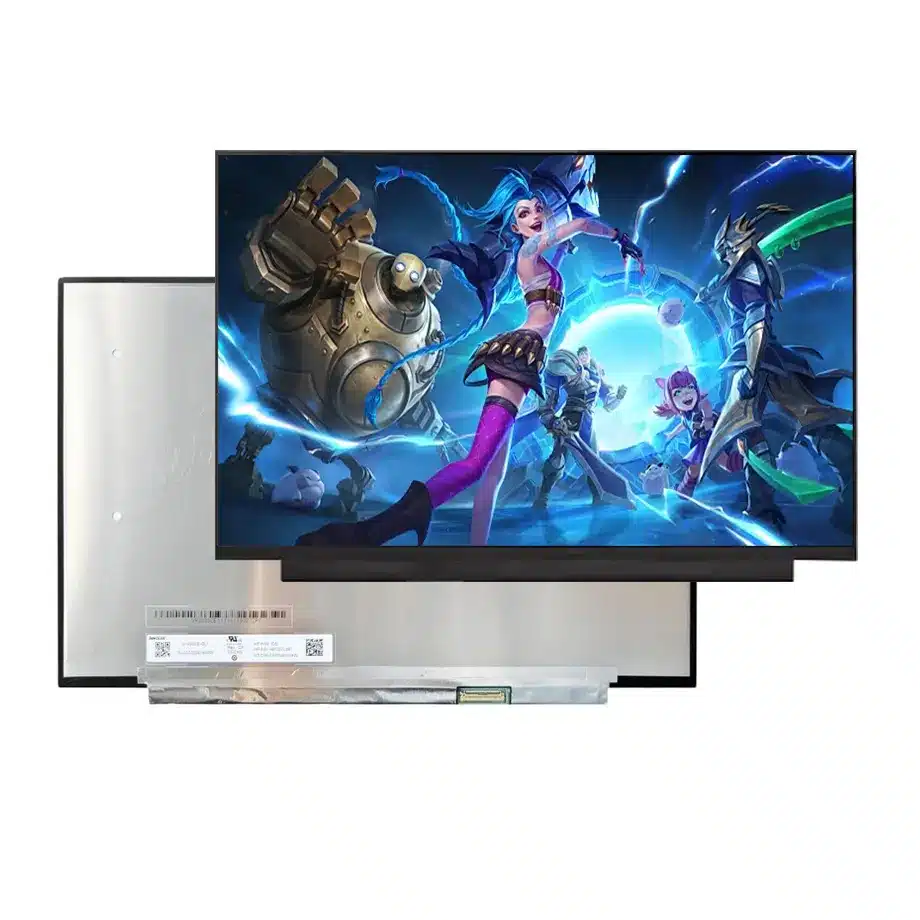
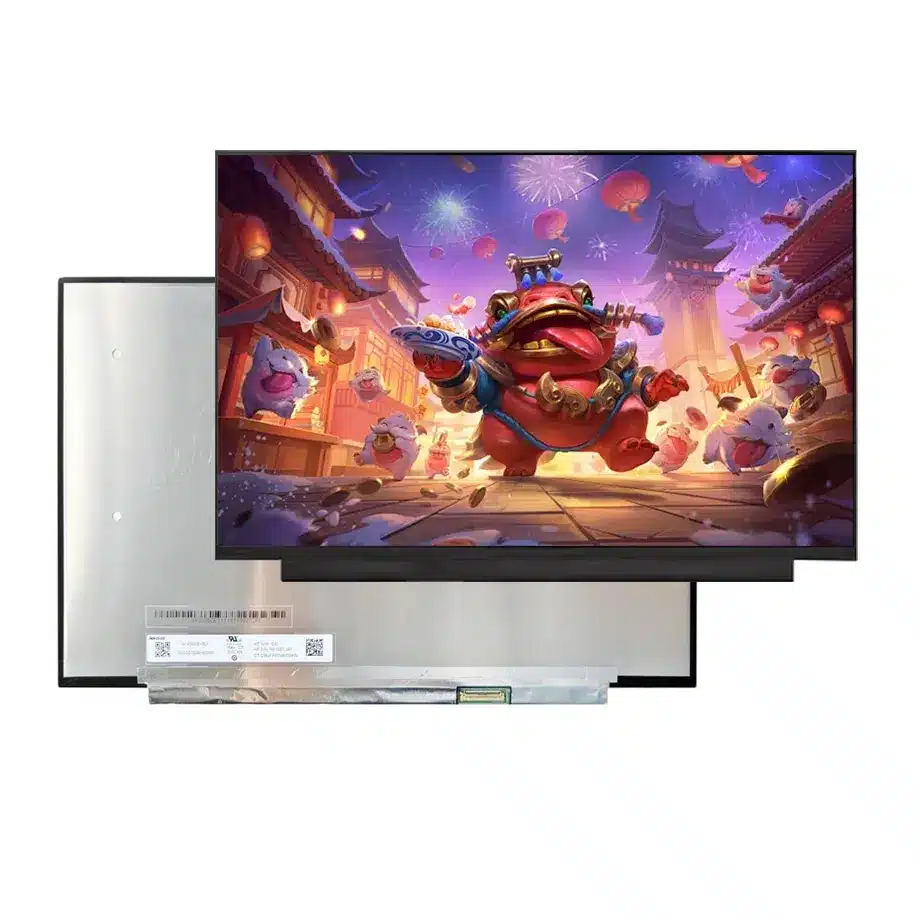
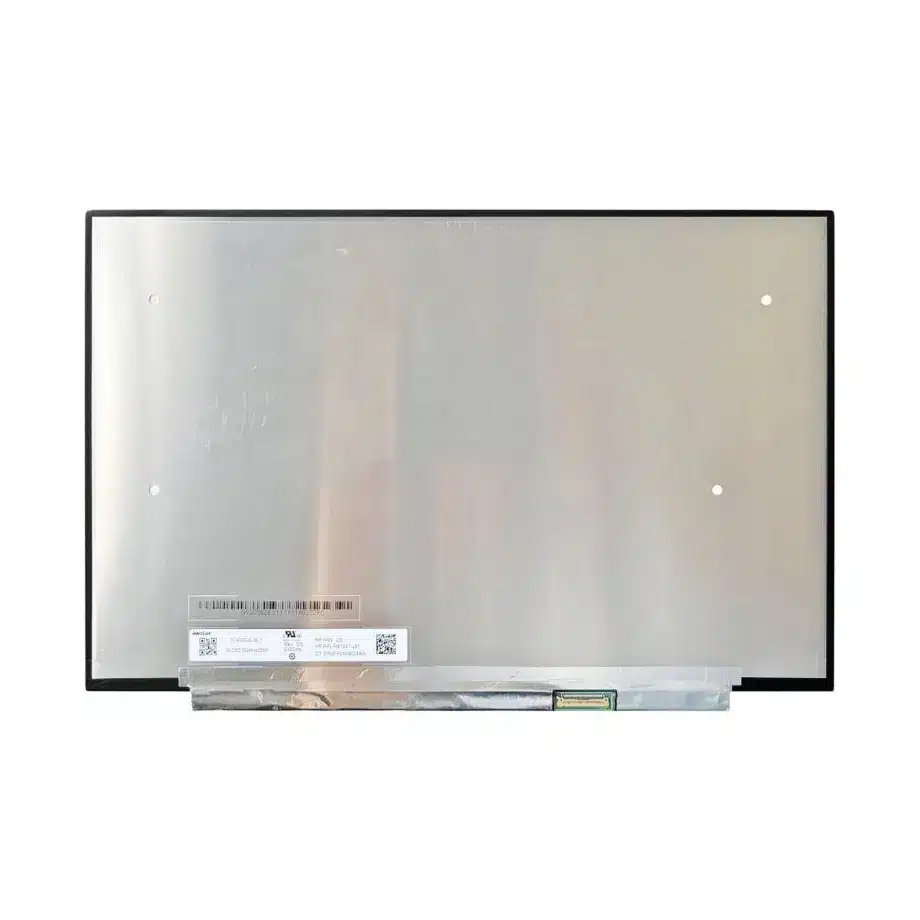
N140GLE-GQ1 VRR High Resolution Laptop Panel is a 14.0-inch Innolux LTPS TFT-LCD LCM for notebook platforms that need a dense 2560(RGB)×1600 WQXGA raster in a 16:10 format. The panel uses AAS normally-black transmissive operation, 500 cd/m² typical luminance, a 1500:1 typical contrast ratio and 16.7M colors with 100% sRGB wording. It runs at 120 Hz, and the exact-model reference also identifies VRR as a feature. The active area is 301.594 × 188.496 mm, while full outline dimensions and panel mass are not confirmed in the available exact-model data.
The module uses four-lane eDP 1.4 with 3.3 V typical panel input. A WLED backlight and LED driver are integrated with a 15K-hour life reference, and the module is supplied without touch. The response-time line lists 12/13 typical Tr/Td with an incompatible “mm” unit; because response time is unambiguously a time quantity, the engineering interpretation is 12/13 ms without changing either numeric value.
Three Core Buyer Value Propositions
1. 120 Hz plus VRR creates a defined high-refresh notebook qualification target
The combination of a 120 Hz panel rate and documented VRR feature gives system teams a clear motion-oriented requirement to validate. It supports notebook architectures that are intentionally designed for higher refresh than a conventional 60 Hz panel. The boundary is system behavior: the GPU, eDP transmitter, cable, firmware and operating modes must support the exact timing and variable-refresh behavior. The panel specification does not guarantee that an arbitrary laptop motherboard can enable VRR or sustain 120 Hz.
2. WQXGA 16:10 geometry and 500-nit luminance support high-density mobile display design
The 2560×1600 native raster provides a 16:10 workspace across a 301.594 × 188.496 mm active area, while 500 cd/m² typical luminance gives a measurable optical target. These facts are useful for high-resolution notebook design and replacement screening. They do not establish sunlight readability, HDR certification or exact fit to a particular computer. Final visibility, power and thermal behavior depend on the complete lid assembly and platform controls.
3. Four-lane eDP 1.4 narrows the electrical class without hiding mechanical unknowns
A four-lane eDP 1.4 path and 3.3 V typical panel input give electrical engineers a concrete starting point for link and cable review. That reduces ambiguity compared with selecting a display by size and resolution alone. Mechanical approval still requires more evidence because the full outline, thickness, connector position and mass are unresolved. Those missing values should remain blank rather than being copied from another N140GLE suffix.
Key Specifications at a Glance
| Parameter | Confirmed value |
|---|---|
| Manufacturer / model | Innolux N140GLE-GQ1 |
| Display size | 14.0 inch |
| Panel type | LTPS TFT-LCD, LCM |
| Native resolution | 2560(RGB)×1600 WQXGA, 16:10 |
| Active area | 301.594 × 188.496 mm |
| Brightness | 500 cd/m² typical |
| Display mode | AAS, Normally Black, Transmissive |
| Contrast ratio | 1500:1 typical |
| Viewing-angle values | 89/89/89/89 typical at CR≥10 |
| Response time | 12/13 ms typical Tr/Td |
| Colors | 16.7M, 100% sRGB |
| Refresh rate | 120 Hz; VRR feature wording |
| Native interface | eDP, 4 lanes, eDP 1.4 |
| Panel input | 3.3 V typical |
| Backlight | WLED, 15K hrs, with LED driver |
| Touch | Without touch screen |
| Operating / storage | 0 to 50 °C / -20 to 60 °C |
What must the platform support for 120 Hz and VRR?
A high-refresh panel needs more than a source resolution match. N140GLE-GQ1 VRR High Resolution Laptop Panel requires the notebook graphics path to deliver the correct 2560×1600 timing through the four-lane embedded link and to support the panel's variable-refresh operating behavior where the platform enables it. VESA explains that eDP is the internal electrical interface used to carry video from graphics hardware to embedded panels in its eDP technology overview.
Qualification should include 120 Hz startup, sleep/resume, link stability, low-refresh transitions where VRR is used, brightness changes and representative GPU workloads. A controller or motherboard advertised for WQXGA output is not sufficient evidence by itself. Firmware timing, cable integrity, AUX communication and panel power sequence all affect whether the exact module operates reliably.
How should the 500 cd/m² luminance be interpreted?
The documented 500 cd/m² typical value is a panel-level luminance target. It is useful for comparing notebook displays and setting incoming optical acceptance, but it should not be converted into a sunlight-readable or outdoor-grade claim. Front-cover reflections, brightness-control range and ambient light affect practical visibility. Sustained high-brightness use can also affect power consumption and lid temperature, so system validation should include thermal behavior at the intended operating point.
The WLED source has a 15K-hour life reference and an integrated LED driver. That reference is not a guarantee of notebook service life, future supply duration or a specific lifetime at maximum brightness. A reliability plan should keep backlight life, system warranty, duty cycle and component sourcing as separate topics. If the project needs a quantified lifetime under a particular brightness profile, it requires its own engineering evidence.
What does the 16:10 WQXGA geometry change for replacement work?
The native 2560×1600 raster is a 16:10 format, so a 14-inch 2560×1440 or 1920×1200 panel is not equivalent simply because the diagonal is similar. Timing, aspect ratio and active image dimensions differ. The confirmed 301.594 × 188.496 mm active area can be compared with the visible aperture of the existing notebook, but the missing full outline prevents a complete mechanical decision from that measurement alone.
Replacement qualification should therefore begin with the exact panel label and continue with the current drawing or an approved original sample. Check connector location, lid cavity, mounting or adhesive method and cable route. If a proposed substitute requires a different cable or timing table, treat it as a new engineering change rather than a drop-in replacement.
Why is the response-time unit corrected to milliseconds?
The response-time specification labels the quantity as Response Time and provides 12/13 typical Tr/Td, but the attached unit is “mm.” Millimeters measure length and cannot describe rise/decay time. Because both the field label and Tr/Td qualifier identify a time measurement, the unit correction is unambiguous: the engineering value is 12/13 ms typical Tr/Td. The numbers are preserved exactly; only the incompatible unit is corrected.
This correction does not authorize any additional performance claim. Rise and decay time are panel transition measurements, not end-to-end input latency. At 120 Hz, the complete notebook still includes frame delivery, GPU rendering, synchronization and operating-system behavior. Motion performance should be evaluated with the intended platform and content rather than inferred from one transition-time line.
Color gamut, viewing angle and calibration boundaries
The module is documented with 16.7M colors and 100% sRGB, plus symmetric 89/89/89/89 typical viewing-angle values at CR≥10. Those facts provide a useful optical baseline for a notebook that needs broad viewing and standard-gamut coverage. They do not guarantee a particular Delta E, white point, gamma or factory calibration. Color-managed applications should define measurable targets for the complete notebook and test them at representative brightness levels.
Innolux describes notebook panels as a major product application and highlights thin, power-efficient and high-resolution designs in its official application overview. That manufacturer context supports laptop use but does not fill the missing dimensions, weight or surface treatment of N140GLE-GQ1. Those unresolved exact-model fields remain blank until a reliable same-model source is available.
Mechanical unknowns and incoming inspection
Full width, height, thickness, mass and surface treatment are not confirmed in the available exact-model data. These omissions are material in a notebook because millimeter-level changes can affect lid fit and connector reach. Procurement should request the controlled drawing or compare an approved sample before volume ordering. Do not borrow mechanics from N140GLE-GL1, N140GLE-GT1 or another family suffix even if the active area and native resolution appear similar.
Incoming inspection should record the exact suffix, connector condition and visible optical surface. A substitute suffix should be quarantined for engineering review. The module's 0 to 50 °C operating range and -20 to 60 °C storage range are useful environmental limits, but they do not establish industrial-wide-temperature, automotive or rugged qualification.
Application fit for high-refresh notebook displays
N140GLE-GQ1 VRR High Resolution Laptop Panel is documented for laptop applications. The strongest use case is a notebook platform intentionally designed for a 14-inch 16:10 WQXGA LCM with 500 cd/m² luminance, 120 Hz refresh, VRR capability and four-lane eDP 1.4. Exact-model service replacement is also appropriate when the installed label matches N140GLE-GQ1 and the system mechanics are confirmed.
The panel has no integrated touch function. A touch-enabled notebook would need a separate sensor, controller, cover and cable stack. No gaming certification, HDR tier or OEM fit is implied from the 120 Hz rate or VRR wording. Those features are engineering triggers for validation, not guarantees about a finished computer's performance or compatibility.
Procurement and validation checklist
- Lock the complete Innolux N140GLE-GQ1 identity in the BOM.
- Validate 2560×1600 native timing at 120 Hz and the intended VRR operating behavior.
- Confirm four-lane eDP 1.4, AUX communication and 3.3 V panel power sequencing.
- Check 500 cd/m² luminance across the required brightness-control and thermal range.
- Use the 301.594 × 188.496 mm active area for preliminary bezel screening, but obtain exact outline data before mechanical release.
- Preserve the corrected 12/13 ms Tr/Td response-time value without importing other performance data.
- Validate 100% sRGB coverage and viewing behavior using project-specific color criteria.
- Keep weight and surface treatment blank until exact-model evidence is available.
- Confirm the no-touch architecture and qualify any external touch stack separately.
For N140GLE-GQ1 VRR High Resolution Laptop Panel qualification, provide the target notebook platform, eDP cable, mechanical drawing, 120 Hz and VRR requirements, luminance and color acceptance limits, and required quantity. Exact-model electrical and mechanical validation should control the decision before the part is released for production or service use.
Recommended: Same Size
(14")
Applications & Value of LCD Panel

- Fast sourcing with in-stock panels & cross-reference alternatives
- Stable supply chain with long-term availability
- Engineering-level support from panel to integration
- Custom solutions: cable, touch & optical bonding
- Strict quality control with IQC / OQC / aging test
- Full traceability system for quality assurance
- Complete technical documentation & drawings
- Compliance support: RoHS & certification files