~
~
~
~
~
~
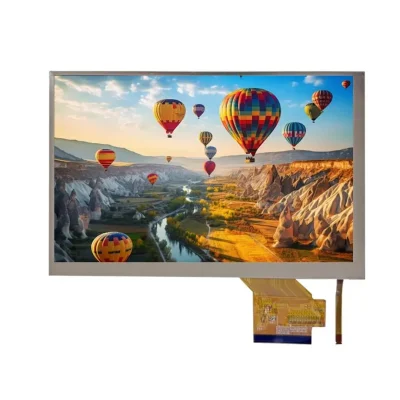
TL070VVGP04-00 7 Inch FHD Handheld Touchscreen Module Tianma
Model P/N
Size
Resolution
Brightness
Viewing Angle
Connector Type
Operating Temp
Overall(mm)
tianma
TL070VVGP04-00
Brand
Panel Size (inch)
Model P/N
Resolution
Brightness (nits)
Viewing Angle
Contrast Ratio
Response Time
Overall (mm)
Active Area (mm)
Refresh Rate
Display Colors
Panel Type
Connector Type
Surface Treatment
Operating Temp
Touchscreen Type
Storage Temp
Work Mode
Pixel Format
Input Voltage (V)
Touch Interface
Designed For
Product Details
Product Overview
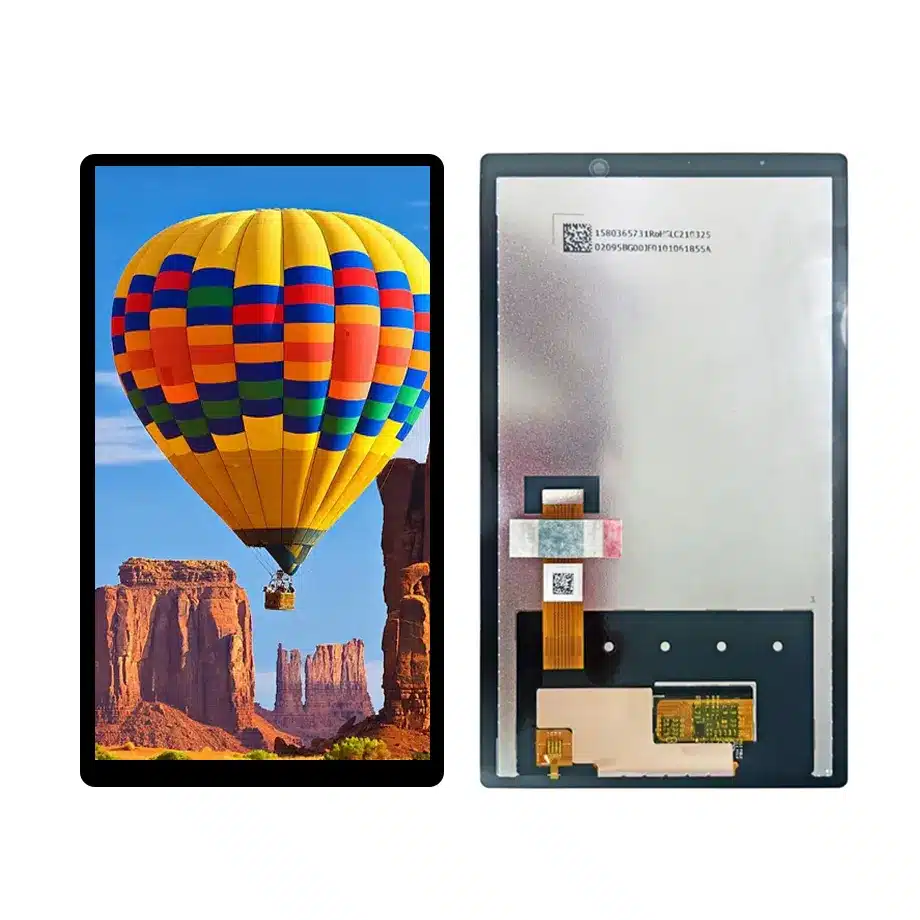
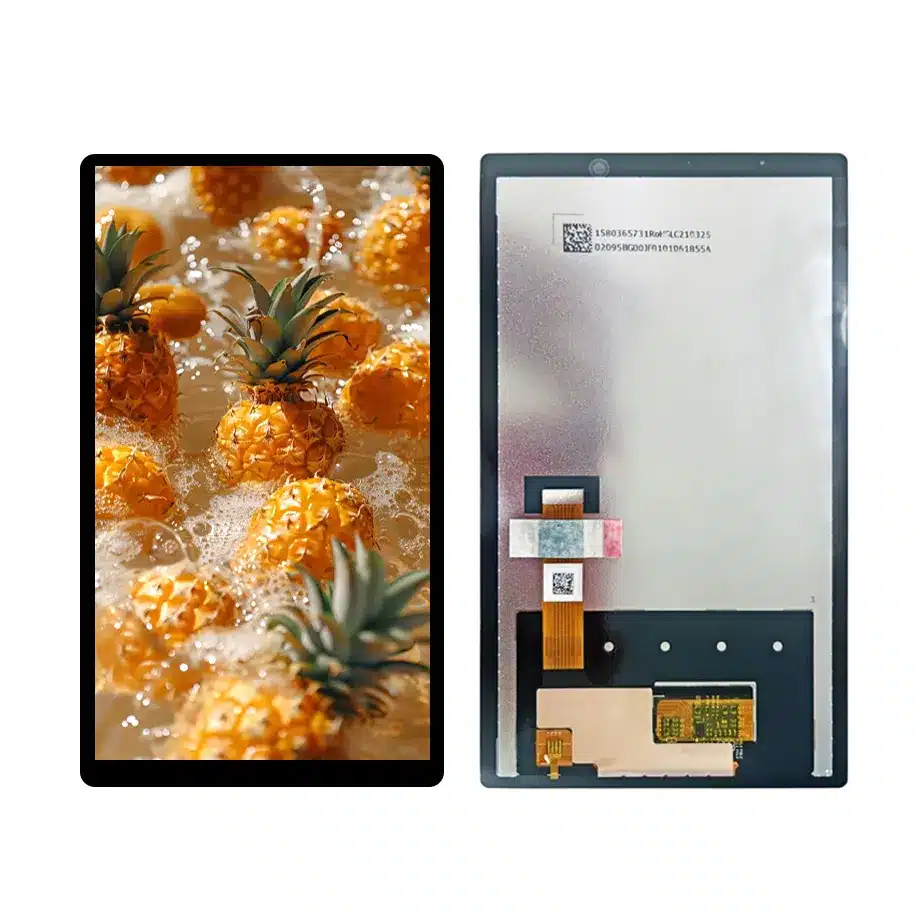
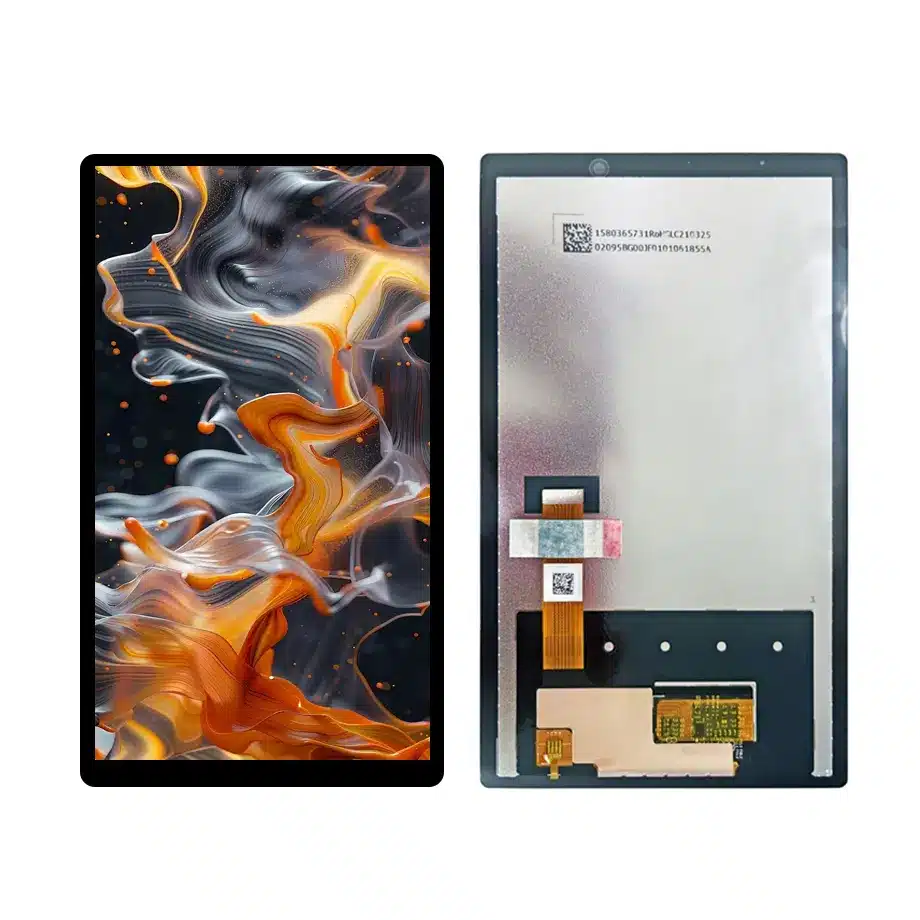
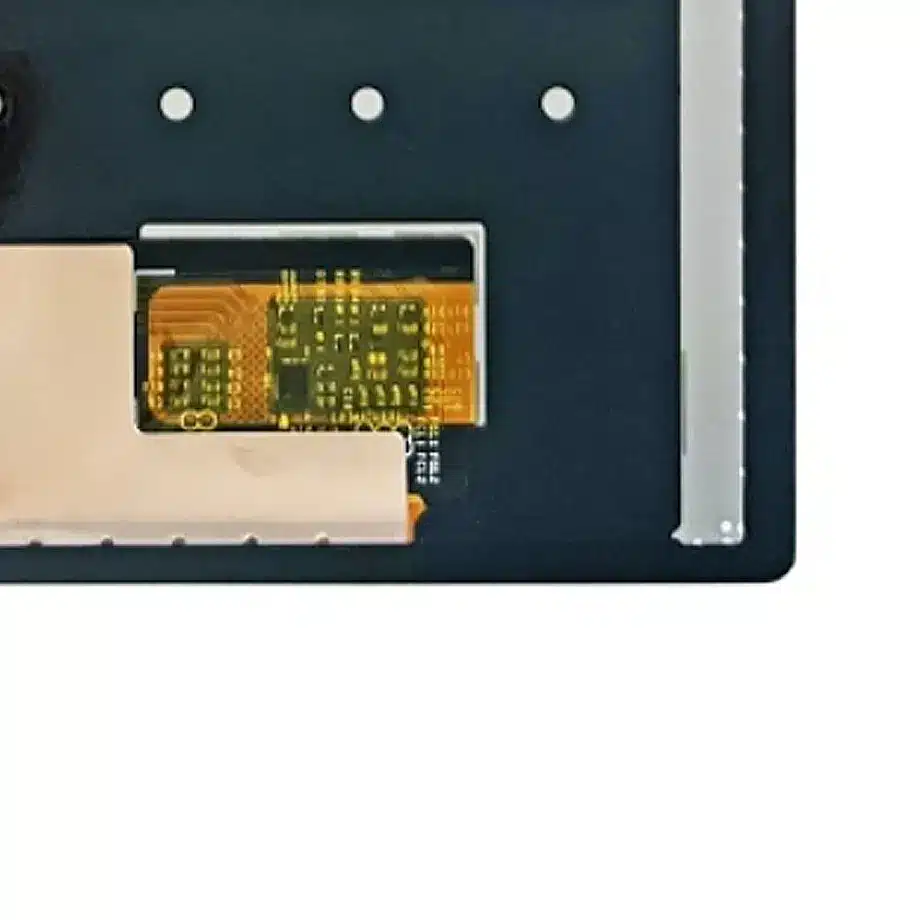
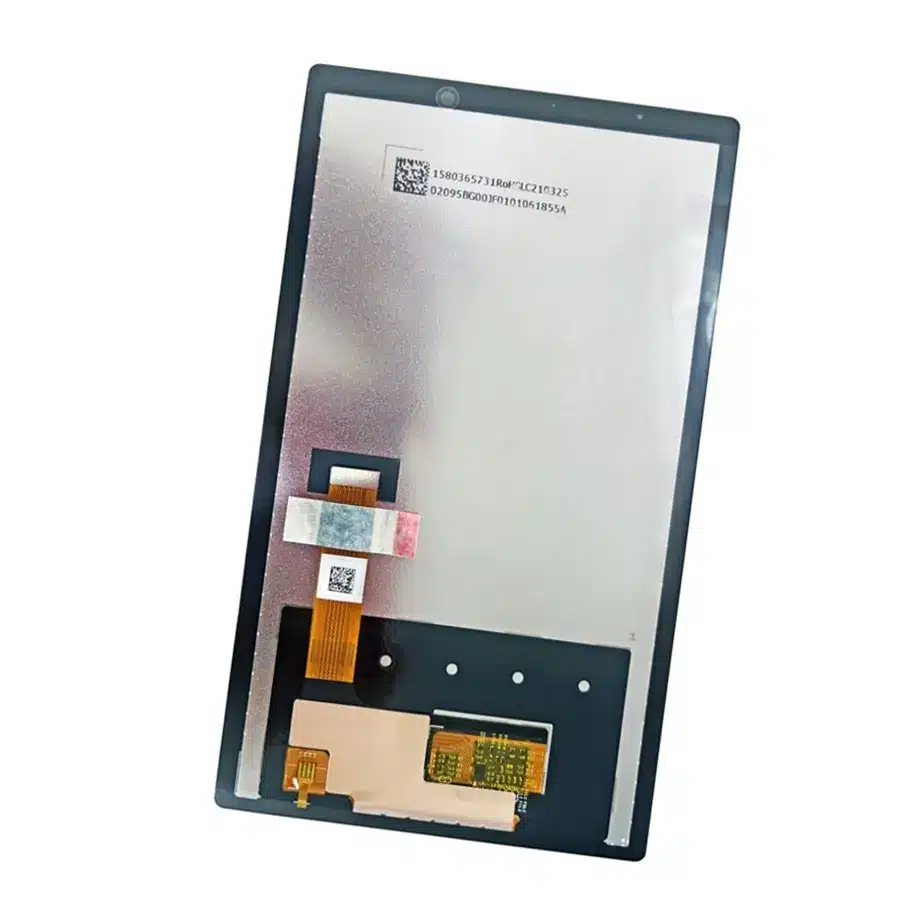
TL070VVGP04-00 7 Inch FHD Handheld Touchscreen Module is a Tianma LTPS TFT-LCD assembly for portrait handheld and PDA integration, combining a native 1080(RGB)×1920 FHD raster with in-cell touch. The 86.832 × 154.368 mm active area is packaged within a 99.556 × 172 × 2.56 mm outline, and the assembly weighs 85.5 g typical. Its FFS normally-black transmissive mode is specified at 450 cd/m² typical luminance, 1000:1 typical contrast and 80/80/80/80 minimum viewing-angle values at CR≥10. The panel supports 16.7M colors with 70% NTSC wording and uses a hard-coated surface.
The native display link is four-lane MIPI on a 40-pin 0.4 mm connector. The integrated in-cell touch function uses I²C for touch communication, so display and touch bring-up must be treated as two coordinated signal paths rather than one generic connector function. The backlight is a 7S3P WLED arrangement supplied without an integrated LED driver. Panel rails are 1.8 V IOVCC, 5.5 V VSP and -5.5 V VSN typical. The module operates at 60 Hz, and the documented maximum Tr+Td response value is represented as 30 ms because response time is unambiguously a time quantity despite the incompatible length unit shown in the raw specification.
Three Core Buyer Value Propositions
1. Integrated in-cell touch reduces front-stack complexity while creating a separate control path
The touch sensor is integrated into the display architecture and communicates through I²C. That can help a handheld device remain thin and compact compared with adding a separate thick touch overlay, while also defining a specific touch-controller and firmware qualification task. The value proposition is not universal compatibility: I²C voltage levels, address behavior, interrupt/reset handling, firmware expectations and host software all need to be checked for the exact assembly. A physically matching 7-inch screen with a different touch controller should be treated as a different electronic subsystem.
2. Four-lane MIPI and portrait FHD timing give the processor team a precise display target
The 1080×1920 portrait raster, 60 Hz operation and four MIPI data lanes establish the native image path that the application processor must generate. That is more useful than selecting by diagonal size because many 7-inch modules use lower resolutions, different lane counts or RGB/LVDS interfaces. The exact 40-pin 0.4 mm connector also matters to cable and flex design. Final validation still requires controlled pin mapping, MIPI timing parameters and power sequencing rather than assuming every four-lane host can drive the module without configuration changes.
3. 450-nit FFS optics and known mechanics support compact handheld qualification
The 450 cd/m² typical luminance, symmetric viewing specification, 85.5 g mass and 2.56 mm depth give industrial designers and sourcing teams a useful component envelope for handheld products. These figures support bezel, battery, enclosure and viewing checks without implying outdoor readability or rugged certification. Finished visibility depends on the cover lens, ambient light and brightness-control strategy, while mechanical fit depends on connector position, mounting details and the complete drawing rather than the 7-inch diagonal alone.
Key Specifications at a Glance
| Parameter | Confirmed value |
|---|---|
| Manufacturer / model | Tianma TL070VVGP04-00 |
| Display size | 7.0 inch |
| Panel type | LTPS TFT-LCD, Assembly |
| Native resolution | 1080(RGB)×1920 FHD, 9:16 |
| Active area | 86.832 × 154.368 mm |
| Outline | 99.556 × 172 × 2.56 mm |
| Weight | 85.5 g typical |
| Brightness | 450 cd/m² typical |
| Display mode | FFS, Normally Black, Transmissive |
| Contrast ratio | 1000:1 typical |
| Viewing-angle values | 80/80/80/80 minimum at CR≥10 |
| Response time | 30 ms maximum Tr+Td |
| Colors | 16.7M, 70% NTSC |
| Surface | Hard coating |
| Refresh rate | 60 Hz |
| Display interface | MIPI, 4 data lanes, 40-pin 0.4 mm connector |
| Touch | In-Cell Touch, I²C |
| Panel input rails | 1.8 / 5.5 / -5.5 V typical (IOVCC / VSP / VSN) |
| Backlight | 7S3P WLED, without LED driver |
| Operating / storage | -20 to 70 °C / -30 to 80 °C |
How should the MIPI display path be brought up?
MIPI Alliance describes MIPI DSI as a high-speed serial interface used between host processors and display modules across smartphones, tablets and embedded devices. That standards context helps define the host-side architecture, but TL070VVGP04-00 still needs its own timing table, lane configuration, command sequence and pin map. The confirmed product fact is a four-data-lane MIPI display connection on a 40-pin 0.4 mm connector.
For TL070VVGP04-00 7 Inch FHD Handheld Touchscreen Module, bring-up should verify native 1080×1920 portrait timing at 60 Hz, reset behavior, panel initialization, image stability, sleep/wake and repeated power cycles. Cable construction and contact pitch matter because 0.4 mm connectors are mechanically different from common 0.5 mm display connectors. A processor that advertises MIPI capability still requires the correct lane rate, command/video mode behavior and panel-specific initialization sequence.
What does in-cell I²C touch require from the host?
In-cell touch reduces the need for a separate external touch panel, but the host still needs a dedicated touch-control path. I²C communication normally involves data and clock plus reset/interrupt or related control functions, and those details must follow the exact module documentation. Firmware should be tested for startup order, sleep/wake, coordinate mapping, orientation, multi-touch behavior if required, and recovery after display power-state changes. Do not assume that the display MIPI link carries the touch data.
Tianma’s consumer-display overview identifies LTPS TFT-LCD and integrated touch as technologies used in compact consumer and smart-device products. That manufacturer context is consistent with the product form but does not add any touch-life, cover-glass or ruggedness specification to this exact assembly. If a project needs a defined touch-service-life test, glove operation or stylus capability, those requirements need separate exact-model evidence.
Why does the backlight need its own driver design?
The module includes a 7S3P WLED light source but is explicitly supplied without an LED driver. The system therefore has to provide the backlight current regulation, dimming method, protection and power conversion needed by the LED string configuration. The panel’s 1.8/5.5/-5.5 V display rails are not a substitute for the backlight-driver design. Brightness control should be validated across the intended user range and at the device’s highest thermal load.
Because 450 cd/m² is the panel’s typical white luminance under its defined drive conditions, the completed handheld should still be measured through the cover lens and any optical adhesive. Dimming frequency, PWM or current control, optical losses and thermal behavior can change the user-visible result. No backlight lifetime in hours is confirmed for this exact model, so procurement documents should not assign a generic WLED lifetime from another Tianma module.
Mechanical fit and portrait handheld packaging
The active image rectangle is 86.832 × 154.368 mm, while the outer module is 99.556 × 172 × 2.56 mm. Those dimensions help establish the bezel aperture and enclosure cavity, but they do not substitute for the full mechanical drawing. In a handheld device, connector location, flex fold, touch routing, adhesive border and local component heights can determine whether a seemingly compatible 7-inch assembly actually fits.
The 85.5 g typical mass is useful for drop-fixture, enclosure and hand-feel budgeting. The -20 to 70 °C operating range also provides a broader component temperature window than many consumer-only modules, but it does not prove any specific IP rating, drop rating or rugged certification. If the target handheld is used outdoors or in industrial service, the complete device must be qualified to those environmental requirements independently.
How should the 30 ms response value be interpreted?
The documented response value is explicitly a Tr+Td time measurement, while the listed unit is inconsistent with that physical quantity. The numeric value is therefore preserved as 30 ms maximum. This is a value-preserving unit-semantic correction rather than a new performance claim. It should not be converted to a gray-to-gray number or compared directly with a differently measured G2G specification without matching test conditions.
For a 60 Hz handheld display, pixel response is only one part of perceived motion. Touch latency, application rendering, host frame scheduling and MIPI transport contribute separately. If the device is used for interactive control or video, evaluate the complete input-to-display response with the intended processor and software rather than treating the panel response line as total system latency.
Application fit for handheld terminals and PDA-style products
TL070VVGP04-00 7 Inch FHD Handheld Touchscreen Module is documented for Handheld & PDA use. Its strongest fit is a portrait mobile terminal designed around a 7-inch FHD LTPS assembly, four-lane MIPI transport and integrated in-cell touch. The 450-nit optical target, compact 2.56 mm module depth and integrated touch can also suit specialized portable terminals when their electrical and environmental requirements remain within the confirmed component limits.
Application fit does not equal exact enclosure compatibility. A barcode terminal, field device, controller or PDA may use a different cover lens, cable exit, touch firmware or processor interface. Replacement approval should match the exact suffix and verify display timing, touch controller behavior, module outline and connector orientation. No named device fit is asserted without platform-level evidence.
Procurement and validation checklist
- Lock Tianma TL070VVGP04-00 in the BOM and verify the full suffix on incoming assemblies.
- Validate native 1080×1920 portrait timing at 60 Hz over the four-lane MIPI path.
- Confirm the 40-pin 0.4 mm connector, exact pin mapping, cable orientation and power sequence.
- Qualify the in-cell I²C touch path, including reset, interrupt behavior, orientation and sleep/wake transitions.
- Check the 99.556 × 172 × 2.56 mm outline, 86.832 × 154.368 mm active area and 85.5 g mass against the handheld enclosure.
- Design a suitable external LED driver for the 7S3P WLED backlight and validate brightness control thermally.
- Verify 450 cd/m² typical luminance and FFS viewing behavior through the production cover stack.
- Preserve the 30 ms maximum Tr+Td response value and its measurement meaning.
- Request current revision and change-status information before volume procurement; current availability is not a guaranteed supply horizon.
For qualification of TL070VVGP04-00 7 Inch FHD Handheld Touchscreen Module, provide the target processor, MIPI timing plan, production flex or cable, I²C touch requirements, enclosure drawing, backlight-driver concept, optical limits and required quantity. Treat display, touch, backlight and mechanics as one coordinated assembly qualification before release.
Recommended: Same Size
(7")
Applications & Value of LCD Panel

- Fast sourcing with in-stock panels & cross-reference alternatives
- Stable supply chain with long-term availability
- Engineering-level support from panel to integration
- Custom solutions: cable, touch & optical bonding
- Strict quality control with IQC / OQC / aging test
- Full traceability system for quality assurance
- Complete technical documentation & drawings
- Compliance support: RoHS & certification files