Freya Yang
+86 18318948097
+852 62667476
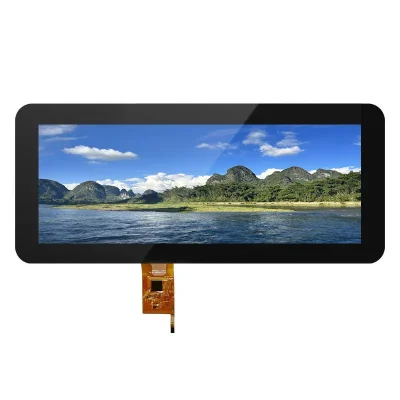
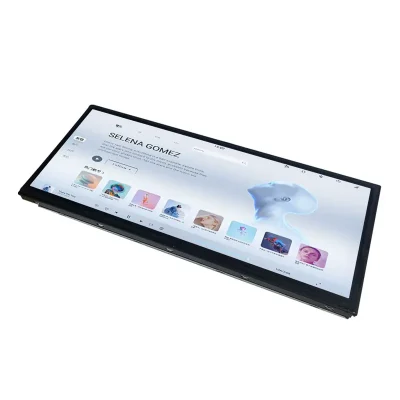
12.3″ 1920×720 850nits LVDS Automotive Industrial TFT Module 1500:1
Model P/N
Size
Resolution
Brightness
Viewing Angle
Connector Type
Operating Temp
Overall(mm)
huisoar
HS123JPW3-D10
Brand
Panel Size (inch)
Model P/N
Resolution
Brightness (nits)
Viewing Angle
Contrast Ratio
Response Time
Overall (mm)
Active Area (mm)
Refresh Rate
Display Colors
Panel Type
Connector Type
Operating Temp
Touchscreen Type
Storage Temp
Work Mode
Input Voltage (V)
Designed For
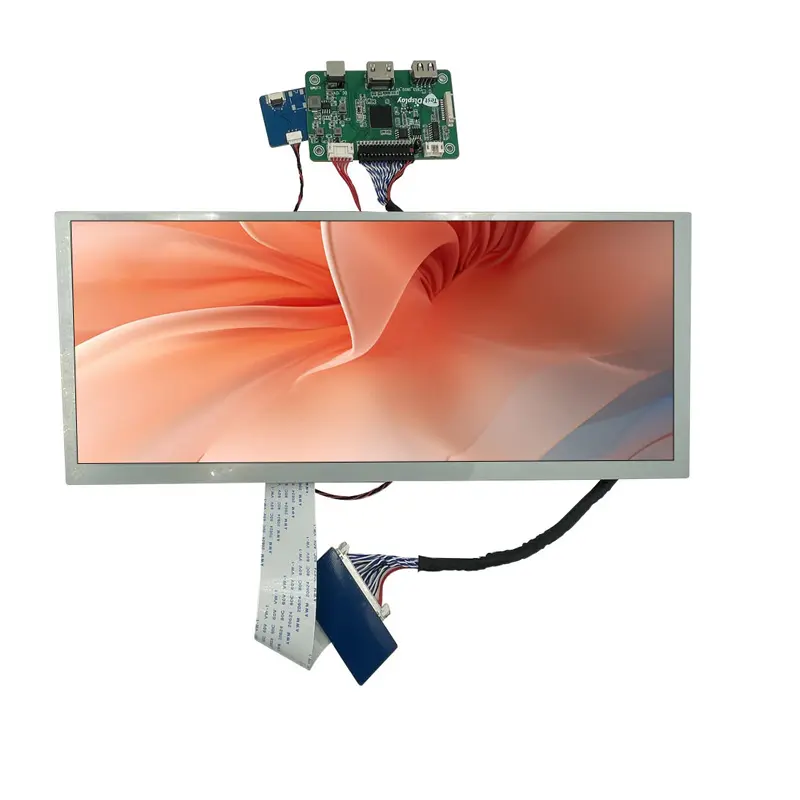
The 12.3" 1920x720 850nits LVDS Automotive Industrial TFT Module is a high-brightness, dual-scenario display solution engineered for automotive and industrial applications, combining 850nits high brightness, 1920×720 resolution, LVDS professional interface, integrated LCD driver board, and 1500:1 high contrast ratio to deliver exceptional performance and reliability. Tailored for car navigation and industrial control screens—where display clarity, environmental adaptability, and integration convenience are critical—it stands out with its wide operating temperature range (-30℃~85℃), ISO9001-2008/TS16949 certifications, and flexible customization options, making it a top choice for automotive electronics manufacturers, industrial equipment integrators, and navigation system providers worldwide.
Core Optical Performance for Automotive & Industrial Scenarios
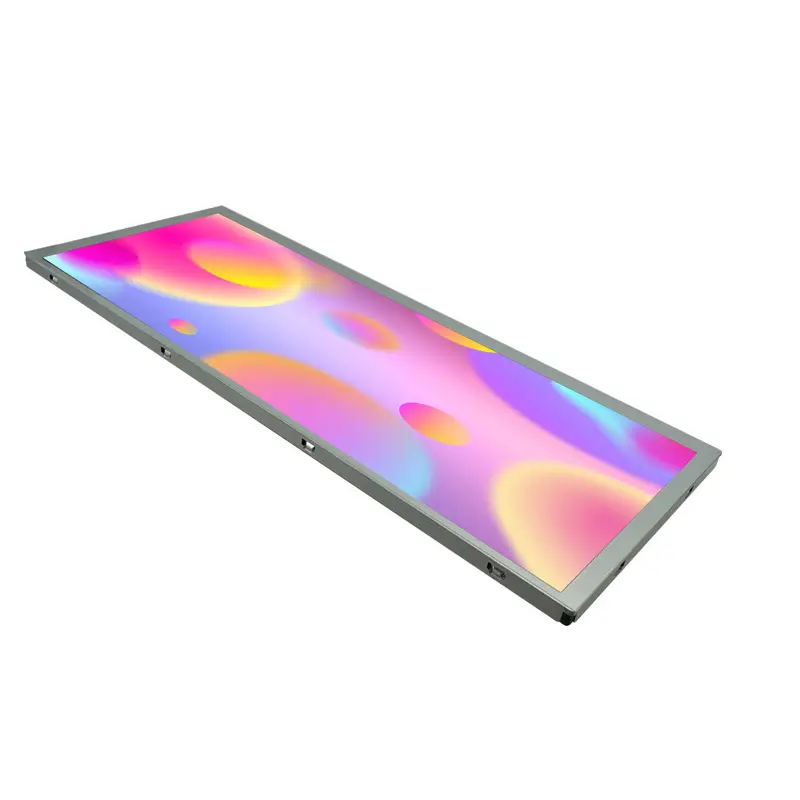
Equipped with a 12.3-inch TFT LCD panel (normally black) and 1920×720 WXGA resolution, this module ensures sharp, detailed visual output for automotive navigation maps, industrial control data, and operational interfaces—ideal for car navigation systems and industrial control screens. The 16:6 aspect ratio optimizes display space for wide-format navigation content and industrial data charts, while the 16.7M color depth delivers vivid, accurate color reproduction, enhancing visual clarity for critical information.
The 850nits high brightness ensures clear visibility in extreme lighting conditions—from bright sunlight during daytime driving to low-light industrial workshops—eliminating glare and ensuring navigation routes or industrial data are easily recognizable. This brightness level far exceeds standard automotive displays (500-600nits), providing a competitive advantage in high-illumination scenarios. The 1500:1 high contrast ratio enhances image depth and detail, making it suitable for displaying complex industrial control interfaces and high-definition navigation graphics.
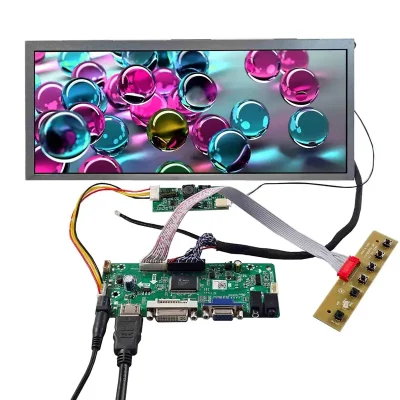
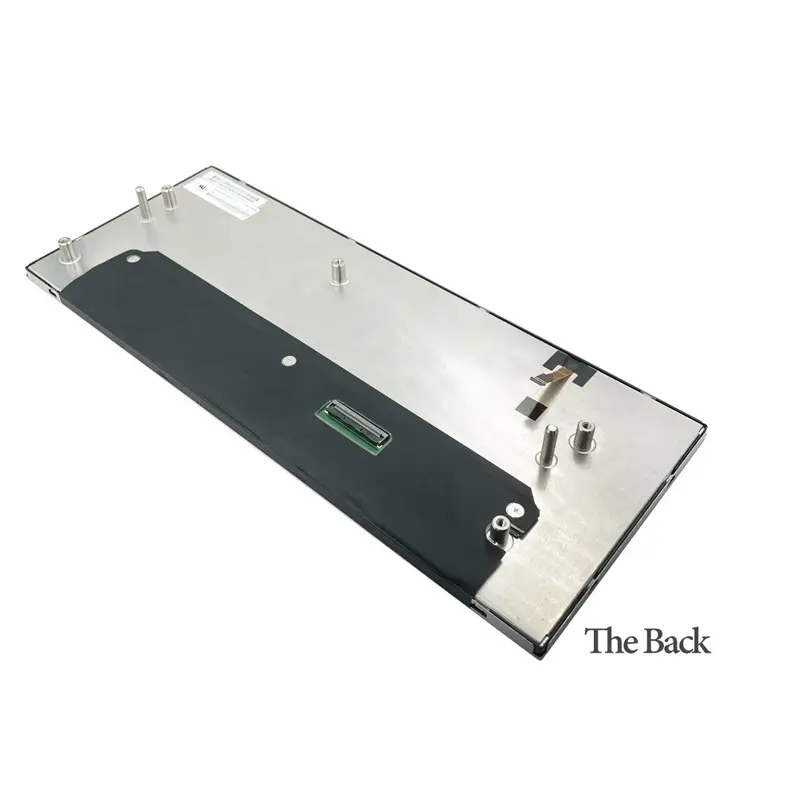
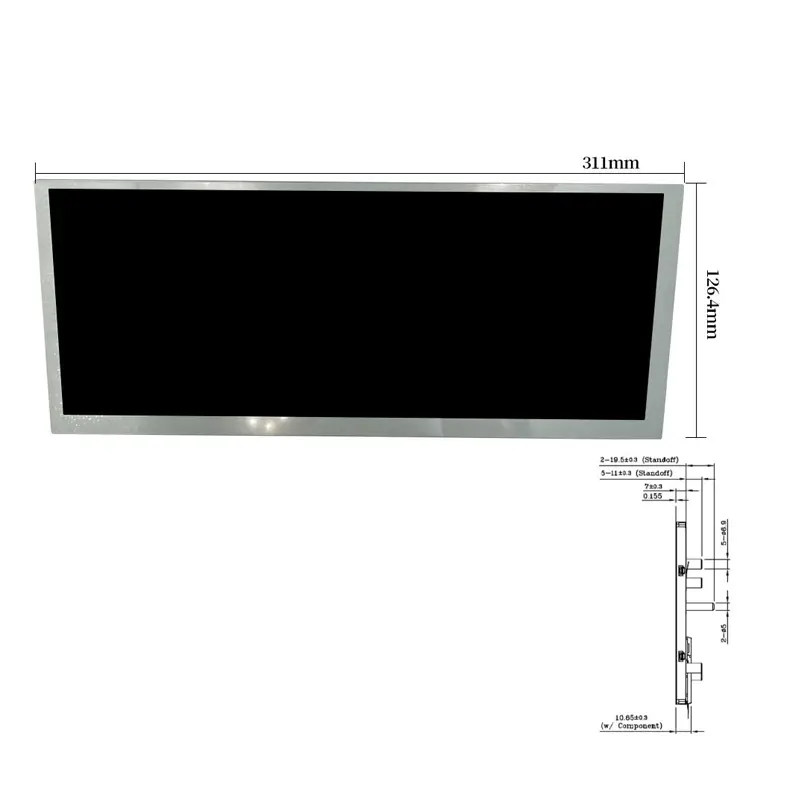
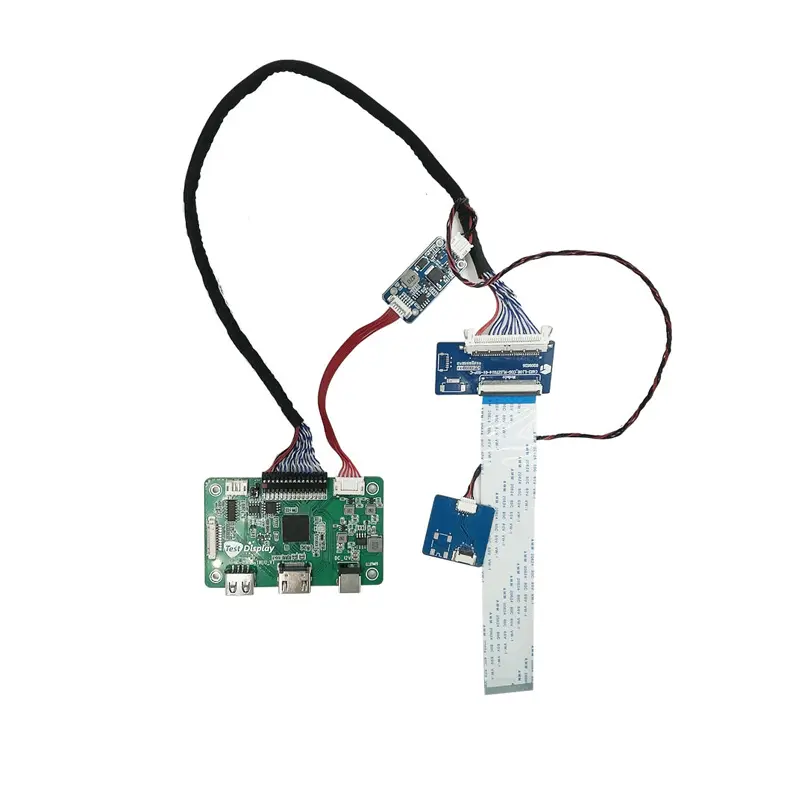
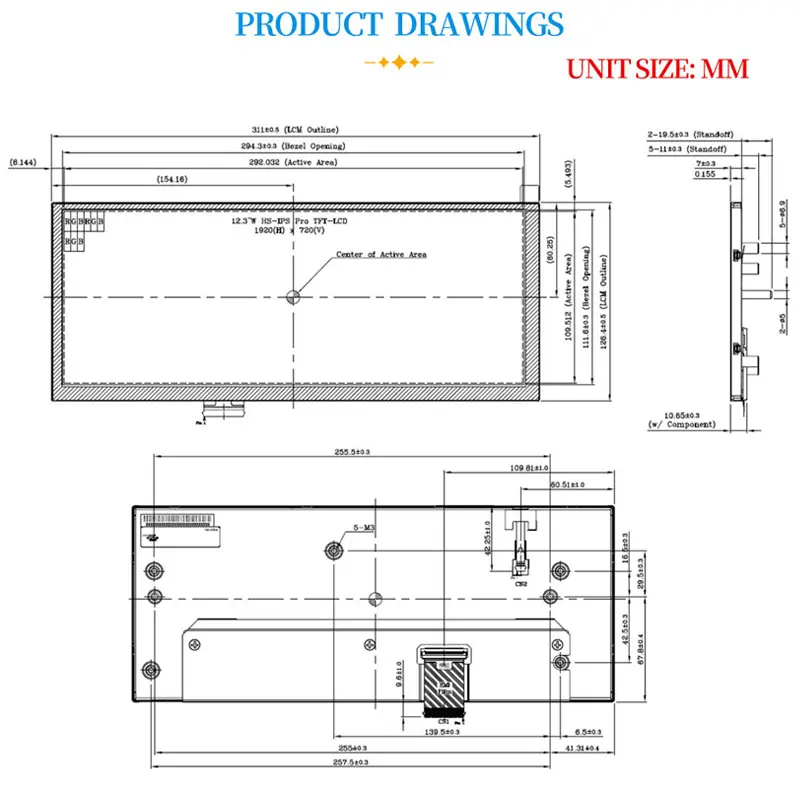
The LVDS interface (50 pins) delivers stable, high-speed data transmission, reducing signal interference and ensuring consistent performance in automotive electrical systems and industrial environments—an advantage over conventional interfaces. The integrated LCD driver board simplifies integration, reducing development time and costs for manufacturers, while the precise active area (292.032×109.512mm) and outline dimensions (311×126.4×26.5mm) facilitate seamless installation in car dashboards and industrial control cabinets.
Structural Reliability & Dual-Environment Adaptability
Built with a robust TFT LCD structure and automotive-grade materials, the module offers excellent mechanical stability and durability. The wide operating temperature range of -30℃ to 85℃ and storage temperature range of -40℃ to 90℃ ensure reliable performance in extreme climates—from freezing cold winters to scorching summer afternoons, as well as harsh industrial environments with temperature fluctuations.
The module complies with strict quality standards, certified by ISO9001-2008, TS16949 (automotive quality management system), CCC, CE, RoHS, and FCC, ensuring consistent quality control throughout the production process. The manufacturer (Shenzhen Dongxingqiang Technology) boasts a 5000㎡ production facility with a hundred-level dust-free workshop and anti-static operation environment, supporting a monthly production capacity of 1000K units, guaranteeing stable supply for large-scale projects.
The module’s compatibility with automotive and industrial standards extends its usability across dual scenarios. It meets automotive vibration resistance requirements, ensuring stable operation during vehicle movement, and complies with industrial environmental standards for dust, moisture, and electromagnetic interference, making it suitable for industrial control applications in manufacturing facilities.
Customization & Procurement Advantages
A key highlight of this TFT module is its flexible customization capabilities, designed to meet specific automotive and industrial project requirements. Customers can customize logo, packaging, and graphics with a minimum order of 1000 pieces. The supplier supports drawing-based, sample-based, and full customization, enabling rapid adaptation to unique car models and industrial equipment designs.
For procurement teams, the tiered pricing structure offers cost advantages for bulk orders: 500-999 pieces at SG$114.38, 1000-4999 pieces at SG$107.88, and ≥5000 pieces at SG$101.37 (sample price: SG$120.89). Lead times are clear, with 1-500 pieces delivered in 31 days and larger orders negotiable. Shipping options include air + express via cooperative logistics, with a $50 discount on the first shipping order, a shipping fee of SG$1,470.37 for 500 pieces, and an estimated transit time of 3-4 days.
The manufacturer has established long-term strategic cooperation with well-known enterprises such as BOE, Qunzhuang, Tianma, Hehui, and HIMAX, with rich experience in smart home appliances, industrial control, medical, automotive, and wearable device fields, ensuring professional technical support and reliable product quality.
Typical Application Scenarios
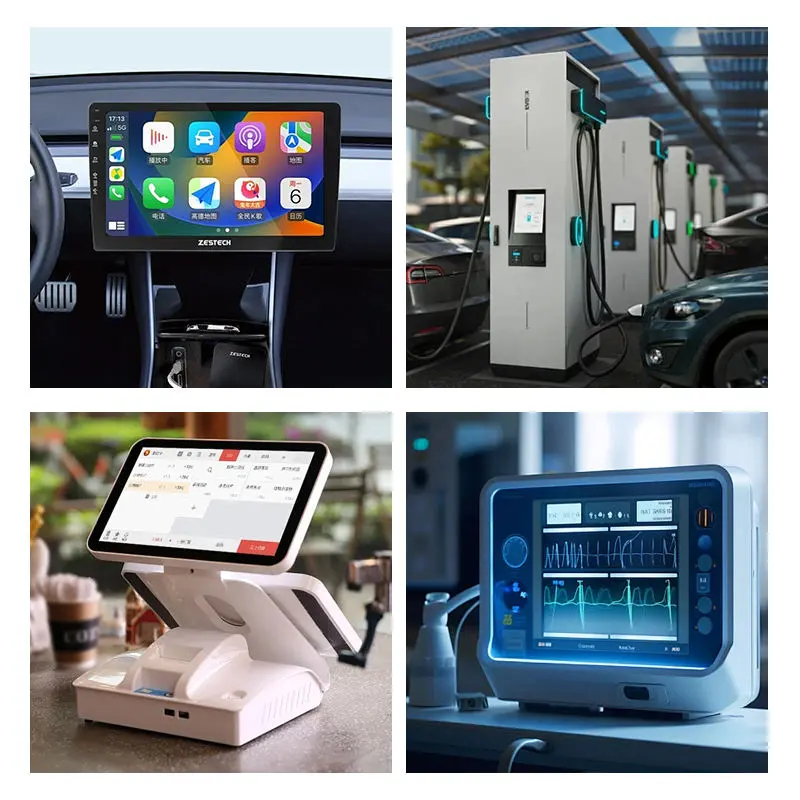
This 12.3-inch TFT module excels in dual core scenarios: automotive navigation systems and industrial control screens. Its 850nits high brightness, wide temperature range, and integrated driver board make it suitable for car manufacturers, automotive electronics suppliers, and industrial equipment manufacturers. It can be integrated into car dashboards for navigation and infotainment, as well as industrial control cabinets for real-time data display and operation.
Beyond traditional applications, the module can be extended to smart car terminals, ruggedized industrial portable devices, and vehicle-mounted monitoring systems—leveraging its automotive-industrial dual adaptation, high brightness, and stable performance. The LVDS interface and wide temperature range ensure compatibility with diverse electronic systems, while the integrated driver board enhances integration convenience.
The 12.3" 1920x720 850nits LVDS Automotive Industrial TFT Module combines high brightness, dual-scenario adaptability, and reliable performance to meet the core needs of modern automotive and industrial applications. Its 850nits sunlight-readable brightness, LVDS stable interface, integrated driver board, and competitive pricing make it a standout solution for global automotive electronics manufacturers, industrial integrators, and navigation system providers. Contact the supplier to discuss customization options, bulk pricing, or sample orders tailored to your specific project requirements.
FAQ
What are the packaging options for shipping and handling of fragile LCD panels?
What is the minimum order quantity (MOQ) for custom-sized automotive-grade displays with capacitive touch, like the 12.3" model shown?
What is the typical lead time and production capacity?
How do your displays perform in high-vibration or shock-prone environments typical in military or heavy machinery?
What is the lead time for standard TFT display modules in your inventory?
Can you develop a square LCD screen with a specific resolution and aspect ratio?
What is the minimum order quantity (MOQ) for custom display modules with integrated touch and controller boards?
What are the key advantages and limitations of Micro-LED technology compared to Mini LED and OLED for large-format commercial displays?
Can you supply displays with specific certifications for automotive (AEC-Q100) or medical (ISO 13485) applications, and what are the cost implications?
Can you provide high brightness displays with 1000+ nits that maintain performance in direct sunlight for outdoor industrial applications?
Freya Yang
+86 18318948097