~
~
~
~
~
~
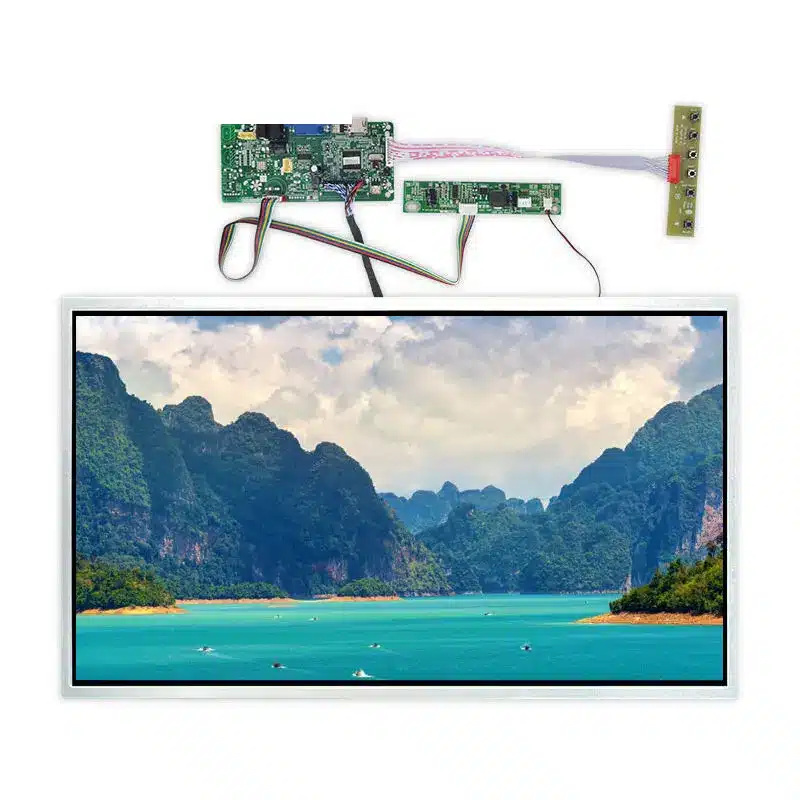
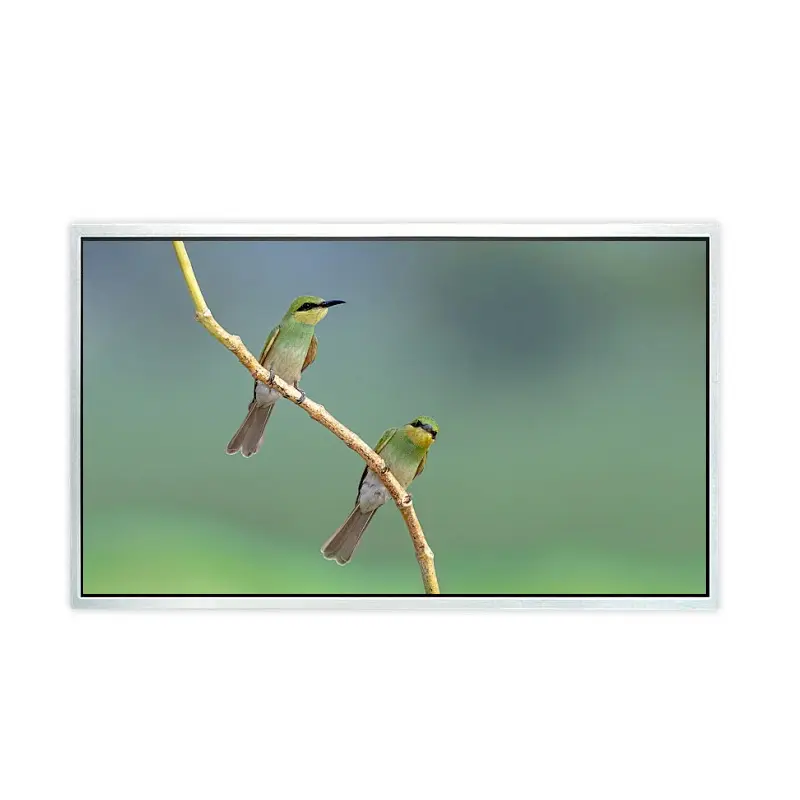
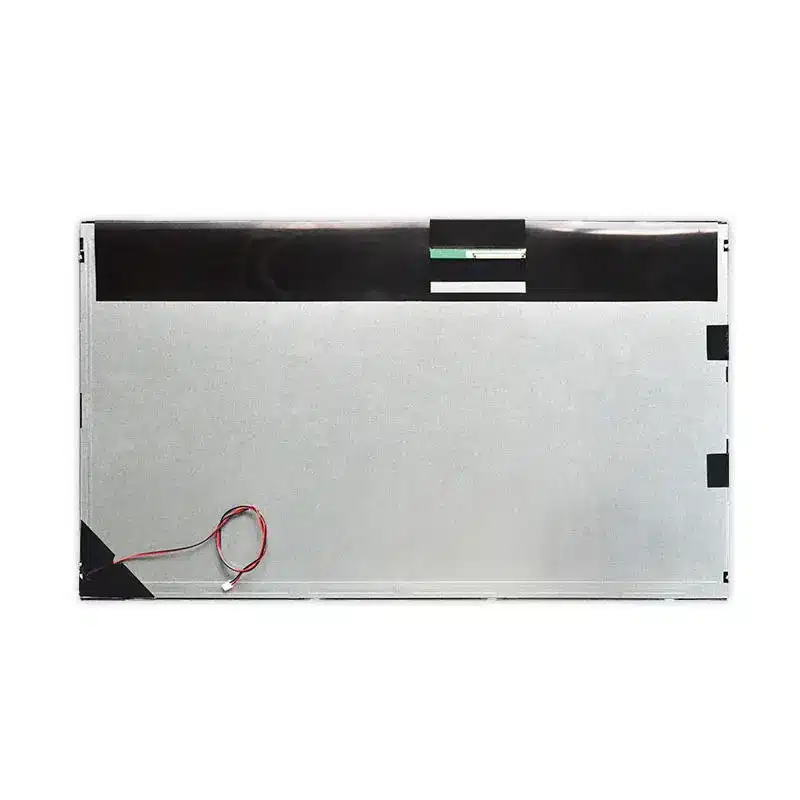
21.5 Inch Embedded Monitor Full HD Display Module with LVDS
Model P/N
Size
Resolution
Brightness
Viewing Angle
Connector Type
Operating Temp
Overall(mm)
huisoar
HS215LVDS19201080
Brand
Panel Size (inch)
Model P/N
Resolution
Brightness (nits)
Viewing Angle
Contrast Ratio
Response Time
Overall (mm)
Active Area (mm)
Refresh Rate
Display Colors
Panel Type
Connector Type
Surface Treatment
Operating Temp
Touchscreen Type
Storage Temp
Work Mode
Pixel Format
Input Voltage (V)
Weight (g)
Designed For
Product Details
21.5 Inch Embedded Monitor Full HD Display Module with LVDS
A 21.5-inch Full HD panel for embedded monitor assemblies, combining a 30-pin LVDS connection, 300 cd/m² typical luminance, and optional touch evaluation.
Product Summary
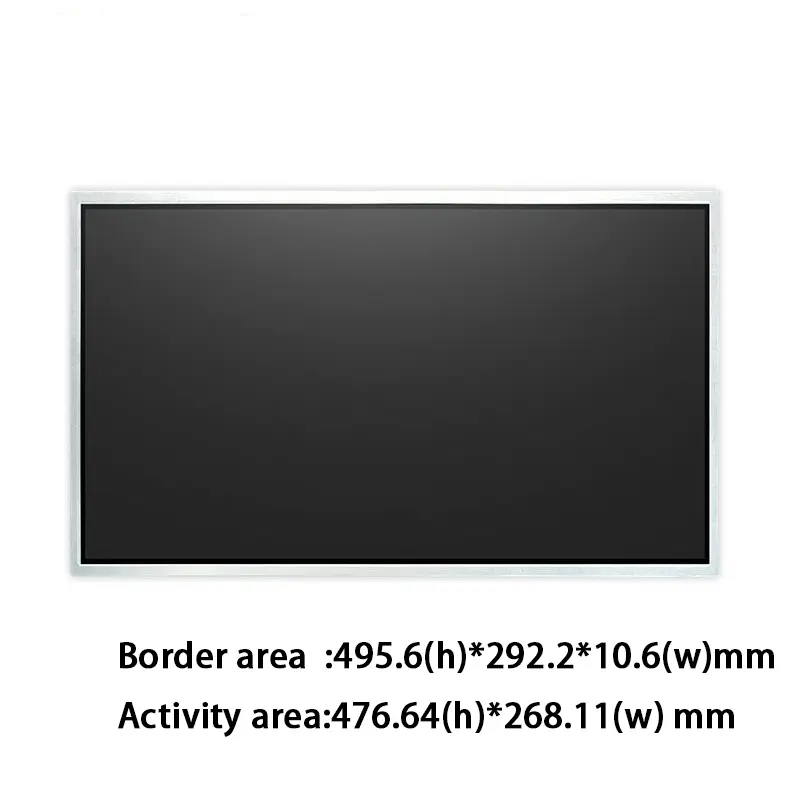
The Embedded Monitor Full HD Display Module is a 21.5-inch a-Si TFT-LCD component for equipment that needs a native 1920 × 1080 image area without using a finished desktop monitor. Its 30-pin, two-channel, 8-bit LVDS interface supports monitor-class integration, while the 476.64 × 268.11 mm active area and 495.6 × 292.2 × 10.6 mm outline provide the mechanical references needed for enclosure planning.
A 3000:1 typical contrast ratio, 300 cd/m² typical luminance, anti-glare surface, and 3H hard coating create a practical optical platform for indoor workstations, equipment dashboards, control-room terminals, and other controlled-light installations. The panel operates from a 5.0 V typical logic supply, refreshes at 60 Hz, and uses a WLED backlight.
Key Specifications for the 21.5-Inch Full HD Panel
| Parameter | Confirmed value |
|---|---|
| Display size | 21.5 inches |
| Resolution | 1920 × 1080 pixels, Full HD |
| Panel construction | a-Si TFT-LCD, LCM |
| Pixel format | RGB vertical stripe |
| Interface | 30-pin LVDS, 2-channel, 8-bit |
| Panel input | 5.0 V typical, VDD |
| Active area | 476.64 × 268.11 mm |
| Module outline | 495.6 × 292.2 × 10.6 mm |
| Luminance | 300 cd/m² typical |
| Contrast ratio | 3000:1 typical |
| Viewing-angle sequence | 89/89/89/89° typical; direction order requires confirmation |
| Response time | 18 ms typical, on/off |
| Display colors | 16.7 million colors; 72% NTSC |
| Surface | Anti-glare, 3H hard coating |
| Backlight | WLED |
| Refresh rate | 60 Hz |
| Weight | 1670 g typical |
| Operating temperature | 0°C to +50°C |
| Storage temperature | −20°C to +60°C |
| Touch status | Optional configuration; technology and interface require confirmation |
Native Full HD Content for Embedded Monitor Integration
1920 × 1080 Interface Design
The native 1920 × 1080 raster supports detailed dashboards, equipment status pages, split-screen monitoring layouts, text-rich control interfaces, and video-oriented content. Driving the panel at its native resolution avoids scaling artifacts and preserves the intended geometry of icons, text, charts, and image regions.
Final UI validation should use the actual viewing distance, font sizes, operator position, and enclosure opening rather than desktop-monitor assumptions.
3000:1 Contrast and 300-Nit Indoor Use
The 3000:1 typical contrast ratio supports separation between dark backgrounds, text, alerts, status fields, and image content. The 300 cd/m² typical luminance is intended primarily for indoor or controlled-light equipment after front-stack losses are considered.
The rating does not establish direct-sun readability. Window-adjacent or brightly lit projects should evaluate the complete front stack under actual ambient light.
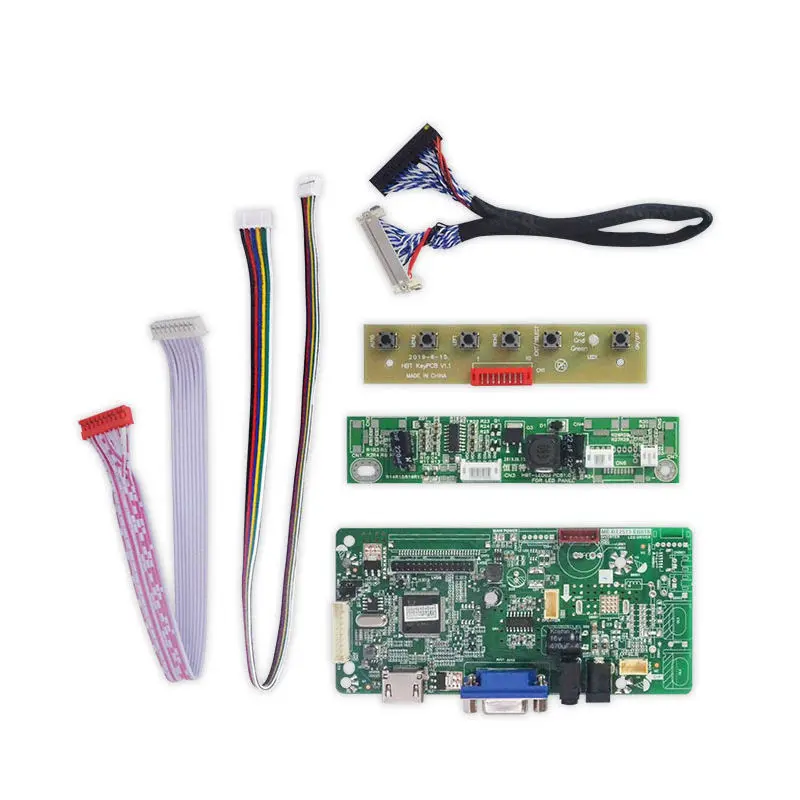
LVDS Interface and Controller Qualification
30-Pin Two-Channel 8-Bit LVDS
The panel uses a 30-pin, two-channel, 8-bit LVDS connection. This interface class is common in Full HD monitor panels, but connector count alone is not a compatibility guarantee.
A 30-pin LVDS connector does not guarantee timing, channel, bit mapping, voltage, or pin compatibility.
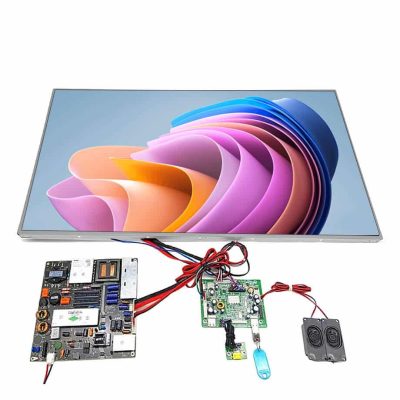
Controller qualification should cover pin assignment, mapping format, pixel clock, synchronization timing, cable orientation, contact side, panel power, and backlight control. HDMI, DisplayPort, USB-C, MIPI DSI, or eDP hosts require a suitable conversion path.
Panel Power and Backlight Planning
The panel logic supply is specified at 5.0 V typical. The WLED backlight requires a compatible driver, but model-specific backlight voltage, current, dimming method, and lifetime grade are not confirmed. These values should be approved before the controller board, power board, or cable harness is finalized.
Panel logic and backlight power should be treated separately. System review should also cover thermal conditions, cable length, grounding, and enclosure airflow without assuming an unconfirmed power sequence.
Mechanical Integration of the Embedded Monitor Full HD Display Module
Active Area, Outline, and Mounting
Mechanical design begins with two different rectangles. The active image area is 476.64 × 268.11 mm, while the overall module measures 495.6 × 292.2 × 10.6 mm. The active area controls the visible opening, and the overall dimensions control enclosure clearance, mounting support, cable space, and rear-component keep-out zones.
The panel is intended for panel mounting and weighs 1670 g typical. The housing should support it without twisting the frame. Use the approved drawing to confirm mounting holes, datum locations, connector position, tolerances, and keep-out areas.
Optical Mode, Surface, and Touch Configuration
IPS and VA Designation Must Be Confirmed
The current specification identifies the display as IPS in one section and as VA mode, normally black in another. The exact optical-mode designation must therefore be confirmed in the approved model-specific documentation before color, off-axis performance, replacement equivalence, or viewing-behavior claims are released.
The raw 89/89/89/89° viewing-angle sequence is useful for comparison, but the direction order should not be assigned until it is explicitly documented. The anti-glare surface and 3H hard coating are confirmed and support controlled-light monitor integration.
Optional Touch Requires Separate Qualification
Optional touch does not mean a touch sensor or touch controller is included in the standard panel configuration.
A touch-enabled version requires confirmation of technology, interface, controller, cover-lens geometry, bonding, total thickness, cable exit, software requirements, and enclosure fit. Optical testing should use the final touch and glass stack.
Recommended Applications
The Embedded Monitor Full HD Display Module is suited to indoor and controlled-light systems that need a raw Full HD panel rather than a finished monitor. Relevant project directions include industrial monitor assemblies, equipment dashboards, control-room terminals, desktop-style embedded systems, information displays, service consoles, and custom visualization equipment.
The panel data does not establish outdoor, automotive, medical, waterproof, payment-terminal, or vibration-qualified use. Those projects require separate component and finished-system qualification.
Procurement Checklist
Confirm these items before sample approval or production release:
- Approved model-specific specification and mechanical drawing
- Native 1920 × 1080 timing and 60 Hz operation
- Complete 30-pin LVDS assignment, channel configuration, bit mapping, and connector orientation
- 5.0 V panel rail and model-specific backlight-driver requirements
- Active-area opening and 495.6 × 292.2 × 10.6 mm enclosure fit
- IPS or VA optical-mode designation and viewing-angle direction order
- Final cover-glass, coating, bonding, and ambient-light conditions
- Standard non-touch or separately qualified touch configuration
- Operating and storage temperature requirements
- Sample quantity, validation criteria, annual demand, and production schedule
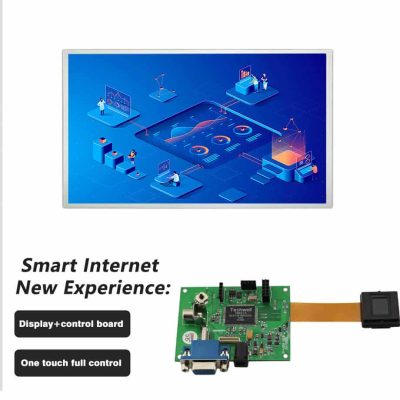
Applications & Value of LCD Panel

- Fast sourcing with in-stock panels & cross-reference alternatives
- Stable supply chain with long-term availability
- Engineering-level support from panel to integration
- Custom solutions: cable, touch & optical bonding
- Strict quality control with IQC / OQC / aging test
- Full traceability system for quality assurance
- Complete technical documentation & drawings
- Compliance support: RoHS & certification files