Freya Yang
+86 18318948097
+852 62667476
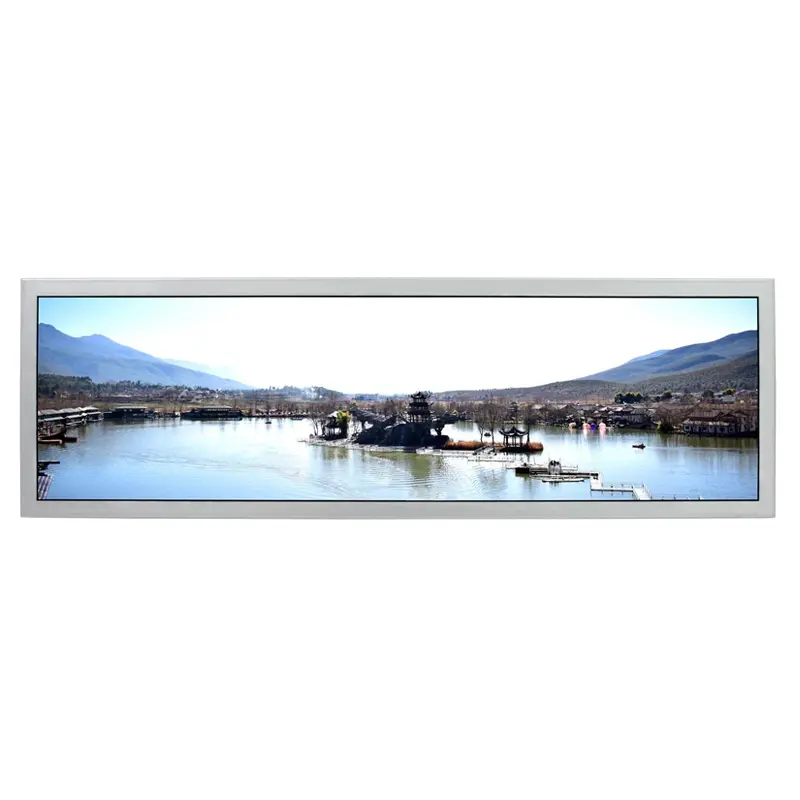
28.6 Inch Android Panoramic Bar Advertising Display Kit for Retail
Model P/N
Size
Resolution
Brightness
Viewing Angle
Connector Type
Operating Temp
Overall(mm)
huisoar
HS286IIE0
Brand
Panel Size (inch)
Model P/N
Resolution
Brightness (nits)
Viewing Angle
Contrast Ratio
Response Time
Overall (mm)
Active Area (mm)
Refresh Rate
Display Colors
Panel Type
Connector Type
Operating Temp
Touchscreen Type
Storage Temp
Work Mode
Pixel Format
Input Voltage (V)
Included Accessories
Operating Environment
Motherboard Type
I/O Interface
Designed For
28.6 Inch Android Panoramic Bar Advertising Display Kit for Retail
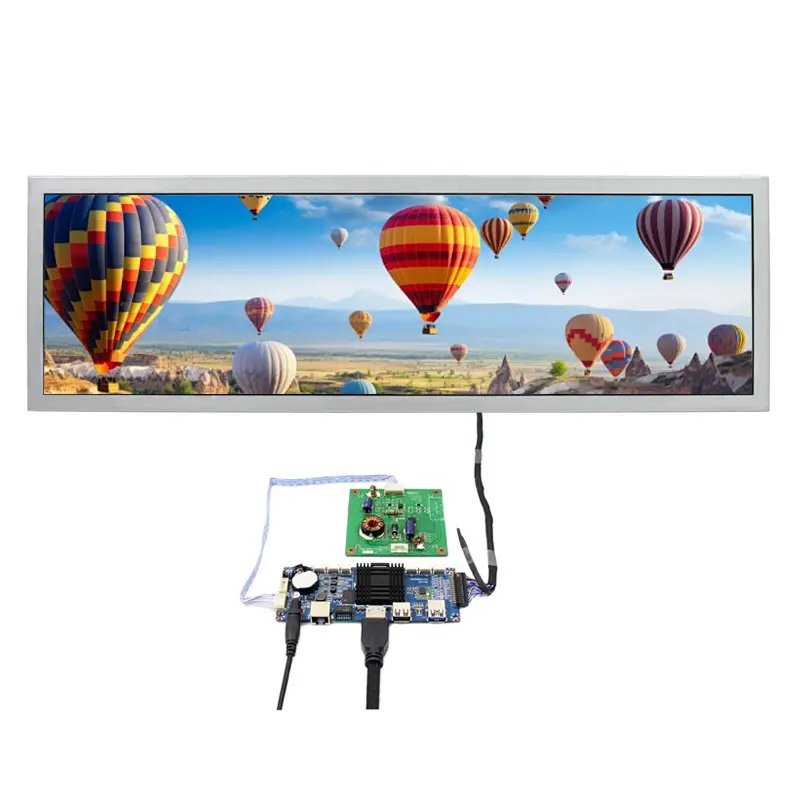
An Android Panoramic Bar Advertising Display Kit gives retail and commercial-display integrators a 28.6-inch ultra-wide canvas with native 1920 × 540 graphics and an Android 4.4 media-control path. The LCD provides 500 cd/m² typical luminance, 3000:1 typical contrast and a 698.4 × 196.4 mm active area, while the supplied controller architecture supports USB, SD and AV content input. This configuration is designed around panoramic message delivery in narrow installation zones rather than a conventional 16:9 monitor layout.
Product Summary
The 28.6-inch format provides a long horizontal display surface for branded information bands, promotional media, shelf headers and other installations where available width is much greater than available height.
Native 1920 × 540 Panoramic Content
The native 1920 × 540 raster should be treated as the artwork target rather than as a cropped version of standard 1920 × 1080 creative. Designing directly for the panel resolution gives product teams more control over text size, graphic zones, pricing blocks and promotional sequences across the stretched format.
A native content workflow is especially useful when the display needs to combine several visual zones in one horizontal strip, such as a brand area, product image, offer text and directional information.
500 cd/m² Optical Boundary
The LCD is specified at 500 cd/m² typical luminance. That level is suitable for evaluation in controlled commercial lighting, including many retail interiors and sheltered signage installations.
A 500 cd/m² specification does not by itself establish direct-sun readability. Finished optical performance also depends on front-glass reflection, ambient illuminance, enclosure geometry and any bonding or protective layers.
Key Specifications
| Specification | Confirmed value |
|---|---|
| Display size | 28.6 inches |
| Resolution | 1920 × 540 pixels |
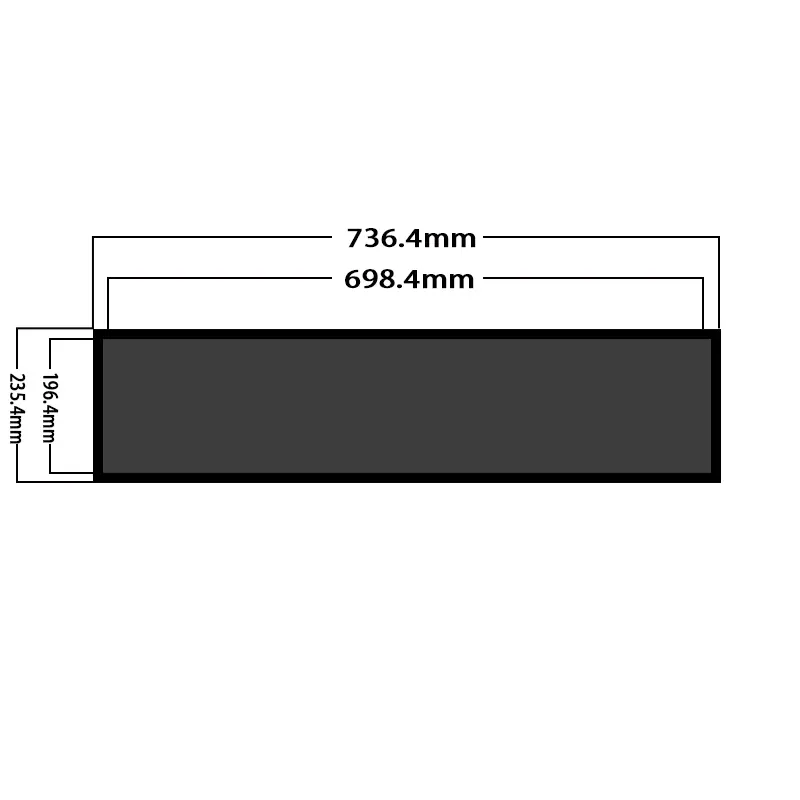
| Active area | 698.4 × 196.4 mm |
| Overall size | 736.4 × 235.4 × 18.6 mm |
| Luminance | 500 cd/m² typical |
| Contrast ratio | 3000:1 typical |
| Viewing angle | 89° / 89° / 89° / 89° L/R/U/D at CR ≥ 10 |
| Display mode | ADS, normally black, transmissive |
| Backlight | WLED |
| Display interface | 30-pin LVDS, 2-channel, 8-bit |
| LCD input | 5.0 V typical |
| Controller | Android 4.4 HSV320A2 V10 |
| Controller size | 138 × 53 × 10 mm |
| Controller input | 12 V DC |
| Media inputs | USB / SD / AV |
| Controller memory | DDR3 512 MB / 8 GB flash |
Android Panoramic Bar Advertising Display Kit Architecture
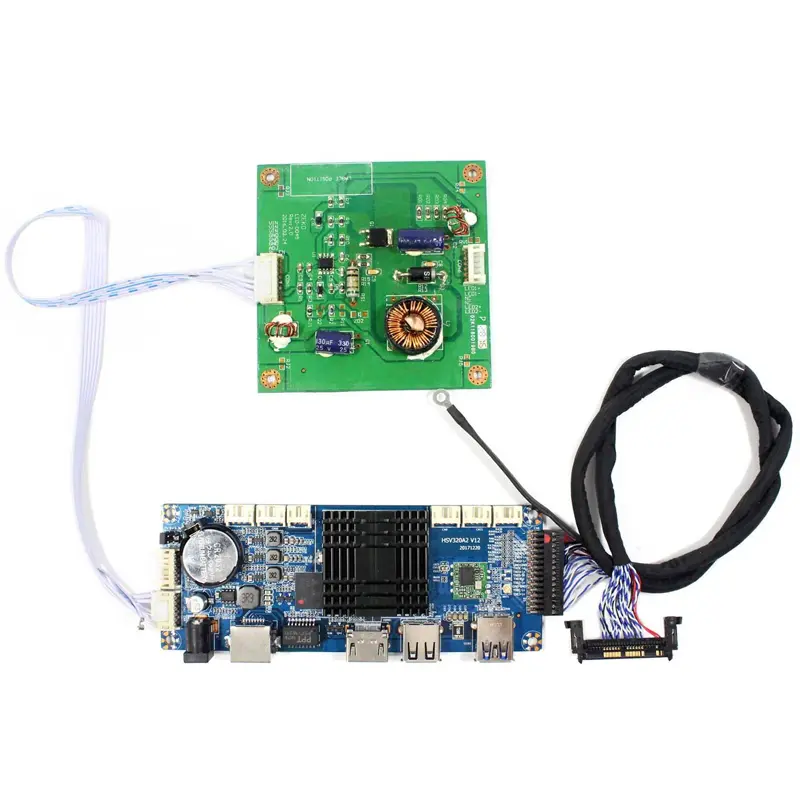
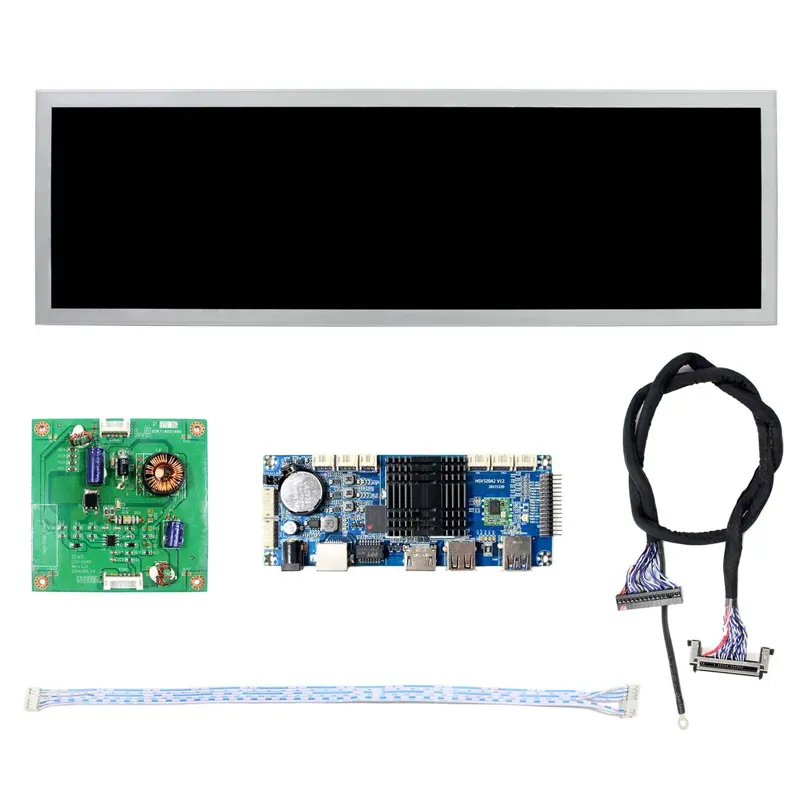
The Android Panoramic Bar Advertising Display Kit combines the stretched LCD with a separate Android controller rather than treating the panel as a stand-alone video monitor. This distinction matters during system design because the LCD signal interface, controller software, input connections and power domains all need to be qualified as one integrated assembly.
Android 4.4 Media Controller
The controller is identified as an Android 4.4 LCD board using the HSV320A2 V10 reference. Its hardware description includes a HI3751V320 processor, DDR3 512 MB memory and 8 GB flash storage.
For a production signage project, the Android version, application workflow, autoplay behavior, supported file formats and any remote-management functions should be fixed before software deployment. Network-module references should also be tied to the actual ordered controller hardware rather than assumed from the Android operating system alone.
USB, SD and AV Content Paths
USB, SD and AV are confirmed input paths for this configuration. This gives system designers a practical local-content route for advertising and information playback without requiring the LCD itself to provide a conventional desktop-monitor interface.
If a project requires a cloud CMS, Ethernet, Wi-Fi or cellular management path, the exact module, port availability and software image should be included in controller qualification.
30-Pin LVDS and Power Integration
A matching 30-pin connector does not guarantee electrical compatibility with another LVDS panel or controller.
The exact assembly uses a 30-pin, two-channel, 8-bit LVDS display path. Host replacement or controller substitution should therefore verify the complete pin assignment, signal mapping, electrical levels, connector orientation and native 1920 × 540 timing.
Official embedded-platform documentation also illustrates why pin count alone is insufficient: different 30-pin and other LVDS connectors expose board-specific signal, enable, PWM, power and data arrangements.
Separate 5 V and 12 V Power Domains
The LCD panel uses 5.0 V typical input, while the Android controller uses a 12 V DC power adapter.
These are separate power references and should not be merged into a single panel-voltage statement. Cable design, controller-board power distribution and backlight wiring should be checked before first power-up.
WLED Backlight Integration
WLED is confirmed as the backlight type, but exact backlight voltage, current, driver topology and lifetime grade are not defined. Those parameters should be added to the engineering file when thermal design, dimming or service-life requirements affect the finished product.
Mechanical Integration for Retail Signage
The active viewing area measures 698.4 × 196.4 mm, while the complete LCD outline is 736.4 × 235.4 × 18.6 mm.
Active Area and Enclosure Opening
The active area defines the visible content surface; it should not replace the complete mechanical outline when designing a bezel or enclosure. Allowance is still required for the LCD border, mounting method, FPC or connector access and cable bend radius.
Controller-Board Clearance
The Android controller measures 138 × 53 × 10 mm. The enclosure therefore needs space not only for the LCD but also for the controller board, signal cable and backlight-board routing.
This is an important difference from a bare 28.6-inch panel procurement route: the electronics layout becomes part of the overall mechanical design.
Optical and Viewing Performance
The detailed display mode is ADS, normally black and transmissive. The product definition also contains IPS terminology for the screen, so the final production revision should control the locked panel-technology name.
The confirmed viewing sequence is 89° / 89° / 89° / 89° for left, right, up and down at CR ≥ 10. This wide viewing specification supports shared-view signage layouts where customers may approach the display from several positions.
The 3000:1 typical contrast ratio provides useful separation between dark and bright content for promotional graphics, text blocks and information bands.
Retail Applications and Outdoor Boundary
An Android Panoramic Bar Advertising Display Kit is particularly relevant to narrow commercial installations such as retail shelf headers, product-promotion bands, counter signage, menu strips, branded information rails and other spaces where a conventional monitor would occupy unnecessary vertical area.
The long-format geometry also works well when the screen needs to display several short pieces of information simultaneously rather than one large 16:9 media frame.
For outdoor or direct-sun projects, treat this configuration as an integration candidate rather than an already qualified outdoor display. Current stretched-display manufacturers commonly separate ordinary commercial-brightness configurations from their dedicated high-brightness sunlight-readable models.
Outdoor deployment therefore requires a defined luminance target, front-window reflection plan, operating-temperature range, thermal management, enclosure sealing and environmental qualification.
Customization and Procurement
Controller revision, LVDS cable definition, Android content workflow, network-module configuration, brightness requirement, enclosure layout, cover glass, mounting structure and touch requirement can be reviewed at project level.
Custom configurations are generally reviewed from 500 pieces, subject to tooling requirements, material availability and the requested specification. Sample and standard-kit quantities are confirmed separately.
Procurement Checklist
Before release, confirm the production revision; native 1920 × 540 timing; complete 30-pin two-channel 8-bit LVDS mapping; connector orientation; 5.0 V LCD input; 12 V controller power; Android 4.4 controller revision; USB/SD/AV workflow; 500 cd/m² acceptance tolerance; 3000:1 contrast; 89°/89°/89°/89° viewing specification; 698.4 × 196.4 mm active area; 736.4 × 235.4 × 18.6 mm outline; controller-board clearance; backlight electrical requirements; network-module scope; touch requirement; installation environment; sample criteria; quantity and annual demand.
FAQ
About 28.6 Inch Android Panoramic Bar Advertising Display Kit
What must be checked before connecting a different controller to the 30-pin LVDS panel?
How should advertising artwork be prepared for the 1920 × 540 screen?
Is 500 cd/m² sufficient for an outdoor advertising installation?
Which voltage should engineers use: 5 V or 12 V?
What is included in the Android display kit, and what still needs confirmation?
Freya Yang
+86 18318948097