Freya Yang
+86 18318948097
+852 62667476
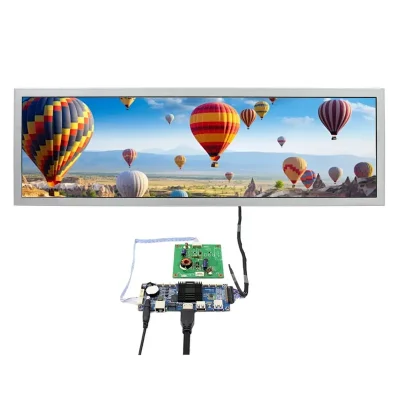
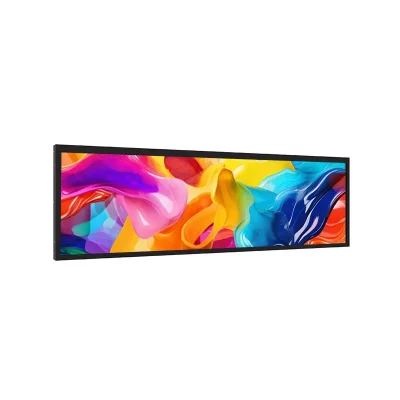
28.6 Inch Bar LCD Module for Transit Information Digital Signage
Model P/N
Size
Resolution
Brightness
Viewing Angle
Connector Type
Operating Temp
Overall(mm)
huisoar
HS290-SBL-FHD
Brand
Panel Size (inch)
Model P/N
Resolution
Brightness (nits)
Viewing Angle
Contrast Ratio
Response Time
Overall (mm)
Active Area (mm)
Refresh Rate
Display Colors
Panel Type
Connector Type
Operating Temp
Touchscreen Type
Storage Temp
Work Mode
Pixel Format
Control Type
Operating Environment
Motherboard Type
Designed For
28.6 Inch Bar LCD Module for Transit Information
This ultra-wide 1920 × 540 IPS module provides 700-nit luminance, full-angle viewing and a 51-pin LVDS interface for route and status displays.
Product Summary
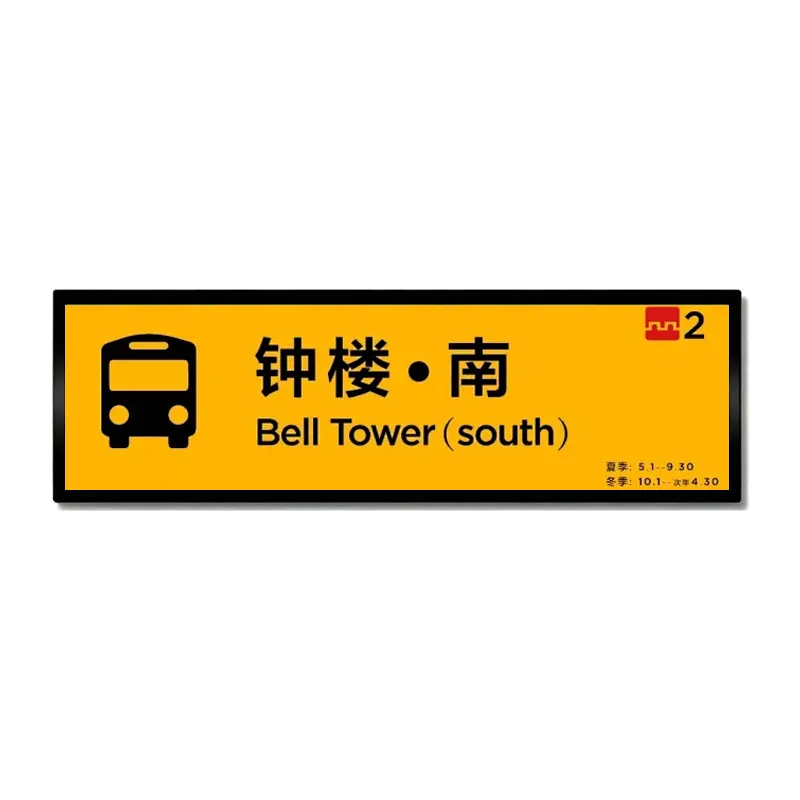
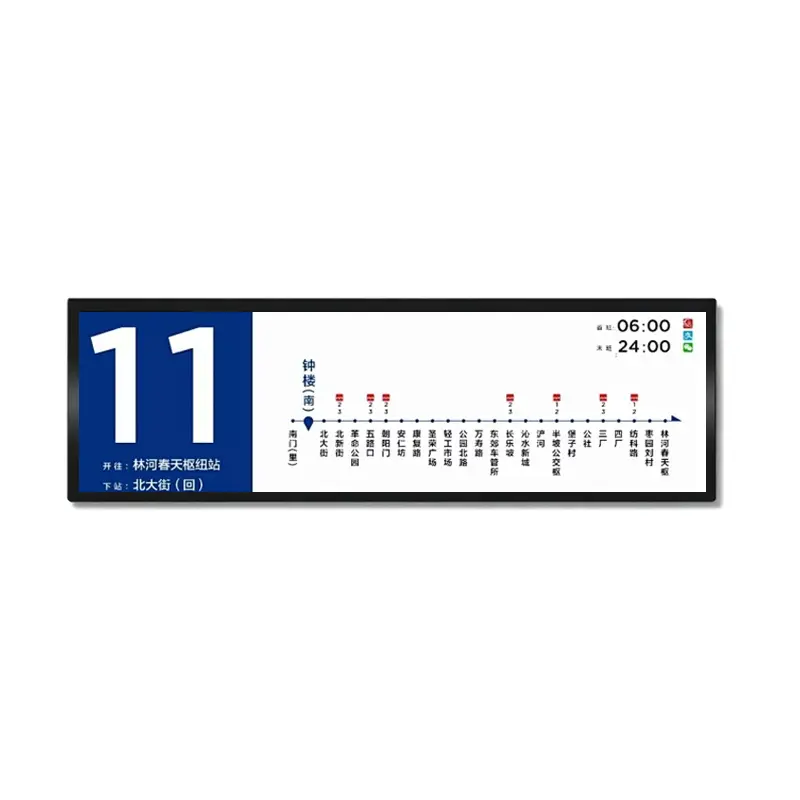
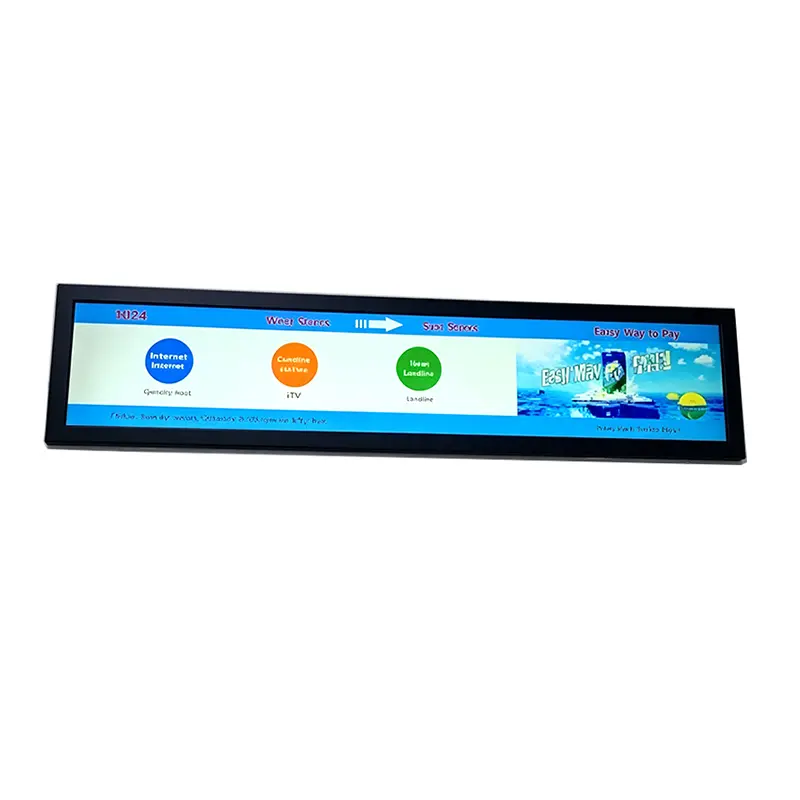
The Bar LCD Module for Transit provides a long horizontal canvas for route information, station names, timetable rows, service notices and equipment status graphics. Its 28.6-inch panel uses a native 1920 × 540 raster, allowing designers to place more information across the screen without the unused vertical area associated with a conventional 16:9 panel.
The module combines 700-nit typical luminance, IPS full-angle viewing, a 1000:1 typical contrast ratio and a 51-pin LVDS interface. A non-touch structure supports fixed information systems where the display functions as a clear visual output rather than an operator-input surface.
Key Specifications
| Parameter | Value |
|---|---|
| Panel size | 28.6 inch |
| Resolution | 1920 × 540 pixels |
| Panel type | a-Si IPS TFT LCD |
| Luminance | 700 nits typical |
| Contrast | 1000:1 typical |
| Viewing angles | 89/89/89/89° typical, L/R/U/D |
| Display colors | 16.7M colors |
| Interface | 51-pin LVDS |
| Backlight | WLED |
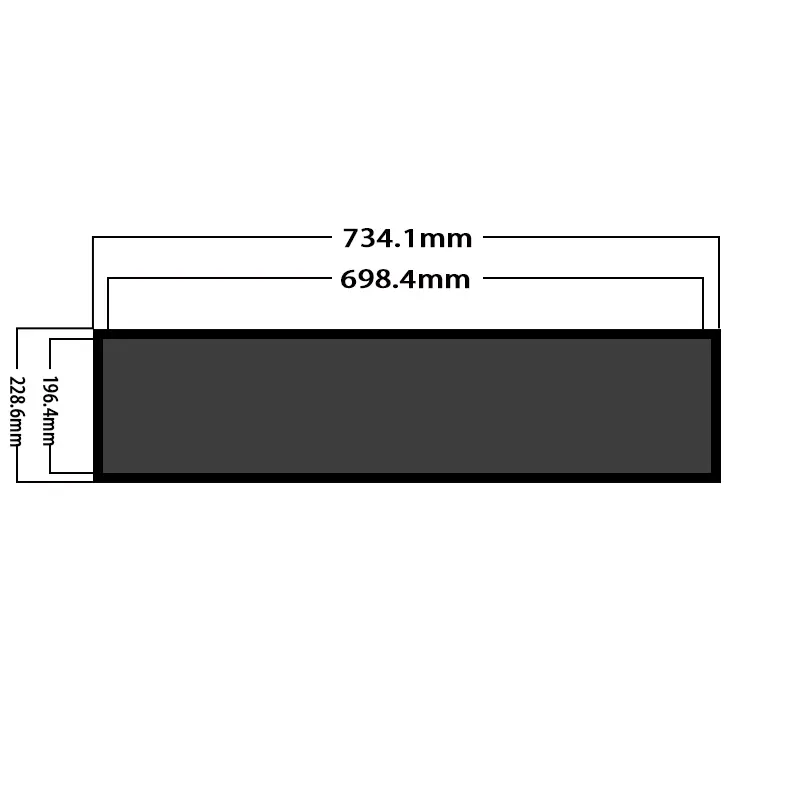
| Active area | 698.4 × 196.42 mm |
| Overall size | 734.1 × 228.6 × 18.5 mm maximum |
| Touch status | Non-touch |
| Operating temperature | 0°C to +50°C |
| Storage temperature | −20°C to +60°C |
Ultra-Wide 1920 × 540 Content Layout
Route, Timetable and Status Graphics
The elongated raster is suited to information that naturally flows from left to right. Route sequences, station names, timetable rows, menu strips, warning messages and production-status indicators can occupy the width of the panel without requiring the height of a conventional monitor.
This shape can reduce unused enclosure space in buses, rail vehicles, station fixtures, retail headers and narrow equipment panels. The greater-than-3:1 format also allows multiple information zones to remain visible at the same time.
Native Resolution and UI Preparation
The 1920 × 540 raster should be driven natively to preserve route text and horizontal graphics.
Content should be designed directly for the panel’s aspect ratio rather than cropped from a standard 1920 × 1080 layout. Important text, icons and status fields should remain within the approved visible opening, with margins reserved for bezel overlap and assembly tolerances.
Optical Performance for Public Information Displays
700-Nit Luminance
The standard module is rated at 700 nits typical. This supports stronger visibility than many conventional indoor panels in stations, retail areas, vehicle interiors and public-information fixtures with controlled ambient lighting.
A 700-nit panel does not by itself establish sunlight readability after cover glass and installation conditions are applied.
Protective glass, air gaps, bonding layers, surface reflections, viewing direction and ambient light can all change finished-system readability. The complete optical stack should therefore be evaluated in the intended installation.
IPS Full-Angle Viewing
The panel provides 89/89/89/89° typical viewing angles in left, right, up and down order. This is useful where passengers or users approach the screen from multiple positions rather than standing directly in front of it.
The IPS full-view structure helps route text, icons and color-coded information remain more consistent across the viewing zone. Final readability should still be checked with the installation angle, front glass and ambient-light conditions.
51-Pin LVDS Integration
Controller and Pinout Qualification
The module uses a 51-pin LVDS signal connection. Before selecting a controller board or releasing a cable, engineering review should confirm:
- complete pin assignment
- LVDS timing
- signal voltage
- channel configuration
- bit depth
- connector pitch
- contact side
- power requirements
- backlight-control method
- cable length and routing
A 51-pin LVDS connector does not guarantee timing, voltage, bit-depth or pin compatibility with another 51-pin panel.
The full module specification and controller documentation must be compared before sample power-up.
Non-LVDS Hosts Need Conversion
HDMI, DisplayPort, MIPI DSI, eDP, USB and parallel RGB sources cannot drive the panel directly unless a suitable controller or conversion path produces the required LVDS output.
A controller-board project should be reviewed as a system that includes video input, native output timing, panel power, WLED backlight control, cable routing and enclosure integration.
Bar LCD Module for Transit Mechanical Planning
Active Area and Visible Opening
The active display area is 698.4 × 196.42 mm. This value defines the image region and should guide the visible window in the bezel or protective cover.
The enclosure opening should account for:
- active-area position
- bezel overlap
- assembly tolerances
- viewing-angle requirements
- front-glass printing
- cable exit direction
- mounting support
Content margins should also reflect the final visible opening rather than assuming the entire module outline is viewable.
Overall Size and Mounting Depth
The module measures 734.1 × 228.6 mm with a maximum thickness of 18.5 mm. These dimensions affect frame width, internal depth, support-point placement and rear-clearance planning.
An approved mechanical drawing should be used before releasing sheet metal, plastic tooling, cover glass or mounting brackets. Connector position and cable bend radius must be included in the enclosure review.
Recommended Application Boundaries
The display may be evaluated for:
- bus route-information displays
- rail and metro information panels
- station timetable boards
- passenger-service messages
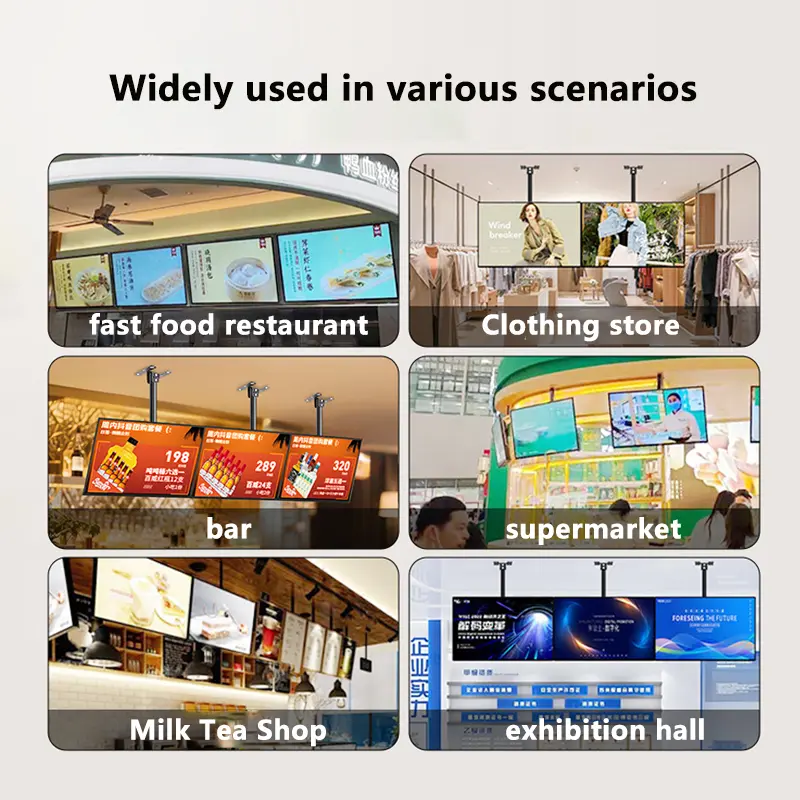
- retail promotional strips
- menu and pricing bands
- production-status displays
- narrow digital-signage assemblies
- equipment status panels
The module is not presented as automotive-qualified, waterproof, vandal-resistant or sunlight-readable. Any such requirement needs separate environmental, optical and certification review.
Non-Touch Architecture
The standard configuration is non-touch. This is appropriate where the display provides fixed or centrally controlled information and user input is handled elsewhere.
A non-touch design can simplify:
- front-stack construction
- controller architecture
- cable routing
- software integration
- optical-loss management
- maintenance in fixed information systems
Projects requiring touch need a separately designed touch sensor, controller, cover lens and interface. Touch must not be assumed from the LCD module specification.
Custom Integration Options
Project review may include:
- LVDS controller-board matching
- custom LVDS cable and connector routing
- cover-glass dimensions
- anti-glare or anti-reflection treatment
- optical bonding evaluation
- enclosure adaptation
- mounting brackets
- brightness configuration review
- protective front glass
- optional touch development
- logo and bezel printing
Custom configurations are generally reviewed from 500 pieces, subject to tooling requirements, material availability and the requested specification. Sample and standard-module quantities are confirmed separately.
Procurement Checklist
Before requesting a production configuration, submit or confirm:
- native 1920 × 540 content layout
- LVDS timing
- signal voltage and bit depth
- full 51-pin assignment
- controller-board model
- connector position and contact side
- installation direction
- approved active-area and outline drawing
- cover-glass stack
- 700-nit optical target
- operating environment
- cable requirements
- sample quantity
- annual demand
- required qualification documents
Sample approval should be completed before controller-board release, cable production, enclosure tooling or volume procurement.
FAQ
About 8.6 Inch Bar LCD Module
What is the typical lead time and production capacity?
Lead time and production capacity depend on order volume, current factory load, and whether the order is standard or customized. Production capacity is generally several thousand units per month for bar-type modules, but exact figures vary by factory schedule. Please confirm the specific lead time and capacity for your required quantity and configuration with our sales team on request.
Do you offer displays with wide viewing angles (e.g., 85/85/85/85) for multi-user transportation information screens?
Yes, the HS290-SBL-FHD offers 89/89/89/89 degree viewing angles, which exceed the 85/85/85/85 requirement. This IPS-level performance ensures consistent image quality from multiple viewing positions, making it suitable for transportation information screens where passengers view from various angles.
Can you customize the mechanical dimensions and mounting holes of a standard LCD panel to fit our specific enclosure design?
Yes, mechanical customization such as changes to mounting holes, bracket positions, or overall outline dimensions is possible for volume orders. Standard LCD modules have fixed active areas and connector locations, so any modification must be evaluated to ensure it does not interfere with the display’s optical or electrical performance. For the HS290-SBL-FHD, the active area is 698.4 × 196.42 mm. Exact customization options should be confirmed on request.
What interface options (e.g., LVDS, eDP) are available for your this size panels, and what are the pin configurations?
LVDS is the most common interface for bar-type panels in transit signage due to its long-distance signal integrity and compatibility with many embedded controllers. The exact pin assignment and signal mapping for the LVDS connector should be confirmed with the datasheet, available on request.
What touch screen technologies do you support (e.g., capacitive, resistive, in-cell)?
The HS290-SBL-FHD is a non-touch module. We support capacitive and resistive touch technologies for other display models. For custom touch integration, please specify your touch requirements (e.g., projected capacitive, surface capacitive, or resistive) and we will recommend a suitable solution.
What are the warranty terms and after-sales service for your display products?
After-sales service includes technical support for integration issues, return material authorization (RMA) for defective units, and optional extended warranty plans. For the HS290-SBL-FHD, warranty coverage does not include damage from improper handling, electrical overstress, or environmental conditions outside the specified operating temperature range (0°C to 50°C) and storage range (-20°C to 60°C). Exact warranty duration and service terms should be confirmed in your purchase contract or by request.
What are the available connector types and pinouts for your 21.5" LVDS panels, and do you offer adapter cables or reference designs?
For 21.5-inch LVDS panels, connector types and pinouts vary by model. We provide datasheets with pin definitions for each panel. Adapter cables or reference designs can be offered for volume orders. Please specify your exact panel model and interface requirements for a tailored solution.
What is the minimum order quantity (MOQ) for custom display solutions?
Minimum order quantity (MOQ) for custom display solutions depends on the complexity of customization and the supplier’s current production planning. Please contact our sales team with your specific requirements to receive a confirmed MOQ and pricing for your project.
Can you provide datasheet, drawing, and pin definition?
Yes, we can provide a datasheet, mechanical drawing, and pin definition for the HS290-SBL-FHD upon request. These documents include electrical characteristics, timing diagrams, and connector details. Please contact our sales team to receive the technical documentation.
Can you provide a custom LCD panel with specific dimensions and a round shape?
Custom LCD panels with specific dimensions and non-rectangular shapes, including round displays, are possible for volume orders. This requires a custom glass design and tooling investment. Please provide your target dimensions, shape, and electrical requirements for a feasibility assessment and cost estimate.
Freya Yang
+86 18318948097