Freya Yang
+86 18318948097
+852 62667476
18.5″ 1080P Wide Temperature EV Charging Station Industrial LCD Panel
Model P/N
Size
Resolution
Brightness
Viewing Angle
Connector Type
Operating Temp
Overall(mm)
huisoar
HS185001B0
Brand
Panel Size (inch)
Model P/N
Resolution
Brightness (nits)
Viewing Angle
Contrast Ratio
Response Time
Overall (mm)
Active Area (mm)
Refresh Rate
Display Colors
Panel Type
Connector Type
Operating Temp
Touchscreen Type
Storage Temp
Work Mode
Operating Environment
Designed For
18.5" 1080P Wide Temperature EV Charging Station Industrial LCD Panel
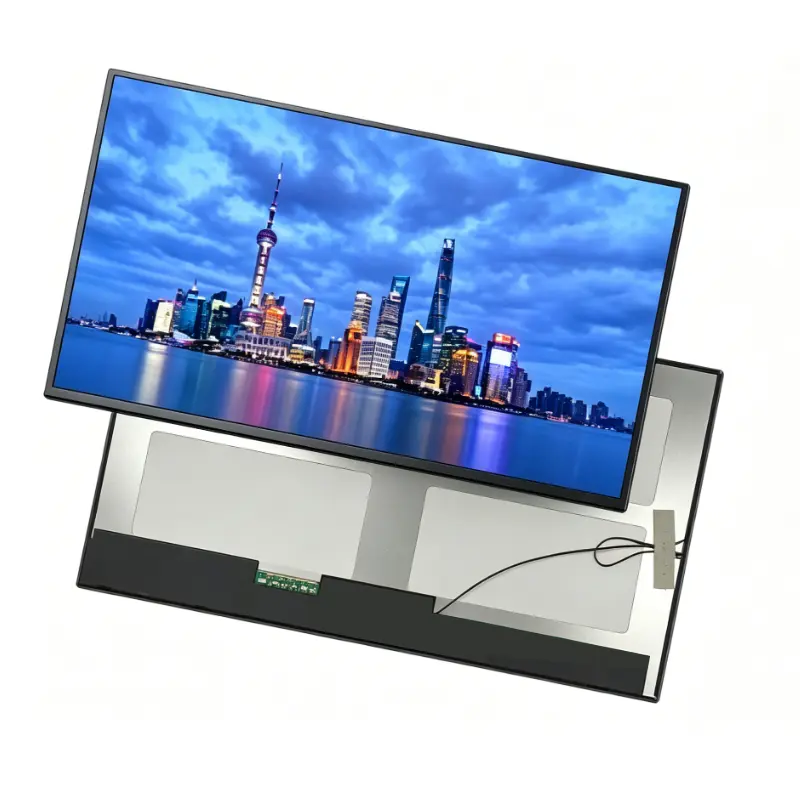
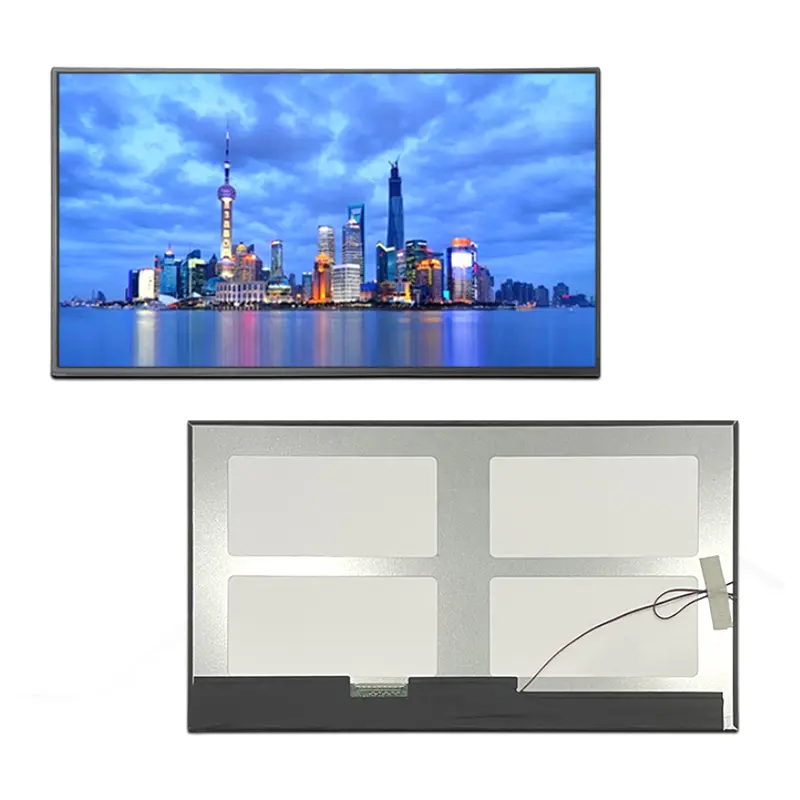
The 1080P Wide Temperature EV Charging Station Industrial LCD is an 18.5-inch Full HD IPS TFT-LCD component for charging equipment, fuel dispensers, agricultural machinery and industrial computer interfaces. It combines 1920 × 1080 resolution, 2000 cd/m² typical luminance, a 408.96 × 230.04 mm active area and a −20°C to +70°C operating range. The standard configuration is non-touch and uses a 30-pin LVDS connection for embedded display integration.
Its 16:9 Full HD format gives equipment designers a larger workspace for charging instructions, operating status, equipment graphics and service information without moving into an oversized signage panel.
Product Summary
This 18.5-inch panel is designed around the requirements that matter in professional equipment: high luminance, Full HD image area, IPS viewing, LVDS integration and wider environmental tolerance.
The transmissive TFT-LCD structure provides 2000 cd/m² typical luminance, while the IPS architecture supports 80° viewing in the left, right, upper and lower directions. A 1200:1 typical contrast ratio and 16.7M-color output provide a practical visual platform for operational interfaces, graphics and information content.
The standard module has no integrated touch sensor. Interactive charging or self-service systems should therefore define the touch layer and controller as a separate system requirement.
Key Specifications
| Parameter | Confirmed value |
|---|---|
| Size | 18.5 inches |
| Resolution | 1920 × 1080 pixels |
| Aspect ratio | 16:9 |
| Display technology | a-Si IPS TFT-LCD |
| Optical mode | Transmissive |
| Brightness | 2000 cd/m² typical |
| Contrast ratio | 1200:1 typical |
| Viewing angle | 80°/80°/80°/80° L/R/U/D |
| Display colors | 16.7M |
| Backlight | WLED |
| Interface | 30-pin LVDS |
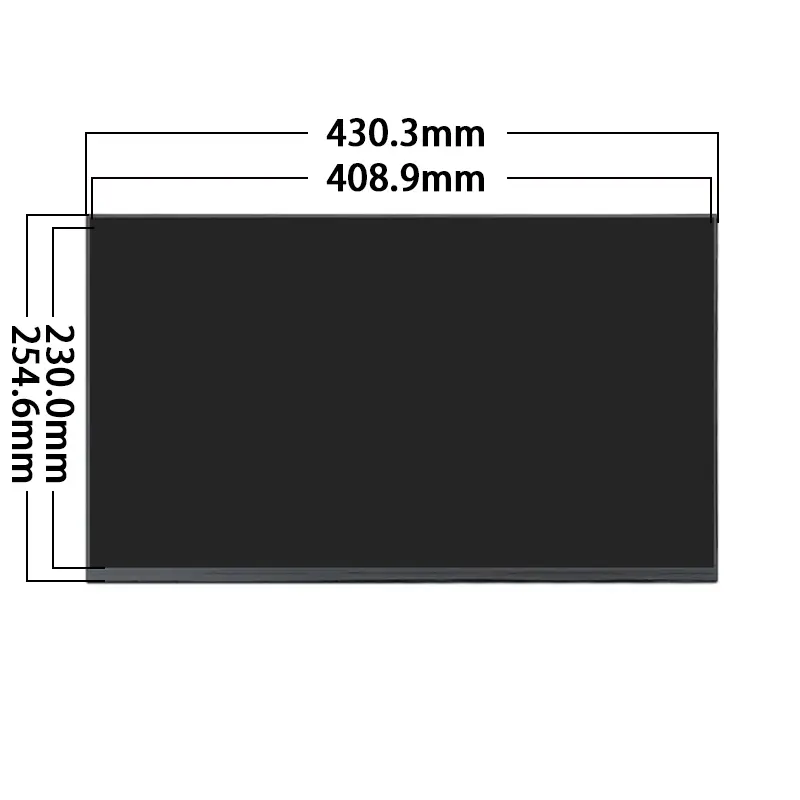
| Active area | 408.96 × 230.04 mm |
| Overall dimensions | 430.37 × 254.6 × 9.3 mm |
| Touch | Non-touch |
| Operating temperature | −20°C to +70°C |
| Storage temperature | −30°C to +80°C |
2000 cd/m² Brightness for Charging and Fueling Equipment
High ambient light can reduce interface contrast in outdoor-facing charging and fueling equipment. The selected panel configuration uses a fixed 2000 cd/m² typical luminance target, giving system designers a substantially brighter starting point than a conventional indoor display.
Use a fixed 2000 cd/m² qualification target
The page family also refers to a 400–2000 cd/m² range. For engineering and procurement, the ordered module should be qualified against one fixed luminance specification rather than treating that range as a continuously variable standard.
For this configuration, use 2000 cd/m² typical as the public specification and confirm its tolerance and measurement method in the production document.
Evaluate the final front-window optical stack
Panel luminance alone does not establish finished-system direct-sun readability.
Front glass, reflection, air or optical bonding, protective coatings, installation angle and ambient illumination can all affect perceived contrast. A charging-station or fuel-dispenser project should therefore test the complete front stack under its actual lighting conditions.
Full HD IPS Performance for Large HMI Layouts
1920 × 1080 supports multi-zone interfaces
The native Full HD raster provides enough canvas for charging progress, status information, instructions, fault messages, QR areas and graphical content on one screen.
Using the native 1920 × 1080 timing also avoids unnecessary scaling of small interface elements. This is useful where icons, numeric values and instructional text must remain clear across a relatively large 18.5-inch interface.
80° viewing in all four directions
The IPS configuration specifies 80°/80°/80°/80° viewing in left, right, upper and lower directions.
That supports equipment where the display may be mounted above or below the user's eye line or where different users approach the terminal from different positions.
Integrating the 1080P Wide Temperature EV Charging Station Industrial LCD
Qualify the 30-pin LVDS interface
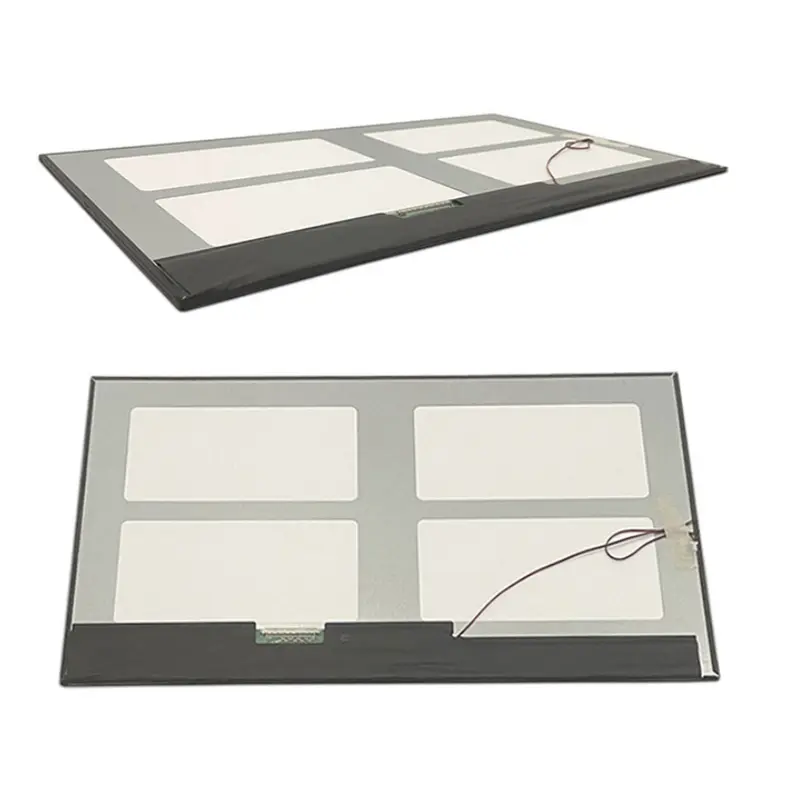
The module uses a 30-pin LVDS connection, but connector count alone is not sufficient for electrical compatibility.
Before controller or cable release, confirm native timing, the complete pin assignment, channel configuration, bit mapping, panel power requirements, connector orientation and cable construction.
Official industrial-board documentation demonstrates that 30-pin LVDS connectors can use materially different signal and power assignments, reinforcing the need to match the actual panel and host documentation rather than assuming that every 30-pin connector is interchangeable.
A matching connector does not guarantee compatibility
A matching 30-pin connector does not guarantee LVDS timing, voltage, channel configuration, bit mapping or pin compatibility.
This distinction is especially important during replacement projects. A second 18.5-inch Full HD LVDS panel can have the same diagonal and resolution while still requiring a different electrical or cable definition.
Mechanical Integration and Enclosure Fit
The detailed module size is 430.37 × 254.6 × 9.3 mm, while the active image area is 408.96 × 230.04 mm.
Use the detailed production dimensions
The active area should control the visible-window plan, while the complete outline and approved tolerance drawing should control the mechanical enclosure.
Do not substitute the rounded 430 × 254 mm and 9 mm catalog values for the detailed production dimensions when releasing tooling. Connector clearance, cable routing, support points and front-window overlap should also be checked before enclosure approval.
Non-Touch Architecture and Interaction Planning
The standard module is non-touch.
For an interactive EV charger or self-service fuel dispenser, treat the touch subsystem as a separate engineering layer. The project should define touch technology, controller interface, cover-lens dimensions, bonding method, FPC direction and required wet/glove behavior before the complete front structure is approved.
The LCD's non-touch status also gives OEM teams flexibility when the equipment uses physical keys, an external keypad or another input method.
Wide-Temperature Operation for Field Equipment
The module supports −20°C to +70°C operation and −30°C to +80°C storage.
These ranges are useful for field equipment exposed to larger temperature changes than typical office displays. They do not, by themselves, establish waterproofing, UV resistance, humidity qualification, enclosure IP rating or full outdoor-system certification.
Thermal qualification should consider the final cabinet, internal electronics, high-brightness backlight load, solar exposure and ventilation strategy rather than evaluating the bare LCD temperature range in isolation.
EV Charging, Fuel Dispenser, Agricultural and Industrial Applications
The 1080P Wide Temperature EV Charging Station Industrial LCD is suitable for evaluation in charging-station interfaces, fuel-dispenser information screens, agricultural machinery displays and industrial computer systems that require Full HD content and stronger luminance.
For charging equipment, the panel can provide a large area for charging status, operating guidance and service messages. Fuel-dispenser systems can use the same Full HD workspace for operating prompts and equipment information. Agricultural and industrial systems can use the IPS panel for dashboards, machine status and visual control information.
Each finished product should still be qualified for its own optical, electrical, thermal, mechanical and environmental requirements.
Customization and Procurement Planning
Custom configurations are generally reviewed from 500 pieces, subject to tooling requirements, material availability and the requested specification. Sample and standard-module quantities are confirmed separately.
Project reviews can cover LVDS cable and pin definition, fixed brightness version, cover glass, anti-glare or anti-reflective treatment, optical bonding, separately engineered touch, enclosure adaptation and front-window optical performance.
Procurement checklist
Before sample release, submit the native 1920 × 1080 host timing, complete 30-pin LVDS requirement, controller platform, panel and WLED electrical requirements, enclosure drawing, front-window structure, target lighting, temperature range, touch requirement, sample quantity and expected annual demand.
Engineering review should confirm LVDS compatibility, panel and backlight power requirements, mechanical fit, optical performance, thermal boundaries, interaction architecture and project-specific customization.
FAQ
What must be checked before connecting a 30-pin LVDS controller?
Does 2000 cd/m² guarantee direct-sun readability in a finished EV charger?
How should the 400–2000 cd/m² wording be interpreted?
What changes if an EV charger requires touch operation?
Which dimensions should control enclosure tooling?
Freya Yang
+86 18318948097