Freya Yang
+86 18318948097
+852 62667476
18.5 Inch Industrial LCD Panel for Sunlight Readability Evaluation
Model P/N
Size
Resolution
Brightness
Viewing Angle
Connector Type
Operating Temp
Overall(mm)
huisoar
HS185WHM-NM2
Brand
Panel Size (inch)
Model P/N
Resolution
Brightness (nits)
Viewing Angle
Contrast Ratio
Response Time
Overall (mm)
Active Area (mm)
Refresh Rate
Display Colors
Panel Type
Connector Type
Surface Treatment
Operating Temp
Touchscreen Type
Storage Temp
Work Mode
Pixel Format
Input Voltage (V)
Control Type
Weight (g)
Operating Environment
Designed For
18.5 Inch Industrial LCD Panel for Sunlight Readability Evaluation
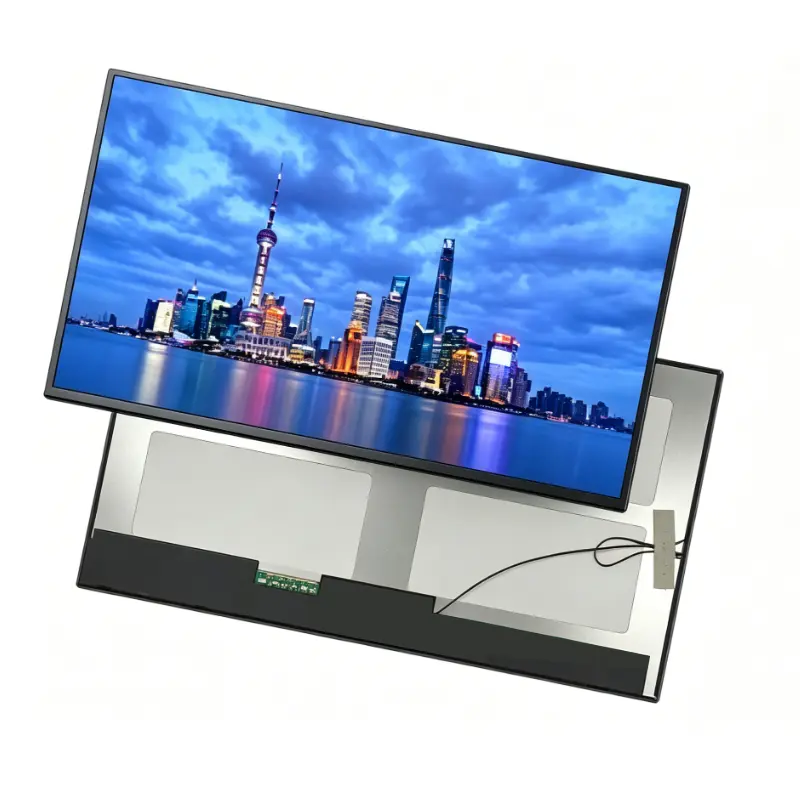
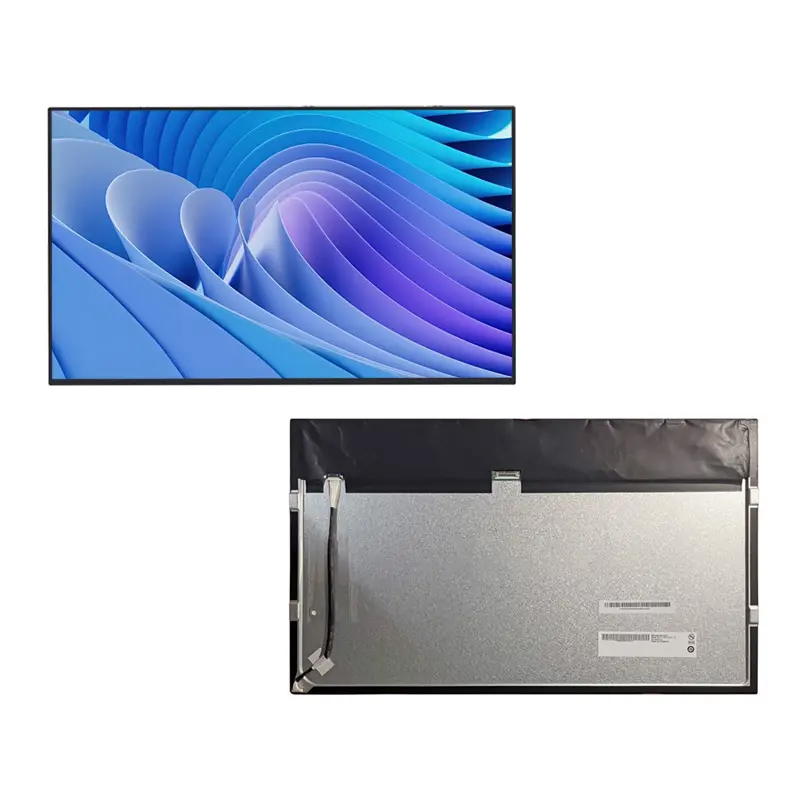
The Industrial LCD Panel for Sunlight Readability Evaluation is an 18.5-inch WXGA TFT-LCD component for control equipment, embedded monitors and commercial display systems. It combines a native 1366 × 768 workspace, IPS viewing, 500 cd/m² typical luminance and a 30-pin LVDS interface in a standard non-touch module. For projects where bright-light or sunlight visibility matters, the panel provides a defined optical baseline, while final readability still needs to be qualified with the actual front window, lighting environment and enclosure.
Product Summary
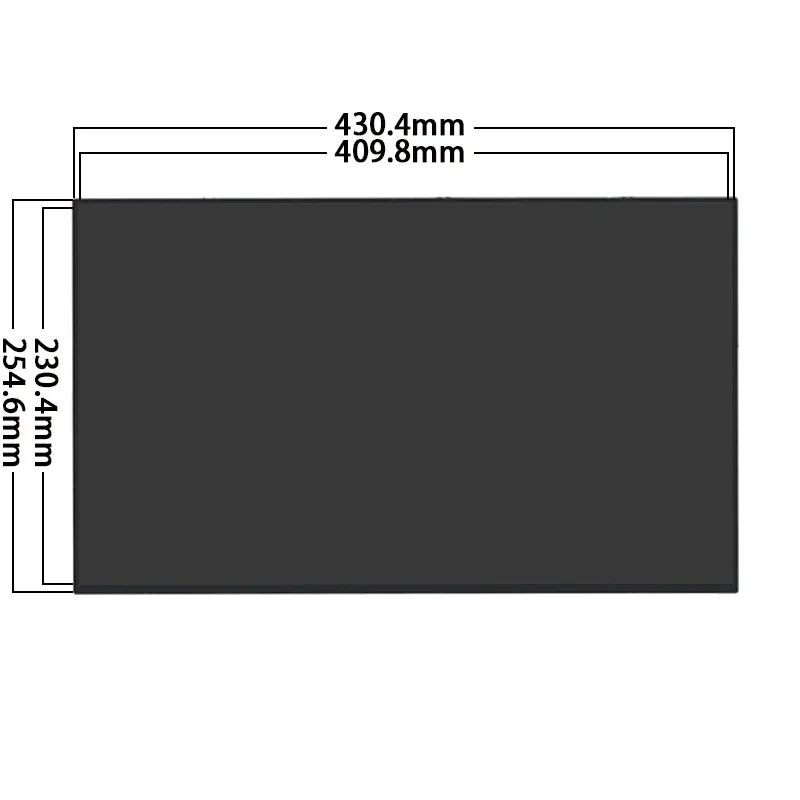
This 18.5-inch industrial LCD panel uses a 16:9 format with an active image area of 409.8 × 230.4 mm. The panel outline is 430.4 × 254.6 mm, and the exact product capture specifies an 11.4 mm maximum thickness.
The display uses an IPS transmissive structure with 89°/89°/89°/89° viewing at CR ≥10. A 1000:1 typical contrast ratio and 16.7M-color output provide a practical optical foundation for machine interfaces, process displays, workstation-style equipment and embedded monitor designs.
The standard configuration is non-touch, allowing system developers to determine separately whether the finished product needs physical controls, a protective front lens or a qualified touch assembly.
Key Specifications
| Parameter | Value |
|---|---|
| Screen size | 18.5 inches |
| Resolution | 1366 × 768 pixels |
| Aspect ratio | 16:9 |
| Panel technology | a-Si IPS TFT-LCD |
| Optical mode | Transmissive |
| Typical luminance | 500 cd/m² |
| Typical contrast | 1000:1 |
| Viewing angle | 89°/89°/89°/89° L/R/U/D at CR ≥10 |
| Display colors | 16.7M colors |
| Active area | 409.8 × 230.4 mm |
| Panel outline | 430.4 × 254.6 mm |
| Maximum thickness | 11.4 mm |
| Interface | 30-pin LVDS |
| Input | 5.0 V typical |
| Backlight | WLED |
| Touch | Non-touch |
| Operating temperature | 0°C to +50°C |
| Storage temperature | −20°C to +60°C |
WXGA Workspace for Control Interfaces
Native 1366 × 768 UI Planning
The native 1366 × 768 raster is suitable for interfaces built around status areas, menus, alarms, operating instructions, process values and equipment graphics. Designing the application around the native pixel grid avoids unnecessary scaling and gives the software team a fixed 16:9 canvas.
A 1366 × 768 panel may also be appropriate when an existing control platform or embedded host already uses WXGA output and moving to Full HD would provide little functional benefit.
16:9 Equipment Layout
The 18.5-inch widescreen format provides more horizontal interface space than a 4:3 or 5:4 panel while remaining compact enough for many monitor-style equipment housings.
Mechanical design should treat the 409.8 × 230.4 mm active area and the complete 430.4 × 254.6 mm panel envelope as separate dimensions. The active area controls the visible UI window, while the outer dimensions determine internal clearance and panel fit.
500 cd/m² and Bright-Light Qualification
What the Panel Rating Establishes
The panel has a fixed 500 cd/m² typical luminance specification.
That value is useful for industrial interiors and other installations where stronger ambient light is expected, but it should not be converted automatically into a direct-sun readability claim. A complete display assembly can add front glass, an air gap, surface reflections, touch layers or other optical elements that change the brightness and contrast perceived by the operator.
The 500 cd/m² panel rating does not by itself establish direct-sun readability in the finished product.
Front-Window Readability Validation
When the project includes a protective front window, its transmission, reflection, surface treatment and installation angle should be included in sample evaluation.
The panel's haze/3H surface provides a defined native front-surface condition, but it does not determine the optical behavior of an additional cover lens. If AR, AG, bonding or a touch layer is introduced, the complete stack should be assessed under the actual installation lighting.
30-Pin LVDS Integration
Connector Count Is Not Compatibility
The module uses a 30-pin LVDS interface, but the presence of another 30-pin connector is not sufficient evidence that two panels can be exchanged directly.
A matching 30-pin connector does not guarantee LVDS timing, channel mapping, bit depth, voltage or pin compatibility.
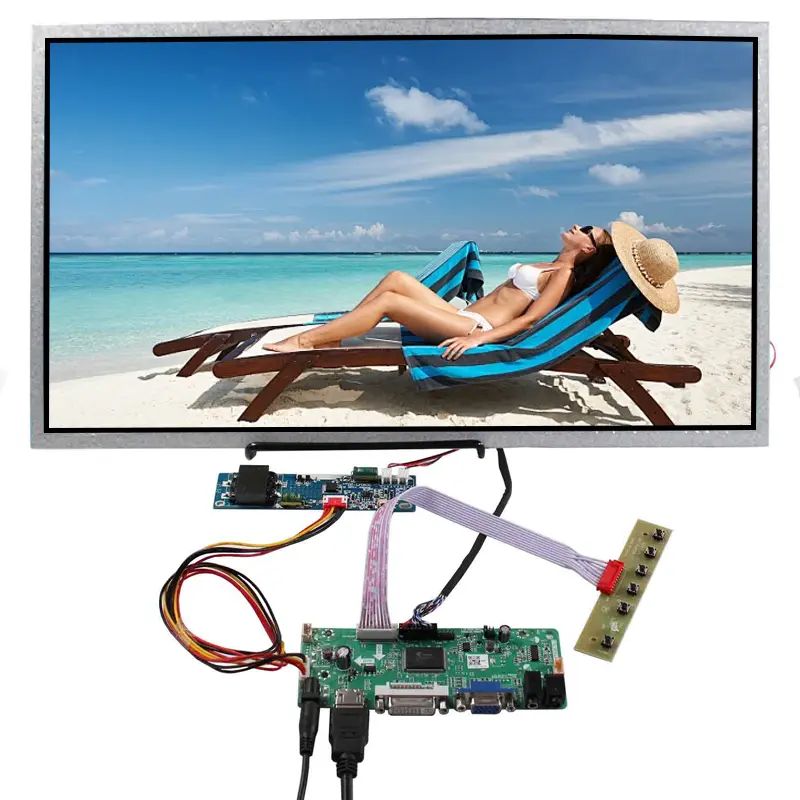
Before controller or cable release, confirm the native 1366 × 768 timing, complete pin assignment, connector orientation, electrical levels and the intended panel/backlight power architecture.
Controller and Cable Qualification
An existing industrial controller, embedded motherboard or display board should be matched using its documented LVDS output rather than connector appearance alone.
Cable length, connector direction and routing also need to fit the enclosure. These details become particularly important where the module is mounted close to a metal back plate, bracket or equipment wall.
Industrial LCD Panel for Sunlight Readability Evaluation
Active Area and Visible Opening
This 18.5-inch panel provides a 409.8 × 230.4 mm active image area. That value should be used when defining the visible front opening and determining how much of the native WXGA interface remains exposed.
Adequate bezel tolerance should be retained so assembly variation does not cover required pixels or expose unintended inactive regions.
Outline and Depth Control
The captured panel data specifies a 430.4 × 254.6 mm outline and an 11.4 mm maximum thickness.
For production tooling, the approved current mechanical drawing should be used to settle final depth and mounting details before the enclosure is frozen.
Enclosure tooling should use the approved current-revision mechanical drawing when dimensional records differ.
IPS Viewing and Operator Positioning
The 89°/89°/89°/89° L/R/U/D viewing specification supports equipment that may be observed from different operator positions or installation heights.
Wide viewing is especially useful when a control display is shared between operators or installed in a standing workstation where the viewer does not remain at one fixed angle.
The finished product should still be evaluated with its actual bezel and front glass because those components can affect the usable viewing geometry even when the LCD itself has a wide-view specification.
Non-Touch System Planning
The standard panel is non-touch.
The standard module is non-touch, so interactive input requires a separately qualified touch assembly or another input method.
This architecture suits machines that use keys, switches, encoders or external controls. If a touch interface is required, the touch sensor, controller, cover lens, bonding structure and communication interface should be developed as a separate system rather than assumed to be part of the base panel.
Adding these layers also changes thickness and optical behavior, so the resulting stack should be included in both mechanical and readability qualification.
Temperature and Mechanical Qualification
The specified operating range is 0°C to +50°C, with storage from −20°C to +60°C.
These limits define the panel's temperature envelope; they do not establish weatherproofing, a sealed enclosure, an IP rating or suitability for unrestricted outdoor exposure.
The 0°C to +50°C operating range must be checked against the actual equipment thermal environment.
The supplied non-operating vibration reference is 10–300 Hz at 1.5 G across the X, Y and Z axes. System designers should preserve that non-operating grade and avoid converting it into an unsupported operating-vibration or rugged-certification claim.
Application Fit
The Industrial LCD Panel for Sunlight Readability Evaluation is suitable for engineering consideration in industrial control terminals, process-controller monitors, workstation-style equipment displays, embedded monitor systems and digital-signage equipment where its electrical, optical and environmental limits match the finished system.
Its key selection combination is the 18.5-inch WXGA format, IPS viewing, 500 cd/m² typical luminance, 30-pin LVDS interface and non-touch structure.
For an installation exposed to direct sunlight or unusually strong reflections, sample qualification should determine whether this 500 cd/m² configuration is sufficient or whether a different optical configuration is required.
Customization and Procurement
Project evaluation can include LVDS cable and controller matching, front-window reflection control, cover glass, AR/AG treatment, optical bonding, enclosure adaptation and separately engineered touch.
Custom configurations are generally reviewed from 500 pieces, subject to tooling requirements, material availability and the requested specification. Sample and standard-module quantities are confirmed separately.
Backlight lifetime should also be confirmed against the approved production revision before it is used in service-life calculations or purchasing specifications.
Procurement Checklist
Before release, confirm:
- assigned model HS185WHM-NM2 and supplier panel DV185WHM-NM2 revision;
- native 1366 × 768 timing;
- complete 30-pin LVDS pin assignment;
- LVDS channel and bit mapping;
- connector orientation and cable specification;
- panel input and WLED electrical requirements;
- 409.8 × 230.4 mm active area;
- 430.4 × 254.6 mm panel outline;
- approved maximum-depth drawing;
- 500 cd/m² luminance target and tolerance;
- final front-window reflection/readability requirement;
- standard non-touch or separate touch plan;
- 0°C to +50°C operating requirement;
- −20°C to +60°C storage requirement;
- vibration condition required by the complete equipment;
- sample acceptance criteria;
- project quantity and annual demand.

FAQ
About Industrial LCD Panel for Sunlight Readability Evaluation
What must be checked before replacing another 30-pin LVDS panel?
Is 500 cd/m² sufficient when the finished equipment must remain readable in sunlight?
What should be evaluated when protective glass is added?
Which depth value should control the enclosure design?
What must be specified if touch is added to the standard panel?
Freya Yang
+86 18318948097