Freya Yang
+86 18318948097
+852 62667476
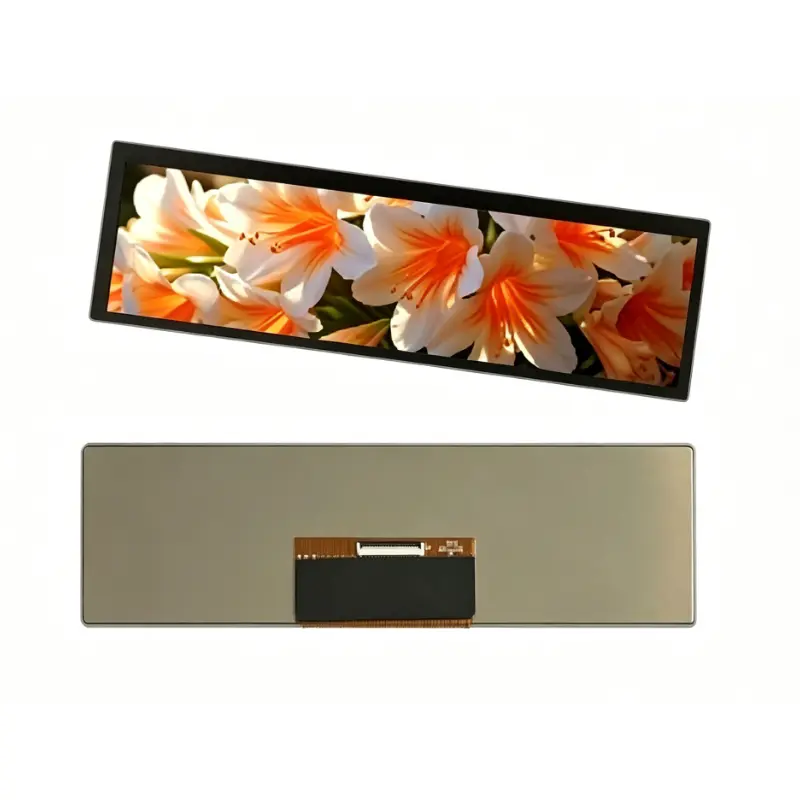
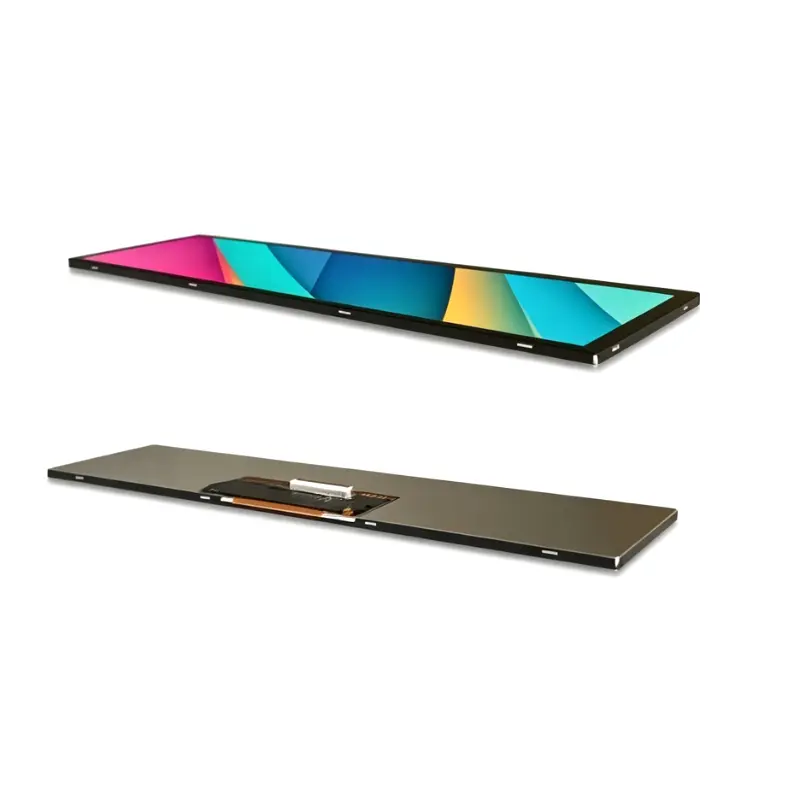
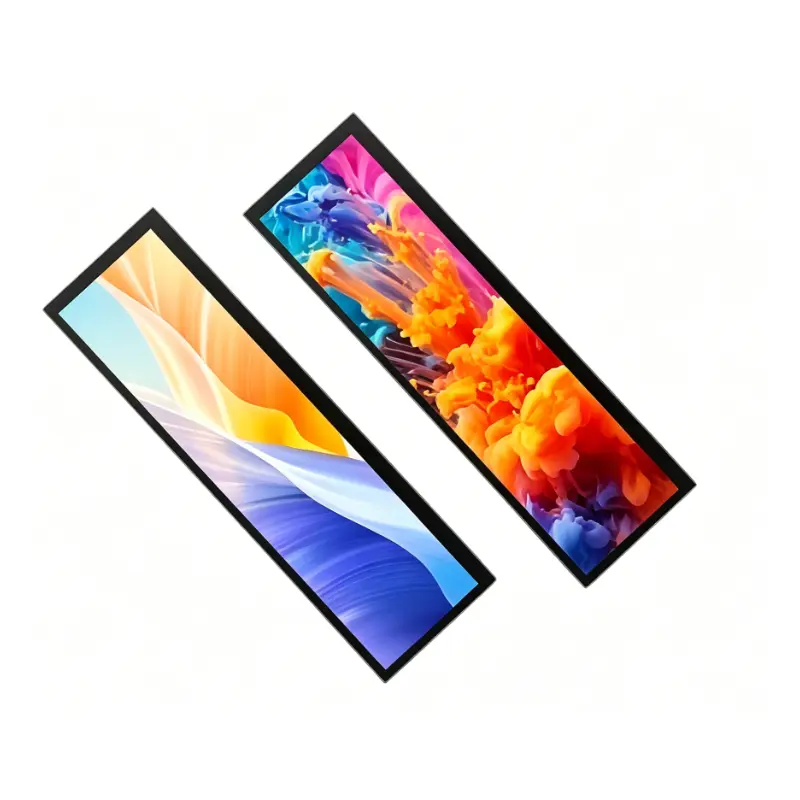
8.8 Inch Ultra Wide LVDS LCD Module Industrial Screen for Control Panels
Model P/N
Size
Resolution
Brightness
Viewing Angle
Connector Type
Operating Temp
Overall(mm)
huisoar
HS880005A0
Brand
Panel Size (inch)
Model P/N
Resolution
Brightness (nits)
Viewing Angle
Contrast Ratio
Response Time
Overall (mm)
Active Area (mm)
Refresh Rate
Display Colors
Panel Type
Connector Type
Operating Temp
Touchscreen Type
Storage Temp
Work Mode
Pixel Format
Control Type
Operating Environment
Motherboard Type
Designed For
8.8 Inch Ultra Wide LVDS LCD Module for Control Panels
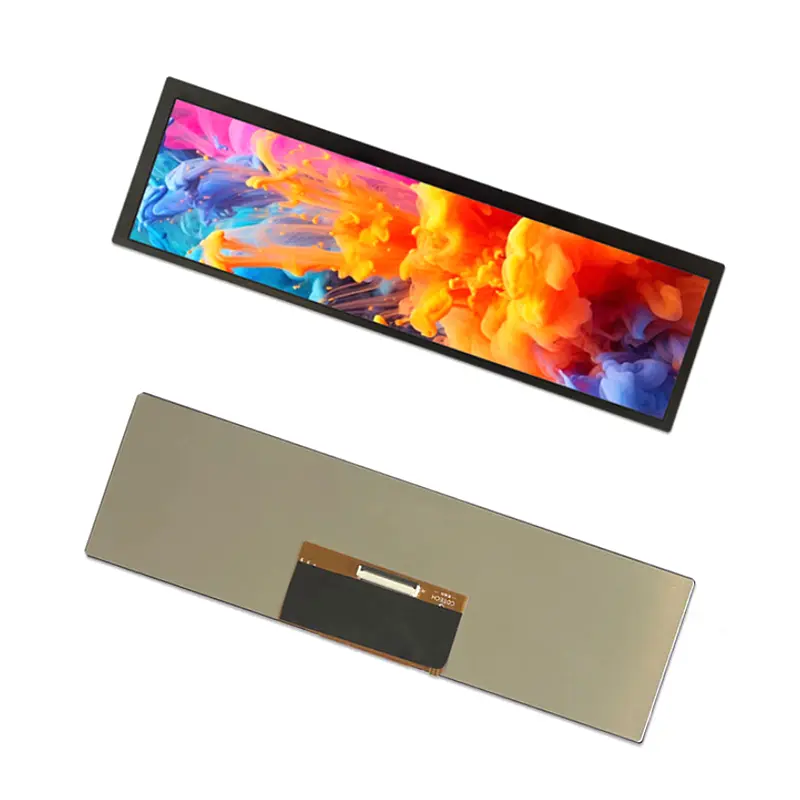
The Ultra Wide LVDS LCD Module provides a 1280 × 320 image area in a long, narrow 8.8-inch format for control panels, equipment status strips, smart-appliance interfaces, and compact information displays. Its 216.96 × 54.24 mm active area allows operating data to be distributed horizontally without requiring the height of a conventional rectangular screen.
The panel combines a 40-pin LVDS connection, TN transmissive construction, 400 cd/m² typical luminance, WLED backlighting, and a 3.5 mm module profile. Electrical timing, LVDS mapping, panel power, backlight power, and enclosure dimensions must be verified before the host board or mechanical tooling is released.
Product Summary
This bar-type TFT LCD is designed for products where available front-panel height is limited but a wide content area is still required.
Its native 1280 × 320 resolution supports horizontal status information, menu labels, operating modes, progress indicators, warning messages, graphics, and multi-zone control content. The image should be generated at the panel’s native resolution to preserve text clarity and avoid scaling distortion.
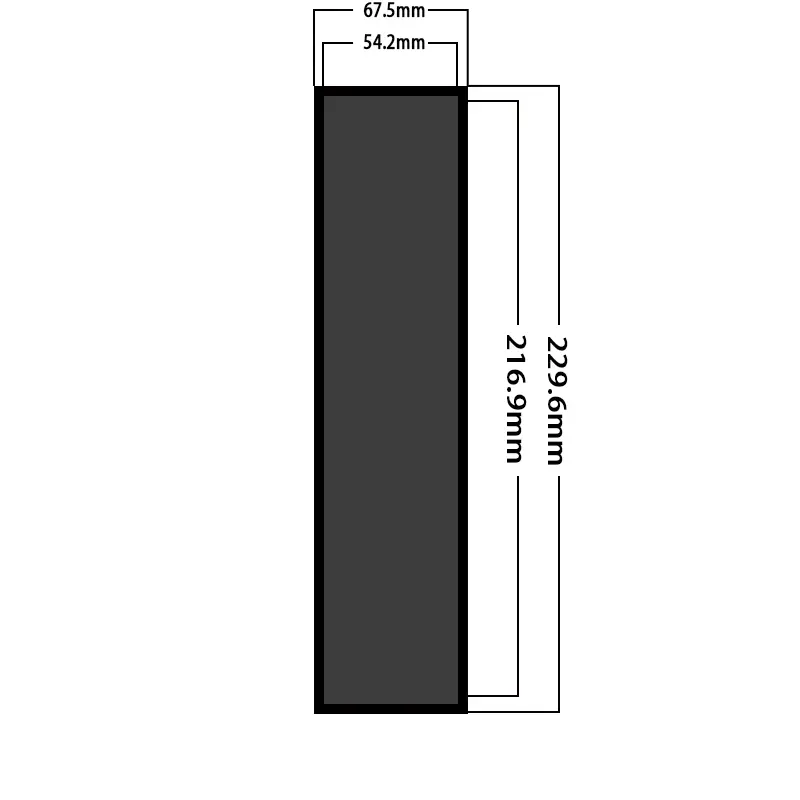
The module has a confirmed active area of 216.96 × 54.24 mm and an outline of 229.66 × 67.5 × 3.5 mm. These dimensions make it suitable for narrow equipment bezels and shallow display stacks.
The standard configuration has no touch panel. Touch should not be implied from application imagery or optional product-family capabilities.
Product Main Parameters
| Main parameter | Confirmed specification |
|---|---|
| Nominal display size | 8.88 inches |
| Display format | Bar-type TFT LCD |
| Native resolution | 1280 × 320 pixels |
| Panel technology | TN a-Si TFT LCD |
| Optical mode | Transmissive |
| Active area | 216.96 × 54.24 mm |
| Module outline | 229.66 × 67.5 × 3.5 mm |
| Brightness | 400 cd/m² typical |
| Contrast ratio | 500:1 typical |
| Viewing angle | 70°/70°/50°/70° left/right/up/down |
| Preferred viewing direction | 6 o’clock |
| Display colors | 16.7M colors |
| Backlight | WLED |
| Interface | 40-pin LVDS |
| Driver identifier | EK79202 |
| Touch status | No touch |
| Operating temperature | −20°C to +70°C |
| Storage temperature | −30°C to +80°C |
Designing a 1280 × 320 Narrow Interface
Organizing Status and Control Content
The bar format is effective when the interface needs to present information across several horizontal zones.
Typical content structures include:
- operating mode on the left;
- primary status in the center;
- alarm or connection indicators on the right;
- progress bars across the full width;
- horizontally arranged menu labels;
- temperature, speed, time, or process readings;
- equipment state and service prompts;
- narrow advertising or product-information strips.
The 320-pixel height is sufficient for several lines of text or a combination of icons and numeric data, but the design should remain visually disciplined. Excessively small type or too many zones can make the display difficult to scan.
Avoiding Scaling and Aspect Distortion
The confirmed native matrix is 1280 × 320 pixels. This corresponds to a 4:1 digital canvas, so content should not be prepared as a conventional 16:9 image.
A mismatched source format may cause:
- stretched graphics;
- compressed text;
- unused borders;
- blurred scaling;
- cropped interface elements;
- incorrect icon proportions.
The host graphics output, operating-system display setting, framebuffer, and application canvas should all match 1280 × 320.
LVDS Integration for the Ultra Wide LVDS LCD Module
Timing, Channel and Bit-Mapping Checks
LVDS is the confirmed panel interface. A compatible connector alone does not prove host compatibility.
Engineering review should confirm:
- native 1280 × 320 timing;
- pixel-clock requirement;
- LVDS channel count;
- bit depth and mapping;
- JEIDA or VESA mapping when applicable;
- panel logic voltage;
- enable signals;
- data-pair polarity;
- backlight enable;
- dimming method;
- cable length;
- grounding and shielding.
LVDS is commonly used on 8.8-inch 1280 × 320 bar modules because it supports the required pixel bandwidth and a compact differential connection. Exact channel mapping and connector definition remain panel-specific.
40-Pin Connector Qualification
The interface is specified as 40-pin LVDS, but the complete pin assignment must be reviewed before PCB or cable production.
Confirm:
- connector manufacturer and series;
- connector pitch;
- contact side;
- pin-1 position;
- insertion direction;
- LVDS data pairs;
- clock pair;
- panel voltage pins;
- ground pins;
- backlight connections;
- control signals;
- reserved or no-connect pins;
- FPC bending and retention.
Two 40-pin LVDS modules may use different pin assignments, power rails, mappings, or connector orientations.
EK79202 Documentation Boundary
EK79202 is the identified driver IC for the module.
The identifier does not by itself establish:
- LVDS channel mapping;
- host register programming;
- initialization commands;
- panel power sequence;
- backlight sequence;
- supported refresh rates;
- controller-board compatibility.
The approved panel specification and connector table must control the electrical design.
TN Optical Performance and Viewing Direction
400 cd/m² Indoor Readability
The panel provides 400 cd/m² typical luminance with a 500:1 typical contrast ratio.
This is appropriate for evaluation in indoor control panels, smart appliances, commercial equipment, vending systems, and sheltered installations. It should not be described as sunlight readable or as a high-brightness outdoor panel.
Final readability depends on:
- ambient-light level;
- cover-lens transmission;
- surface reflections;
- installation depth;
- content contrast;
- font size;
- viewing distance;
- backlight dimming;
- enclosure temperature.
Applying the 6 O’Clock Viewing Direction
The TN panel has a preferred 6 o’clock viewing direction. The listed viewing angles are 70° left, 70° right, 50° up, and 70° down.
Mechanical orientation matters because TN displays can show greater contrast or color change from the less-favorable direction. Before fixing the panel in the enclosure, evaluate:
- operator eye position;
- installation height;
- panel tilt;
- portrait or inverted mounting;
- expected approach direction;
- reflection from the cover lens;
- viewing from standing and seated positions.
The module should be tested in the intended physical orientation rather than qualified only while lying flat on a bench.
Mechanical Integration and Enclosure Fit
The active area is 216.96 × 54.24 mm, while the full module measures 229.66 × 67.5 × 3.5 mm.
The approved drawing should control:
- bezel opening;
- active-area position;
- module edge clearance;
- FPC exit;
- connector access;
- rear-component keep-out;
- mounting support;
- cover-lens gap;
- pressure-free glass zones;
- tolerance stack.
The 3.5 mm module depth supports slim product structures, but the complete stack must also include the FPC bend, connector, backlight components, protective cover, adhesive, bracket, and host-board clearance.
Environmental Operating Limits
The module is specified for operation from −20°C to +70°C and storage from −30°C to +80°C.
These are component temperature limits. They do not prove:
- automotive qualification;
- vibration resistance;
- humidity resistance;
- condensation resistance;
- outdoor protection;
- continuous operation at maximum brightness across the full range.
Sample testing should include cold startup, high-temperature image stability, backlight operation, LVDS link stability, and enclosure temperature rise.
Recommended Application Routes
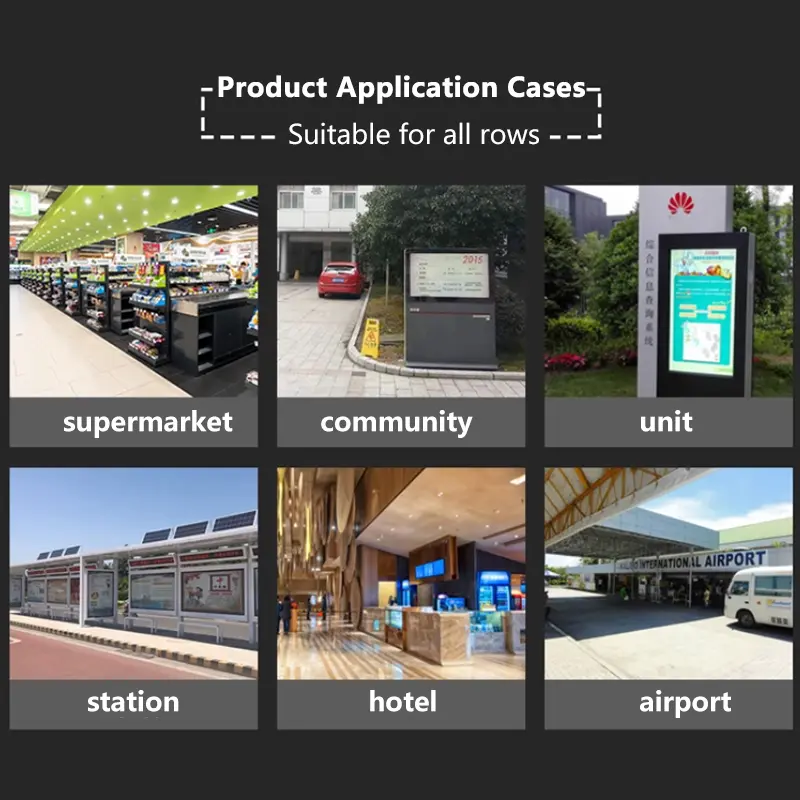
The module may be evaluated for:
- industrial control-panel status strips;
- smart-appliance interfaces;
- equipment mode displays;
- vending-machine information panels;
- retail shelf or counter displays;
- access-control status interfaces;
- elevator or building-control displays;
- sheltered vehicle-information interfaces;
- compact commercial equipment.
In late-stage product selection, the Ultra Wide LVDS LCD Module should be assessed by native timing, LVDS mapping, viewing orientation, active-area fit, backlight power, and environmental conditions rather than size alone.
These are integration routes, not certification or compatibility claims.
Customization and Sample Qualification
Project review may cover:
- FPC shape and routing;
- connector and pin assignment;
- backlight configuration;
- cover lens;
- printed border;
- optical bonding;
- mechanical adaptation;
- external touch development;
- controller-board matching;
- packaging.
Custom configurations are generally reviewed from 500 pieces, subject to tooling requirements, material availability, and the requested specification. Sample and standard-module quantities are confirmed separately.
A representative sample should be tested for:
- native 1280 × 320 image output;
- correct LVDS mapping;
- text and icon clarity;
- viewing-direction behavior;
- backlight uniformity;
- enclosure fit;
- FPC alignment;
- cold startup;
- high-temperature operation;
- continuous display stability.
Procurement Checklist
Provide the following before sample or production approval:
- native 1280 × 320 timing;
- pixel clock and blanking values;
- LVDS channel count;
- JEIDA or VESA bit mapping;
- complete 40-pin assignment;
- connector pitch and contact side;
- panel logic voltage;
- backlight voltage and current;
- enable and dimming method;
- approved mechanical drawing;
- required mounting orientation;
- operator viewing position;
- cover-lens requirement;
- touch or no-touch decision;
- operating environment;
- sample quantity;
- annual demand;
- qualification requirements;
- production schedule.
FAQ
About Ultra Wide LVDS LCD Module
What is the typical lead time for custom display modules with specific interface requirements?
Lead time for custom display modules depends on the complexity of the customization, current production load, and component availability. The exact lead time for your specific requirements should be confirmed on request, as it varies by order volume and specification.
What is the typical response time and refresh rate for your industrial TFT displays?
The refresh rate for this 8.8-inch Ultra Wide LVDS LCD Module (model HS880005A0) is 60 Hz, which is standard for industrial TFT displays. Response time is For precise response time data, please request the official datasheet. If your application requires faster response, consider confirming the exact value with the supplier.
What interface options (e.g., LVDS, eDP) are available for your this size panels, and what are the pin configurations?
Pin configuration details, including LVDS mapping, power sequencing, and backlight connections, are For exact pin assignments and electrical timing, request the official datasheet from the manufacturer.
Can you integrate touch controllers (resistive/capacitive) into custom display modules with specific firmware requirements?
The HS880005A0 is specified as 'Without Touch'. For custom display modules with integrated resistive or capacitive touch controllers and specific firmware, we can evaluate your requirements. Please provide your touch interface specifications and firmware needs; our engineering team will assess feasibility and provide a solution tailored to your application.
What are the operating temperature ranges for your industrial control displays, especially for environments below -20°C or above 70°C?
The HS880005A0 operates from -20°C to 70°C and stores from -30°C to 80°C. For environments below -20°C or above 70°C, extended temperature options may be available upon request. Please contact our engineering team with your specific temperature requirements to discuss potential customizations or alternative panel selections.
What are the packaging options for shipping and handling of fragile LCD panels?
Packaging options for fragile LCD panels like the HS880005A0 typically include anti-static bags, foam cushioning, and sturdy cartons designed to prevent damage during shipping. For bulk orders, we can provide custom packaging per your requirements. Please confirm your shipping volume and handling needs with our sales team for detailed packaging specifications.
What are the operating temperature ranges for your industrial LCD panels, especially for extended outdoor use?
The HS880005A0 operates from -20°C to 70°C and stores from -30°C to 80°C. For extended outdoor use, additional considerations such as sunlight readability and UV resistance may be needed. Please consult our engineering team for recommendations on panel customization or protective measures for outdoor environments.
Can you customize the mechanical dimensions and mounting holes of a standard LCD panel to fit our specific enclosure design?
Custom mechanical dimensions and mounting holes can be evaluated for your specific enclosure design. Please provide your mechanical drawings and requirements; our engineering team will assess feasibility and provide a customized solution.
Can you compare the power consumption and lifespan of your Mini LED backlight units against standard LED backlights in similar-sized panels?
The HS880005A0 uses WLED backlighting. Power consumption and lifespan data for Mini LED vs. standard LED backlights are For a comparison, please contact our engineering team with your specific size and brightness requirements; they can provide guidance based on similar projects and available technologies.
What backlight lifetime is expected (e.g., L70) and do you have accelerated life test guidance?
Accelerated life test guidance is Confirm the exact backlight lifetime and test conditions with the supplier.
Freya Yang
+86 18318948097