Freya Yang
+86 18318948097
+852 62667476
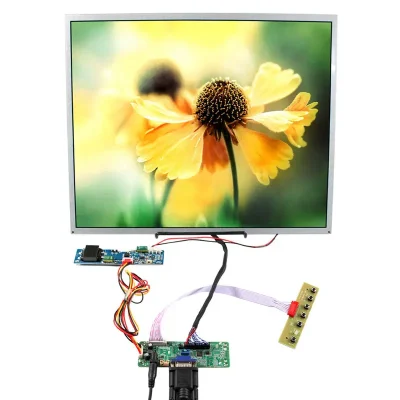
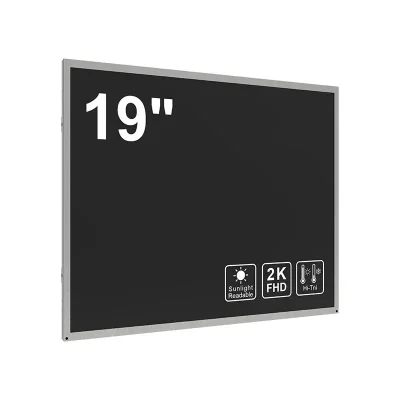
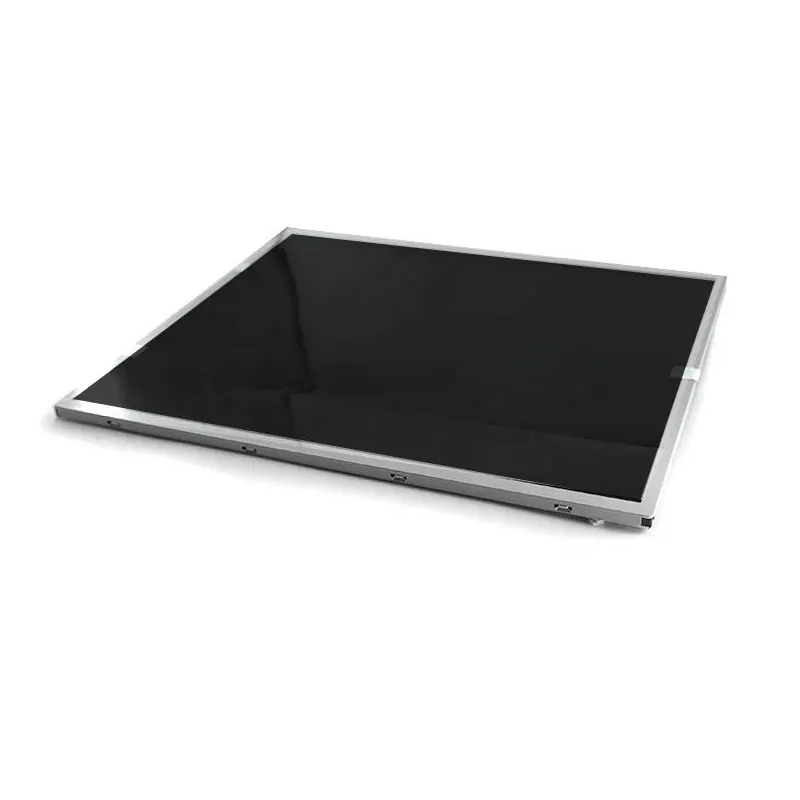
19 Inch SXGA LCD Module for Process Control Monitors

Model P/N
Size
Resolution
Brightness
Viewing Angle
Connector Type
Operating Temp
Overall(mm)
huisoar
HS190EOM-N10
Brand
Panel Size (inch)
Model P/N
Resolution
Brightness (nits)
Viewing Angle
Contrast Ratio
Response Time
Overall (mm)
Active Area (mm)
Refresh Rate
Display Colors
Panel Type
Connector Type
Operating Temp
Touchscreen Type
Storage Temp
Work Mode
Pixel Format
Control Type
Included Accessories
Operating Environment
Motherboard Type
Designed For
19 Inch SXGA LCD Module for Process Control Monitors
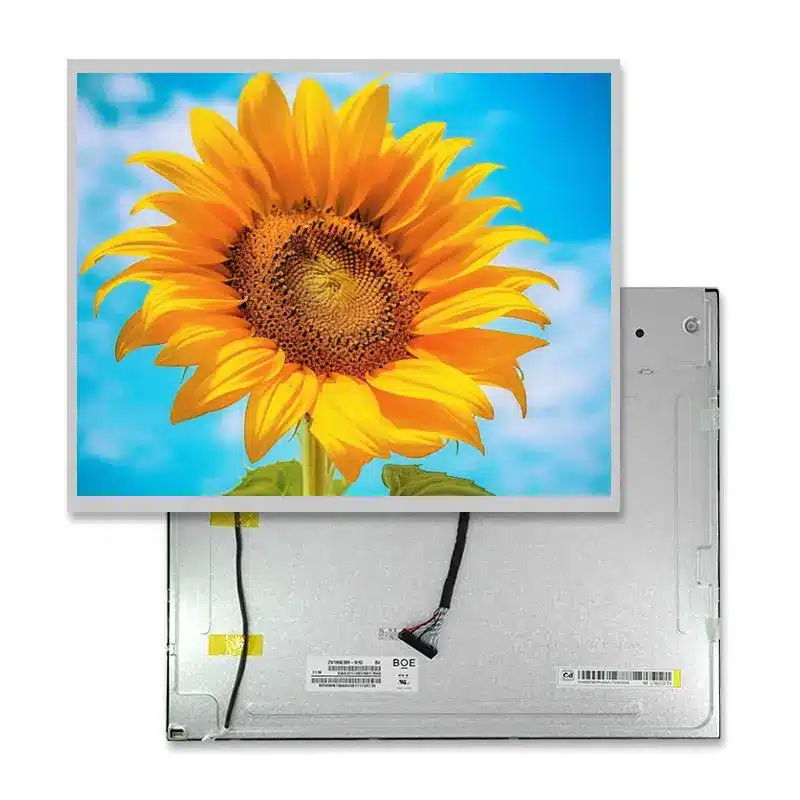
This non-touch 19-inch panel combines a native 1280 × 1024 workspace, 250-nit luminance and mature LVDS integration for 5:4 equipment displays.
Product Summary
The 19 Inch SXGA LCD Module provides a square-format display platform for process-control monitors, industrial workstations and embedded systems that were designed around a 5:4 user interface. Its native 1280 × 1024 raster supports data tables, process graphics, alarm lists, machine-status screens and desktop-style applications without forcing a widescreen redesign.
The module uses normally black TFT LCD construction, supports 16.7M colors and provides 250-nit luminance for indoor or controlled-light equipment. LVDS is the native display interface, while an HDMI input requires an optional controller board.
Key Specifications
| Parameter | Value |
|---|---|
| Size | 19 inch |
| Resolution | 1280 × 1024 pixels |
| Format | SXGA, 5:4 |
| Panel type | TFT LCD |
| Display mode | Normally black |
| Luminance | 250 nits |
| Colors | 16.7M |
| Color gamut | 90% NTSC typical; 83% minimum |
| Interface | LVDS |
| Timing notes | Two pixels per clock; DE only |
| Active area | 374.784 × 299.8272 mm |
| Module size | 396 × 324 × 9.9 mm typical |
| Pixel pitch | 0.2928 × 0.2928 mm |
| Backlight | Horizontal single-LED lighting-bar type |
| Touch | Non-touch |
| Operating temperature | 0°C to +50°C |
| Storage temperature | −20°C to +60°C |
5:4 SXGA Workspace for Industrial Interfaces
Native 1280 × 1024 Content Layout
The 1280 × 1024 raster should be driven natively to preserve 5:4 interface geometry and text detail.
A native output avoids distortion or unused borders when the application was designed for an SXGA screen. This is particularly important for older process-control software, workstation applications and machine interfaces with fixed-size windows.
The format supports:
- process diagrams
- equipment-status grids
- alarm and event lists
- measurement tables
- workstation applications
- machine-control menus
- multi-row monitoring screens
When a 5:4 Panel Fits Better Than Widescreen
A 5:4 display may fit an existing cabinet or software layout more effectively than a modern 16:9 panel. It provides additional vertical workspace relative to its width and can reduce the need to modify:
- cabinet openings
- front bezels
- mounting frames
- software scaling
- graphical interface proportions
- operator workflows
The panel is therefore relevant to replacement-oriented projects where maintaining mechanical and interface continuity is more important than adopting a wider consumer-screen format.
Optical Performance for Indoor Monitor Systems
250-Nit Luminance Boundary
The panel is specified at 250 nits and is intended primarily for indoor or controlled-light installations.
A 250-nit panel is intended primarily for indoor or controlled-light installations after front-glass losses are considered.
Cover glass, air gaps, touch overlays, surface reflections and installation angle can reduce perceived contrast. The finished monitor should be evaluated under the actual workplace lighting before production release.
The 250-nit configuration should not be described as high brightness, sunlight readable or outdoor capable.
Normally Black Mode and Color Coverage
Normally black operation provides a dark inactive appearance and can improve the visual presentation of interfaces that use dark backgrounds, illuminated indicators or video content.
The panel supports 16.7M colors using 6-bit plus Hi-FRC wording. The listed color gamut is 90% NTSC typical and 83% minimum, which can support clearer differentiation between:
- process states
- warning colors
- graph traces
- equipment zones
- image content
- branded interface elements
These color values do not establish calibrated imaging performance. Applications requiring formal color accuracy need system-level measurement and calibration.
LVDS Host and Controller Integration
Timing, Mapping and Connector Qualification
An LVDS interface label does not guarantee channel count, bit width, timing, voltage, connector or pin compatibility with an existing controller.
Before selecting a controller board or releasing a cable, confirm:
- native 1280 × 1024 timing
- LVDS channel configuration
- bit depth and Hi-FRC handling
- two-pixel-per-clock support
- DE-only timing support
- signal voltage
- complete connector pinout
- connector pitch and contact side
- panel power
- backlight power and control
- cable routing and orientation
Current 19-inch SXGA products may share the same diagonal, resolution and LVDS terminology while using different channel, voltage, connector and mechanical definitions. Model-specific qualification is therefore required.
HDMI Requires a Controller Board
HDMI is not the native electrical interface of the LCD module. The optional HDMI configuration adds a controller board that converts the external video input into the LVDS timing required by the panel.
The controller-board configuration should be checked for:
- accepted HDMI input modes
- native 1280 × 1024 output
- aspect-ratio handling
- scaling behavior
- LVDS mapping
- board power
- backlight control
- OSD settings
- connector locations
- enclosure clearance
A board designed for a widescreen resolution may not produce the correct SXGA timing or 5:4 geometry.
19 Inch SXGA LCD Module Mechanical Planning
Active Area and Bezel Geometry
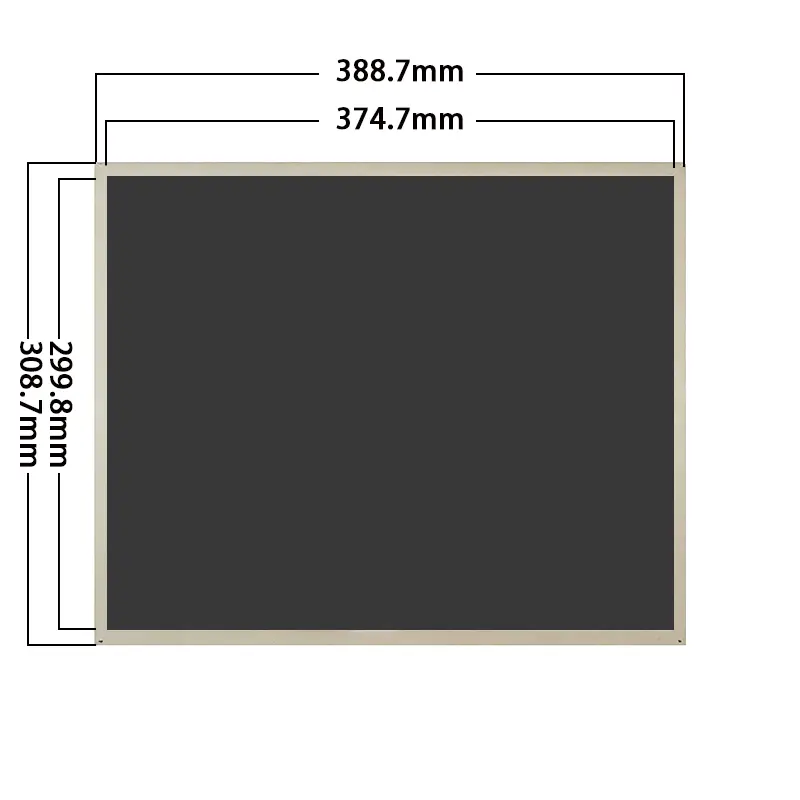
The active display area is 374.784 × 299.8272 mm. This value should control:
- visible enclosure opening
- UI-safe area
- front-glass window
- panel alignment
- mask printing
- operator viewing position
The bezel-width data is listed as:
- left: 8.6 mm
- right: 8.6 mm
- upper: 10.5 mm
- lower: 10.5 mm
These values can support preliminary opening calculations, but the approved mechanical drawing must control final tolerances and alignment.
Module-Size Conflict and Enclosure Release
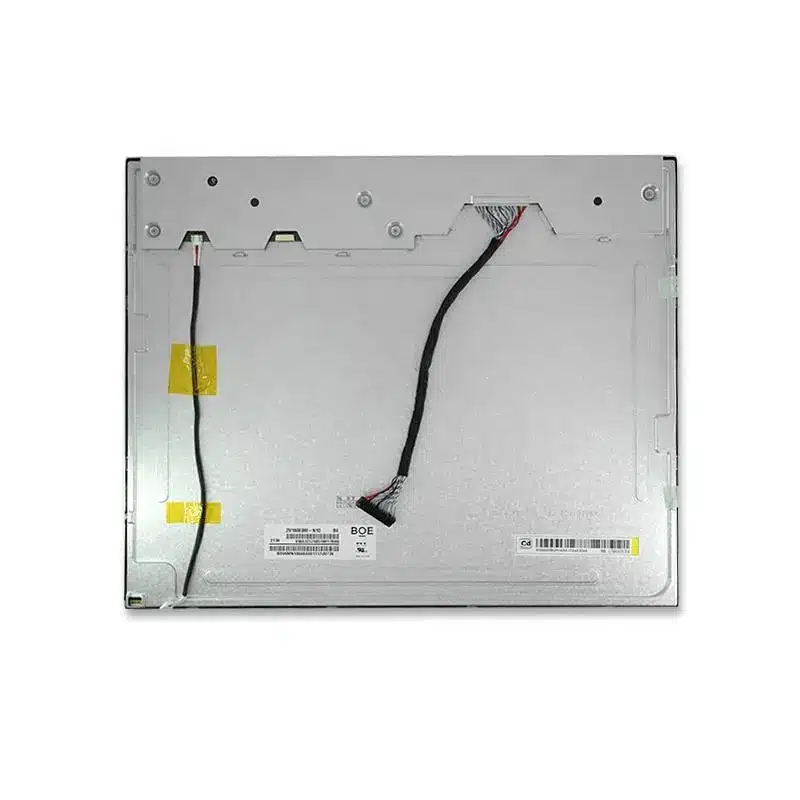
The detailed module specification gives a typical envelope of 396 × 324 × 9.9 mm. A separate marketplace table lists 388.7 × 308.7 × 1.32 mm, which does not appear to represent the same complete module envelope.
The 396 × 324 × 9.9 mm reference should control preliminary enclosure planning until the ordered configuration is confirmed.
Before tooling release, verify:
- complete module outline
- panel-body thickness
- rear structure
- connector locations
- cable exit direction
- mounting points
- backlight-driver clearance
- optional controller-board position
The diagonal size or active area alone is not sufficient for enclosure release.
Backlight and Timing Architecture
The backlight is described as a horizontally arranged single-LED lighting-bar type. This wording identifies the general construction but does not confirm:
- operating voltage
- regulated current
- connector pinout
- dimming method
- LED quantity
- power consumption
- lifetime
- external-driver requirements
The approved electrical specification must define the backlight drive before selecting a power circuit.
The panel also uses DE-only timing wording. The controller must therefore provide the required data-enable behavior together with the correct pixel clock and LVDS mapping.
Non-Touch Applications and Selection Boundaries
The standard module is non-touch. It is appropriate where user input is handled through:
- keyboard and mouse
- physical buttons
- membrane keys
- rotary controls
- trackball or pointing device
- remote software
- a separately developed touch overlay
Potential applications include:
- process-control monitors
- industrial workstations
- equipment-control terminals
- desktop-type embedded computers
- machine-status displays
- testing and service stations
- stand-alone industrial monitors
- replacement-oriented monitor assemblies
No outdoor, sunlight-readable, waterproof, medical, automotive or safety-critical qualification is implied.
Custom Integration Options
Project review may include:
- LVDS controller-board matching
- cable and connector definition
- HDMI controller-board configuration
- interface adaptation
- brightness review
- front-glass sizing
- enclosure adaptation
- mounting support
- FPC or cable routing
- logo and graphic printing
- optional touch-panel development
- packaging and labeling
Custom configurations are generally reviewed from 500 pieces, subject to tooling requirements, material availability and the requested specification. Sample and standard-module quantities are confirmed separately.
Procurement Checklist
Before requesting samples or production approval, submit or confirm:
- native 1280 × 1024 timing
- LVDS channel configuration
- bit depth and Hi-FRC handling
- two-pixel-per-clock support
- DE-only timing support
- complete connector pinout
- signal voltage
- panel and backlight power requirements
- bare-panel or HDMI-board configuration
- approved 396 × 324 × 9.9 mm module drawing
- active-area and bezel position
- front-glass stack
- 250-nit lighting conditions
- non-touch or optional-touch requirement
- operating temperature
- sample quantity
- annual demand
Sample approval should precede controller release, cable manufacture, front-glass tooling and enclosure production.
FAQ
About 19 Inch SXGA LCD Module
What is the typical lead time for custom display modules with specific interface requirements?
Lead time for custom display modules depends on the specific interface requirements and order volume. For standard configurations like the HS190EOM-N10 with LVDS interface, typical lead time is based on stock availability and production schedule. Custom interface modifications may require additional engineering validation and procurement of components, which can extend lead time. Since exact lead time is
What are the key durability and reliability differences between your standard TFT displays and your sunlight readable models for outdoor industrial use?
The HS190EOM-N10 is a standard TFT-LCD module with 250-nit brightness, suitable for indoor or controlled-light environments. Durability differences may include wider operating temperature ranges and robust mechanical construction. For this specific model, operating temperature is 0°C to 50°C and storage temperature is -20°C to 60°C. For outdoor use, please confirm if a sunlight readable variant is available on request.
Can you customize the display driver board to match our existing system's LVDS or eDP interface?
The HS190EOM-N10 uses a native LVDS interface, which is a common standard for industrial displays. Customizing the driver board to match your system's interface is possible, but it depends on the specific requirements and compatibility with the panel's timing controller. Since exact customization options are not detailed on this page, we recommend confirming the feasibility and lead time for your specific interface requirements on request.
Can you integrate a touch controller and provide a fully assembled display module?
The HS190EOM-N10 is a non-touch module. We can integrate a touch controller and provide a fully assembled display module with either capacitive or resistive touch. This would require adding a touch panel and controller board, and possibly optical bonding. Please share your touch requirements (type, size, interface) and environmental conditions; we will then propose a customized solution.
What are the packaging options for shipping and handling of fragile LCD panels?
Fragile LCD panels like the HS190EOM-N10 are typically packaged in anti-static bags, foam cushioning, and sturdy corrugated boxes. Each panel is individually separated to prevent contact. For bulk orders, we use partitioned trays within reinforced cartons. Custom packaging (e.g., vacuum-sealed, ESD-safe containers) is available upon request. Please specify your handling and shipping requirements for a tailored packaging proposal.
Can you customize the mechanical dimensions and mounting holes for a specific industrial enclosure?
The HS190EOM-N10 has fixed mechanical dimensions: active area 374.784(H) × 299.8272(V) mm. Customizing mounting holes or overall dimensions is not standard for this model. However, we can discuss a custom mechanical design for your enclosure if volume justifies tooling changes. Please provide your enclosure drawing and required mounting points; our engineering team will assess feasibility and cost.
Can you provide a custom LCD panel with specific dimensions and a round shape?
Round LCD panels are not part of our standard product line. Custom round displays would require a completely new design, including custom glass cutting and driver electronics, which is typically only feasible for very high volumes. We recommend evaluating standard rectangular panels for your application; if a round shape is essential, please contact us with your requirements.
What interface options are available (e.g., LVDS, eDP, MIPI) for your panels?
The HS190EOM-N10 panel supports LVDS as its native interface, which is widely used in industrial and process control applications. For specific interface options beyond LVDS, please confirm availability and compatibility on request.
Can you integrate capacitive or resistive touch screens with optically bonded covers for enhanced durability?
Yes, we can integrate capacitive or resistive touch screens with optically bonded covers for enhanced durability. The HS190EOM-N10 can be customized with a touch panel and optical bonding to improve sunlight readability and mechanical robustness. Please specify your touch type, cover glass thickness, and environmental requirements; we will provide a solution that meets your durability and optical needs.
Can you provide datasheet, drawing, and pin definition?
Yes, we can provide the datasheet, mechanical drawing, and pin definition for the HS190EOM-N10 upon request. The datasheet includes detailed specifications such as active area (374.784 mm × 299.8272 mm), resolution (1280×1024), brightness (250 nits), interface type (LVDS), and electrical characteristics. The drawing shows mounting dimensions and connector location. Pin definition for the LVDS connector is also available. Please contact us to request these documents for your evaluation.
Freya Yang
+86 18318948097