Freya Yang
+86 18318948097
+852 62667476
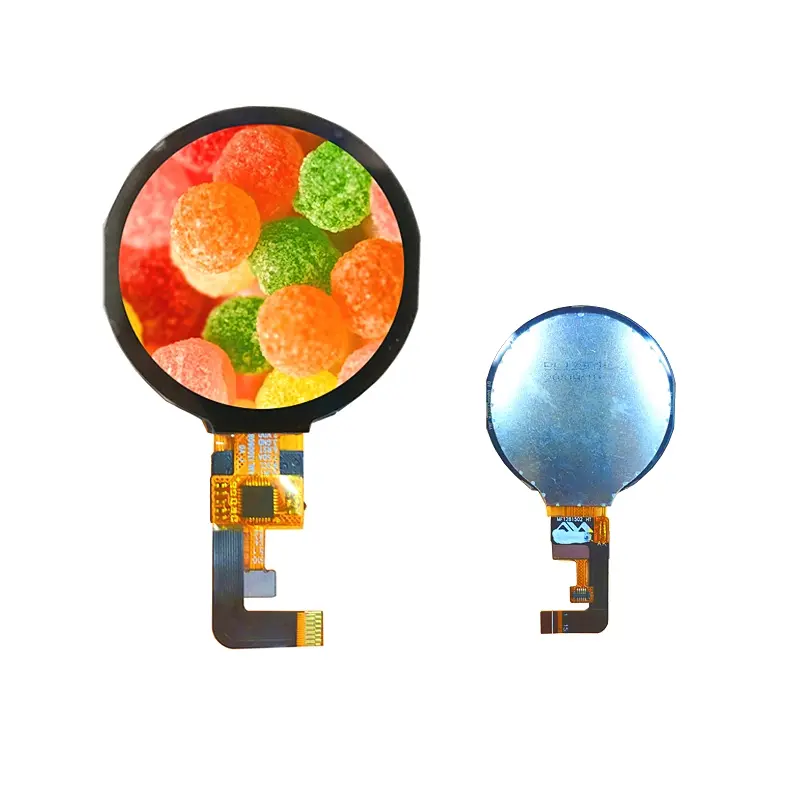
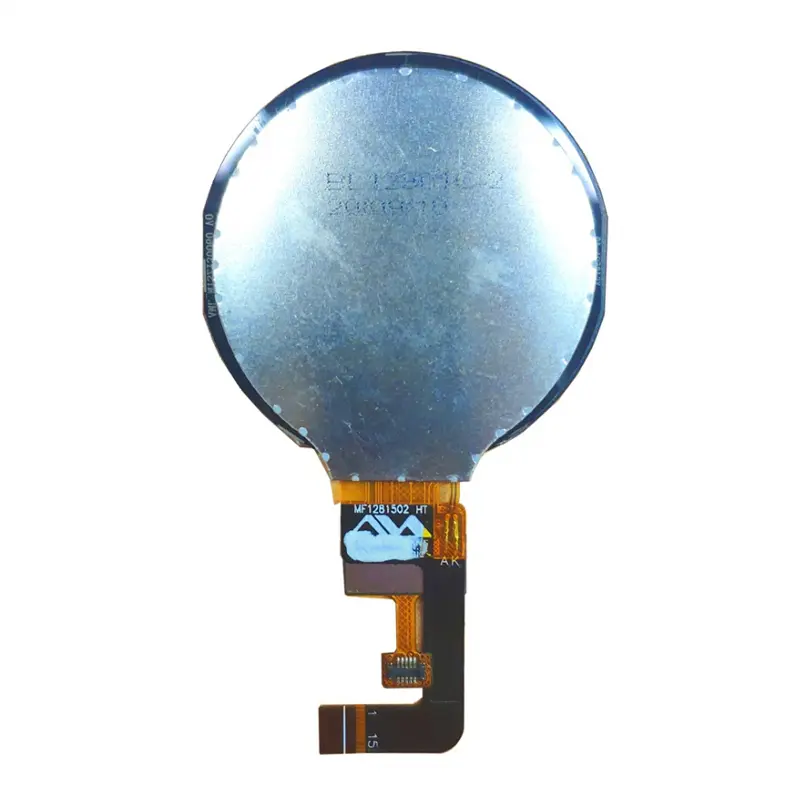
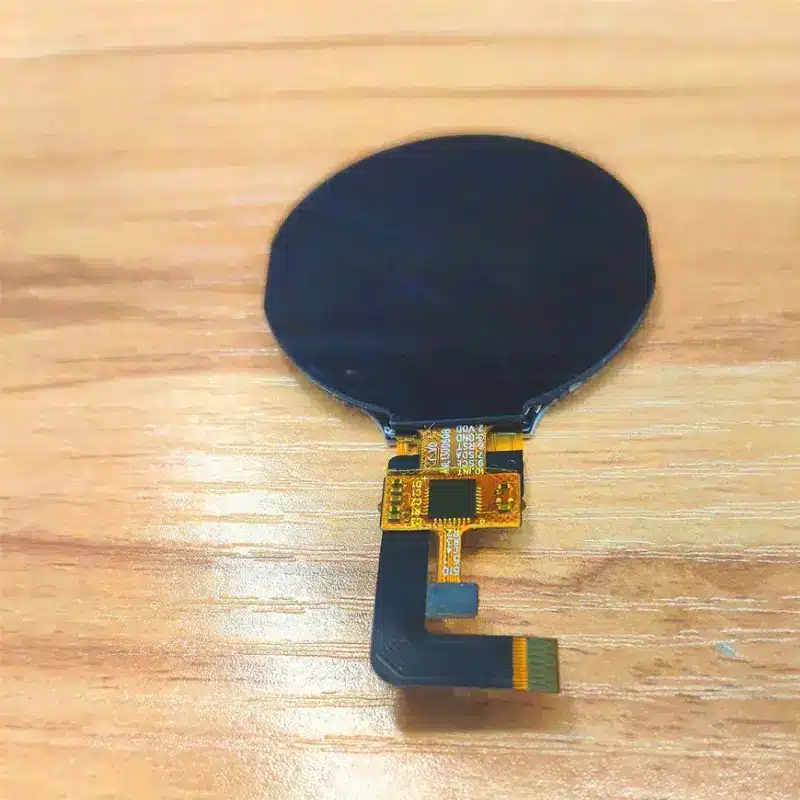
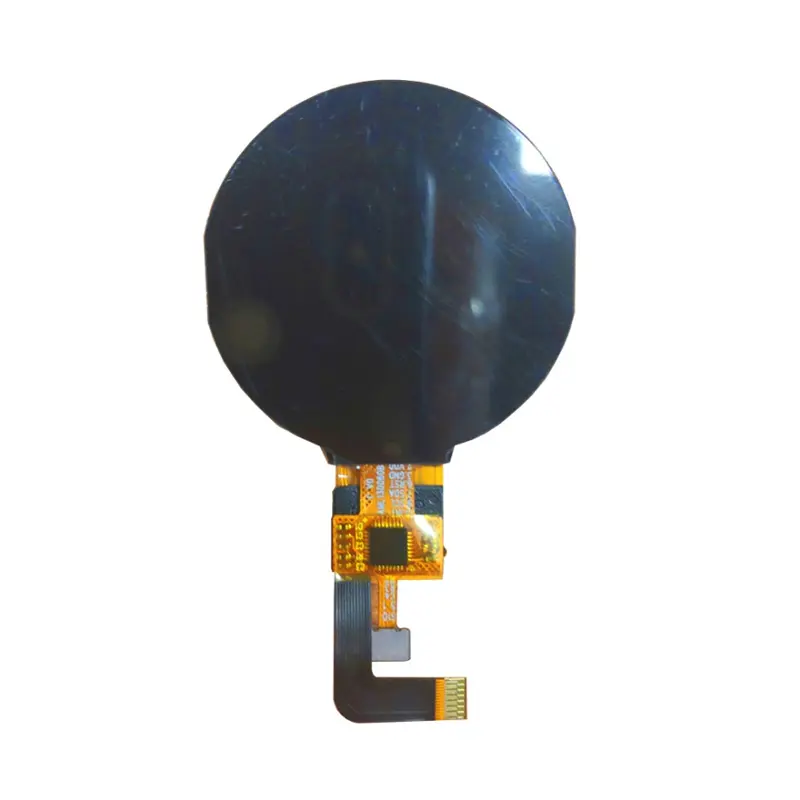
1.28 Inch SPI TFT Display Module 240×240 Wearable Smart Home
Model P/N
Size
Resolution
Brightness
Viewing Angle
Connector Type
Operating Temp
Overall(mm)
huisoar
HS128A1502
Brand
Panel Size (inch)
Model P/N
Resolution
Brightness (nits)
Viewing Angle
Contrast Ratio
Response Time
Overall (mm)
Active Area (mm)
Refresh Rate
Display Colors
Panel Type
Connector Type
Surface Treatment
Operating Temp
Touchscreen Type
Storage Temp
Work Mode
Pixel Format
Input Voltage (V)
Designed For
Compact 4SPI GC9A01 TFT LCD for Wearable and Smart Home Devices
A 1.28 Inch SPI TFT Display Module is a compact 240×240 transmissive TFT LCD for wearable, smart home, and mini IoT devices that need a small square screen, stable 4SPI control, and low-voltage integration. It combines a 1.28-inch panel, GC9A01 driver IC, 262K colors, 220 cd/m² typical luminance, and a 35.6 × 37.74 × 1.60 mm outline. For OEM engineers, it provides a practical display platform for space-constrained products where size, readability, FPC routing, and controller compatibility matter.
At a Glance: 1.28 Inch 240x240 TFT LCD Highlights
- 1.28 inch transmissive TFT LCD module with 240(RGB) × 240 square resolution.
- Compact 35.6 × 37.74 × 1.60 mm module outline for miniaturized product housings.
- 32.4 × 32.4 mm active area for compact graphical UI and status display layouts.
- GC9A01 driver IC supports structured display control for embedded projects.
- 4SPI interface and 15-pin FPC connector simplify compact PCB and cable planning.
- 220 cd/m² typical brightness supports indoor wearable and smart home readability.
- Standard configuration is no touch; touch can be reviewed as a project option.
Product Overview of the 1.28 Inch SPI TFT Display Module
The 1.28 Inch SPI TFT Display Module is designed for compact electronic products that need a small color display without the mechanical footprint of a larger screen. Its 240×240 square pixel layout, 262K colors, and full-view display behavior make it useful for smart watches, fitness trackers, small smart home controllers, mini IoT terminals, and portable status indicators.
This module is not positioned as a large multimedia panel. Its value is precise mini-display integration: a small active area, thin 1.60 mm profile, GC9A01 control, 4SPI interface, and low-voltage operation. For product teams building compact devices, those parameters help reduce enclosure pressure, simplify display routing, and support concise graphical UI design.
The module uses a transmissive TFT structure with LED backlight. The 220 cd/m² typical luminance is most suitable for indoor and moderate-light applications. For outdoor use, engineers should evaluate cover lens reflection, UI contrast, backlight drive, and final enclosure design before approving the display for production.
Key Features of the 1.28 Inch SPI TFT Display Module
| Key Feature | B2B Value |
|---|---|
| 1.28 inch compact screen | Supports wearable and smart home products with limited front-panel space. |
| 240(RGB) × 240 resolution | Enables square UI layouts for icons, digits, status graphics, and compact menus. |
| GC9A01 driver IC | Gives engineers a clear driver-control basis for firmware and controller planning. |
| 4SPI interface | Helps reduce wiring complexity in compact embedded systems. |
| 220 cd/m² brightness | Provides practical readability for indoor wearable and smart terminal use. |
| 262K colors | Supports color-coded data, icons, alerts, and branded interface designs. |
| 35.6 × 37.74 × 1.60 mm outline | Fits small enclosures where thickness and board space are restricted. |
| Full viewing direction | Helps maintain visibility when users view the device from different positions. |
| 2.8 V typical input | Supports low-voltage electronics and battery-powered product planning. |
| No-touch standard configuration | Suitable for button-controlled or status-display products; touch can be evaluated separately. |
Technical Specifications of the Compact 1.28 Inch TFT LCD Module
| Specification | Value |
|---|---|
| Product Type | TFT Transmissive LCD Module |
| Display Size | 1.28 inch |
| Resolution | 240(RGB) × 240 |
| Active Area | 32.4 × 32.4 mm |
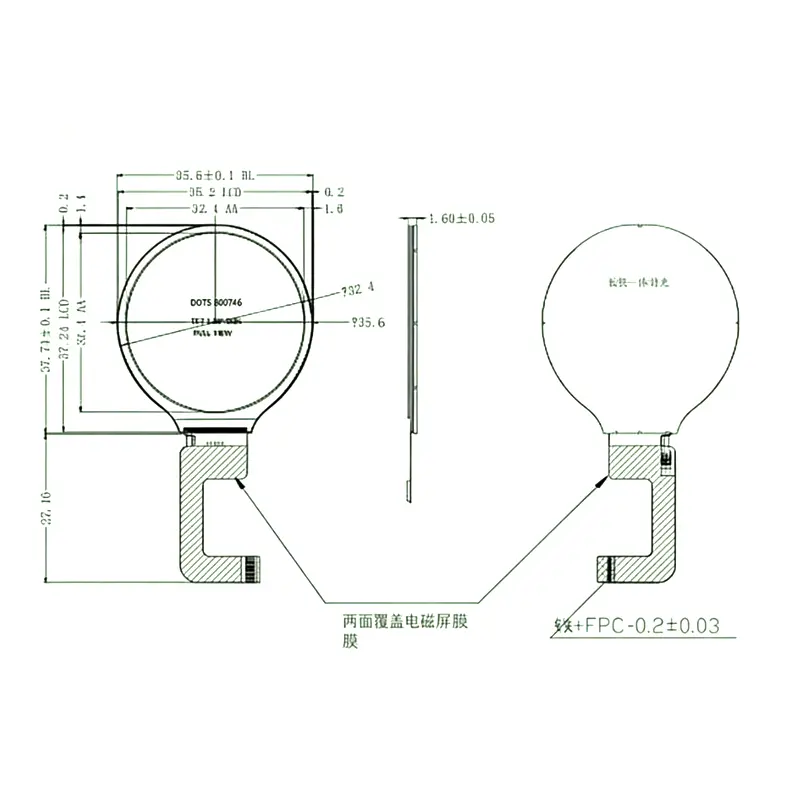
| Module Outline | 35.6 × 37.74 × 1.60 mm |
| Brightness | 220 cd/m² typ. |
| Display Colors | 262K |
| Interface | 4SPI |
| Driver IC | GC9A01 |
| Operating Temperature | -20°C to 60°C |
These specifications are important because mini-display design is constrained by every millimeter of mechanical space and every pin of the control interface. The 4SPI interface supports compact signal routing, while the 35.6 × 37.74 mm outline and 1.60 mm thickness help product engineers review housing fit, FPC bend area, front window opening, and PCB placement before sample approval.
Why Choose This 1.28 Inch TFT LCD Module?
This 1.28 inch TFT LCD module is suitable when a product needs a small color display with simple embedded integration rather than a large high-power screen.
240x240 Square TFT Display for Wearable UI and Status Graphics
The 240×240 pixel structure gives designers a balanced 1:1 canvas for compact user interfaces. Smart watches, fitness trackers, device status indicators, and small smart home terminals often use icons, simple menus, numeric values, battery indicators, connectivity status, and warning symbols. A square display format allows these elements to be arranged cleanly without wasting space.
The 262K color capability also helps the module support color-coded feedback. For example, a wearable product can use different colors for fitness status, notifications, and battery alerts. A smart home controller can use colored indicators for device state, temperature mode, or automation status. The display should still be validated with the final UI artwork because font size, contrast, and icon spacing strongly affect readability on a 1.28 inch screen.
4SPI Interface, GC9A01 Control, and Slim Structure
The module’s 4SPI interface is a major integration advantage for compact electronic systems. Compared with wider parallel interfaces, SPI-based control can reduce connection complexity and support a smaller PCB layout. The GC9A01 driver IC gives firmware engineers a defined control target for display initialization, command configuration, and image output planning.
The slim 1.60 mm profile also supports products where enclosure thickness is limited. In a wearable device, the display must share space with the PCB, battery, sensors, cover lens, buttons, seals, and charging structure. The small module outline gives mechanical engineers more room to plan the complete stack without forcing an oversized device body.
Display Performance of the Mini TFT Display for Wearable and Smart Home Use
This mini TFT display provides practical visual output for compact devices that prioritize stable status information, moderate brightness, and concise color graphics.
220 Nits Brightness for Indoor Readability
The 220 cd/m² typical luminance is suitable for many indoor wearable and smart home applications. It can support clear display of icons, text, numbers, and status graphics in normal indoor lighting. For outdoor or sunlight-facing products, it should not be treated as a sunlight-readable display without additional system evaluation.
Brightness performance depends on the complete optical stack. Cover lens material, surface reflection, bonding method, UI color contrast, and backlight driving conditions can all affect final readability. For best results, sample testing should be performed with the actual enclosure and cover structure.
Full View, 262K Colors, and Transmissive TFT Output
The full-view characteristic helps users read the display from different viewing positions. This is valuable for wearable products because the user may glance at the device while moving, exercising, or holding the wrist at an angle. It is also useful for small smart home controllers that may be mounted on a wall, device panel, or desktop dock.
The 262K color output supports more expressive UI than monochrome mini displays. It is appropriate for product interfaces that need icons, state colors, simple graphics, and branded visual elements. Since the module is transmissive TFT with LED backlight, final image quality should be validated under the target backlight current and housing conditions.
Temperature Range for Mini Electronics
The module operates from -20°C to 60°C and stores from -30°C to 70°C. This range supports many wearable, portable, and indoor smart home products. It also gives engineers a baseline for seasonal use, shipping, and storage evaluation.
Complete product testing remains necessary. Battery heat, charging heat, enclosure sealing, waterproofing decisions, and processor behavior can influence the final thermal environment. The display should be validated inside the complete device, not only as a loose module on a bench.
Integration and Mounting Options for 4SPI Embedded Display Projects
4SPI embedded display projects should confirm control signals, FPC routing, mechanical opening, voltage rails, and no-touch or optional-touch decisions before tooling.
GC9A01 Driver IC and 4SPI Controller Integration
The GC9A01 driver IC and 4SPI interface give engineers a clear starting point for controller matching. The signal list includes display control pins such as LPTE, LSDA, LSA0, LSCK, LSCE-B, and reset-related signals, along with LED and ground connections. This makes it important to confirm the host MCU, firmware library, SPI timing, display initialization, and power sequencing.
For a 1.28 Inch SPI TFT Display Module, firmware readiness is as important as mechanical fit. Engineers should confirm whether the selected MCU can support the required refresh behavior, image buffer strategy, and UI update rate for the final application.
FPC, 15-Pin Connector, and Small Housing Planning
The module uses FPC connection and a 15-pin signal structure. In compact devices, the FPC route must be planned early because bending area, connector height, PCB location, and assembly tolerance can limit the final mechanical design. The 35.6 × 37.74 mm outline and 32.4 × 32.4 mm active area should be reviewed against the front window and product enclosure drawing.
For wearable and smart home projects, cover lens, gasket, adhesive, button location, and enclosure wall thickness should be checked before confirming production tooling. A small display module can still fail integration if the FPC bend radius or connector position conflicts with the battery or mainboard.
Power Input, Backlight Drive, and System-Level Review
The supplied electrical information shows 2.8 V typical input, logic supply range of 2.4–3.2 V, and I/O supply range of 1.65–3.2 V. The backlight uses 2 LEDs with a typical forward voltage of 3.0 V and constant current driving condition of 30 mA ±10%. These values should be reviewed with the power architecture of the complete product.
For battery-powered products, display brightness and UI refresh strategy affect power consumption. Procurement and engineering teams should test the display with the target firmware, brightness setting, sleep behavior, and battery mode to confirm real operating performance.
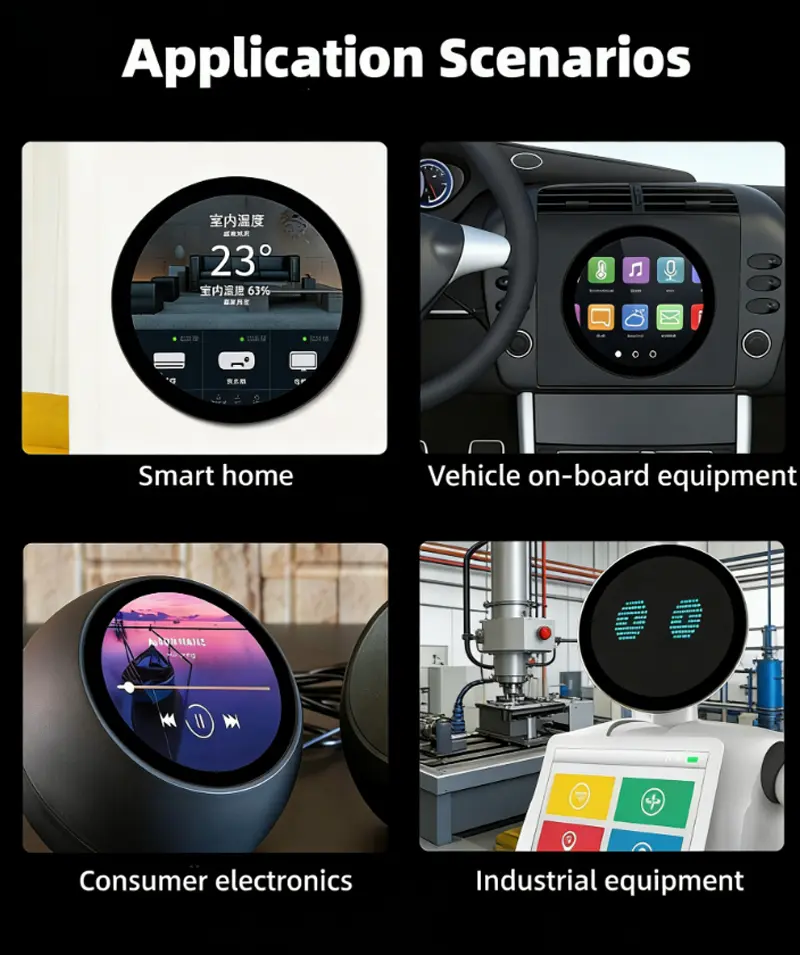
Recommended Applications for Wearable and Smart Home Mini Displays
This wearable and smart home mini display is best suited to products that need compact color output and stable SPI integration.
Smart Watches and Fitness Trackers Requiring Compact Color UI
Smart watches and fitness trackers need small displays that can show time, steps, heart-rate status, notifications, battery level, and simple menu graphics. The 1.28 inch size, 240×240 resolution, 262K colors, and full-view display behavior make this module relevant for compact wearable interfaces.
The standard no-touch configuration is suitable for button-controlled designs or products where interaction is handled by external keys, sensors, or mobile app control. If touch is needed, it should be reviewed as a separate project requirement.
Smart Home Control Panels and Status Indicators
Small smart home devices often require a compact screen for mode indication, temperature status, connection state, timer display, or device feedback. The 4SPI interface and GC9A01 driver IC support embedded controller integration for these compact terminals.
Because many smart home products are mounted in fixed positions, viewing angle and UI contrast matter. The full-view display behavior helps users read status information from different positions in a room.
Mini IoT Devices and Portable Electronic Gadgets
Mini IoT devices, portable sensors, smart jewelry, and compact electronic gadgets can use this display for simple graphical output. The small outline and low-voltage operating profile make it practical for devices where size and power budget are limited.
The display should be selected after checking UI complexity. It is suitable for concise interface layouts rather than large multimedia content. For small data dashboards, icon screens, and status displays, the 240×240 resolution provides a useful balance of readability and compactness.
Customization Options for Mini TFT Display Projects
Customization should be evaluated according to the final housing, interaction method, interface platform, and production quantity. The standard source configuration is no touch, but optional capacitive or resistive touch can be reviewed if the product requires direct screen interaction.
Project evaluation may also include FPC shape, FPC material, connector orientation, interface and pin definition, cover lens, housing fit, logo or packaging requirements, and controller support. For products that require enhanced durability, engineers should review cover lens thickness, bonding method, sealing structure, and mechanical protection rather than assuming these features are included by default.
For battery-powered devices, brightness and power behavior should be evaluated together. Higher brightness, touch integration, and frequent screen updates can affect battery life, so sample testing should include real UI behavior and standby mode.
Procurement and Engineering Checklist for 1.28 Inch TFT Module Selection
- Confirm the UI requirement: 240×240 resolution is suitable for icons, short text, numbers, and compact menus.
- Check host compatibility with 4SPI and GC9A01 driver control.
- Review the 15-pin FPC pinout against the mainboard schematic.
- Validate 2.8 V typical input and I/O voltage compatibility.
- Compare the 35.6 × 37.74 × 1.60 mm outline with the enclosure drawing.
- Confirm whether the project needs no touch, capacitive touch, or resistive touch.
- Test 220 cd/m² brightness behind the final cover lens.
- Review operating temperature requirements for the final use environment.
- Validate sample performance with the real firmware, UI artwork, and power mode.
- Confirm quantity, packaging, delivery schedule, and long-term supply plan.
Brightness / Interface / Mounting Selection Guide for Mini TFT Display Projects
For indoor wearable and smart home products, 220 cd/m² can be practical when UI contrast is designed well. For brighter environments, test the sample in the real enclosure before approval. For interface selection, confirm that the MCU supports 4SPI display communication and has adequate firmware resources for the target UI. For mounting, check active area, module outline, FPC bend area, connector height, cover lens overlap, and adhesive zone before opening production tooling.
FAQ
About 1.28 Inch SPI TFT Display Module Integration
What is a 1.28 Inch SPI TFT Display Module used for?
Does this module use the GC9A01 driver IC?
Is the standard module touch-enabled?
Is 220 nits brightness enough for wearables?
What interface does the module use?
What are the key mechanical dimensions?
What temperature range is supported?
Can the FPC or interface be customized?
What information should buyers provide for a quotation?
Is this display suitable for smart home control panels?
Freya Yang
+86 18318948097