Freya Yang
+86 18318948097
+852 62667476
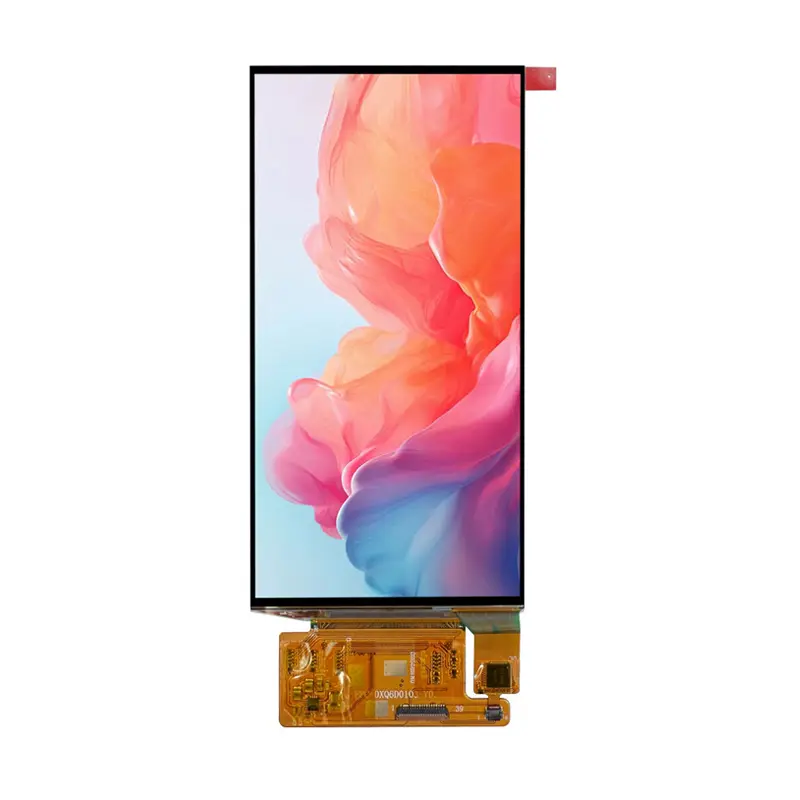
6.01 Inch AMOLED Game Console Display Mobile phone 1080×2160 800nits
Model P/N
Size
Resolution
Brightness
Viewing Angle
Connector Type
Operating Temp
Overall(mm)
huisoar
HS0601D01
Brand
Panel Size (inch)
Model P/N
Resolution
Brightness (nits)
Viewing Angle
Contrast Ratio
Response Time
Overall (mm)
Active Area (mm)
Refresh Rate
Bezel Opening
Display Colors
Panel Type
Connector Type
Operating Temp
Touchscreen Type
Storage Temp
Work Mode
Pixel Format
Input Voltage (V)
Weight (g)
Designed For
Slim 800 Nits MIPI OLED Module for Premium Portable Gaming Devices
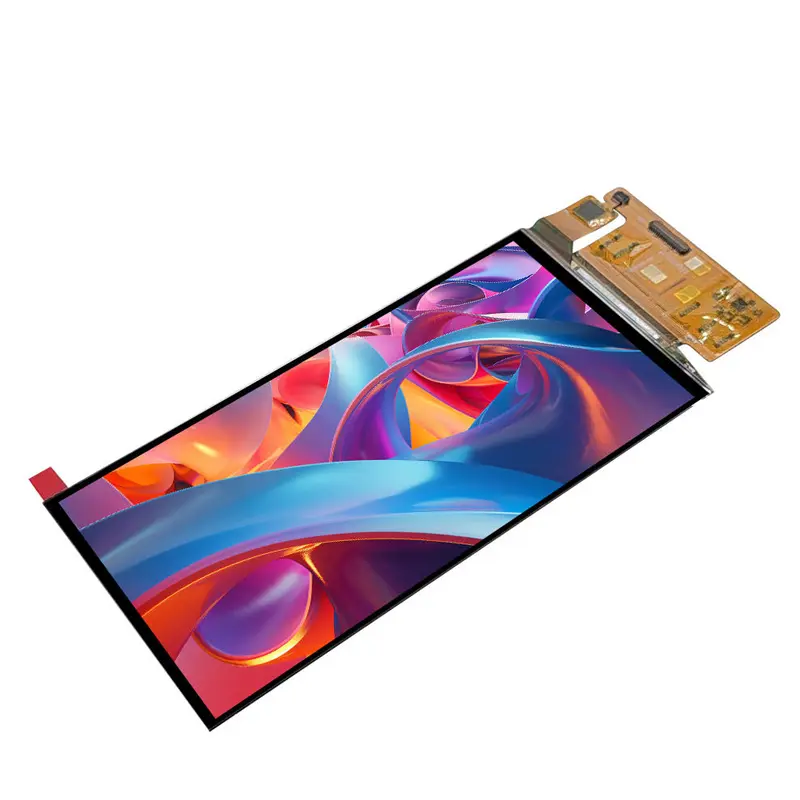
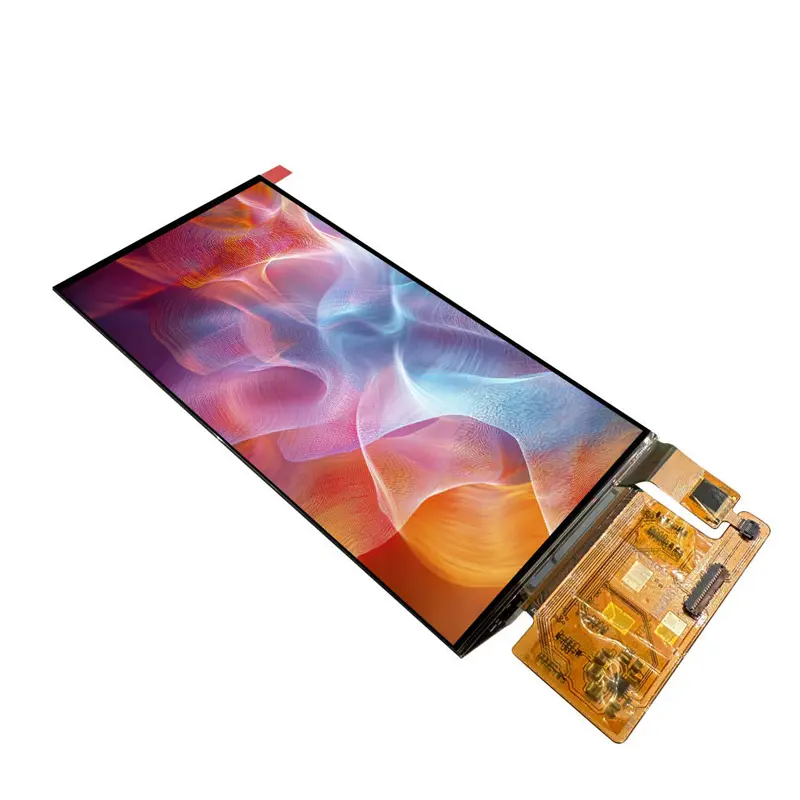
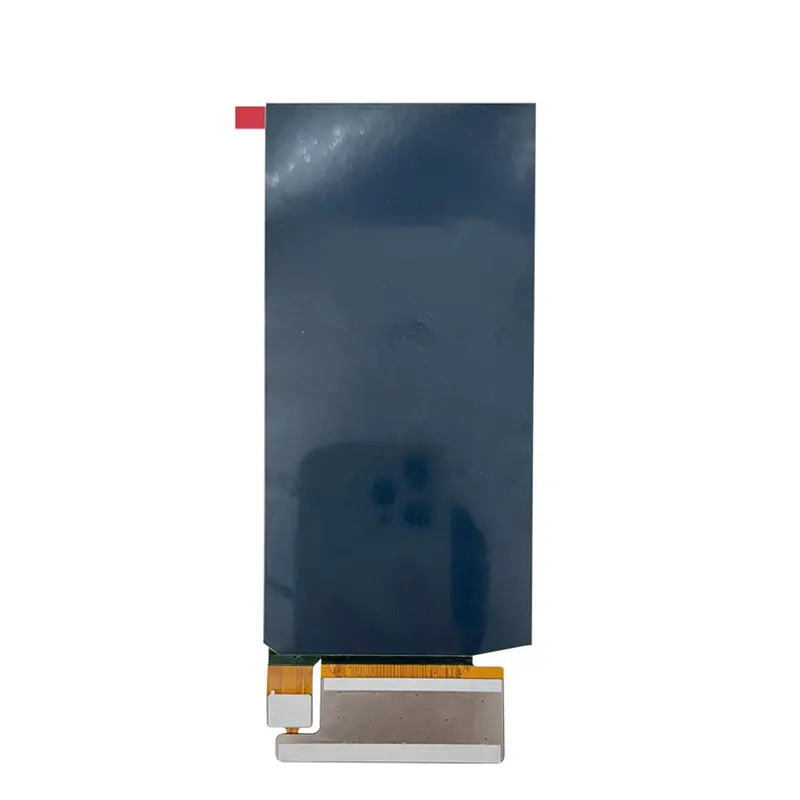
A 6.01 Inch AMOLED Game Console Display is a slim high-resolution module for portable gaming hardware that needs sharp visuals, high contrast, and compact mechanical integration. It combines a 6.01 inch AMOLED panel, 1080×2160 resolution, 800 nits luminance, MIPI signal input, 60 Hz refresh, and a 0.66 mm module profile. For OEM teams, it supports premium handheld console design where readability, image depth, interface matching, and enclosure space are critical selection factors.
At a Glance: 6.01 Inch AMOLED Gaming Display Highlights
- 6.01 inch AMOLED / OLED display module designed for handheld game console and portable entertainment device projects.
- 1080×2160 resolution supports sharp gaming UI, menu text, icons, and detailed visual content.
- 800 cd/m² luminance helps improve readability in varied indoor and bright portable-use environments.
- 10000:1 contrast ratio supports deeper blacks and stronger image separation than many standard display formats.
- MIPI interface with 39-pin connection supports embedded control-board integration.
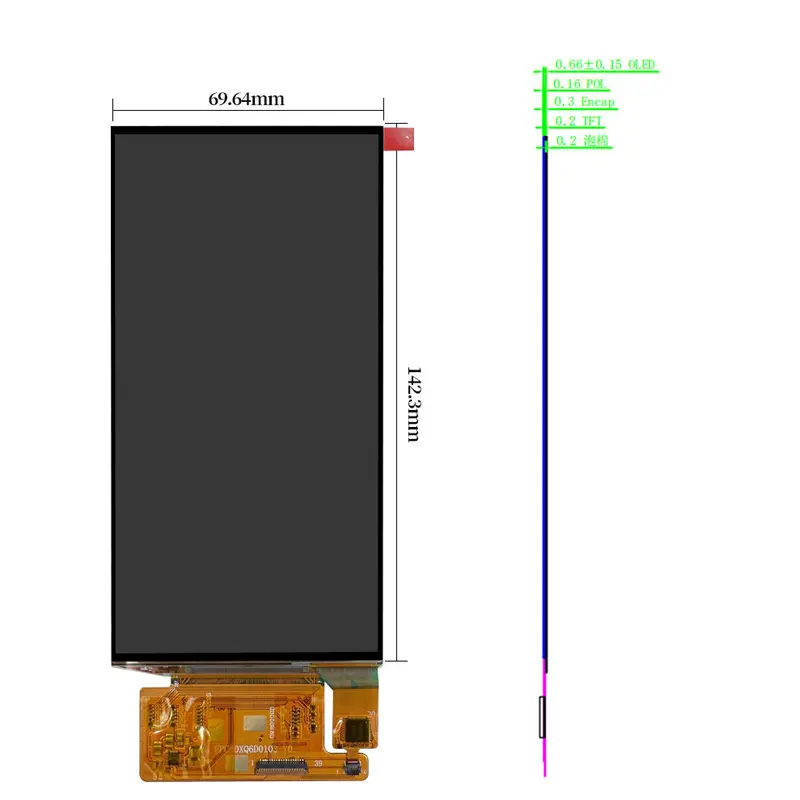
- 69.646 × 142.30 × 0.66 mm module area helps engineers design slim portable hardware.
- -20°C to 70°C operating range supports wider product-environment evaluation for portable electronics.
Product Overview of the 6.01 Inch AMOLED Game Console Display
The 6.01 Inch AMOLED Game Console Display is built for portable gaming products that require a premium visual experience in a compact device body. Its core value is the combination of high pixel density, AMOLED contrast performance, 800 nits luminance, and a very slim module profile, giving product teams a display option for handheld consoles, compact entertainment terminals, and portable smart devices.
For game-console developers, the display is more than a screen component. It affects UI clarity, gaming immersion, battery-system planning, enclosure thickness, cable routing, touch decision-making, thermal strategy, and control-board compatibility. The confirmed 1080×2160 resolution provides a tall high-definition canvas for modern handheld UI layouts, while the AMOLED panel type supports strong contrast and visual depth for game graphics.
The module is especially relevant for OEM and ODM teams that need a display candidate during early product definition. The supplied specifications confirm the display size, active area, module outline, MIPI interface, brightness, contrast ratio, refresh frequency, color temperature, temperature ranges, and pin structure, giving engineers a practical basis for feasibility review before sample validation.
Key Features of the 6.01 Inch AMOLED Game Console Display
| Key Feature | B2B Value |
|---|---|
| 6.01 inch AMOLED / OLED panel | Supports a premium handheld display format for portable gaming and compact smart entertainment products. |
| 1080 × 2160 resolution | Provides sharp rendering for game graphics, interface text, maps, menus, and high-density visual content. |
| 800 cd/m² luminance | Helps improve screen visibility for handheld products used across different lighting environments. |
| 10000:1 contrast ratio | Supports deep black levels and strong separation between dark and bright game scenes. |
| 60 Hz refresh frequency | Provides a standard refresh baseline for many handheld display applications. |
| MIPI interface | Enables integration with embedded processors and display control boards designed for MIPI signal input. |
| 39-pin connection | Gives engineers a defined pin architecture for schematic review and FPC planning. |
| 0.66 mm module thickness | Helps reduce display-stack thickness in compact portable device enclosures. |
| -20°C to 70°C operation | Supports broader environmental review for portable electronics and outdoor-use scenarios. |
| Customization support | Interface, brightness, logo, packaging, graphic, FPC, and touch-related options can be evaluated by project. |
Technical Specifications of the 6.01 Inch AMOLED Display Module
| Specification | Value |
|---|---|
| Product Type | AMOLED / OLED Display Module |
| Display Size | 6.01 inch |
| Resolution | 1080 × 2160 |
| Brightness | 800 cd/m² |
| Interface | MIPI |
| Pin Count | 39 pins |
| Active Area | 68.256 × 136.51 mm |
| Module Area | 69.646 × 142.30 × 0.66 mm |
| Contrast Ratio | 10000:1 |
| Operating Temperature | -20°C to 70°C |
These parameters are central to engineering evaluation. The resolution and active area determine UI scaling and visual density. The MIPI interface, pin count, and voltage rails affect control-board matching. The module thickness, active area, and outline dimensions affect enclosure design, FPC routing, cover lens stack-up, and thermal clearance. The brightness, contrast ratio, and operating temperature range should be reviewed together with the final housing, touch structure, and battery-system design.
Why Choose This AMOLED Handheld Display Module?
This AMOLED handheld display module is suitable for premium portable gaming products because it combines a tall high-resolution format with a slim mechanical structure and high-contrast OLED image performance.
6.01 Inch 1080×2160 OLED Format for Handheld Console UI
The 6.01 inch size gives handheld product teams a display format large enough for rich gaming visuals while still remaining suitable for portable hardware. The 1080×2160 resolution supports detailed UI elements, game textures, menu structures, and small text. For handheld console design, this matters because display density directly affects perceived quality, especially when users hold the device close to the eyes.
The tall resolution format also supports flexible interface layouts. Game status bars, inventory panels, maps, touch controls, notification areas, and menu overlays can be arranged with more vertical space than lower-resolution modules. For product managers, this creates room for a more premium visual design without relying only on software scaling.
800 Nits, MIPI Interface, and Slim Structure for Portable Hardware
The 800 cd/m² luminance supports stronger visibility than many low-brightness compact display modules, especially for portable devices used in living rooms, public areas, vehicles, or brighter indoor environments. It should not be treated as a complete outdoor readability guarantee, because final readability depends on cover glass, reflection, bonding, UI contrast, and enclosure design. However, it gives engineers a useful brightness baseline for game-console projects.
The MIPI interface supports embedded system integration where the host processor or display bridge is designed for MIPI output. The 39-pin structure and voltage information should be reviewed during schematic and FPC validation. The 0.66 mm module thickness is also important for product teams designing a slim handheld console body, because every layer in the display stack affects battery placement, mechanical stiffness, cover lens selection, and final device thickness.
Display Performance of the AMOLED Game Console Display for Portable Gaming
This AMOLED game console display supports immersive visual output by combining high contrast, high luminance, and a high-resolution pixel structure for handheld gaming interfaces.
800 Nits Readability for Portable Gaming Environments
The confirmed 800 cd/m² luminance helps the screen remain more visible in varied portable-use environments. For handheld gaming, users may move between dim rooms, bright indoor spaces, vehicles, and shaded outdoor areas. Higher luminance gives the display system more room to maintain readable UI elements, but final visibility still depends on cover lens reflectance, optical bonding decisions, anti-glare treatment, UI color design, and system brightness control.
For OEM projects, brightness should be evaluated at the full device level. A display module that appears bright in an open test setup can behave differently once placed behind cover glass, adhesive layers, touch structures, or a protective enclosure. Sample testing under the target lighting environment is recommended before mass production.
1080×2160 Resolution, 10000:1 Contrast, and 6500K Color Temperature
The 1080×2160 resolution supports fine visual detail for game content, text, icons, and dynamic interface elements. The 10000:1 contrast ratio is a strong optical differentiator for dark game scenes, cinematic visuals, and UI elements where black levels matter. AMOLED technology is well suited to visual experiences where depth, color separation, and contrast are part of the product value.
The supplied data also indicates 6500K color temperature. This gives product teams a reference point for visual tuning, although final color behavior should still be reviewed through the complete optical stack. If the product uses cover glass, touch layers, or optical adhesive, the final perceived color can shift and should be validated during sample testing.
Wide-Temperature Evaluation for Handheld and Embedded Display Conditions
The -20°C to 70°C operating range and -30°C to 80°C storage range make the display relevant for portable electronics that may experience temperature variation during transport, storage, or use. This does not replace full product-level environmental testing, but it gives engineers a starting point for suitability evaluation.
For handheld game console projects, the screen should be reviewed together with battery heat, processor heat, enclosure ventilation, charging behavior, and user holding comfort. AMOLED display performance can be influenced by system thermal design, so the display module should not be evaluated separately from the complete device architecture.
Integration and Mounting Options for MIPI AMOLED Display Projects
MIPI AMOLED integration should be planned around signal compatibility, voltage rails, FPC routing, mechanical stack-up, and touch or cover-glass decisions before tooling begins.
MIPI Interface and 39-Pin Driver Board Integration
The module uses a MIPI interface and 39-pin connection, which makes control-board compatibility one of the first engineering checks. The pin table includes multiple ground pins, MIPI data lanes, MIPI clock lane, reset signal, IO power supply, VCI power supply, tearing-effect signal, and touch-related pins. These details should be reviewed against the host processor, display bridge IC, and PCB layout plan.
For embedded system teams, signal integrity and connector selection are critical. MIPI routing should be kept within the electrical and layout requirements of the selected processor platform. Engineers should confirm lane assignment, clock behavior, voltage domains, reset logic, and initialization sequence before confirming the display module for production.
Mechanical Mounting, Cover Glass, and Cable Planning
The module area of 69.646 × 142.30 × 0.66 mm and active area of 68.256 × 136.51 mm are important for industrial design and enclosure planning. The display opening, cover glass overlap, adhesive zone, FPC bend radius, and internal support structure should be evaluated using mechanical drawings rather than visual estimation.
Because handheld products are frequently dropped, carried, pressed, and handled during long gaming sessions, the display stack should be validated for mechanical stability. Cover glass thickness, touch panel type, optical bonding, gasket design, and enclosure support should be reviewed at the system level. If the project requires touch, the touch interface and touch stack need separate verification.
Power, Thermal, and System-Level Review
The pin information includes VBAT 3.8–4.5 V input, VDDIO 1.8 V, VCI 3.3 V, and touch-related voltage rails. These rails must be matched with the mainboard power architecture. Engineers should confirm power sequencing, current capacity, ESD protection, grounding strategy, and connector reliability during schematic review.
Thermal planning is also important. Portable gaming devices may combine high processor load, charging heat, battery heat, and display brightness demand in a compact enclosure. The display should be tested inside the target device under expected game workloads, brightness levels, and ambient temperatures.
Recommended Applications for Portable AMOLED Gaming Display Projects
This portable AMOLED gaming display is best suited to compact electronic products where visual quality, slim design, and embedded MIPI integration are part of the product value.
Handheld Game Consoles Needing High-Resolution Visual Detail
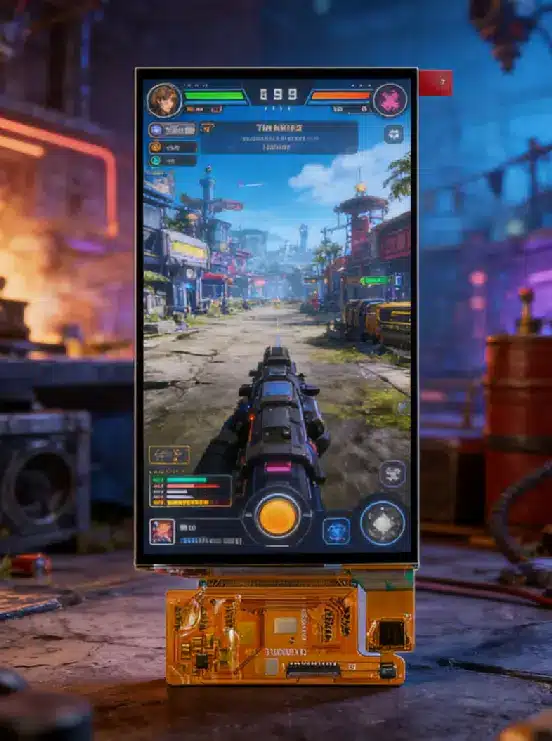
Handheld game consoles need a display that can make small text, fast menus, character details, and rich graphics easy to read at close viewing distance. The 1080×2160 resolution and AMOLED contrast performance support a premium gaming experience, while the slim profile helps product designers manage internal space.
For console developers, this module is especially relevant when the product positioning depends on display quality. The display can support advanced UI design and detailed game visuals, but final performance should be confirmed through firmware, graphics scaling, brightness tuning, and enclosure-level sample testing.
Portable Entertainment Devices with Slim Enclosure Requirements
Compact entertainment devices often require a display module that fits into a thin body without reducing image quality. The 0.66 mm module thickness and MIPI interface make this display useful for projects where mechanical space is limited and embedded control-board integration is required.
The display should be reviewed with the full stack, including cover lens, possible touch panel, adhesive layers, internal bracket, battery placement, and FPC routing. Early drawing review helps reduce the risk of rework during tooling and pilot production.
Smart Terminals and Embedded Products Requiring OLED Contrast
Some compact smart terminals, industrial handheld controllers, and embedded entertainment products benefit from OLED contrast, high resolution, and a vertical display format. The 10000:1 contrast ratio supports strong image separation, while 800 cd/m² luminance helps maintain readability across varied environments.
For these products, the main selection questions are interface compatibility, mechanical fit, touch requirements, and operating temperature. Engineers should confirm whether the product needs standard display output only or additional touch, cover glass, bonding, or protective structure.
Customization Options for AMOLED Handheld Display Projects
Customization for AMOLED handheld display projects should be evaluated based on the final device structure, interface platform, user environment, and production quantity. Confirmed customization options include logo, packaging, and graphic customization with minimum quantities shown in the supplied screenshots. The supplied content also indicates professional customization of interface, brightness, and related project requirements.
For engineering projects, additional review areas can include touch panel selection, FPC length or shape, connector location, cover glass, optical bonding, anti-glare treatment, housing support, cable planning, and control-board matching. These should be treated as project-evaluation options rather than default standard features unless confirmed in a final datasheet or order specification.
If the device targets outdoor or semi-outdoor usage, brightness, cover glass reflection, optical bonding, anti-glare coating, thermal dissipation, and enclosure protection should be reviewed together. If the product requires touch, the touch stack, touch IC compatibility, TP power rails, and firmware support should be validated through sample testing.
Procurement and Engineering Checklist for AMOLED Game Console Display Selection
A successful AMOLED game console display selection should confirm optical, electrical, mechanical, thermal, and supply requirements before mass production.
- Confirm the target resolution and UI scaling plan. A 1080×2160 display supports high visual detail, but the software interface should be designed and tested for this pixel format.
- Review MIPI interface compatibility. Confirm lane routing, clock signals, reset sequence, voltage domains, and initialization requirements with the selected processor or display bridge.
- Validate the 39-pin connector and FPC layout. Connector position, cable route, bending area, and assembly process should match the handheld enclosure.
- Check the active area and module outline against the industrial design. The 68.256 × 136.51 mm active area and 69.646 × 142.30 × 0.66 mm module area should be compared with the cover opening and housing structure.
- Evaluate brightness under real use conditions. The 800 cd/m² luminance should be tested behind the actual cover glass or touch stack.
- Review operating and storage temperature requirements. The module data supports -20°C to 70°C operation and -30°C to 80°C storage, but complete device testing remains necessary.
- Decide whether touch is required. Touch-related pins are shown, but touch configuration should be confirmed by project specification.
- Request samples before tooling. Sample validation should include display output, color, brightness, touch if used, heat, enclosure fit, and long-duration gaming use.
Brightness / Interface / Mounting Selection Guide for AMOLED Game Console Display Projects
For indoor handheld gaming devices, brightness requirements may be lower than outdoor-facing equipment, but 800 cd/m² provides extra visibility margin for brighter environments. For window-facing, vehicle, or outdoor casual-use scenarios, cover glass reflection, bonding, and anti-glare options should be evaluated with brightness.
For interface selection, choose this display only after confirming that the host board supports the required MIPI configuration and voltage rails. For mounting, use mechanical drawings to validate the active area, adhesive zone, FPC bend, cover lens, and internal support structure. Avoid final approval based only on product photos.
FAQ
About 6.01 Inch AMOLED Game Console Display Modules
What is a 6.01 Inch AMOLED Game Console Display used for?
Does the display support MIPI integration?
Is 800 nits brightness enough for handheld gaming?
What makes AMOLED useful for game console displays?
Can this display be used with touch?
What dimensions should engineers check before enclosure design?
What voltage information is available for this module?
Is this display suitable for outdoor handheld devices?
What customization options should buyers discuss?
What information is needed for a sample quotation?
Freya Yang
+86 18318948097