Freya Yang
+86 18318948097
+852 62667476
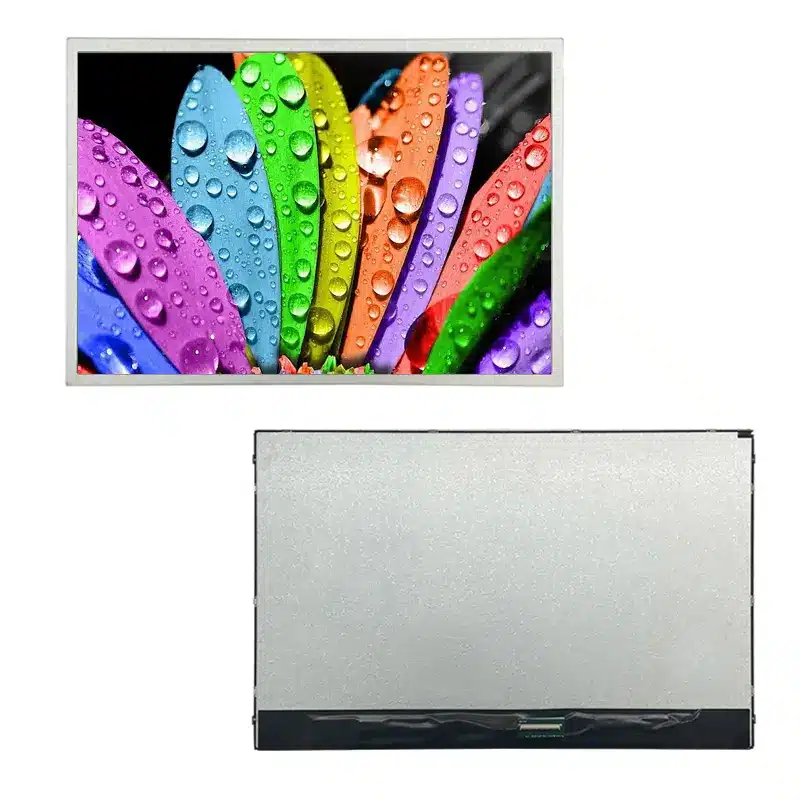
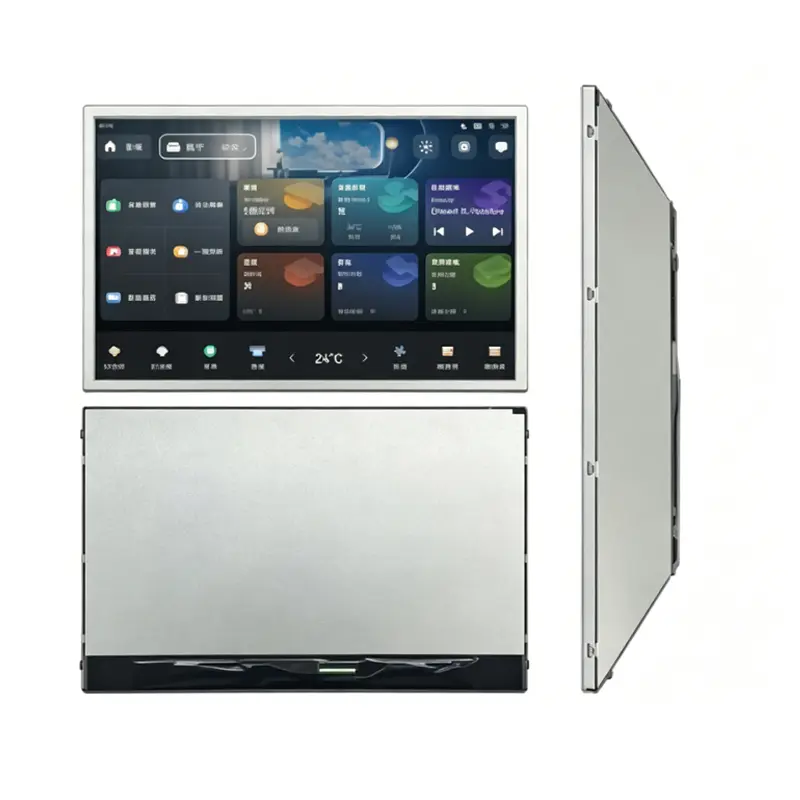
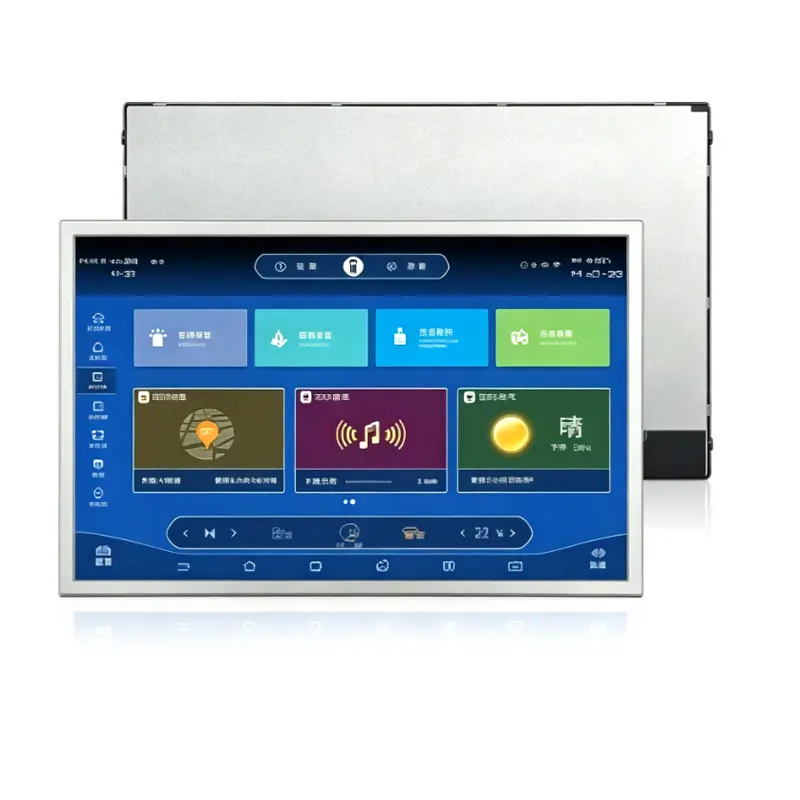
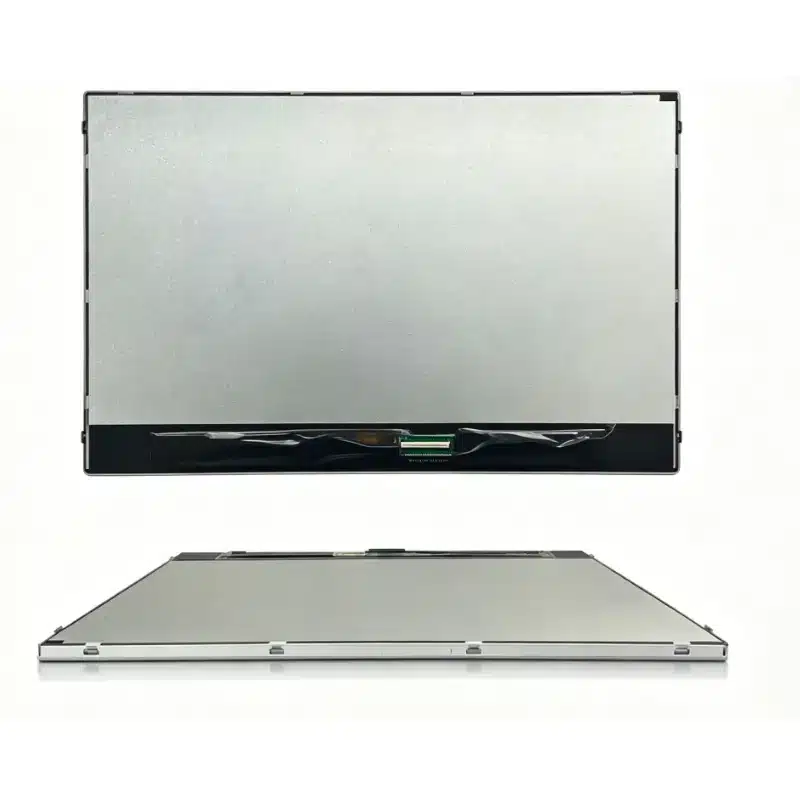
12.1″ 1280×800 Wide Temp Medical Automotive Industrial Display Panel
Model P/N
Size
Resolution
Brightness
Viewing Angle
Connector Type
Operating Temp
Overall(mm)
huisoar
HS121003B0
Brand
Panel Size (inch)
Model P/N
Resolution
Brightness (nits)
Viewing Angle
Contrast Ratio
Response Time
Overall (mm)
Active Area (mm)
Refresh Rate
Display Colors
Panel Type
Connector Type
Operating Temp
Touchscreen Type
Storage Temp
Work Mode
Operating Environment
Designed For
12.1" 1280x800 Wide Temp Medical Automotive Industrial Display Panel
A 12.1-inch display gives equipment designers enough interface area for status information, controls, menus and graphical data without moving to a large-format screen. This IPS TFT-LCD configuration combines a 16:10 layout, 450 cd/m² typical luminance, wide viewing and 40-pin LVDS connectivity for embedded equipment.
The 1280x800 Wide Temp Medical Automotive Industrial Display Panel is positioned for professional integration where display geometry, viewing stability and environmental range must be evaluated together. Its standard configuration is non-touch, allowing interaction hardware to be planned separately when a project requires it.
Product Summary
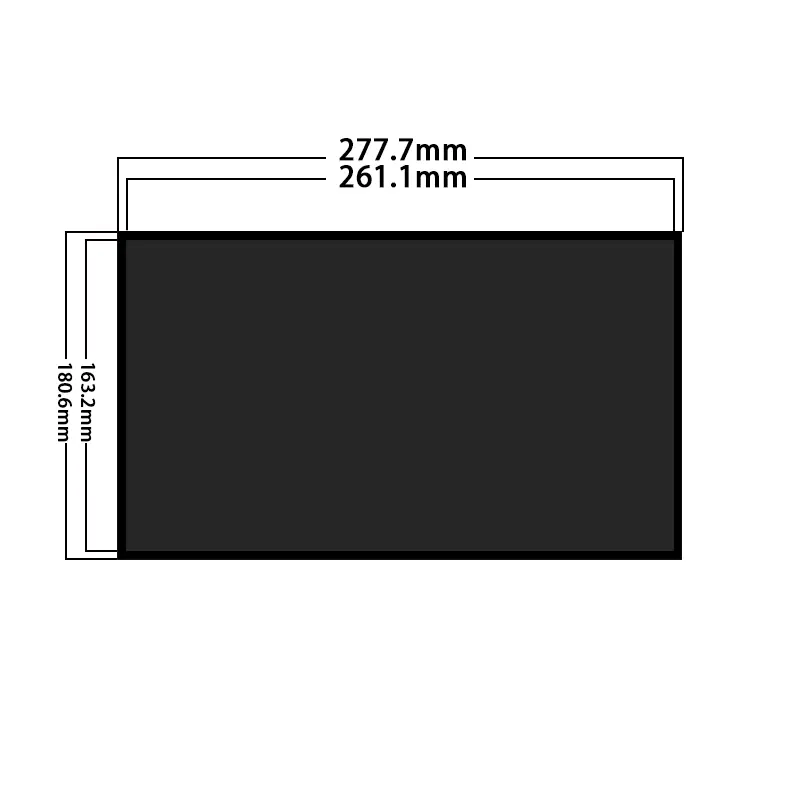
The panel combines a 261.12 × 163.20 mm active area with a 277.7 × 180.6 × 8.7 mm module envelope. This gives engineers a relatively compact 12.1-inch mechanical platform while preserving a wide 16:10 image format.
1280 × 800 WXGA Workspace
The primary native resolution is 1280 × 800 pixels. A 16:10 raster is useful for interfaces that need a central working area together with status bars, navigation zones, alarm lists or parameter columns.
Running the panel at its approved native timing also avoids unnecessary scaling when text, icons and equipment graphics are prepared specifically for the display.
IPS Viewing for Shared Equipment
The IPS configuration provides 85°/85°/85°/85° viewing angles for left, right, up and down. This is useful where an operator may not remain directly centered in front of the display.
Shared equipment, vehicle-mounted interfaces and instrument displays can all benefit from stable off-axis visibility, but mounting geometry should still be confirmed in the finished device.
Key Specifications
| Parameter | Specification |
|---|---|
| Size | 12.1 inches |
| Primary Resolution | 1280 × 800 pixels |
| Aspect Ratio | 16:10 |
| Panel Type | IPS TFT-LCD |
| Optical Mode | Transmissive |
| Brightness | 450 cd/m² typical |
| Contrast Ratio | 1200:1 typical |
| Viewing Angle | 85°/85°/85°/85° L/R/U/D |
| Display Colors | 16.7M |
| Pixel Arrangement | RGB stripe |
| Active Area | 261.12 × 163.20 mm |
| Module Outline | 277.7 × 180.6 × 8.7 mm |
| Signal Interface | LVDS |
| Connector | 40 pins |
| Backlight | WLED |
| Touch | Non-touch |
| Operating Temperature | −20°C to +70°C |
| Storage Temperature | −30°C to +80°C |
Optical Performance in Professional Equipment
450 cd/m² Lighting Position
A 450 cd/m² typical panel provides a practical luminance level for industrial interiors, equipment cabins and other controlled professional environments.
The 450 cd/m² panel rating does not establish sunlight readability behind the final front stack.
Cover glass, coatings, bonding layers, installation angle and ambient reflection can all influence finished-system visibility. Optical approval should therefore use the actual front structure and representative installation lighting.
1200:1 Contrast and Full Viewing
The specified 1200:1 typical contrast ratio works together with the IPS viewing structure to support clear interface separation between text, graphics and background elements.
For equipment that uses color-coded states, alarms or operating zones, the 16.7M-color capability provides an appropriate base for graphical UI development without implying any particular color-calibration grade.
1280x800 Wide Temp Medical Automotive Industrial Display Panel Integration
For system design, the primary integration task is not simply matching the physical connector. The host must support the correct LVDS timing, electrical definition and panel pin assignment.
40-Pin LVDS Qualification
A matching 40-pin LVDS connector does not guarantee timing, voltage, channel mapping, bit width or pin compatibility.
Before controller or cable release, engineering should confirm:
- native 1280 × 800 timing;
- complete 40-pin assignment;
- LVDS channel configuration;
- bit mapping and convention;
- connector pitch and orientation;
- panel electrical requirements;
- WLED backlight requirements.
The interface should therefore be qualified using the approved panel documentation rather than connector count alone.
Standard Non-Touch Architecture
The standard module is non-touch.
This makes it suitable for systems controlled through physical keys, external controls or a separate input device. When touch interaction is required, the cover, touch sensor, controller, mechanical stack and interface must be treated as a separately qualified assembly.
Mechanical Integration
Active Area Versus Module Outline
The 261.12 × 163.20 mm active area defines the visible image region. The 277.7 × 180.6 × 8.7 mm module envelope controls enclosure clearance, bracket positioning and internal depth.
These two dimensional sets should not be interchanged during housing design. The approved production drawing should also control mounting clearances and connector access before tooling is released.
Wide-Temperature Qualification
The module is specified for −20°C to +70°C operation and −30°C to +80°C storage.
This wider environmental range can support equipment exposed to larger temperature swings than typical office displays, but it does not establish the temperature performance of the complete product.
The finished system must separately account for internal heat, enclosure ventilation, sunlight loading where relevant, controller electronics and the front optical stack.
Medical, Automotive and Industrial Application Boundaries
Medical-Equipment Interfaces
The display can be evaluated for medical-equipment interfaces that require a 12.1-inch 16:10 screen, LVDS connectivity and wide viewing.
Medical-equipment application wording does not establish medical certification or diagnostic-display qualification. The finished device must define its own safety, EMC, cleaning, optical and regulatory requirements.
Vehicle and Automotive Displays
The same mechanical and wide-temperature characteristics make the module relevant to vehicle-mounted display development, instrument interfaces and other embedded automotive projects after system qualification.
Automotive application wording does not establish automotive-grade qualification. Vehicle projects should separately define supply transients, vibration, temperature location, EMC, optical environment and applicable compliance requirements before design release.
Industrial Controls and Instruments
Industrial HMIs, instrument displays, machine terminals and monitoring equipment are natural integration routes for this panel. The 16:10 raster provides room for control graphics and status information while the non-touch structure leaves input architecture open to the equipment designer.
A late-stage 1280x800 Wide Temp Medical Automotive Industrial Display Panel evaluation should therefore check electrical, mechanical, optical and environmental requirements together rather than treating any single parameter as proof of suitability.
Resolution Documentation Control
The product information contains a resolution discrepancy that should be resolved before production timing is frozen.
The main product identification, product series and detailed specification identify 1280 × 800, while one parameter graphic shows 1200 × 800.
The approved production datasheet should control native timing, and engineering should not build a controller definition around the conflicting 1200 × 800 value without revision confirmation.
Custom Configuration Planning
Custom configurations are generally reviewed from 500 pieces, subject to tooling requirements, material availability and the requested specification. Sample and standard-module quantities are confirmed separately.
Project review may cover LVDS cable/controller matching, connector definition, front glass, optical treatment, bonding, separate touch development, enclosure adaptation, mounting and branding when the required drawings and electrical data are available.
Procurement Checklist
Before sample approval, confirm:
- exact production revision;
- native 1280 × 800 timing;
- resolution conflict closure;
- full 40-pin LVDS assignment;
- channel and bit mapping;
- connector orientation and mating cable;
- panel voltage/current;
- WLED voltage/current, enable and dimming requirements;
- 261.12 × 163.20 mm active area;
- 277.7 × 180.6 × 8.7 mm module envelope;
- 450 cd/m² luminance tolerance;
- 1200:1 typical contrast;
- 85°/85°/85°/85° viewing specification;
- standard non-touch architecture;
- −20°C to +70°C operating range;
- −30°C to +80°C storage range;
- final cover/window optical stack;
- medical or automotive qualification requirements where applicable;
- sample acceptance criteria;
- annual demand and production schedule.
FAQ
About Wide Temp Medical Automotive Industrial Display Panel
What must be checked before connecting another 40-pin LVDS controller?
Which resolution should engineering use when one product value says 1200 × 800?
Is 450 cd/m² enough behind a front cover?
What does the wide-temperature range prove for an automotive project?
What must be qualified before using this panel in medical equipment?
Freya Yang
+86 18318948097