Freya Yang
+86 18318948097
+852 62667476
12.1″ XGA military grade industrial medical equipment LCD display fit

Model P/N
Size
Resolution
Brightness
Viewing Angle
Connector Type
Operating Temp
Overall(mm)
huisoar
HS121006A0
Brand
Panel Size (inch)
Model P/N
Resolution
Brightness (nits)
Viewing Angle
Contrast Ratio
Response Time
Overall (mm)
Active Area (mm)
Refresh Rate
Display Colors
Panel Type
Connector Type
Operating Temp
Touchscreen Type
Storage Temp
Work Mode
Operating Environment
Designed For
12.1" XGA military grade industrial medical equipment LCD display fit
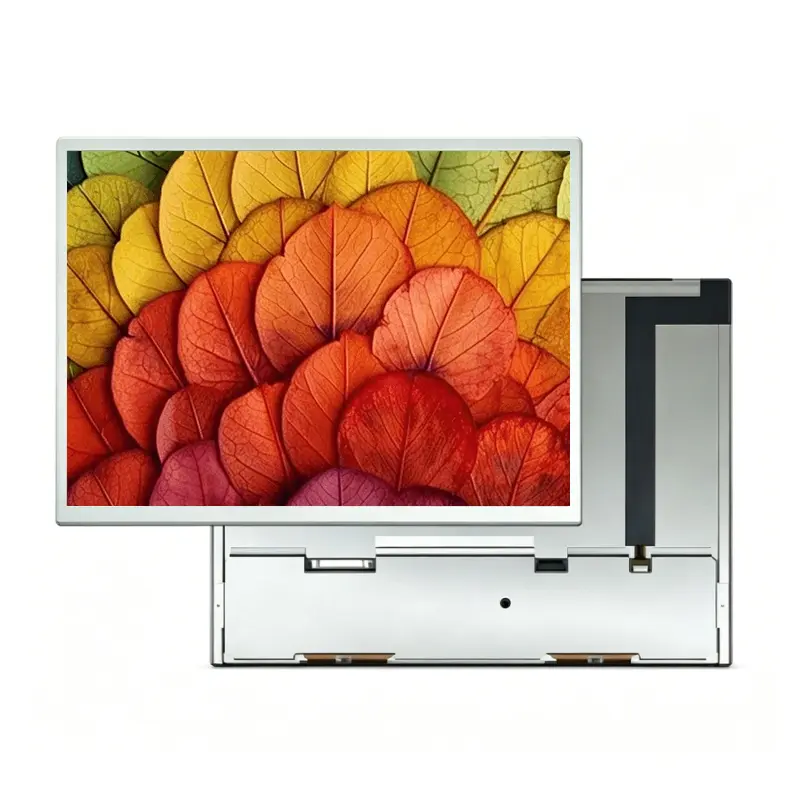
For projects evaluating an XGA military grade industrial medical equipment LCD display, this 12.1-inch IPS TFT-LCD module provides a practical 4:3 XGA platform with 1024 × 768 resolution, 500 cd/m² minimum luminance and wide-temperature operation. It is suitable for industrial, vehicle and medical-equipment integration planning, while military-grade status must be qualified separately rather than assumed from the application category.
The module uses a transmissive IPS structure, provides 85° viewing in all four specified directions and supports 16.7M colors. Its standard configuration is non-touch, allowing equipment manufacturers to use physical controls or engineer a separate touch solution when interaction is required.
Product Summary
This 12.1-inch LCD is built around the classic XGA format used in industrial controls, instrumentation, legacy interface upgrades and professional equipment.
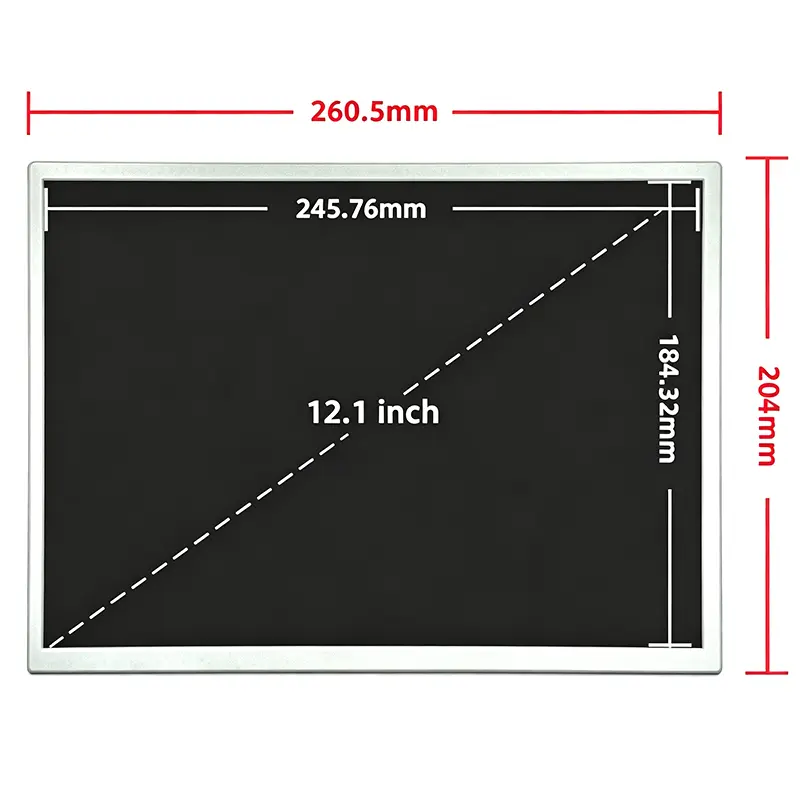
The 245.76 × 184.32 mm active area provides a balanced 4:3 workspace for parameter lists, diagnostic graphics, operating menus and status information. Unlike a wide 16:9 panel, the XGA layout provides comparatively more vertical working space, which can be useful when an interface contains multiple rows of data or vertically stacked controls.
The panel operates from −20°C to +70°C and supports storage from −30°C to +80°C. These module-level limits provide a useful starting point for professional equipment, but finished-system environmental requirements still need separate enclosure, power, thermal and protection validation.
Key Specifications
| Parameter | Confirmed value |
|---|---|
| Size | 12.1 inches |
| Resolution | 1024 × 768 pixels |
| Aspect ratio | 4:3 |
| Panel | a-Si IPS TFT-LCD |
| Optical mode | Transmissive |
| Luminance | 500 cd/m² minimum |
| Contrast | 500:1 minimum |
| Viewing angle | 85°/85°/85°/85° L/R/U/D |
| Colors | 16.7M |
| Backlight | WLED |
| Interface family | LVDS |
| Active area | 245.76 × 184.32 mm |
| Module footprint | 260.5 × 204 mm |
| Touch | Non-touch |
| Operating temperature | −20°C to +70°C |
| Storage temperature | −30°C to +80°C |
4:3 XGA Workspace for Industrial and Medical Equipment
Native 1024 × 768 for data-oriented interfaces
The native XGA raster supports interfaces built around numerical values, equipment states, charts, menu trees and diagnostic pages.
When a host system already uses 1024 × 768 graphics, driving the panel at its native resolution also avoids unnecessary scaling. This is especially relevant in legacy industrial systems and equipment revisions where interface geometry may already be fixed.
IPS viewing from four directions
The panel specifies 85°/85°/85°/85° viewing for left, right, upper and lower directions.
That wider viewing geometry supports equipment where the screen may sit above or below the operator's normal eye position, or where several users need to read the same information from different positions.
500 cd/m² Minimum Luminance and Optical Boundaries
The panel is specified at 500 cd/m² minimum, rather than merely a nominal ungraded value.
That output can support bright indoor equipment, factory environments, vehicle cabins and other higher-ambient installations, but panel luminance alone does not establish sunlight readability.
Bright-ambient visibility is a system-level check
Front glass, reflection, bonding layers, installation angle and ambient illumination can materially change finished-system contrast.
For outdoor-facing or high-ambient equipment, the complete optical stack should therefore be tested under the intended lighting conditions before readability targets are approved.
Evaluating the XGA military grade industrial medical equipment LCD display
This display can be evaluated for projects that combine industrial reliability requirements with medical-equipment or military-equipment application goals, but those applications require clear qualification boundaries.
Military-grade qualification must be defined separately
A military-equipment application direction does not establish a military-grade specification by itself.
Before a project is released under a military-grade requirement, the customer should define the applicable environmental, EMC, mechanical and system-level qualification requirements. The LCD module's temperature range, luminance and viewing characteristics are component parameters, not substitutes for the qualification of the complete equipment.
Medical-equipment integration requires finished-device qualification
Medical-equipment use should also be treated as an integration target rather than an automatic certification claim.
The display can provide the image area for a medical instrument, monitoring interface or diagnostic equipment UI, but the finished device must establish its own applicable electrical, EMC, cleaning, optical and regulatory requirements.
LVDS Integration and Connector Revision Control
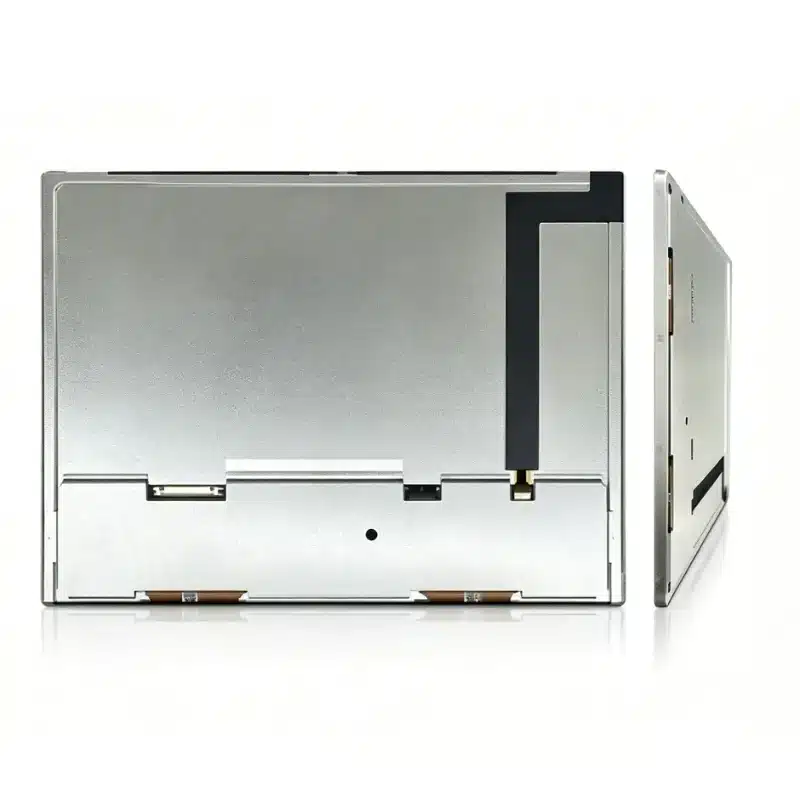
The module uses an LVDS display interface, which makes host-interface definition a critical procurement item.
Resolve the 20-pin versus 30-pin conflict
Available product data contain conflicting 20-pin and 30-pin references.
Do not release the cable, controller board or enclosure until the approved production revision identifies the actual connector, contact orientation and complete pin assignment.
Match timing, mapping and electrical requirements
A matching connector count does not guarantee LVDS compatibility.
Native XGA timing, channel configuration, bit mapping, electrical levels, connector pitch and pin direction should all be verified against the selected host platform. Panel logic power and WLED backlight requirements should also be treated as separate electrical design items until their approved values are available.
Mechanical Integration and Enclosure Fit
The active image area measures 245.76 × 184.32 mm, while the detailed footprint is approximately 260.5 × 204 mm.
Resolve the 8.0 mm versus 8.51 mm thickness data
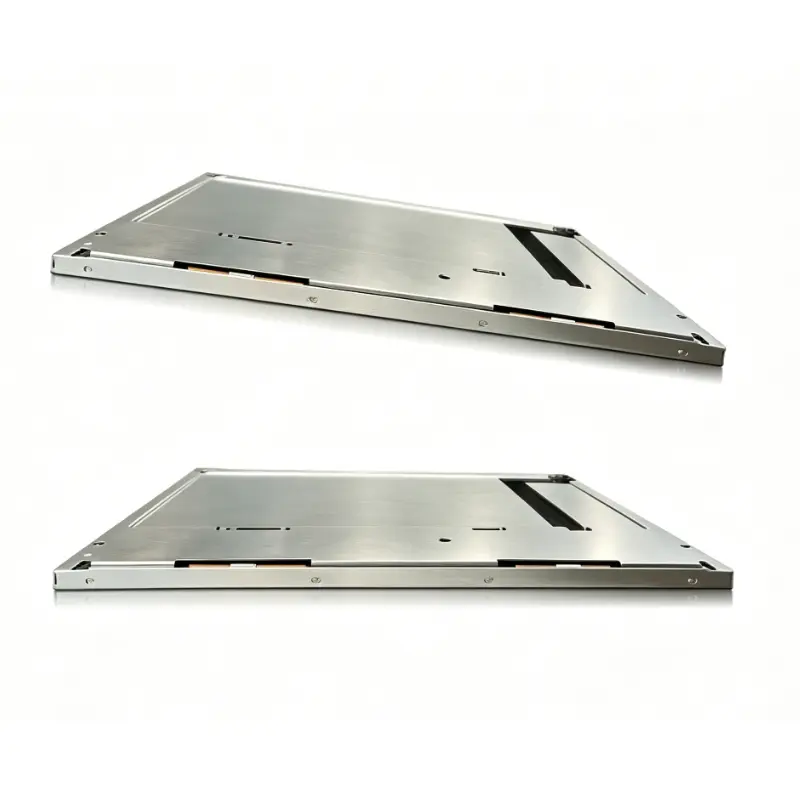
Thickness data vary between 8.0 mm and 8.51 mm.
That difference is small for early concept work but can matter for production tooling, retaining brackets, cable clearance and front-window stack-up. Use the approved production drawing and its tolerances before releasing a housing or mechanical fixture.
Non-Touch Architecture
The standard module is non-touch.
That configuration works well when equipment uses membrane keys, physical buttons, external controls or another input device. It can also provide a clean starting point for projects that intend to develop a separate touch stack.
If touch is required, define the touch technology, controller interface, cover glass, bonding method, active area, FPC routing and environmental behavior as a separate engineering requirement.
Wide-Temperature Application Boundaries
The module operates from −20°C to +70°C and stores from −30°C to +80°C.
These temperature values support a broader integration envelope than typical office-only display hardware, but they do not establish waterproofing, military environmental qualification, UV resistance, vibration compliance or an enclosure IP rating.
When the XGA military grade industrial medical equipment LCD display requirement is part of a field system, thermal testing should consider the entire cabinet, electronics, backlight load, ventilation strategy and installation environment rather than the LCD temperature range alone.
Industrial, Vehicle and Professional Equipment Applications
The module can be evaluated for:
- industrial HMI and machine-control displays;
- industrial security and monitoring interfaces;
- vehicle-mounted information equipment;
- medical-equipment display integration subject to finished-device qualification;
- military-equipment projects subject to separate military qualification;
- outdoor-facing equipment after optical, environmental and enclosure validation.
Its 4:3 format is particularly useful where existing software, legacy controller hardware or established front-panel geometry already assumes an XGA workspace.
Customization and Procurement Planning
Custom configurations are generally reviewed from 500 pieces, subject to tooling requirements, material availability and the requested specification. Sample and standard-module quantities are confirmed separately.
Project review can cover LVDS cable and pin definition, controller matching, cover glass, anti-glare or anti-reflective treatment, optical bonding, separate touch development, enclosure adaptation and front-window optical performance.
Procurement checklist
Before sample release, submit:
- native 1024 × 768 timing;
- complete approved LVDS connector and pin definition;
- required channel and bit mapping;
- panel power requirements;
- WLED voltage, current, enable and dimming requirements;
- approved mechanical drawing;
- front-window and touch plan;
- target lighting conditions;
- operating and storage environment;
- required medical qualification scope, if applicable;
- required military/environmental qualification scope, if applicable;
- sample quantity and annual demand.
FAQ
About 12.1" XGA military grade industrial medical equipment LCD display
What must be checked before choosing a 20-pin or 30-pin LVDS cable?
Is 500 cd/m² minimum sufficient for an outdoor-facing front window?
Does the military-equipment application direction make this a MIL-STD-qualified display?
What must be confirmed before using the panel in medical equipment?
Which thickness should be used for enclosure tooling?
Freya Yang
+86 18318948097