Freya Yang
+86 18318948097
+852 62667476
25 Inch Elevator Advertising Display Module for Narrow Signage and Elevator Ads
Model P/N
Size
Resolution
Brightness
Viewing Angle
Connector Type
Operating Temp
Overall(mm)
huisoar
HS250S04
Brand
Panel Size (inch)
Model P/N
Resolution
Brightness (nits)
Viewing Angle
Contrast Ratio
Response Time
Overall (mm)
Active Area (mm)
Refresh Rate
Display Colors
Panel Type
Connector Type
Surface Treatment
Operating Temp
Touchscreen Type
Storage Temp
Work Mode
Pixel Format
Input Voltage (V)
Control Type
Weight (g)
Operating Environment
I/O Interface
Designed For
25 Inch Elevator Advertising Display Module for Narrow Signage
A 25-inch 2560 × 1080 AH-IPS module with 92-pin LVDS, 250 cd/m² luminance and a long-format canvas for controlled-light elevator media.
Product Summary
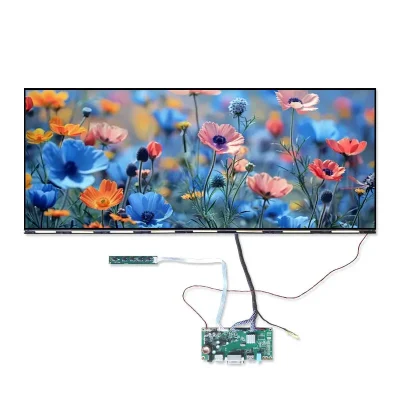
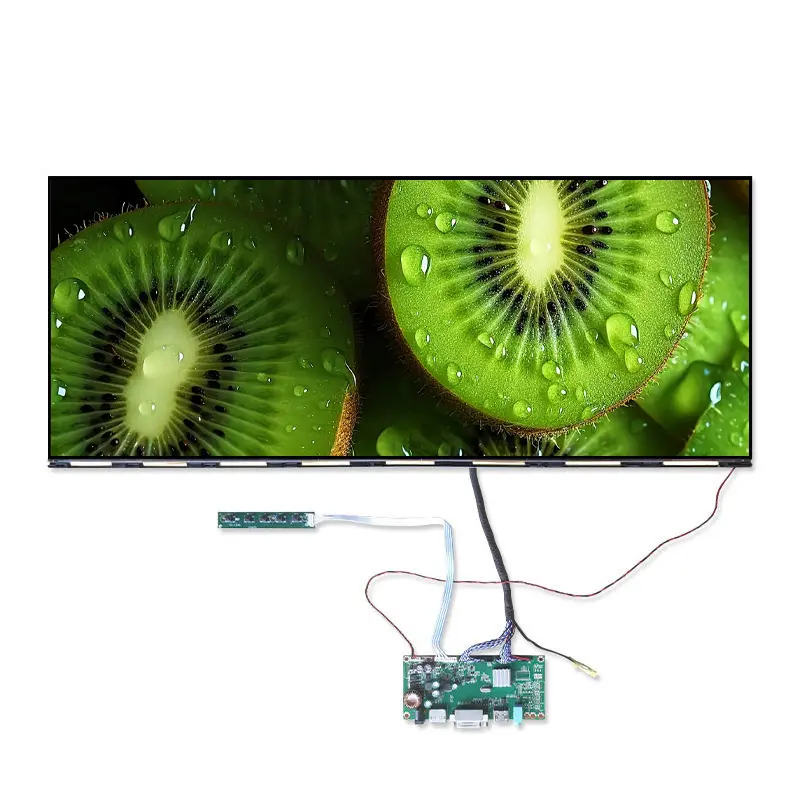
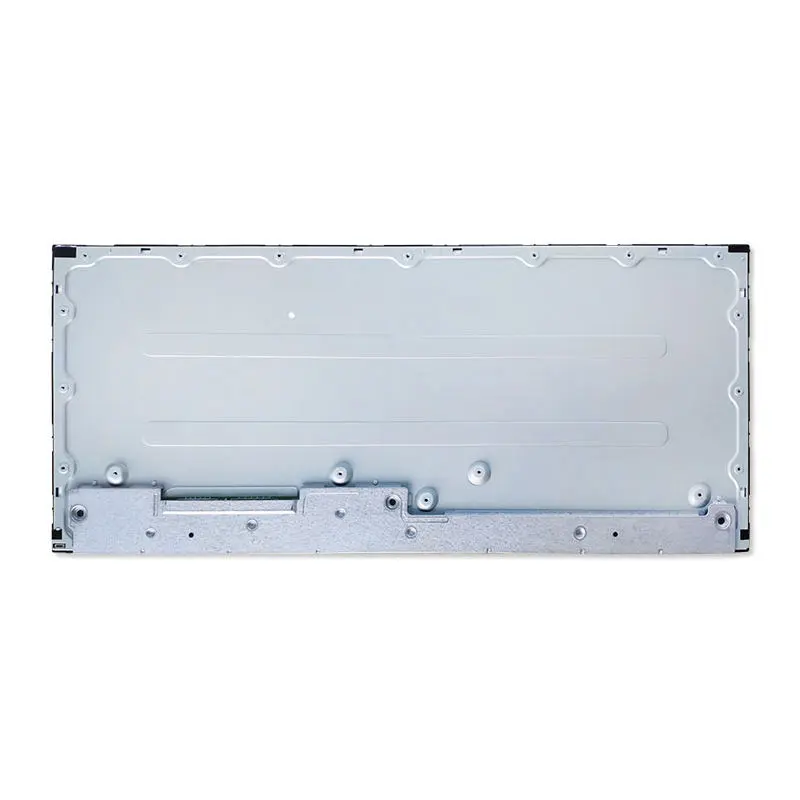
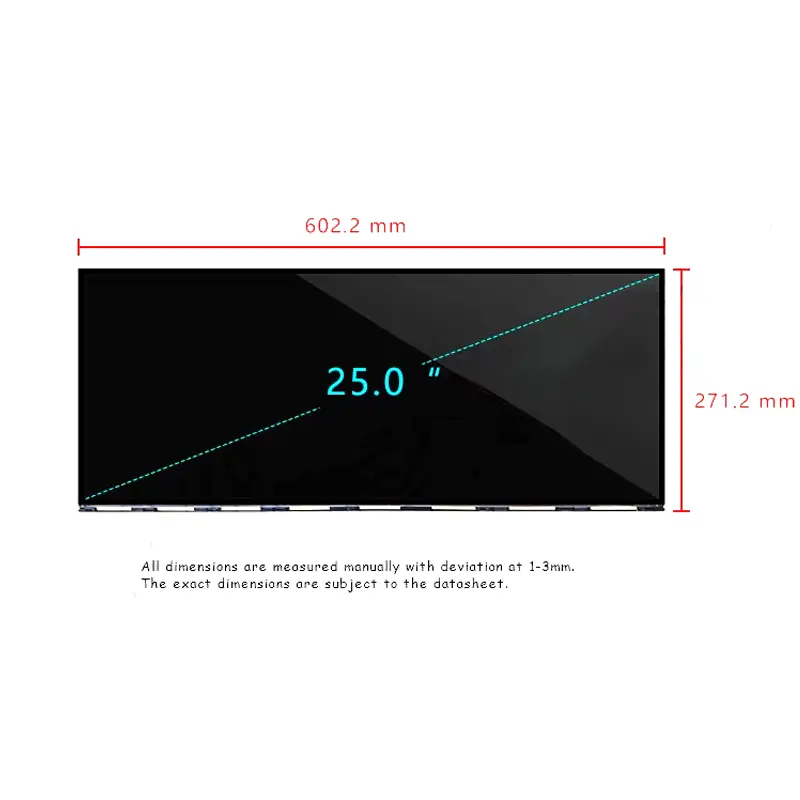
The Elevator Advertising Display Module is a 25-inch ultra-wide LCD component for elevator cabins, lift lobbies, corridor media and other narrow commercial-signage openings. Its native 2560 × 1080 raster provides more horizontal content space than a conventional 16:9 panel while retaining a practical 602.2 × 271.2 × 16.5 mm mechanical envelope.
The AH-IPS normally black structure provides wide raw viewing-angle data, 1000:1 typical contrast and 16.7 million colors with a 99% sRGB reference. The standard configuration uses a 250 cd/m² backlight and is therefore best evaluated for controlled indoor lighting rather than direct-sun installations.
Key Specifications
| Parameter | Confirmed value |
|---|---|
| Screen size | 25 inches |
| Resolution | 2560 × 1080 pixels |
| Active area | 585.216 × 246.888 mm |
| Outline | 602.2 × 271.2 × 16.5 mm |
| Panel mode | AH-IPS, normally black, transmissive |
| Luminance | 250 cd/m² typical |
| Contrast | 1000:1 typical |
| Viewing data | 89/89/89/89° typical, CR ≥ 10 |
| Response | 14 ms typical, gray-to-gray |
| Color | 16.7 million colors, 99% sRGB |
| Surface | Anti-glare, 3H hard coating |
| Refresh rate | 60 Hz |
| Native interface | 92-pin, four-channel, 8-bit LVDS |
| Panel input | 10.0 V typical |
| Backlight | 15S4P WLED |
| Backlight driver | Not included |
| Backlight-life reference | 30,000 hours |
| Touch | Non-touch |
| Panel weight | 2.42 kg typical |
| Operating temperature | 0°C to +50°C |
| Storage temperature | −20°C to +60°C |
Native 2560 × 1080 Content for Long-Format Media
Prepare Artwork at the Native Raster
The content pipeline should output 2560 × 1080 pixels natively. Scaling a standard 1920 × 1080 layout can distort text, stretch imagery or leave unused side regions.
The long canvas can support panoramic promotions, paired advertising zones, building information, announcements and branded media. Content templates should be approved in the final physical orientation before the enclosure and controller firmware are released.
Design for Elevator Viewing Distance
Elevator users normally view the screen at short or medium distance. Typography should remain legible without making every region visually dense.
A practical layout can reserve one area for the main promotion and another for building information or notices. Safe margins should account for the final bezel, cover glass and mounting frame.
Optical Use in Controlled Commercial Lighting
Treat 250 cd/m² as an Indoor Configuration
A 250 cd/m² panel is suitable for evaluation in controlled indoor lighting, including elevator cabins and protected corridors.
A 250 cd/m² panel does not establish outdoor or sunlight-readable performance.
Projects exposed to windows, strong lobby lighting or exterior conditions should define a separate luminance target and review the effects of the front cover, reflection and thermal load.
Evaluate the Final Protective Front
The panel uses an anti-glare surface with 3H hard coating. A separate glass or polymer cover can change the final reflection level and apparent contrast.
Test the exact cover material, tint, air gap or bonding layer under the expected site lighting. The final approval should be based on the assembled optical stack rather than the bare panel alone.
LVDS Integration for the Elevator Advertising Display Module
Confirm the Complete 92-Pin Definition
The module uses four-channel, 8-bit LVDS through a 92-pin connector. Matching the words “LVDS” and “92 pin” is not sufficient for compatibility.
A 92-pin LVDS connector does not guarantee timing, channel mapping, voltage or pin compatibility with another panel.
Confirm the native timing, pixel clock, channel arrangement, bit mapping, connector orientation, control signals and complete pin assignment before approving the host controller.
Non-standard stretched and bar displays often require controller timing that explicitly supports their native raster rather than a generic panel profile.
Keep the Backlight Driver Separate
The panel backlight is identified as a 15S4P WLED structure, and the backlight driver is not included.
The engineering package must define the driver output voltage, current, dimming method, startup behavior and protection requirements. The 10.0 V value applies to the panel input and should not be assumed to be the required WLED-driver output.
Controller Board and External Video Inputs
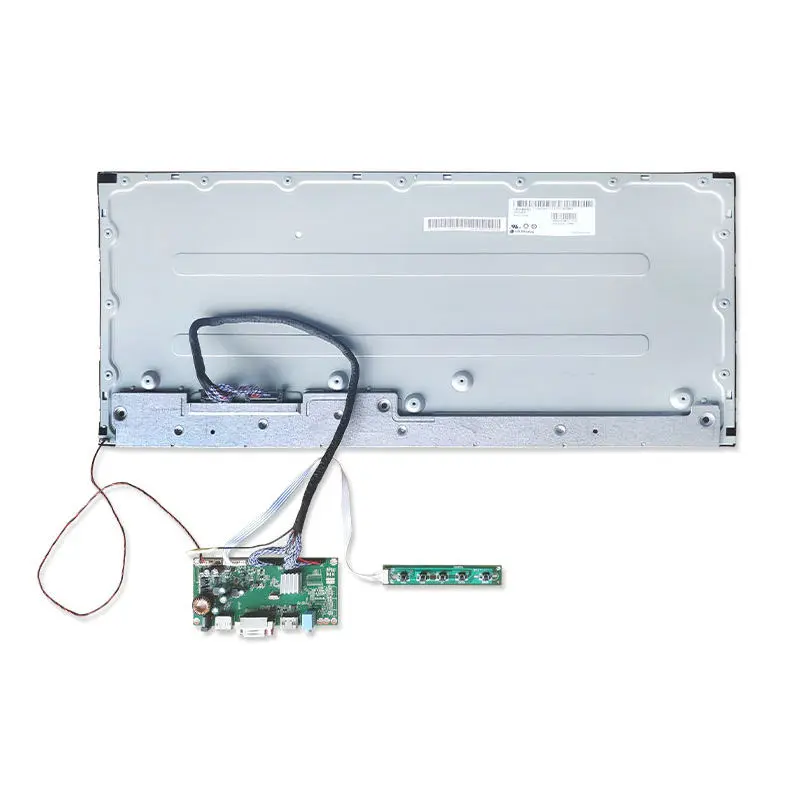
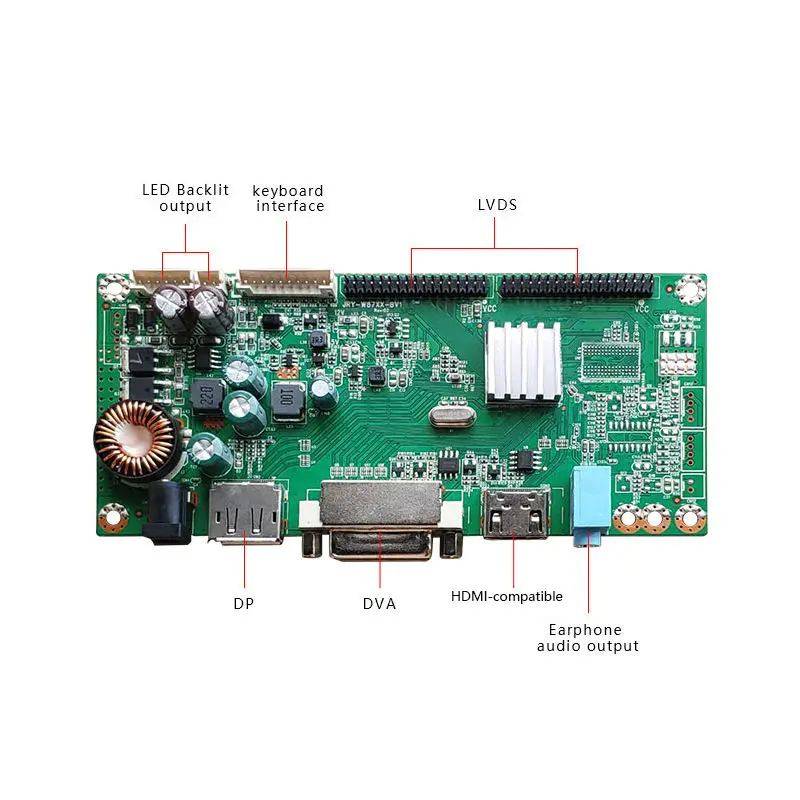
A separately specified controller board may add DisplayPort, DVI, HDMI, audio or keypad functions. These connections are not native interfaces of the LCD panel itself.
The controller board and its external ports must be confirmed as separate ordered items.
For a complete advertising system, define the video inputs, native-resolution support, content player, audio requirement, control keypad, power supply, cable set and firmware configuration.
Mechanical Integration and Mounting
Use the Approved Panel Envelope
The active image area is 585.216 × 246.888 mm, while the panel outline is 602.2 × 271.2 × 16.5 mm. The enclosure opening should be based on the active area plus the approved visible-border allowance.
Cable routing, connector clearance and backlight-driver placement must be included in the complete assembly drawing.
Distribute Support Across the Long Frame
The panel weighs 2.42 kg typically and 2.54 kg at the stated maximum. Its long shape requires distributed support rather than concentrated pressure near one corner or connector area.
The final frame should control torsion, protect the glass and permit service access without loading the display surface.
Application Fit
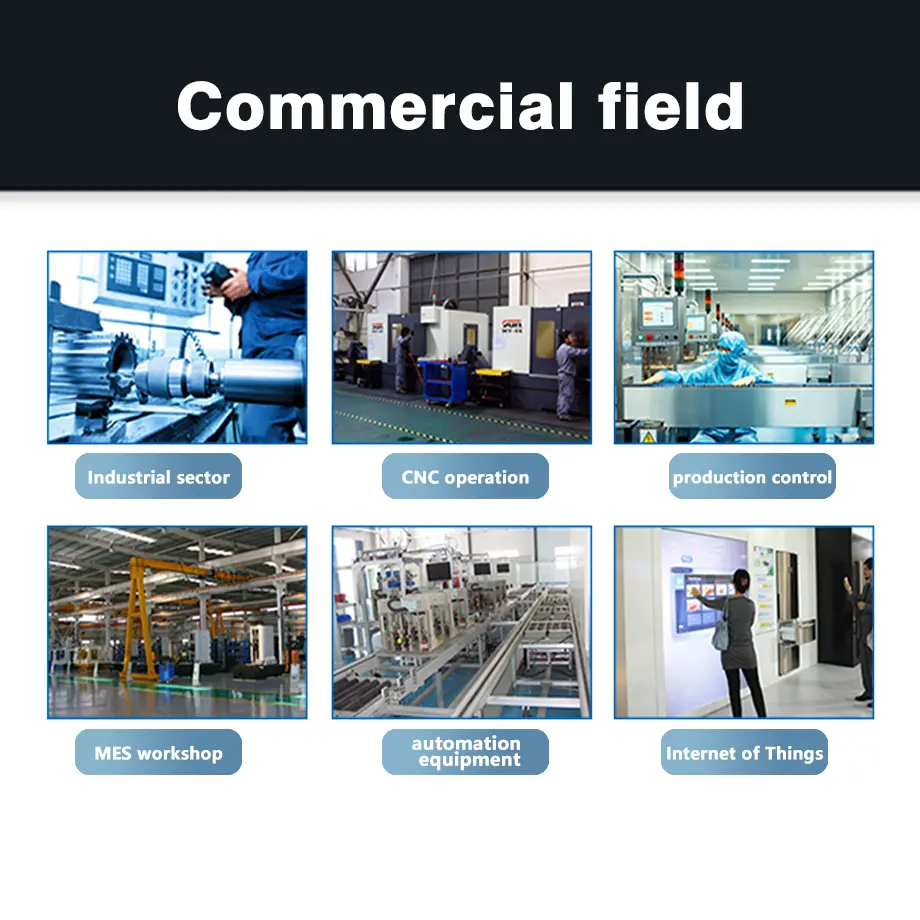
The Elevator Advertising Display Module is suited to indoor elevator advertising, lift-lobby media, corridor promotional bands, wall advertising and other narrow commercial-information systems.
Its 2560 × 1080 format can also support panoramic desk-computer or monitoring layouts when the host provides the correct LVDS timing. It should not be presented as a finished outdoor, waterproof or sunlight-readable display in the standard 250 cd/m² configuration.
Configuration Options
Project review may cover:
- LVDS controller and cable matching
- Native 2560 × 1080 timing
- External HDMI, DP or DVI controller board
- WLED backlight-driver design
- Brightness changes
- Cover glass and reflection control
- Optical bonding
- Enclosure and mounting
- Optional touch development
- Branding and packaging
Logo, packaging and graphic customization are identified from 1,000 pieces. Engineering changes require separate feasibility and quantity review. Sample and standard-module quantities are confirmed separately.
Procurement Checklist
Confirm the following before sample approval:
- Native 2560 × 1080 content workflow
- Pixel clock and full timing
- Four-channel 8-bit LVDS mapping
- Complete 92-pin assignment
- Connector and cable orientation
- 10.0 V panel input
- WLED-driver voltage and current
- Dimming or PWM method
- Backlight startup and protection
- Required controller-board inputs
- HDMI, DP, DVI or audio scope
- 585.216 × 246.888 mm active area
- 602.2 × 271.2 × 16.5 mm outline
- 2.42 kg typical mounting load
- Cover-glass material and reflection
- 250 cd/m² lighting target
- Indoor or protected installation
- Standard non-touch or custom touch
- Temperature requirements
- Sample quantity and annual demand
FAQ
About 25 Inch Elevator Advertising Display Module
What must be checked before connecting a 92-pin LVDS controller?
How should content be prepared for the 2560 × 1080 format?
Is the standard 250 cd/m² version suitable for outdoor advertising?
Is the video controller board included with the panel?
What backlight information is required before electrical release?
Freya Yang
+86 18318948097