Freya Yang
+86 18318948097
+852 62667476
25 Inch Elevator Advertising LCD Panel Bar Display for Wall Media
Model P/N
Size
Resolution
Brightness
Viewing Angle
Connector Type
Operating Temp
Overall(mm)
huisoar
HS250S0040
Brand
Panel Size (inch)
Model P/N
Resolution
Brightness (nits)
Viewing Angle
Contrast Ratio
Response Time
Overall (mm)
Active Area (mm)
Refresh Rate
Display Colors
Panel Type
Connector Type
Surface Treatment
Operating Temp
Touchscreen Type
Storage Temp
Work Mode
Pixel Format
Input Voltage (V)
Weight (g)
Operating Environment
Designed For
25 Inch Elevator Advertising LCD Panel for Wall Media
The ultra-wide 2560 × 1080 image area supports long-format elevator and wall-media layouts, while the 92-pin LVDS interface keeps the panel ready for custom integration.
Product Summary
The Elevator Advertising LCD Panel provides a 25-inch ultra-wide image platform for elevator cabin media, lift-lobby displays and wall-mounted promotional systems. Its 2560 × 1080 resolution creates a long visual canvas that can accommodate advertising, directional information, building notices and branded content without forcing the layout into a conventional 16:9 screen.
The module uses AH-IPS normally-black transmissive technology, 250 cd/m² typical luminance and a 1000:1 typical contrast ratio. Its native panel interface is a 92-pin, four-channel, 8-bit LVDS connection, and the panel input is 10.0 V typical.
A 92-pin LVDS connector does not guarantee timing, channel mapping, voltage or pin compatibility with another controller.
Key Specifications at a Glance
| Parameter | Confirmed value |
|---|---|
| Display size | 25 inches |
| Resolution | 2560 × 1080 pixels |
| Panel mode | AH-IPS, normally black, transmissive |
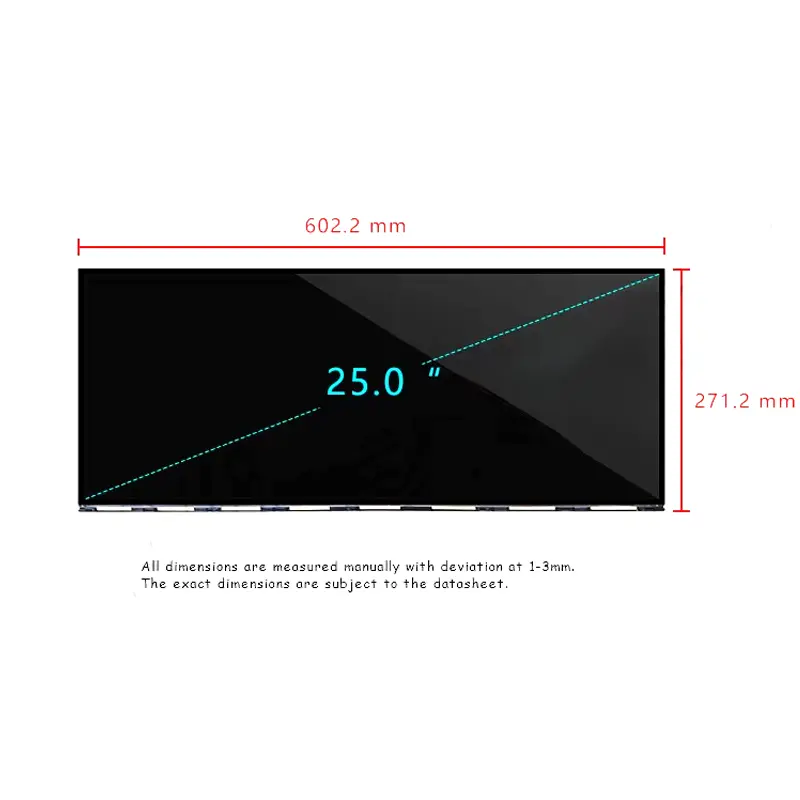
| Active area | 585.216 × 246.888 mm |
| Module outline | 602.2 × 271.2 × 16.5 mm |
| Luminance | 250 cd/m² typical |
| Contrast ratio | 1000:1 typical |
| Viewing-angle data | 89/89/89/89° typical, raw sequence |
| Display colors | 16.7M colors, 99% sRGB |
| Surface | Anti-glare, 3H hard coating |
| Response time | 14 ms typical, G-to-G |
| Frame rate | 60 Hz |
| Signal interface | 92-pin, four-channel, 8-bit LVDS |
| Panel input | 10.0 V typical |
| Backlight | 15S4P WLED, driver not included |
| Backlight-life reference | Listed 30,000 hours |
| Touch | Non-touch |
| Weight | 2.42 kg typical / 2.54 kg maximum |
| Operating temperature | 0°C to +50°C |
| Storage temperature | −20°C to +60°C |
Ultra-Wide 2560 × 1080 Content for Elevator Media
When the Long Format Is the Right Choice
A long-format panel is useful when the available installation area is wider or taller than a standard monitor window. Elevator walls, cabin headers, corridor bands and narrow media frames often leave insufficient room for a conventional 16:9 display without wasting space or obstructing other equipment.
The 585.216 × 246.888 mm active area gives designers a wide canvas for:
- Multiple advertising zones
- Floor and directional information
- Building announcements
- Scrolling messages
- Brand graphics
- Time and weather widgets
- Split-screen promotional content
The long geometry is not merely decorative. It allows content architecture to follow the physical installation area.
Native Content Preparation
The native 2560 × 1080 raster should be used to preserve long-format elevator artwork and avoid scaling distortion.
Content teams should prepare templates at the panel’s native resolution rather than stretching a 1920 × 1080 image. A native layout supports sharper typography, cleaner image placement and more predictable zoning.
Before content production begins, define:
- Horizontal or vertical installation
- Safe text margins
- Number of content zones
- Viewer distance
- Type size
- Image-cropping rules
- Media-player output resolution
- Rotation handling
- Emergency-message priority
Optical Performance for Controlled-Light Installations
250 cd/m² Use Boundary
The standard luminance is 250 cd/m² typical. This level is appropriate for controlled-light interiors such as elevator cabins, lift lobbies, indoor corridors and wall-media systems that are not exposed to strong daylight.
A 250 cd/m² panel is intended for controlled-light evaluation and does not establish outdoor or sunlight-readable performance.
When a protective front window is added, delivered brightness can be reduced by transmission losses and reflections. Review the front material, tint, printed border, reflection level and installation lighting before the final optical design is approved.
Projects exposed to direct sun, storefront daylight or strong outdoor ambient light require a separately approved higher-brightness configuration and finished enclosure.
AH-IPS Viewing and Anti-Glare Surface
The AH-IPS normally-black optical structure provides a raw 89/89/89/89° viewing-angle sequence. The exact directional order should be confirmed before assigning left, right, up or down labels.
This wide-view behavior supports public-facing media where passengers approach from different positions. The anti-glare surface and 3H hard coating also help control panel-surface reflections and provide a practical front-surface reference for commercial equipment.
A separate cover glass may change the reflection and haze performance, so the final optical stack must be tested as an assembly.
Integrating the Elevator Advertising LCD Panel
92-Pin Four-Channel LVDS Qualification
The native signal path uses four-channel, 8-bit LVDS through a 92-pin connector. Controller matching should verify:
- Native 2560 × 1080 timing
- 60 Hz operation
- Pixel-clock range
- Four-channel data mapping
- 8-bit color convention
- Complete 92-pin assignment
- VESA or JEIDA mapping
- Connector pitch
- Contact side
- Cable orientation
- Grounding and shielding
- Enable and control signals
Connector count alone is not a compatibility standard. An incompatible voltage, mapping or timing definition can prevent operation or damage the panel.
Panel and WLED Backlight Power
The 10.0 V typical value applies to the panel input. It does not define the complete finished-display power supply.
The 15S4P WLED backlight is identified without an included driver. Engineering review must establish:
- LED string voltage
- Current per string
- Driver output range
- PWM or analogue dimming
- Backlight-enable logic
- Thermal protection
- Maximum power
- Required cable and connector
The stated 30,000-hour figure should be treated as a listed reference until its operating current, luminance and temperature conditions are confirmed.
Mechanical and Front-Window Planning
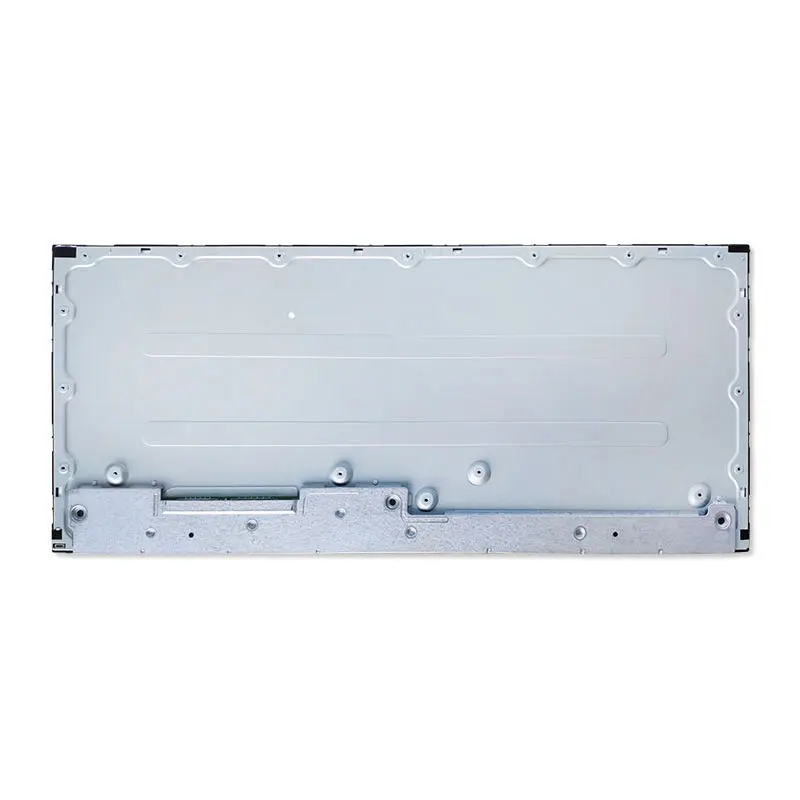
The active image area measures 585.216 × 246.888 mm. The complete panel measures 602.2 × 271.2 × 16.5 mm and weighs 2.42 kg typically, with a stated 2.54 kg maximum.
These values control different design tasks:
- Active area defines the visible image.
- Overall dimensions control enclosure clearance.
- The 16.5 mm depth controls rear spacing.
- Panel weight controls brackets and structural support.
- Connector location controls cable routing.
- Mounting points and keep-out zones require an approved drawing.
The front-window design should also consider transmission, reflection, printed masking, ventilation, service access and the risk of panel stress from an uneven mounting frame.
Controller-Board and Non-Touch Boundaries
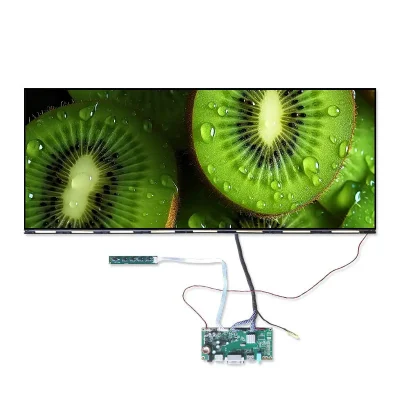
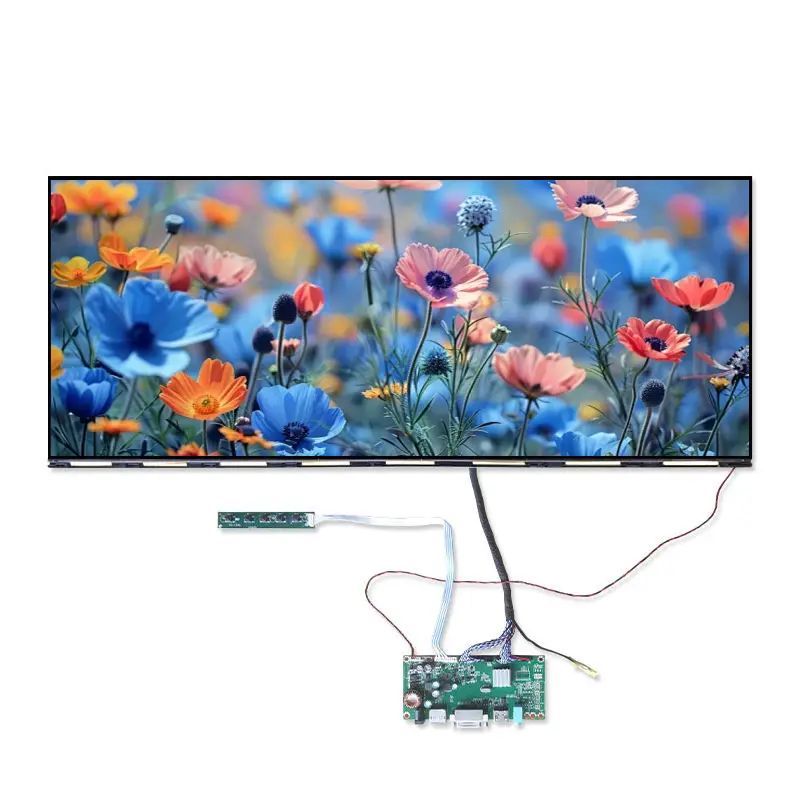
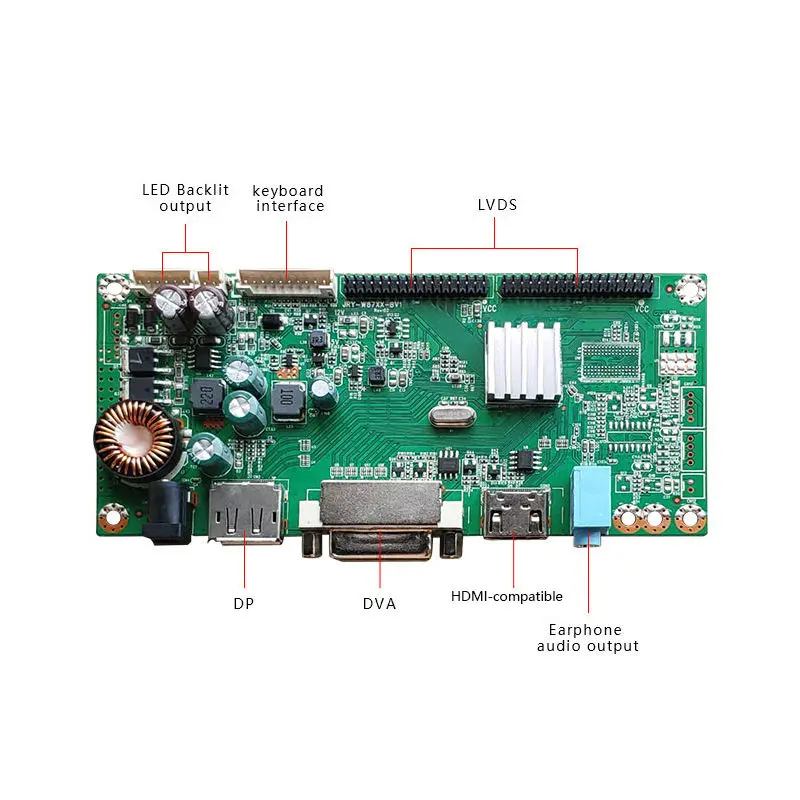
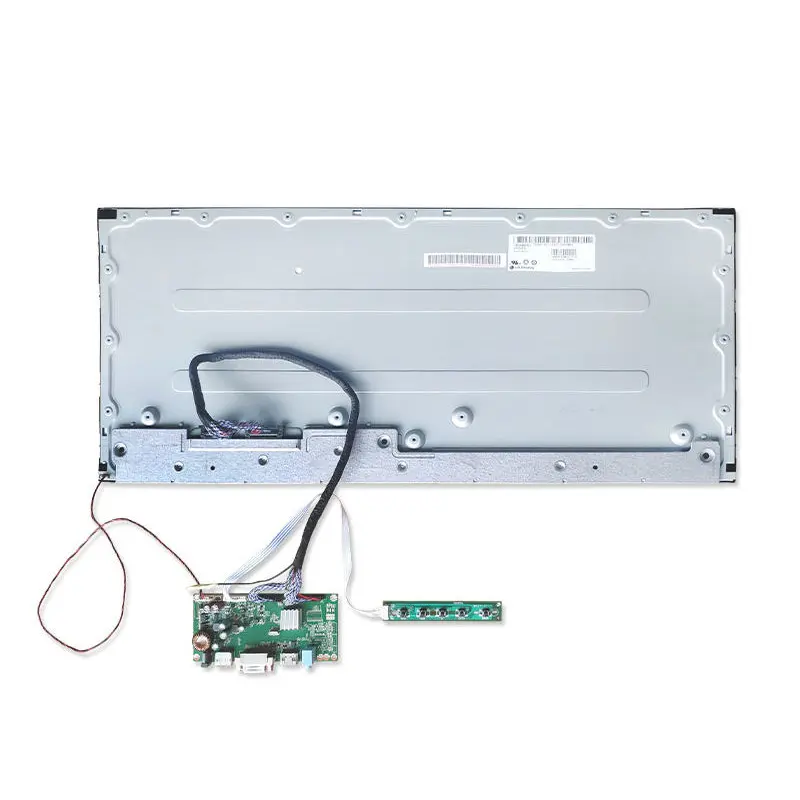
The product imagery shows controller-board options with external inputs, but the panel’s confirmed native interface is LVDS.
The controller board and its external ports must be confirmed as a separate ordered item because the panel specification defines LVDS as the native signal interface.
DP, DVI, HDMI-compatible and audio connections should therefore be described only as controller-board functions when the selected quotation includes that hardware.
The standard module is non-touch.
An interactive version would require a separately engineered touch sensor, controller, cover lens, bonding method, cable route and enclosure opening. Optional touch development does not convert the standard non-touch panel into a touchscreen without those additional components.
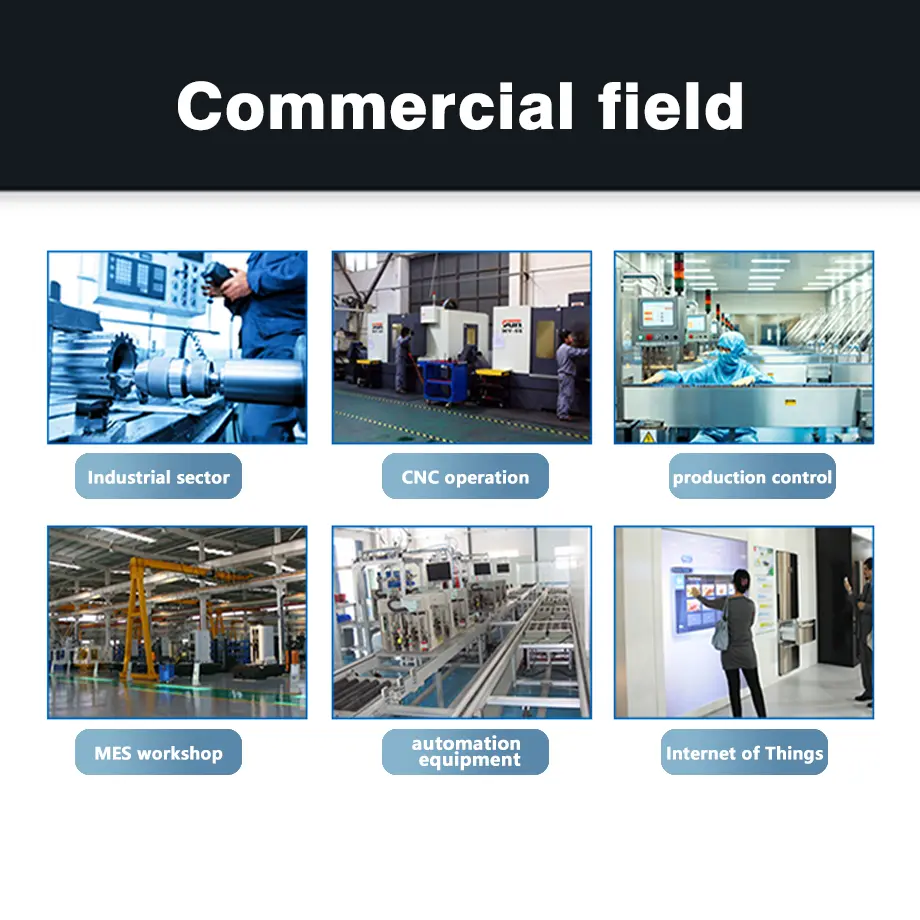
Recommended OEM Applications
The Elevator Advertising LCD Panel is suited to:
- Elevator cabin advertising
- Lift-lobby media
- Wall-mounted promotional bands
- Corridor information displays
- Building-directory media
- Indoor queue-information screens
- Narrow commercial signage
- Desk-computer or monitoring layouts requiring 2560 × 1080
The standard configuration should remain within controlled-light indoor environments. Outdoor-facing use requires separate optical, enclosure and thermal qualification.
Customization and Project Qualification
Project review may cover:
- LVDS controller matching
- 92-pin cable definition
- External-input controller selection
- WLED backlight-driver design
- Front cover glass
- Anti-reflective or anti-glare treatment
- Optical bonding
- Enclosure adaptation
- Mounting brackets
- Optional touch development
- Branding and packaging
Logo, packaging and graphic customization are generally evaluated from 1,000 pieces. Engineering customization, samples and standard-module quantities are confirmed separately.
Procurement Checklist
Confirm these items before sample or tooling approval:
- Whether HS250S0040 differs from HS250S04/TOP250S04
- Native 2560 × 1080 timing
- 60 Hz operation
- Four-channel, 8-bit LVDS mapping
- Complete 92-pin assignment
- VESA or JEIDA convention
- Connector pitch and contact side
- Cable orientation and length
- 10.0 V panel input
- WLED voltage and current
- Dimming and enable requirements
- Backlight-driver inclusion
- Controller-board inclusion
- Required external ports
- 585.216 × 246.888 mm active area
- 602.2 × 271.2 × 16.5 mm enclosure fit
- 2.42 kg typical mounting load
- Front-window transmission and reflection
- Controlled-light 250 cd/m² target
- Non-touch or custom-touch plan
- Operating and storage temperatures
- Compliance-document requirements
- Sample criteria
- Order quantity and annual demand
FAQ
About 25 Inch Elevator Advertising LCD Panel
When should this panel be selected instead of a standard 16:9 screen?
What must be confirmed before using a 92-pin LVDS controller?
How does 250 cd/m² affect front-window planning?
What is required to add touch or external video inputs?
Freya Yang
+86 18318948097