Freya Yang
+86 18318948097
+852 62667476
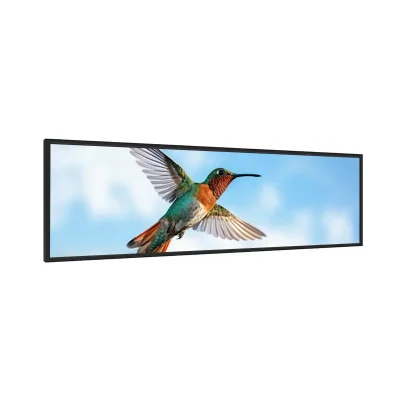
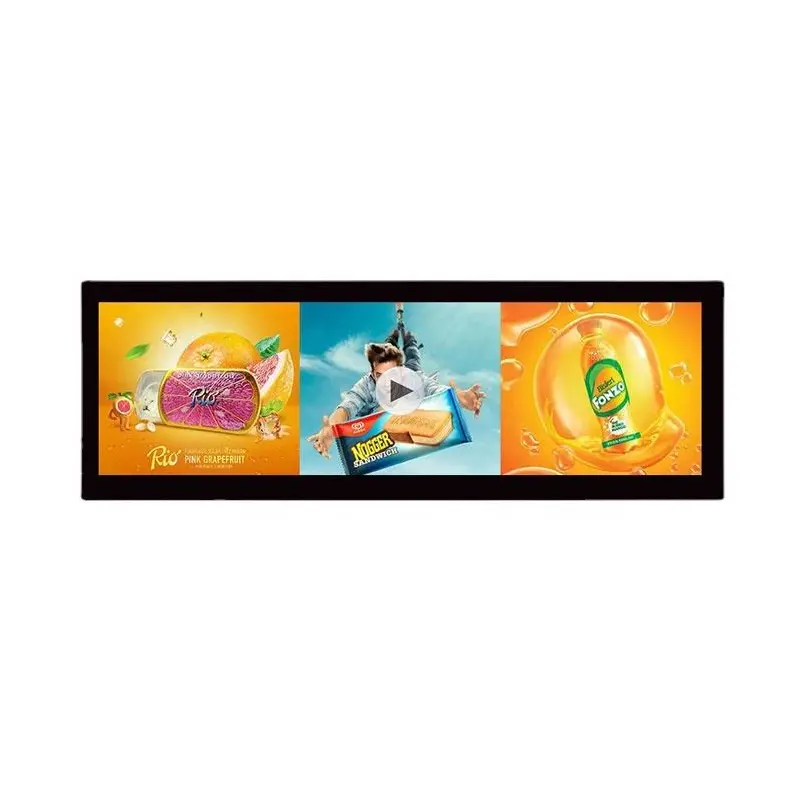
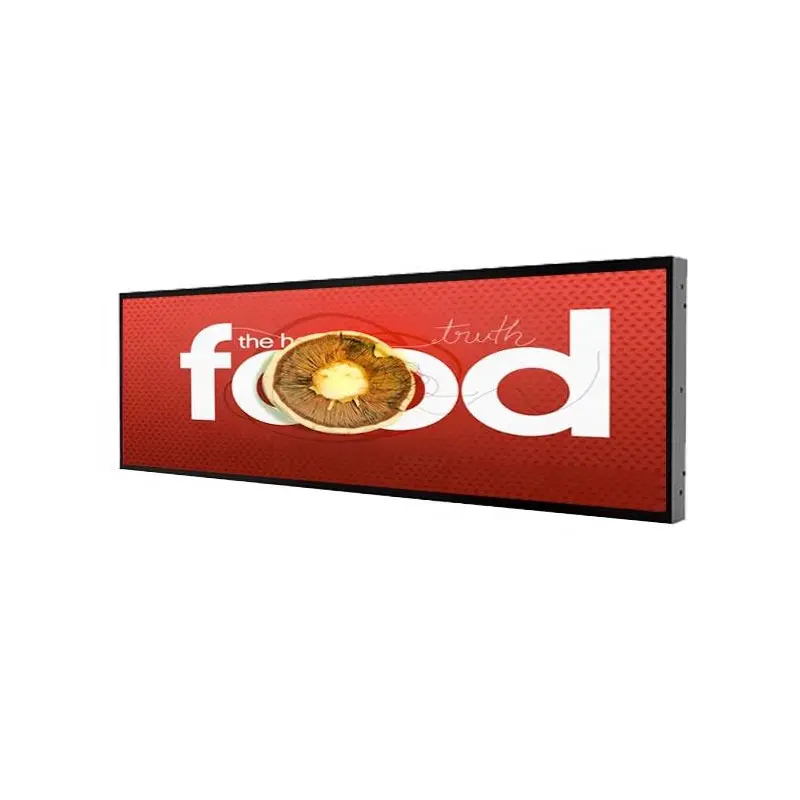
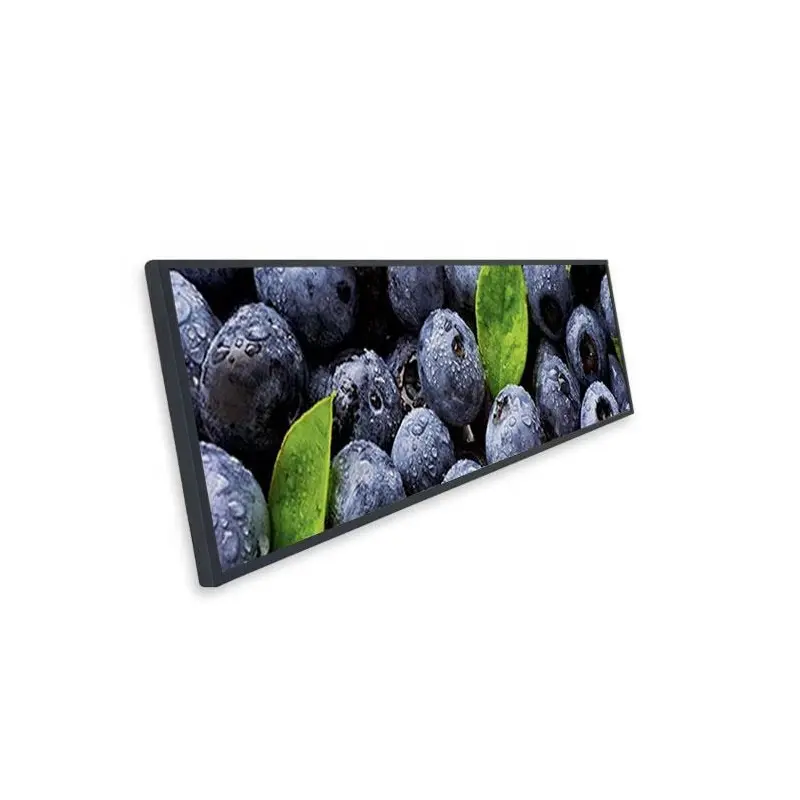
37 Inch Ultra Wide Ultra Stretch LCD Screen for Advertising
Model P/N
Size
Resolution
Brightness
Viewing Angle
Connector Type
Operating Temp
Overall(mm)
huisoar
HS037lcd01
Brand
Panel Size (inch)
Model P/N
Resolution
Brightness (nits)
Viewing Angle
Contrast Ratio
Response Time
Overall (mm)
Active Area (mm)
Refresh Rate
Display Colors
Panel Type
Connector Type
Operating Temp
Touchscreen Type
Storage Temp
Work Mode
Operating Environment
Designed For
37 Inch Ultra Wide Ultra Stretch LCD Screen for Advertising
This 37-inch ultra-wide TFT LCD screen combines a native 1920 × 540 canvas with 1500 cd/m² luminance for panoramic commercial advertising layouts.
An Ultra Wide Ultra Stretch LCD Screen is designed for visual spaces where a conventional 16:9 display creates unnecessary height or cannot align naturally with a long architectural opening. This 37-inch screen uses a 1920 × 540 raster with 1500 cd/m² luminance, 4000:1 contrast, 16.7M colors and wide viewing performance, giving advertising integrators a purpose-built platform for elongated promotional content.
Its value comes from the combination of panoramic geometry and commercial visibility rather than from treating it as a standard monitor with the picture simply cropped.
Product Summary
The display uses TFT LCD technology in a 37-inch format. Native resolution is 1920 × 540 pixels, while luminance is specified at 1500 cd/m².
A 4000:1 contrast ratio, 16.7M-color capability and 8 ms response time support promotional graphics, text bands and moving advertising content. Viewing data is specified at 89°/89°/89°/89° in right/left/up/down order.
Key Specifications
| Parameter | Confirmed value |
|---|---|
| Screen size | 37 inches |
| Technology | TFT LCD |
| Resolution | 1920 × 540 pixels |
| Luminance | 1500 cd/m² |
| Contrast ratio | 4000:1 |
| Display colors | 16.7M colors |
| Response time | 8 ms |
| Viewing angle | 89°/89°/89°/89° R/L/U/D |
| Screen outline | 1055 × 385 × 68 mm |
Panoramic Format for Commercial Advertising
Native 1920 × 540 Content Canvas
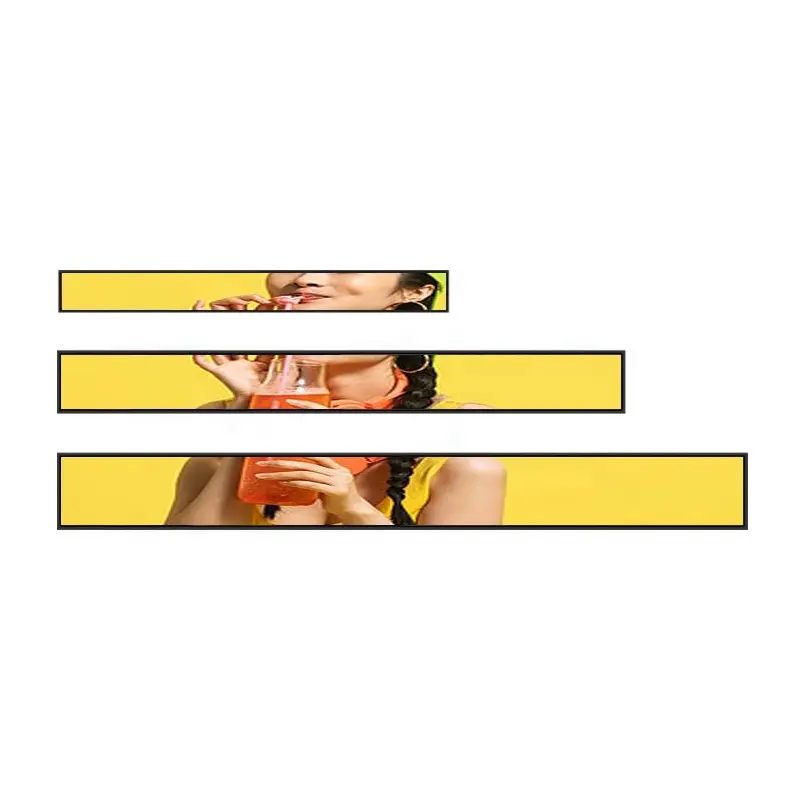
The 1920 × 540 raster creates a substantially wider visual canvas than a conventional widescreen format. That geometry is suitable for promotional strips, product campaigns, brand headers, menu bands and other layouts that benefit from horizontal sequencing.
Creative files should be prepared directly at the native raster whenever practical. Scaling a conventional 1920 × 1080 design into the same space can compress text, distort images or leave important visual elements outside the intended composition.
1500 cd/m² Visibility Boundary
Luminance is specified at 1500 cd/m², giving the screen a stronger optical starting point than ordinary low-brightness commercial monitors.
That value is useful when the installation has strong interior lighting or other demanding ambient-light conditions, but it should not automatically be converted into a sunlight-readable or outdoor rating. Front glass, reflections, screen position, heat load and actual site lighting all influence finished-system visibility.
Optical Performance for Public-Facing Content
4000:1 Contrast and 16.7M Colors
The 4000:1 contrast specification can support strong separation between text, graphical backgrounds and promotional imagery. Combined with 16.7M colors, the display can handle advertising layouts that mix brand colors, photographs, icons and high-contrast information zones.
The 8 ms response specification also makes the screen suitable for animated banners and changing promotional sequences without positioning the product as a specialist high-refresh video monitor.
Confirmed Wide Viewing Data
Viewing performance is specified at 89°/89°/89°/89° in right, left, up and down directions.
Wide viewing is particularly useful for elongated advertising screens because customers may approach the display from different positions rather than viewing it directly from the center. Installation testing should still account for front glass and mounting angle because the finished optical stack can affect perceived contrast.
Content Planning for the Ultra Wide Ultra Stretch LCD Screen
Avoid Scaling Standard 16:9 Artwork
The most important content decision is to treat 1920 × 540 as its own native format.
Rather than shrinking a conventional advertisement, designers can divide the long canvas into independent content zones. One region can carry the primary product message, another can show pricing or campaign information, and a third can present a call to action or supporting imagery.
This approach uses the horizontal format as an advantage instead of treating it as a limitation.
Design Text and Promotion Zones for Viewing Distance
Typography should be sized for the real installation distance, not simply for the pixel dimensions on a desktop design tool.
Long advertising screens often work best with short headlines, strong visual hierarchy and fewer simultaneous messages. Buyers evaluating the display should therefore review both the physical installation width and the intended content template before finalizing the screen location.
Mechanical Integration and Drawing Release
1055 × 385 × 68 mm Screen Envelope
The confirmed overall dimensions are 1055 × 385 × 68 mm.
These dimensions should be considered when planning the cabinet opening, rear clearance, mounting support and surrounding trim. The 68 mm depth is especially relevant where the screen must fit inside a shallow retail fixture or purpose-built advertising enclosure.
Mounting-hole positions and installation hardware still require confirmation before fabrication.
Active-Area Drawing Must Be Confirmed
The 885 × 315 mm active-area figure should not control tooling until an approved mechanical drawing is available.
Its proportions do not correspond closely enough to the native 1920 × 540 raster to release a front-window opening with confidence. The safest procurement route is to obtain the approved production drawing and verify active image area, bezel opening and outer enclosure separately before machining metalwork or glass.
The active image area and the complete screen envelope must be treated as separate mechanical boundaries.
Advertising Application Direction
The Ultra Wide Ultra Stretch LCD Screen is most relevant where a long advertising format creates more value than a standard rectangular display.
Retail and Promotional Headers
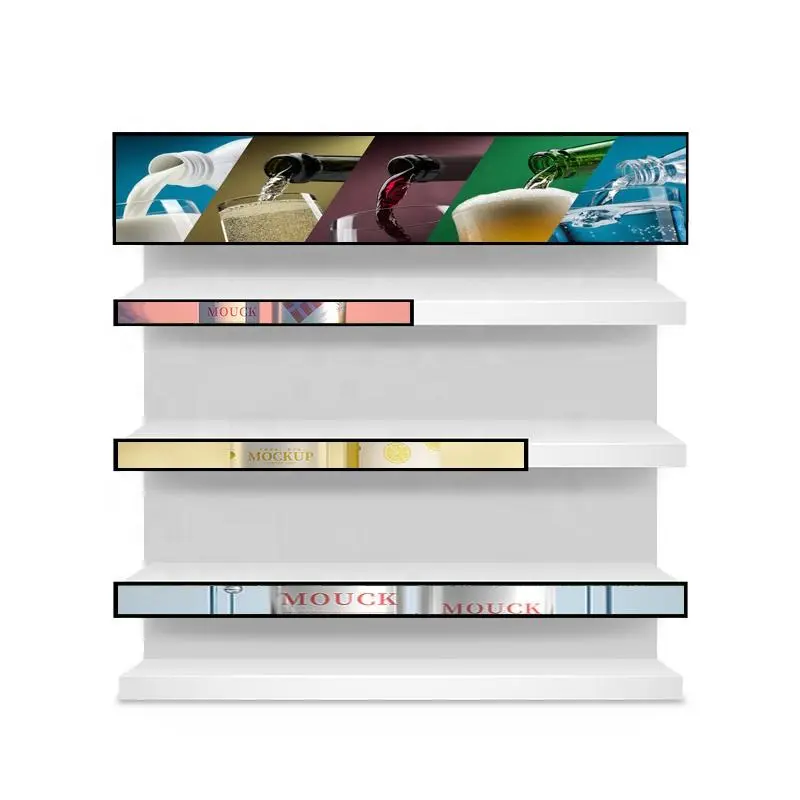
Potential projects include retail promotional bands, supermarket or showroom headers, branded product zones and commercial campaign displays. The long canvas allows multiple information blocks to sit across one continuous visual surface.
Menu, Message and Exhibition Displays
The same geometry can support menu strips, branded information bands and exhibition or showroom messaging where available vertical space is limited.
Application qualification should remain tied to the actual installation. Waterproofing, direct-sun use, transportation certification or another environmental grade should not be inferred from the optical specifications alone.
Customization and Integration Boundaries
Project review can cover enclosure finish, branding, mounting, signal-input requirements, media-player selection, touch requirements and mechanical adaptation.
Custom configurations are generally reviewed from 500 pieces, subject to tooling requirements, material availability and the requested specification. Sample and standard-unit quantities are confirmed separately.
Signal interfaces, input voltage, maximum power, operating system, touch configuration and environmental limits should be fixed in the ordered specification rather than assumed from the exterior screen appearance.
Procurement Checklist
Before sample approval, confirm the exact production revision; native 1920 × 540 content orientation; 1500 cd/m² luminance and tolerance; 4000:1 contrast; 16.7M-color definition; 8 ms response condition; 89°/89°/89°/89° R/L/U/D viewing condition; approved 1055 × 385 × 68 mm mechanical drawing; active image area and bezel opening; product net weight; native input signals and connectors; controller or media-player scope; input voltage and maximum power; mounting points; touch requirement; operating and storage conditions; front protection; sample quantity; and annual demand.
FAQ
About 37 Inch Ultra Wide Ultra Stretch LCD Screen
What should be confirmed before preparing 1920 × 540 advertising content?
Does 1500 cd/m² mean the screen is automatically sunlight readable?
Which dimensions should be used before releasing an enclosure?
What signal and player information should be submitted for integration?
When is a stretched screen preferable to a conventional 16:9 display?
Freya Yang
+86 18318948097