Freya Yang
+86 18318948097
+852 62667476
5.1 Inch Portrait AMOLED Display Module for HMI Embedded Prototypes
Model P/N
Size
Resolution
Brightness
Viewing Angle
Connector Type
Operating Temp
Overall(mm)
huisoar
HS051MIPI-V1
Brand
Panel Size (inch)
Model P/N
Resolution
Brightness (nits)
Viewing Angle
Response Time
Overall (mm)
Active Area (mm)
Refresh Rate
Display Colors
Panel Type
Connector Type
Operating Temp
Touchscreen Type
Storage Temp
Work Mode
Pixel Format
Input Voltage (V)
Operating Environment
Designed For
5.1 Inch Portrait AMOLED Display Module for HMI Embedded Prototypes
This slim 1080 × 1920 AMOLED panel supports native MIPI integration and an HDMI conversion board for compact interface evaluation.
Product Summary
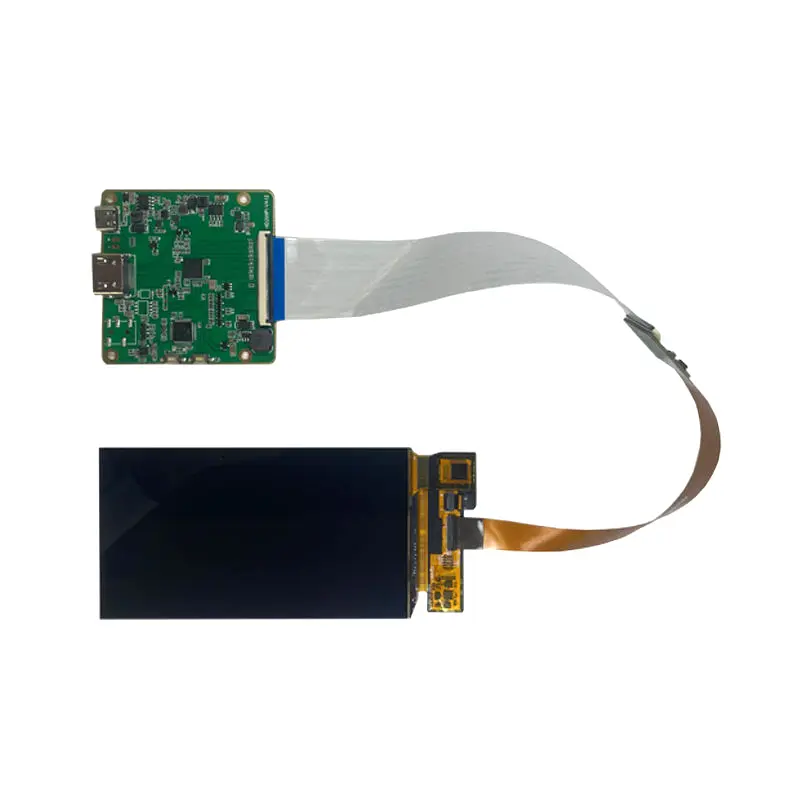
The Portrait AMOLED Display Module combines a 5.1-inch 1080 × 1920 panel with a compact HDMI-to-MIPI evaluation path. Its tall native raster provides detailed space for menus, operating data, status graphics, control zones, and mobile-style interface layouts without requiring a larger display footprint.
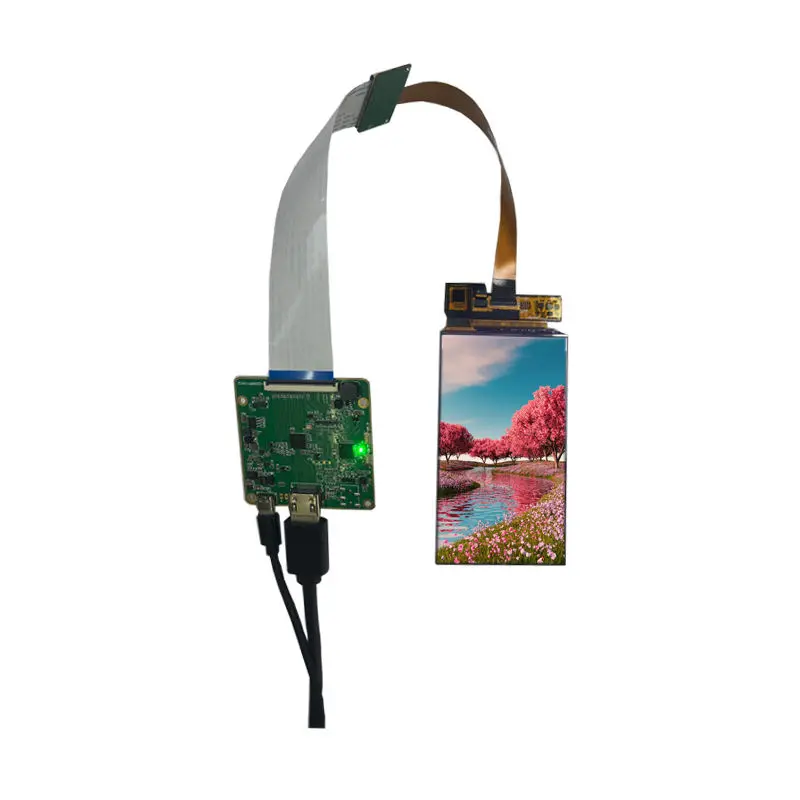
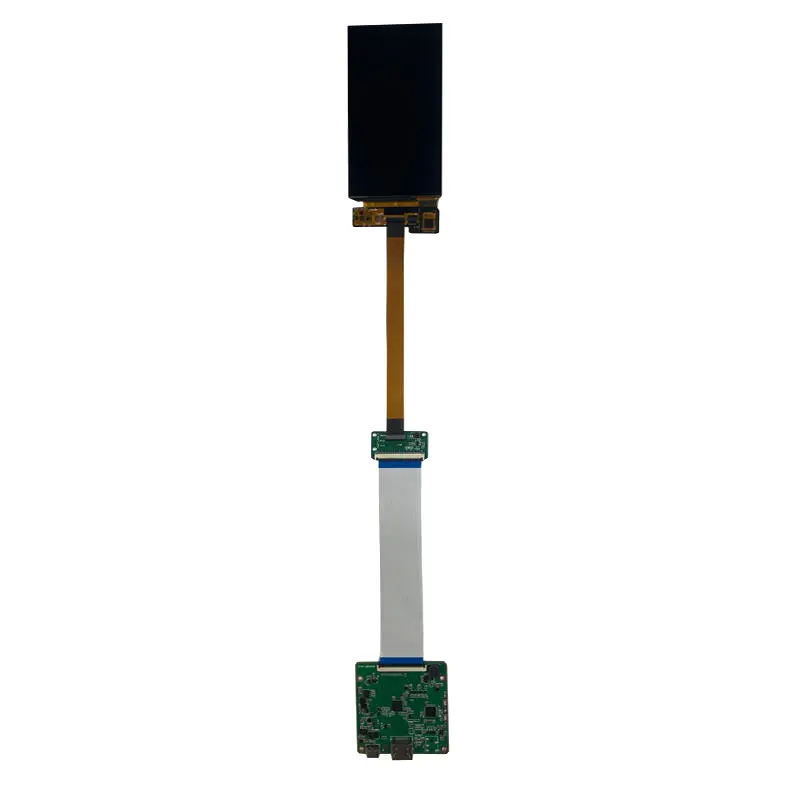
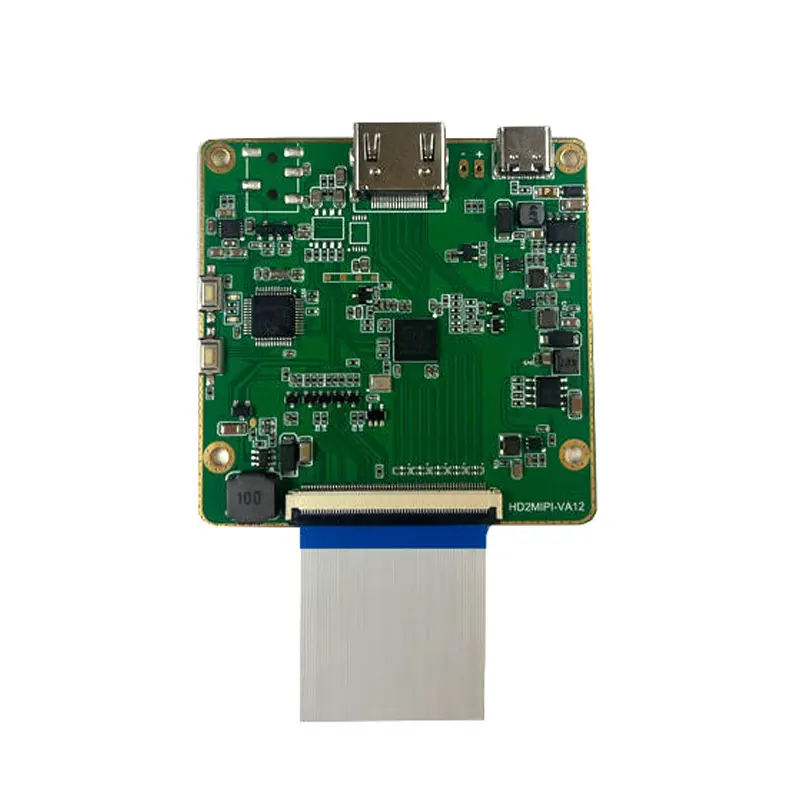
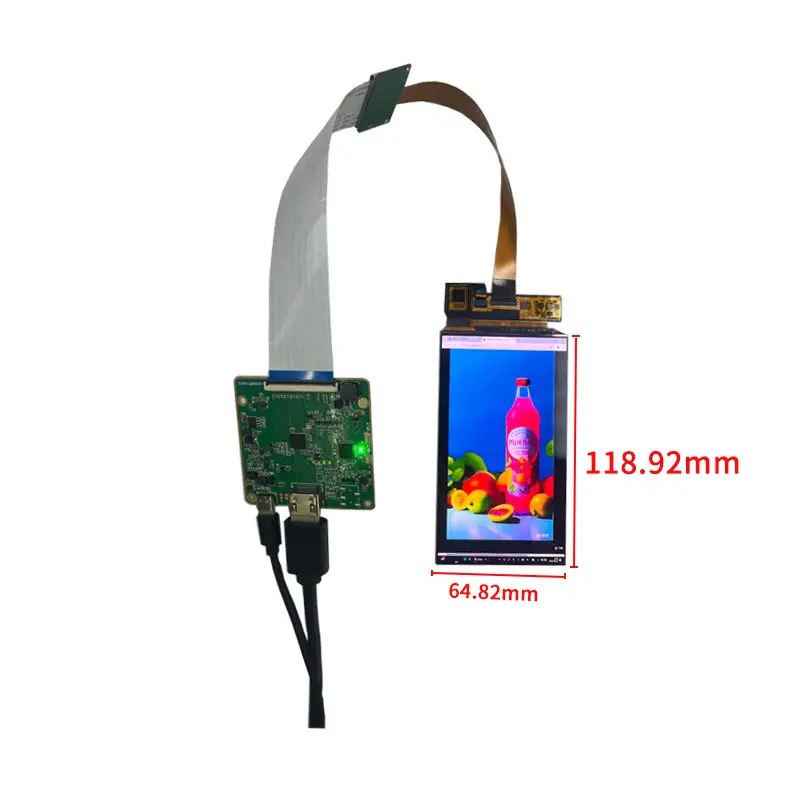
The selected panel provides 450 cd/m² luminance, a 64.82 × 116.29 mm active area, and a 64.82 × 118.92 × 0.85 mm outline. Native display communication is MIPI, while the associated evaluation board converts HDMI input for use with PCs, laptops, Raspberry Pi platforms, and other compatible video hosts.
This is a panel-and-controller evaluation configuration rather than a finished monitor. Touch, front glass, enclosure, mounting structure, audio, environmental sealing, and direct native-host compatibility must be confirmed separately.
Key Specifications
| Parameter | Confirmed Value |
|---|---|
| Display size | 5.1 inches |
| Native resolution | 1080 × 1920 pixels |
| Display technology | AMOLED |
| Luminance | 450 cd/m² |
| Viewing description | All-direction viewing wording |
| Active area | 64.82 × 116.29 mm |
| Panel outline | 64.82 × 118.92 × 0.85 mm |
| Native interface | MIPI |
| Listed driver IC | SH8801A |
| Evaluation board | MT-HDMI2MIPI-V1 |
| Host-video input | HDMI Type-A |
| Mapping mode | 1:1 pixel mapping |
| Board dimensions | 64 × 65 × 7.5 mm |
| Board power | Micro USB, 4.5–5 V / 500 mA |
| Native orientation | Portrait |
| Touch | Not confirmed |
Portrait UI and AMOLED Image Planning
Native 1080 × 1920 Interface Design
The native raster is 1080 pixels wide by 1920 pixels high. Interface assets should therefore be designed for portrait operation rather than rotated from a conventional landscape canvas. Native artwork preserves text sharpness, icon proportions, line weight, and the intended allocation of vertical interface zones.
The display can divide a compact HMI into status, visualization, menu, navigation, and alarm areas. UI validation should cover font size, viewing distance, operating posture, and the amount of information presented on one screen.
AMOLED Optical Behavior
AMOLED pixels emit their own light and do not require a conventional LCD backlight. This allows the panel to maintain its 0.85 mm-class structure and provide strong separation between illuminated and dark interface regions. Final appearance still depends on the selected color theme, front-cover reflections, bonding construction, and installation lighting.
Static interface duty, thermal conditions, and long-duration image patterns should be evaluated during product qualification rather than inferred from general AMOLED characteristics.
450 cd/m² Installation Boundary
The panel is listed at 450 cd/m². This value can support indoor HMIs, protected terminals, test systems, and controlled-light evaluation, but it does not establish direct-sun readability or outdoor suitability.
The finished product should be tested behind its final cover lens. Tinted glass, air gaps, surface reflections, optical adhesives, and viewing angle can all affect perceived readability.
Integrating the Portrait AMOLED Display Module
Native MIPI Qualification
Native integration requires more than confirming that both devices use MIPI.
A matching MIPI connector does not establish lane, mode, timing, voltage, pinout, or initialization compatibility.
Before connecting a native host, confirm:
- MIPI DSI lane count
- Command or video mode
- Native 1080 × 1920 timing
- Complete connector pin assignment
- Power and logic rails
- Reset and enable behavior
- Initialization commands
- FPC contact side and orientation
- SH8801A documentation
- Host display-controller capability
The HDMI conversion board is useful for evaluation, but it does not replace the documentation needed for direct processor-to-panel integration.
SH8801A Documentation Boundary
SH8801A is identified as the display driver IC. That part number alone does not establish a host initialization sequence, register table, panel power order, timing package, or firmware compatibility.
The same identifier is also repeated under a TP IC field. This duplicated label does not prove that the panel includes touch. No touch sensor, touch bus, cover lens, controller function, or touch cable is confirmed.
Touch is not confirmed for the selected configuration.
Portrait and Landscape Operation
The 1080 × 1920 raster operates in portrait mode by default. A Windows or laptop host can normally rotate the desktop through its display settings. Raspberry Pi landscape operation may require an approved timing or system configuration.
The 1080 × 1920 raster is portrait by default; landscape use requires host settings or an approved timing configuration.
Orientation should be fixed before the UI, enclosure, cable route, thermal layout, and mounting method are released.
HDMI-to-MIPI Evaluation Board
When to Use the Conversion Board
The MT-HDMI2MIPI-V1 board creates an accessible evaluation path for systems that provide HDMI rather than native MIPI DSI. It is useful for:
- PC-based interface evaluation
- Raspberry Pi display testing
- Prototype HMI demonstrations
- Image and orientation validation
- Enclosure mock-ups
- Production-screen inspection fixtures
The board is described with 1:1 pixel mapping and plug-and-play operation. Host OS, HDMI output mode, board firmware, panel adapter, and screen reference should still be recorded with the approved sample.
Power and Brightness-Control Limits
The evaluation board uses Micro USB power rated at 4.5–5 V / 500 mA. The panel’s individual voltage rails remain separate technical data and must be obtained from the approved panel documentation.
The board description identifies a brightness-control button but states that this hardware adjustment is not currently supported for AMOLED without customization.
Hardware brightness adjustment is not supported for this AMOLED configuration unless a customized control route is approved.
Do not assume that a button used with an LCD configuration will provide the same function with the AMOLED panel.
Mechanical and System Integration
Panel and Active-Area Fit
The active image measures 64.82 × 116.29 mm. The full panel outline is 64.82 × 118.92 × 0.85 mm.
The enclosure design should define:
- Visible opening
- Edge overlap
- FPC bend radius
- Adapter-board position
- Cable strain relief
- Panel support
- Front-cover clearance
- Service and replacement access
The thin AMOLED body must not carry enclosure loads or connector stress.
Board and Cable Clearance
The controller board measures 64 × 65 × 7.5 mm. Additional clearance is required for:
- HDMI connector and cable
- Micro USB power connection
- FFC and adapter boards
- Cable bend area
- Mounting holes
- Insulation and board standoffs
- Access to control buttons
The connected assembly is considerably deeper and wider than the 0.85 mm panel alone.
Included and Unconfirmed Items
The identified component route includes the HDMI-to-MIPI board, FFC and display-interface adapter. The exact order scope should confirm whether HDMI and Micro USB cables are supplied.
The following are not established as standard:
- Capacitive touch
- Cover glass
- Protective enclosure
- Audio hardware
- Mounting frame
- Native MIPI cable for a separate host
- Environmental sealing
- Production firmware package
Application Fit and Qualification Boundaries
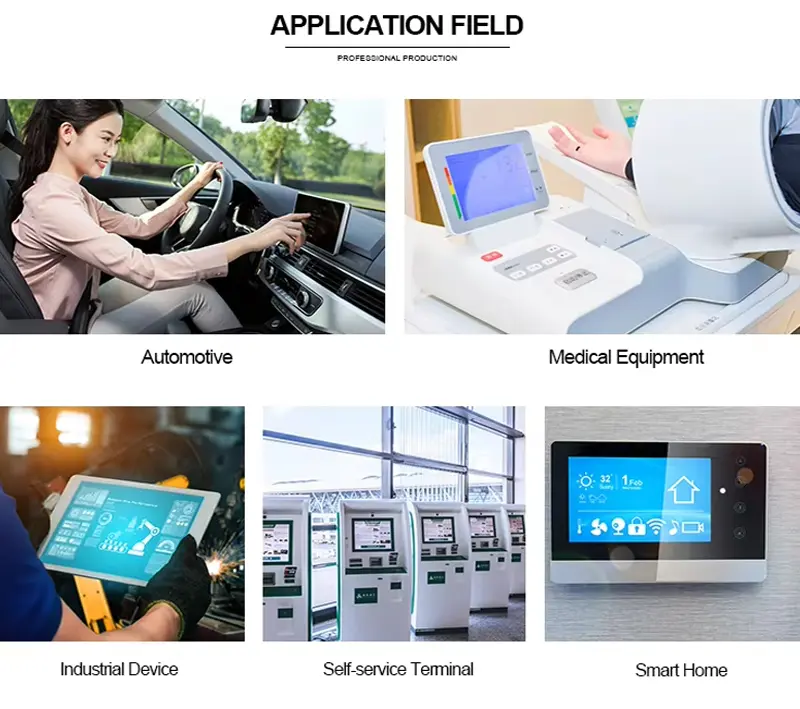
This Portrait AMOLED Display Module can be evaluated for compact embedded HMIs, smart terminals, equipment interfaces, 3D-printer controls, simulator panels, PC-based display fixtures, and Raspberry Pi prototypes.
The HDMI board provides a convenient development path where a native MIPI host is not yet available. Production integration may later continue through the conversion board or move to direct MIPI after lane, timing, voltage, pinout, initialization, and firmware qualification.
Vehicle-style, medical, outdoor, continuous-duty, or safety-related applications require complete finished-system validation. The panel size, AMOLED technology, or supplier category does not establish those grades.
Customization and Procurement
Drawing-based, sample-based, and full customization are available for review. Project scope may include:
- MIPI pin and lane definition
- FPC or FFC routing
- Adapter-board layout
- HDMI-to-MIPI firmware
- Portrait or landscape timing
- Brightness-control adaptation
- Cover lens
- Touch development
- Enclosure and mounting
- Branding and packaging
Custom configurations are generally reviewed from 500 pieces, subject to tooling requirements, material availability, and the requested specification. Sample and standard-kit quantities are confirmed separately.
Procurement Checklist
Confirm these items before sample approval or production release:
- Approved HS051MIPI-V1 documentation
- MTL051FD03A-V1 panel label and drawing
- MT-HDMI2MIPI-V1 board revision
- Native 1080 × 1920 timing
- MIPI DSI lane count and mode
- Complete connector pinout
- Panel power and logic rails
- Initialization and reset package
- SH8801A technical documentation
- HDMI host resolution and operating system
- Board firmware and 1:1 mapping
- Portrait or landscape operation
- Micro USB 4.5–5 V / 500 mA power
- Board-output and adapter wiring
- 64.82 × 116.29 mm visible opening
- 64.82 × 118.92 × 0.85 mm panel fit
- 64 × 65 × 7.5 mm board clearance
- FPC and FFC bend space
- Brightness-control requirement
- Touch status and interface
- Cover lens and front protection
- Included cable scope
- Sample criteria
- Order quantity and annual demand
FAQ
About 5.1 Inch Portrait AMOLED Display Module
What must be confirmed before connecting the panel directly to a MIPI host?
When should the HDMI-to-MIPI board be selected instead of native MIPI integration?
How should portrait and landscape operation be planned?
Does this configuration include capacitive touch?
Can the board button adjust AMOLED brightness?
What is the typical lead time for custom Mini LED display modules in quantities of 500-1000 units?
Since this page does not specify lead times for the HS051MIPI-V1 or other Mini LED products, we recommend contacting our sales team with your exact requirements to receive a confirmed schedule. We can provide a detailed timeline based on your order quantity, customization needs, and current production capacity.
What are the brightness levels available for industrial displays, and can you customize beyond 1500 nits?
Our industrial displays are available with brightness levels up to 1500 nits, and we can customize beyond that for specific sunlight-readable applications. For higher brightness, we typically use enhanced backlight units or optical bonding to reduce reflection. Please contact us with your target brightness and environmental conditions, and we will assess the feasibility and provide a tailored solution. Note that higher brightness may impact power consumption and thermal management.
Do you offer displays with high refresh rates (e.g., 120Hz) for smooth graphics in transportation information systems?
While this page does not list a high refresh rate option, our standard 5.1-inch AMOLED module (HS051MIPI-V1) operates at 60Hz, which is suitable for many HMI and information display applications. For transportation information systems requiring smoother graphics, higher refresh rates such as 120Hz are possible on select AMOLED panels, but availability depends on the specific panel and interface. We recommend evaluating your content and motion requirements; if 120Hz is essential, please contact us to discuss compatible panel options and feasibility. We can confirm exact refresh rate capabilities and lead times upon request.
Can you integrate a touch controller and provide a fully assembled display module?
The HS051MIPI-V1 module as listed is a non-touch panel with a MIPI DSI interface. However, we can integrate a touch controller and provide a fully assembled display module, including cover glass, touch panel, and controller board, as a customization service. This would require additional engineering and validation to ensure compatibility and performance. Please contact our sales team with your specifications so we can propose a suitable configuration and provide a confirmed quotation and lead time.
What are the packaging options for shipping and handling of fragile LCD panels?
For shipping fragile LCD panels, we use anti-static bags, foam padding, and rigid cartons designed to withstand impact and vibration. Each panel is individually wrapped and placed in a custom-cut foam insert. For international shipments, we use wooden or reinforced boxes with proper cushioning. We also offer moisture barrier packaging for long-term storage. Please confirm your shipping destination and volume, and we will provide a packaging plan that meets your handling requirements.
Freya Yang
+86 18318948097