Freya Yang
+86 18318948097
+852 62667476
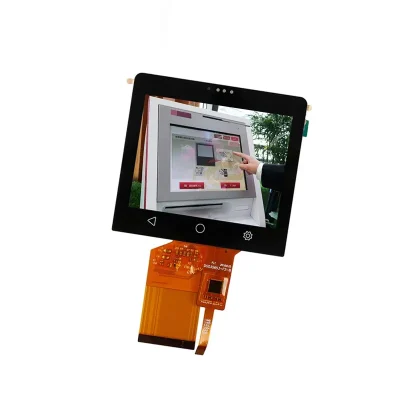
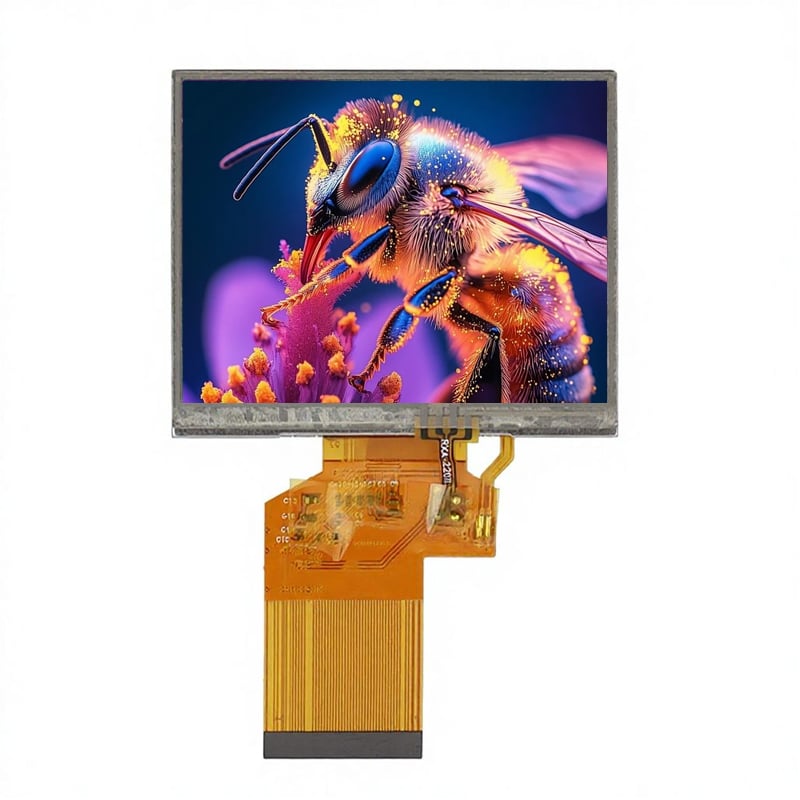
Embedded Touch LCD Module 3.5 Inch RGB Resistive Display For RGB Controller Boards


Model P/N
Size
Resolution
Brightness
Viewing Angle
Connector Type
Operating Temp
Overall(mm)
huisoar
HS035R06C30-C00
Brand
Panel Size (inch)
Model P/N
Resolution
Brightness (nits)
Viewing Angle
Contrast Ratio
Response Time
Overall (mm)
Active Area (mm)
Refresh Rate
Display Colors
Panel Type
Connector Type
Surface Treatment
Operating Temp
Touchscreen Type
Storage Temp
Work Mode
Pixel Format
Input Voltage (V)
Touch Interface
Control Type
Designed For
3.5-Inch 320×240 TN TFT with 4-Wire Resistive Touch and 54-Pin FPC
An Embedded Touch LCD Module is a 3.5-inch 320×240 TN TFT display with 4-wire resistive touch for compact HMI, POS, handheld, medical and smart-device control panels. It combines 24-bit RGB input, a 54-pin FPC, 300 cd/m² typical luminance, 300:1 contrast, 70.08 × 52.56 mm active area, and -20°C to +70°C operation for cost-sensitive embedded systems.
At a Glance: 3.5-Inch RGB Resistive TFT Highlights
- 3.5-inch display size fits compact control panels, handheld terminals, and small embedded products.
- 320×240 resolution supports menus, icons, measurement data, simple graphics, and status screens.
- 4-wire resistive touch supports finger, stylus, and glove-based operation.
- RGB 24-bit parallel interface with 54-pin FPC supports direct embedded controller integration.
- 300 cd/m² typical luminance is suitable for many indoor control and terminal environments.
- -20°C to +70°C operating range supports broader deployment than narrow consumer-only modules.
- 6-chip WLED backlight and listed 50,000-hour lifetime support long-use equipment planning.
Product Overview of the Embedded Touch LCD Module
The Embedded Touch LCD Module is designed for small devices that need both display output and direct user input without moving to a large HMI screen. Its 3.5-inch format is large enough for compact menus, machine states, POS prompts, medical readings, configuration pages, and smart-device controls, while remaining small enough for constrained housings.
The 320×240 resolution is a practical choice for controller-driven products. It reduces content-processing load compared with higher-resolution panels while still supporting clear button labels, status icons, and compact visual layouts. For product teams building embedded equipment, this helps balance cost, display clarity, interface complexity, and system performance.
The module uses a TN normally white transmissive TFT structure with a resistive touch panel. This makes it especially relevant for industrial and commercial environments where operators may use gloves, stylus input, or firm touch pressure. Final system performance still depends on controller timing, front-window structure, touch calibration, FPC routing, and mechanical fit.
Key Features of the Embedded Touch LCD Module
| Feature | B2B Value |
|---|---|
| 3.5-inch compact size | Fits handheld equipment, POS terminals, medical instruments, and compact HMI panels. |
| 320×240 resolution | Supports efficient UI layouts without excessive controller processing load. |
| 4-wire resistive touch | Enables practical touch input with finger, glove, or stylus operation. |
| RGB 24-bit parallel interface | Fits embedded controller boards that require direct RGB display control. |
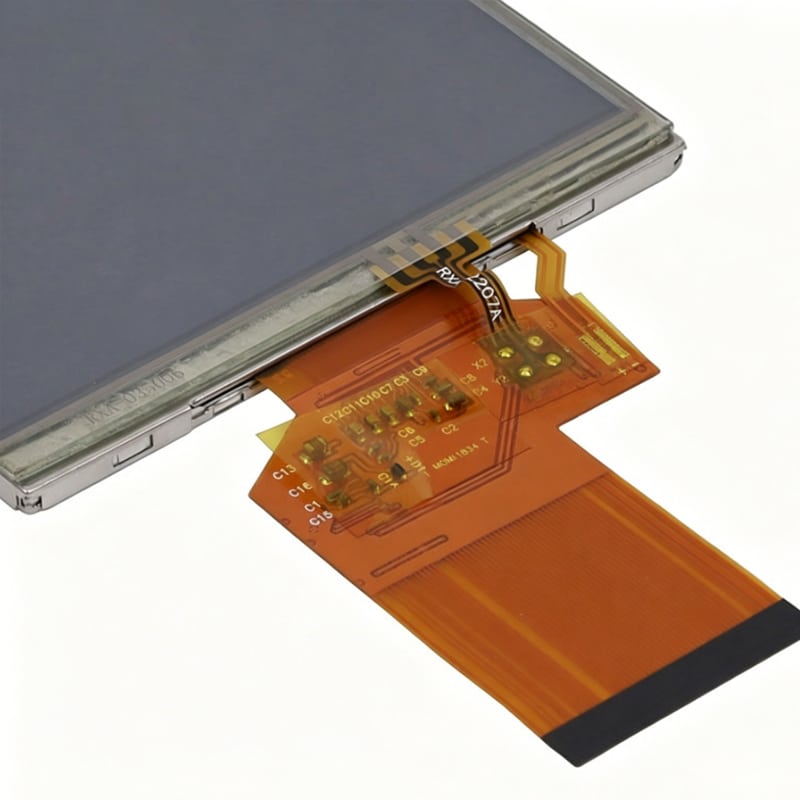
| 54-pin FPC | Provides a defined connector route for hardware and harness planning. |
| 300 cd/m² luminance | Supports clear indoor visibility for terminals and control interfaces. |
| 300:1 contrast ratio | Provides a workable contrast base for text, icons, and simple graphics. |
| 25 ms response time | Supports stable user-interface display behavior for control screens. |
| -20°C to +70°C operation | Helps systems operate across broader equipment environments. |
| 6-chip WLED backlight | Supports uniform illumination planning for compact display assemblies. |
Technical Specifications of the 3.5-Inch RGB TFT Touch Module
| Specification | Confirmed Value |
|---|---|
| Display Size | 3.5 inch |
| Resolution | 320 × 240 / 320RGB × 240 |
| Display Mode | TN, normally white, transmissive TFT |
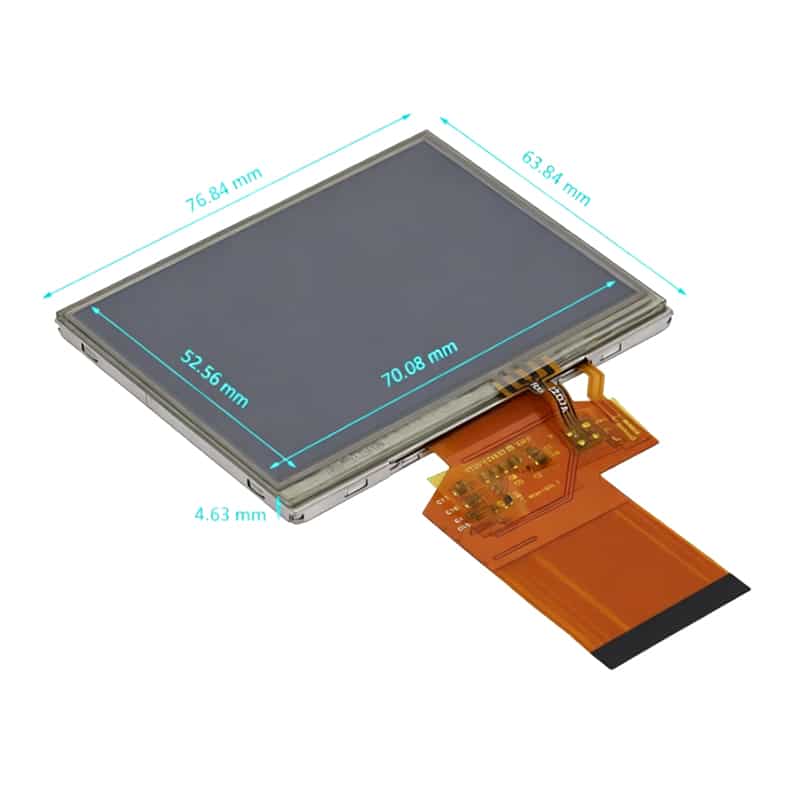
| Active Area | 70.08 × 52.56 mm |
| Outline Size | 76.84 × 63.84 mm; thickness value requires drawing confirmation |
| Luminance | 300 cd/m² typical |
| Contrast Ratio | 300:1 typical |
| Viewing Direction | 70/70/50/70 typical |
| Interface | RGB 24-bit parallel, FPC 54 pins |
| Touch Type | 4-wire resistive touch panel |
| Operating Temperature | -20°C ~ +70°C |
| Storage Temperature | -30°C ~ +80°C |
This public specification table keeps only confirmed high-value values. The thickness should be confirmed before tooling because the provided material lists both 3.25 mm and 4.63 mm in different places.
Why Choose This 3.5-Inch Module for Embedded Control?
320×240 Layout for Compact HMI Screens
The 320×240 format is useful for control interfaces that need a clear but lightweight UI. It can show menus, numeric readings, alarm states, soft keys, configuration prompts, and simple diagrams without requiring a large display processor. This makes it suitable for lower-cost control boards and compact products.
Resistive Touch for Glove and Stylus Operation
Resistive touch remains useful when the operator may wear gloves, use a stylus, or work in environments where capacitive touch is not the most practical choice. For an Embedded Touch LCD Module used in an industrial terminal or medical instrument, the 4-wire RTP structure can support controlled, deliberate input instead of gesture-heavy interaction.
Cost-Effective TN TFT Structure
A TN normally white TFT panel is often selected when cost, availability, and straightforward display behavior matter more than premium viewing-angle performance. The 70/70/50/70 viewing direction should be checked against the final mounting angle, especially for wall panels, tabletop instruments, or handheld products.
300 cd/m² Display Performance and Viewing Checks
The 300 cd/m² typical luminance is suitable for many indoor embedded products, POS terminals, smart home controls, and instrument panels. It is not positioned as a sunlight-readable module, so outdoor or high-ambient-light projects should request brightness and cover-lens evaluation before approval.
For late-stage validation, an Embedded Touch LCD Module should be tested with the final cover lens, bezel opening, UI color palette, and viewing distance. The TN viewing angle and 300:1 contrast ratio can be acceptable for many fixed-angle products, but they should be validated in the actual enclosure instead of only from the datasheet.
RGB 54-Pin FPC and Mechanical Integration Notes
The RGB 24-bit parallel interface provides direct display control for embedded boards that support RGB timing. Engineers should confirm the 54-pin FPC pinout, pixel clock, sync signals, data mapping, power rails, and touch-panel routing before final PCB layout.
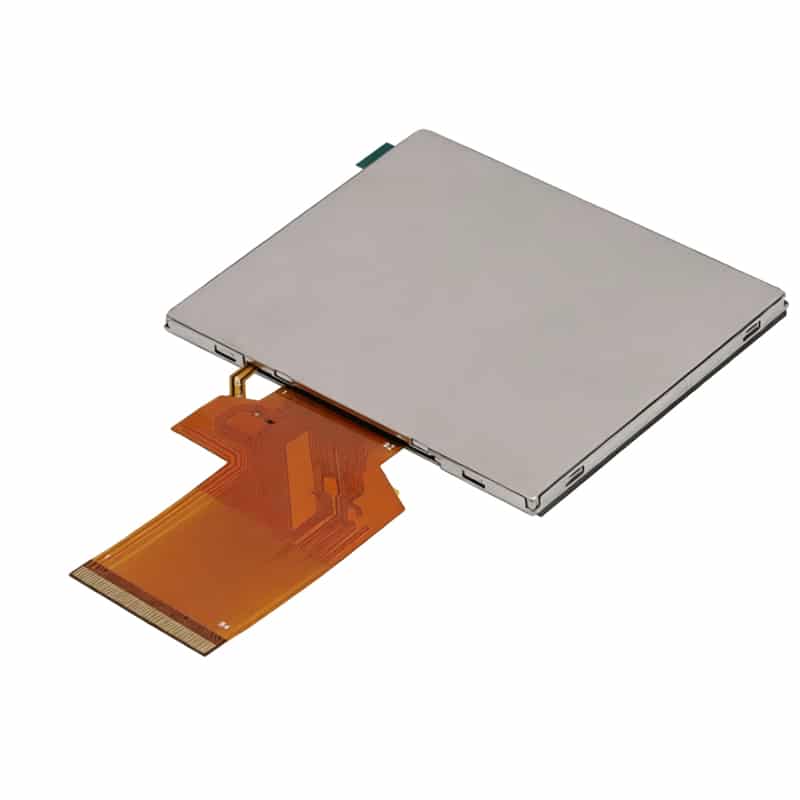
Mechanical design should start with the 70.08 × 52.56 mm active area and 76.84 × 63.84 mm outline. The touch panel view area, touch outline, FPC bending direction, connector position, adhesive border, enclosure tolerance, and display thickness must be checked together. Since the source values conflict on thickness, the official drawing should control the final housing design.
Recommended Applications for Compact Embedded Devices
Industrial Control Panels
Industrial equipment can use this display for mode selection, machine status, alarm messages, and local configuration. Resistive touch supports deliberate operator input, including stylus and glove use.
POS and Payment Terminals
POS systems often need a compact color display for menus, prompts, transaction status, and confirmation screens. The 3.5-inch size and RGB interface can fit embedded payment or service terminals.
Medical Instruments
Medical and diagnostic instruments can use the display for values, prompts, mode selection, and warning states. Final projects should verify cleaning requirements, touch durability, regulatory expectations, and enclosure protection.
Smart Home and Compact Control Devices
Smart home panels, appliance controllers, and small IoT terminals can use the module for local control, settings, and status pages. The display is most suitable when the UI is simple, stable, and optimized for 320×240 resolution.
Customization Options for RGB Resistive Touch Projects
Project evaluation can include FPC customization, 54-pin pinout and timing review, brightness and backlight adjustment, resistive touchscreen stack review, cover or glass evaluation, mechanical drawing adaptation, packaging, sample validation, and controller-board support. Customization should be based on the exact enclosure, target UI, input method, and order quantity.
Procurement and Engineering Checklist
- Confirm the 320×240 UI layout using real icons, text size, and button spacing.
- Verify RGB 24-bit host support, timing, sync signals, and 54-pin FPC pinout.
- Check touch-panel routing, 4-wire RTP calibration, and required input method.
- Confirm active area, outline, touch view area, thickness, and bezel opening before tooling.
- Validate 300 cd/m² brightness with the final cover lens and enclosure.
- Review TN viewing direction against the final mounting position.
- Confirm backlight drive requirements, including 6-chip WLED and 19.8V/20mA data.
- Approve samples under actual operating temperature, touch, and user-interface conditions.
FAQ
About Embedded Touch LCD Module Integration
Is this Embedded Touch LCD Module suitable for industrial HMI use?
What interface does the display use?
Is the touch panel capacitive or resistive?
What brightness level is listed?
Which thickness should be used for enclosure design?
Can this module be customized?
What products can use this module?
Freya Yang
+86 18318948097