
~
~
~
~
~
~
B156HAK02.1 HW1B FreeSync Windows Touch LCM Glare 15.6in AUO

Model P/N
Size
Resolution
Brightness
Viewing Angle
Connector Type
Operating Temp
Overall(mm)
auo
B156HAK02.1 HW1B
Brand
Panel Size (inch)
Model P/N
Resolution
Brightness (nits)
Viewing Angle
Contrast Ratio
Response Time
Overall (mm)
Active Area (mm)
Refresh Rate
Display Colors
Panel Type
Connector Type
Surface Treatment
Operating Temp
Touchscreen Type
Storage Temp
Work Mode
Pixel Format
Input Voltage (V)
Touch Interface
Vibration Resistance
Weight (g)
Designed For
Product Details
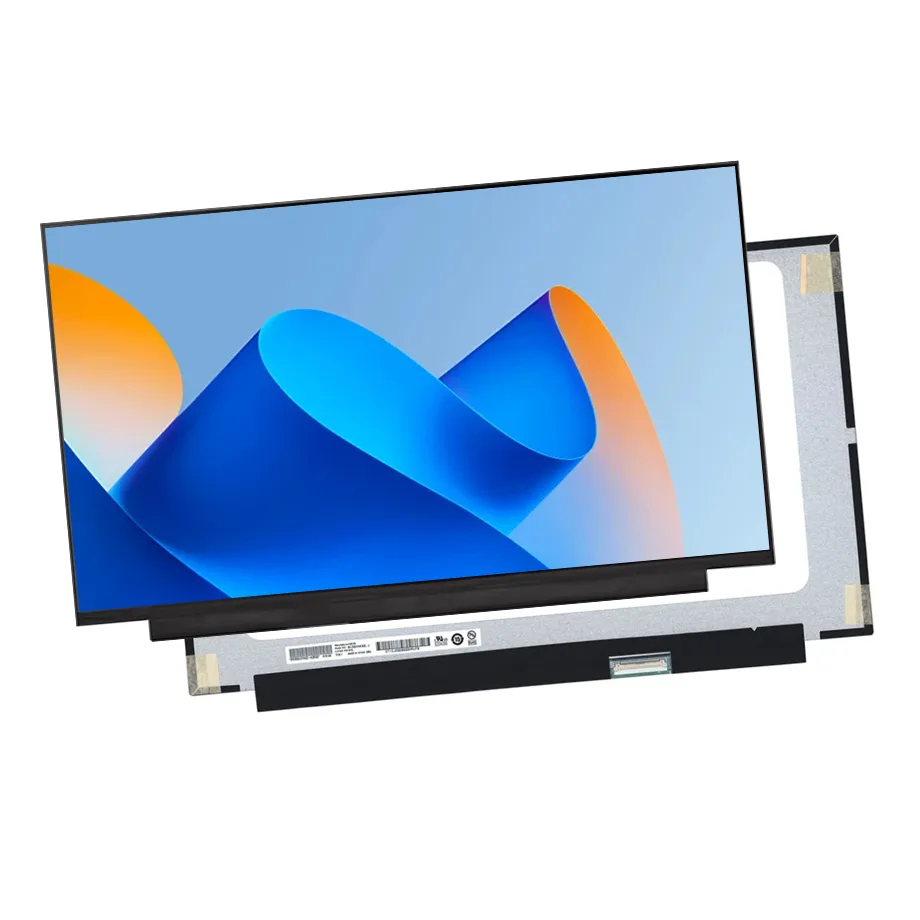
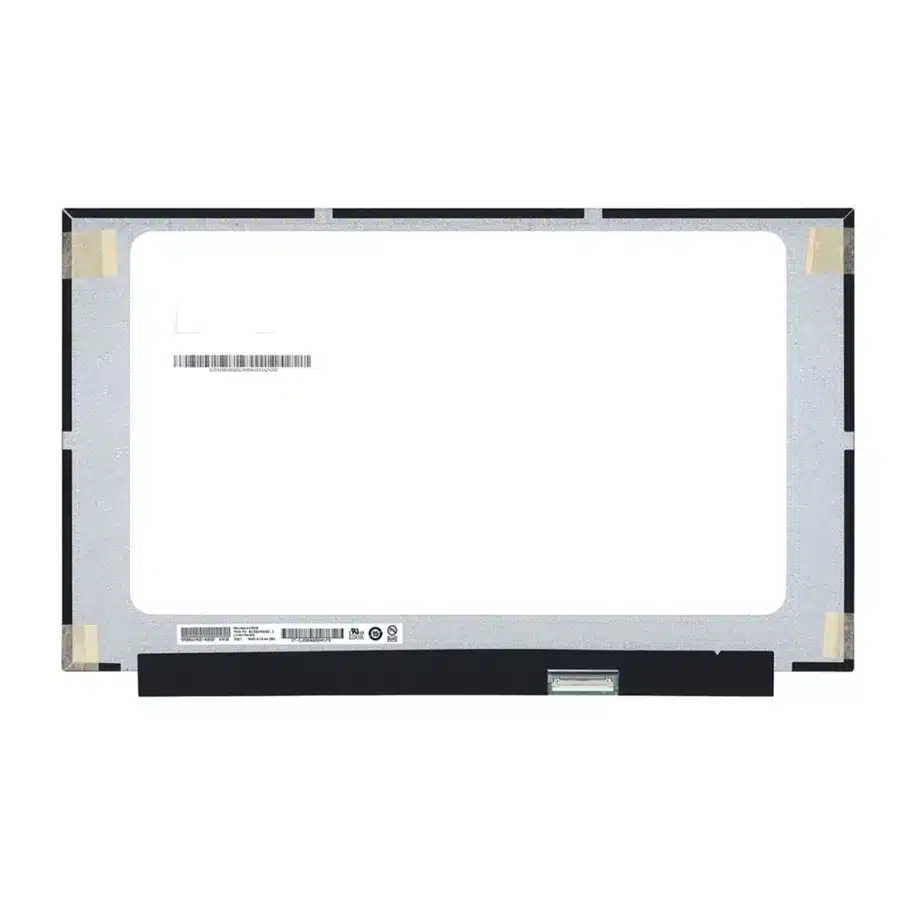
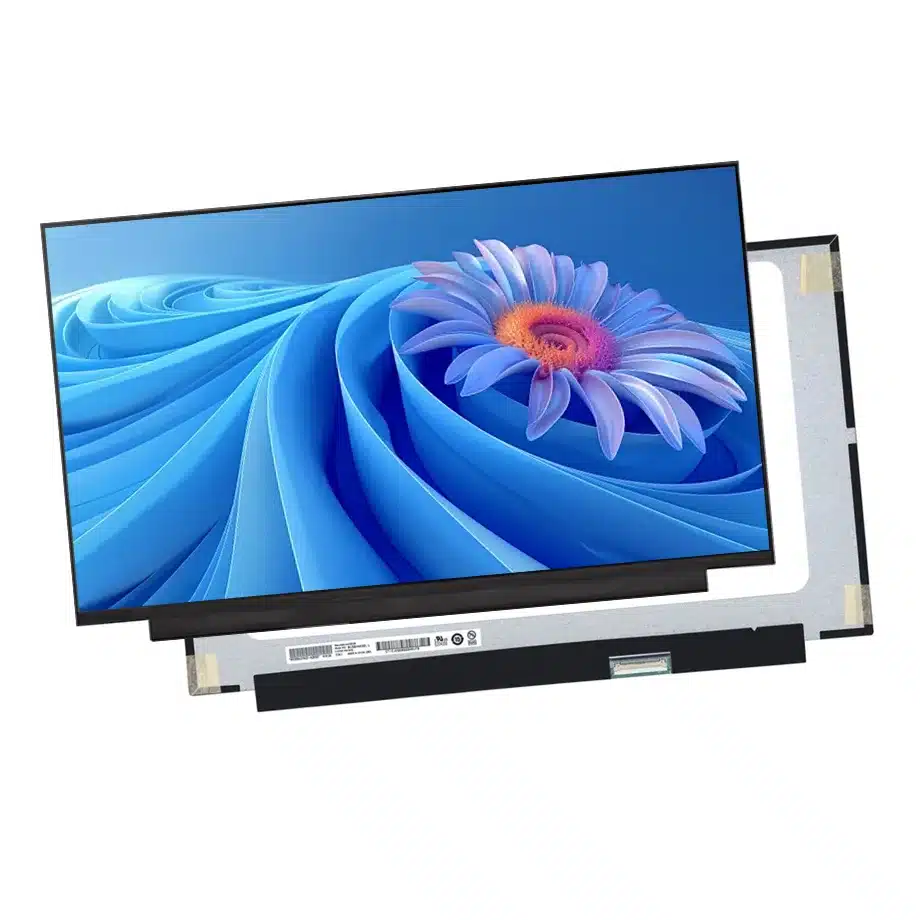
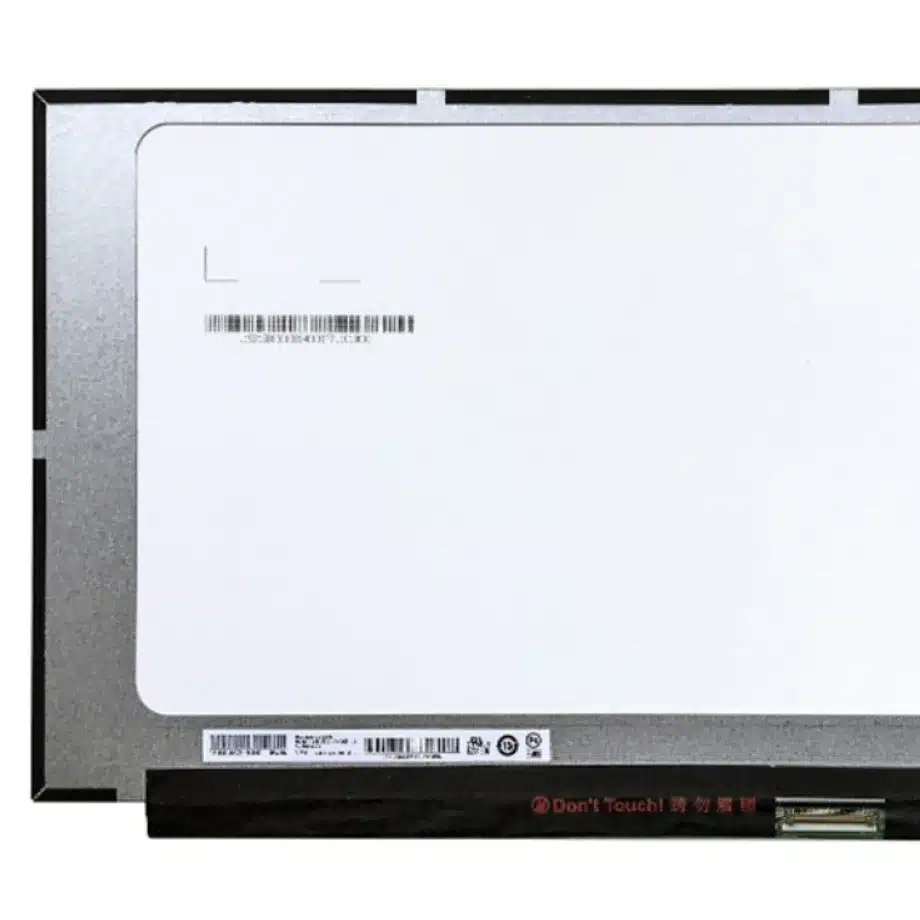
B156HAK02.1 HW1B FreeSync Windows Touch LCM is a 15.6-inch AUO a-Si TFT-LCD module that combines a 1920×1080 FHD image with integrated On-Cell Touch and an I²C touch interface. The display path is eDP 1.2 over two lanes through a 40-pin 0.5 mm connector, while the panel supply is 3.3 V typical. This configuration makes touch architecture part of the replacement decision: matching the video connector alone is not enough, because the host also has to support the touch path, cable allocation, firmware/OS behavior, and mechanical stack.
The supplied screen data identifies AHVA, normally-black, transmissive operation, a glossy surface, 250 cd/m² typical luminance, 800:1 typical contrast, and 60 Hz refresh with AMD FreeSync wording. Display color is supplied as 262K with 45% NTSC wording. Those values are preserved as current-run facts even where other public sources may report a different color-depth variant; the approved row data remains authoritative for this product record.
Why is touch the first qualification question?
An On-Cell Touch module integrates the touch sensing function differently from a non-touch LCD plus external overlay. For B156HAK02.1 HW1B, the touch interface is I²C and the source wording references Windows 8/10 use. A replacement therefore needs more than a 40-pin physical match. The host cable must carry the required touch signals, the platform must expose a compatible I²C path, and system firmware/software must recognize the device as intended.
Do not assume that another B156 panel or a non-touch 15.6-inch FHD screen can substitute directly. Touch versus no-touch can change cable pin allocation, connector use, stack thickness, glass/sensor construction, power expectations, and OS interaction. Conversely, a replacement marketed as “touch compatible” still requires exact electrical and mechanical comparison with this module.
Three buyer value propositions
Integrated touch reduces the need to qualify a separate overlay stack
The confirmed On-Cell Touch architecture means touch is part of the module's approved configuration rather than an assumed accessory. That can simplify a like-for-like service path because the buyer can specify one exact display identity. The boundary is host support: I²C routing, firmware, drivers, cable mapping, and operating-system behavior remain system-level dependencies that must be tested.
FHD timing and two-lane eDP define a clear video-side target
The panel uses 1920×1080 native resolution at 60 Hz and a two-lane eDP 1.2 interface. Those facts let engineers screen graphics-link compatibility before physical installation. They do not prove that every 40-pin touch cable or eDP controller is suitable; pinout, link rate, AUX behavior, backlight control, and touch-channel mapping still need the exact documentation.
Known outline dimensions support controlled service replacement
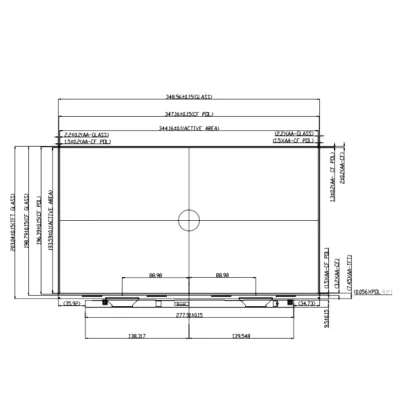
The 350.66 × 216.15 × 3.4 mm outline, 344.16 × 193.59 mm active area, and 370 g maximum mass are useful for a chassis-fit review. A buyer can compare those values with the original assembly before ordering samples. Mounting features, connector location, bezel pressure, cable fold, and touch-sensor stack must still be checked from the drawing rather than inferred from diagonal size.
Key Specifications at a Glance
| Specification | Approved value |
|---|---|
| Manufacturer / Model | AUO B156HAK02.1 HW1B |
| Display type | a-Si TFT-LCD, LCM |
| Diagonal size | 15.6 inch |
| Native resolution | 1920(RGB)×1080, 16:9, FHD |
| Active area | 344.16×193.59 mm (H×V) |
| Outline | 350.66×216.15×3.4 mm (H×V×D) |
| Brightness | 250 cd/m² (Typ.) |
| Contrast ratio | 800:1 (Typ.) |
| Viewing angle | 85/85/85/85 (Typ.)(CR≥10) |
| Response time | 25 ms (Typ.)(Tr+Td) |
| Color | 262K, 45% NTSC |
| Refresh rate | 60 Hz, AMD FreeSync |
| Native interface | eDP (2 Lanes), eDP1.2, 40-pin 0.5 mm connector |
| Panel supply | 3.3 V (Typ.) |
| Operating temperature | 0 ~ 50 °C |
| Storage temperature | -20 ~ 60 °C |
| Touch | On-Cell Touch; I²C |
How should the video and touch paths be validated separately?
For video, verify two-lane eDP 1.2, native FHD timing, the 40-pin 0.5 mm connector, 3.3 V supply, and the exact pin mapping. For touch, verify the I²C signals, power/ground allocation, interrupt or reset requirements where documented, host-controller support, and the intended Windows integration. Keeping the two paths separate during debugging makes it easier to identify whether a failure is link-related, touch-related, cable-related, or software-related.
VESA's VESA embedded display interface context provides standards background on eDP as an embedded interface for notebook-class systems. That reference helps explain the video-link architecture, but it does not document this AUO module's touch protocol or pinout. Use exact-model material for implementation details.
AUO's AUO notebook display portfolio discusses notebook display technologies and identifies on-cell/in-cell touch approaches at the portfolio level. It supports the broader notebook-touch context. This page does not transfer optional portfolio features, cover-glass specifications, bonding methods, or certifications onto B156HAK02.1 HW1B unless they are separately evidenced.
What do the optical limits mean in practice?
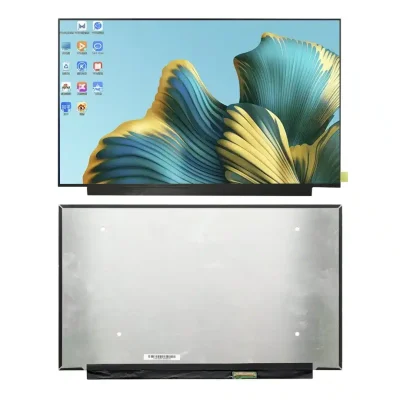
B156HAK02.1 HW1B FreeSync Windows Touch LCM is specified at 250 cd/m² typical luminance with a glossy Haze 0% surface. In a notebook, that combination can be appropriate for controlled indoor environments, but it is not evidence of sunlight-readable performance. Reflections, cover layers, ambient lighting, brightness-control range, and panel aging influence the user's final visual experience. Projects with strong-light requirements should define an assembled-system visibility target and test it directly.
The AHVA normally-black transmissive mode and 85/85/85/85 viewing-angle figures support wide-angle viewing. The supplied 800:1 typical contrast and 25 ms Tr+Td response are panel-level metrics, not whole-device guarantees. FreeSync wording is present in the source, but adaptive-refresh behavior requires compatible host graphics, timing, firmware, and software. Do not market the panel as a complete variable-refresh solution without confirming the finished platform.
Color information deserves particular discipline on this model. The current row explicitly supplies 262K and 45% NTSC. That value is therefore retained even though other public listings can contain alternative color-depth wording for similarly named hardware. The production record should not silently replace a user-locked value with an external specification. If the buyer's project depends on a different color-depth configuration, the correct action is to resolve the exact hardware revision, not to blend sources.
When should B156HAK02.1 HW1B FreeSync Windows Touch LCM be used for a touchscreen replacement?
The strongest case is a like-for-like replacement where the original system already uses B156HAK02.1 HW1B. For a new design or cross-model substitution, require a full interchange review. The exact-model evidence identifies laptop use and integrated touch; same-model marketplace listings also position it as a replacement notebook screen. That evidence does not establish compatibility with every laptop that accepts a 15.6-inch FHD display.
Check the 350.66 mm width, 216.15 mm height, 3.4 mm depth, connector location, cable length, touch signal routing, and mounting arrangement. Then verify eDP timing and I²C touch operation with the intended host. If the service organization expects plug-and-play replacement, include cold boot, sleep/wake, brightness control, touch accuracy, multi-touch behavior where documented, and repeated cable-flex tests in sample approval.
B156HAK02.1 HW1B FreeSync Windows Touch LCM has an operating range of 0 to 50 °C and a storage range of -20 to 60 °C. Those limits belong in the qualification plan, but they do not establish industrial, automotive, medical, or rugged grade. The source description's 1.5G vibration figure also should not be turned into a certification claim without the corresponding test method and qualification context.
Lifecycle and service planning for an exact touch module
The supplied reference description identifies this model as discontinued. Because that statement comes from a reference source rather than a manufacturer lifecycle commitment, it should trigger a procurement verification step rather than a guarantee about future supply. A service program should ask for current production/EOL documentation, available quantity, revision control, and whether any proposed alternate has been formally validated. Current stock, if found, is not the same as expected long-term availability.
For touch displays, replacement planning is especially sensitive to unannounced electrical differences. An alternate may show an image while losing touch, or touch may work while brightness control, sleep/wake, or cable fit fails. Maintain an approved alternate list only after testing the complete display-plus-touch behavior on representative systems.
Procurement Checklist
- Specify the exact AUO model B156HAK02.1 HW1B and record the original hardware identity.
- Match 1920×1080 at the required 60 Hz mode over two-lane eDP 1.2.
- Verify the 40-pin 0.5 mm connector pinout and cable orientation.
- Confirm On-Cell Touch and the I²C host path, including platform software/firmware support.
- Compare the 350.66 × 216.15 × 3.4 mm outline, connector position, and mounting method.
- Test glossy-surface reflections and 250 cd/m² typical luminance in the assembled notebook.
- Confirm lifecycle status and any approved substitute with current supplier/manufacturer evidence.
- Validate samples before volume purchasing or a field-service rollout.
Quick engineering answers
AUO B156HAK02.1 HW1B is a 15.6-inch FHD AHVA LCM with integrated On-Cell Touch and an I²C touch interface.
The native video path is two-lane eDP 1.2 through a 40-pin 0.5 mm connector, so a 40-pin label alone is not enough to prove replacement compatibility.
B156HAK02.1 HW1B FreeSync Windows Touch LCM is specified at 250 cd/m² typical luminance with a glossy surface, which does not by itself support a sunlight-readable claim.
The panel is supplied for laptop use and must not be described as industrial, automotive, medical, or rugged grade without separate exact-model qualification evidence.
For an RFQ, send the original notebook model, panel photograph/ID, cable part number, connector orientation, mechanical envelope, touch requirements, sample quantity, and expected annual demand. B156HAK02.1 HW1B FreeSync Windows Touch LCM should be approved as a combined display-and-touch component, with video, I²C touch, mechanics, optics, environment, and supply status checked independently before release.
Recommended: Same Size
(15.6")
Applications & Value of LCD Panel

- Fast sourcing with in-stock panels & cross-reference alternatives
- Stable supply chain with long-term availability
- Engineering-level support from panel to integration
- Custom solutions: cable, touch & optical bonding
- Strict quality control with IQC / OQC / aging test
- Full traceability system for quality assurance
- Complete technical documentation & drawings
- Compliance support: RoHS & certification files
