~
~
~
~
~
~
LP161WFG-SPB2 Flat-PCBA 165Hz IPS Screen LG Display
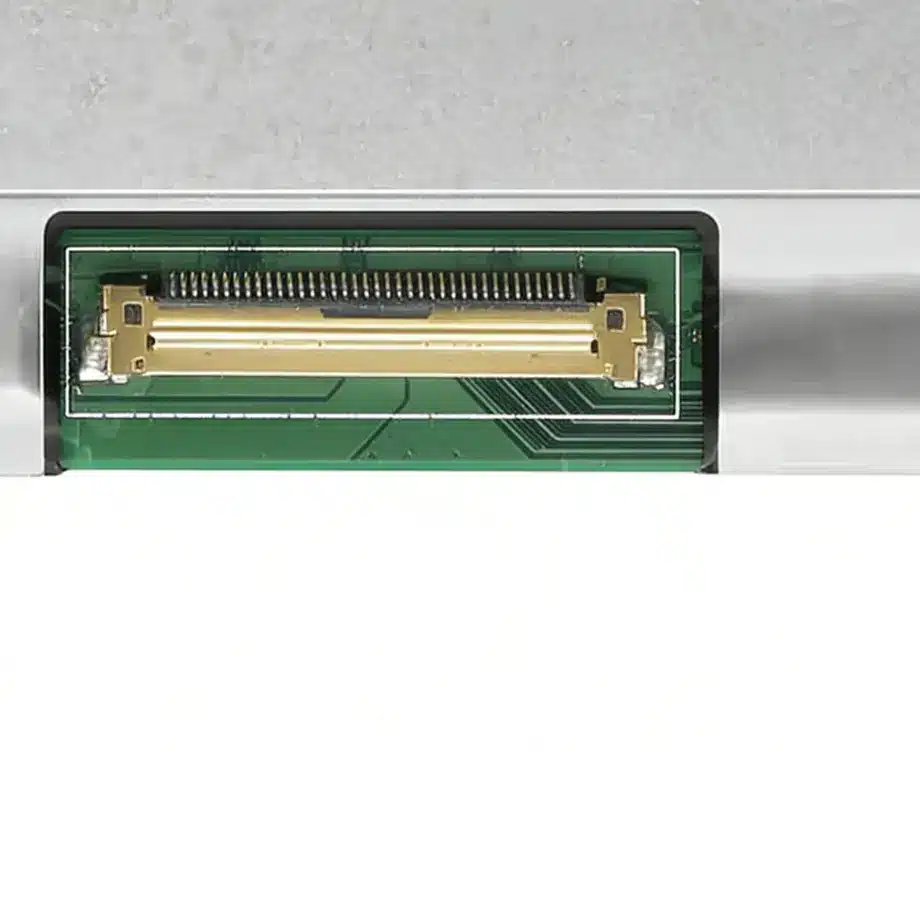
Model P/N
Size
Resolution
Brightness
Viewing Angle
Connector Type
Operating Temp
Overall(mm)
lg-display
LP161WFG-SPB2
Brand
Panel Size (inch)
Model P/N
Resolution
Brightness (nits)
Viewing Angle
Contrast Ratio
Response Time
Overall (mm)
Active Area (mm)
Refresh Rate
Display Colors
Panel Type
Connector Type
Surface Treatment
Operating Temp
Touchscreen Type
Storage Temp
Work Mode
Pixel Format
Input Voltage (V)
Vibration Resistance
Weight (g)
Designed For
Product Details
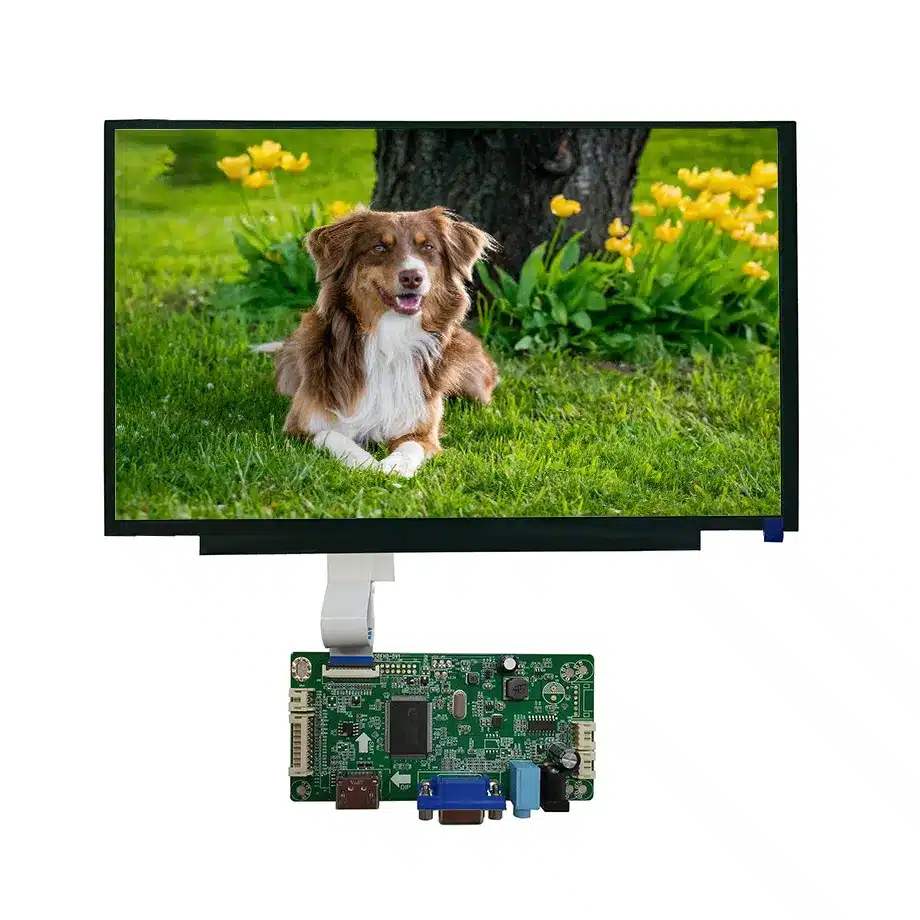
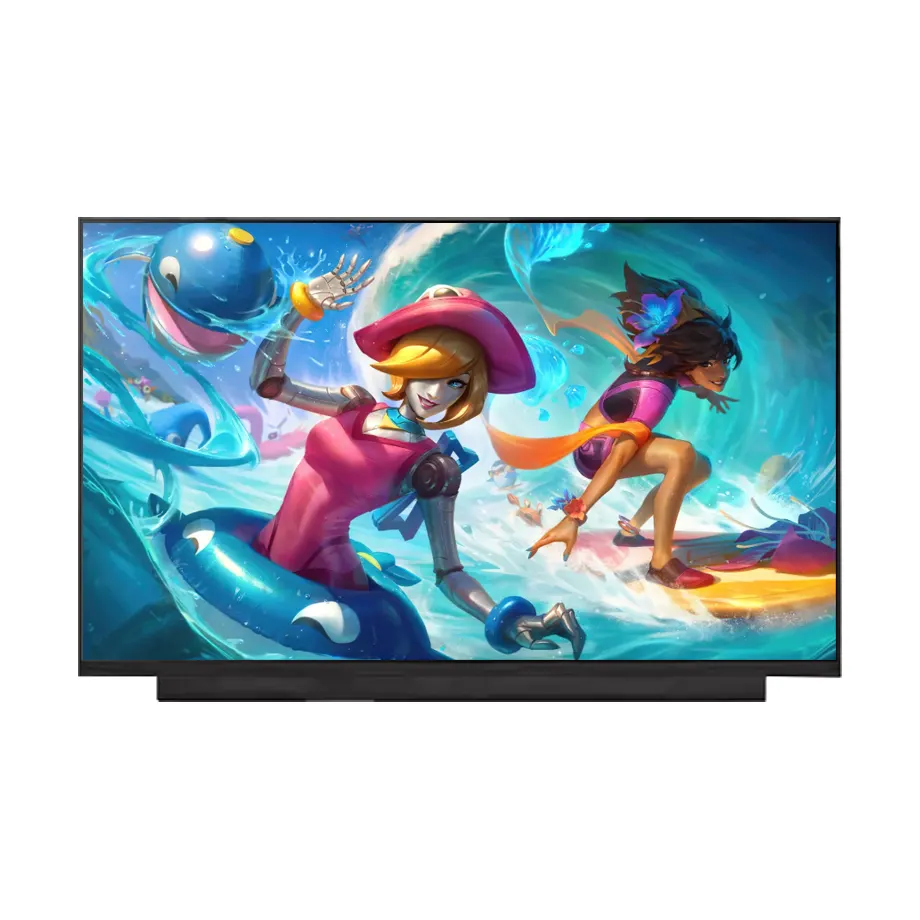
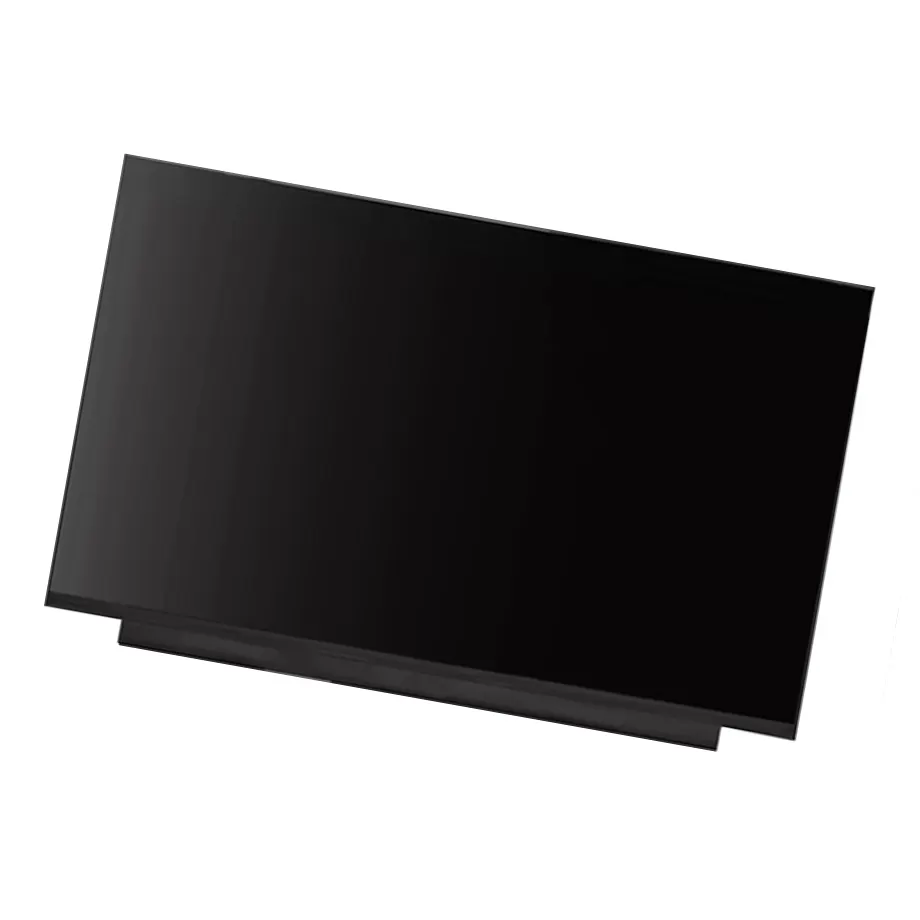
LP161WFG-SPB2 Flat-PCBA 165Hz IPS Screen is a 16.1-inch LG Display a-Si TFT-LCD module for laptop and gaming-notebook integration, combining 1920×1080 FHD resolution, a 165 Hz refresh rate and a four-lane eDP 1.4b HBR2 interface through a 40-pin 0.5 mm connector. The exact-model data lists 300 cd/m² typical luminance, 1000:1 typical contrast, 89/89/89/89 viewing angles, 16.7 million colors and a 5.8 typical Tr+Td response entry. Its active area is 355.39 × 199.91 mm within a 361.89 × 222.16 × 3.2 mm outline, with a typical mass of 380 g. The module includes a WLED backlight with LED driver and is supplied without touch.
Gaming-notebook panel architecture
The panel's combination of FHD resolution, 165 Hz refresh and slim 3.2 mm construction places it squarely in high-refresh notebook display integration rather than general desktop-monitor use. The documented applications are Laptop and Gaming. That supports engineering and replacement projects for gaming-class notebooks when the target system matches the exact connector, timing and mechanical layout. It does not establish universal fit across every 16.1-inch gaming laptop, because notebook families can use different approved panels, connector positions and firmware expectations.
The native image uses a 16:9 format and RGB vertical-stripe layout. IPS normally-black transmissive operation gives wide viewing behavior, while the antiglare 3H surface is appropriate for notebook environments where reflections need to be controlled. These are component-level characteristics. Final display behavior still depends on the notebook's graphics path, backlight control, color management, enclosure and firmware.
Three Core Buyer Value Propositions
1. 165 Hz native refresh provides a defined gaming-notebook timing target
The 165 Hz specification is the strongest motion-related feature of this model. It gives the system designer a concrete native timing to qualify through the notebook GPU, embedded DisplayPort path and internal cable. Sustained high-refresh operation should be checked under representative game workloads, not only with a static test pattern. Frame pacing, GPU output, firmware and display overdrive can affect perceived motion, so the panel refresh figure is not an end-to-end latency guarantee.
2. Four-lane HBR2 eDP narrows cable and motherboard compatibility
The exact signal path is eDP with four lanes, eDP 1.4b and HBR2 at 5.4G per lane through a 40-pin 0.5 mm connector. Those details are critical for replacement and new notebook designs because a 30-pin eDP panel or a lower-bandwidth configuration may not be interchangeable even if the diagonal and FHD resolution match. Procurement should verify the original panel label, connector, cable and motherboard support before treating another 16.1-inch screen as equivalent.
3. Integrated LED driver simplifies the notebook backlight architecture
The WLED system includes an LED driver and a 15K-hour source reference, allowing the notebook to control brightness without designing a separate external LED driver for the panel light source. The 15K figure is a component reference, not a finished-laptop life or warranty claim. Backlight thermal conditions, usage profile and system dimming strategy still matter to the complete product.
Key Specifications at a Glance
| Specification | LP161WFG-SPB2 value |
|---|---|
| Display size | 16.1 inch |
| Panel type | a-Si TFT-LCD, LCM |
| Resolution | 1920×1080 FHD, 16:9 |
| Active area | 355.39 × 199.91 mm |
| Outline | 361.89 × 222.16 × 3.2 mm |
| Weight | 380 g typical |
| Brightness | 300 cd/m² typical |
| Contrast | 1000:1 typical |
| Viewing angle | 89/89/89/89 typical at CR≥10 |
| Response | 5.8 typical Tr+Td |
| Colors | 16.7M |
| Refresh rate | 165 Hz, FreeSync / G-Sync listed |
| Interface | eDP 4 lanes, eDP1.4b, HBR2, 40-pin 0.5 mm connector |
| Supply | 3.3 V typical |
| Backlight | WLED, 15K hours, with LED driver |
| Operating / storage | 0 to 50°C / -20 to 60°C |
Exact-part replacement checks matter more than diagonal size
Replacement-screen listings often group panels by size, resolution and connector count, but those attributes are only an initial screen. A valid LP161WFG-SPB2 replacement project should match the exact label or a formally approved equivalent, then verify outline, connector position, mounting style and cable routing. The source identifies a slim flat-PCBA form with thickness up to 3.2 mm, which is a useful packaging clue but not a universal notebook fit statement.
LP161WFG-SPB2 Flat-PCBA 165Hz IPS Screen should be compared with the installed screen before ordering. Check whether the notebook expects 165 Hz operation, the same four-lane HBR2 interface and the same 40-pin connector. A screen that lights at a fallback mode is not necessarily fully qualified if high-refresh timing, sleep/wake or brightness control fails later.
eDP bring-up and high-refresh stability
Notebook qualification should include cold boot, repeated restart, suspend/resume, lid-close behavior, graphics-driver changes and sustained 165 Hz operation. The eDP cable must preserve signal integrity through the hinge area and the intended routing path. A generic eDP cable is not automatically acceptable simply because it has the same pin count; impedance, shielding, length and connector orientation can influence high-speed performance.
Where adaptive-sync behavior is required, validate it at system level with the intended GPU and firmware. The exact-model source lists FreeSync / G-Sync among the panel features, but that does not guarantee a complete notebook certification or a particular variable-refresh range. Finished-system support depends on the graphics platform, firmware and software configuration.
Optical behavior for a matte gaming laptop screen
The panel is specified at 300 cd/m² typical luminance with 1000:1 typical contrast and antiglare 3H treatment. Those values support normal indoor notebook use, but they do not establish outdoor or sunlight-readable performance. Ambient reflections, lid angle and surrounding illumination can affect perceived contrast. The source does not provide a precise sRGB percentage in the user-locked parameter block, so the production record preserves 16.7M color support without inventing an exact gamut percentage.
For gaming notebook programs, optical acceptance should include dark-scene inspection, white uniformity, viewing-angle consistency and motion behavior at native refresh. If a protective layer or privacy film is added, repeat the optical checks because front-stack changes can reduce luminance and alter reflections.
Response time and motion should be validated with real content
The source places a 5.8 typical Tr+Td value in the response-time field. The unit formatting in the supplied parameter text is inconsistent, so public wording preserves the response descriptor without using an erroneous dimensional unit. This prevents a formatting error in a database row from becoming a false engineering statement. If the exact datasheet is available, the response measurement method should be confirmed before it is used in formal product benchmarking.
Motion quality depends on pixel response, refresh timing and any overdrive strategy. Test fast pans, dark transitions and variable frame delivery on the intended notebook platform. A high refresh rate can improve update frequency, but visible ghosting or overshoot must be judged on the complete drive implementation.
Mechanical and thermal integration in a slim notebook lid
The module outline is 361.89 × 222.16 × 3.2 mm with a 355.39 × 199.91 mm active area. A typical mass of 380 g is useful for lid balance and hinge calculations. Verify bezel overlap, cable exit, rear clearance and pressure distribution with the exact mechanical drawing. Thin LCD modules can be sensitive to chassis twist, so prototype lids should be checked across normal opening, closing and transport loads.
The component operating range is 0 to 50°C. Internal notebook temperatures can rise during sustained gaming loads, so measure the local panel environment with the GPU and CPU under representative stress. The temperature limit does not establish rugged, automotive or industrial qualification.
Application fit: gaming laptops and notebook integration
Laptop and Gaming are documented applications. That supports new-design and replacement evaluation for gaming notebooks where a 16.1-inch FHD 165 Hz panel fits the approved electrical and mechanical envelope. The page does not claim compatibility with a named ASUS, Acer, Dell, Lenovo, HP or MSI model merely because third-party sellers advertise broad fit lists. The notebook's own parts list and installed panel remain the controlling evidence.
The module has no touch. A notebook design that requires touch needs a different display architecture or a separately engineered sensor, with corresponding changes to lid thickness, optics and cable routing. Do not treat the absence of touch as a software setting.
Procurement and revision control
Incoming inspection should confirm LP161WFG-SPB2, the panel revision, 40-pin connector, matte surface and 361.89 × 222.16 mm outline. Keep the approved cable, graphics timing and firmware configuration with the sample record. If a supplier proposes SPB1 or another LP161WFG-family part, treat it as a different model and revalidate rather than inheriting values across suffixes.
LP161WFG-SPB2 Flat-PCBA 165Hz IPS Screen should enter volume purchasing only after high-refresh timing, brightness control, sleep/wake and mechanical fit pass on the target notebook. Stock, MOQ, lead time, price and lifecycle must be confirmed independently at sourcing time; technical suitability does not establish commercial availability.
Qualification evidence to retain for future replacement lots
For a notebook panel, the most useful long-term evidence is not only a spec sheet but a matched set of approved artifacts: front and rear label photos, cable part number, connector position, native timing capture, firmware build and representative brightness/motion test results. Keeping these together gives engineering a practical baseline when a later supplier lot arrives or when a purchasing team proposes another 16.1-inch screen. It also makes it easier to separate a true equivalent from a panel that only shares resolution and refresh-rate marketing language.
Engineering summary
LP161WFG-SPB2 Flat-PCBA 165Hz IPS Screen is a slim 16.1-inch FHD IPS notebook module with 165 Hz refresh, four-lane HBR2 eDP, a 40-pin connector, integrated WLED driver and no touch. Its exact-model value is the combination of high-refresh timing and a defined notebook electrical/mechanical package. Successful replacement or new-product use depends on matching the cable, controller path, firmware and lid geometry rather than relying on size and resolution alone.
Recommended: Same Size
(16.1")
Applications & Value of LCD Panel

- Fast sourcing with in-stock panels & cross-reference alternatives
- Stable supply chain with long-term availability
- Engineering-level support from panel to integration
- Custom solutions: cable, touch & optical bonding
- Strict quality control with IQC / OQC / aging test
- Full traceability system for quality assurance
- Complete technical documentation & drawings
- Compliance support: RoHS & certification files