~
~
~
~
~
~
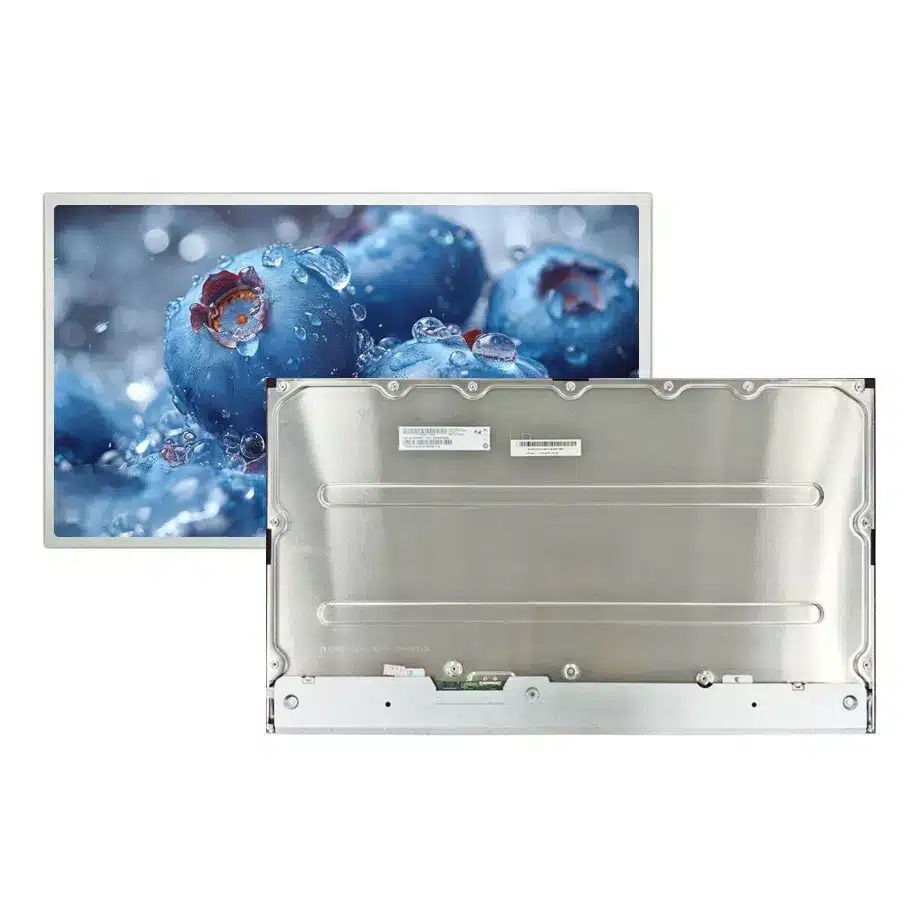
M270QAN06.R 10-Bit KSF Desktop Monitor LCM AUO
Model P/N
Size
Resolution
Brightness
Viewing Angle
Connector Type
Operating Temp
Overall(mm)
auo
M270QAN06.R
Brand
Panel Size (inch)
Model P/N
Resolution
Brightness (nits)
Viewing Angle
Contrast Ratio
Response Time
Overall (mm)
Active Area (mm)
Refresh Rate
Display Colors
Panel Type
Connector Type
Surface Treatment
Operating Temp
Touchscreen Type
Storage Temp
Work Mode
Pixel Format
Input Voltage (V)
Designed For
Product Details
Product Overview
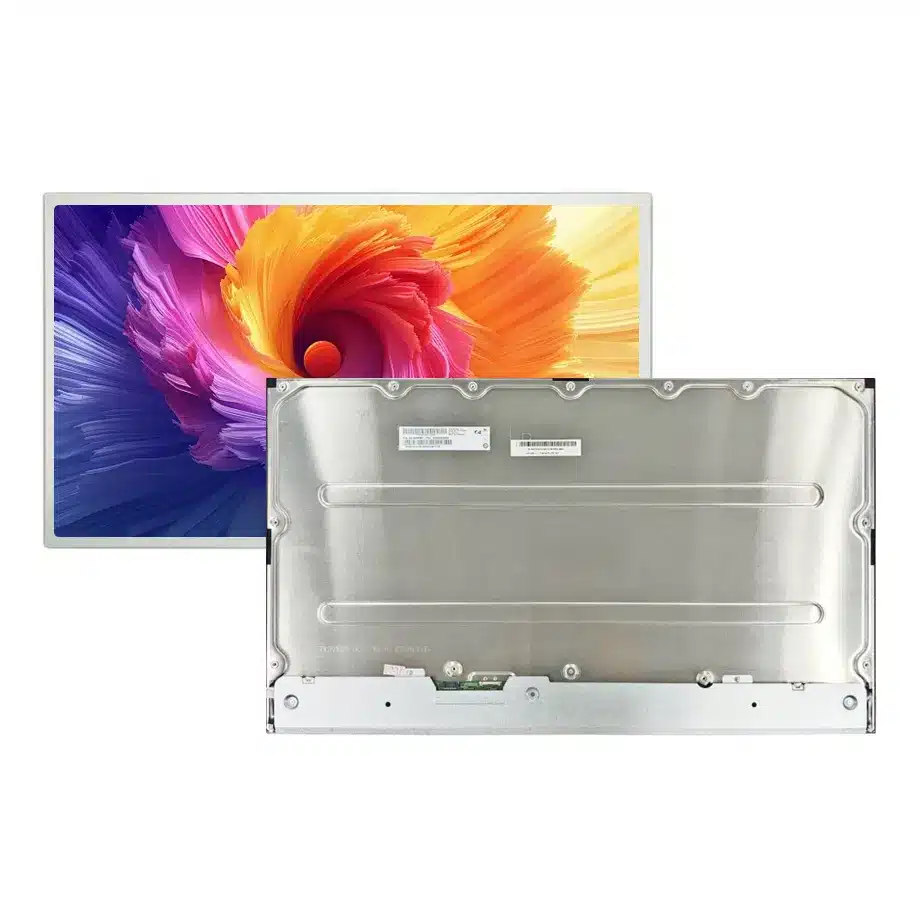
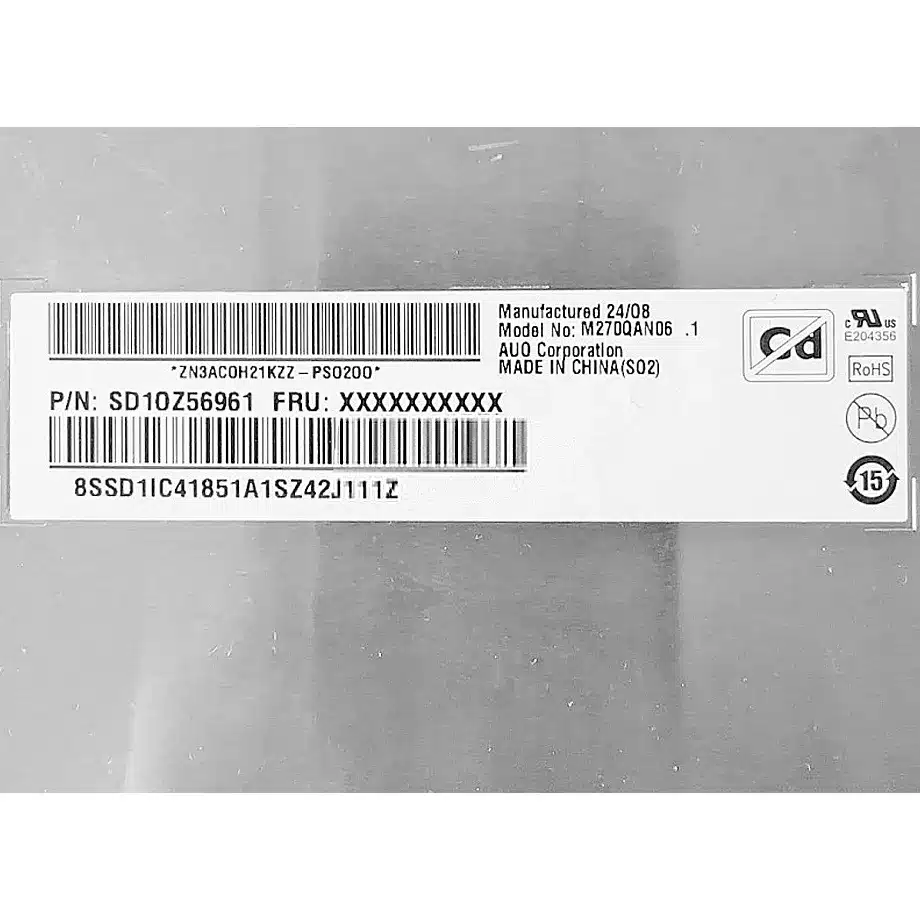
M270QAN06.R 10-Bit KSF Desktop Monitor LCM is a 27.0-inch AUO a-Si TFT-LCD module for desktop-monitor integration, built around a native 3840(RGB)×2160 UHD raster in a 16:9 format. The confirmed active image area is 596.736 × 335.664 mm. Its AHVA normally-black transmissive mode is specified at 300 cd/m² typical luminance, 900:1 typical contrast and 89/89/89/89 viewing-angle values. The color specification is 1.07B colors with 99% DCI-P3 wording, while the front surface is antiglare with 25% haze and 3H hard coating.
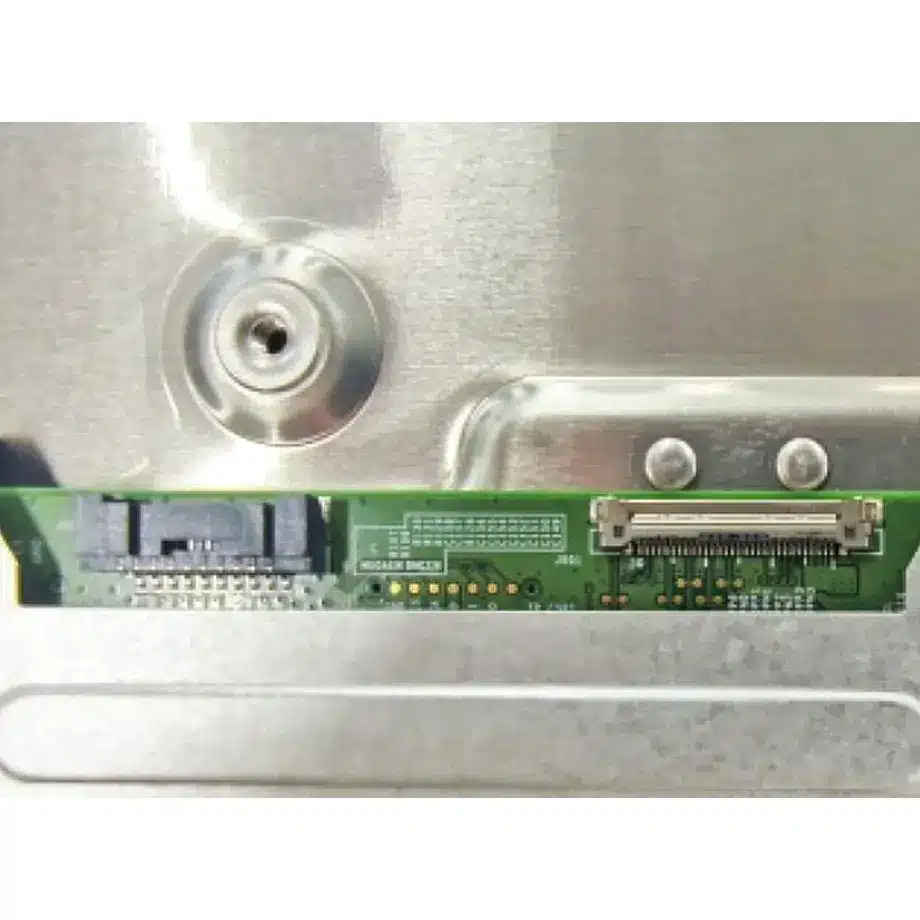
The module operates at 60 Hz and uses four-lane eDP with HBR2 signaling at 5.4 Gbit/s per lane through a 30-pin 0.5 mm connector. A 10 V typical input is documented for the panel. The backlight is identified as KSF LED and is supplied without an integrated LED driver, so the display system must provide the backlight-drive electronics and brightness-control strategy. The exact model is supplied without touch. Its response-time value is 14 ms typical G2G, and the supported environmental range is 0 to 50 °C operation with -20 to 60 °C storage.
Three Core Buyer Value Propositions
1. UHD resolution and 99% DCI-P3 create a defined wide-gamut monitor target
The 3840×2160 raster gives engineering and procurement teams an exact 4K UHD timing target rather than a broad “27-inch monitor panel” description. Combined with 1.07B colors and 99% DCI-P3 wording, it provides a concrete basis for creator-oriented, design, imaging and premium office monitor qualification where high pixel density and broad color coverage matter. These component specifications do not by themselves establish factory calibration, Delta E performance, HDR certification or a particular color profile. Those requirements should be defined and measured at the finished-monitor level.
2. Four-lane HBR2 eDP gives the controller team a precise native-link boundary
The panel's four HBR2 lanes, 30-pin 0.5 mm connector and 60 Hz native timing narrow the controller and TCON integration problem substantially. A design team can plan link bandwidth, cable routing and connector mechanics around a specific embedded DisplayPort implementation rather than guessing from resolution alone. Electrical compatibility still requires the exact pin map, AUX behavior, link-training settings and power sequence. A board that supports eDP generically is not automatically compatible with this suffix.
3. KSF illumination without an integrated driver separates optical capability from backlight electronics
The KSF LED light source supports the wide-gamut objective, while the lack of an integrated LED driver leaves current regulation, dimming and thermal management to the monitor electronics. That architecture can be useful when the system designer wants direct control over brightness behavior, but it also means panel luminance cannot be qualified independently from the chosen driver. The 300 cd/m² typical target, thermal behavior, flicker and low-brightness stability should be validated on production-intent hardware rather than inferred from the panel label alone.
Key Specifications at a Glance
| Parameter | Confirmed value |
|---|---|
| Manufacturer / model | AUO M270QAN06.R |
| Display size | 27.0 inch |
| Panel type | a-Si TFT-LCD, LCM |
| Native resolution | 3840(RGB)×2160 UHD, 16:9 |
| Active area | 596.736 × 335.664 mm |
| Brightness | 300 cd/m² typical |
| Display mode | AHVA, Normally Black, Transmissive |
| Contrast ratio | 900:1 typical |
| Viewing-angle values | 89/89/89/89 |
| Response time | 14 ms typical G2G |
| Colors | 1.07B, 99% DCI-P3 |
| Surface | Antiglare, haze 25%, hard coating 3H |
| Refresh rate | 60 Hz |
| Native interface | eDP, 4 lanes, HBR2 5.4 Gbit/s per lane |
| Connector | 30-pin 0.5 mm connector |
| Panel input | 10 V typical |
| Backlight | KSF LED, without LED driver |
| Touch | Without touch screen |
| Operating / storage | 0 to 50 °C / -20 to 60 °C |
How should the four-lane HBR2 eDP link be qualified?
VESA's Embedded DisplayPort overview provides standards context for internal display links, including the AUX channel, link training and embedded-panel use. For this exact model, the product-level requirements are four HBR2 lanes at 5.4 Gbit/s per lane, a 30-pin 0.5 mm connector and a native 3840×2160/60 Hz image path. The production controller still needs the correct timing table, pin mapping, link settings and panel power sequence.
Bring-up of M270QAN06.R 10-Bit KSF Desktop Monitor LCM should cover cold start, repeated link training, sleep/wake, graphics-mode changes, brightness transitions and sustained native-resolution operation. Cable construction and routing deserve attention because UHD bandwidth can expose signal-integrity problems that do not appear at lower modes. If a controller board offers both DisplayPort input and eDP panel output, keep those two interfaces conceptually separate: the external connector belongs to the monitor system, while eDP is the panel-native link.
Why KSF LED matters for the optical design
KSF phosphor technology is commonly used to improve red spectral output and expand color gamut in LCD backlights. In this model, the exact evidence is the KSF LED designation together with 99% DCI-P3 wording. Those facts support a wide-gamut monitor design, but they do not establish a specific spectral power distribution, white point, factory calibration accuracy or lifetime value. The finished display should be measured with the selected LED driver, optical films and brightness-control implementation.
Because the LED driver is not integrated, the monitor power board must provide the required current regulation and dimming method. Verify brightness uniformity, low-level stability, thermal rise and any PWM behavior across the intended range. If the project needs a flicker specification, blue-light certification or energy standard, obtain evidence for the completed product rather than assuming those attributes from the KSF backlight technology.
How should 99% DCI-P3 and 1.07B colors be translated into acceptance criteria?
The color specifications describe capability, not calibration. A professional or creator-focused monitor should define target white point, gamma, color error and uniformity separately. GPU output format, panel timing, monitor firmware and any color-management LUT all influence the final result. Sampling should include multiple brightness levels because gamut coverage alone does not show whether color accuracy or white balance remains stable as luminance changes.
AUO's monitor display portfolio places high resolution, wide color and advanced panel technology within the broader monitor market. That manufacturer context is relevant to application planning, but portfolio-level features do not automatically attach to M270QAN06.R. Keep the exact 300-nit, 900:1, 99% DCI-P3 and 60 Hz values tied to this model, and treat any additional certification as a separate evidence requirement.
Surface treatment and reflection behavior in a desktop monitor
The front surface is antiglare with 25% haze and 3H hard coating. Haze can reduce sharp specular reflections from lamps and windows, while also affecting perceived grain and fine-detail presentation compared with a glossy surface. That trade-off should be evaluated with real text, photographs and high-contrast UI at the intended viewing distance. The 300 cd/m² typical luminance is a panel target and should not be turned into a sunlight-readable claim.
If the monitor adds a protective cover, touch overlay or specialty front filter, the optical behavior can change substantially. This exact module is supplied without touch, so any additional front layer is a separate subsystem. Measure luminance, reflection, black level and color after the final stack is assembled rather than assuming the bare-panel antiglare specification describes the finished product.
Mechanical and thermal planning when outline and mass remain unresolved
The active area is confirmed at 596.736 × 335.664 mm, but reliable exact-model outline dimensions and module mass are not available in the available exact-model documentation. Those fields should therefore remain open until a controlled drawing or measured production sample is available. Mechanical design should not copy dimensions from another M270QAN06 revision simply because the diagonal and resolution match; family members can differ in frames, boards, connector locations and backlight construction.
For early industrial design, use the active image dimensions only as an optical-window reference and obtain the current mechanical drawing before tooling. Thermal validation should include the panel, external LED driver, power board and enclosure because the module operates up to 50 °C at component level. The -20 to 60 °C storage range likewise describes the panel boundary, not a finished-monitor environmental qualification.
Application fit for UHD desktop and creator-oriented monitor systems
M270QAN06.R 10-Bit KSF Desktop Monitor LCM is documented for Desktop Monitor use. A strong integration scenario is a 27-inch UHD monitor designed around 60 Hz operation, 300-nit AHVA optics, 99% DCI-P3 wording and four-lane HBR2 eDP. Creator, imaging, engineering and premium productivity monitors are reasonable application directions when the complete system validates calibration, backlight control and controller bandwidth. No specific retail monitor or OEM chassis fit is asserted from the panel specification alone.
Replacement programs should lock the `.R` suffix and compare the exact native link, KSF backlight, connector and optical characteristics. Related M270QAN06 revisions can use different luminance, contrast, light-source or cell/module configurations. Treat each suffix as a separate engineering item rather than approving substitution from the shared family name.
Procurement and validation checklist
- Lock AUO M270QAN06.R and the complete suffix in the approved BOM.
- Validate native 3840×2160 timing at 60 Hz over four-lane HBR2 eDP.
- Confirm the 30-pin 0.5 mm connector, AUX behavior, exact pin mapping and power sequence.
- Design the external KSF LED driver for the required luminance, dimming and thermal limits.
- Verify 300 cd/m² typical luminance, 900:1 contrast and 99% DCI-P3 on production samples.
- Preserve the 14 ms typical G2G response qualifier when comparing alternatives.
- Use the antiglare 25% haze and 3H coating as exact surface requirements.
- Keep outline dimensions and mass unresolved until exact-model controlled evidence is available.
- Do not infer calibration, HDR certification, touch capability or lifecycle commitment from family-level information.
For M270QAN06.R 10-Bit KSF Desktop Monitor LCM qualification, provide the monitor controller architecture, production eDP cable, backlight-driver concept, enclosure constraints, luminance and color acceptance criteria, thermal conditions and required quantity. Exact-model electrical, optical and mechanical verification should control production release so a related 27-inch UHD panel is not treated as interchangeable without evidence.
Recommended: Same Size
(27")
Applications & Value of LCD Panel

- Fast sourcing with in-stock panels & cross-reference alternatives
- Stable supply chain with long-term availability
- Engineering-level support from panel to integration
- Custom solutions: cable, touch & optical bonding
- Strict quality control with IQC / OQC / aging test
- Full traceability system for quality assurance
- Complete technical documentation & drawings
- Compliance support: RoHS & certification files