
~
~
~
~
~
~
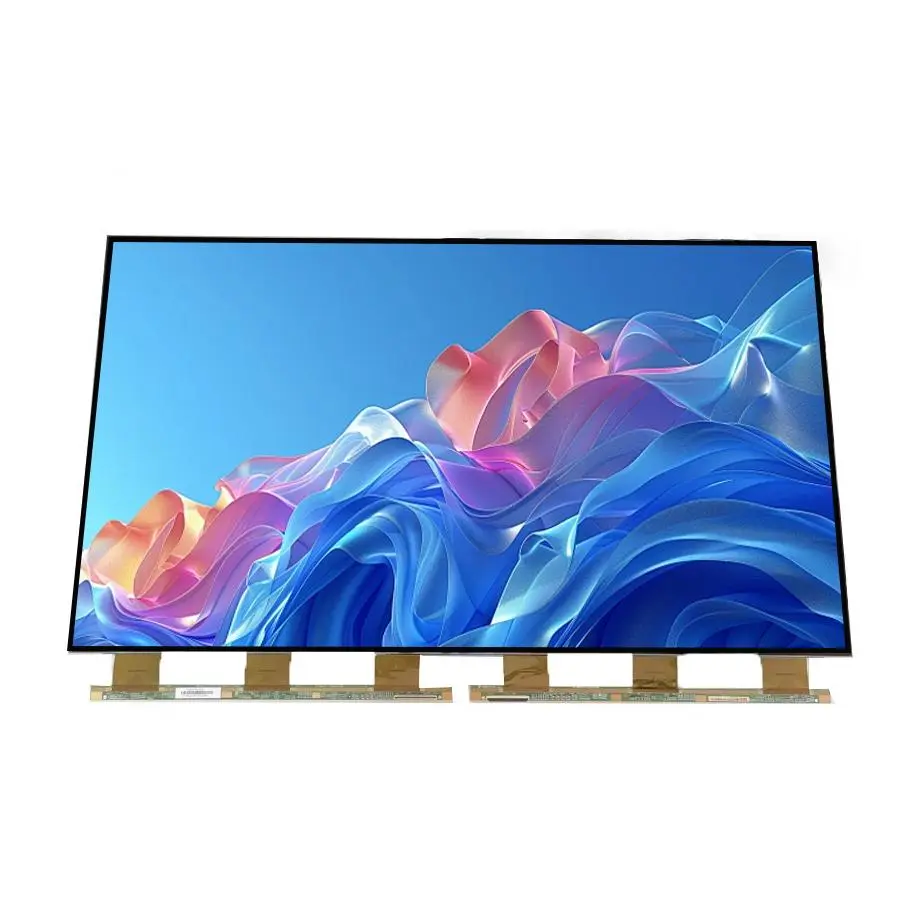
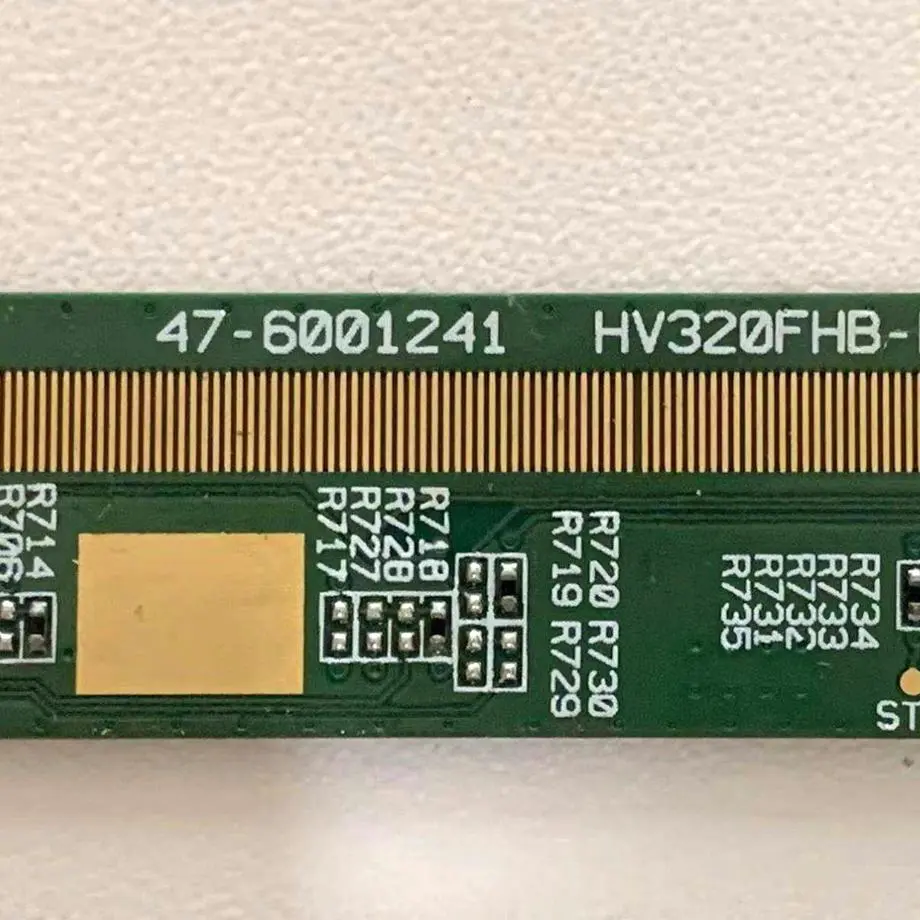
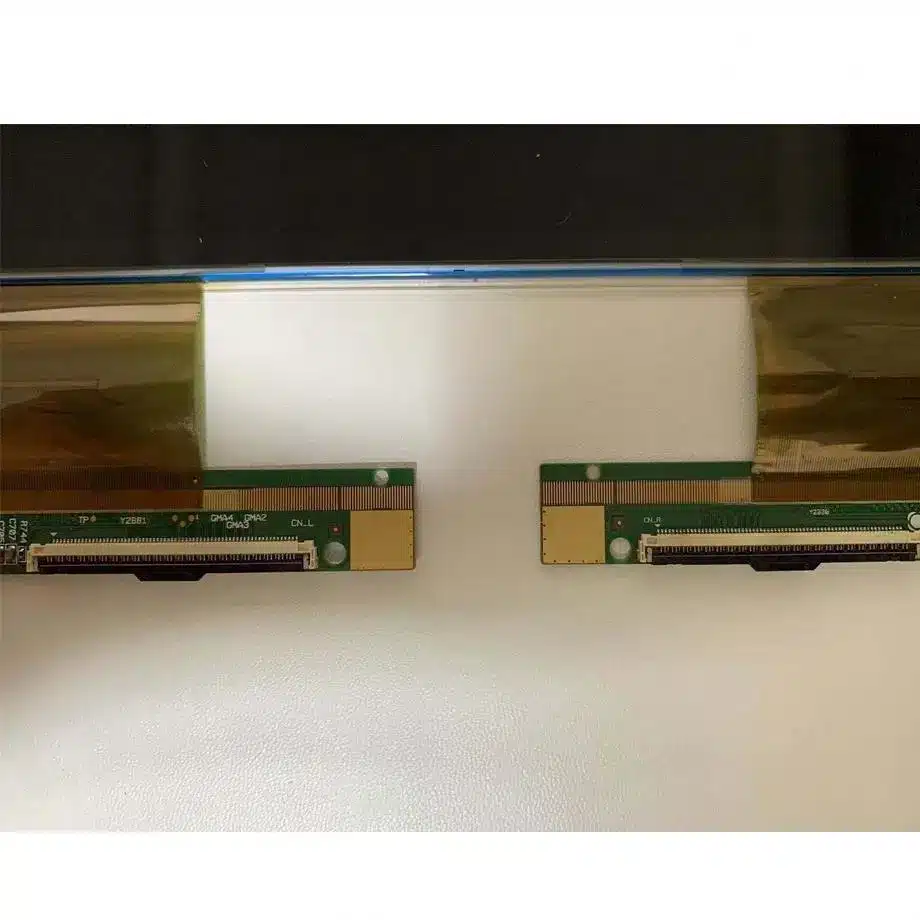
QV320FHB-N10 120Hz LVDS Signage LCD Cell 32 Inch ADS BOE
Model P/N
Size
Resolution
Brightness
Viewing Angle
Connector Type
Operating Temp
Overall(mm)
boe
QV320FHB-N10
Brand
Panel Size (inch)
Model P/N
Resolution
Viewing Angle
Contrast Ratio
Response Time
Overall (mm)
Active Area (mm)
Refresh Rate
Display Colors
Panel Type
Connector Type
Surface Treatment
Operating Temp
Touchscreen Type
Storage Temp
Work Mode
Pixel Format
Input Voltage (V)
Weight (g)
Designed For
Product Details
Product Overview
The QV320FHB-N10 120Hz LVDS Signage LCD Cell is a 32.0-inch BOE a-Si TFT-LCD cell for large-format display integration. It combines a native 1920(RGB)×1080 FHD raster with a 120 Hz refresh rate, ADS normally-black transmissive operation and a specified 100% NTSC color gamut. The active image measures 698.4 × 392.85 mm inside a 708.4 × 405.4 × 1.36 mm glass outline, while the cell mass is specified at 910 g maximum.
This is a CELL rather than a complete backlit LCM. The listed luminance is 0 cd/m² because no backlight system is integrated, and the product is also supplied without touch. The host design therefore has to solve three separate tasks: drive the 4-channel 8-bit LVDS video path, provide the specified 12.0 V panel input, and build a compatible illumination stack around the LCD cell. That separation is especially important in digital-signage equipment, where mechanical depth, thermal behavior and backlight serviceability are often system-level decisions.
Three Core Buyer Value Propositions
120 Hz FHD operation supports motion-focused signage designs
The 1920×1080 raster runs at a specified 120 Hz, giving the integrator a higher-refresh target than a conventional 60 Hz signage panel. The engineering consequence is not simply “smoother video”: the scaler, timing controller path, cable layout and LVDS transmitter must sustain the required pixel throughput and timing margin. Qualification should therefore use the production controller and cable at native timing rather than assuming that any 1080p LVDS board can run this cell at its intended refresh rate.
100% NTSC and ADS wide-view geometry give optical design a clear baseline
The cell is specified for 16.7 million colors with 100% NTSC coverage and 89/89/89/89 typical viewing angles at CR≥10. For a signage enclosure, that creates a useful starting point for wide-view, color-sensitive content. The boundary is equally important: those panel figures do not define the finished display’s calibrated color accuracy, front-glass reflections, ambient contrast or final luminance. Those outcomes depend on the backlight, optical stack, cover material and system calibration.
Cell-level construction gives integrators control over illumination and packaging
At only 1.36 mm specified cell thickness, QV320FHB-N10 leaves the backlight, frame and thermal path to the equipment designer. That can be useful when a signage manufacturer already has a qualified light engine or needs a custom mechanical stack. It also increases integration responsibility. The illumination design must be mechanically compatible with the 708.4 × 405.4 mm cell, manage uniformity and temperature, and avoid loading the glass in ways not supported by the model drawing.
Key Specifications at a Glance
| Parameter | Specification |
|---|---|
| Manufacturer / model | BOE QV320FHB-N10 |
| Size / construction | 32.0 inch a-Si TFT-LCD, CELL (FOB) |
| Resolution | 1920(RGB)×1080 FHD, 16:9 |
| Active area / outline | 698.4 × 392.85 mm / 708.4 × 405.4 × 1.36 mm |
| Weight | 910 g maximum |
| Refresh rate | 120 Hz |
| Display mode | ADS, normally black, transmissive |
| Brightness | 0 cd/m²; CELL is supplied without backlight |
| Contrast / viewing | 1000:1 typical / 89/89/89/89 typical at CR≥10 |
| Color | 16.7M, 100% NTSC |
| Surface | Antiglare, 25% haze; hard coating 3H |
| Response / transmissivity | 16 ms typical G-to-G / 5.0% typical with polarizer |
| Native interface | LVDS, 4 channels, 8-bit, 92-pin connector |
| Panel input | 12.0 V typical |
| Temperature | Operating 0 to 50 °C; storage -20 to 60 °C |
| Touch | Without touch screen |
| Designed for | Digital Signage |
What does 120 Hz change in controller qualification?
The QV320FHB-N10 120Hz LVDS Signage LCD Cell should be qualified as a 120 Hz endpoint, not as a generic 32-inch FHD screen. A controller can advertise 1920×1080 output and still be unsuitable if its LVDS mapping, channel count, bit depth, clocking or frame-rate support differs from this cell. The specified native connection is four-channel, 8-bit LVDS on a 92-pin connector, so the controller-side architecture and the cable must be checked against the exact BOE pin assignment and timing documentation.
Texas Instruments describes LVDS as a physical-layer signaling method rather than a universal display protocol, which is a useful reminder that electrical compatibility does not automatically establish panel timing compatibility. Its engineering training covers differential signaling, termination and system-dependent data-rate limits (TI Precision Labs: LVDS). In practice, validate the complete video path with test patterns, motion content, repeated mode changes and long-duration playback at the intended 120 Hz operating point.
Channel count and pin count are not substitute identifiers
A 92-pin connector that physically mates with another cell is not sufficient evidence of interchangeability. Verify lane/channel mapping, pixel bit assignment, clock pairs, grounds, control pins and power contacts from the model-specific interface drawing. Do the same for the cable and controller board revision. Replacement approval should be based on the complete electrical and timing definition, not on diagonal size, resolution or connector count alone.
Why does 0 cd/m² matter for this LCD cell?
The 0 cd/m² entry is consistent with a cell that contains no backlight; it should not be interpreted as a defective or unusable optical specification. The finished display needs an external illumination system designed around the cell’s transmittance, color characteristics, aperture and thermal limits. The specified transmissivity is 5.0% typical with polarizer, which helps frame the optical task but does not provide the LED power, diffuser construction, optical efficiency or finished-display luminance.
Backlight design is part of the finished product, not part of the cell
For digital signage, the light engine usually determines a large share of the thermal load and service profile. Define LED topology, driver efficiency, dimming range, diffuser and light-guide strategy, thermal interface and enclosure ventilation separately. If a target luminance, day/night dimming ratio or ambient-light performance is required, treat those as system requirements and prove them on the assembled display. Do not infer them from the LCD cell’s color gamut or viewing-angle data.
How should the 92-pin LVDS and 12 V input be verified?
The native panel input is specified as 12.0 V typical and the video interface as 4-channel 8-bit LVDS. Those are separate electrical functions and should be validated separately. Before connecting a prototype, confirm supply tolerance, startup and shutdown behavior, enable/control requirements, connector orientation and ground arrangement from the current BOE documentation. Measure the panel rail at the connector under operating load rather than relying only on a bench-supply setting.
BOE describes ADS as a wide-view LCD technology and highlights high-refresh capabilities within its current LCD technology portfolio (BOE LCD technology overview). That manufacturer context is useful for understanding the display architecture, but the model-specific electrical limits still come from QV320FHB-N10 documentation. A family-level technology statement is not a substitute for the exact cell timing, pin map or absolute ratings.
Prototype tests should exercise transitions, not only a static image
A useful qualification sequence includes cold start, warm restart, repeated power cycling, no-signal recovery, 60-to-120 Hz controller mode changes where applicable, full-white and dark patterns, moving high-contrast content and long-duration thermal soak. Watch for intermittent link errors, line noise, incorrect bit mapping, color-channel swaps, image instability and timing-dependent artifacts. Record the exact controller firmware and cable used so procurement can reproduce the approved configuration later.
Mechanical and optical fit for digital signage
For enclosure work, the QV320FHB-N10 120Hz LVDS Signage LCD Cell should be controlled from the exact mechanical drawing. The active area is 698.4 × 392.85 mm, while the cell outline is 708.4 × 405.4 × 1.36 mm. The difference between those dimensions matters when defining the visible opening, edge support, mask area and backlight aperture. A thin glass cell should not be clamped like a finished metal-framed module. Use the current mechanical drawing to define support points, keep-out areas, tolerances and connector handling before the bezel and backlight tray are released.
The surface is specified as antiglare with 25% haze and hard coating 3H. Those facts describe the cell surface but do not establish the properties of a finished cover glass or protective window. If the signage product adds tempered glass, acrylic, an air gap, optical bonding or a vandal-resistant front layer, re-evaluate reflections, image haze, viewing behavior and thermal expansion on the assembled stack. No optical-bonding or protective-glass configuration is implied by the base cell.
Color, viewing angle and finished-display calibration
The specified 100% NTSC gamut and symmetric 89-degree viewing figures can support wide-view content, but procurement should keep panel capability separate from display-system calibration. White point, gamma, uniformity, color error and final brightness depend on the backlight spectrum, optical films, drive settings and calibration process. A cell replacement should therefore be checked not only for image formation but also for the system’s accepted color and uniformity limits.
For multi-screen signage installations, establish a repeatable acceptance method for color and luminance matching across units. Record measurement conditions and the approved backlight operating point. If the project needs a specific sRGB, DCI-P3 or other calibrated target, treat that as a finished-system requirement unless model-specific BOE documentation explicitly defines it for this cell.
Procurement and replacement controls
Third-party sourcing listings currently describe QV320FHB-N10 as an in-production model, but that should be reconfirmed through BOE or an authorized channel before a volume commitment. Availability listings and supplier counts are not the same as HS-LCD inventory, a lifecycle guarantee or a change-notification commitment. For a new project, request current revision information, traceability, applicable PCN/EOL handling and the latest mechanical/electrical documents.
For replacement work, preserve the approved baseline: BOE model and revision, 120 Hz timing, 4-channel 8-bit LVDS mapping, 92-pin cable, 12 V panel rail, backlight assembly, optical films, mechanical support and controller firmware. A nearby 32-inch FHD cell can look attractive on a parameter comparison while still requiring a different cable, timing table, backlight aperture or mechanical stack.
Engineering Answers in Brief
QV320FHB-N10 is a 32-inch BOE FHD LCD cell specified for 120 Hz operation, 4-channel 8-bit LVDS and a 12.0 V typical panel input.
The cell has no integrated backlight, so finished-display luminance, LED driving, optical films and thermal management remain system-level responsibilities.
The specified 100% NTSC gamut and wide viewing angles provide panel-level optical targets, not a guarantee of finished-display color calibration or ambient-light performance.
A replacement should match the exact BOE timing, 92-pin mapping, mechanical drawing and backlight geometry rather than relying on size and FHD resolution alone.
Procurement Checklist
- Specify BOE QV320FHB-N10 and confirm the exact offered revision.
- Request the current 120 Hz timing, four-channel 8-bit LVDS map and 92-pin connector assignment.
- Verify 12.0 V panel power tolerance, sequencing and control requirements with production hardware.
- Qualify the external backlight, optical films and thermal path for the required finished-display luminance and uniformity.
- Check the 708.4 × 405.4 × 1.36 mm cell outline and 698.4 × 392.85 mm active area against the bezel, support and light engine.
- Validate antiglare/haze behavior with any added cover window or protective front stack.
- Run native 1920×1080 content at the intended 120 Hz using the released controller, cable and firmware.
- Reconfirm lifecycle, traceability and PCN/EOL requirements before volume purchasing.
The QV320FHB-N10 120Hz LVDS Signage LCD Cell is most useful when treated as a component inside a controlled signage display architecture. Its 120 Hz FHD timing, wide-gamut ADS cell, four-channel LVDS path and thin glass construction define a strong integration baseline, while the backlight, protection, calibration and enclosure remain responsibilities of the finished system.
Recommended: Same Size
(32")
Applications & Value of LCD Panel

- Fast sourcing with in-stock panels & cross-reference alternatives
- Stable supply chain with long-term availability
- Engineering-level support from panel to integration
- Custom solutions: cable, touch & optical bonding
- Strict quality control with IQC / OQC / aging test
- Full traceability system for quality assurance
- Complete technical documentation & drawings
- Compliance support: RoHS & certification files
