
~
~
~
~
~
~
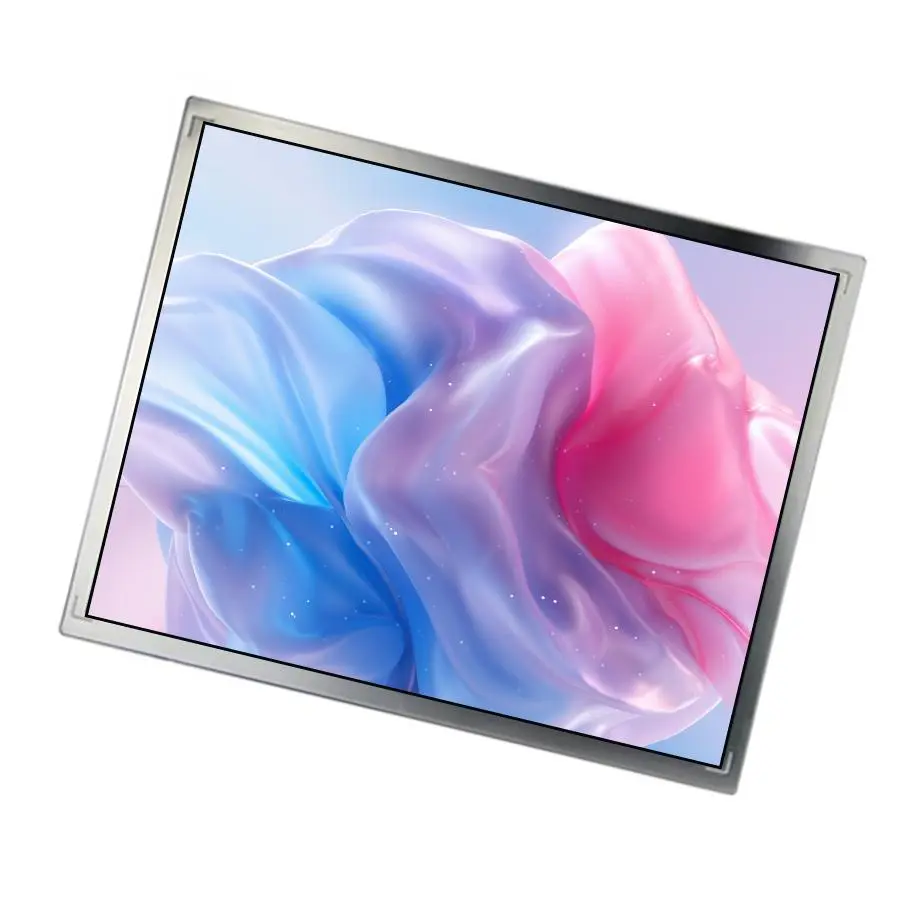
PAH307DB1-1 WQXGA eDP Touch Assembly 17.3 Inch CSOT
Model P/N
Size
Resolution
Brightness
Viewing Angle
Connector Type
Operating Temp
Overall(mm)
csot
PAH307DB1-1
Brand
Panel Size (inch)
Model P/N
Resolution
Brightness (nits)
Viewing Angle
Response Time
Overall (mm)
Active Area (mm)
Refresh Rate
Display Colors
Panel Type
Connector Type
Surface Treatment
Operating Temp
Touchscreen Type
Storage Temp
Work Mode
Pixel Format
Input Voltage (V)
Touch Interface
Weight (g)
Designed For
Product Details
Product Overview
The PAH307DB1-1 WQXGA eDP Touch Assembly is a 17.3-inch CSOT LTPS TFT-LCD display assembly intended for automotive display integration. It uses a native 2560(RGB)×1600 WQXGA raster in a 16:10 aspect ratio and an active image area of 372.48 × 232.8 mm. The assembly combines a 4-lane eDP display interface on a 50-pin connector with In-Cell Touch using an I²C touch interface, a 3.3 V typical display supply, and a 9S6P WLED backlight without an integrated backlight driver.
The current parameter set does not establish luminance, contrast ratio, viewing-angle values, response time, operating temperature, storage temperature, vibration qualification or automotive certification. It also contains an outline entry of 383.48 × 52.4 mm that is not mechanically consistent with the confirmed 372.48 × 232.8 mm active area. No corrected outline is guessed here. Enclosure design therefore requires the current CSOT mechanical drawing before brackets, bezel openings or cable clearances are released.
Three Core Buyer Value Propositions
WQXGA 16:10 gives a defined high-resolution cockpit canvas
The native 2560×1600 image format provides more vertical workspace than a 16:9 panel and can support dense vehicle HMI layouts, maps, controls and multi-zone information. The 17.3-inch diagonal and 372.48 × 232.8 mm active area give UI and packaging teams concrete screen geometry for early concept work. The resolution is a confirmed panel fact; it does not prove compatibility with a particular cockpit computer, GPU or automotive ECU until the eDP timing and link behavior are matched.
Integrated in-cell touch reduces front-stack functional separation
The display assembly includes In-Cell Touch with an I²C interface, so touch sensing is part of the display architecture rather than a separately specified external touch panel. That can simplify the functional stack compared with adding an independent sensor, but the current facts do not define touch-point count, glove operation, wet-touch behavior, controller IC, interrupt behavior, cover lens or optical bonding. Those items must be confirmed for the target vehicle program before the mechanical and software interfaces are frozen.
4-lane eDP and 50-pin connectivity create a specific integration checkpoint
The native display path is four-lane eDP through a 50-pin connector with a 3.3 V typical panel supply. VESA describes Embedded DisplayPort as an internal display interface used to transport video data from graphics hardware to an embedded panel (VESA Embedded DisplayPort overview). That standards context explains the interface family, while the exact PAH307DB1-1 lane configuration, pin mapping, timing and power sequence must still come from model-specific CSOT documentation.
Key Specifications at a Glance
| Parameter | Specification |
|---|---|
| Manufacturer / model | CSOT PAH307DB1-1 |
| Display size / type | 17.3 inch LTPS TFT-LCD, Assembly |
| Resolution | 2560(RGB)×1600 WQXGA, 16:10 |
| Active area | 372.48 × 232.8 mm |
| Overall dimensions | Drawing confirmation required; available outline entry conflicts with the active-area geometry |
| Weight | 1.70 kg typical |
| Display mode / colors | HFS, normally black, transmissive / 16.7M colors |
| Brightness / contrast / viewing | Not specified in the current product parameters |
| Refresh rate | 60 Hz |
| Native display interface | eDP, 4 lanes, 50-pin connector |
| Display supply | 3.3 V typical |
| Backlight | 9S6P WLED, 15,000-hour reference, without driver |
| Touch | In-Cell Touch, I²C |
| Surface | Hard coating, 3H |
| Designed for | Automotive Display |
How Should the Four-Lane eDP Link Be Qualified?
The PAH307DB1-1 WQXGA eDP Touch Assembly is an embedded panel assembly, not a finished vehicle monitor with a universal external input. The four-lane eDP path has to be driven by electronics that match the exact panel timing, lane configuration and 50-pin assignment. A controller that accepts HDMI, DisplayPort or another host-facing format is relevant only if its panel-side output is designed and configured for this exact display.
Connector fit is not the same as electrical compatibility
A 50-pin connector can share a mechanical form with another display while using a different pin map, lane allocation, auxiliary/control signals or power arrangement. Confirm the connector orientation, mating part, eDP lanes, grounds, 3.3 V supply contacts and any enable or control signals from the current drawing and interface specification. Do not substitute a generic 50-pin cable or another 17.3-inch panel pinout merely because the connector can mate.
Prototype qualification should run native 2560×1600 content at the confirmed 60 Hz rate and include repeated power cycles, long-duration operation and vehicle-representative sleep/wake or ECU state changes. If the host uses a serializer/deserializer or bridge between the compute unit and the panel, qualify the complete path. MIPI Alliance notes that automotive display frameworks may carry protocols including VESA eDP/DP over long-reach vehicle links and that functional-safety mechanisms belong to the broader system architecture (MIPI automotive display integration context).
What Does In-Cell Touch with I²C Require from the Host?
The display video link and touch-control link are separate functions. eDP transports the display image, while the product facts identify I²C for the in-cell touch interface. NXP’s I²C-bus specification and user manual defines I²C as a serial bidirectional bus used between integrated devices. That general bus definition does not provide the PAH307DB1-1 touch register map, address, interrupt behavior or firmware protocol; those details must come from the exact touch documentation.
Do not infer touch capabilities that are not documented
The current product facts establish In-Cell Touch and I²C, but not touch-point count, report rate, glove mode, water rejection, palm rejection, stylus behavior or touch-controller identity. If those behaviors matter to the vehicle HMI, place them in the project requirements and obtain evidence before sample approval. The same rule applies to a cover lens and optical bonding: neither is documented as part of the standard assembly facts, so no bonded-cover configuration is claimed.
Software qualification should cover touch initialization, interrupt handling, coordinate orientation and behavior through power-state transitions. Because the display is WQXGA 16:10, confirm that touch coordinates map correctly to the active image in the final HMI orientation. Mechanical changes to the front stack can also affect touch behavior, so validate the actual cover and mounting concept rather than only the bare assembly on a bench.
How Should the Automotive Application Label Be Interpreted?
The product is explicitly listed for Automotive Display use, so an automotive/transport integration profile is appropriate. That application label is not the same as an automotive-grade certification. The current facts do not provide an ISO 16750 result, AEC qualification, IATF status for this model, EMC/ESD level, vibration evidence, functional-safety rating or any other model-specific automotive qualification. No such claim should be inferred from the application category alone.
Missing environmental values are verification items, not values to fill from another model
Operating and storage temperature limits are not included in the current product parameters. Brightness, contrast, viewing angle and response time are also unspecified. Those omissions matter for a cockpit display because solar loading, viewing position, day/night dimming and thermal conditions can influence the system requirement. Request the exact model specification and qualification package rather than borrowing environmental or optical data from a related CSOT assembly.
The 9S6P WLED backlight has a 15,000-hour reference and no integrated driver. The external driver must therefore be qualified for the actual string voltage, current, brightness-control method and vehicle power architecture. Dimming behavior is especially important in a cockpit, but no PWM frequency, analog-dimming method, minimum luminance or day/night ratio is established in the current facts.
Automotive Verification Matrix
| Verification item | Current status |
|---|---|
| Operating temperature | Not documented; model-specific confirmation required |
| Storage temperature | Not documented; model-specific confirmation required |
| Brightness | Not documented in the current parameters |
| Dimming method | Not documented; external backlight-driver design must be confirmed |
| Native interface | Confirmed: four-lane eDP, 50-pin connector |
| Touch interface | Confirmed: In-Cell Touch with I²C |
| Cover lens | Not documented |
| Optical bonding | Not documented |
| Vibration evidence | Not documented |
| Expected availability / lifecycle | Supporting sourcing reference indicates production status; current manufacturer confirmation required |
| Automotive qualification | Not documented; no automotive-grade claim is made |
Long-Term Supply and Replacement Planning
The supporting sourcing description says the model entered mass production in Q1 2021 and is currently listed in production. That information is useful for sourcing context, but it is not a guaranteed supply duration, second-source commitment or PCN/EOL policy. Automotive programs can outlive a short purchasing cycle, so procurement should confirm current revision status and ask for the supply information required by the target vehicle program.
For a new automotive project, the RFQ should state the target SOP date, expected annual volume, buyer-required supply lifetime, second-source requirement and change-notification expectations. These are project requirements, not claims that CSOT has already committed to them. For a replacement project, record the exact display revision, controller/bridge hardware, eDP cable, touch firmware, LED-driver design, mechanical drawing and front stack that passed qualification.
The PAH307DB1-1 WQXGA eDP Touch Assembly should also be mechanically controlled with a current drawing because the available outline entry cannot be safely used as a final enclosure dimension. A sample that produces an image and touch response is not enough to close the replacement decision if mounting, thermal, dimming or qualification evidence remains unresolved.
Engineering Answers in Brief
PAH307DB1-1 is a 17.3-inch CSOT WQXGA LTPS TFT-LCD assembly intended for automotive display integration.
The display path is four-lane eDP on a 50-pin connector, while in-cell touch communicates through a separate I²C interface.
The assembly contains a 9S6P WLED backlight without its driver, so backlight power and dimming remain system-level responsibilities.
No automotive-grade, temperature, brightness, vibration, cover-lens or optical-bonding claim is made without model-specific documentation.
Procurement Checklist
- Specify CSOT PAH307DB1-1 and confirm the exact offered revision.
- Obtain the current 2560×1600 timing, 50-pin eDP assignment and mechanically valid drawing before enclosure release.
- Verify native 60 Hz operation through the four-lane eDP path using the intended controller or vehicle bridge architecture.
- Confirm the 3.3 V panel supply, power sequence and the separate I²C touch protocol with production hardware and firmware.
- Request touch-point, glove/wet-touch, controller and front-stack requirements if they matter to the target HMI.
- Qualify the external 9S6P WLED driver, day/night dimming behavior and thermal performance.
- Request operating/storage temperature, optical performance, vibration and automotive-qualification evidence required by the vehicle program.
- State target SOP date, annual volume, required supply lifetime, second-source requirement and change-notification expectation in the RFQ.
The PAH307DB1-1 WQXGA eDP Touch Assembly provides a high-resolution 17.3-inch display and in-cell touch architecture for automotive integration, but final suitability depends on model-specific eDP timing, touch protocol, valid mechanics, backlight driving, environmental evidence and sourcing controls being qualified together.
Recommended: Same Size
(17.3")
Applications & Value of LCD Panel

- Fast sourcing with in-stock panels & cross-reference alternatives
- Stable supply chain with long-term availability
- Engineering-level support from panel to integration
- Custom solutions: cable, touch & optical bonding
- Strict quality control with IQC / OQC / aging test
- Full traceability system for quality assurance
- Complete technical documentation & drawings
- Compliance support: RoHS & certification files
