Freya Yang
+86 18318948097
+852 62667476
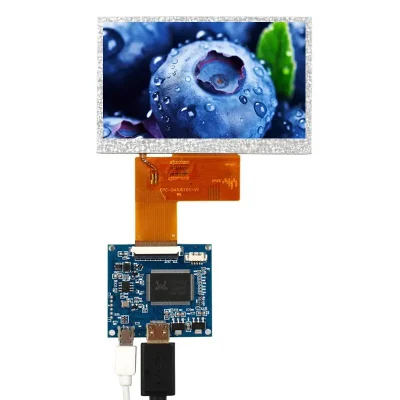
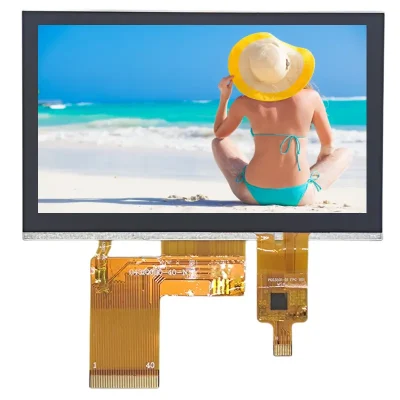
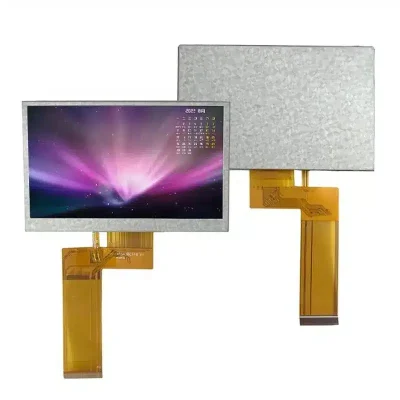
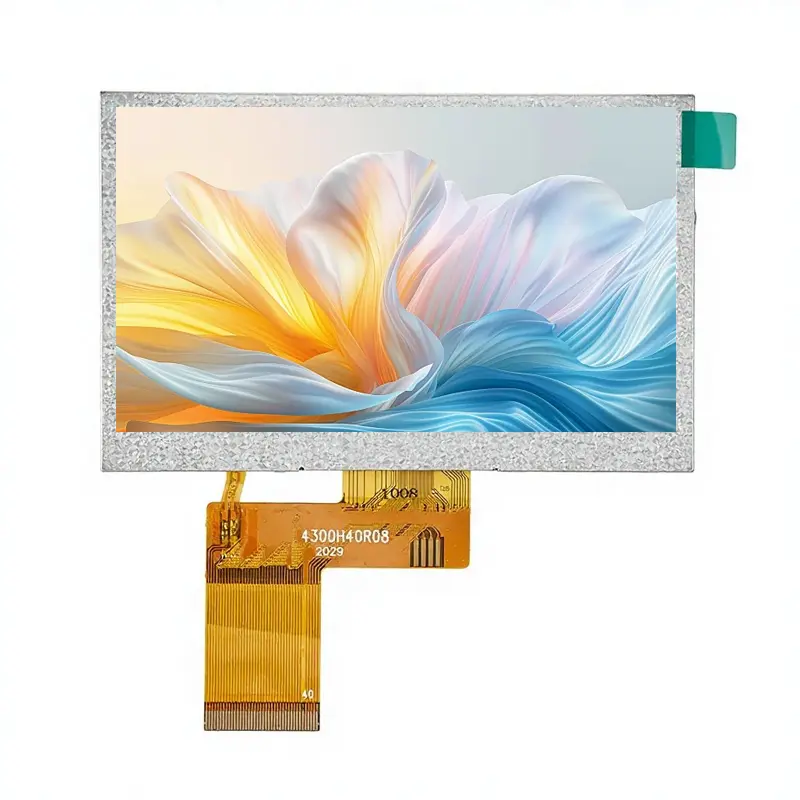
4.3 Inch ST7262 40 Pin LVDS Display with 800×480 IPS
Model P/N
Size
Resolution
Brightness
Viewing Angle
Connector Type
Operating Temp
Overall(mm)
huisoar
HSO43R10BM50-L
Brand
Panel Size (inch)
Model P/N
Resolution
Brightness (nits)
Viewing Angle
Contrast Ratio
Response Time
Overall (mm)
Active Area (mm)
Refresh Rate
Display Colors
Panel Type
Connector Type
Operating Temp
Touchscreen Type
Storage Temp
Work Mode
Control Type
Operating Environment
Designed For
4.3 Inch ST7262 40 Pin LVDS Display with 800x480 IPS
Compact ST7262 LVDS display for native 800x480 HMI integration, wide IPS viewing and optional RTP or CTP configuration
Product Summary
A ST7262 40 Pin LVDS Display is a 4.3-inch IPS TFT component for embedded equipment that requires native 800×480 graphics and a compact differential-video connection. Standard luminance is specified at 350 cd/m² typical, with a 1200:1 typical contrast ratio and 80/80/80/80-degree viewing.
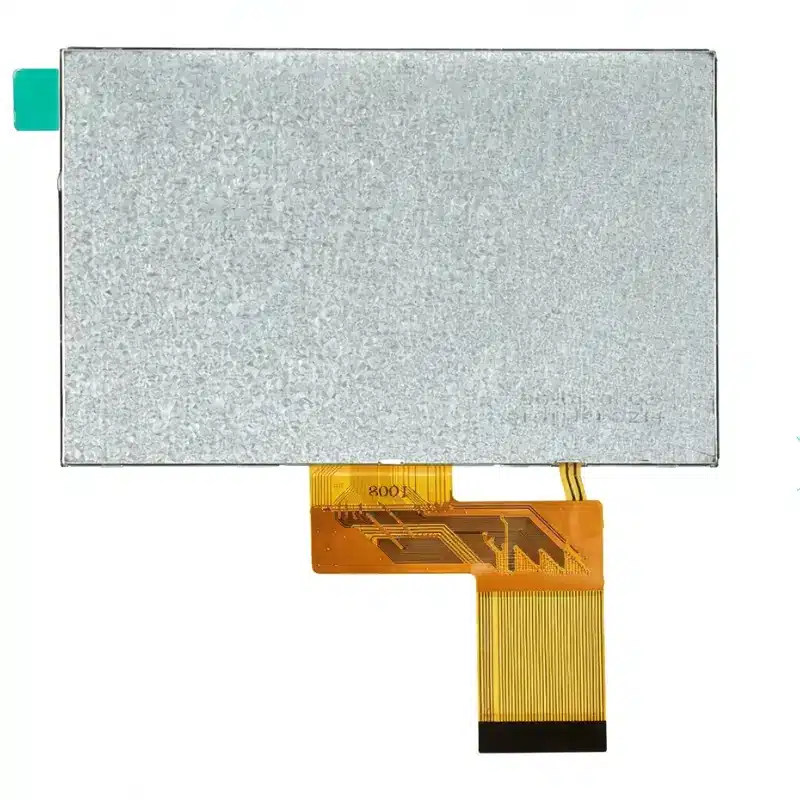
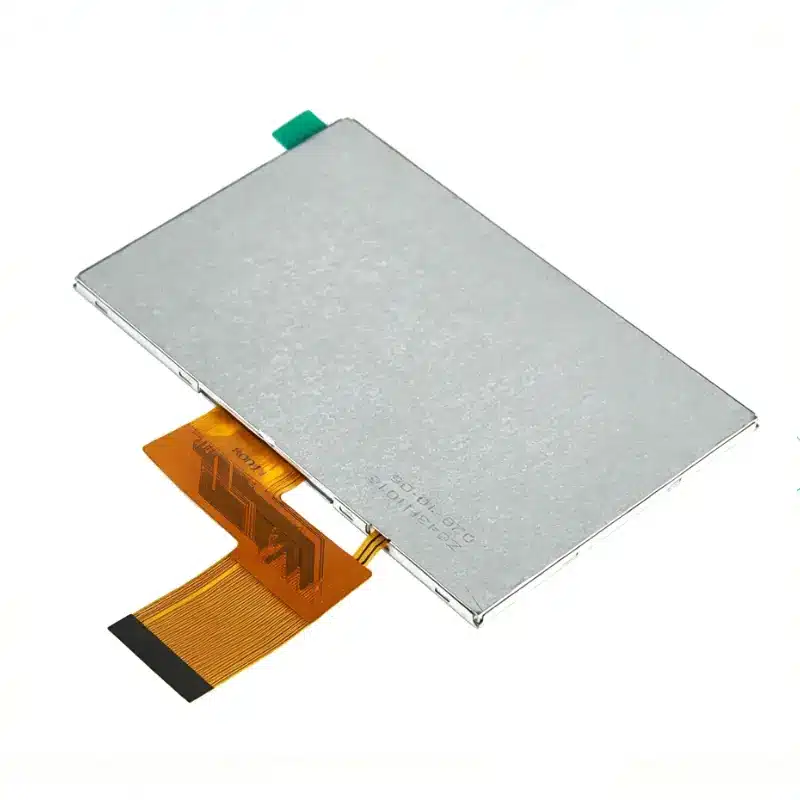
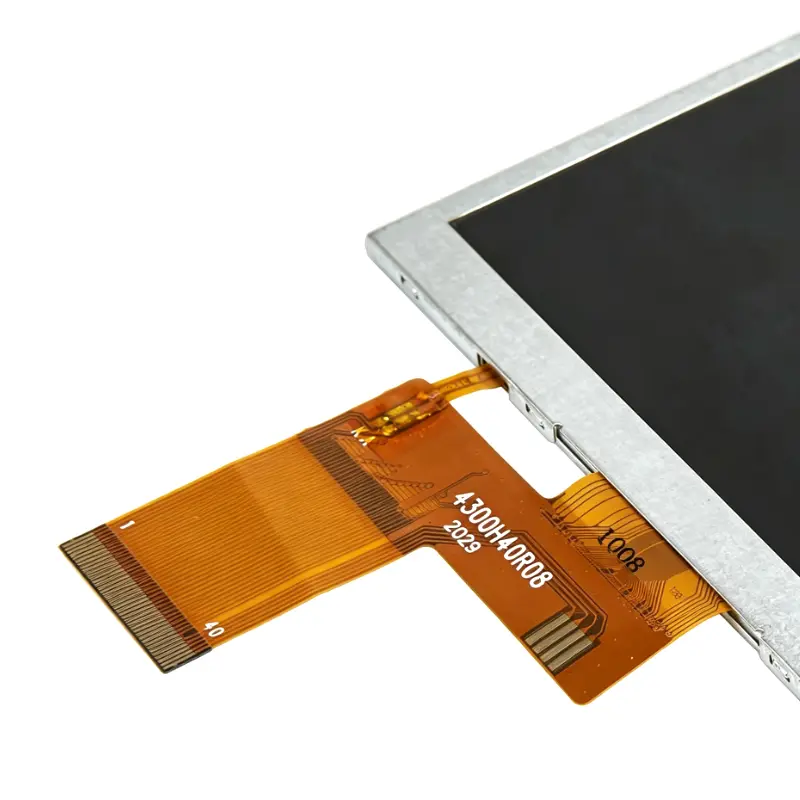
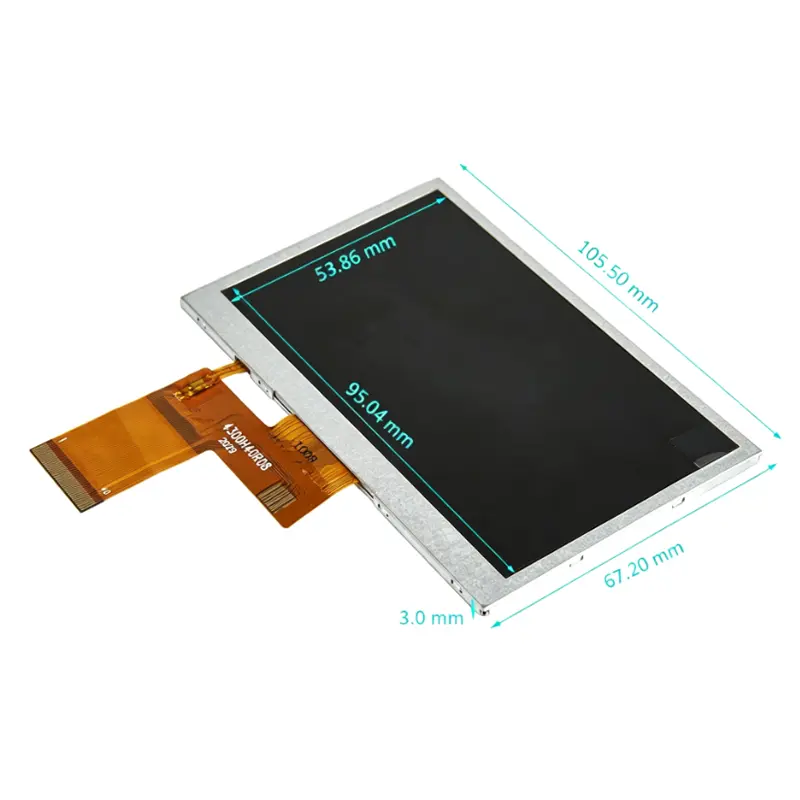
The LCD measures 105.44 × 67.2 × 3.0 mm and uses a 40-pin FPC. Optional resistive or capacitive touch can be reviewed for interactive products, while the standard non-touch configuration remains appropriate for status displays and control interfaces.
Key Specifications at a Glance
| Feature | Value |
|---|---|
| Display size | 4.3 inch |
| Native resolution | 800 × 480 |
| Panel type | IPS TFT LCD |
| Display mode | Normally black, transmissive |
| Signal interface | LVDS |
| Connector | 40-pin FPC |
| TFT driver IC | ST7262 |
| Typical luminance | 350 cd/m² |
| Typical contrast | 1200:1 |
| Viewing angle | 80/80/80/80° typical |
| Overall dimensions | 105.44 × 67.2 × 3.0 mm |
| Touch options | Optional RTP or CTP |
Why the ST7262 and 40-Pin LVDS Combination Matters
The ST7262 40 Pin LVDS Display differs from similarly sized RGB modules because the host board must provide the correct LVDS signal arrangement. A matching resolution or connector count does not establish compatibility.
ST7262 is specified as the panel’s TFT driver IC. Its presence alone does not determine a particular host initialization method, power sequence or controller-board solution. Datasheet-defined timing and power requirements must be verified before the controller PCB is released.
Native 800×480 output is also important. A host configured for another resolution may require scaling or a dedicated controller, while a board that only provides parallel RGB, MIPI, HDMI or USB cannot connect directly through a passive cable.
Key Features for Compact Embedded Interfaces
Wide IPS Viewing
Typical viewing angles of 80 degrees from the upper, lower, left and right directions help maintain image consistency when an operator is not centered directly in front of the panel. This is useful in wall controls, handheld instruments and equipment installed above or below normal eye level.
Normally Black, 1200:1 Typical Contrast
Normally black operation supports dark interface backgrounds and clear separation between status fields, icons and warning elements. The 1200:1 contrast ratio is a typical value and should not be interpreted as guaranteed minimum performance under every system condition.
Slim 3.0 mm LCD Profile
The base LCD structure measures 3.0 mm thick. Enclosure planning must also account for the FPC bend, connector height, support frame and any optional touch sensor, adhesive or cover glass.
Optional Touch Configuration
RTP or CTP can be considered according to the input method and front-panel design. Touch-controller type, interface, external dimensions, thickness, cover glass and bonding method require separate confirmation.
Technical Specifications
The active image area is 95.04 × 53.85 mm within a 105.44 × 67.2 mm overall module outline. Dot pitch is specified at 0.1188 × 0.1122 mm.
Typical response time is 30 ms for the combined rise-and-fall reference. Standard luminance is 350 cd/m² typical, which aligns with indoor and controlled-lighting interfaces rather than direct-sunlight installations.
A 10-chip WLED backlight is specified. The backlight electrical reference is 16 V/40 mA, and the listed backlight lifetime is 30,000 hours under the specified reference conditions. Final driver selection must follow the approved electrical specification.
Operating temperature is −10°C to +60°C, with storage from −20°C to +70°C. Final electrical, optical and mechanical values remain subject to the approved datasheet, drawing and sample validation.
LVDS Interface and Controller Compatibility
The 40-pin FPC must be checked at pin level. Engineering review should cover:
- LVDS channel and clock-pair mapping
- Native 800×480 timing
- Pixel-clock requirements
- Data format and color depth
- Panel power rails
- Exact 40-pin assignment
- FPC contact side
- Cable exit direction
- Connector position
- Datasheet-defined timing and power requirements
An adapter cable cannot correct a mismatch in signal type, voltage or timing. Conversion hardware is required when the host only supplies HDMI, USB, MIPI, eDP or parallel RGB.
The module requires host-board verification and should not be treated as a universal replacement for every 4.3-inch or 40-pin LCD.
Mechanical Dimensions and Enclosure Integration
A 3.0 mm LCD thickness helps reduce enclosure depth, but the panel glass should not carry mechanical stress from the bezel or mounting structure.
Design review should include:
- Active-area alignment with the bezel opening
- FPC bend radius and exit direction
- Connector clearance on the host PCB
- Support locations around the LCD frame
- Touch and cover-glass stack height
- Adhesive or bonding allowance
- Assembly tolerance
- Internal operating temperature
For a touch-enabled version, the finished outline may differ from the bare LCD dimensions. The final touch drawing should therefore be approved before machining a front enclosure.
Display Performance and Application Fit
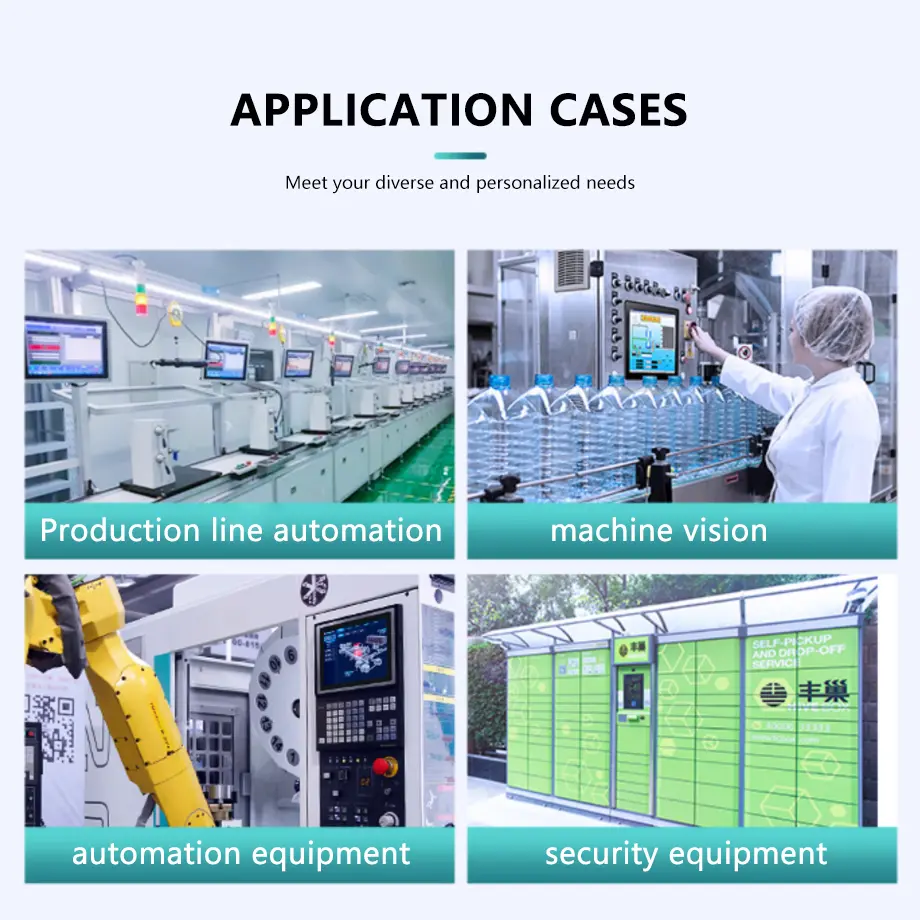
The 350 cd/m² standard version is appropriate for many factory controls, smart-home panels, portable test tools and compact terminals operating under controlled ambient light.
Dark cover glass, a touch sensor or a large air gap can reduce perceived brightness. Sample testing should use the intended cover material and actual installation angle.
Wide viewing and the 1200:1 typical contrast ratio are useful when the interface contains dark backgrounds, status indicators, process values and compact menus. These specifications do not establish medical, automotive or outdoor qualification.
When to Choose This Display
This configuration is a practical candidate when the system needs:
- A 4.3-inch landscape interface
- Native 800×480 resolution
- IPS viewing
- LVDS rather than RGB
- A 40-pin FPC connection
- A slim LCD outline
- Optional RTP or CTP
- Standard indoor luminance
When Additional Hardware or Qualification Is Required
The standard configuration is not a direct fit when:
- The host lacks native LVDS output
- Direct sunlight must remain readable
- A certified medical or automotive part is mandatory
- The product requires a wider operating-temperature range
- A defined touch controller and touch interface are already fixed
- The enclosure conflicts with the FPC direction
- A complete HDMI monitor rather than a bare panel is required
In these cases, additional conversion hardware, optical modification, mechanical adaptation or system-level qualification is required before approval.
Recommended Applications
The ST7262 40 Pin LVDS Display can be reviewed for:
- Industrial control panels
- Embedded HMI controllers
- Smart-home and building controls
- Portable diagnostic instruments
- Test and measurement equipment
- Compact terminals
- Monitoring interfaces
- Project-qualified medical or auxiliary vehicle systems
Application approval depends on the complete electronics, enclosure, optical stack and compliance requirements.
Customization Options
Project customization can be reviewed for:
- FPC design and cable direction
- LVDS mapping
- Backlight type and brightness
- RTP or CTP integration
- Cover-glass dimensions and printing
- Bonding requirements
- Mechanical adaptation
- Packaging and sample validation
The displayed custom-option minimum is 1,000 pieces for the shown categories. This does not automatically define the MOQ for samples, standard modules, tooling or every customized configuration. Quantity requirements must be reconfirmed for the actual project.
Procurement and Compatibility Checklist
Before sample approval, confirm:
- Native 800×480 output from the host.
- LVDS channel mapping and electrical level.
- Exact 40-pin FPC assignment and contact side.
- FPC direction relative to the controller PCB.
- Datasheet-defined timing and power requirements.
- Backlight-driver suitability for the electrical reference.
- Fit within the 105.44 × 67.2 × 3.0 mm LCD envelope.
- Suitability of 350 cd/m² for the lighting environment.
- Non-touch, RTP or CTP configuration.
- Operating-temperature requirement.
- Sample quantity and annual demand.
- Mechanical and display testing in the final enclosure.
FAQ
about ST7262 40 Pin LVDS Display
Is every 40-pin LVDS LCD interchangeable?
Does ST7262 determine the required controller board?
Can the display connect directly to HDMI?
Is 350 cd/m² sunlight readable?
Does optional touch use a fixed interface?
What information is needed for sample approval?
Freya Yang
+86 18318948097