Freya Yang
+86 18318948097
+852 62667476
QVGA Controller LCD 3.5 inch 320×240 TN TFT for Compact RGB Boards
Model P/N
Size
Resolution
Brightness
Viewing Angle
Connector Type
Operating Temp
Overall(mm)
huisoar
HSO35R06C30
Brand
Panel Size (inch)
Model P/N
Resolution
Brightness (nits)
Viewing Angle
Contrast Ratio
Response Time
Overall (mm)
Active Area (mm)
Refresh Rate
Display Colors
Panel Type
Connector Type
Operating Temp
Touchscreen Type
Storage Temp
Work Mode
Pixel Format
Input Voltage (V)
Control Type
Weight (g)
Designed For
3.5-Inch 320×240 TN TFT with RGB 24-Bit FPC and HX8238-D Driver
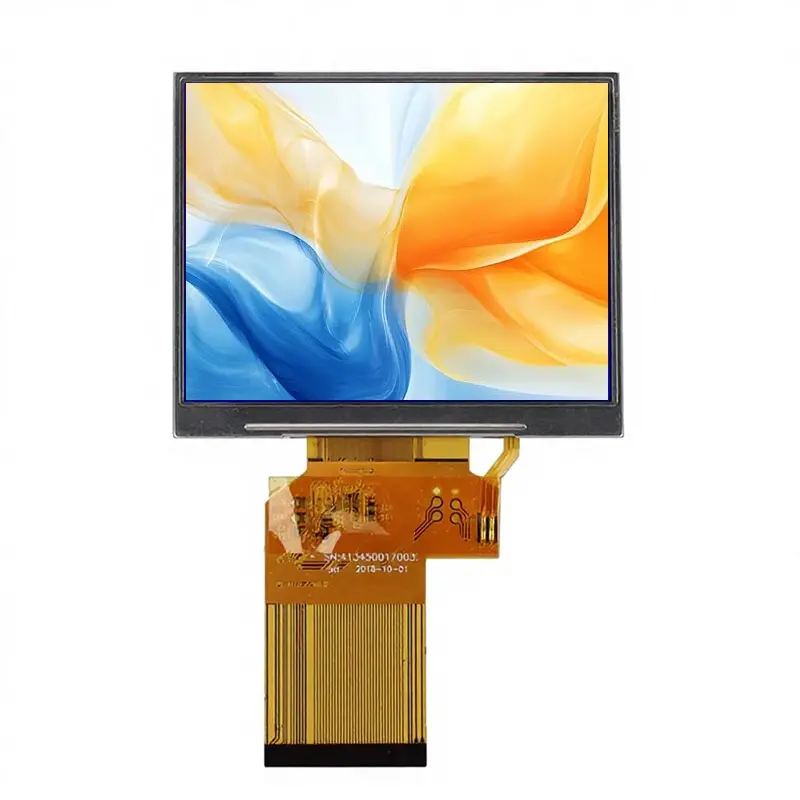
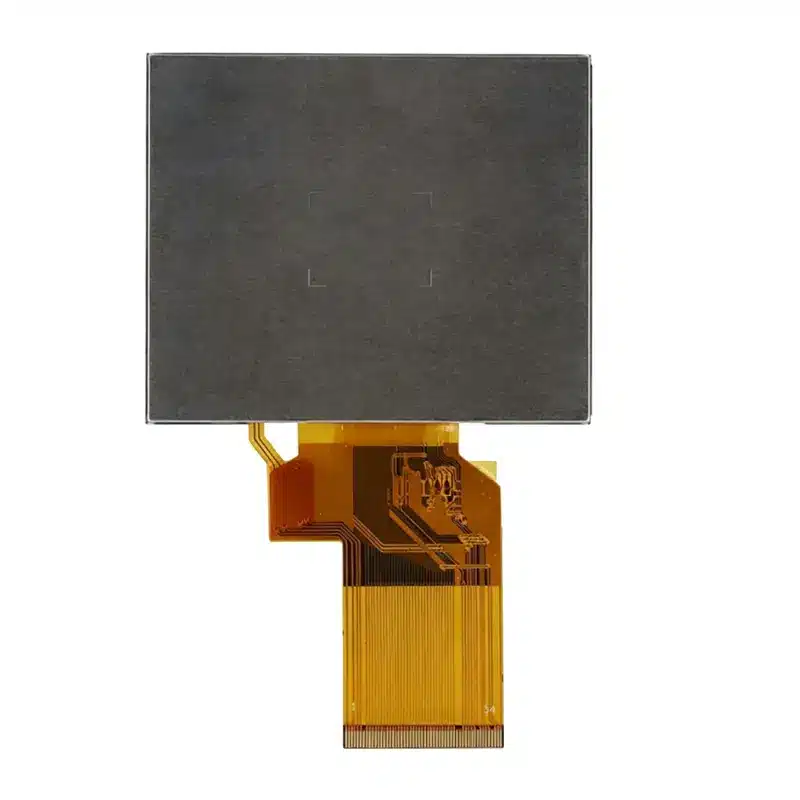
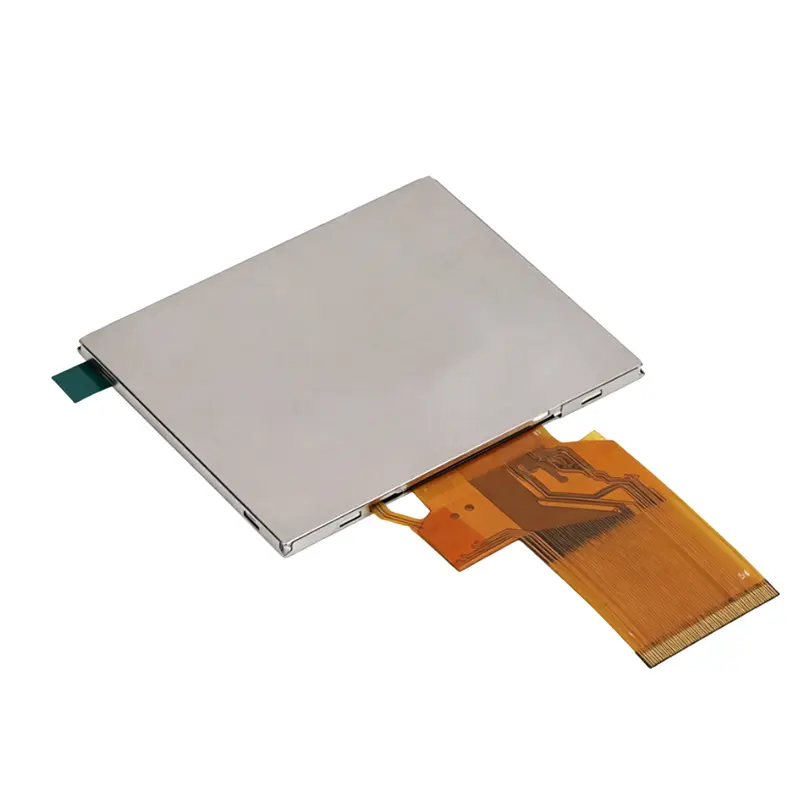
A QVGA Controller LCD is a 3.5-inch 320×240 TN TFT display module for compact controller boards, handheld terminals, POS devices, small HMIs, and embedded equipment that need RGB 24-bit 54-pin FPC integration. It combines HX8238-D driver support, 300 cd/m² standard brightness, an up-to-800-nit option, optional RTP or CTP touch, 6-chip WLED backlight, and -20°C to +70°C operation for compact OEM display projects.
At a Glance: 3.5-Inch QVGA RGB Board Highlights
- 3.5-inch compact format supports small enclosures, handheld shells, and embedded panels.
- 320×240 QVGA resolution fits menu pages, numeric values, icons, and status screens.
- RGB 24-bit interface with FPC 54 pins supports direct controller-board integration.
- HX8238-D driver IC gives engineers a defined display bring-up reference.
- 300 cd/m² standard brightness suits controlled indoor equipment.
- Up-to-800-nit or higher option supports brighter product variants.
- Optional RTP or CTP touch lets buyers choose pressure input or finger-touch interaction.
Product Overview of the QVGA Controller LCD
The QVGA Controller LCD is built for compact electronic products that need a practical color interface without moving to a larger or higher-cost display platform. Its 320×240 resolution is enough for simple dashboards, operating menus, settings pages, status icons, alert messages, battery indicators, and compact user controls.
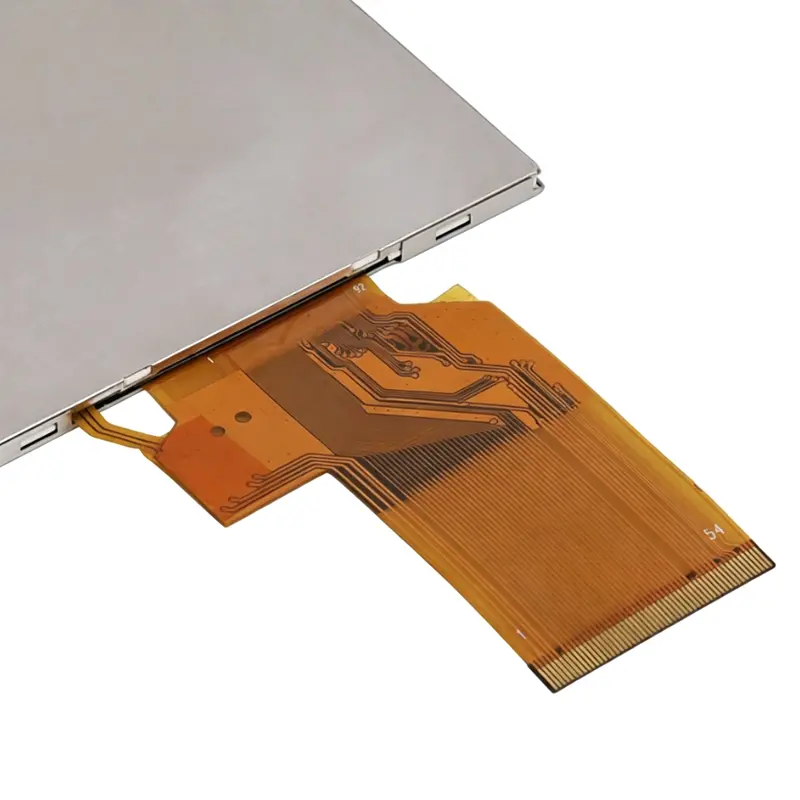
This module is especially useful when the host board already supports RGB display output. The RGB 24-bit FPC 54-pin interface gives hardware teams a direct route for parallel display signaling, but the exact timing, pinout, signal voltage, and connector direction should be confirmed before PCB layout.
The display uses a TN normally white transmissive structure. That makes it a cost-efficient option for many embedded products, but it should not be described as IPS. The 6 o’clock viewing direction is a real design point and should be matched to how the user will view the finished device.
Key Features of the QVGA Controller LCD
| Feature | B2B value |
|---|---|
| 320×240 QVGA resolution | Keeps UI layout simple for compact controllers and instruments. |
| RGB 24-bit input | Supports direct display output from compatible embedded processors. |
| FPC 54-pin connector | Provides a defined interface path for PCB and cable design. |
| HX8238-D driver IC | Gives developers a concrete driver point for initialization review. |
| 300 cd/m² standard brightness | Fits many indoor HMI, POS, handheld, and instrument environments. |
| Up-to-800-nit option | Supports brighter configurations when the product environment requires it. |
| Optional RTP or CTP | Allows touch selection based on input method, budget, and UI style. |
| 6-chip WLED backlight | Uses confirmed 19.8V/20mA backlight reference data. |
| 50,000-hour backlight life | Supports long-service planning for embedded equipment. |
| -20°C to +70°C operation | Fits many industrial, commercial, and portable electronics applications. |
Technical Specifications of the 3.5-Inch RGB TFT Module
| Specification | Confirmed value |
|---|---|
| Display Size | 3.5 inch |
| Resolution | 320 × RGB × 240 |
| Display Mode | TN, normally white, transmissive TFT |
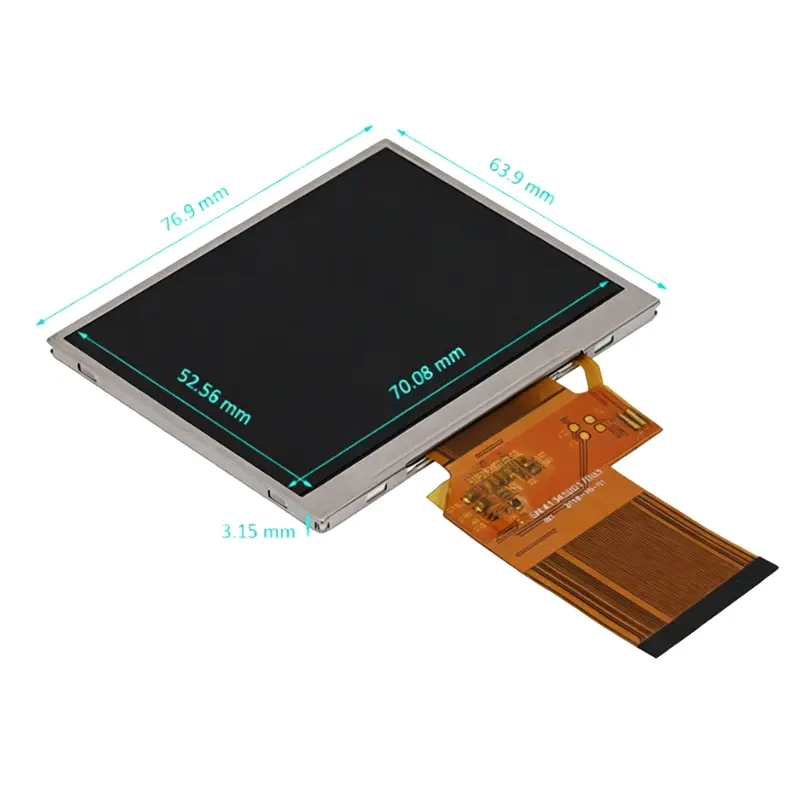
| Active Area | 70.08 × 52.56 mm |
| Module Size | 76.9 × 63.9 × 3.15 mm |
| Brightness | 300 cd/m² standard; up to 800 nits or higher option |
| Viewing Angle | 50/70/70/70 typical |
| Viewing Direction | 6 o’clock |
| Contrast Ratio | 300:1 typical |
| Response Time | 10/15 ms typical |
| Interface | RGB 24-bit, FPC 54 pins |
| TFT Driver IC | HX8238-D |
| Backlight | 6-chip WLED, 19.8V/20mA |
| Backlight Life | 50,000 hours typical |
| Touch Panel | Optional RTP or CTP |
| Operating Temperature | -20°C ~ +70°C |
| Storage Temperature | -30°C ~ +80°C |
This specification set should be reviewed with the final controller board and enclosure. The key engineering checks are RGB timing, 54-pin pinout, HX8238-D initialization, FPC direction, backlight drive, active-area alignment, viewing direction, and optional touch stack.
Why Choose This 3.5-Inch QVGA Display for Embedded Controllers?
Compact UI Space for Controller Products
A 3.5-inch 320×240 screen is useful when the product needs essential visual feedback but cannot justify a larger display. It can show operating mode, sensor values, configuration menus, service alerts, and basic touch targets without requiring a heavy graphics system.
Better Fit Than a Generic Display Module
This page positions the product around controller-board integration rather than generic “display module” wording. For buyers comparing several 3.5-inch TFT options, the key distinction is the RGB 24-bit 54-pin interface, HX8238-D driver, and optional touch flexibility.
Touch Choice Without Locking the Base Platform
Touch is optional, not assumed. RTP can be reviewed for stylus, glove, or pressure activation, while CTP can be reviewed for modern finger-touch interaction. The correct choice depends on cover glass, environment, controller support, cost target, and final UI design.
300-to-800-Nit Brightness and 6 O’clock Viewing
The 300 cd/m² standard brightness is suitable for many indoor products, including handheld terminals, POS systems, smart home controls, and small industrial panels. For higher ambient light, the source supports an up-to-800-nit or higher configuration path.
Brightness selection should be made with the real enclosure, front cover, touch stack, UI color palette, and expected lighting condition. A brighter version may require additional review of LED drive, power budget, heat path, and optical performance.
Because this is a TN display, viewing direction is also critical. The confirmed 6 o’clock viewing direction should be checked against the installed angle. If the screen will be mounted above eye level, below eye level, or tilted in a handheld housing, sample testing is recommended before mass production.
RGB 54-Pin, HX8238-D, and Backlight Integration
The late-middle engineering focus of this QVGA Controller LCD is the RGB signal path. The host board should be reviewed for pixel clock, HSYNC, VSYNC, data enable, RGB data mapping, power rails, reset sequence, FPC pitch, and connector orientation.
HX8238-D setup should also be checked during display bring-up. Correct initialization, stable signal timing, and clean FPC routing are necessary for reliable image output. If the project changes brightness or adds touch, the electrical and mechanical stack should be reviewed again.
The backlight uses 6-chip WLEDs with 19.8V/20mA reference data. For battery-powered or thermally constrained products, brightness control and backlight efficiency should be included in the design review.
Recommended Applications for Compact Controller Interfaces
Industrial Control Panels
The module can support small equipment menus, alarm pages, operating values, and local configuration screens. Designers should validate the 6 o’clock viewing direction against the final panel position.
Handheld Instruments
Portable testers, meters, diagnostic tools, and field devices can use the compact display to show readings and workflow prompts. The 3.15 mm module thickness helps in space-limited housings.
Smart Home and Appliance Controls
Smart home interfaces and appliance panels can use the screen for settings, icons, and status pages. CTP may be evaluated for consumer-style touch, while RTP may be preferred for pressure-based input.
POS and Compact Commercial Devices
Small POS terminals and service devices can use the display for transaction prompts, menu options, and status messages. Optional touch, cover glass, and brightness should be confirmed by sample.
Customization Options for 3.5-Inch RGB LCD Projects
Project evaluation can include FPC customization, RGB timing review, 54-pin pinout and FPC direction, HX8238-D bring-up support, brightness and backlight tuning, RTP or CTP touch selection, cover glass review, mechanical drawing adaptation, packaging, sample validation, and controller-board support.
Procurement and Engineering Checklist for QVGA Controller LCD Selection
- Confirm the 320×240 UI layout with real text, icons, menus, and alert pages.
- Verify RGB 24-bit host support, 54-pin pinout, FPC direction, and timing signals.
- Check HX8238-D driver initialization and reset/power sequencing requirements.
- Decide whether the product needs no touch, RTP, or CTP.
- Select 300 cd/m² standard brightness or request the up-to-800-nit option.
- Validate 6 o’clock viewing direction in the final mounting angle.
- Review backlight drive data, including 6-chip WLED and 19.8V/20mA.
- Test samples with the real enclosure, cover glass, temperature, and application environment.
FAQ
About QVGA Controller LCD Integration
What does QVGA mean for this display?
Does this QVGA Controller LCD use RGB, LVDS, or MIPI?
Is the touch panel included by default?
Is this an IPS display?
What should engineers check before PCB design?
Can the brightness be customized?
Why is 6 o’clock viewing direction important?
Freya Yang
+86 18318948097