
~
~
~
~
~
~
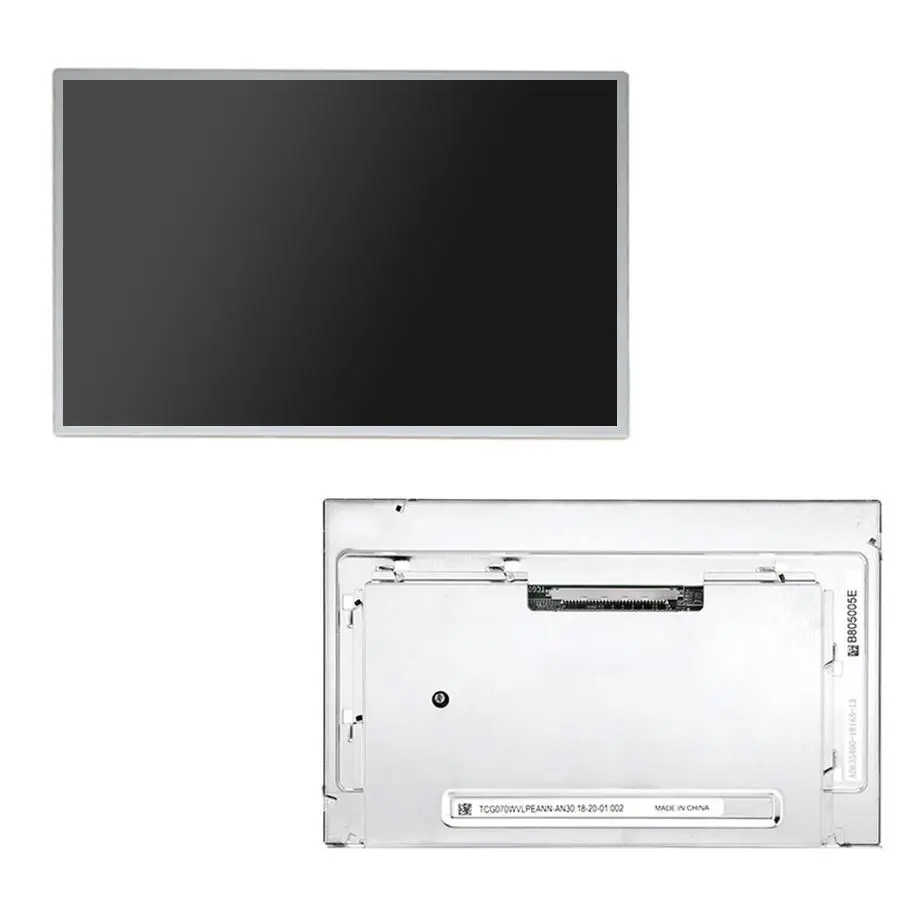
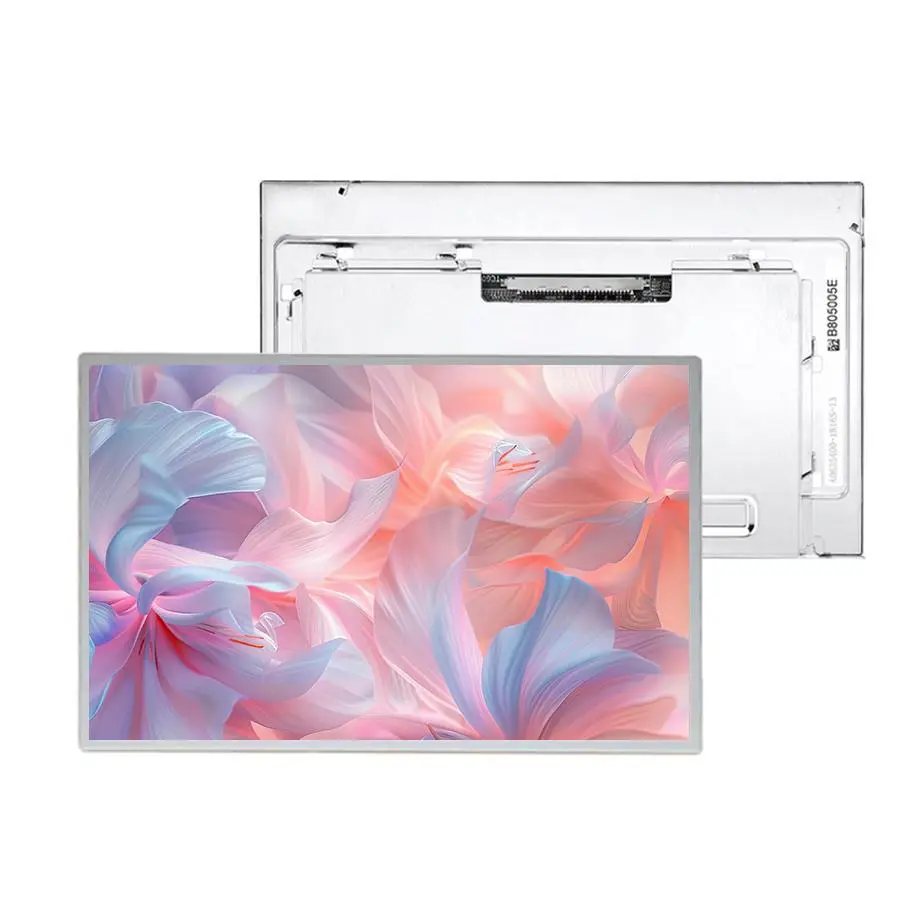
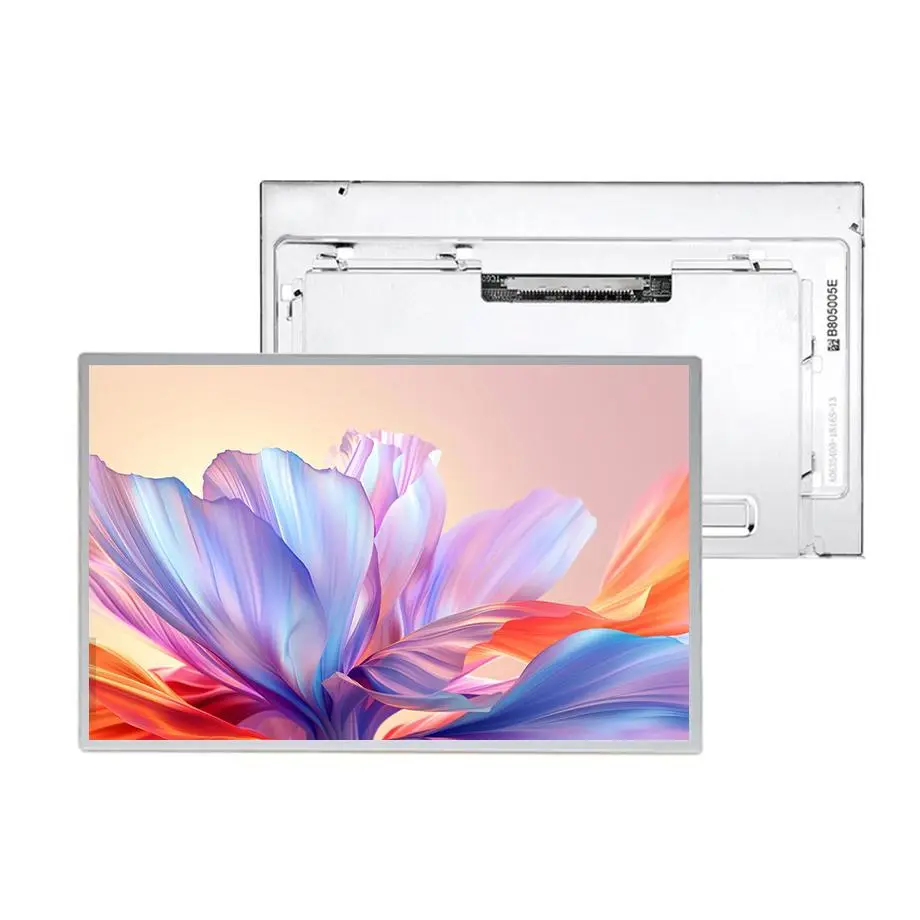
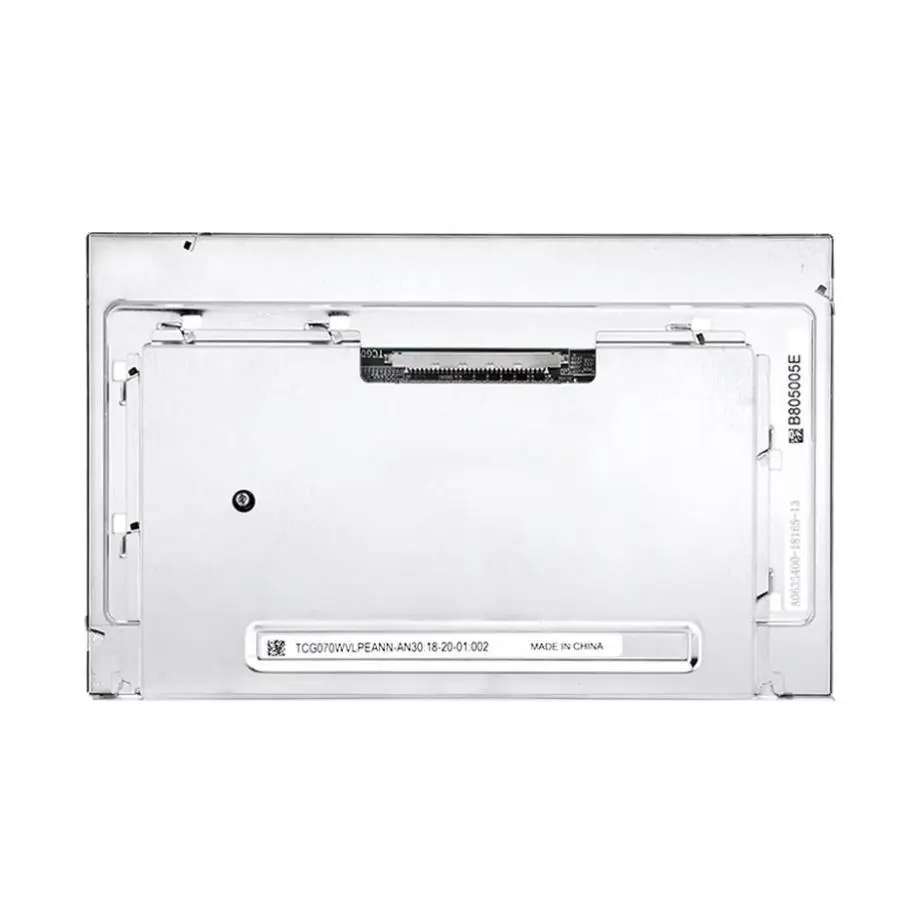
TCG070WVLPEANN-AN20-S 350-Nit LVDS HMI Display 7 Inch Kyocera
Model P/N
Size
Resolution
Brightness
Viewing Angle
Connector Type
Operating Temp
Overall(mm)
kyocera
TCG070WVLPEANN-AN20-S
Brand
Panel Size (inch)
Model P/N
Resolution
Brightness (nits)
Viewing Angle
Contrast Ratio
Response Time
Overall (mm)
Active Area (mm)
Refresh Rate
Display Colors
Panel Type
Connector Type
Surface Treatment
Operating Temp
Touchscreen Type
Storage Temp
Work Mode
Pixel Format
Input Voltage (V)
Weight (g)
Designed For
Product Details
Product Overview
The TCG070WVLPEANN-AN20-S 350-Nit LVDS HMI Display is a 7.0-inch Kyocera a-Si TFT-LCD module intended for industrial display integration. Its native 800(RGB)×480 WVGA image uses a 15:9 format, with a 152.4 × 91.44 mm active area inside a 165 × 104.4 × 9.1 mm module outline. The display is specified for 350 cd/m² typical luminance, 1000:1 typical contrast, antiglare surface treatment and TN normally-white transmissive operation.
This module combines a single-channel 6/8-bit LVDS interface, a 30-pin connector and a 3.3 V typical panel input. It also includes a WLED backlight with an LED driver, so the integration boundary differs from a bare cell or a module that requires a separate backlight driver. The specified operating range is -20 to 70 °C and the storage range is -30 to 80 °C. Those values are useful for industrial design screening, but they do not by themselves establish shock, vibration, ingress, EMC or application-specific qualification.
Three Core Buyer Value Propositions
Compact WVGA geometry supports space-constrained industrial HMIs
The 7-inch format provides an 800×480 canvas in a 165 × 104.4 mm mechanical envelope. For control panels, test equipment or compact machine interfaces, that creates a known relationship between visible area and module size before a bezel or bracket is finalized. The engineering boundary is that connector location, mounting details and tolerances still need the exact mechanical drawing; diagonal size and outline dimensions alone do not prove drop-in fit.
-20 to 70 °C operation gives qualification teams a defined thermal screening range
The documented operating range extends below normal indoor ambient temperatures and up to 70 °C, which can be useful for industrial enclosures exposed to cold starts or elevated internal heat. This is a panel operating specification, not a complete system environmental rating. Enclosure temperature rise, ventilation, backlight heat, controller dissipation and local hot spots still need to be measured in the finished equipment.
Integrated WLED driving reduces one subsystem in the display stack
The module is specified with a WLED backlight and LED driver, with a 50K-hour backlight-life reference. That can simplify controller-board architecture compared with a panel that exposes raw LED strings. It does not eliminate backlight verification: the host still needs the correct supply/control arrangement, and the 50K-hour figure should remain a manufacturer reference rather than being converted into a machine lifetime, warranty or maintenance interval.
Key Specifications at a Glance
| Parameter | Specification |
|---|---|
| Manufacturer / model | Kyocera TCG070WVLPEANN-AN20-S |
| Size / type | 7.0 inch a-Si TFT-LCD, LCM |
| Resolution | 800(RGB)×480 WVGA, 15:9 |
| Active area / outline | 152.4 × 91.44 mm / 165 × 104.4 × 9.1 mm |
| Weight | 205 g |
| Brightness | 350 cd/m² typical |
| Contrast / viewing | 1000:1 typical / 80/80/60/80 typical at CR≥10 |
| Display mode | TN, normally white, transmissive |
| Colors | 262K/16.2M, 49% NTSC |
| Surface | Antiglare |
| Response time | 5/25 ms typical (Tr/Td) |
| Native interface | LVDS, 1 channel, 6/8-bit, 30-pin connector |
| Panel input | 3.3 V typical |
| Backlight | WLED, 50K-hour reference, with LED driver |
| Refresh rate | 60 Hz |
| Temperature | Operating -20 to 70 °C; storage -30 to 80 °C |
| Touch | Without touch screen |
| Designed for | Industrial |
How should the 30-pin LVDS connection be qualified?
The TCG070WVLPEANN-AN20-S 350-Nit LVDS HMI Display uses one-channel LVDS with 6/8-bit support on a 30-pin connector. A matching connector body is only the beginning of the qualification process. The controller must match the display’s pixel mapping, clocking, bit-depth mode, control signals and power sequence, while the cable must preserve the exact pin assignment and orientation. Do not assume another 7-inch WVGA LVDS module uses the same 30-pin map.
Texas Instruments describes LVDS as an electrical physical layer and emphasizes that data rate, termination and system behavior depend on the actual link design (TI Precision Labs: LVDS). For an LCD module, that means the production controller, cable length, grounding and connector implementation should be tested together. Use the current Kyocera interface specification for the panel timing and pin map rather than trying to derive them from generic LVDS rules.
6-bit and 8-bit capability must match the selected controller mode
The interface is listed as 6/8-bit capable, so the released system configuration should define which mode is actually used. Confirm the controller output format, LVDS mapping and firmware timing for that mode. During prototype testing, use gradients, fine text and color ramps that can expose mapping or bit-depth errors, then repeat cold starts and sleep/wake transitions to verify that initialization remains stable.
What does the integrated LED driver change for system design?
Because the backlight driver is included, the host design does not need to reproduce the raw LED string drive architecture that would be required for a driverless module. That can reduce component count and simplify qualification of the illumination subsystem. However, the host still needs the model-specific backlight power and brightness-control requirements. Do not infer the dimming input, PWM range, backlight supply tolerance or current demand from the phrase “with LED driver.”
Backlight life is a reference condition, not a finished-machine service guarantee
The 50K-hour figure is useful for comparing the module’s stated illumination-life reference with project requirements. Actual field behavior depends on drive level, temperature, duty cycle and the manufacturer’s end-of-life criterion. If the machine has a long service interval or continuous-duty requirement, record expected operating hours and ambient conditions in the display qualification plan, then confirm the applicable lifetime definition in the current module documentation.
How should the industrial temperature range be interpreted?
The -20 to 70 °C operating range and -30 to 80 °C storage range provide clear component limits for thermal design. They do not establish that a completed HMI can operate anywhere in that range without additional testing. The display can be influenced by enclosure heating, cold-start response, backlight efficiency, controller temperature and local mechanical stress. Place temperature sensors near the display during thermal validation rather than relying only on chamber air temperature.
Kyocera’s current industrial TFT portfolio highlights broad use of TFT modules in factory automation and HMI applications and publishes model-specific interface, luminance and temperature information for its industrial display families (Kyocera industrial TFT overview). That portfolio context supports the industrial integration approach, while TCG070WVLPEANN-AN20-S should still be qualified from its exact revision documentation.
Environmental range is not the same as industrial certification
No vibration level, ingress rating, EMC class, safety certification or ruggedization standard is established by the current product facts. If the target equipment must meet IEC, UL, railway, medical, automotive or other program-specific requirements, treat those as separate qualification items. The display’s temperature range is one input to that work, not a substitute for the full equipment compliance plan.
Viewing direction, TN behavior and mechanical placement
The module uses TN normally-white transmissive technology and lists a 12 o’clock preferred viewing direction with 80/80/60/80 typical viewing angles at CR≥10. In a machine panel, operator position can matter as much as the nominal angle specification. Test the actual mounting orientation from standing, seated and off-axis positions, especially if the HMI is tilted or located above/below eye level.
Mechanical qualification of the TCG070WVLPEANN-AN20-S 350-Nit LVDS HMI Display should use the current drawing. The active area is 152.4 × 91.44 mm and the module outline is 165 × 104.4 × 9.1 mm. Use those dimensions to establish the visible opening and envelope, but rely on the mechanical drawing for mounting holes, connector position, tolerances and keep-out zones. The 205 g module mass should be included in bracket and vibration calculations, even though no model-specific vibration resistance is documented here.
Replacement planning for a 7-inch industrial display
A replacement candidate should be compared across more than WVGA resolution. Match the 165 × 104.4 × 9.1 mm envelope, active-area position, 30-pin LVDS mapping, selected 6/8-bit mode, 3.3 V panel supply, backlight-driver behavior, viewing direction and temperature range. A mechanically similar module can still require a new cable, controller setting, bezel opening or firmware timing.
Third-party sourcing listings currently describe this model as in production, but lifecycle should be reconfirmed through Kyocera or an authorized supply channel for any long-running industrial program. Supplier stock pages do not create an HS-LCD inventory commitment. Record the exact model suffix, revision and approved controller/cable combination so later purchasing teams do not accidentally substitute a related family member without engineering review.
Optical expectations for 350 cd/m² antiglare operation
The 350 cd/m² typical luminance and antiglare surface make this module suitable for many controlled indoor industrial environments, but they do not prove sunlight readability. Ambient contrast depends on the enclosure window, reflections, front-surface treatment and illumination conditions. If the HMI will face windows, overhead lighting or outdoor ambient light, test the assembled front stack rather than qualifying the module from luminance alone.
The specified color capability is 262K/16.2M with 49% NTSC. For industrial graphics, that may be adequate for icons, trends, status graphics and operator controls, but it should not be represented as a color-critical display without a separate color requirement and measurement. Define what the application actually needs before using gamut percentage as a purchasing differentiator.
Engineering Answers in Brief
TCG070WVLPEANN-AN20-S is a 7-inch Kyocera WVGA industrial LCD module with one-channel 6/8-bit LVDS, a 30-pin connector and 3.3 V typical panel input.
The module includes its WLED backlight driver, but the host still must meet the exact backlight power and control requirements defined for the model.
The specified -20 to 70 °C operating range supports industrial thermal screening but does not establish a complete rugged, EMC or safety qualification.
Replacement approval should match the exact LVDS mapping, viewing orientation, mechanics and backlight-control behavior, not only the 800×480 resolution.
Procurement Checklist
- Specify Kyocera TCG070WVLPEANN-AN20-S including the exact suffix and revision.
- Request the current 30-pin LVDS assignment, timing table and 6/8-bit configuration details.
- Confirm 3.3 V panel power, startup/shutdown sequencing and integrated backlight-driver control requirements.
- Check the 165 × 104.4 × 9.1 mm outline and 152.4 × 91.44 mm active area against the enclosure and visible opening.
- Validate operator viewing from the actual mounting orientation, including the 12 o’clock preferred direction.
- Test the assembled HMI across the required thermal profile while keeping the module within -20 to 70 °C operation.
- Verify front-window reflections and readability under the intended ambient-light conditions.
- Reconfirm lifecycle, revision traceability and change-notification requirements before volume purchasing.
The TCG070WVLPEANN-AN20-S 350-Nit LVDS HMI Display provides a compact, well-defined industrial display baseline with WVGA resolution, LVDS connectivity, an integrated WLED driver and a broad operating-temperature range. Successful deployment depends on matching the exact interface, mechanics, viewing orientation, thermal environment and lifecycle controls to the target equipment.
Recommended: Same Size
(7")
Applications & Value of LCD Panel

- Fast sourcing with in-stock panels & cross-reference alternatives
- Stable supply chain with long-term availability
- Engineering-level support from panel to integration
- Custom solutions: cable, touch & optical bonding
- Strict quality control with IQC / OQC / aging test
- Full traceability system for quality assurance
- Complete technical documentation & drawings
- Compliance support: RoHS & certification files
