
~
~
~
~
~
~
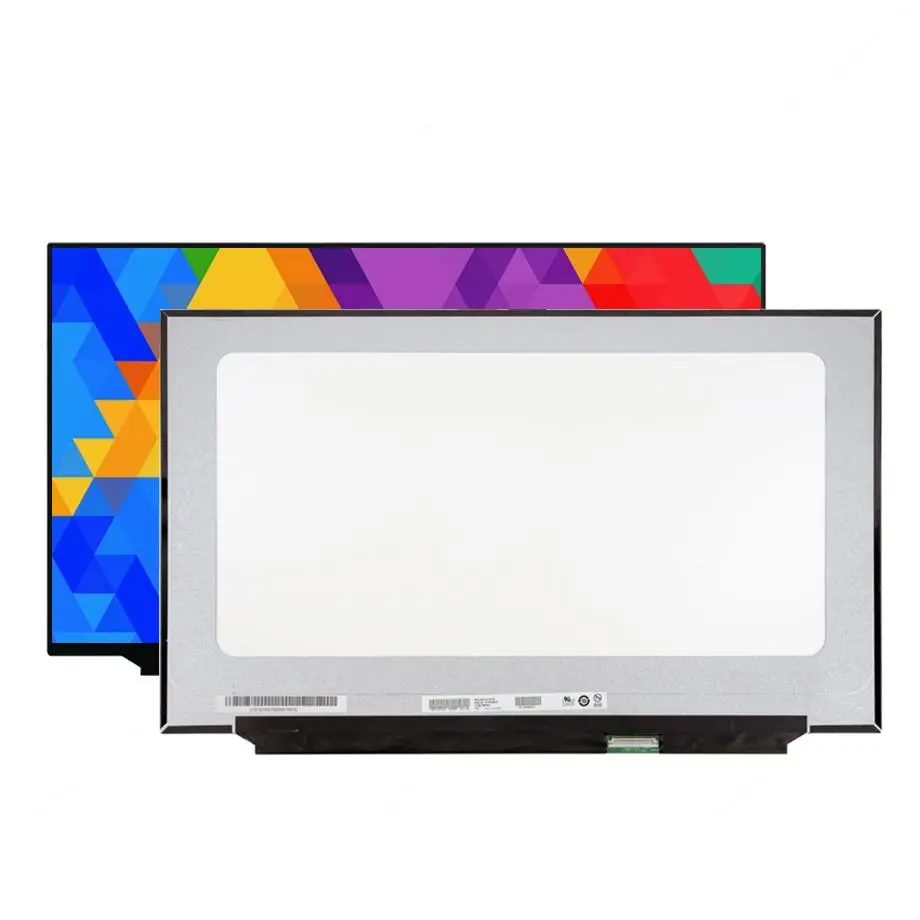
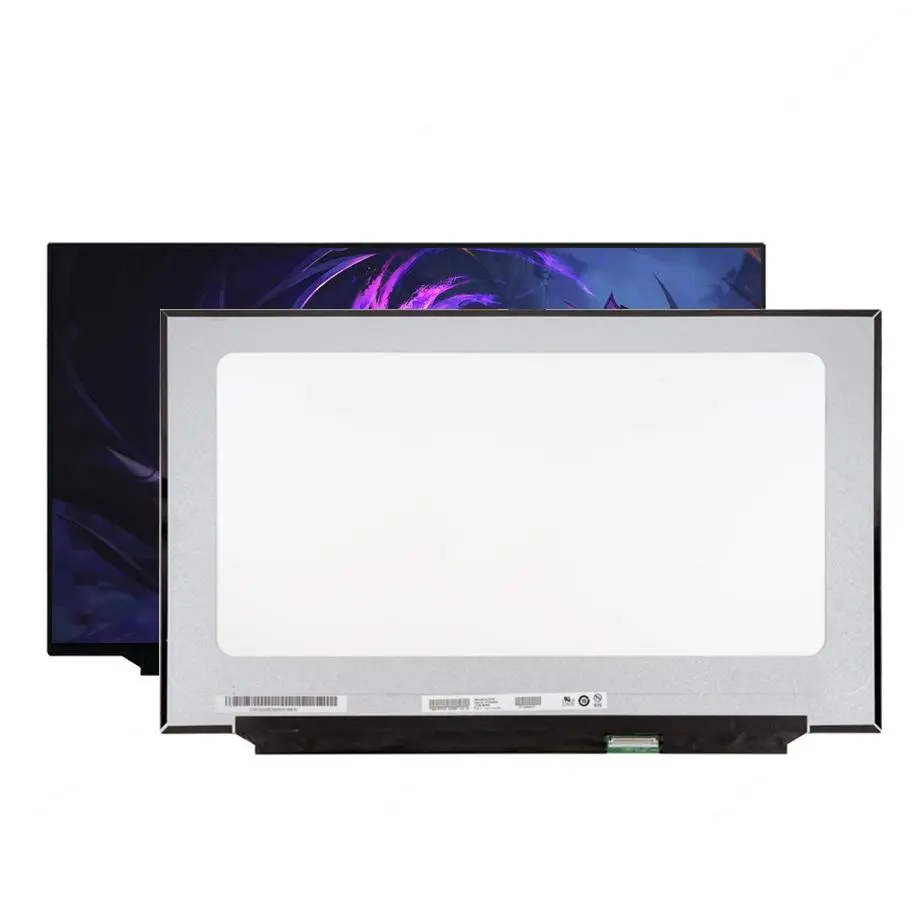
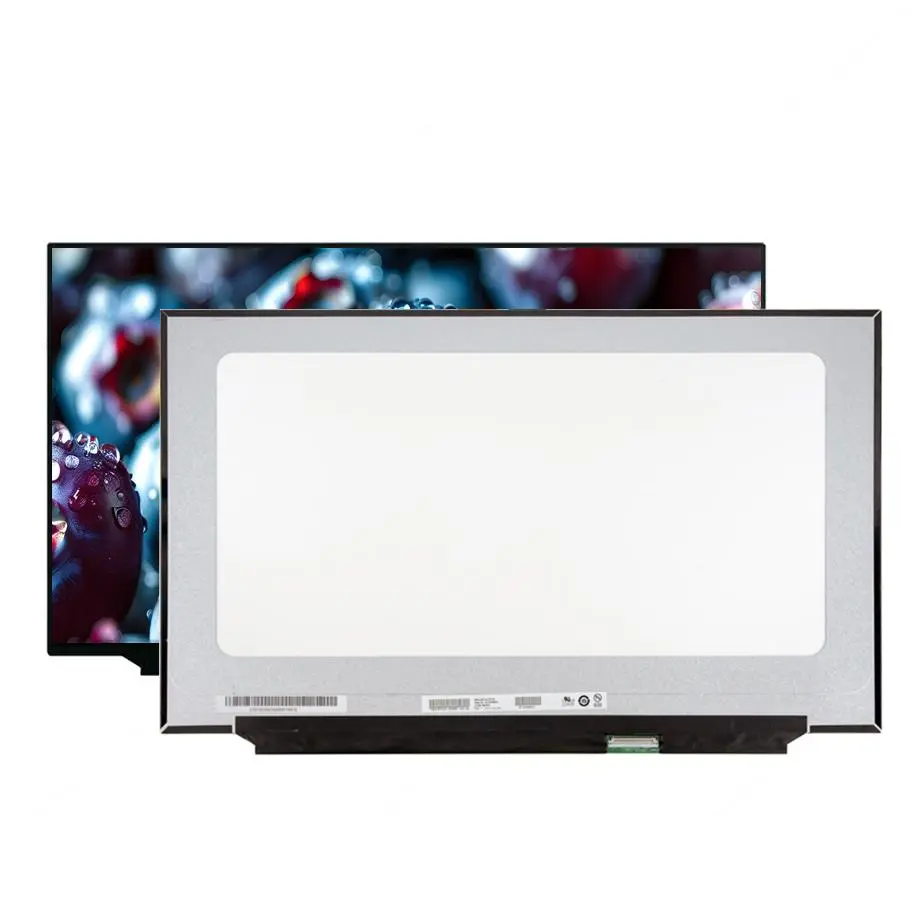
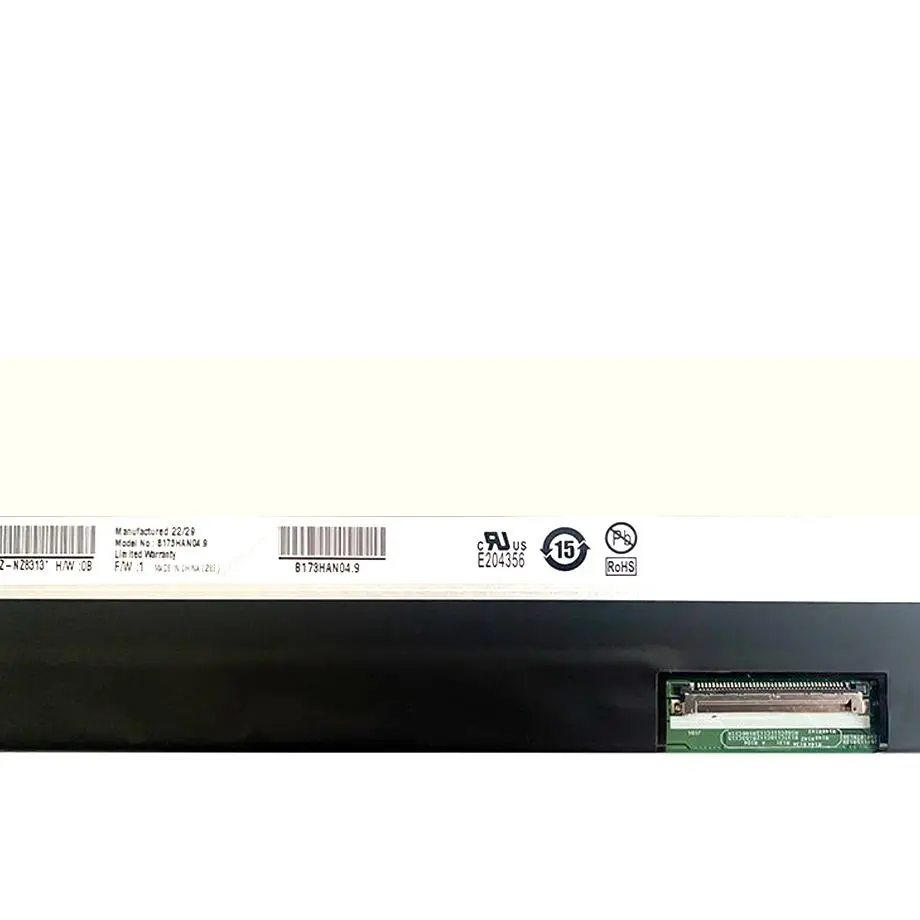
B173HANAA.K 300-Nit FHD eDP AHVA LCM Antiglare 17.3 Inch AUO
Model P/N
Size
Resolution
Brightness
Viewing Angle
Connector Type
Operating Temp
Overall(mm)
auo
B173HANAA.K
Brand
Panel Size (inch)
Model P/N
Resolution
Brightness (nits)
Viewing Angle
Contrast Ratio
Response Time
Overall (mm)
Active Area (mm)
Refresh Rate
Display Colors
Panel Type
Connector Type
Surface Treatment
Operating Temp
Touchscreen Type
Storage Temp
Work Mode
Pixel Format
Input Voltage (V)
Weight (g)
Designed For
Product Details
Product Overview
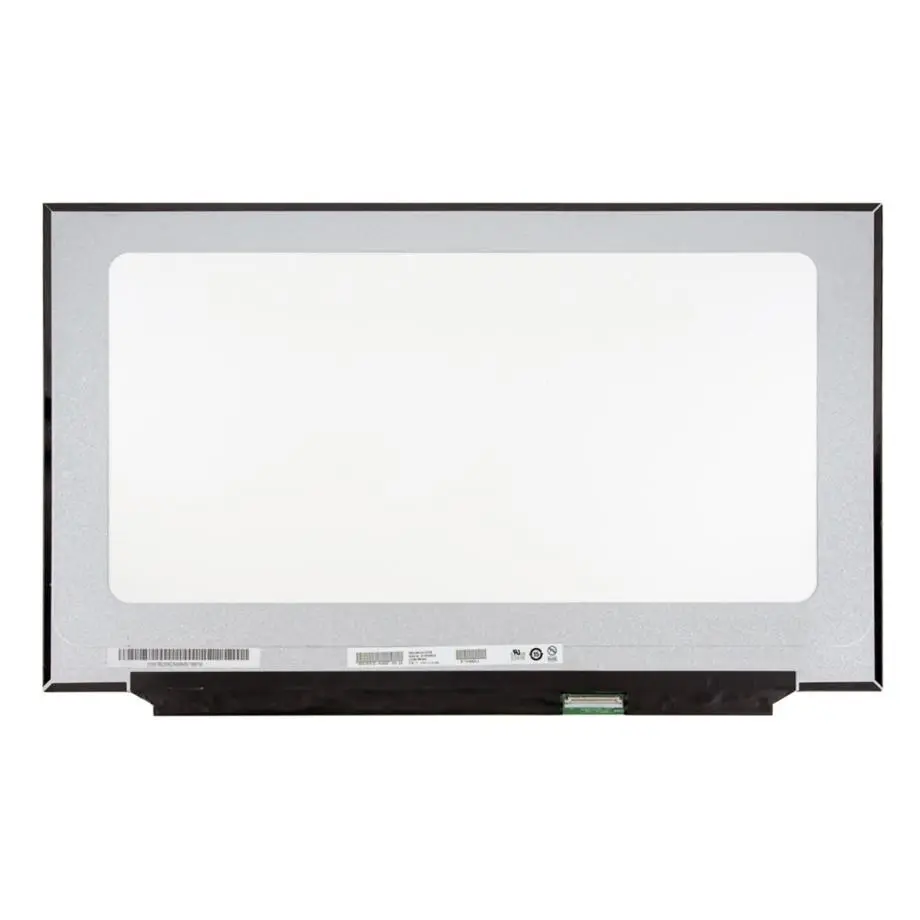
The B173HANAA.K 300-Nit FHD eDP AHVA LCM is a 17.3-inch AUO a-Si TFT-LCD module intended for notebook integration. It provides a native 1920(RGB)×1080 FHD image in a 16:9 format, using AHVA normally-black transmissive operation. The active image measures 381.888 × 214.812 mm within a 389.89 × 238.31 × 3.5 mm module outline. AUO specifies 300 cd/m² typical luminance, 1200:1 typical contrast, 89/89/89/89 typical viewing angles at CR≥10, 16.7 million colors and 45% NTSC coverage.
The module uses a two-lane eDP 1.2 interface through a 30-pin connector and a 3.3 V typical panel input. Its WLED backlight includes an LED driver, so the host does not need to generate raw LED-string drive in the same way it would for a driverless panel. The display is specified for 60 Hz operation, a 25 ms typical Tr+Td response time, 0 to 50 °C operation and -20 to 60 °C storage. The standard module is supplied without touch.
Three Core Buyer Value Propositions
FHD notebook geometry reduces redesign risk in 17.3-inch platforms
The 381.888 × 214.812 mm active area and 389.89 × 238.31 mm outline give mechanical teams concrete dimensions for bezel opening, lid cavity and cable routing. The 3.5 mm module thickness also provides a defined packaging baseline. These dimensions do not by themselves prove drop-in interchangeability with another 17.3-inch panel; mounting features, connector position, tolerances and PCBA geometry still need comparison against the current mechanical drawing.
Two-lane eDP 1.2 establishes a clear native video-interface target
The panel-side interface is explicitly two-lane eDP 1.2 on a 30-pin connector. That narrows controller and cable qualification to hardware that can drive the required embedded DisplayPort link, rather than treating every 30-pin notebook cable as equivalent. The exact lane mapping, AUX-channel contacts, power pins, backlight control and sequencing should be checked against the model-specific AUO documentation before a replacement is approved.
Integrated WLED driving simplifies the illumination boundary
The module includes a WLED backlight with LED driver and a 15K-hour backlight-life reference. This can reduce the number of external illumination circuits compared with a driverless display. The life figure remains a manufacturer reference under defined conditions, not a notebook service-life guarantee. Actual brightness retention depends on drive level, thermal conditions and usage profile, so long-life product programs should define their own acceptance criteria.
Key Specifications at a Glance
| Parameter | Specification |
|---|---|
| Manufacturer / model | AUO B173HANAA.K |
| Size / type | 17.3 inch a-Si TFT-LCD, LCM |
| Resolution | 1920(RGB)×1080 FHD, 16:9 |
| Active area | 381.888 × 214.812 mm |
| Outline / thickness | 389.89 × 238.31 × 3.5 mm |
| Weight | 480 g maximum |
| Brightness | 300 cd/m² typical |
| Contrast / viewing | 1200:1 typical / 89/89/89/89 typical at CR≥10 |
| Display mode | AHVA, normally black, transmissive |
| Colors | 16.7M, 45% NTSC |
| Surface | Antiglare, hard coating 3H |
| Response time | 25 ms typical Tr+Td |
| Native interface | eDP 1.2, 2 lanes, 30-pin connector |
| Panel input | 3.3 V typical |
| Backlight | WLED, integrated LED driver, 15K-hour reference |
| Refresh rate | 60 Hz |
| Temperature | Operating 0 to 50 °C; storage -20 to 60 °C |
| Touch | Without touch screen |
How should the two-lane eDP 1.2 link be qualified?
The B173HANAA.K 300-Nit FHD eDP AHVA LCM should be treated as an embedded DisplayPort endpoint with model-specific timing and pin mapping. VESA describes eDP as the internal display interface used to carry video from system graphics hardware to embedded panels, with AUX-channel functions and defined lane structures (VESA Embedded DisplayPort overview). That standard context explains the architecture, but it does not replace the B173HANAA.K timing table or connector assignment.
Qualification should use the production GPU or display controller, the intended 30-pin cable and the released BIOS/firmware settings. Verify link training, native 1920×1080 timing, 60 Hz operation, color mapping, brightness control, sleep/wake transitions and repeated cold starts. A notebook cable that physically fits another 30-pin panel can still have a different pin map or backlight-control arrangement, so continuity should be checked against the exact AUO drawing rather than by connector appearance.
Keep panel power and link signaling as separate verification items
The 3.3 V typical panel input is not a substitute for the complete power-sequence definition. Confirm voltage tolerance, inrush behavior, enable timing and any AUX/backlight interactions before prototype release. Measure the rail at the panel connector under operating load, especially in battery-powered designs where cable loss and power-state transitions can expose marginal conditions.
What does AHVA mean for viewing and optical expectations?
AUO has used AHVA technology across high-resolution mobile displays to support wide viewing and compact panel designs (AUO high-resolution mobile display technology). For this model, the specific evidence is the 89/89/89/89 typical viewing-angle specification at CR≥10 and the 1200:1 typical contrast ratio. Those values give system designers a strong notebook viewing baseline, but they do not guarantee finished-product color calibration or ambient-light performance.
The antiglare surface and 3H hard coating also describe the panel surface only. If a notebook design adds a protective lens, privacy film or other optical layer, re-check reflections, haze and apparent contrast on the assembled lid. The 45% NTSC figure defines the panel’s stated color-gamut coverage; it should not be represented as a wide-gamut or professional color-accuracy claim without separate calibration evidence.
How should the integrated backlight driver be handled?
Because the backlight driver is included, the host design can avoid a separate raw LED-string driver stage. Still, the system must follow the panel’s backlight-control and power requirements. Confirm brightness-control signaling, enable behavior and any PWM or AUX-based control defined by the current specification. Do not infer those details from another AUO notebook panel, even when the size and eDP connector are similar.
The 300 cd/m² typical luminance is a panel-level target under defined conditions. Finished notebook brightness can be affected by lid optics, privacy layers, power management and calibration. For a replacement program, compare measured luminance and uniformity at the system level rather than approving a panel solely from the nominal 300-nit specification.
Mechanical fit, service replacement and connector control
The 17.3-inch form factor is common enough that visually similar panels can appear interchangeable, but service replacement requires a tighter comparison. Check the 389.89 × 238.31 × 3.5 mm outline, 381.888 × 214.812 mm active area, connector position, cable fold path, PCBA-flat geometry and mounting features. Even a small change in connector offset or bottom-board thickness can interfere with a lid bracket or cable bend.
The B173HANAA.K 300-Nit FHD eDP AHVA LCM is specified without touch, so it should not be substituted into a touch notebook assembly unless the touch system is implemented separately and the mechanical stack supports it. Likewise, a touch-enabled sibling model should not be assumed equivalent because added sensor layers can change thickness, connector requirements, optical transmission and power behavior.
Thermal and lifecycle checks for notebook programs
The operating range of 0 to 50 °C and storage range of -20 to 60 °C are component limits for the display module. They do not define the complete notebook environmental rating. During validation, measure panel temperature after sustained backlight operation, CPU/GPU load and charging conditions, because heat from the system can raise the display environment above room temperature. Test sleep/wake and brightness control at the project’s low and high operating conditions.
Third-party sourcing information currently lists B173HANAA.K as in production, but that is not a manufacturer support guarantee and should not be converted into an HS-LCD stock claim. For engineering change control, record the exact suffix and any supplier-reported revision before samples move from evaluation into production qualification. For volume programs, request current AUO revision information, traceability and any applicable PCN/EOL handling through the actual supply channel. Preserve the approved panel revision, cable and firmware configuration together in the project BOM.
Engineering Answers in Brief
B173HANAA.K is a 17.3-inch AUO FHD AHVA LCM with 300 cd/m² typical brightness, two-lane eDP 1.2 and a 30-pin connector.
The panel operates from a 3.3 V typical input and includes a WLED backlight driver, but its exact power sequence and backlight-control behavior must follow the model-specific AUO documentation.
The module is specified for 60 Hz operation, 1200:1 typical contrast and wide 89-degree viewing angles, while the listed 45% NTSC gamut should not be overstated as professional color performance.
Replacement approval requires the exact electrical, mechanical and firmware baseline, not only a 17.3-inch FHD resolution match.
Procurement Checklist
- Specify AUO B173HANAA.K exactly and confirm the offered hardware revision.
- Request the current 30-pin eDP 1.2 pin map, timing table and power-sequence requirements.
- Verify the two-lane link with the production controller, cable and firmware at native 1920×1080 and 60 Hz.
- Check the 389.89 × 238.31 × 3.5 mm outline and connector position against the notebook lid mechanics.
- Confirm backlight enable and brightness-control behavior for the integrated WLED driver.
- Validate luminance, uniformity and viewing performance with the finished notebook optical stack.
- Test operating behavior over the required project temperatures within the panel’s 0 to 50 °C range.
- Reconfirm lifecycle, revision traceability and PCN/EOL expectations before volume purchasing.
The B173HANAA.K 300-Nit FHD eDP AHVA LCM provides a clearly defined AUO notebook-panel baseline around FHD resolution, two-lane eDP, integrated backlight driving and wide AHVA viewing. A production design should lock the exact connector, mechanics, power sequence and firmware configuration before final approval.
Recommended: Same Size
(17.3")
Applications & Value of LCD Panel

- Fast sourcing with in-stock panels & cross-reference alternatives
- Stable supply chain with long-term availability
- Engineering-level support from panel to integration
- Custom solutions: cable, touch & optical bonding
- Strict quality control with IQC / OQC / aging test
- Full traceability system for quality assurance
- Complete technical documentation & drawings
- Compliance support: RoHS & certification files
