
~
~
~
~
~
~
C101NWTG WSVGA Bare TFT LCD Cell Q-CUT 10.1 Inch IVO
Model P/N
Size
Resolution
Brightness
Viewing Angle
Connector Type
Operating Temp
Overall(mm)
ivo
C101NWTG
Brand
Panel Size (inch)
Model P/N
Resolution
Viewing Angle
Contrast Ratio
Response Time
Overall (mm)
Active Area (mm)
Refresh Rate
Display Colors
Panel Type
Connector Type
Surface Treatment
Operating Temp
Touchscreen Type
Storage Temp
Work Mode
Pixel Format
Designed For
Product Details
Product Overview
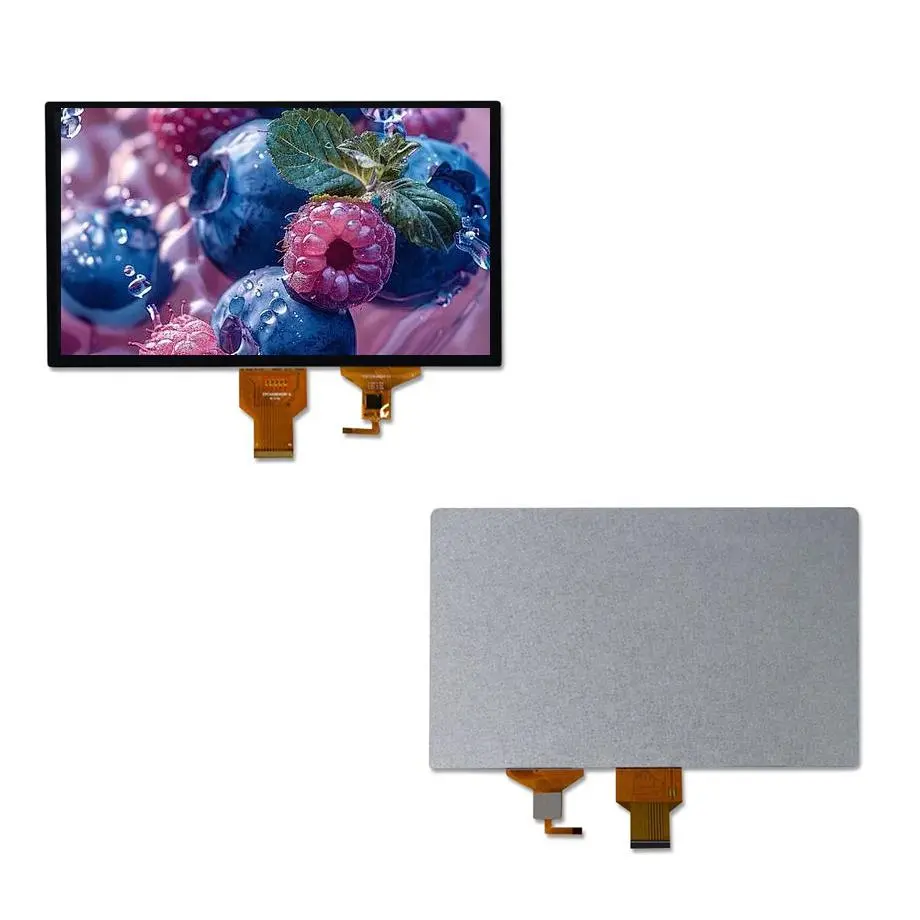
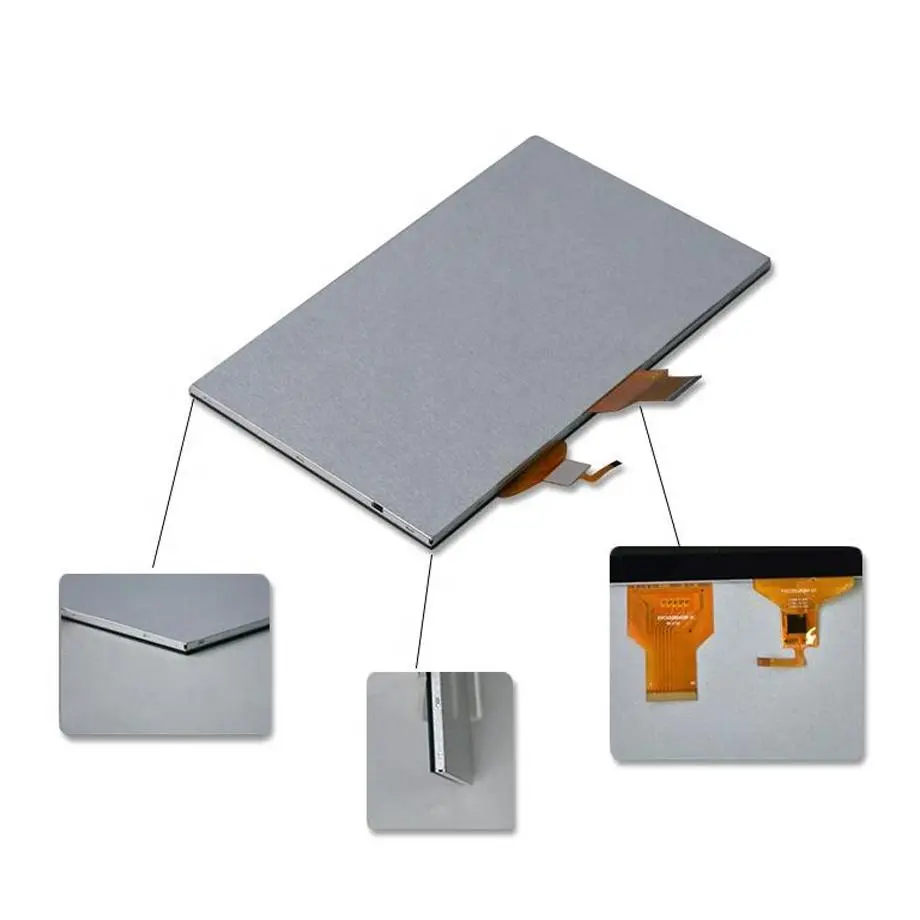
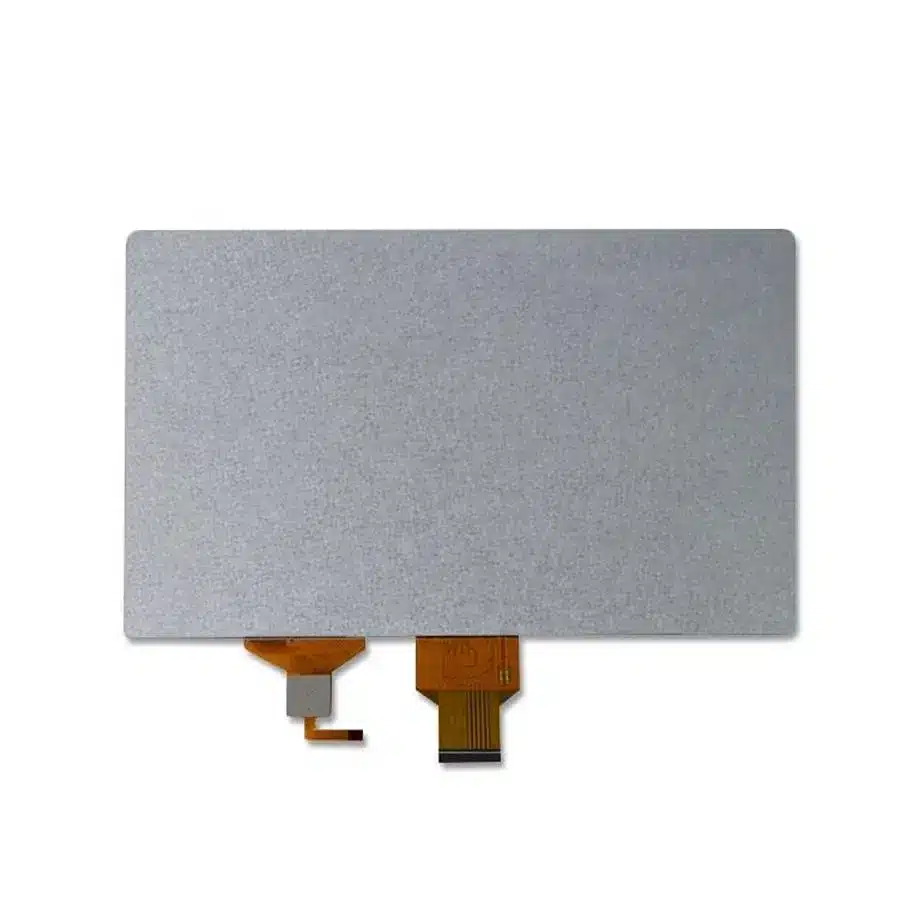
The C101NWTG WSVGA Bare TFT LCD Cell is a 10.1-inch IVO a-Si TFT-LCD cell supplied as a Q-CUT full-cell component rather than a finished backlit module. Its native image is 1024(RGB)×600 WSVGA in a 16:9 format, with a 222.72 × 125.28 mm active area inside a 230.52 × 134.3 × 1.0 mm glass outline. The cell uses TN normally-white transmissive operation, supports 16.7 million colors with 45% NTSC coverage and is specified for 500:1 typical contrast.
This part has no integrated backlight and no touch screen. The source data also identifies the surface as without polarizer, lists 0 cd/m² luminance and gives 6.36% typical transmissivity with polarizer. No finished host interface is specified. A suggested COG driver combination of NT51008 + NT52003 is referenced, but a driver-IC suggestion is not equivalent to a controller interface, cable pinout or complete timing definition. Those details must come from current model-specific IVO documentation before the cell is designed into a product.
Three Core Buyer Value Propositions
Cell-level construction gives the integrator control of the optical stack
Because the part is supplied without backlight and without polarizer, the equipment designer can define the illumination, polarizer and mechanical stack around the 10.1-inch glass. That can be useful in custom tablet, netbook or embedded-display programs where the complete optical system is already controlled by the integrator. It also means finished-display brightness, uniformity, reflectance and thermal behavior cannot be inferred directly from the cell itself.
Known glass and active-area dimensions support early mechanical planning
The 230.52 × 134.3 × 1.0 mm outline and 222.72 × 125.28 mm active area provide a concrete starting point for bezel opening, light-guide sizing and stack alignment. These dimensions should still be checked against the latest drawing before tooling is released. A full-cell replacement also needs matching edge connections, driver architecture and support conditions; glass size alone does not establish interchangeability.
Documented transmissivity helps frame backlight-efficiency decisions
The 6.36% typical transmissivity value with polarizer provides an optical parameter that can be used in system-level light-budget work. It does not specify the LED count, backlight power or final luminance. The finished display must be evaluated with the actual backlight, optical films, polarizer construction and drive conditions selected for the target system.
Key Specifications at a Glance
| Parameter | Specification |
|---|---|
| Manufacturer / model | IVO C101NWTG |
| Size / construction | 10.1 inch a-Si TFT-LCD, CELL, Q-CUT full cell |
| Resolution | 1024(RGB)×600 WSVGA, 16:9 |
| Active area | 222.72 × 125.28 mm |
| Outline / thickness | 230.52 × 134.3 × 1.0 mm |
| Brightness | 0 cd/m²; cell has no backlight |
| Contrast | 500:1 typical |
| Viewing angle | 70/70/50/70 typical at CR≥10; 6 o'clock viewing direction |
| Display mode | TN, normally white, transmissive |
| Colors | 16.7M, 45% NTSC |
| Surface | Without polarizer |
| Response time | 8 ms typical Tr+Td |
| Transmissivity | 6.36% typical with polarizer |
| Host interface | Not specified; confirm driver/TCON architecture |
| Suggested driver ICs | NT51008 + NT52003 suggestion; not a host-interface definition |
| Touch | Without touch screen |
| Temperature | Operating 0 to 50 °C; storage -20 to 60 °C |
| Designed for | Netbook PC / Pad & Tablet |
What does “bare cell” mean for system integration?
The C101NWTG WSVGA Bare TFT LCD Cell should be planned as an LCD cell inside a larger display assembly. IVO describes its business as the development and production of TFT-LCD panels for notebook, automotive, industrial-control and other display terminals (IVO corporate profile). At the cell level, however, the integrator still has to create the missing optical and electronic subsystems appropriate to the target product.
An engineering overview from Analog Devices separates the TFT-LCD panel, timing/controller functions and backlight into distinct elements and notes that smaller display implementations may require external timing and drive circuitry (Analog Devices TFT-LCD system overview). That distinction is directly relevant here because the C101NWTG source does not define a finished host video connector. The driver-IC suggestion should therefore be treated as component guidance, not as proof of LVDS, RGB, MIPI or any other host-side protocol.
Driver IC names do not remove the need for a timing definition
Before board design, obtain the current glass pinout, source/gate-driver architecture, timing requirements, bias rails and power sequence. The suggested NT51008 + NT52003 combination may help identify the intended drive solution, but the system still needs the exact signals and voltage domains required by the cell. Do not derive those values from a related IVO 10.1-inch product.
How should the backlight and polarizer be designed?
The 0 cd/m² entry is consistent with a cell that has no backlight; it is not a finished-display luminance specification. The system designer must add a compatible light source, optical films and mechanical light path. The 6.36% typical transmissivity with polarizer can support early optical calculations, but the actual LED power needed for a target brightness depends on light-guide efficiency, diffuser losses, polarizer selection, temperature and enclosure geometry.
The source also states “without polarizer,” so the final optical stack needs the correct polarizer configuration. Polarizer orientation and optical properties are not arbitrary because they interact with the TN cell and viewing direction. If the project uses a custom cover window, bonding layer or touch overlay, validate the complete stack for transmission, reflections, haze and viewing behavior rather than assigning a finished-display value to the bare glass.
How should viewing direction and TN behavior influence product layout?
The specified viewing angles are 70/70/50/70 typical at CR≥10 with a 6 o'clock preferred viewing direction. Those values are directional and should be interpreted with the exact manufacturer convention before the enclosure orientation is frozen. In a tablet or netbook concept, test the intended landscape/portrait orientation from the expected operator positions, especially if the product will be tilted on a stand or viewed from above.
The 500:1 typical contrast and 45% NTSC color coverage are useful panel-level descriptors, but they do not define calibrated color accuracy or ambient-light readability. Once the backlight and polarizer are selected, remeasure contrast, white point, color and uniformity on the complete display assembly.
Mechanical stack-up and replacement planning
The cell outline is only 1.0 mm thick, which makes handling and support design important. Avoid assuming that the glass can be clamped or supported like a framed LCM. The current drawing should define edge keep-outs, bonding zones, electrical contact geometry and allowable loading. The backlight tray, polarizer and bezel should support the glass without introducing pressure points that can create mura or damage.
For replacement work, compare more than the 10.1-inch WSVGA format. Match the 230.52 × 134.3 mm outline, active-area position, glass thickness, driver architecture, viewing direction, optical stack and environmental limits. A visually similar 1024×600 cell can require different driver ICs, timing, bias voltages or polarizer orientation, so a substitute should be qualified from current documentation rather than family resemblance.
For a development team evaluating the C101NWTG WSVGA Bare TFT LCD Cell, sample approval should include optical-stack and drive-architecture documentation together, not as separate late-stage tasks. A change in polarizer, driver IC, glass revision or light-engine geometry can affect the final image, so procurement should preserve those items as one controlled display baseline.
Temperature, sourcing and lifecycle controls
The specified operating range is 0 to 50 °C and storage range is -20 to 60 °C. These are cell-level environmental limits and do not create an industrial, automotive or rugged qualification. The final assembly should be tested with its backlight and electronics because the optical stack and local heating can alter display behavior at temperature extremes.
Third-party sourcing information currently lists C101NWTG as in production, but that listing should be reconfirmed with IVO or an authorized channel before a volume commitment. It does not establish HS-LCD inventory, a guaranteed support period or a PCN/EOL commitment. For long-running tablet or embedded programs, record the exact offered revision, driver solution and approved optical stack so later material changes can be assessed against the qualified baseline.
Engineering Answers in Brief
C101NWTG is a 10.1-inch IVO 1024×600 TFT-LCD cell supplied without backlight, polarizer or touch.
The cell does not publish a finished host interface in the current source packet, so controller protocol, timing, bias rails and pinout must be confirmed from model-specific documentation.
The 6.36% typical transmissivity with polarizer is an optical input for system design, not a finished-display brightness guarantee.
A replacement must match the glass mechanics, driver architecture and optical stack as well as the WSVGA resolution.
Procurement Checklist
- Specify IVO C101NWTG exactly and request the current glass/COG revision.
- Obtain the model-specific driver, timing, bias-voltage and pinout documentation before controller design.
- Verify the 230.52 × 134.3 × 1.0 mm glass outline and 222.72 × 125.28 mm active area in the mechanical stack.
- Design the backlight, polarizer and optical films around the target finished-display brightness and uniformity.
- Confirm viewing-direction convention and validate the final landscape/portrait orientation.
- Do not treat the NT51008 + NT52003 suggestion as proof of a host-side video protocol.
- Test the assembled display within the 0 to 50 °C operating range and -20 to 60 °C storage limits.
- Reconfirm current production status, revision traceability and change-notification expectations before volume purchasing.
The C101NWTG WSVGA Bare TFT LCD Cell is most appropriate when the buyer intentionally needs cell-level control over the optical and electronic architecture. The key procurement task is to close the model-specific drive, timing, polarizer and backlight requirements before releasing the complete display design.
Recommended: Same Size
(10.1")
Applications & Value of LCD Panel

- Fast sourcing with in-stock panels & cross-reference alternatives
- Stable supply chain with long-term availability
- Engineering-level support from panel to integration
- Custom solutions: cable, touch & optical bonding
- Strict quality control with IQC / OQC / aging test
- Full traceability system for quality assurance
- Complete technical documentation & drawings
- Compliance support: RoHS & certification files
