
~
~
~
~
~
~
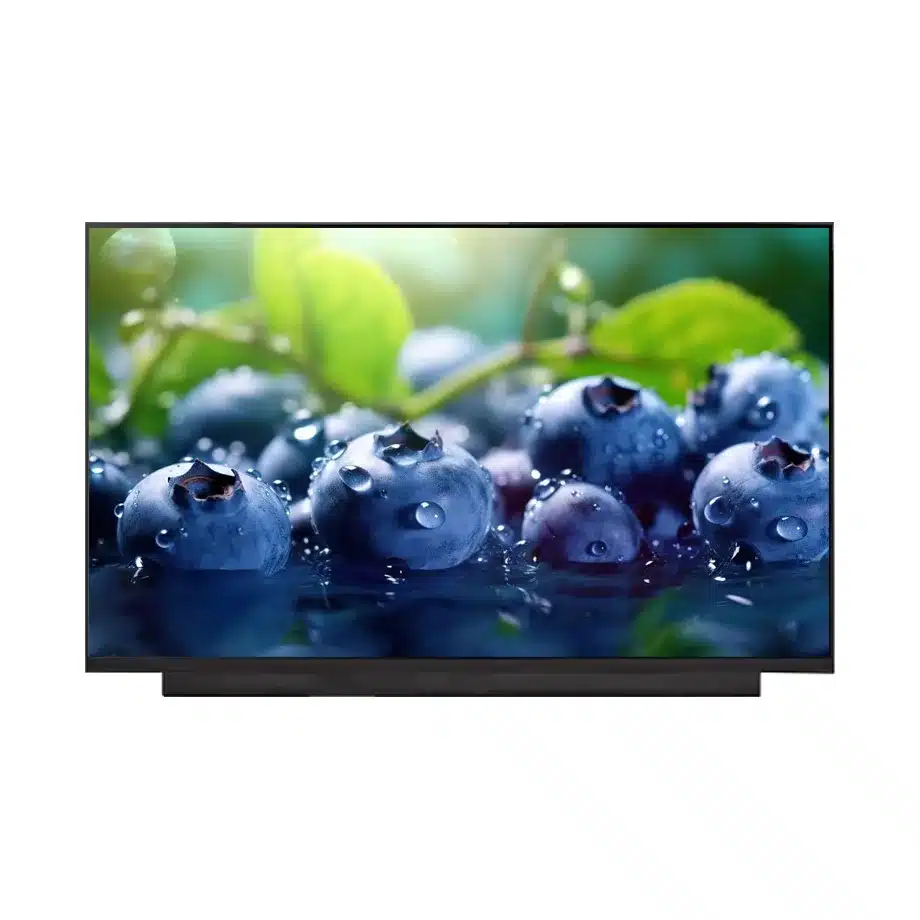
MZM601EZ1-1 0.1ms UHD OLED Monitor 21.6 Inch CSOT
Model P/N
Size
Resolution
Brightness
Viewing Angle
Connector Type
Operating Temp
Overall(mm)
csot
MZM601EZ1-1
Brand
Panel Size (inch)
Model P/N
Resolution
Brightness (nits)
Viewing Angle
Contrast Ratio
Response Time
Overall (mm)
Active Area (mm)
Refresh Rate
Display Colors
Panel Type
Connector Type
Surface Treatment
Operating Temp
Touchscreen Type
Storage Temp
Work Mode
Pixel Format
Input Voltage (V)
Designed For
Product Details
Product Overview
MZM601EZ1-1 0.1ms UHD OLED Monitor is a 21.6-inch CSOT AM-OLED full module for UHD desktop-monitor integration. The native image is 3840(RGB)×2160 in a 16:9 format, with a 478.08 × 268.02 mm active area and 493.672 × 292.512 mm outer dimensions. The display is self-emissive, so it does not use a conventional LCD backlight stack. The supplied source gives 140 cd/m² typical luminance and a 1,000,000:1 minimum contrast ratio.
The panel supports 1.07 billion colors, 60 Hz refresh and symmetric 89/89/89/89 minimum viewing at CR≥10. The source response row contains an obvious unit error, showing “0.1 (Typ.)(Tr+Td) mm”; the exact-model technical page confirms that the physical response-time quantity is 0.1 ms typical Tr+Td. That normalized unit is used in public and storage fields while the raw source wording remains traceable internally.
The native interface is four-lane HBR2 eDP at 5.4 Gbit/s per lane on a 40-pin connector, with a 12.0 V typical supply. The exact-model technical listing identifies the part for desktop monitors and references CSOT Ver.2 documentation dated 2024-07-26. VESA's eDP material supplies interface-level context.
Three Core Buyer Value Propositions
1. 0.1 ms typical response supports fast pixel transitions
The normalized exact-model response value is 0.1 ms typical Tr+Td. For a desktop monitor, that provides very fast panel-level transition behavior compared with conventional LCD technology and can reduce pixel-response blur. It does not establish total input latency or gaming-system responsiveness. Controller processing, frame delivery and the 60 Hz refresh interval still determine the complete motion experience.
2. Self-emissive OLED produces very high panel contrast without a backlight
The 1,000,000:1 minimum contrast specification reflects the self-emissive architecture, where dark pixels can be driven close to black without light leakage from a WLED stack. This can be valuable for video, dark UI and image review. Perceived contrast in a finished monitor still depends on ambient reflections, the antireflection treatment and the front-surface condition.
3. UHD 10-bit-oriented color in a compact 21.6-inch format
3840×2160 resolution on a 21.6-inch diagonal creates a high pixel density for desktop use, while 1.07B colors support a 10-bit-oriented pipeline. That combination can suit detailed productivity, media and imaging interfaces where text and fine graphics matter. The product facts do not establish a specific gamut percentage or calibration accuracy, so those claims should remain separate unless exact-model evidence is obtained.
Key Specifications at a Glance
| Parameter | Confirmed value |
|---|---|
| Manufacturer / model | CSOT MZM601EZ1-1 |
| Display size | 21.6 inch |
| Technology | AM-OLED, full module |
| Resolution | 3840(RGB)×2160, UHD, 16:9 |
| Active area | 478.08 × 268.02 mm |
| Outline | 493.672 × 292.512 mm |
| Brightness | 140 cd/m² typical |
| Contrast | 1,000,000:1 minimum |
| Viewing | 89/89/89/89 minimum at CR≥10 |
| Response | 0.1 ms typical Tr+Td |
| Color | 1.07B |
| Refresh | 60 Hz |
| Surface | Antiglare, 2H hard coating, antireflection |
| Interface | eDP, 4 lanes, HBR2, 40-pin connector |
| Supply | 12.0 V typical |
| Power usage | 24.0 W typical |
| Touch | Without touch screen |
| Operating / storage | -20 to 70 °C / -40 to 80 °C |
How Should the 0.1 ms Response Be Interpreted at 60 Hz?
A 60 Hz display presents a new frame every 16.7 ms, whereas pixel response describes how quickly a pixel changes state after the panel drive commands it. The 0.1 ms OLED response can therefore reduce transition smearing even though the panel is not high-refresh. It should not be converted into a claim that the monitor has 0.1 ms input lag, because signal processing and frame timing occur before the pixel transition.
MZM601EZ1-1 0.1ms UHD OLED Monitor should be tested with scrolling text, dark transitions, video and interactive content using the target monitor controller. If the product is aimed at gaming or fast visualization, verify whether 60 Hz meets the user requirement despite the fast pixel response. Do not infer a 120 Hz mode from OLED technology alone.
What Does 140 cd/m² Mean for a Desktop OLED?
The 140 cd/m² typical luminance is a user-supplied exact-model fact and should be preserved even if some finished consumer OLED monitors advertise much higher brightness. It suggests that this module should be evaluated around controlled indoor or specialized desktop use rather than being positioned as a high-brightness display. The antiglare and antireflection surface can help perceived visibility, but those treatments cannot substitute for emitted luminance in a bright environment.
OLED power and thermal behavior are content dependent. The supplied typical power usage is 24.0 W, but bright full-screen content and dark interfaces may produce different internal loads. Validate the module with representative desktop scenes and after thermal stabilization rather than extrapolating from one static test pattern.
How Should the HBR2 eDP Path Be Integrated?
The panel-side connection is four-lane HBR2 eDP through a 40-pin connector. A monitor controller must produce the exact 3840×2160 timing, AUX behavior, pin map and power sequence. HDMI or external DisplayPort inputs on the finished monitor require a scaler or bridge path that converts those inputs to the embedded panel interface.
The 12.0 V typical supply is a panel-level requirement, not a statement about the monitor's external power adapter. Keep system power conversion and panel power separate in the electrical architecture. Prototype validation should include input switching, standby, wake, repeated power cycles and thermal operation at the production cable length.
What Advantages and Risks Come With Self-Emissive OLED?
Removing the LCD backlight stack can reduce optical layers and deliver very high black-level contrast. It also changes power, lifetime and image-retention considerations. The supplied model data does not give a lifetime number, burn-in specification or pixel-shift function, so no endurance guarantee should be invented. A desktop-monitor program should define its static-UI duty cycle and request the manufacturer's exact lifetime guidance.
For applications with fixed menus, toolbars or monitoring graphics, test representative long-duration content and the monitor's mitigation strategy. These are system-level engineering questions rather than reasons to reject OLED categorically. The correct decision depends on expected content, luminance and operating hours.
Where Does MZM601EZ1-1 Fit?
The exact-model application is Desktop Monitor. MZM601EZ1-1 0.1ms UHD OLED Monitor is relevant to compact UHD desktop monitors, specialist visualization terminals, premium control interfaces and image-focused desktop equipment where 21.6-inch UHD density, 10-bit-oriented color and OLED contrast are useful. The 140 cd/m² luminance should be considered in the target environment, especially if the product sits under bright office or retail lighting.
The operating range of -20 to 70 °C is broader than many ordinary desktop panels, but it does not automatically establish industrial or rugged certification. A finished product still needs enclosure, controller and power-supply qualification across its own required environment.
How Should Procurement Control the Ver.2 Configuration?
The exact-model public technical source references a CSOT Ver.2 specification dated 2024-07-26. Use that provenance as a traceability point and request the current production file before volume release. Compare the interface, electrical, optical and mechanical fields with the approved sample so that any later revision change is detected rather than silently accepted.
Current production and supplier-stock information is time-sensitive. It should not be presented as a guaranteed lifecycle, lead time, MOQ or second-source arrangement. For a specialized OLED monitor design, revision and change-notification control are as important as the headline optical specifications.
How Should a First Article Be Approved for OLED Desktop Use?
First-article approval should verify the exact MZM601EZ1-1 revision, 40-pin HBR2 path, 12 V supply and native UHD timing. Exercise cold boot, standby, wake, input switching and repeated power cycles with the final controller board. Because OLED load varies with image content, measure module power and temperature using dark UI, mixed desktop content and bright full-screen patterns rather than relying on one test image.
Optical sign-off should preserve the exact 140 cd/m² typical target and test it in the intended ambient environment. Evaluate black appearance, reflections, uniformity and response after thermal stabilization. If the monitor will display static dashboards or toolbars for long periods, include an endurance pattern representative of the real duty cycle and request CSOT's current image-retention and lifetime guidance. The release record should state clearly that the 0.1 ms value is panel response, not end-to-end input lag, and that the normalized ms unit was confirmed by exact-model technical evidence.
Incoming inspection should also verify the exact OLED label, connector condition and surface quality before assembly. Because the module is self-emissive, visible defects or handling damage can have a different appearance from backlit LCD issues and should be screened with both dark and bright test patterns.
Procurement Checklist
- Confirm the exact MZM601EZ1-1 production revision.
- Use 0.1 ms as the response-time unit while retaining the raw source typo in traceability notes.
- Match four-lane HBR2 eDP, the 40-pin connector and 12.0 V panel supply.
- Check the 493.672 × 292.512 mm outline in the production enclosure.
- Validate 140 cd/m² luminance and antireflection performance in the actual desktop environment.
- Measure power and thermal behavior with representative OLED image content.
- Request exact lifetime / image-retention guidance if static UI is part of the application.
- Confirm current revision and lifecycle information before volume sourcing.
MZM601EZ1-1 0.1ms UHD OLED Monitor combines compact UHD resolution, self-emissive contrast and very fast pixel response in a desktop-monitor OLED module. Production approval should preserve the exact 140-nit optical target while validating eDP, power, thermal behavior and OLED duty-cycle requirements at the finished-system level.
Recommended: Same Size
(21.6")
Applications & Value of LCD Panel

- Fast sourcing with in-stock panels & cross-reference alternatives
- Stable supply chain with long-term availability
- Engineering-level support from panel to integration
- Custom solutions: cable, touch & optical bonding
- Strict quality control with IQC / OQC / aging test
- Full traceability system for quality assurance
- Complete technical documentation & drawings
- Compliance support: RoHS & certification files
