
~
~
~
~
~
~
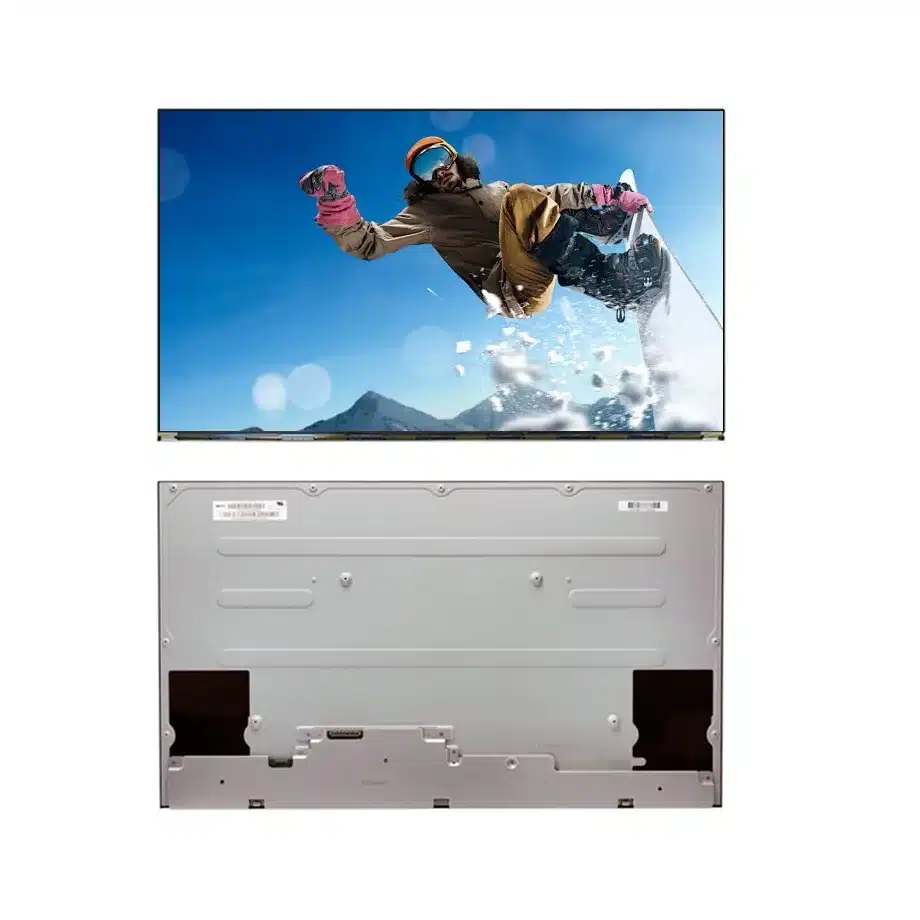
M315DCA-D8B HBR2 10-Bit UHD LCD Cell 99% DCI-P3 Innolux
Model P/N
Size
Resolution
Brightness
Viewing Angle
Connector Type
Operating Temp
Overall(mm)
innolux
M315DCA-D8B
Brand
Panel Size (inch)
Model P/N
Resolution
Viewing Angle
Contrast Ratio
Response Time
Overall (mm)
Active Area (mm)
Refresh Rate
Display Colors
Panel Type
Connector Type
Surface Treatment
Operating Temp
Touchscreen Type
Storage Temp
Work Mode
Pixel Format
Input Voltage (V)
Vibration Resistance
Weight (g)
Designed For
Product Details
Product Overview
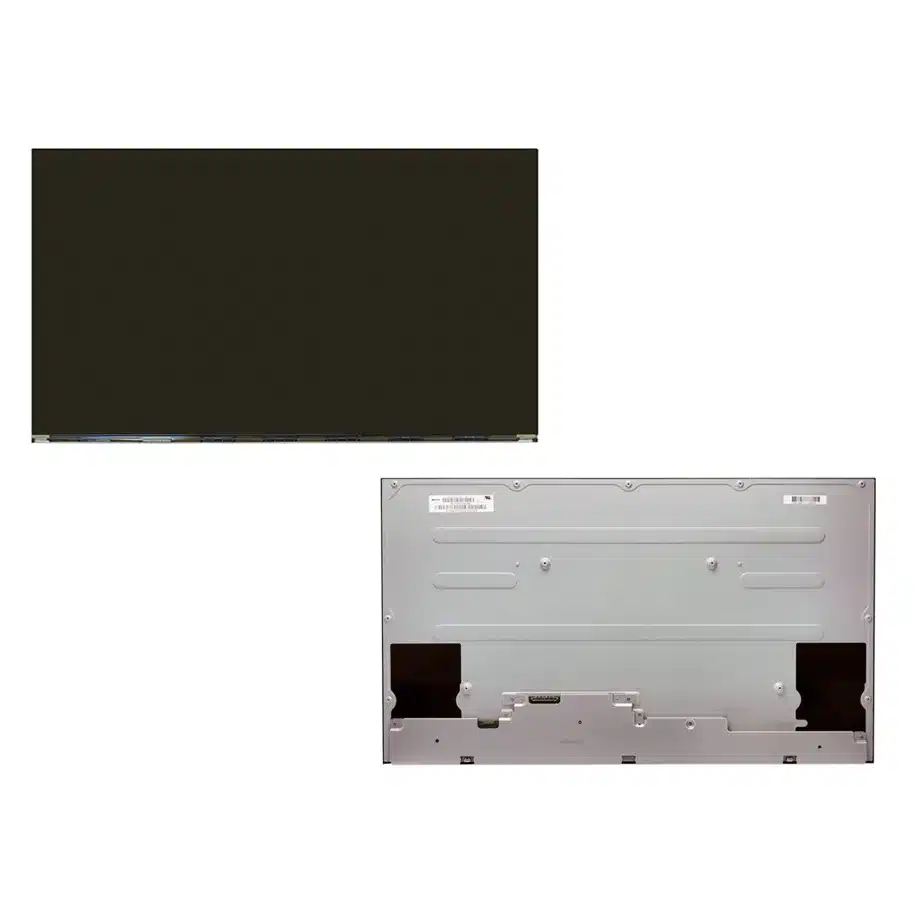
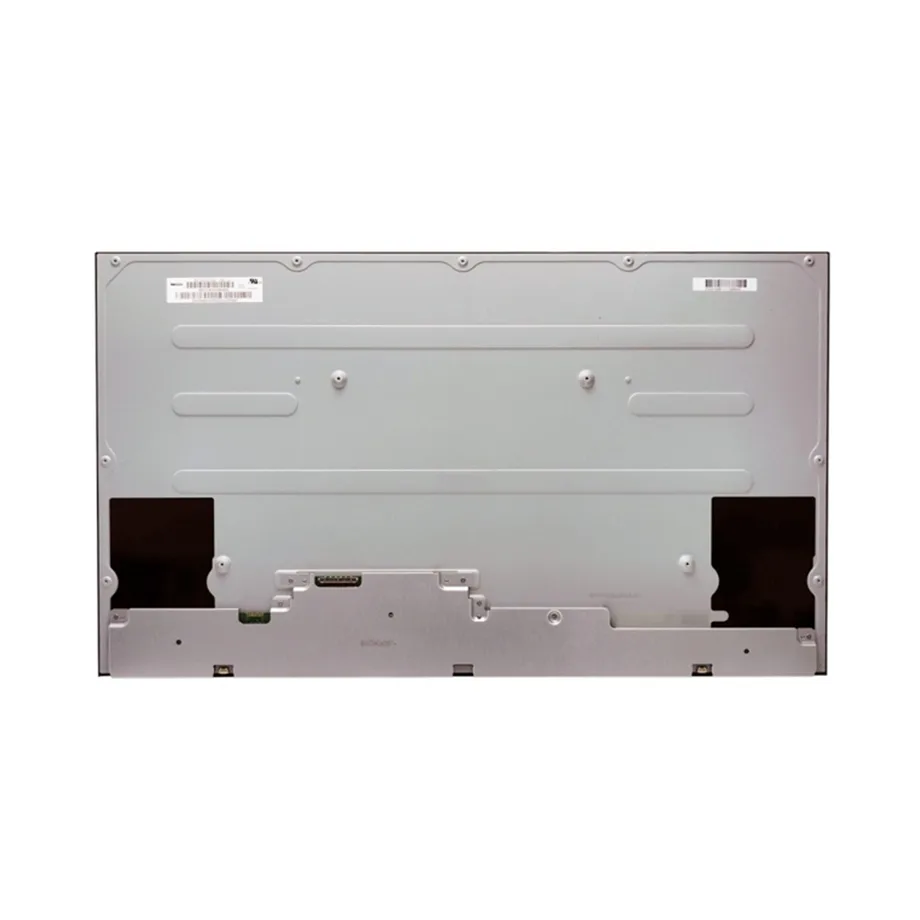
M315DCA-D8B HBR2 10-Bit UHD LCD Cell is a 32.0-inch Innolux a-Si TFT-LCD cell for UHD desktop-monitor integration. It provides 3840(RGB)×2160 resolution in a 16:9 format, with a 697.306 × 392.234 mm active area and a 709.11 × 405.13 × 1.35 mm glass outline. Because it is a CELL rather than a complete module, no backlight is included and the luminance field is 0 cd/m² at the component level.
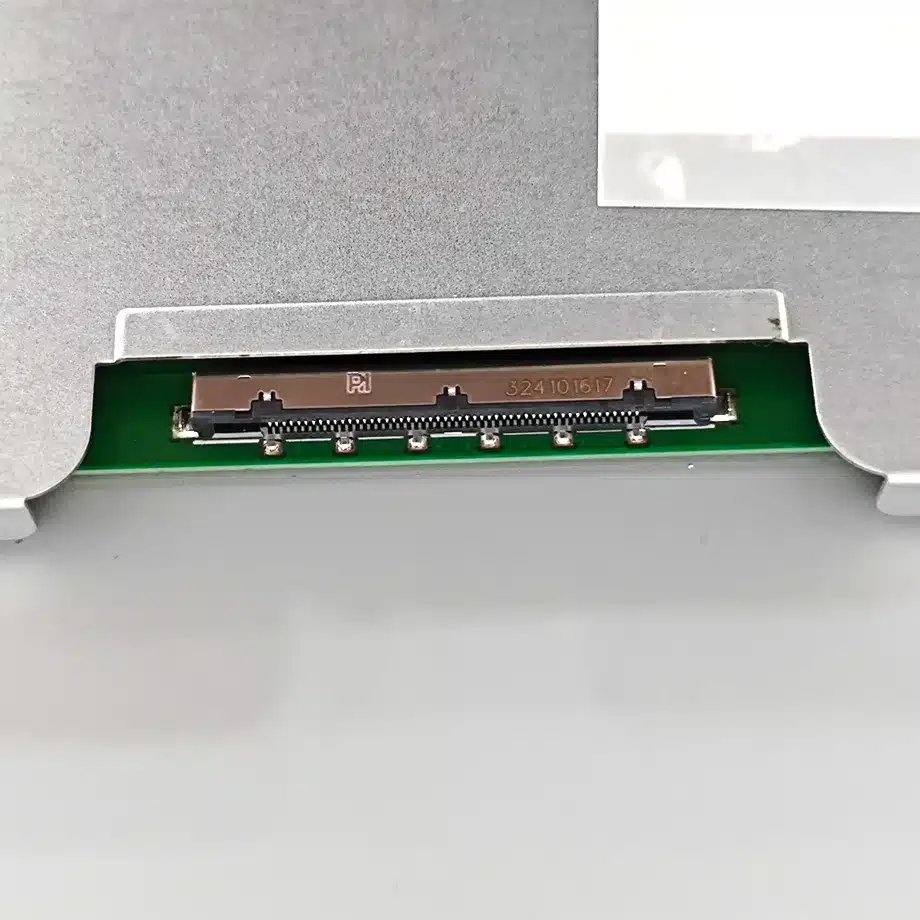
The supplied optical facts include 1000:1 typical contrast, 89/89/89/89 typical viewing at CR≥10, 14 ms typical gray-to-gray response, 1.07B colors and 99% DCI-P3. The surface uses 25% haze antiglare treatment with 3H hard coating. The native interface is four-lane HBR2 eDP at 5.4 Gbit/s per lane through a 51-pin connector, powered from a 12 V typical panel rail.
Same-model public information positions M315DCA-D8B for desktop monitors and describes a three-side-borderless, 10-bit, matte configuration. Innolux lists monitor displays among its display solution areas, while VESA's eDP material provides interface context for four-lane embedded links. The exact 51-pin mapping remains model-specific.
Three Core Buyer Value Propositions
1. 99% DCI-P3 and 1.07B colors support wide-gamut monitor platforms
The cell combines a 10-bit-oriented 1.07-billion-color capability with 99% DCI-P3 coverage. That makes it relevant to premium productivity, media and creator-oriented monitor designs that need wider gamut than standard sRGB. The cell figure is not a finished-monitor calibration certificate. Backlight spectrum, firmware, white point, gamma and calibration all influence the delivered monitor color.
2. Four-lane HBR2 eDP supports a native UHD embedded path
The exact interface is four-lane HBR2 eDP through a 51-pin connector. This gives controller designers a clear high-bandwidth panel-side transport for 3840×2160 at 60 Hz. It does not mean a PC's external DisplayPort output connects directly to the glass. A scaler or monitor controller must generate the exact embedded panel timing, power sequence and connector map.
3. 25% haze provides a strong matte optical characteristic
The surface treatment is specified at 25% haze with 3H hard coating. That is useful in desktop environments where reflections from overhead lighting and windows can interfere with dark UI content. Higher haze can also soften very fine visual detail compared with a clear surface, so monitor prototypes should be evaluated at normal viewing distance rather than assuming that more haze is always better.
Key Specifications at a Glance
| Parameter | Confirmed value |
|---|---|
| Manufacturer / model | Innolux M315DCA-D8B |
| Display size | 32.0 inch |
| Panel type | a-Si TFT-LCD CELL, FOB |
| Resolution | 3840(RGB)×2160, UHD, 16:9 |
| Active area | 697.306 × 392.234 mm |
| Outline | 709.11 × 405.13 × 1.35 mm |
| Weight | 1.10 kg typical / 1.16 kg maximum |
| Brightness | 0 cd/m² at cell level |
| Contrast | 1000:1 typical |
| Viewing | 89/89/89/89 typical at CR≥10 |
| Response | 14 ms typical G-to-G |
| Color | 1.07B, 99% DCI-P3 |
| Transmissivity | 3.15% typical without polarizer |
| Surface | Antiglare, 25% haze, 3H hard coating |
| Refresh | 60 Hz |
| Interface | eDP, 4 lanes, HBR2, 51-pin connector |
| Supply | 12 V typical |
| Backlight / touch | No backlight / no touch |
| Operating / storage | 0 to 50 °C / -20 to 60 °C |
How Should the Backlight Be Engineered for a 99% DCI-P3 Cell?
The cell does not include illumination, so the monitor OEM controls the spectral source that determines whether the finished monitor actually reaches the desired gamut. The 99% DCI-P3 cell capability should be paired with a WLED or other backlight whose spectrum supports the target primaries. A generic low-cost white LED system can restrict the finished gamut even if the LCD cell itself is capable of wider color.
M315DCA-D8B HBR2 10-Bit UHD LCD Cell has a 3.15% typical transmissivity figure measured without polarizer, so the value must be interpreted exactly as specified rather than mixed with a “with polarizer” result from another panel. Use the current Innolux optical definition when sizing the backlight and validating efficiency. Final brightness, uniformity and color should be measured after the complete optical film and backlight stack are assembled.
Color consistency
A wide-gamut monitor should define more than a gamut percentage. Establish acceptable white point, gamma, color error and uniformity at the finished-system level. If the monitor ships with multiple panel suppliers, each supplier configuration needs its own optical validation rather than being assumed equivalent from resolution alone.
What Does Four-Lane HBR2 Require From the Monitor Controller?
The scaler or controller board must output the exact 3840×2160 timing through four eDP lanes at HBR2. Verify the 51-pin assignment, lane mapping, AUX communication, 12 V panel power and power sequencing. An external HDMI or DisplayPort connector on the monitor chassis does not define the panel-side link; the internal bridge from consumer input to eDP is part of the monitor electronics.
During prototype testing, exercise cold boot, input switching, standby, wake and resolution changes. Look for blanking, link retraining or image corruption. Cable construction also matters: the internal eDP route should be evaluated in the production chassis with the actual shielding and bend geometry.
How Should 25% Haze Be Evaluated?
A 25% haze antiglare surface scatters more ambient reflection than a low-haze glossy or semi-gloss screen. For office and control-room monitor use, that can reduce distinct lamp reflections. The same scattering can slightly reduce perceived sharpness or contrast in very fine high-resolution content. A 32-inch UHD monitor should therefore be reviewed at realistic desk distance with text, spreadsheets, dark UI and image content.
The three-side-borderless same-model feature can support modern monitor aesthetics, but bezel dimensions and mechanical packaging need the exact drawing. “Borderless” is a product-design descriptor, not evidence that the active area reaches the glass edge.
Why Is a CELL Different From a Finished UHD Panel Module?
The 1.35 mm glass outline does not describe the eventual monitor thickness. The finished system adds backlight, films, metal frame, controller, shielding and rear enclosure. Procurement teams comparing this product with a complete LCM should account for that architectural difference. A cell can offer more flexibility to a monitor manufacturer that owns the optical and mechanical design, but it requires more engineering work.
The built-in 12 source chips are part of the cell electronics. They reduce some integration complexity but do not eliminate the need for an external timing/controller architecture. Handling procedures must also protect the large glass area from flex and edge damage during assembly.
Where Does M315DCA-D8B Fit?
The user-supplied application is Desktop Monitor and same-model public data reinforces a monitor-oriented, three-side-borderless use case. M315DCA-D8B HBR2 10-Bit UHD LCD Cell is suitable for 32-inch UHD desktop displays, creator monitors, office productivity monitors and embedded monitor platforms where a separate backlight and scaler are already part of the product architecture.
The 60 Hz refresh and 14 ms typical gray-to-gray response should guide positioning. It is a high-resolution wide-gamut monitor cell, not a high-refresh esports panel. If the finished product needs gaming motion, the buyer should qualify whether 60 Hz and the supplied response behavior meet the target rather than relying on UHD resolution as a performance proxy.
How Should a First Article Be Approved for a UHD Monitor?
Begin with electrical bring-up using the intended scaler, 51-pin eDP cable and 12 V panel rail. Confirm native 3840×2160 at 60 Hz, input switching and stable standby/wake behavior before evaluating color. Record the approved controller firmware and cable because a later internal change can affect link margin even when the same glass is used.
The optical approval should use the production backlight and film stack. Measure brightness, uniformity, white point, gamut and black level after warm-up, then compare those results with the target 99% DCI-P3 monitor specification. Include text and fine UHD content when evaluating the 25% haze surface, since the balance between reflection diffusion and perceived sharpness is application dependent. Mechanical inspection should also verify that the large 1.16 kg maximum cell is supported without twist or point loading. These first-article records become the baseline for incoming supplier lots and prevent a same-size UHD family variant from being accepted without review.
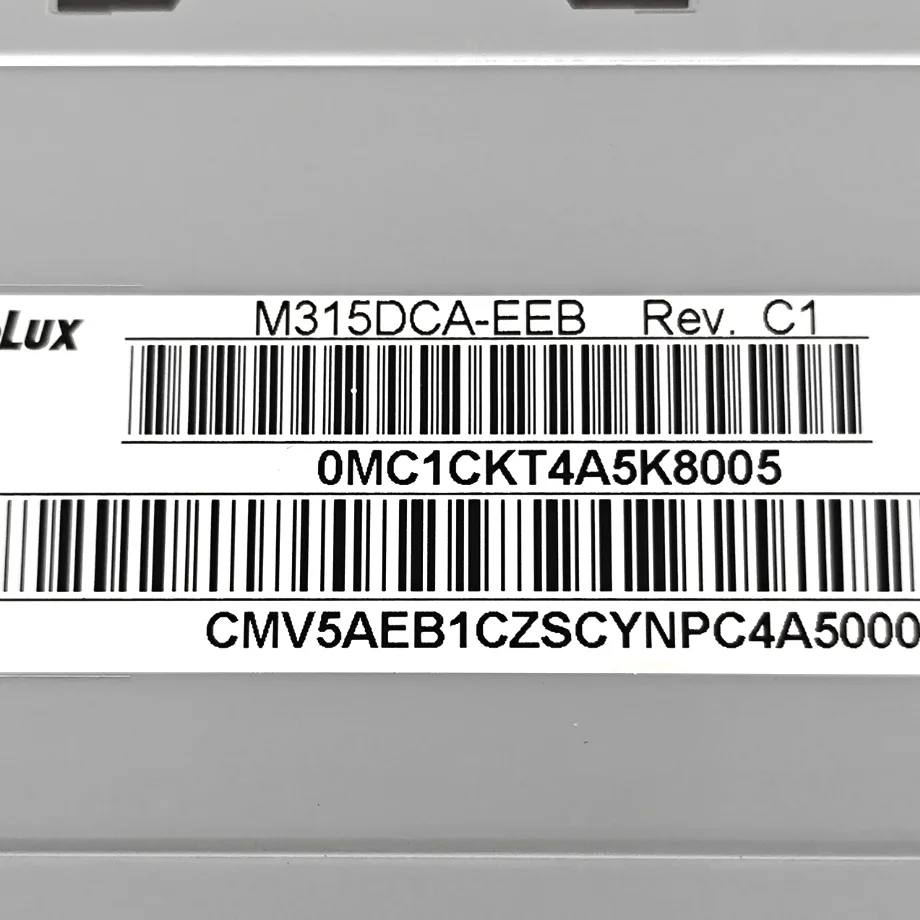
For serviceability, keep the panel-side 51-pin cable and controller revision in the approved bill of materials. A later cable substitution can preserve basic image operation while changing high-speed margin, EMI behavior or standby reliability. Incoming inspection should therefore verify exact model identity, glass condition and connector geometry before the cell enters monitor assembly.
For packaging and transport, protect the large thin glass from torsion and edge impact. The 1.35 mm cell depth gives little structural stiffness by itself, so trays, frames and assembly fixtures should support the approved handling method.
Procurement Checklist
- Confirm exact M315DCA-D8B identity and current Innolux revision.
- Match the four-lane HBR2 eDP timing and 51-pin connector mapping.
- Verify 12 V panel power and the complete startup / shutdown sequence.
- Design a separate backlight capable of supporting the intended 99% DCI-P3 finished gamut.
- Check the 709.11 × 405.13 × 1.35 mm glass outline and 1.16 kg maximum mass.
- Evaluate the 25% haze surface at real monitor viewing distance.
- Keep the 0 cd/m² cell field separate from finished-monitor brightness.
- Confirm current production and revision-control information before volume sourcing.
M315DCA-D8B HBR2 10-Bit UHD LCD Cell gives a monitor manufacturer a UHD, wide-gamut LCD cell with a defined HBR2 eDP path and matte optical surface. Its successful use depends on the OEM's backlight spectrum, scaler electronics, large-glass mechanics and finished-system color validation.
Recommended: Same Size
(32")
Applications & Value of LCD Panel

- Fast sourcing with in-stock panels & cross-reference alternatives
- Stable supply chain with long-term availability
- Engineering-level support from panel to integration
- Custom solutions: cable, touch & optical bonding
- Strict quality control with IQC / OQC / aging test
- Full traceability system for quality assurance
- Complete technical documentation & drawings
- Compliance support: RoHS & certification files
